In case you somehow missed it, we recently launched an eye-catching collaboration with Isotope, leveraging gorgeous vitreous enamel dials to make their sleek Mercury case. Well, that got us thinking about enamel in general and, specifically, the various types of enamel in the pantheon of incredibly demanding metier d’art.
While there are similarities between them – namely, the very particular type of molten glass that is enamel – they use the base material in dramatically different ways. Some are more common; some are incredibly rare. But they’re all absolutely stunning.
Here then is your primer to the various types of enamel and why they’re worth knowing.
Vitreous Enamel

Rather than a technique, vitreous enamel is the name given to the specific material usually used in enamelling, meaning that every other ‘type’ of enamel featured in this article is actually a different way to present vitreous enamel. You might also come across some brands using the term interchangeably with some of the techniques. Materially, it’s a very specific type of powdered glass made from a mix of silica, borax and soda ash. When heated to an insane degree – 800 degrees or higher – the powder melts and bonds to metal, creating a perfectly glassy surface. The result is a hard, durable and often beautiful coating.
It is however, a tricky, brittle material and imperfections can cause cracking, meaning that no matter the technique, failure rates of enamel dials are worryingly high. There’s a reason enamel generally commands a premium – although it’s generally well worth it.
Grand Feu
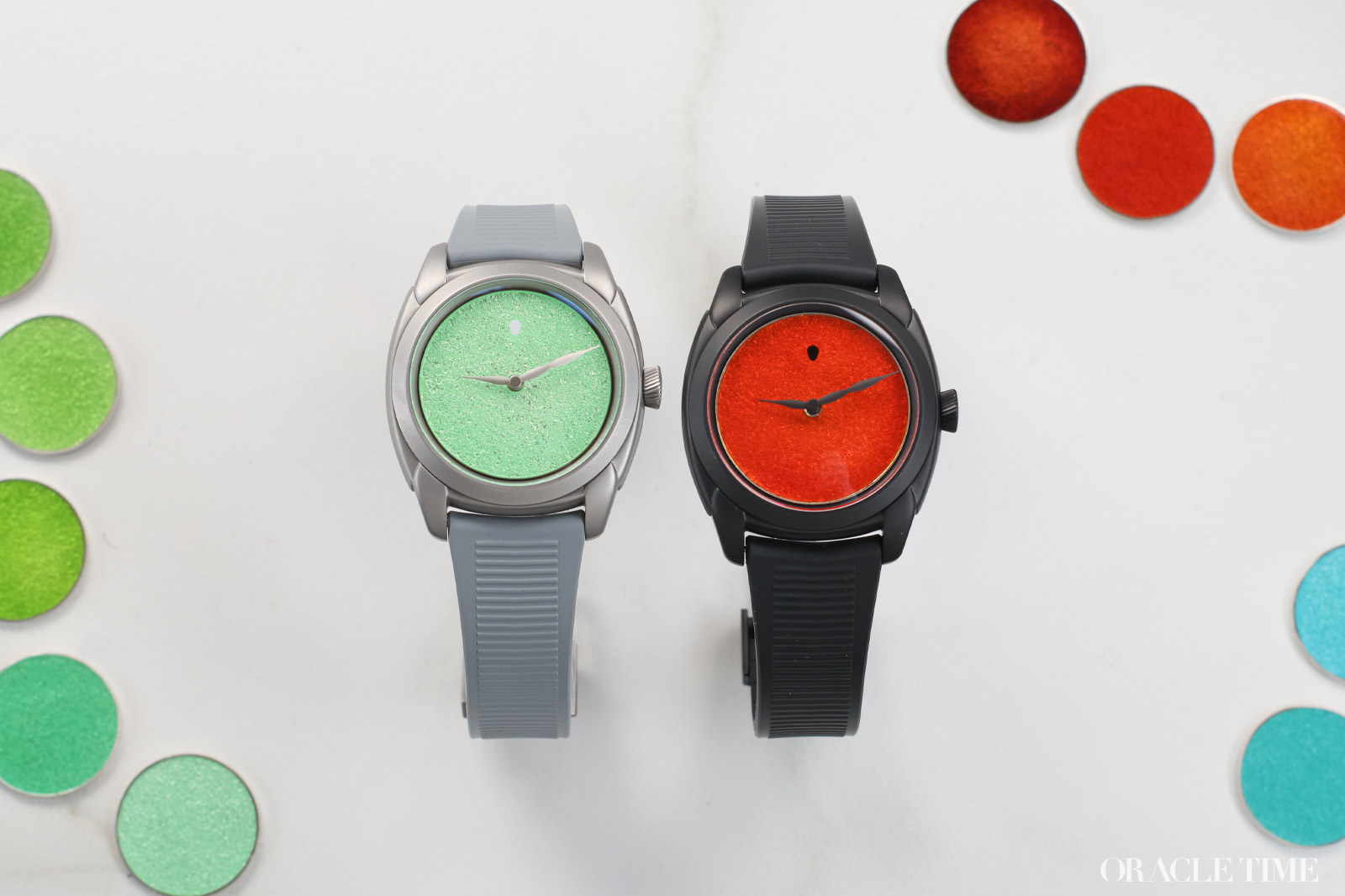
A form of enamelling that actually originates in watchmaking – specifically the pocket watches of the 17th century – it became a common, if incredibly refined sight in the 18th century, especially here in the UK. Despite the visual simplicity, it’s one of the trickiest types of enamelling and involves painting a single layer of material onto the dial before firing it at 800 degrees centigrade. Then you paint another layer on and fire again and again and again, gradually building up an incredible depth of colour.
Classically, these would be crisp, pristine white, but these days you’ll see plenty that use a semi-transparent colour over silver leaf for a beautiful textured effect. Elegant cushion case in point, the Isotope x Oracle Time Mercury Vitreous, available in spearmint green or fiery orange in complementary matte steel or DLC black cases. Seven layers of enamel have been applied over silver leaf for a gorgeous depth of colour. If you’re lucky, there might even be some left…
Cloisonné
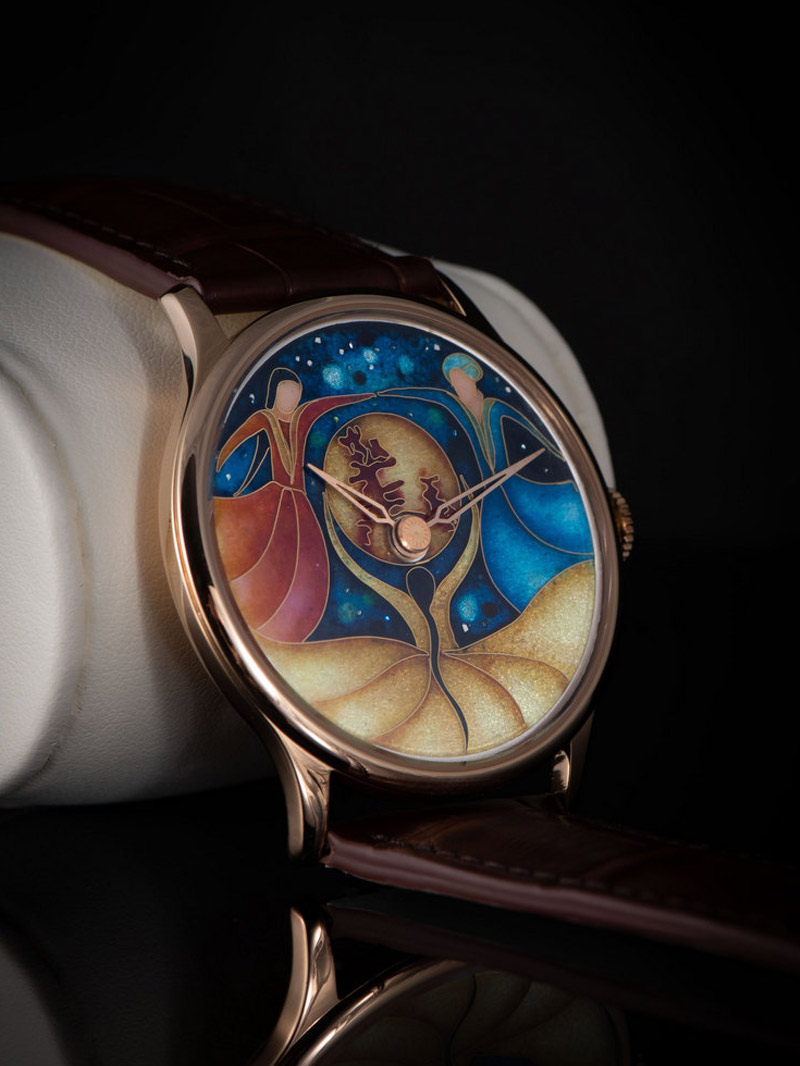
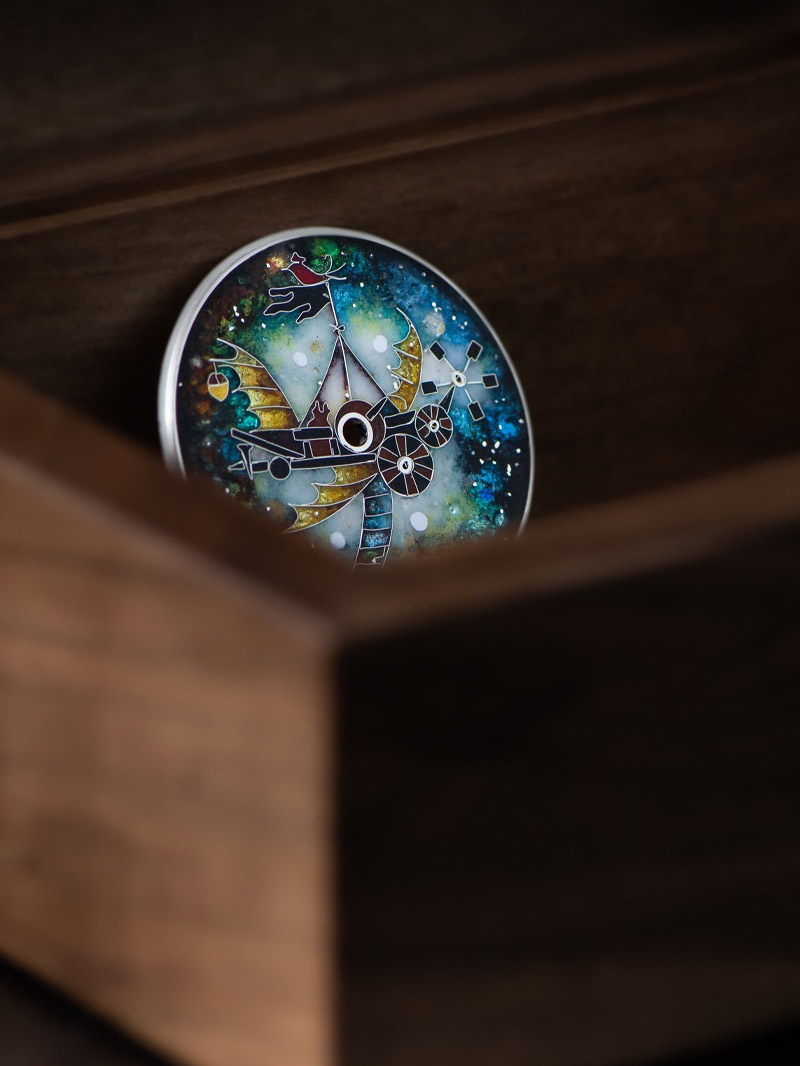
One of the oldest, most visually ornate types of enamelling, rudimentary forms of cloisonné date back to ancient Egypt, albeit using glass rather than proper enamel. Regardless, the concept has remained the same: you build a picture out of gold wire and then flood each section with enamel. These sections can be incredibly tiny, but it means that you can build a mosaic-style pattern or picture out of various colours of enamel.
Plenty of haute horology houses have played around with cloisonné over the years and historically even Rolex got in on the act. But for my money, it’s hard to beat the dials from Georgia-based cloisonné specialist Deguiret. This Japanese scene illustrates perfectly just what cloisonné enamel can be.
Plique-à-Jour

Dating back to the 6th century Byzantine Empire – though more commonly seen in Art Nouveau pieces from the likes of Lalique, Tiffany and Faberge – plique-à-jour is the kind of enamel you’ll most often see on jewellery and objets d’art rather than watches. Rather than bonding the enamel to a metal backing as every other technique does, layers of enamel are painted into frames or cells with nothing behind them. It’s then fired at 900 degrees to bond the enamel to said frame. The result is an effect like a stained-glass window, allowing you to see straight through it.
The latest – and possibly one of the only – modern watch to use the technique is Czapek & Cie’s stunning anniversary timepiece, the aptly named Antarctique Plique-à-Jour. The sporty integrated bracelet case is the same as ever, but the dial here is made from a network of metal lines in an almost organic, cracking pattern with translucent blue enamel in-between, showing off the movement underneath.
Champlevé

The concept of champlevé is pretty simple and dates all the way back to Celtic artisans in the 2nd and 3rd centuries. Basically, you engrave or carve recesses into metal and then fill the different sections with enamel. It’s like a slightly easier version of cloisonné – though it’s of course by no means easy and is the crowning achievement of many an ancient reliquary.
Less ancient but no less precious is Laurent Ferrier’s Classic Traveller Globe Night Blue. Here, the Swiss independent legend uses champlevé to pick out a beautiful map of the world in dark shades of blue, complete with pinpricks of city lights at night picked out with obsessive accuracy. It’s not the first time Laurent Ferrier have used the same technique, but this is the most stunning.
Basse-Taille
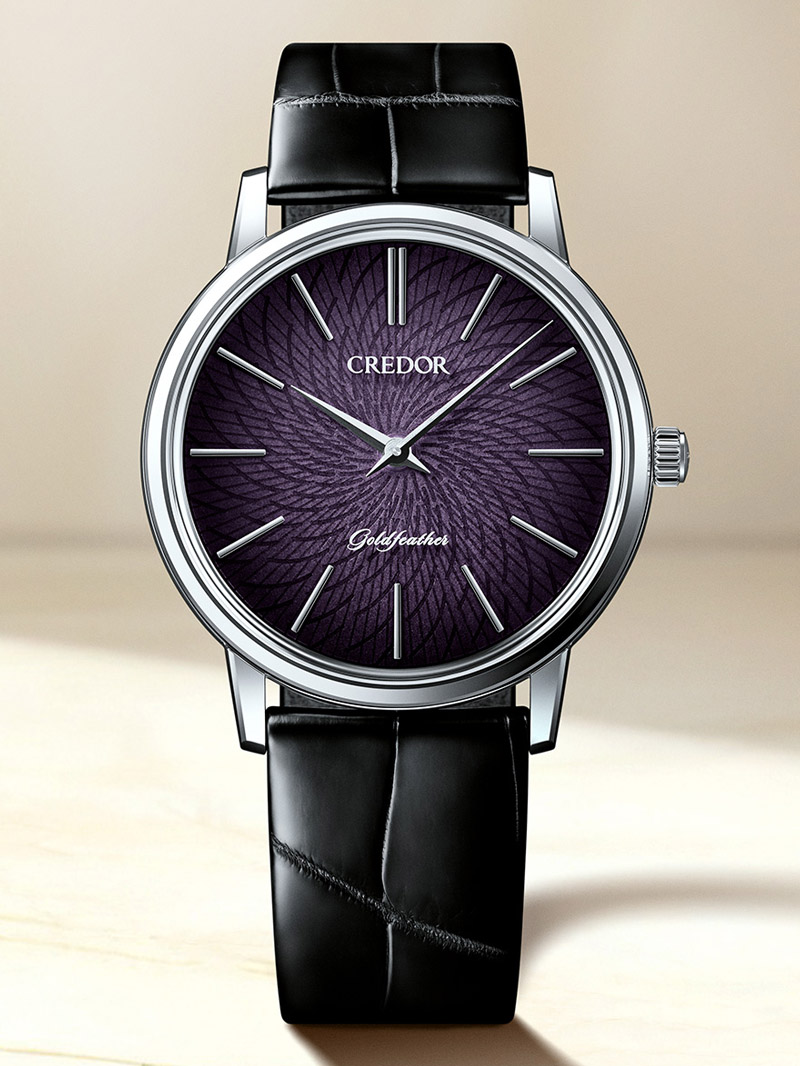
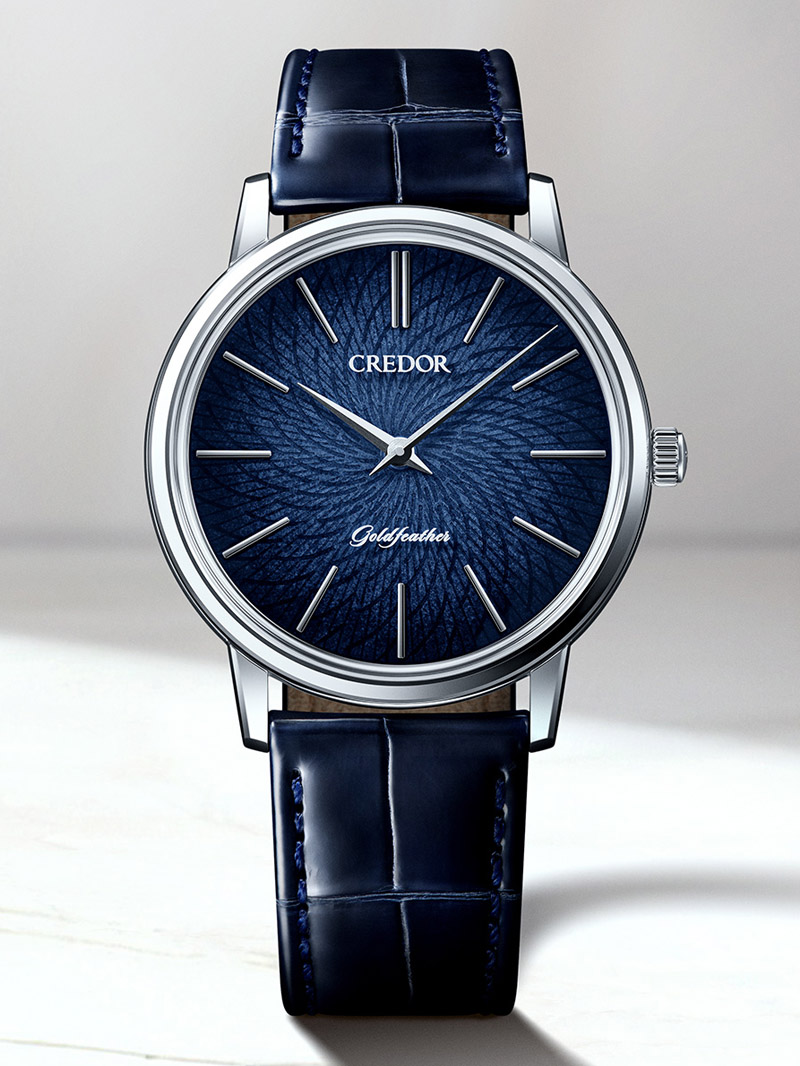
An evolution of champlevé developed in 13th-century Italy, rather than engraving distinct cells basse-taille first involves creating a bas-relief pattern then covering the entire thing with enamel. The deeper the enamel, the deeper the colour, meaning the high points of the relief stand out with a paler colour against the darker surround. It’s amazing just how much detail you can get using basse-taille.
For a current interpretation we’ll turn to the upper echelons of Seiko’s catalogue for the Credor Goldfeather GBBY969 and 971. These stunners start with a spectacular swirl of guilloche like a more abstract space-time depiction of a black hole, covering it with soft blue or purple enamel respectively. Housed in ultra-thin platinum cases, these are proof positive of why Credor is placed above even Grand Seiko when it comes to finishing.
Flinqué

Flinqué is what happens when you engine-turn a dial with guilloché in any pattern of your choosing and then cover it with enamel. Because of the slight crossover with other techniques, it’s hard to pinpoint exactly when flinqué first originated, but we do know it gained prominence between the 18th and 20th centuries, in large part thanks to Faberge, for whom it was a bit of a signature.
In fact, Faberge is the inspiration behind nascent microbrand Etien. The guilloché pattern of the T04 model is specifically taken from the Russian maestro’s metiers d’art and covered in either light blue, mid blue or purple enamel, complemented with solid hour rings. If you’re looking for a more accessible way to embrace enamel, then Etien is a solid bet.
Geneva Enamel
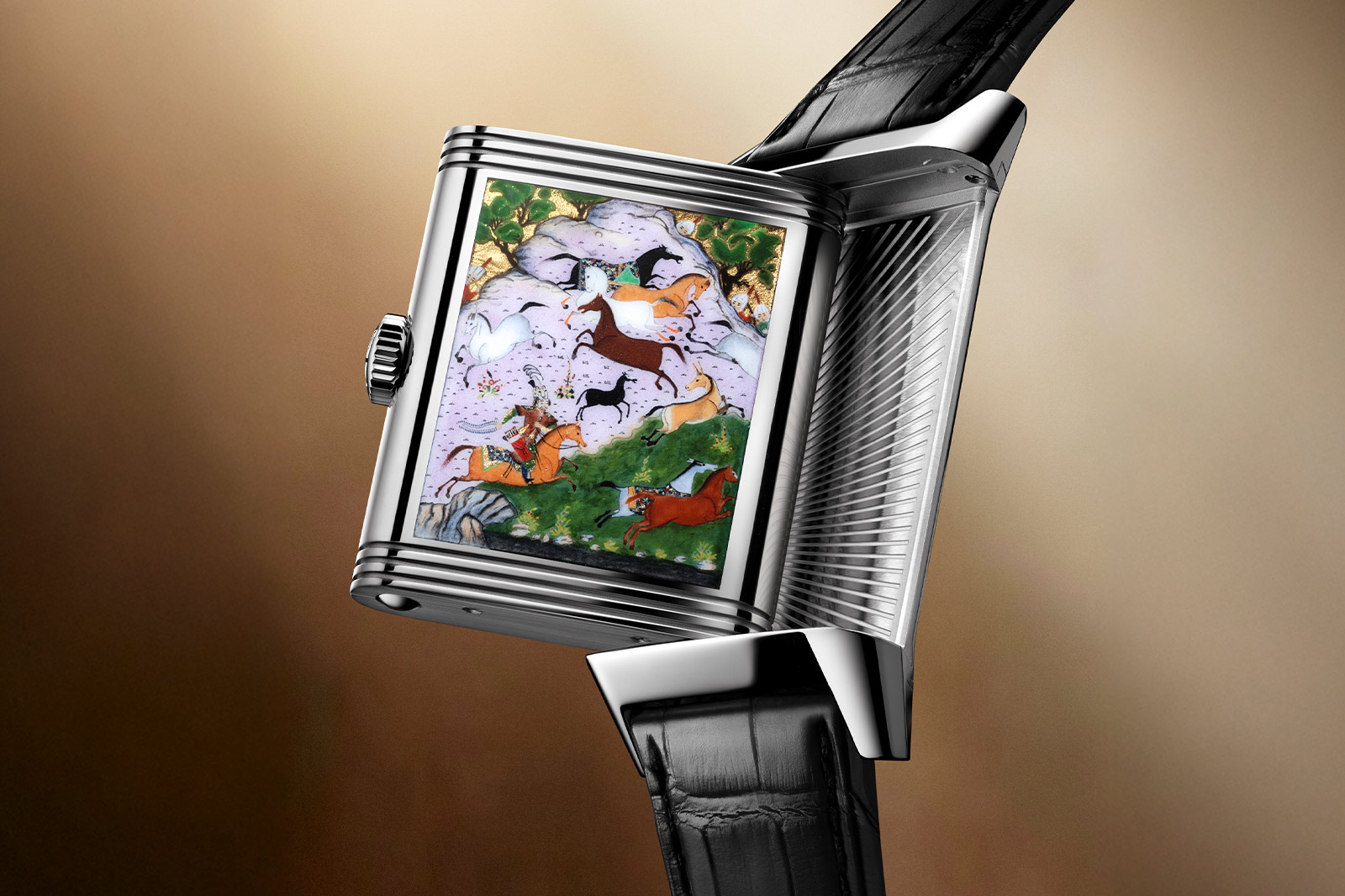
Developed in, no surprise, Geneva in the 17th century, Geneva enamel is arguably the single most demanding approach to decoration. It takes all the skill of micro-painting and all the failure rate of firing enamel. The technique is straightforward, turning enamel into a pigment that can be painted on by hand. But as you can’t paint one colour on until the previous colour has been fired, it means that the number of steps involved in the creation of a painted enamel dial makes it a daunting prospect.
Imagine painting a photorealistic pastoral scene painstakingly onto a tiny canvas like a watch dial, only to have it crack during its second-to-last firing. It’s enough to drive someone to madness.
For a superlative version of the technique, look no further than Jaeger-LeCoultre’s Watches & Wonders 2025 offering, which included Reversos with hand-painted artwork on the casebacks. This version, inspired by the ancient Persian poem Shahnameh, is downright breathtaking in its detail.

![Ulysse Nardin Introduce Freak [One Blue Enamel] and Freak [One Guilloché] for 25th Anniversary](https://oracleoftime.com/wp-content/uploads/2026/09/Ulysse-Nardin-Freak-ONE-Featured-600x337.jpg)