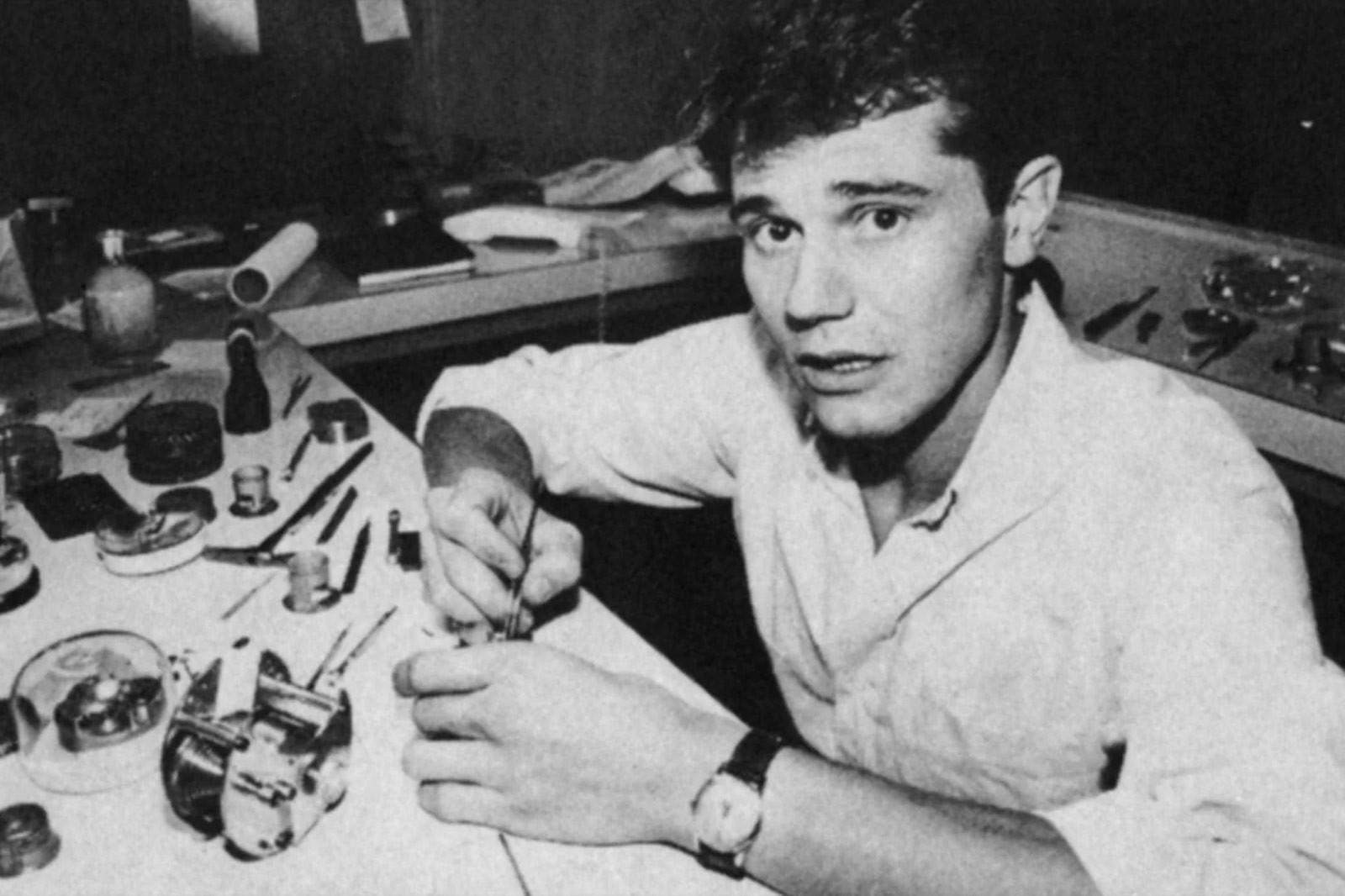
If you’ve ever had the chance to step inside an antique watch restoration workshop, the smell of aged brass and the sight of scarred oak workbenches and dismantled calibres is a memory that never really leaves you. Now, picture a rebellious teenage boy from Marseille, who had already been shown the door by a local technical school for being far too disruptive, being dropped right into the middle of such an environment. This was the situation young François-Paul Journe, the man who would become F.P. Journe, found himself enveloped by when he was sent off to his uncle Michel’s atelier in the elegant neighbourhood of Saint-Germain-des-Prés during the 1970s. Such a decision turned out to be the catalyst for a chain of events that fundamentally changed the course of modern watchmaking.
Becoming an Independent Watchmaker
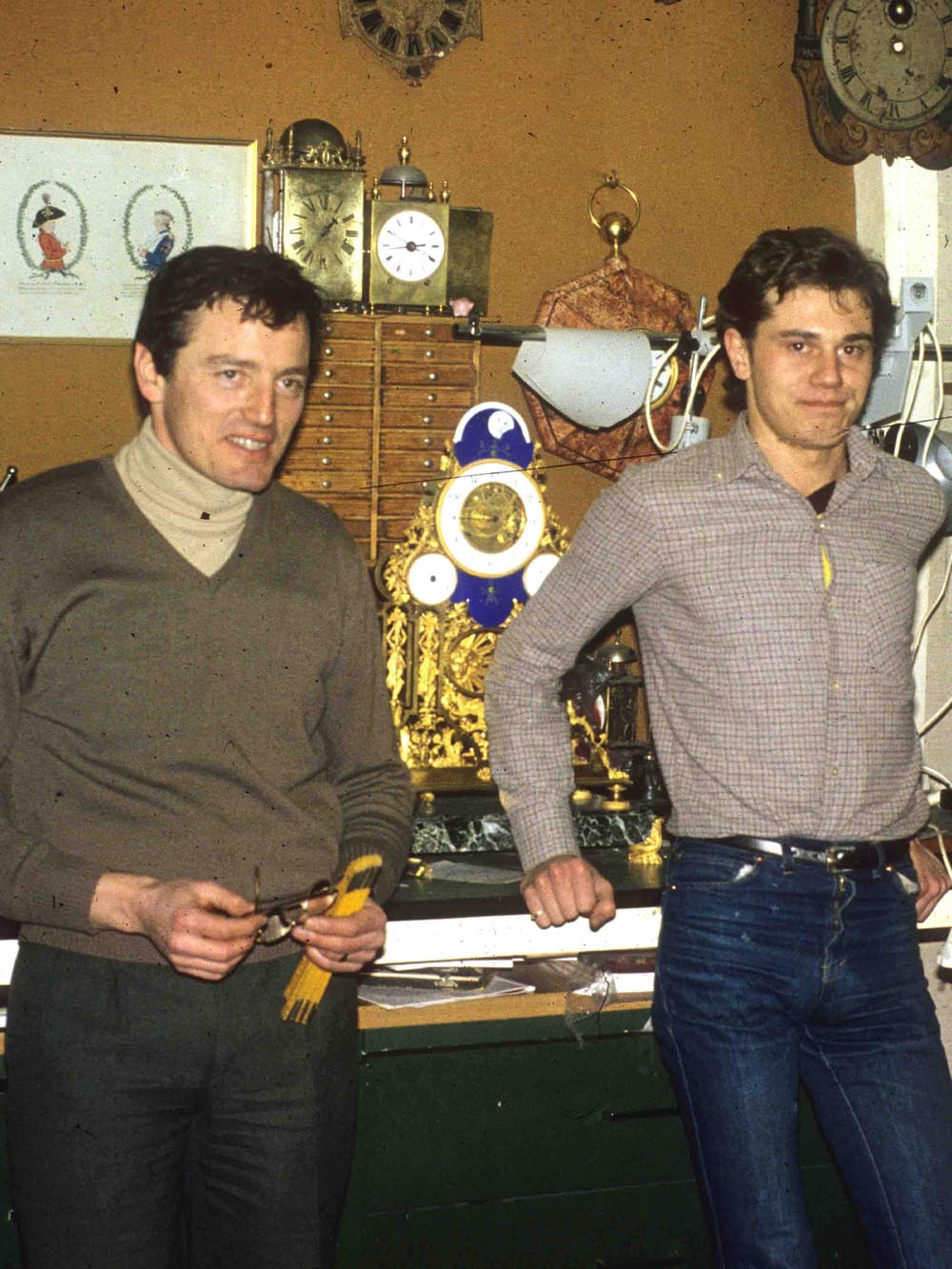
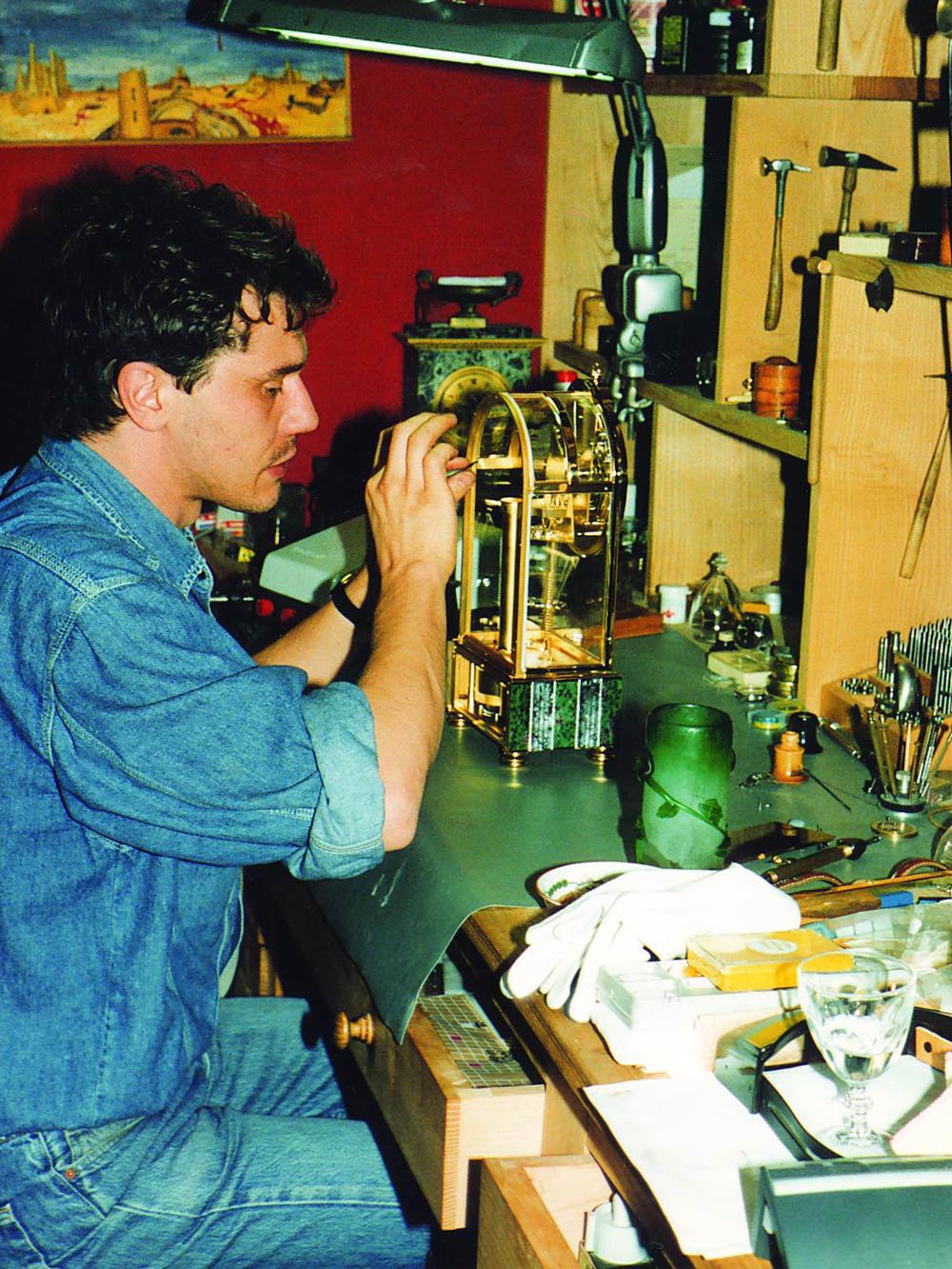
At this point, it’s worth mentioning that Uncle Michel wasn’t your run-of-the-mill repairman, but an eminent restorer of masterpieces created by the likes of Abraham-Louis Breguet, Antide Janvier, and Ferdinand Berthoud – all of whom are arguably the founding fathers of high horology. For the young François-Paul, the practice of disassembling 200-year-old marine chronometers and intricate pocket watches offered a rare chance to literally unpick the brains of some of the greatest watchmakers in history. Having absorbed their mechanical problem-solving and sheer obsession with chronometry, his hands-on experience was eventually formalised at the École d’horlogerie de Paris, but it was the workshop bench, under the keen eye of his uncle, that served as his true crucible.
By the time he had reached his early 20s, Journe desperately wanted a tourbillon pocket watch of his own. The problem, of course, was that an apprentice’s wage barely stretched to a decent lunch in Paris. So, he decided to build one himself. Working late into the night, with little more than the dismantled relics of his uncle’s workshop, he began fabricating every single component from scratch. After five agonising years, he finally completed his first tourbillon pocket watch in 1983.
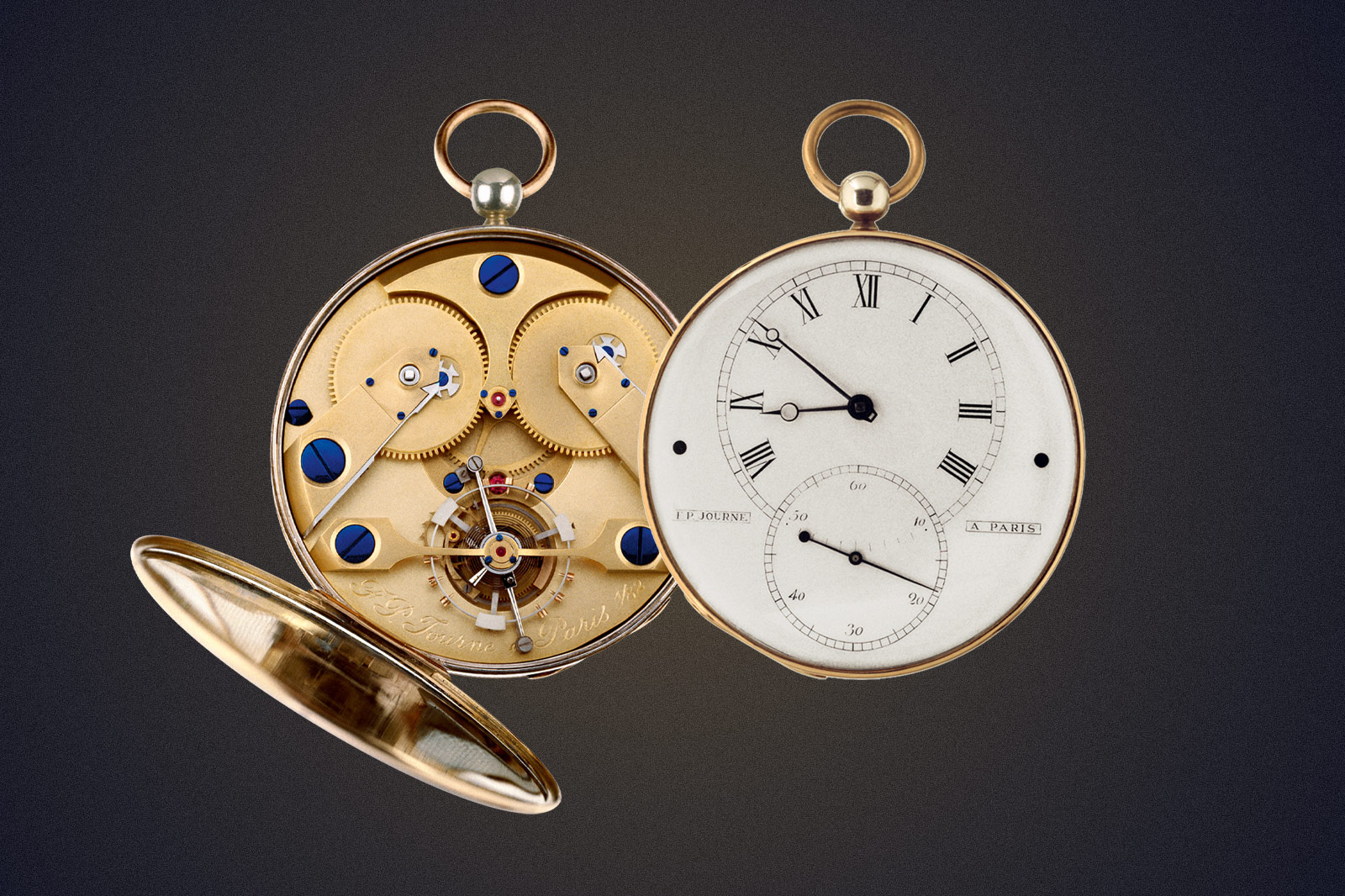
For a long time, though, Journe remained the man behind the curtain. Throughout the late 80s and well into the 90s, he operated from a workshop, creating complex mechanisms and bespoke pieces for established luxury brands, who happily placed their own names on the dials. This anonymous toil eventually bred a profound frustration deep within him, and he moved away from enriching the heritage of corporate entities. Focusing instead on launching his own eponymous marque in 1999, F. P. Journe (Montres Journe SA) was born, the dials of which were adorned with a Latin phrase that would become the cornerstone of his identity: “Invenit et Fecit” (He invented it, and he made it).
The Tourbillon Souverain
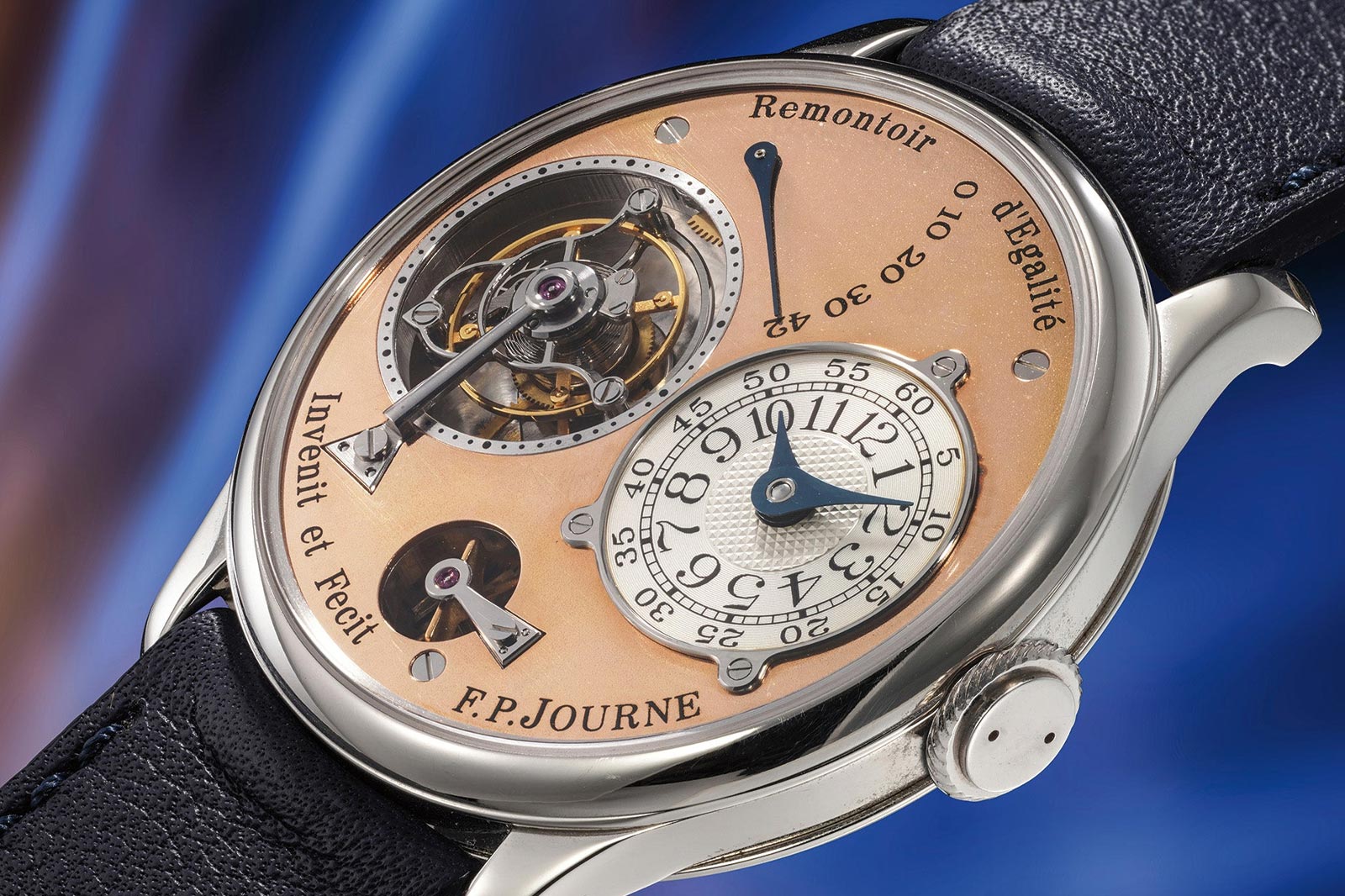
To fund his business, Journe adopted a method pioneered by Breguet himself: the souscription, offering a handful of trusted friends and clients the opportunity to pay upfront for a watch that did not yet exist. The watch he delivered to those early believers was the Tourbillon Souverain, and it completely turned the watch world on its head. At the time, the tourbillon was certainly popular, but mostly as a spinning spectacle that a collector could admire through a hole in the dial. Journe, however, looked at it strictly as a tool to improve accuracy and noticed that as the mainspring of a watch unwound over a few days, it delivered less power to the escapement, thus disrupting timekeeping considerably.
His solution was to integrate a remontoire d’égalité. The easiest way to think of this mechanism is to imagine a dam holding back a river. Instead of letting the water rush straight onto a waterwheel, you let it fill a bucket, which then tips a consistent amount of water onto the wheel at regular intervals. In the Tourbillon Souverain, the remontoire is a tiny secondary spring near the escapement. The mainspring winds this little spring every second, delivering a perfectly constant pulse of energy to the balance wheel – a feat in and of itself, but one that immediately established Journe as a heavyweight in independent watchmaking.
The Chronomètre à Résonance
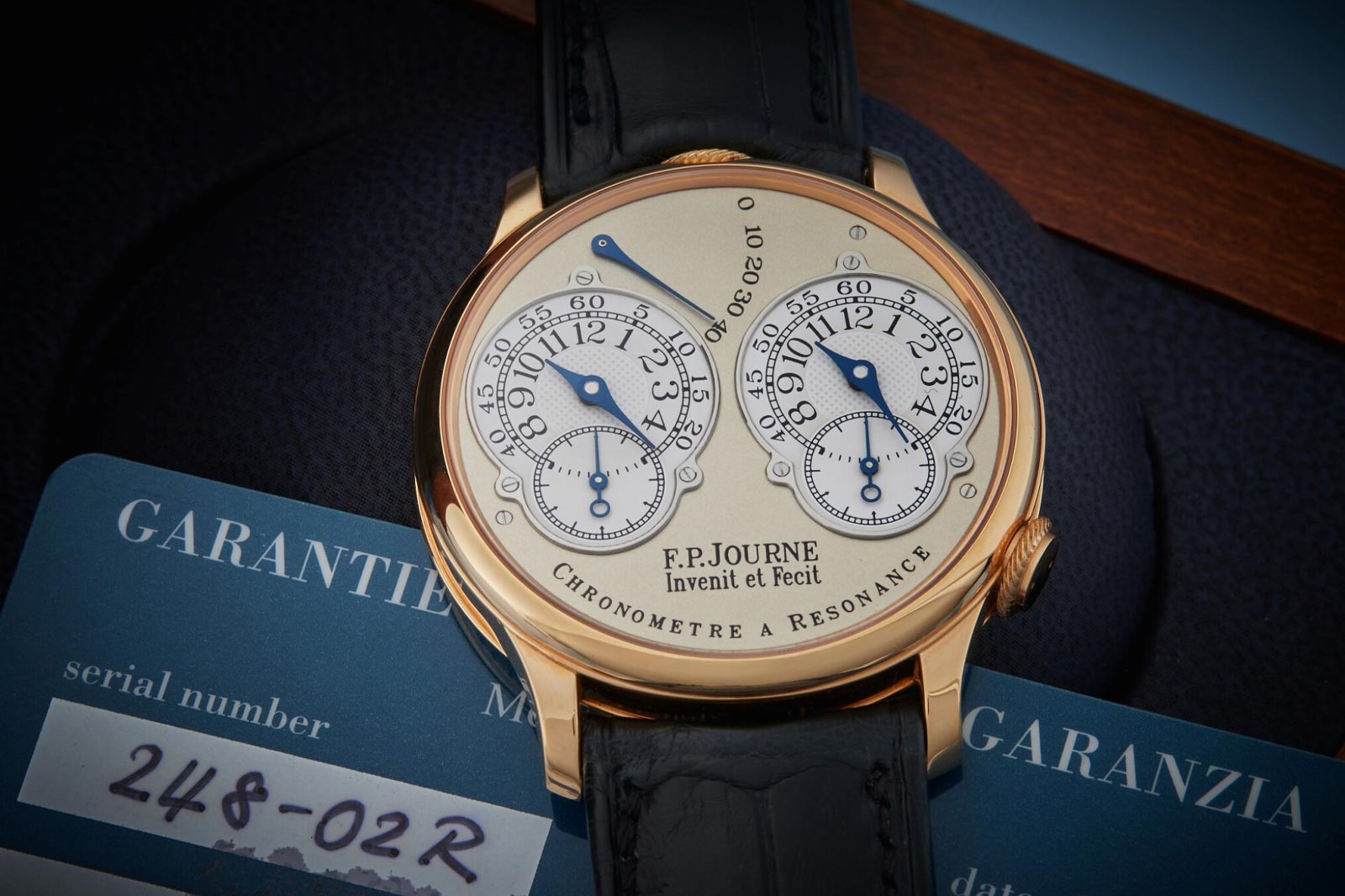
Yet, if it was the Tourbillon Souverain that announced F.P. Journe’s arrival, it was surely the release of his next creation in 2000 that cemented his immortality: the Chronomètre à Résonance. The resonance was a concept that had fascinated the likes of Breguet and Antide Janvier centuries earlier. Several clocks had utilised the phenomenon, featuring two pendulums placed in close proximity that would eventually synchronise their swings through kinetic energy transfer, correcting each other’s tiny errors. Trying to replicate that delicate physical dance inside a tiny metal case strapped to a wrist, however, was widely considered a fool’s errand.
Journe, ignored the doubters, producing the Chronomètre à Résonance, which featured two entirely independent balance wheels sitting just fractions of a millimetre apart. Both would move tiny amounts of air and send microscopic vibrations through the metal plate they shared as they were beating, so if one balance wheel happened to slow down, the kinetic energy from the other wheel would gently pull it back into a synchronised rhythm. It remains a staggering achievement that very few watchmakers have dared to replicate since.
As the years rolled on and the brand found its footing, Journe’s obsession with doing things his own way only intensified. In 2004, he made the decision to craft all his movement plates and bridges from 18ct rose gold as opposed to the far more common rhodium-plated brass or German silver. Machining solid gold can be a nightmare because of its softness, often gumming up expensive cutting tools. However, the aesthetic result is undeniable. Today, when you flip an F.P. Journe watch over, you’re greeted by the warm, radiant glow of its carefully arranged golden components – a wildly extravagant touch, but one that shows just how much care goes into the hidden details.
The Master of Independent Watchmaking
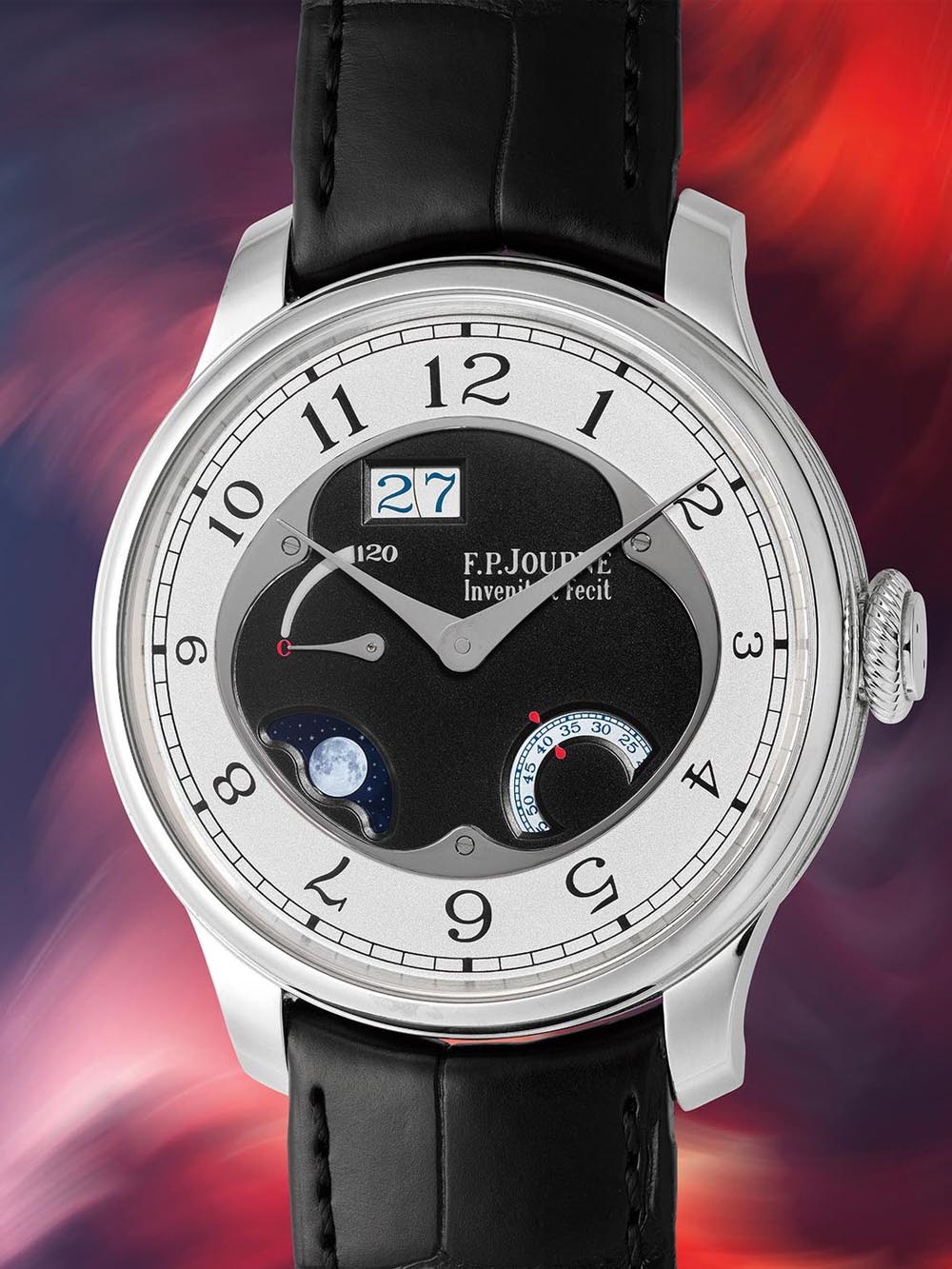

The golden era of the brand also saw the introduction of the Octa calibre, which Journe designed with a 120-hour power reserve and an ultra-thin baseplate that would house various complications, be that a chronograph, a moon phase, or an annual calendar. By leaving a designated space within the original footprint of the movement, the elegant, slender profile of his signature cases was able to remain uniform across the entire Octa watch collection.
Beyond the mechanical marvels, the finer, more idiosyncratic details of an F.P. Journe watch are just as deserving of our attention. Consider the dial of an F. P. Journe timepiece – often a canvas of juxtapositions. Interacting textures. Smooth silvered guilloche sub-dials placed over matte, granular backgrounds. Lots of interplay between light and shadows. And then there are the hour numerals – a playful, entirely bespoke typography that has become an instantly recognisable signature across his collections.
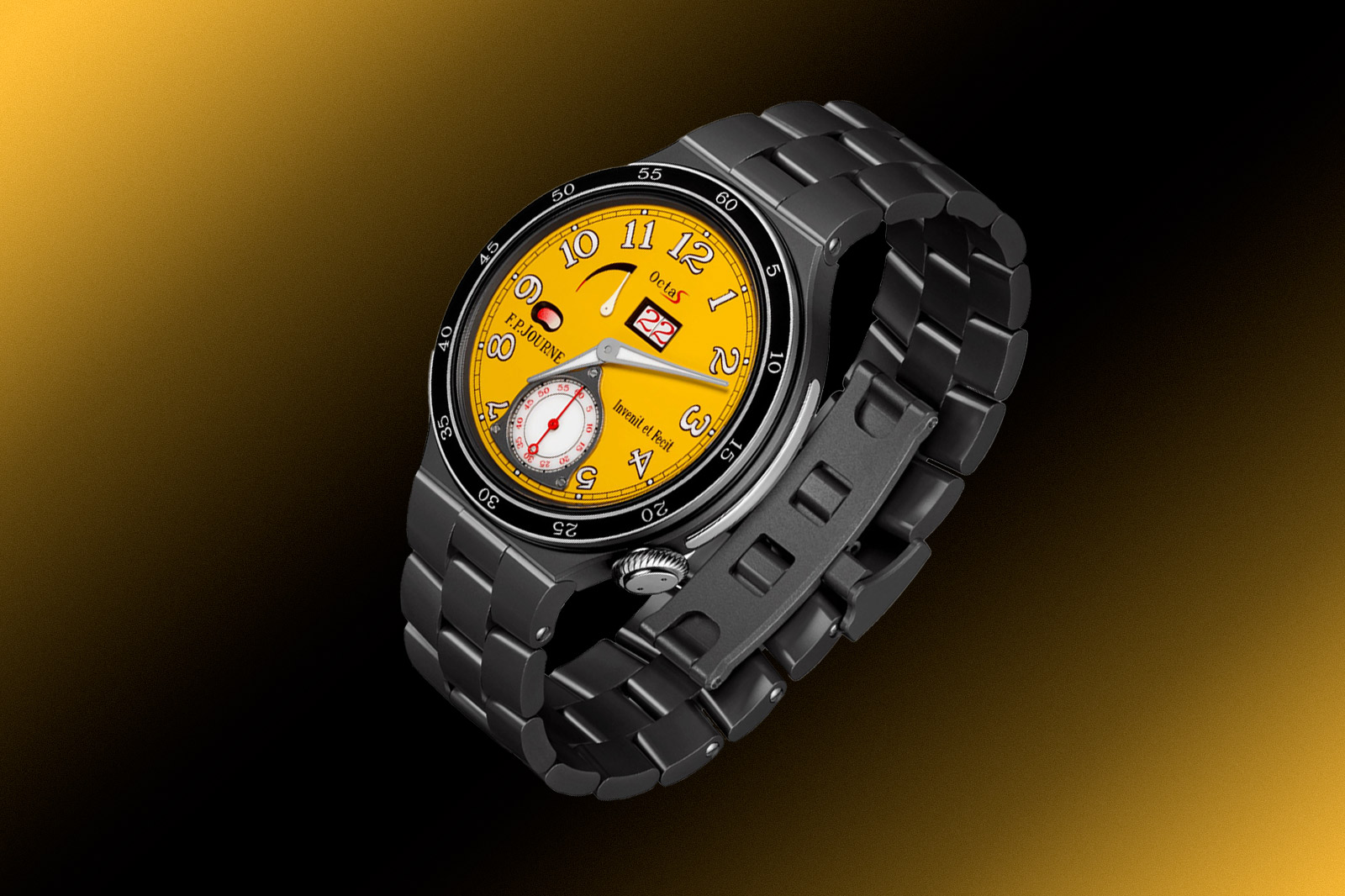
The handling of these watches is just as impressive. Winding the flat, silk-rope patterned crown provides a buttery resistance that connects the wearer directly to the golden heart beating within. And the cases, usually rendered in platinum or 18ct rose gold, present in various shapes from perfectly round to pebble or “turtle” shapes, as well as asymmetrical profiles (as seen in the brand’s semi-barrel LineSport collection).
Today, Journe’s watches are hunted by seasoned collectors far and wide. Still operating from a small manufacture in the heart of Geneva, the company’s production numbers barely reach a thousand per year, despite such massive global demand. Such refusal to increase production demonstrates the watchmaker’s belief in protecting the intimate craft of independent watchmaking – a prerequisite that has followed him from the dusty restoration benches of Paris to the highly guarded doors of his Geneva headquarters.
More details at F. P Journe.