No discussion of independent watchmaking would be complete without one of the most disruptive forces in genuine independent horological engineering and development: Horage. The Biel-based watchmaker has been making ripples since it was founded in 2007. This grew to surfable waves when its first in-house, temptingly accessible Swiss tourbillon hit the market in 2020.
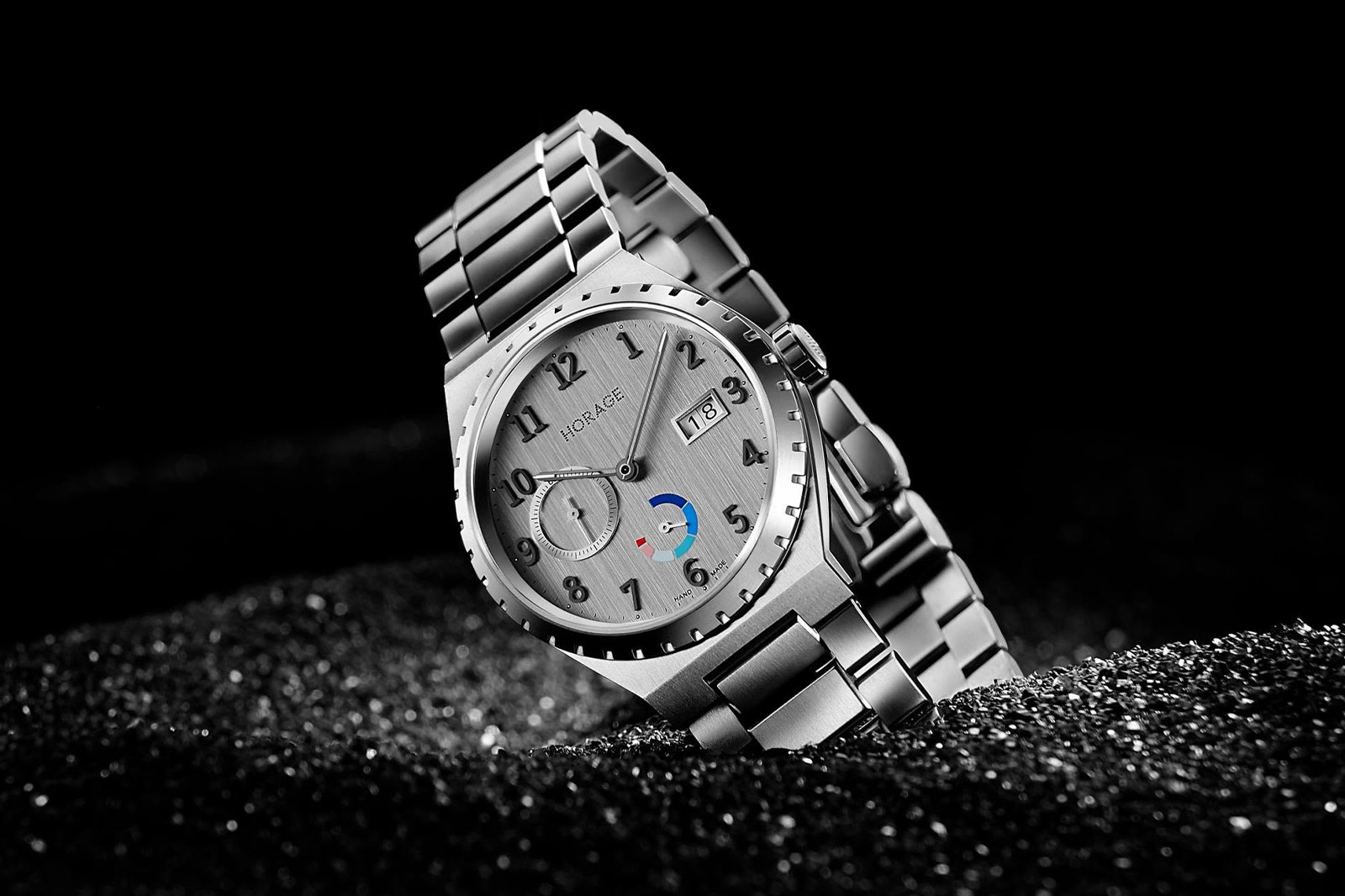
But while Horage’s line-up is full of one-off designs and ambitious combinations of complications, there’s one watch that highlights its approach to independent watchmaking better than any other. It also happens to be the closest thing it has to a continuous collection: the Autark.
If you happen to speak German, the name says it all. While it’s not a word that has a straight translation, it approximates to ‘self-sufficient’ or ‘self-sustaining’. In essence, it’s the idea that Horage doesn’t need to rely on other watchmakers distilled into a watch. And when it first launched in 2015, the reasoning behind the name was obvious. That’s because the Autark housed the Horage K1, the brand’s first in-house developed movement.
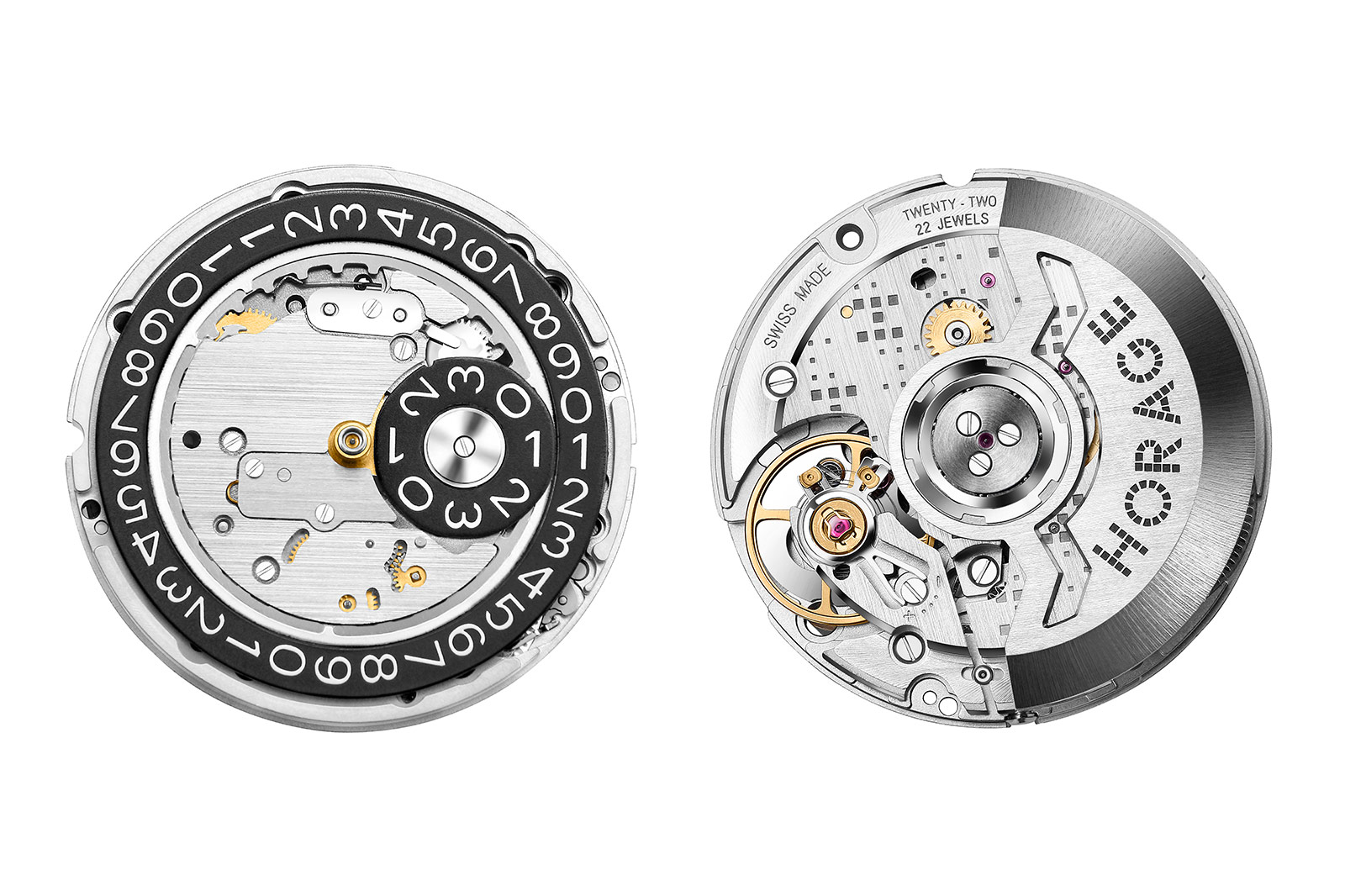
Movement development is the single most demanding aspect of modern watchmaking. It doesn’t just take expertise, it takes time and resources to design, prototype and eventually manufacture a movement in-house. Those demands have made the idea of developing in-house out of reach for most brands, hence the proliferation of third-party ETA, Sellita and Miyota movements, among others. Even for Horage, the K1 took nearly a decade of development to build; time that many watchmakers just don’t have.
It wasn’t just a flex either. At the time the K1 came out, supplies of third-party movements were dwindling. It became obvious that relying on external suppliers was risky. By bringing the main movement in-house, Horage became not just a better watchmaker, but a more self-sufficient one.
Not that the 2015 Autark was all about the movement of course. While it was leaning into the trend for integrated bracelet sports watches (which wasn’t quite as saturated a market as it is now), it did so in a defiantly individual way. Flat planes and an integrated bracelet, yes, but paired with a deeply notched bezel and an architectural profile view that pushed the brand’s engineers much further than necessary. And it was all in titanium.
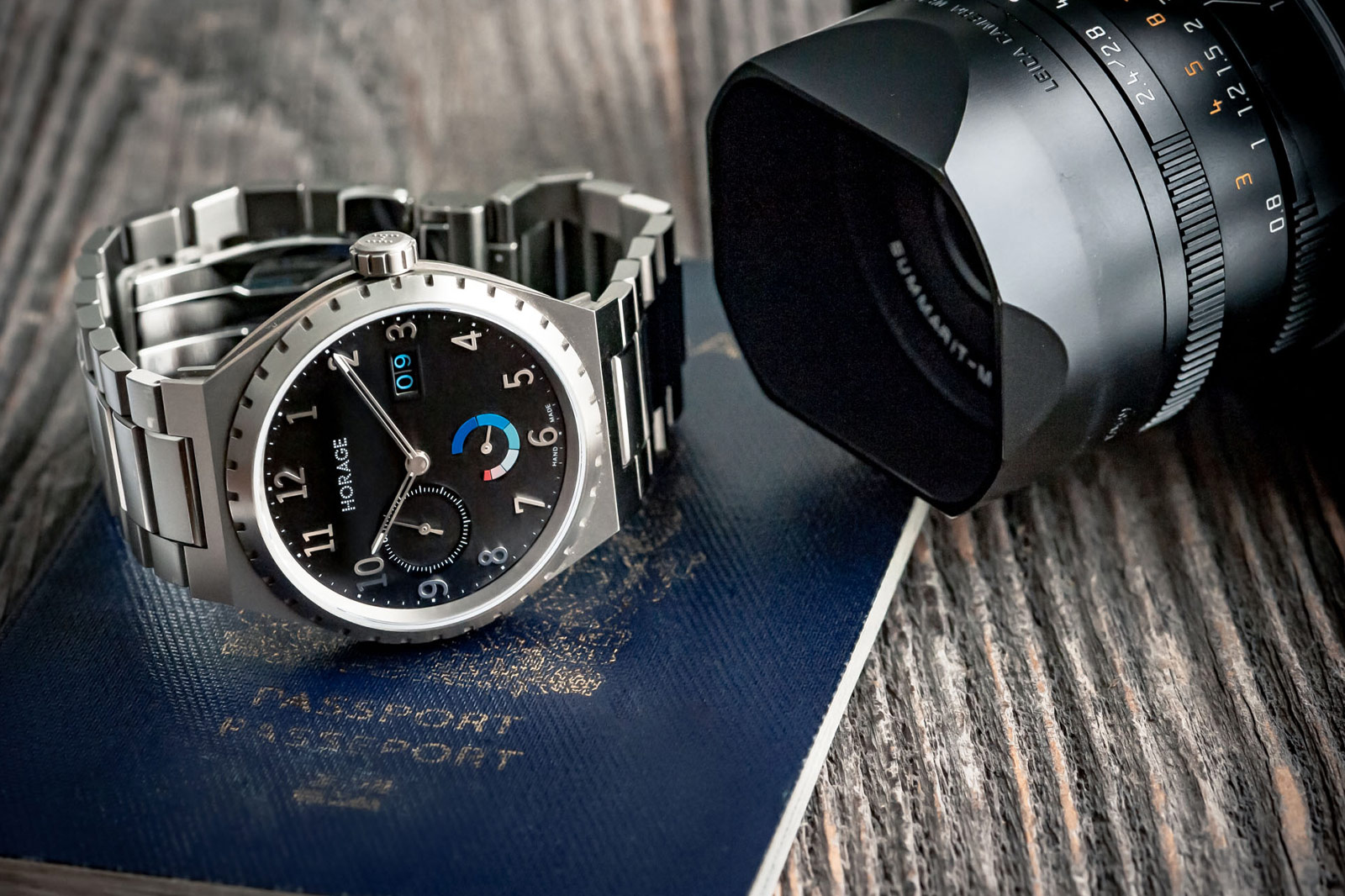
Titanium today is more common than ever, but in 2015 it was nowhere near as prevalent. It wasn’t exactly rare, but it was considered demanding to work with even at the Grade 2 Horage used, more like tantalum today. Brands that did use titanium did so simply and sparingly. Horage did not.
In 2019, the Autark returned in a 99-piece limited edition that didn’t look too dissimilar from its predecessor. It had a new smooth bezel and a vertically brushed dial, but not much else. But there were definitely changes. For one, Horage upgraded to Grade 5 titanium, harder and more difficult to work with than Grade 2, an indication of the brand’s growing expertise with the metal. More indicative of how Horage works however was the movement. Yes, it was still the K1, but it wasn’t the same K1.
Because Horage was in control of its own movement, it could continually improve it. Earlier Autark models became field tests, and every time a watch came in for servicing, Horage’s watchmakers found new ways to improve precision, up tolerances and fix weak spots. It’s also a feedback loop. If you take in an original Autark for repair today, you won’t get the movement simply put back the way it was; you’ll get the upgrades that have been introduced since. Could you imagine a group brand doing that?
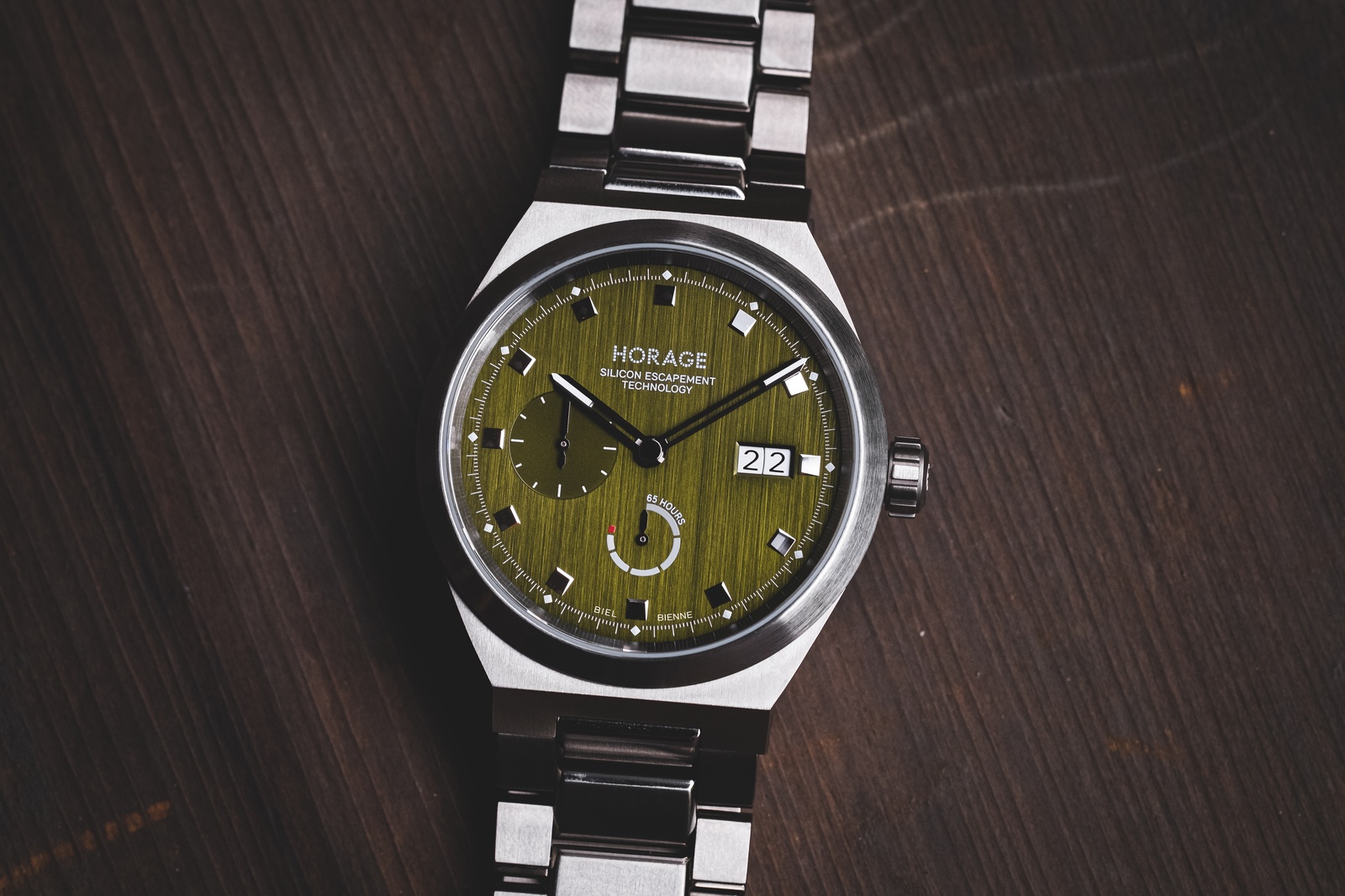

The next step in the Autark master plan was 2021, when the improvements in movement and material were brought into the core collection. A limited edition is a great indicator of potential, but the core collection shows that it’s more than a showpiece. And, of course, the K1 movement inside continued to improve, year on year.
The biggest change however was in 2024, when the Autark became the fitting home of Horage’s new K2 movement. This wasn’t just a movement imitating the overall architecture of an automatic movement à la ETA; this was a brand-new microrotor movement, ultra-slim at 3.6mm tall and with a 72-hour power reserve from a single mainspring. This wasn’t just a new movement or some exotic complication; this was something innovative coming from a small independent watchmaker that genuinely shifted the scales – and the Autark moved with them.
To show off the ultra-slim nature of the K2, the Autark also got thinner, shrinking from 10.05mm to just 8.8mm. This came with a complete redesign of the already tricky five-part case. Rather than building the mid-case out of three separate components, Horage instead reengineered it into a single monobloc piece, sealing the movement in with just the caseback and dial. This meant fewer gaskets, fewer seals, fewer potential points of failure – all while maintaining the Autark’s signature look.
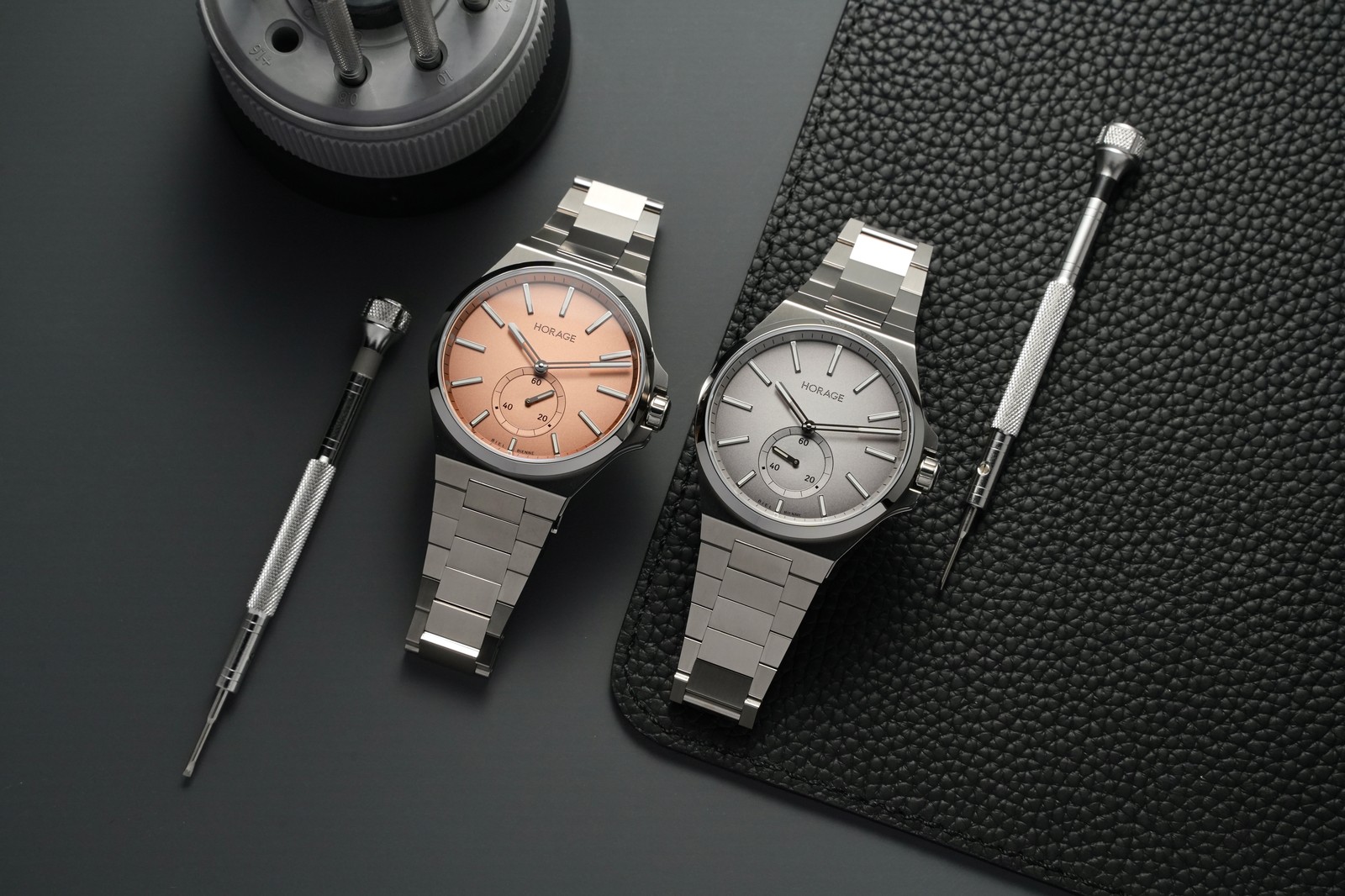
Almost as a sidenote, it came with a new in-house micro-adjustment titanium bracelet with up to 10mm of adjustment. This is something many watchmakers have adopted over the past couple of years, and while Horage wasn’t the first, they were early adopters.
That same year, Horage released the Autark its fans had been waiting for with a tourbillon. This wasn’t the same as its previous, headline-grabbing, accessible hand-wound version; this was an automatic, drawing on what it had learned with the ambitious Tourbillon 1 and combining it with the microrotor of the K2 – something that was quickly expanded on.
2025 saw what Horage consider a genuine first, the Autark Tourbillon GMT, the first microrotor-powered traveller GMT tourbillon. That’s admittedly a very niche record, but an impressive one all the same. It also came with a meteorite dial which tends to be much thicker than standard dials, yet it remained as slim as ever. And yet something was missing. It wasn’t quite the watch Horage had set out to build.
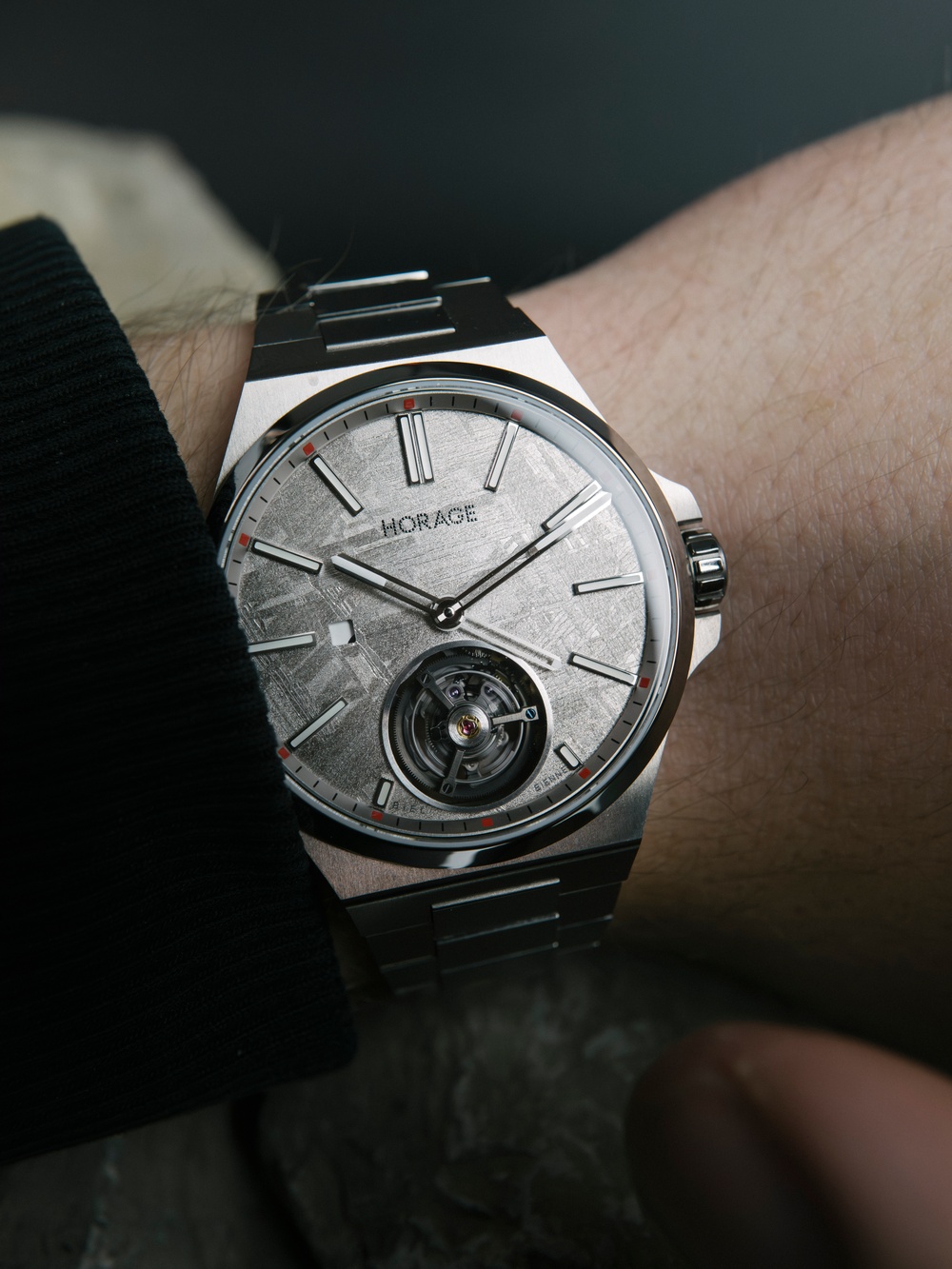
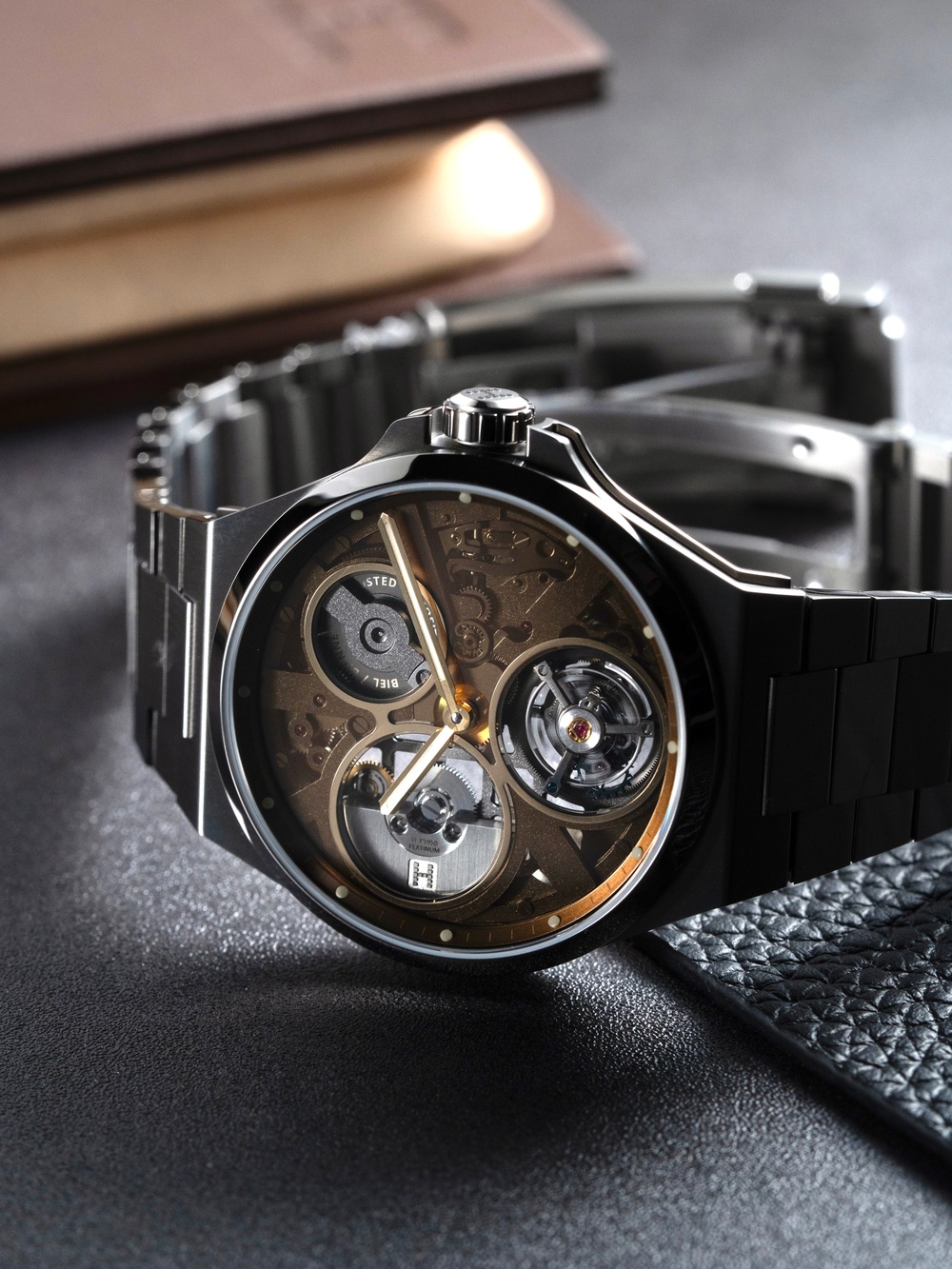
The original plan for the Autark Tourbillon was actually skeletonised and in reverse, allowing the wearer to see both microrotor and tourbillon cage on the dial side. This was too ambitious early on even for Horage, and needed to sit on the shelf until the time was right. Which brings us to the new Autark Tourbillon Bubbles.
This is the culmination not just of the Autark collection, but of Horage’s approach to watchmaking as a whole. Three separate circles highlight the three key elements of the watch, the mainspring at 1 o’clock, the microrotor at 10 o’clock and the tourbillon at 6 o’clock. It’s a bold move in a design that’s not for everyone, but one that turns the engineering behind an in-house movement into a key part of its design.
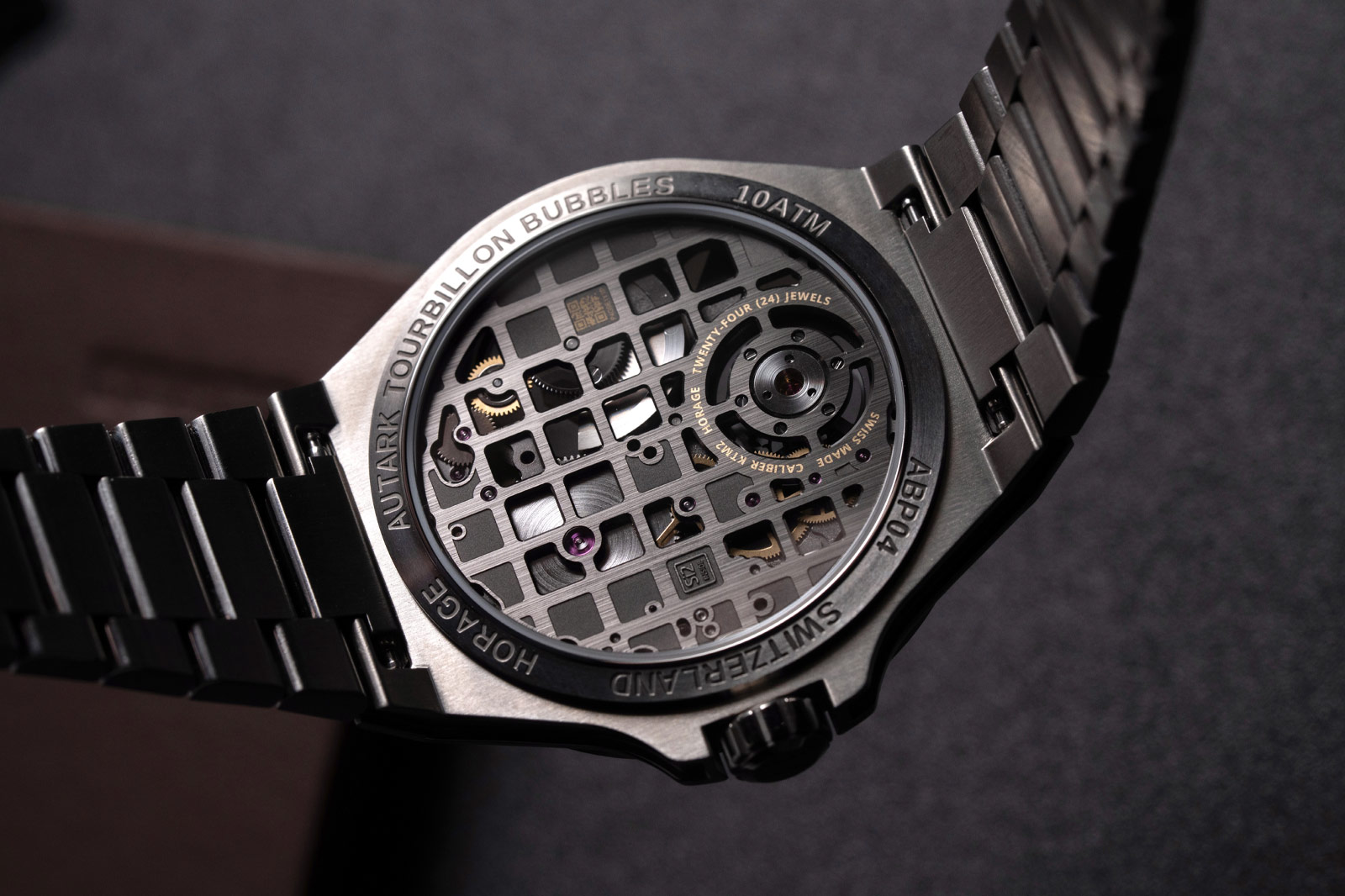
It’s still in Grade 5 titanium and it still has the Autark’s signature architecture. It’s still under 9mm high and has a 72-hour power reserve. It’s certainly not a watch for everyone, but it’s also a watch that couldn’t exist in the first place without Horage accepting that fact. After all, independence means being self-confident as well as self-sufficient. And while the Autark Tourbillon Bubbles is the culmination of the collection’s decade-long development, you can be sure there’s plenty more coming. The ultimate expression of self-sufficiency is perpetual motion – and there’s no stopping Horage.
More details at Horage.