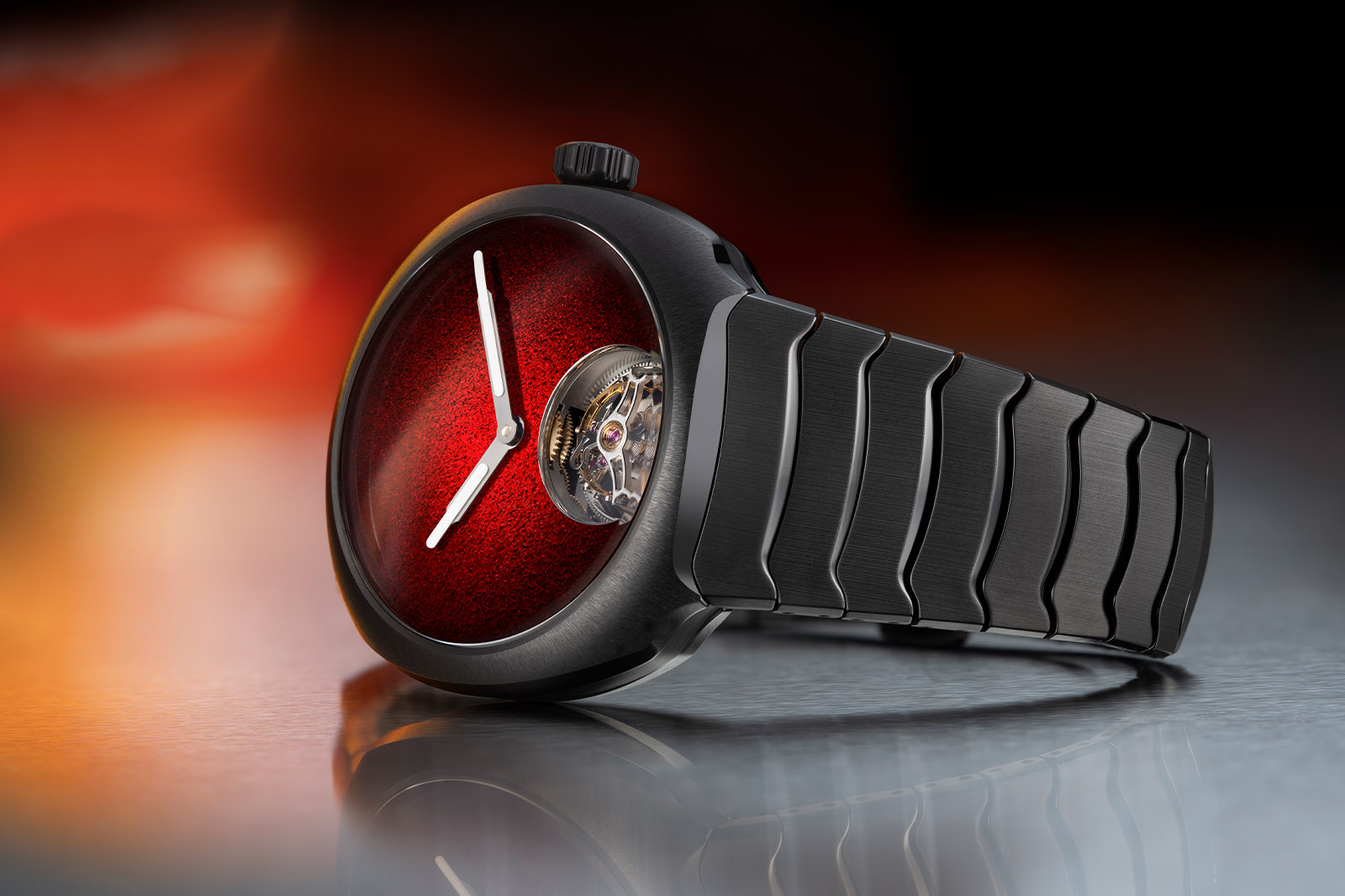
Given the wide variety of haute horological avenues H. Moser & Cie. have travelled down in their history, it’s quite surprising that they’ve never produced a ceramic wristwatch before. You’d think that one of the fundamental materials of modern high watchmaking would come before experimenting with niche techniques like 3D printed titanium, but evidently not. They’re making their ceramic debut with the new Streamliner Tourbillon Concept Ceramic.
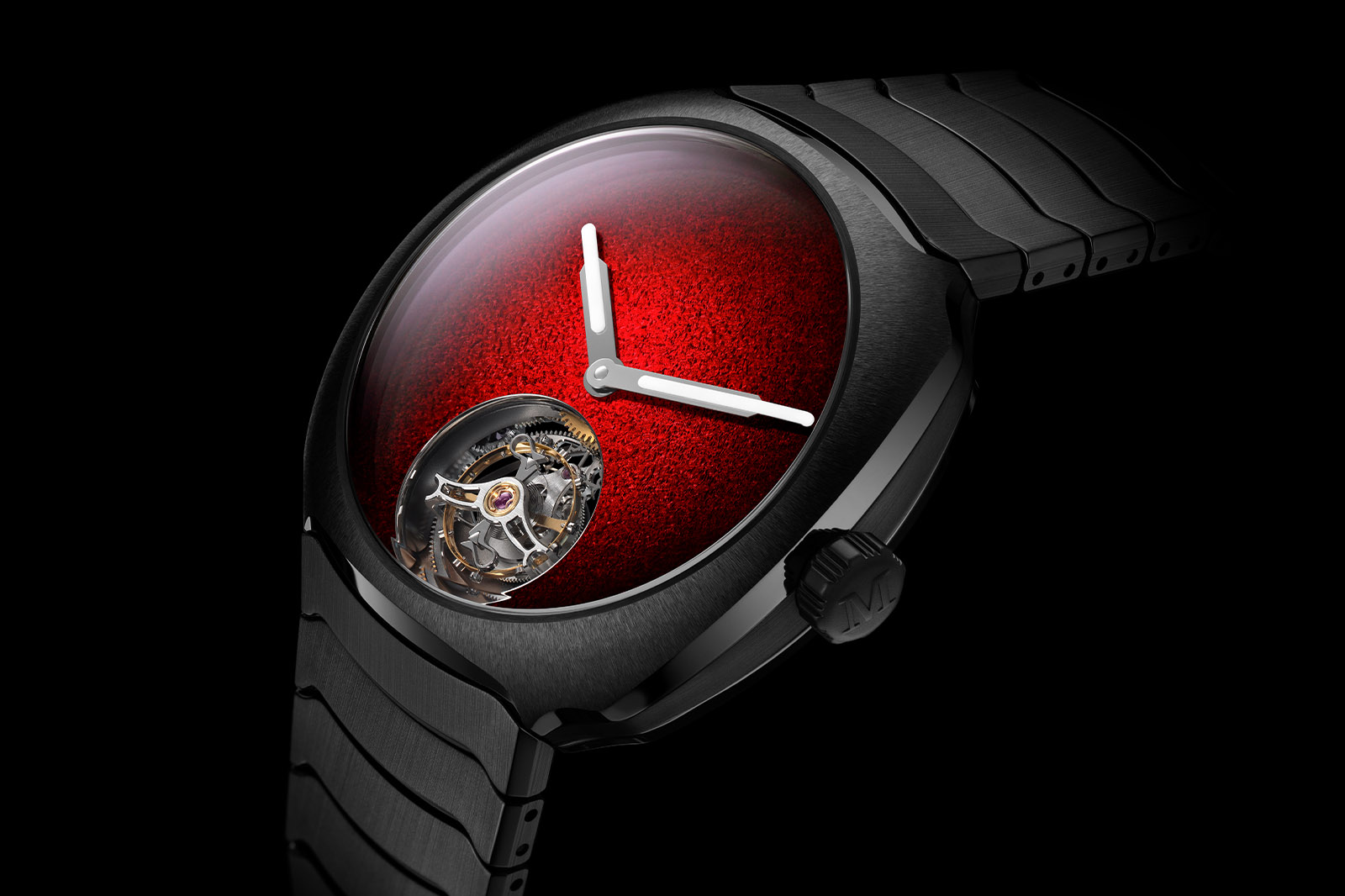
Getting right into it, the new ceramic case measures 40mm in diameter with the signature Streamliner cushion shape leading into an integrated bracelet that’s also in ceramic. It has a dark anthracite colour rather than full black, which leaves room for more visual nuance as the light plays across its surface to reveal the alternating brushed and polish finishing. The bracelet features vertical brushing with polished edges while the body of the cushion case is brushed with a radial grain.
Of course, one of the questions that you have to ask when buying a watch that’s available in multiple materials is what are the benefits and restrictions of each material? For example, steel is generally hard wearing and durable while also having lower prices due to availability, but is often quite heavy. Titanium offers a more lightweight option but can have issues with scratch resistance depending on the grade used. Gold has a higher lustre and corrosion resistance, as well as being prestigious due to its rarity although with a price to match. So how does ceramic stack up?
On the durability front, ceramic is one of the toughest materials in watchmaking. It’s practically impervious to scratches and in fact is more likely to shatter before it scratches in most cases. It’s also exceptionally stable, which means it is unaffected by atmospheric conditions, which in practical terms translates to the fact that it will never fade or alter its colour. On a collector focussed front, the fact that it’s not metal also makes it comfortable to wear as it isn’t cold to the touch in addition to being hypoallergenic. It’s also surprisingly lightweight despite looking dense. The trade-off for these great qualities is that it’s typically very expensive and produced in low quantities. It also lacks the lustre and luxury appeal of precious metal, often leaning in a sportier direction.

To contrast with the dark tone of the case, H. Moser have given the Streamliner Tourbillon Concept Ceramic an intense red dial made from Grand Feu enamel. Unlike ceramic, enamel is a material H. Moser are very familiar with. Here it has a rich colour and slight fumé gradient on a white gold base that was hammered before the enamel was applied in order to create the intricate texture you see across the surface. The intensity looks great, though the colour scheme feels familiar for some reason, as if I’ve seen it somewhere before….
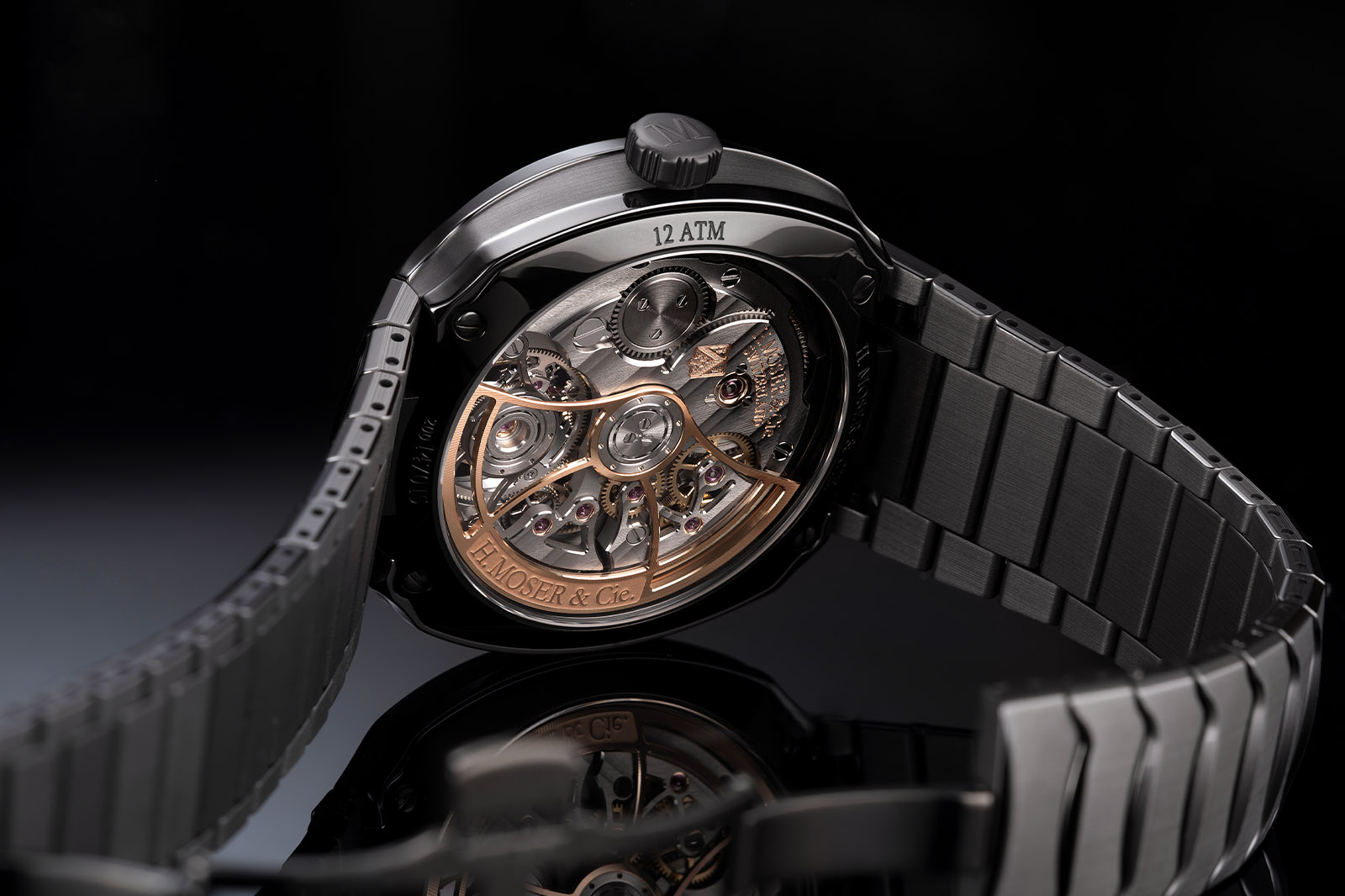
Powering the watch is the HMC 805 automatic tourbillon movement. It has a 72-hour power reserve provided by a skeleton rotor in red gold. The tourbillon is positioned at 6 o’clock, visible on the dial side where it rotates at a rate of once per minute, serving as the running seconds indicator. I say running seconds rather than small seconds because like the rest of the display, there aren’t any timing scales, so you do have to do the classic time estimation, which somewhat undermines the point of having a hyper accurate movement. That’s why this falls under the label ‘Concept’ as it’s more a proof of concept rather than a practical timekeeper.
The H. Moser & Cie. Streamliner Tourbillon Concept Ceramic is priced at £98,000 including tax. That seems an appropriate price given that the recent full gold bracelet edition of the Pierre Gasly Tourbillon is around £116,000. Now, a ceramic F1 collaboration watch, there’s an idea H. Moser should run with.
Price and Specs:
More details at H. Moser & Cie.