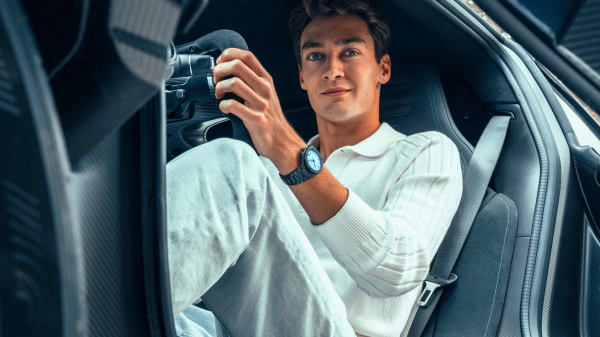
I’ll start by quoting Hodinkee alumni and one of my role models for (quite wordy) watch journalism, Jack Forster. He is one of the very few watch writers who admits to double-wristing watches with an Apple Watch. I’ll quote him from his latest Substack post, where he said: ”I haven’t stopped loving mechanical watches because of the Ultra, but facing up to the fact that I wear it on an almost daily basis is hard to do because it feels like I’m betraying the long, proud tradition of mechanical horology. Feelings are not facts, and the idea that somewhere, Hans Wilsdorf or Breguet are spinning in their graves every time I put on the Ultra is ridiculous; rationally, it’s all upside and no downside. Indeed, wearing an Ultra is a victimless crime if it is a crime at all; it’s been three years, and it works flawlessly day in and day out; it’s well designed, offers so much more functionality than any mechanical watch that there’s no contest.”
This says a lot for the positives of adopting this seemingly unnecessary fashion of doubling up on time-telling devices, while freely admitting that the mechanical watch is, in fact, quite unnecessary. But despite the skyrocketing popularity of smartwatches and fitness trackers, the fashion of double-wristing is not new.
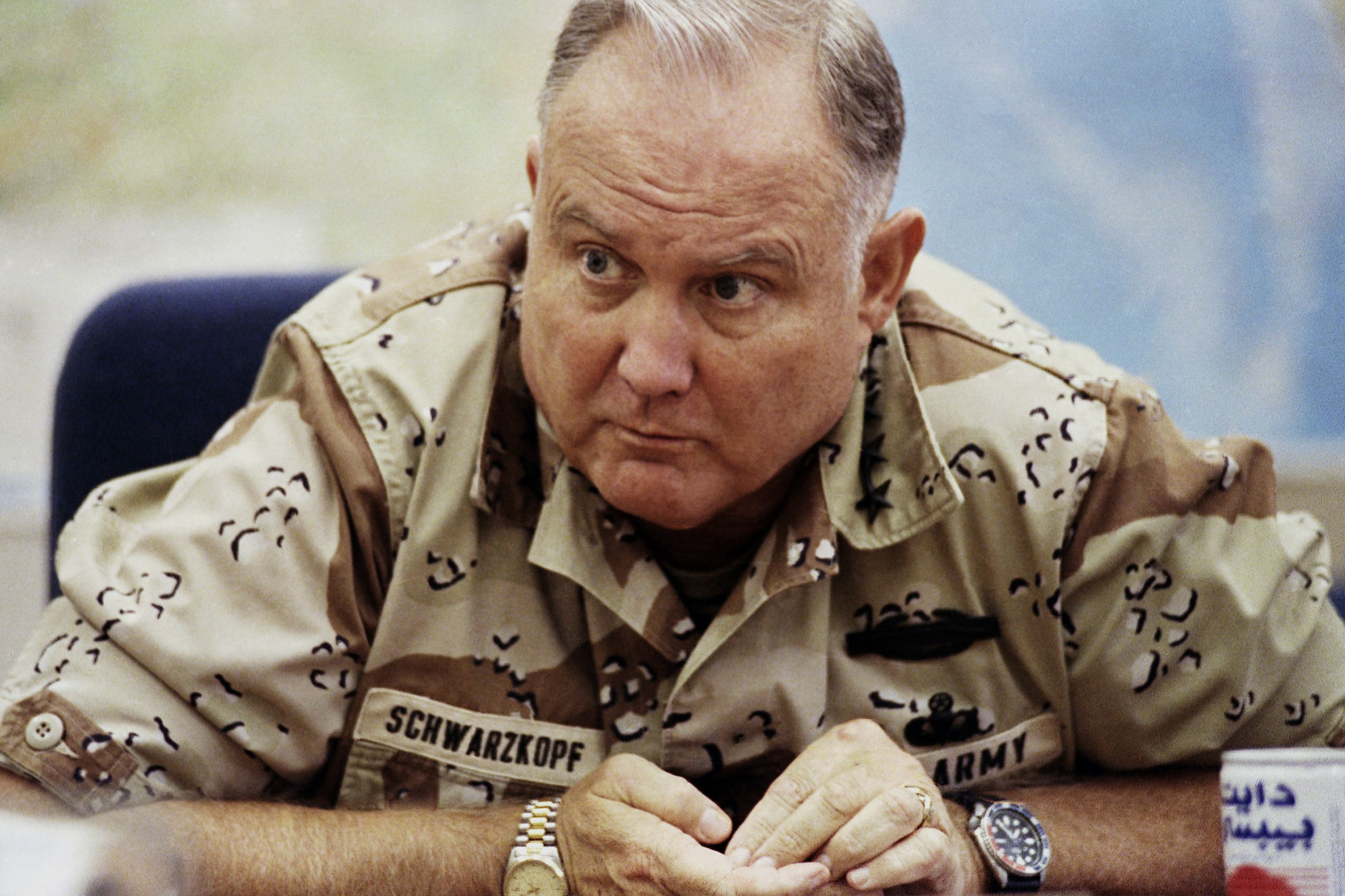
U.S. General Norman Stormin’ Schwarzkopf
Wearing two watches simultaneously, either one on each wrist or stacking both on one wrist (yes, really), is a trend rooted in function, sentiment, and showmanship. Its origins date back decades, driven by practical needs that shaped the fashion. Today, we often see a snug-fitting Apple Watch paired with a more personal mechanical watch, but let’s rewind to the last century and World War II. During conflicts, military figures began strapping timepieces to their wrists to track multiple time zones or synchronise manoeuvres efficiently. This was seen as late as the nineties, as U.S. General Norman “Stormin’” Schwarzkopf famously wore a Seiko on one wrist and a Rolex Day-Date on the other so he could track both Saudi Arabian time and D.C. time during the Gulf War.

Fidel Castro (far right)
Similarly, Fidel Castro was often seen wearing two Rolexes – sometimes layered on the same wrist – set to Havana and Moscow time. With today’s very different view on Rolex, we can all see the irony in the Communist leader’s choice. But back then, Rolex produced the best tool watches, reliable enough for a guerrilla leader who later outstayed his tenure, twin Rolex flex unrelated. The larger-than-life Diego Maradona, on the other hand, said he wore two watches for sentimental reasons (one was a gift) rather than just for practicality and double-wristing soon evolved into a style statement.
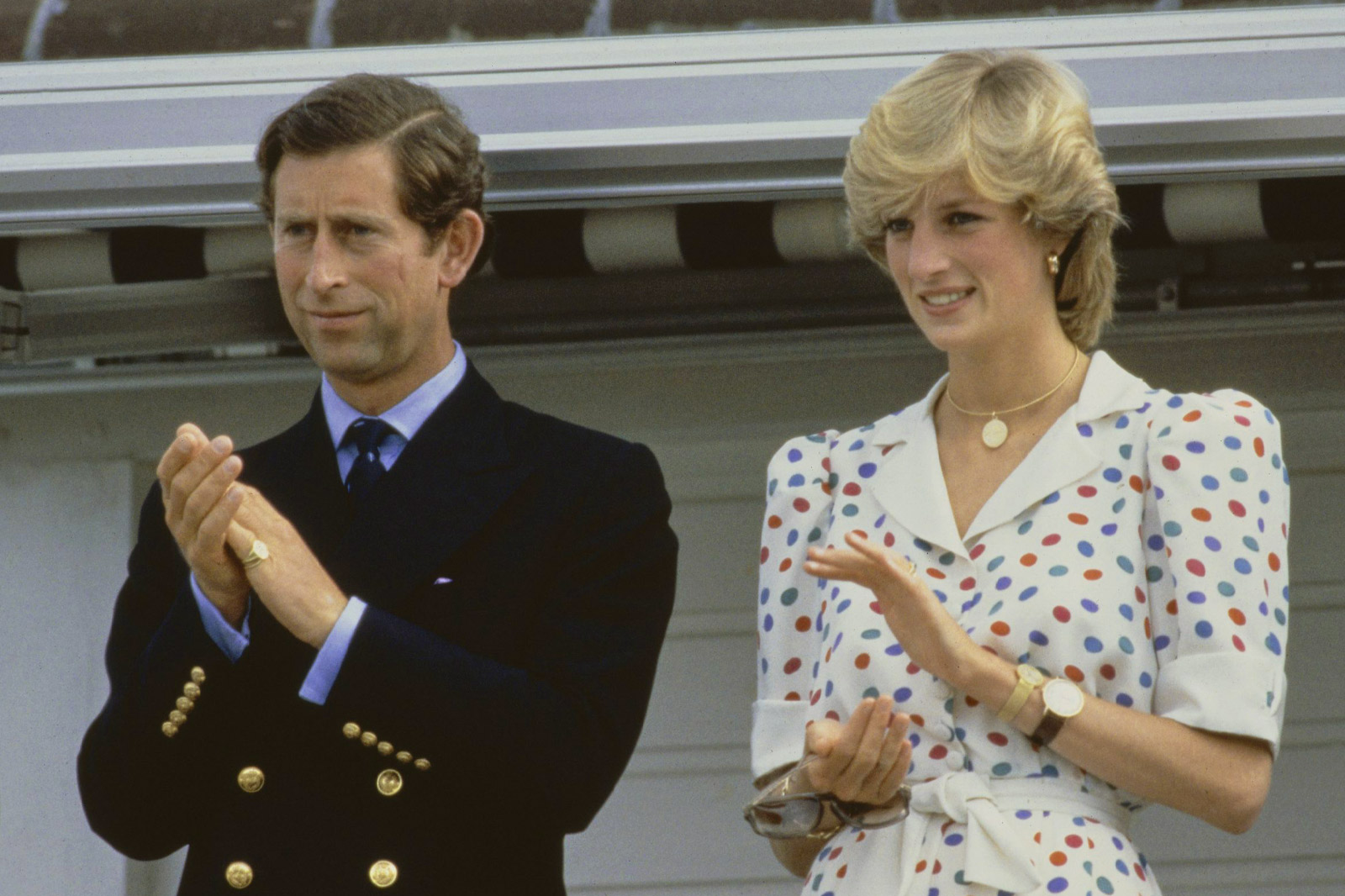
Princess Diana
High-profile figures like Princess Diana, Marlon Brando, Johnny Depp, Justin Bieber and Billie Eilish have all been known to double-wrist or stack their watches on one wrist. Some years ago at the BAFTA awards, actor Richard E. Grant appeared wearing a Cartier Santos on one wrist (set two hours ahead as a memorial to his father’s time zone) and a Breitling Navitimer on the other, blending utility with emotional storytelling.
But in this smartwatch era, double-wristing has found new life as a union of analogue charm and digital functionality. Prince William, for example, has been seen pairing his classic Omega Seamaster with a Garmin Forerunner, bridging tradition with a fitness flex. For some, double-wristing has transformed from a quirky habit into a practical, even fashionable, fusion of old and new. For many enthusiasts, the pairing of a mechanical watch with a smartwatch offers the best of both worlds, Swiss craftsmanship on one wrist jostling for attention with cutting-edge technology on the other.
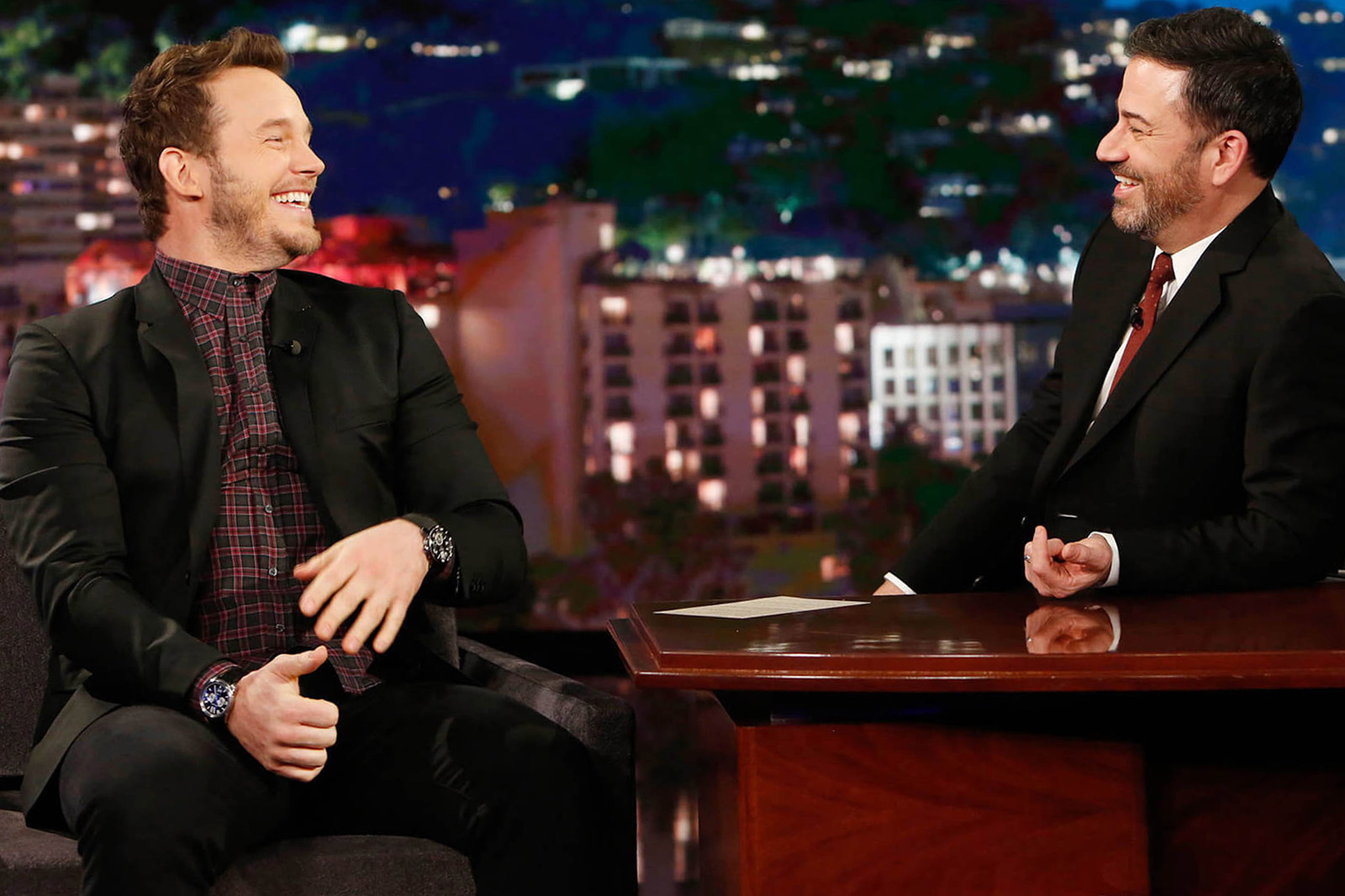
Chris Pratt
A mechanical or quartz timepiece, with its tactile weight, intricate design and sense of history, satisfies our appreciation for craftsmanship, artistry and permanence. Meanwhile, the smartwatch is a hub of notifications, fitness tracking, navigation, and voice assistance, a constantly updating tool. Wearing them together sidesteps the “either/or” choice, letting style and tech coexist without compromise.
Viewed by many as eccentric, the hybrid approach has still attracted high-profile adherents. Prince William’s Omega Seamaster paired with a Garmin sports watch signals both royal tradition and an active, data-driven lifestyle. Actor Chris Pratt has been spotted wearing a Rolex alongside an Apple Watch, projecting a look that is often framed as a nod to practicality without abandoning personality. But with the big emphasis on red carpet celeb watch spotting these days, a smart watch looks even worse with a tuxedo than a 45mm dive watch, so we’d leave it at home for the Oscars.
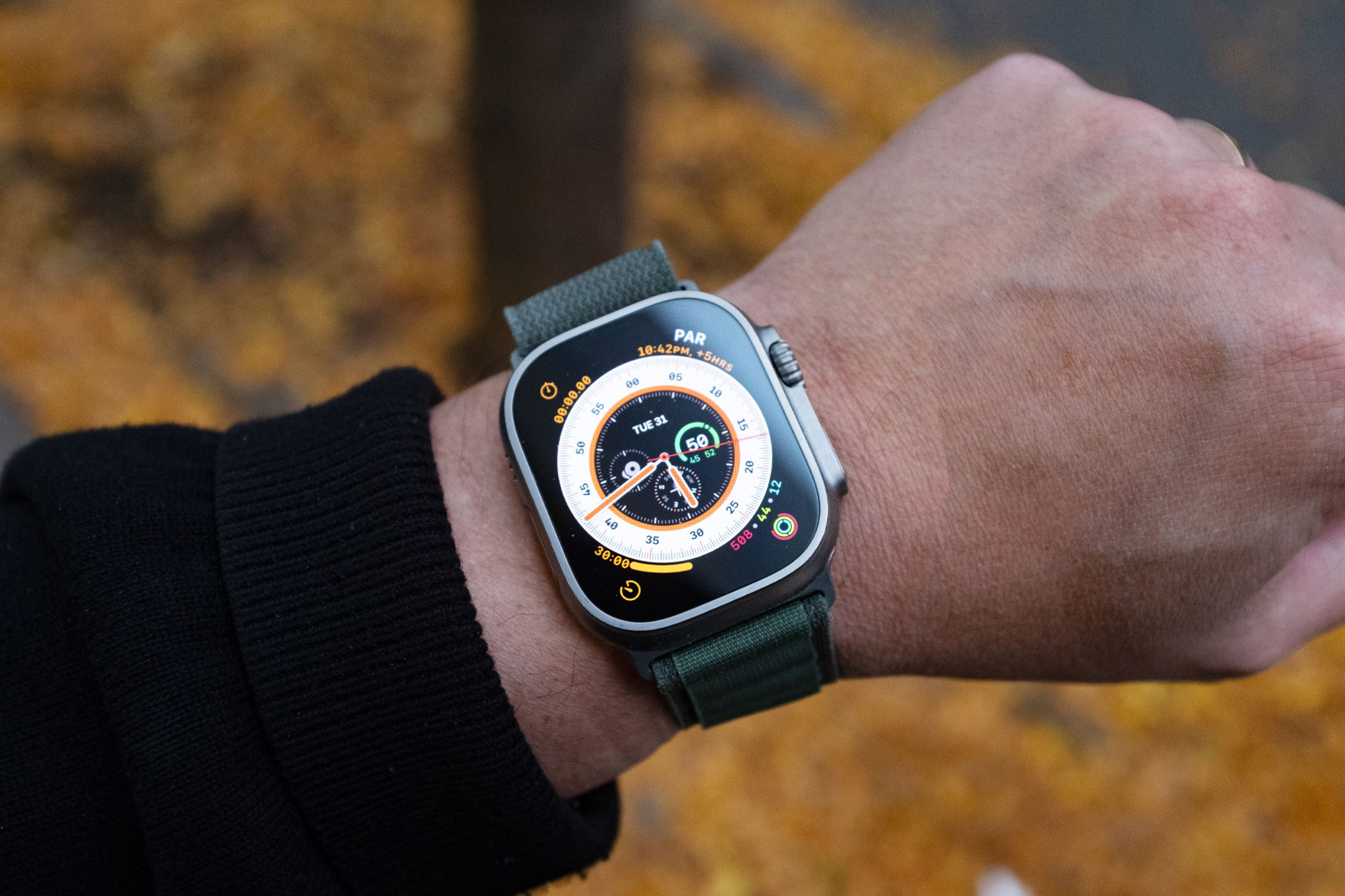
Apple Watch Ultra, image credit: Jack Forster
There is also a more grounded, immensely important reason for embracing the double, as tech-aware people get older or develop health issues. My mother rocks an Apple Watch on the right with a dainty two-tone Swiss watch on the left, and at 82, you might ask me why. Well, she has knee and nerve issues that can cause her legs to collapse. The Apple Watch’s Fall Detection feature is designed to sense when the wearer takes a hard tumble and, if needed, automatically summon help. And yes, she has seen it proven in action. This important feature is on by default for users over 55 but can be enabled manually at any age, giving the duality of double-wristing real purpose.

Apple Watch Fall Detection feature
So, as wearable tech becomes more accessible to everyone and our reliance on technology ever increases, the fashion of double-wristing is likely here to stay. That is, until technology evolves once again in who knows what direction. Perhaps virtual reality glasses that actually deliver on the promises made by Google more than a decade ago, or something more shocking, like implants. However, while the technologic side of the double-wrist will surely shift and change, the mechanical watch is a stalwart feature of men’s fashion. They’re already redundant but we love them all the same, and that love will keep them firmly on our wrists regardless of what else happens to be there.