When I think about H. Moser & Cie., the first watches that come to mind are their most outlandish and unusual creations that can’t fail to capture the imagination. Most recently that’s their collaboration with Reebok, but also the Passion Fruit and Perpetual Calendar for Dummies. However, their horological bread and butter is to actually simplify complications into their most essential forms as with the Endeavour Perpetual Calendar which fits an entire calendar’s worth of information on a dial with less markings on it than even the most minimalist Bauhaus creation. Their latest creation, the Endeavour Flyback Chronograph Dual Time Date, falls into that category.
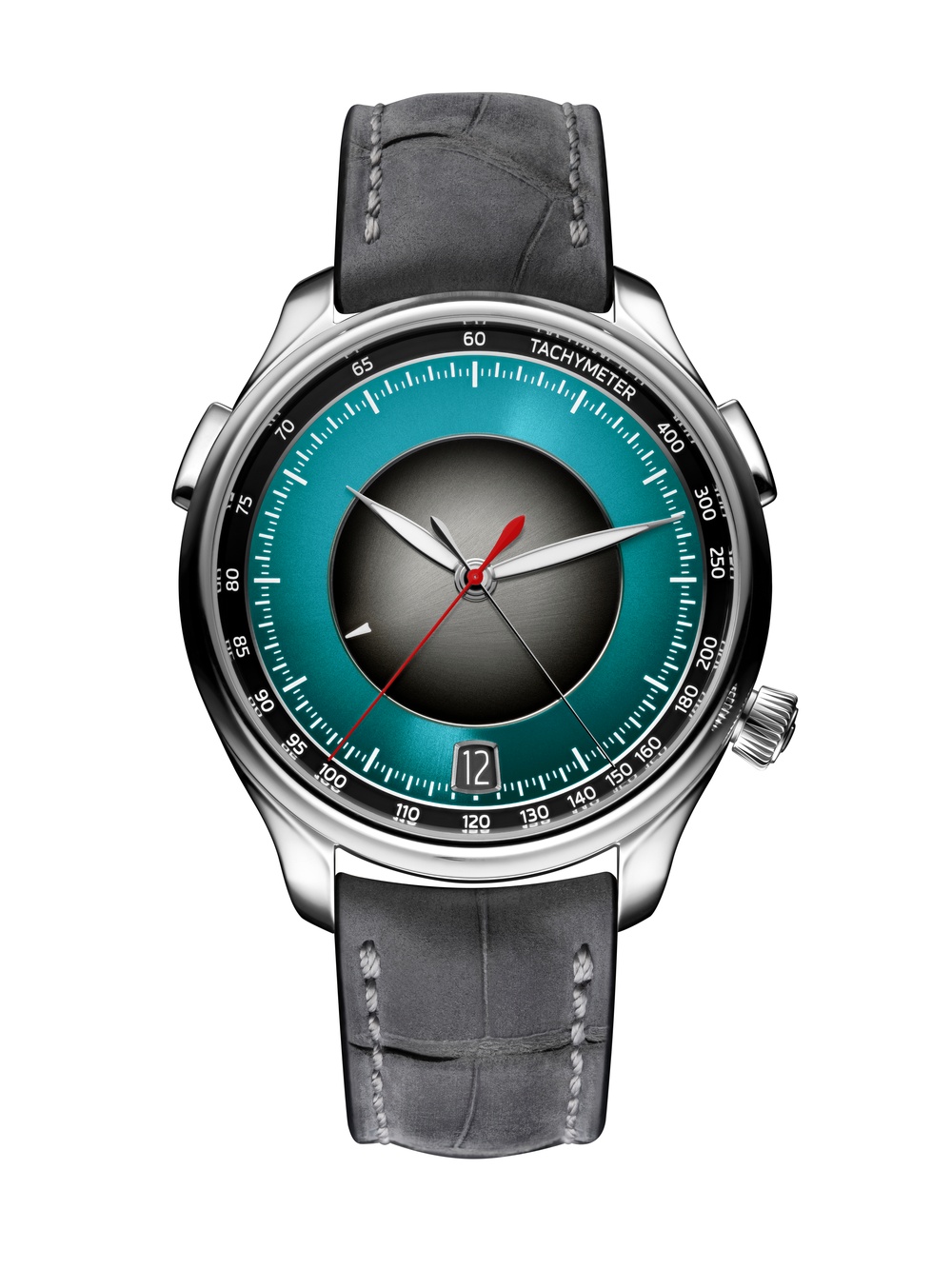
First, the display uses a new sector style design that hasn’t been used on the Endeavour before: there’s a central disk in fumé grey and then an encompassing ring in sunray brushed teal (also with a fumé gradient). This structure is more than just aesthetic though because the inner disk serves as the watch’s dual time complication, with a small white arrow indicating the hours for the second time zone. The turquoise ring houses the hour scale as well as the date at 6 o’clock.

For the chronograph function, they’ve opted for a central chronograph where the seconds and minutes are told via the central handstack. There’s a red hand for the seconds and a rhodium hand for the minutes. It eliminates the need for any subdials, keeping the sleek aesthetic of the dial and preserving the uniformity of the finishing. Lastly, there’s a tachymeter scale on the watch’s flange around the edge of the display, allowing you to calculate your speed.
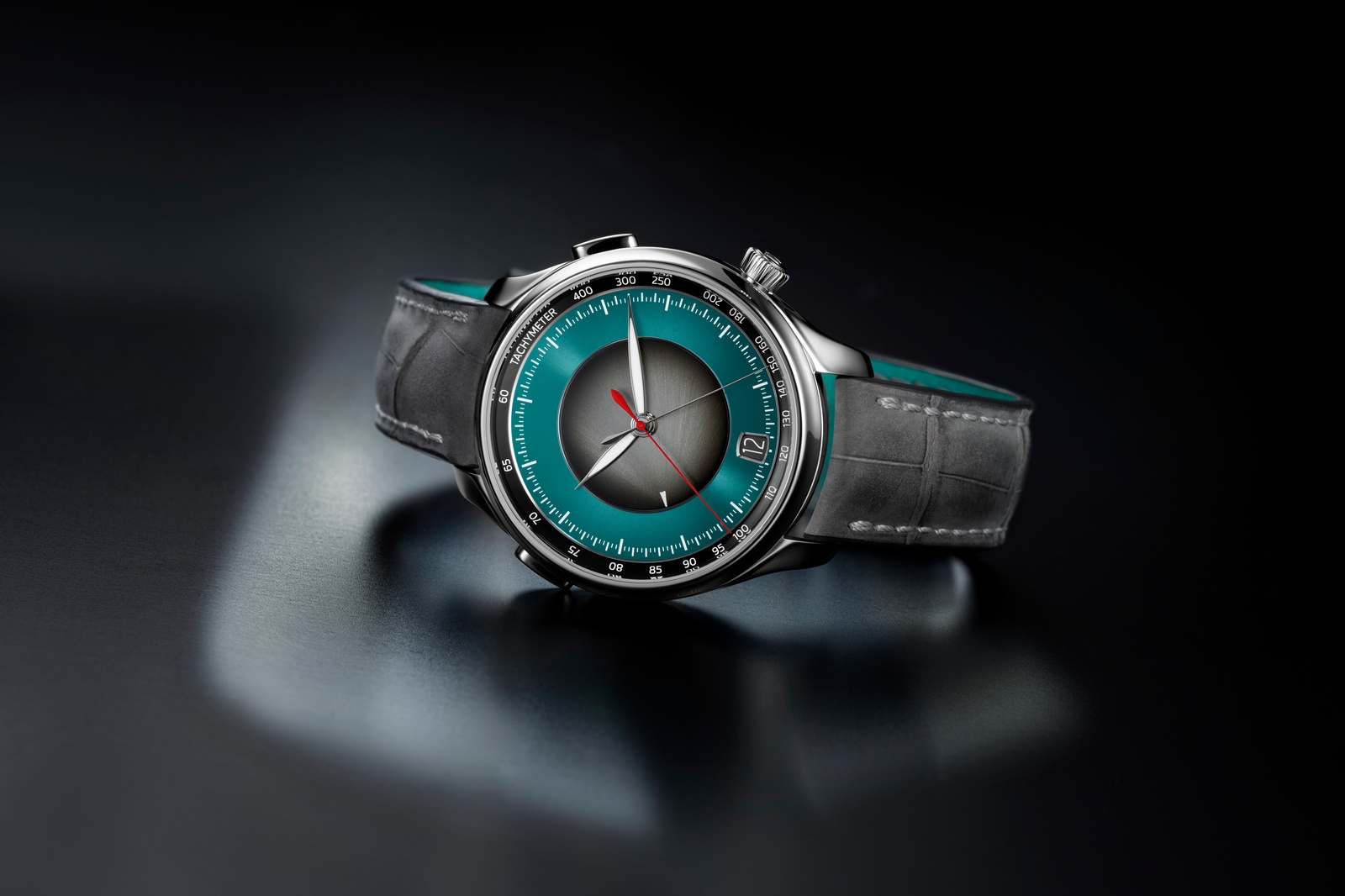
If you’re at all familiar with central chronographs, perhaps via brands like Singer Reimagined, then you’ll know that there is one movement manufacture that specialises in them above all others: Agenhor. Sure enough, look inside the H. Moser & Cie. Endeavour Flyback Chronograph Dual Time Date and you’ll see the touch of Agenhor here too. They helped develop the HMC 730 for H. Moser, which is based on the automatic HMC 902 movement but removes the rotor and automatic winding system to accommodate the dual time and date functions instead. The resulting calibre is manual-winding with a 72-hour power reserve. The flyback chrono uses a column wheel mechanism with horizontal clutch designed to reduce jerking when activating the chronograph.
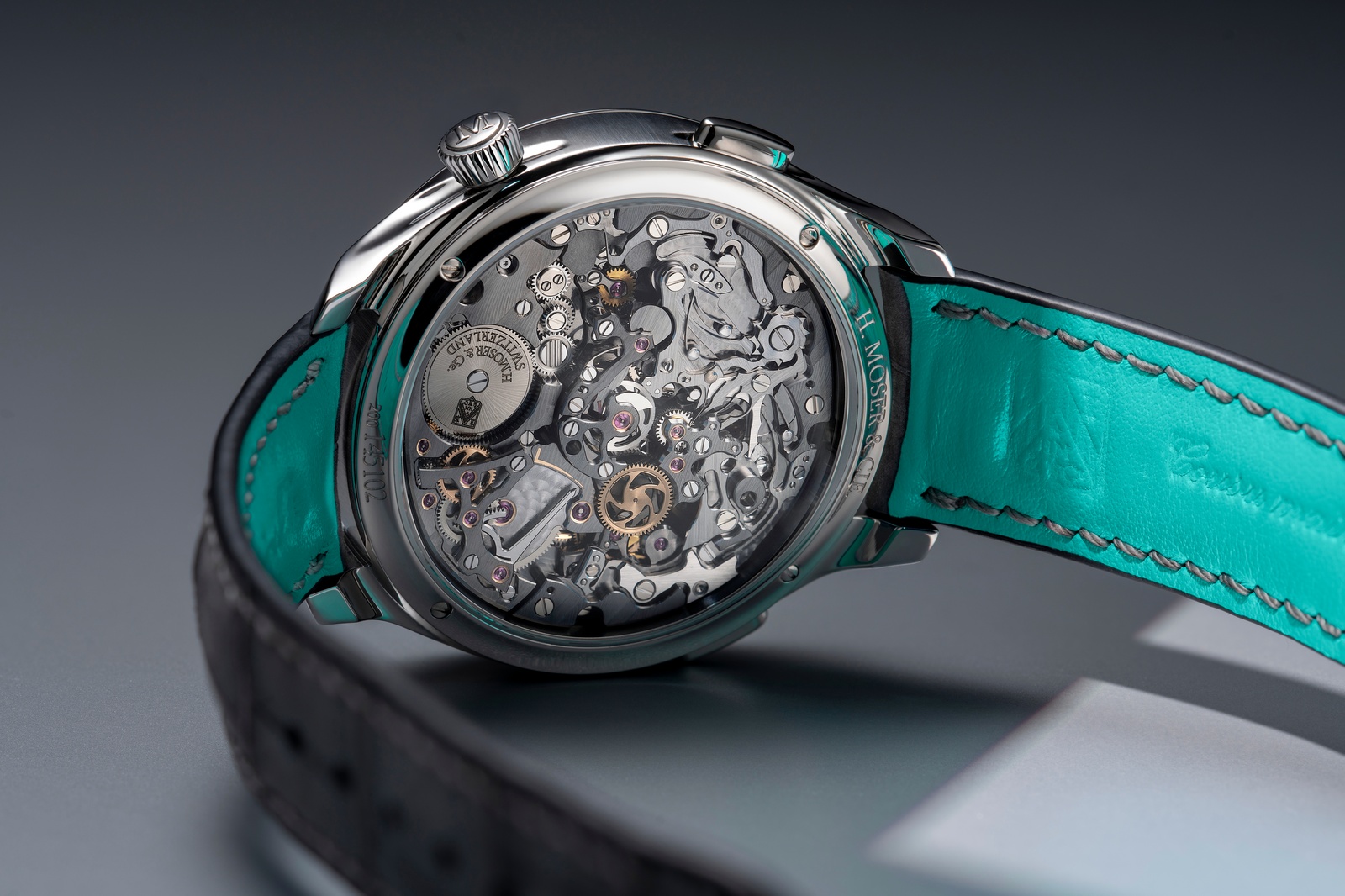
Housing the movement and dial is a 42mm steel case with a 4 o’clock crown and bullhead style chronograph pushers. That means the pushers are located at 10 and 2 o’clock, as if they were horns on a cow’s head. Although their smooth shape here stops them from looking particularly horn-like. The case then leads into equally smooth, curving lugs that attach to the grey, nubuck alligator leather strap. On the reverse side is an exhibition caseback that reveals the immaculate finishing of the movement.
For pricing, the H. Moser & Cie. Endeavour Flyback Chronograph Dual Time Date is £65,000 including VAT. That puts it at roughly £10k less than the Endeavour Skeleton Tourbillon and £40k more than the Endeavour Central Seconds. I think it’s easy to fall into the trap of saying that that price seems excessive for a chronograph because of how minimalist the display is – it looks simple. But a huge amount of work has been done under the surface to achieve that, and it thoroughly deserves to be regarded on the same level as any other piece of haute horology.
Price and Specs:
More details at H. Moser & Cie.