Eco-Drive is the terminology Citizen uses to describe quartz watches that use light absorbed through the dial to charge their batteries rather than the typical chemical batteries you need to replace on a standard quartz watch. The first Eco-Drive watch, though that term hadn’t been coined yet, was the 1976 Citizen Crystron Solar Cell, making 2026 the 50th anniversary of its launch. To celebrate this milestone, the Japanese brand has released the Citizen Eco-Drive Photon 50th Anniversary Innovation.
The case has a rounded octagonal shape leading into an integrated bracelet, like a slightly stretched out Hermes H08. It measures 39.6mm in diameter with a thickness of 9.9mm so it’s well sized for daily wear, being neither too bulky or too small. That’s especially true as it’s made from Citizen’s Super Titanium alloy, providing a good combination of being lightweight and strong, with extra scratch resistance from the Duratect coatings in either titanium grey or black with amber yellow across the two references in the series.
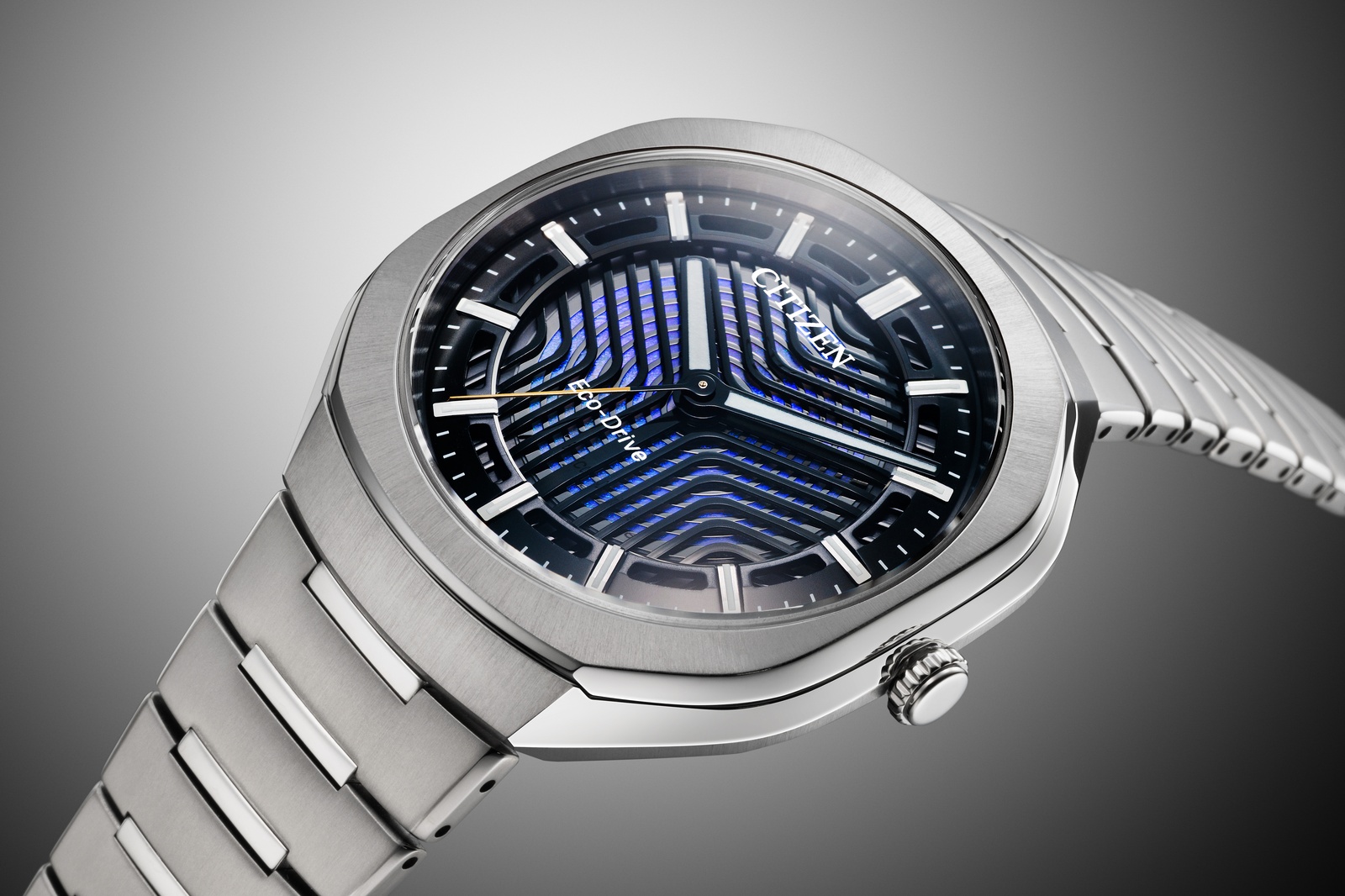
Where the Eco-Drive Photon truly comes to life though is the dial. It’s a multi-layer ode to how weird light truly is. You have your normal timing scales around the edge of the display but in the centre is a double layer of slits in a ripple style arrangement. This is a reference to the “double slit experiment”, a famous experiment where a beam of light, such as a laser, is pointed towards a sheet with two vertical slits and then detected again on the other side. To be honest I have just read a description of this experiment and barely understand it because it’s related to quantum mechanics and all sorts of fundamental ideas about the universe, but the long and short of it is that it proves that light behaves like waves and particles at the same time.
Beneath that double layer of slits is then a layer of colour structure film, which relates to a completely different light-based scientific concept. Colour structure is all about how the physical surface of a material can affect what light gets reflected off it regardless of the pigments of that surface. The basic example here is the iridescent spots on a peacock’s tail feathers, where the pigment of the feather is actually brown but because of the way the micro-textures of the feather reflect light, what we see is actually blue. With variance caused by the angle of viewing, hence the iridescence. Colour structure film is a man-made material that creates the same effect.
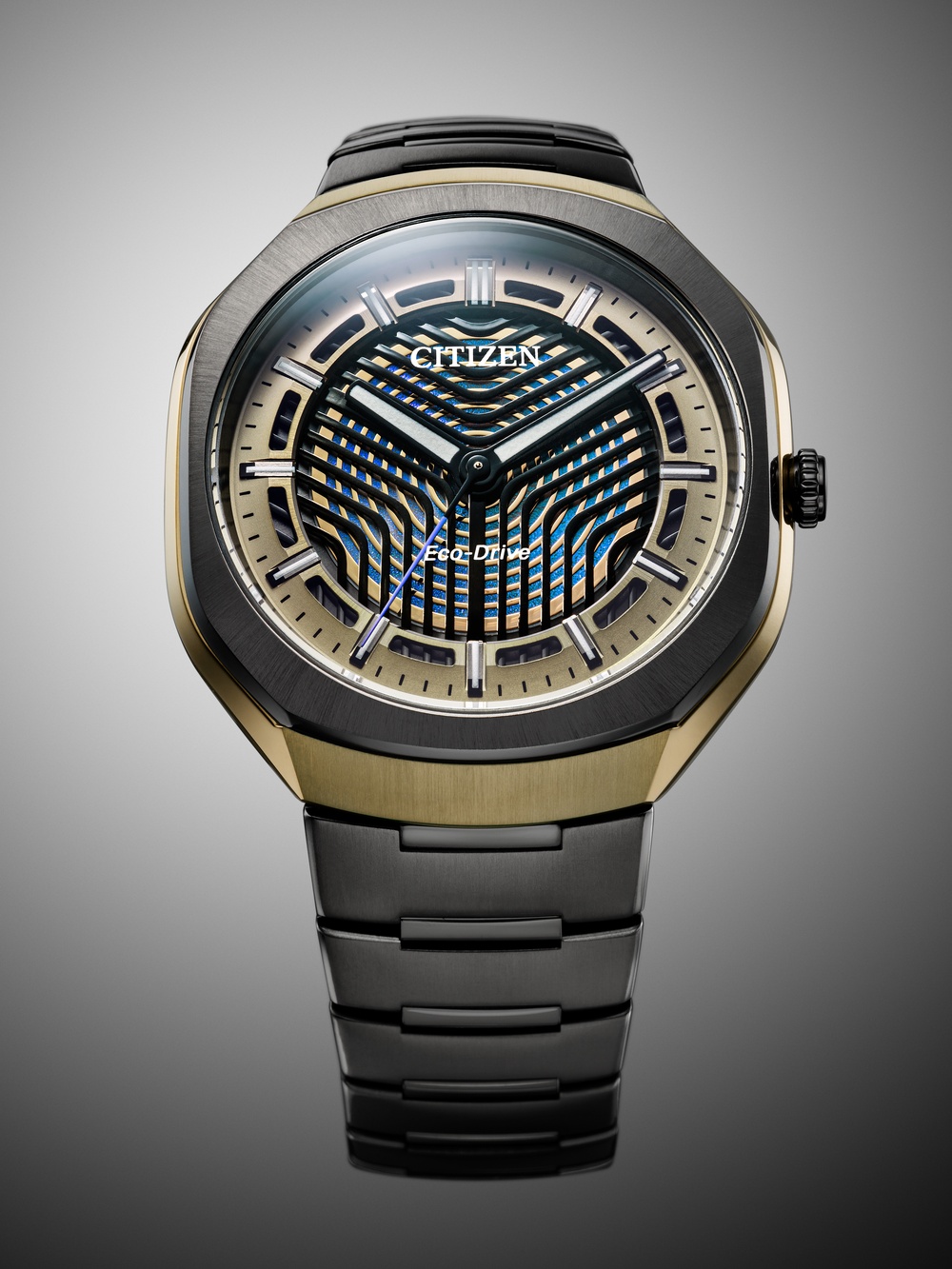
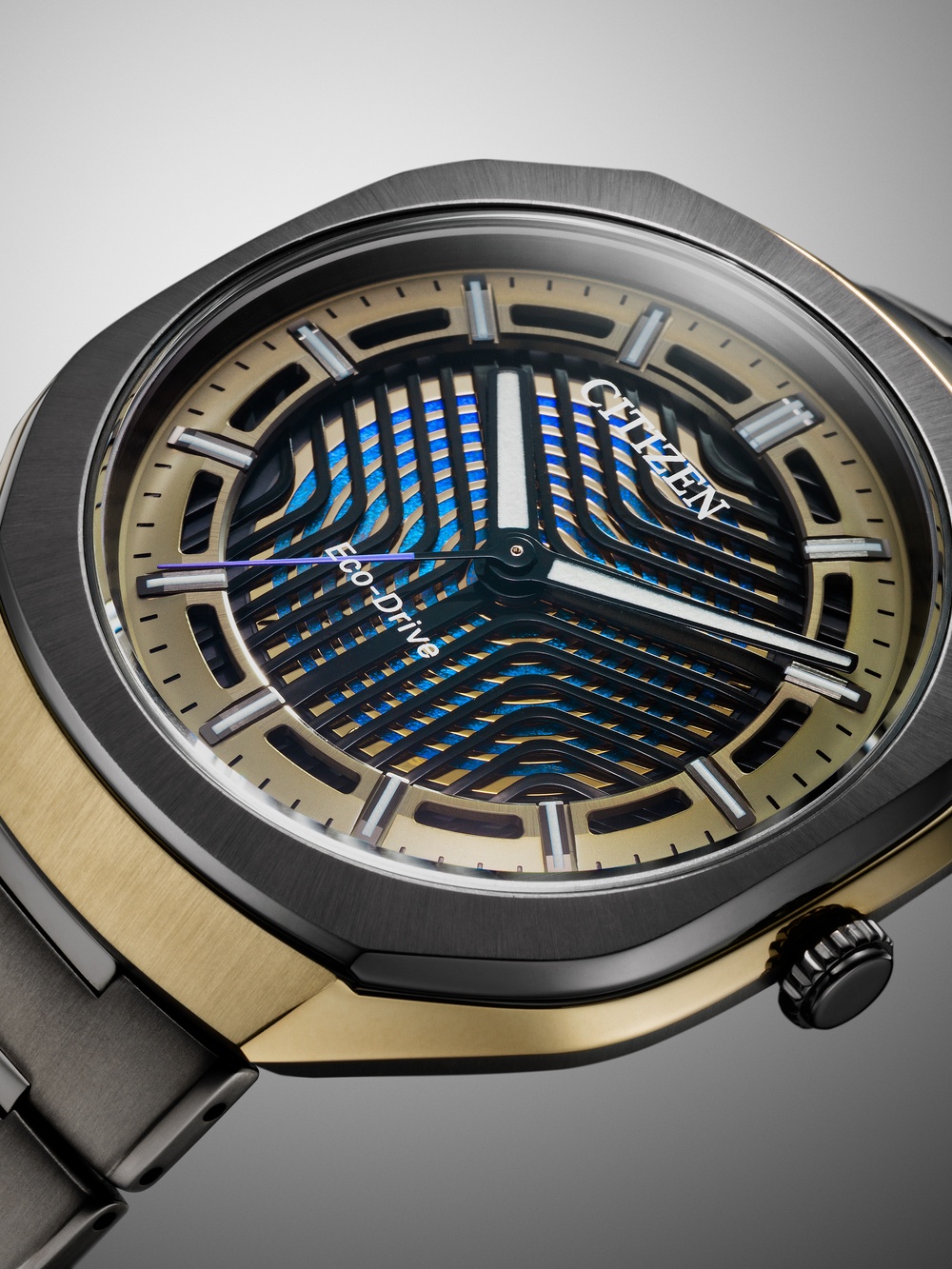
So the Eco-Drive Photon’s dial is essentially a science lesson in how light moves weirdly and gets reflected weirdly to create unexpected and constantly shifting colours. On top of that, some light actually passes all the way through the dial to charge the movement and power the watch. The movement used here is a new one, the calibre E036 (essentially a non-date version of the E365). With Eco-Drive you can’t really specify a power reserve because so long as it receives light, either natural or artificial, it will never stop running. Instead, the spec that people talk about is how long the watch can run for if it receives no light, shut away in a draw for example, and the E036 has a 365-day reserve in that context.
While a lot of privilege is given to mechanical watchmaking by collectors, innovation in watch design and manufacture across any horological discipline is cool to see. Plus, Eco-drive tends to lean towards the accessible, with the Photon priced at £749 for the grey-blue edition and £895 for the black-yellow edition. Both are limited to 5,000 watches each. If you want a science lesson on your wrist, here you go.
Price and Specs:
More details at Citizen.