As in the motoring world, wristwatches have their top trump specs to win that pub debate with your mates. The speed and horsepower, or kilowatts, in today’s EV-focused world, can be measured in hertz and hours. Zenith and Grand Seiko come out on top with the El Primero and Hi-beat movements spinning dizzyingly at 36,000vph, with power reserve indicators playing a vital role as your wristwear’s de facto fuel gauge.
A mechanical watch is powered by the centuries-old principle of a coiled, flat spring housed in a spring barrel for protection against dust and particles, with some featuring twin or triple barrels. The power reserve indicator shows how much energy remains in the mainspring before the watch needs rewinding. With the exponential progress of micro-engineering in watch movements, this varies from an everyday 38 hours to the astonishing record of Vacheron Constantin with a baffling 65 days.
The mainspring, coiled inside its barrel, stores energy when wound (manually or automatically), and as it unwinds, it releases energy to power the watch. A power reserve indication is made possible by fitting a gear connected to the mainspring barrel’s central arbour, which rotates as the spring unwinds. Some designs use a cam attached to the barrel, which moves a lever proportionally to the spring’s unwinding. This enables the display of remaining power, charge or fuel for your micro-mechanical engine. This gear meshes with an intermediate reduction gear train that scales down the rotation to match the power reserve display, which can take on many forms. Watchmakers and designers choose to display this within the watch’s dial, or keep it exclusive to the owner by displaying it on the movement side.

The power reserve mechanism in a mechanical watch is a fascinating interplay of gears, levers, and springs that translates the remaining tension in the mainspring into a visual indicator. The scaled-down motion usually moves a pointer across a graduated, arced scale, often marked in hours, that points to the maximum reserve when fully wound. As power depletes, it gradually drops toward zero, reminding you to wind or wear the watch to keep it wound and on time. In self-winding, or automatic movements, the power reserve must account for bidirectional winding, requiring a differential gear to avoid erratic readings.
There are many iterations of power reserve mechanisms, including Rolex and Patek Philippe, with a reversing mechanism that ensures the power reserve only decreases when the watch is not worn. Another variant is IWC’s Pellaton winding system, which uses a cam-and-lever setup to translate bidirectional rotor motion into a linear power reserve display. This useful complication is the fuel gauge of watch movements and draws many parallels to internal combustion and electrical engines, albeit on a much smaller scale. Let’s look at some creative examples.
Double Power Reserve Indicator: Jaeger-LeCoultre Duomètre

The Jaeger-LeCoultre Duomètre has two separate barrels, each with an individual indicator, flamboyantly displaying its total power reserve. The Chronograph Moon ref. Q622656J is a 42.5mm multi-hyphenate with one of today’s most desirable salmon dials. JLC’s high horology pieces are hand-crafted and limited, and the Duomètre vies for attention with high complications from the likes of Vacheron Constantin. The platinum case houses the Calibre 391, a manual-winding movement with twin barrels, two gear trains and an intricate dial.
The twin power reserves are shown in two crescent-shaped openings at four and seven o’clock, on a dial with a lot to unpack. The Côtes de Genève–sun ray snailed movement includes a chronograph, moon phase at two o’clock, and hour-minute and day/night indicator at nine o’clock. Despite the wealth of information, the dial is well-read and balanced, with a blued central seconds hand sweeping the dial, and seconde foudroyante (emblematic of the collection) at six o’clock.
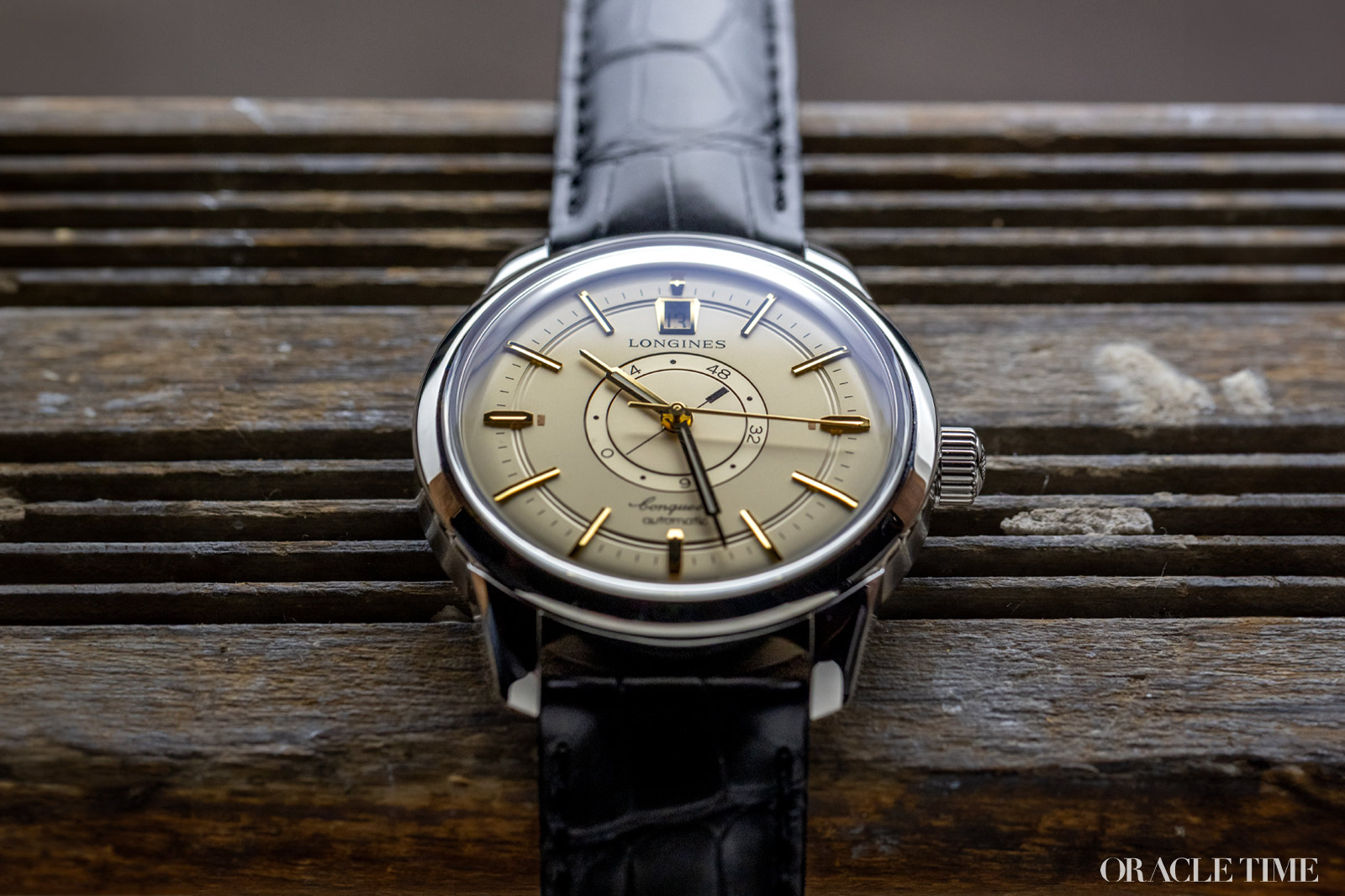
Central Power Reserve Indicator: Longines Conquest Heritage Central Power Reserve

This Longines displays a most unusual power reserve and was a surprising release from the Swiss brand last year. Longines has had a strong success with the retro-modern Spirit, but the Heritage line remains a curated choice with a suave but restrained collection. That’s why we were delighted to see this complex twist on a power reserve, unusually centralised. With an elegant cream dial accentuated with applied details, its innovative looks were inspired by a 1959 Longines Conquest model with a set of rotating central discs for the useful complication. This perfectly sized 38mm model has a miniature paddle-shaped pointer printed on the central rotating disc, keeping a check on the strong 64-hour reserve of the in-house L896.5 movement.
Standard Power Reserve Indicator: Grand Seiko Spring Drive

Grand Seiko has long since transcended its insider status, with boutiques in Paris and Madison Avenue spreading the word on timeless Japanese design. The brand’s sports watches have an elegant vibe, and the innovative Spring Drive series is easily recognised by its prominent power reserve. With a timeless broad-shouldered 44GS case, the dial of the SBGA497 boasts a power reserve in pride of place at 7:30. The recessed crescent-shape might seem oddly distracting on such a vibrant, open dial, but together with the seamless sweep of the blued seconds hand it only accentuates the snow-like surface of Grand Seiko’s dial art.
Skeleton Power Reserve Indicator: Orient Star M34 Skeleton
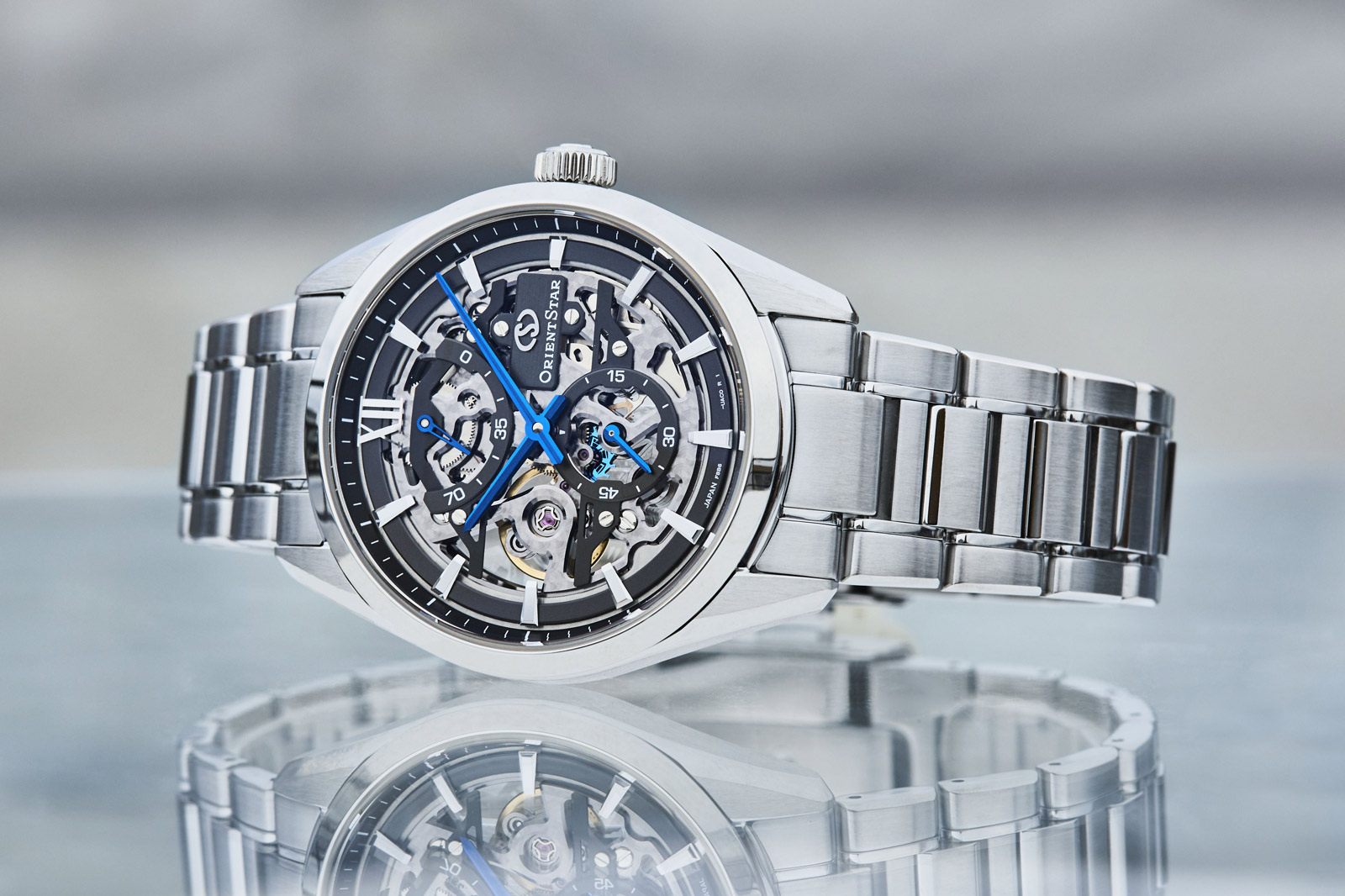
Striking power reserves are not exclusive to big budget wristwear, and cult brand Orient’s premium Orient Star line has the complication as a recognising feature. With value-driven in-house tech, the brand is making inroads on the collector scene with modern designs like the M34 Skeleton. This is an accessible entry ticket to skeletonised chic, and comes in a svelte 10.8mm case with a short-lugged 39mm diameter. It has a monochrome dial with dark grey contrasting perlage-finished bridgework in the skeletonised movement below, and a 70-hour power reserve paired with a single Roman numeral at 12. A large, small seconds aperture at six, affixed with wing-shaped bridges, completes an intricate open-worked design with blued hands, making for a refined take on the everyday sports watch.
Avante Garde Power Reserve Indicator: Greubel Forsey Art Piece Edition 2

No one will accuse Greubel Forsey of understatement, even with this year’s restrained Nano Foudroyante EWT. But this is exactly why their creations stand out and will continue to knock us for six under new CEO, former marketing director, Michel Nydegger. The brand has flaunted inventive power reserves within their multi-layered dials before, but none more flamboyant than the 2017 Art Piece Edition 2. Within the bright blue dial, time itself is shown through a quadrant of a circular, engraved circle at 5:30, while the power reserve display takes up more space than the inclined 30-degree tourbillon—in fact, almost half the dial. With its practically cartoon-like text and massive presence, this Greubel Forsey is the biggest celebration of the power reserve ever created.
Split Power Reserve Indicator: Breva Segreto di Lario

While on first appearance the twin hands of the Breva Segreto di Lario Retrograde Power Reserve watch’s power reserve indicator make it look similar to the double power reserve indicator above, it operates in a fundamentally different way. Instead of each hand referring to the reserve of an individual power barrel, they both display the reserve of the same barrel. However, the hand on the left shows the first 6 days of power reserve, graduated by days, while the indicator on the right then displays the power reserve of the final 7th day, graduated by hours. Essentially giving you greater insight into that final day of operation when it needs winding again.
Band Power Reserve Indicator: Ulysse Nardin Blast Free Wheel Maillechort
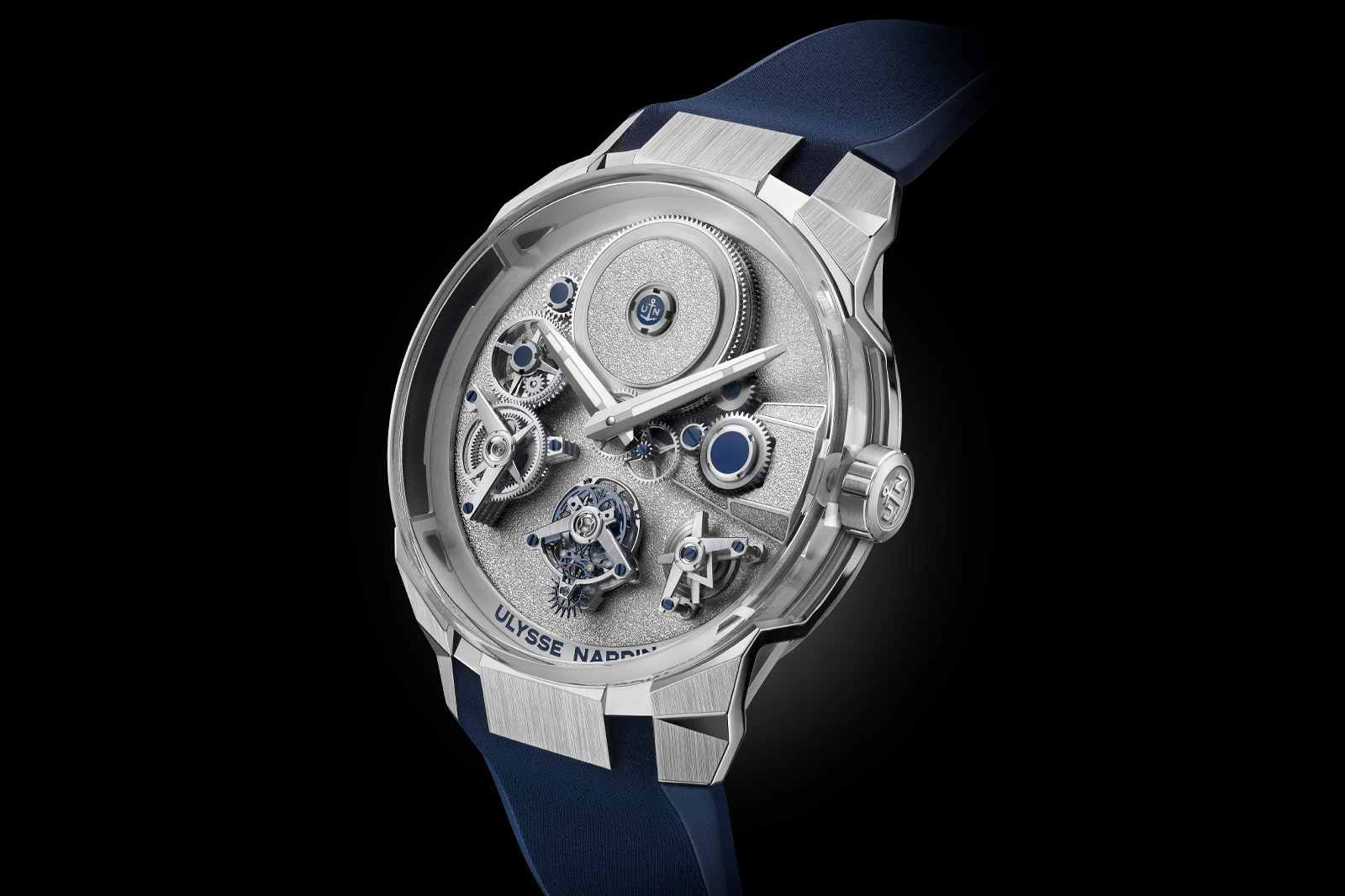
The Ulysse Nardin Blast Free Wheel Maillechort uses an unusual power reserve indicator. Instead of having a hand that moves along a scale, it uses a fixed hand with a rotating disc. The disc is decorated with three bands on it, when all three bands are showing the reserve is full, two bands indicates some of the power has been used and a single band means the reserve is almost empty. It’s admittedly less accurate or specific than a properly graduated scale but at the same time it look much better alongside the futuristic aesthetic of the Blast Free Wheel.

![Ulysse Nardin Introduce Freak [One Blue Enamel] and Freak [One Guilloché] for 25th Anniversary](https://oracleoftime.com/wp-content/uploads/2026/09/Ulysse-Nardin-Freak-ONE-Featured-600x337.jpg)
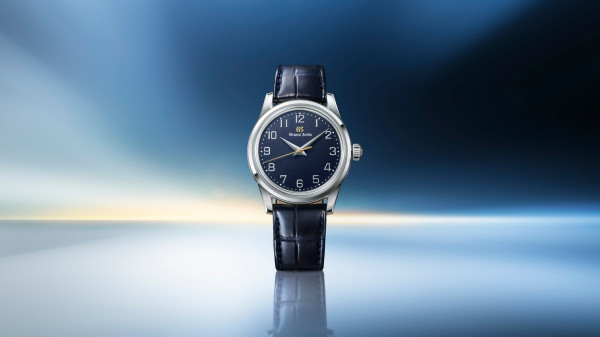

What is the point indeed. My GS spring drive power reserve rarely moves far from the full position. And even if left for a couple of days, the accuracy of a spring drive quartz remains consistently accurate regardless of the main spring state. I love the watch, the finishing, the concept, the value, the fact it isn’t a Rolex, but I often look at the power reserve meter and think, what is the point?
As always, a great review from Thor, his technical knowledge is insightful in terms of providing us watch lovers with the detail of exactly how these makers turn these wonders of micro engineering into the very useful power reserve indicators, to keep us mere mortals aware of when we need to wind our watches, particularly as there are so many different power reserve movements, we can easily lose touch with each of our watches “heartbeats” starting to wane and therefore provide the necessary stimulus by virtue of a simple winding operation to compensate for the complicated method of showing that this is needed.
Anyone that reads my comments will know that I am a big fan of both JLC and Longines watches, but the surprise may be how my vote goes for watches in this review. As with pretty much everything, cost does come into the equation, so the voting needs to be split into two categories to make things fair. In the high cost arena, my vote actually goes to the Breva Segreto di Lario, as this watch meets my personal preference for more simplified visuals, as the dial isn’t open frame or having too much detail of guilloche etc. No surprise in the realistic cost arena, the Longines gets the vote, a beautiful watch and at a more realistic price for the man in the street rather than from the supertax bracket.