We have reached such a technologically savvy period of human existence that innovations from only a couple of years ago that were mind-boggling are already the norm. The same pattern is true of watches – whenever there is a breakthrough in technology or design, it’s only a matter of time before it is commodified and saturates the market. Currently I would point to the explosion in accessible tourbillons, which were once rare and prestigious. Another example of that, which we don’t tend to focus on in the 21st century, is the humble date wheel. But Tissot are making us pay attention with the revival of the Tissot Visodate.
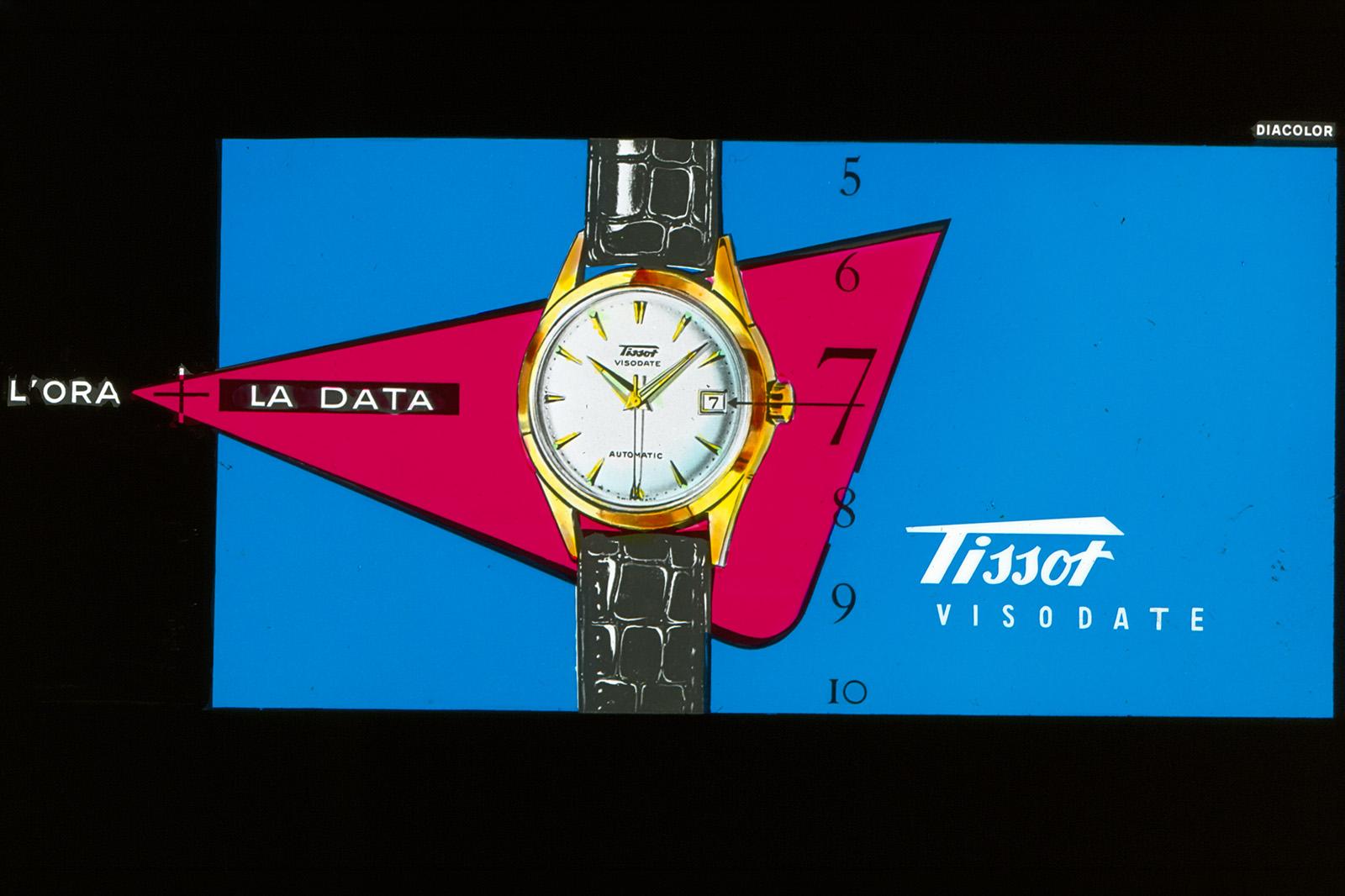
The Visodate was first introduced in 1954, an interesting period of development for the watch industry. After years of war, watchmakers were starting to turn its attention to civilian production and leisure again, which would see a boom in recreational and civilian-use tool watches. As part of that the date function finally became ubiquitous as brands like Tissot were able to mass produce them at an accessible price point. Less than a decade after Rolex introduced the first ever automatic date watch, the Datejust, in 1945.
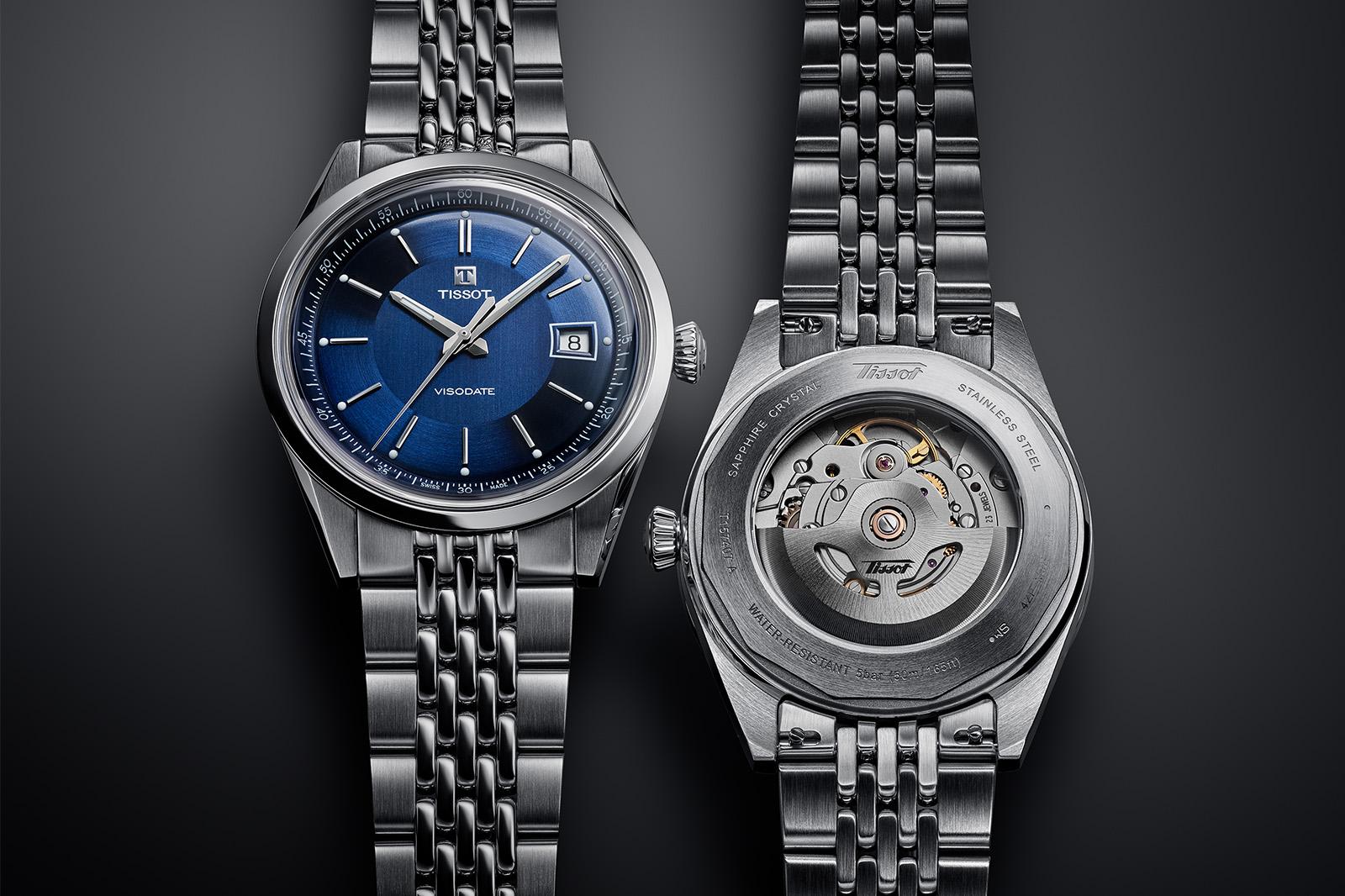
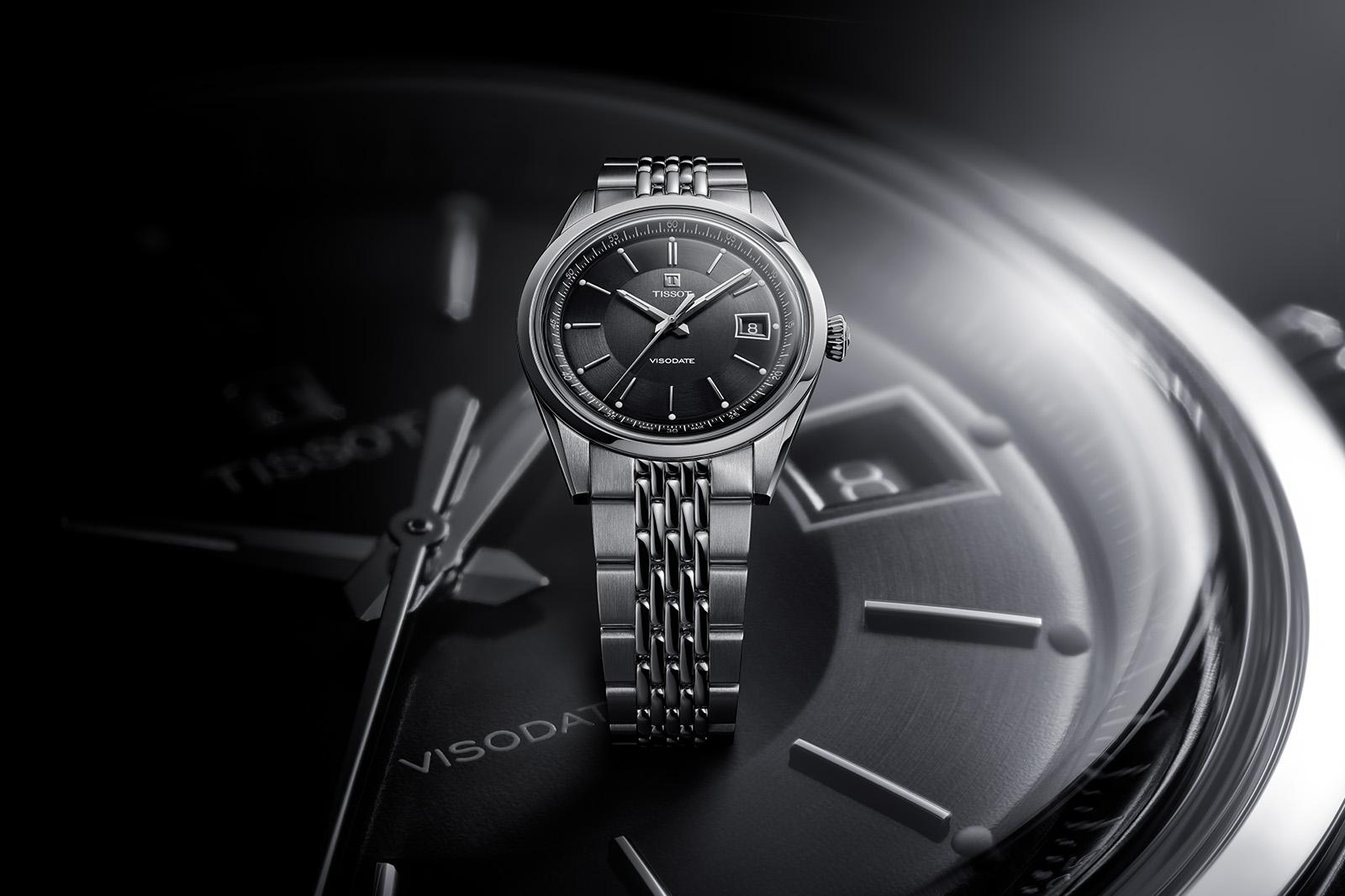
Bringing the collection into the 21st century, it’s presented at 39mm in steel with a round design and relatively pronounced, angular lugs. A smooth bezel encircles a box sapphire crystal over the domed sector style dial. There are three colours of dial available: blue, black and silver. The last of those featuring gold coloured hour markers and hands for a little extra luxury. They each feature central discs with vertical brushing that adds nice definition in comparison to the circular brushing of the hour scale.
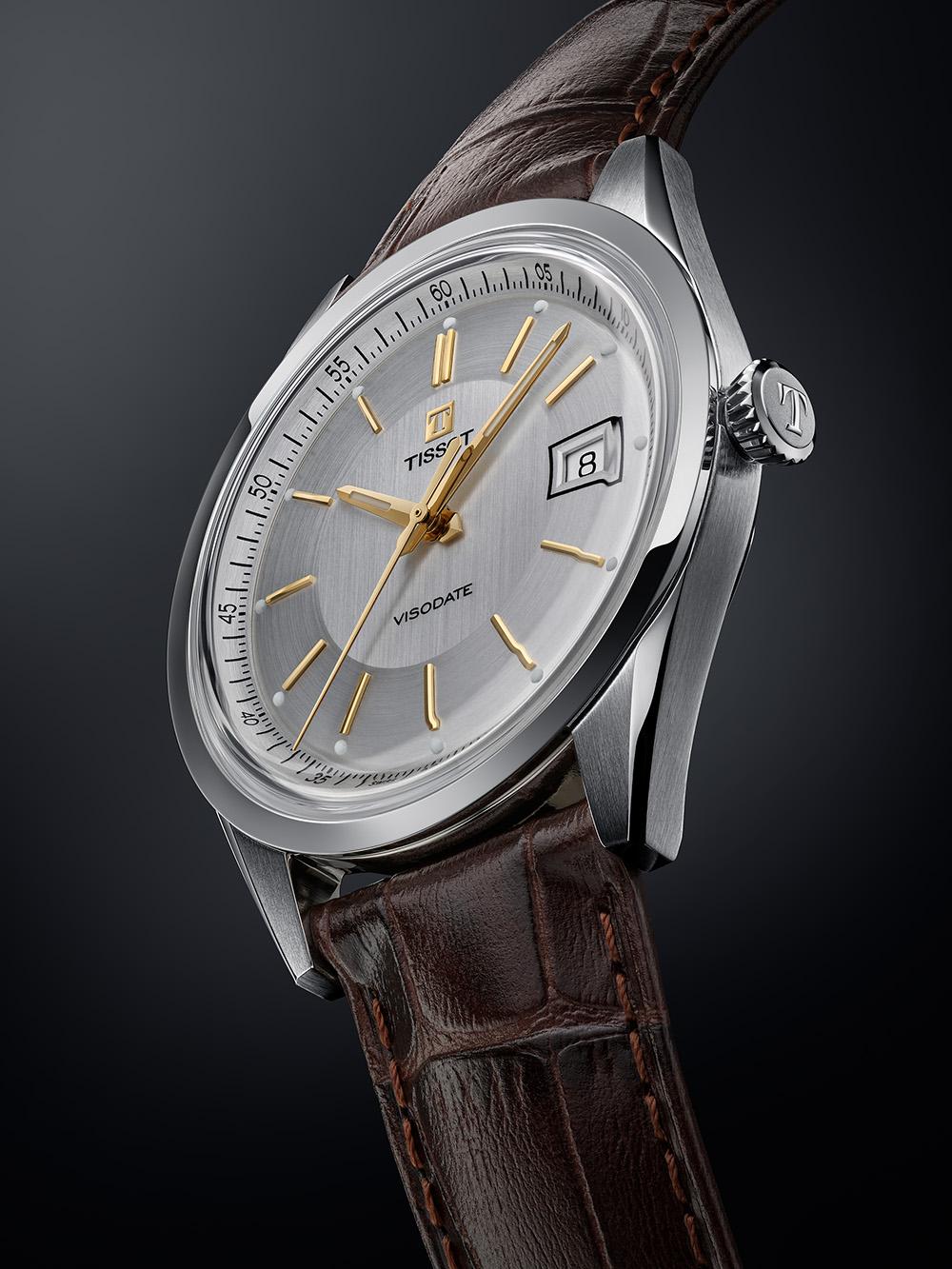
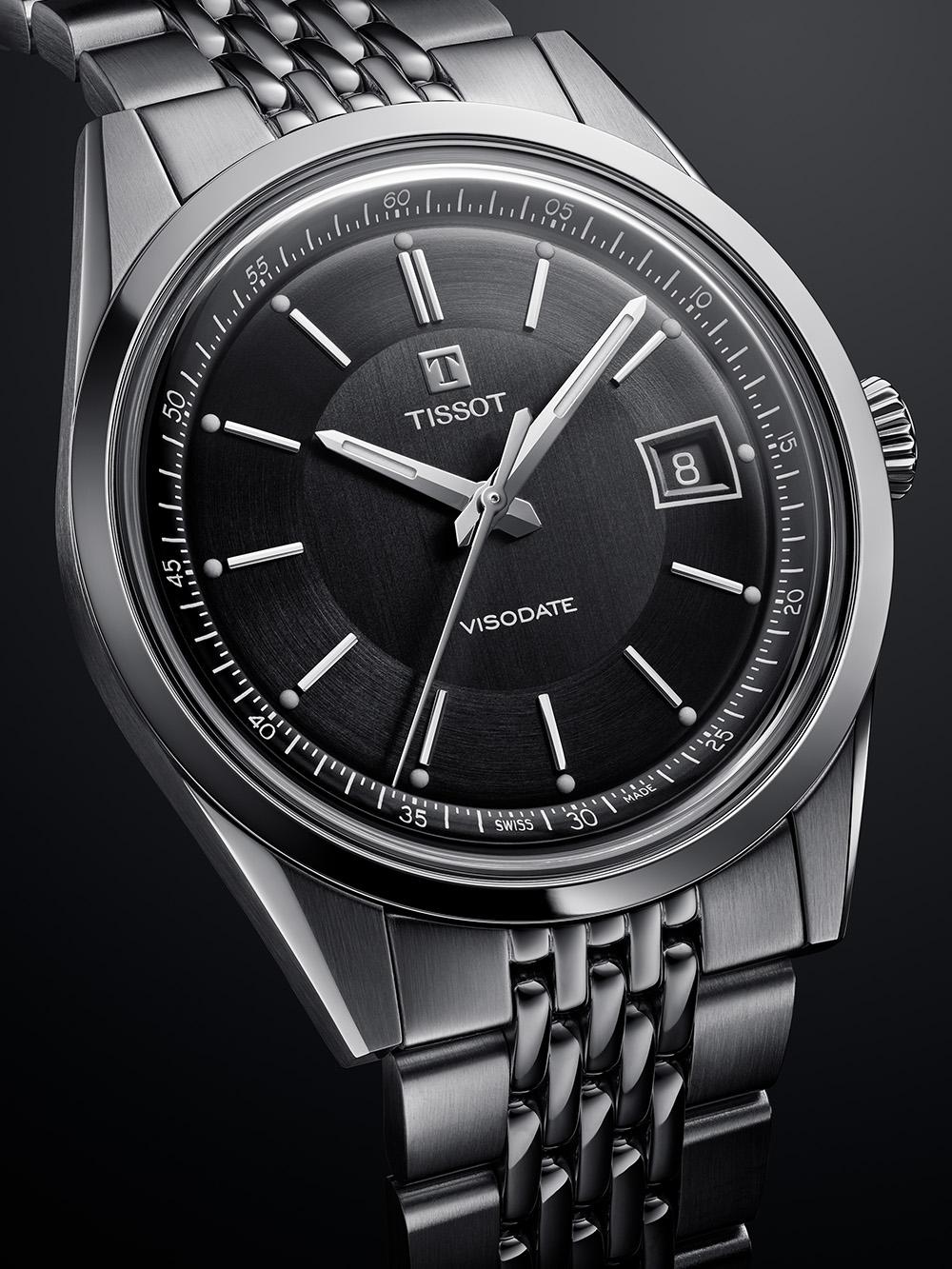
The Visodate’s date function sits in its traditional position at 3 o’clock. While I know there are plenty of collectors who prefer the 6 o’clock position for preserving the vertical symmetry of the dial, I personally prefer 3 o’clock dates – they feel more natural to read as your eye naturally flows from the main time display to the date, reading from left to right.
Powering this revived collection is a staple of modern Swatch Group brands, the Powermatic 80. It has an 80-hour power reserve, making it nice and weekend proof, improving its practicality and utility. You can view the movement through the watch’s exhibition caseback.


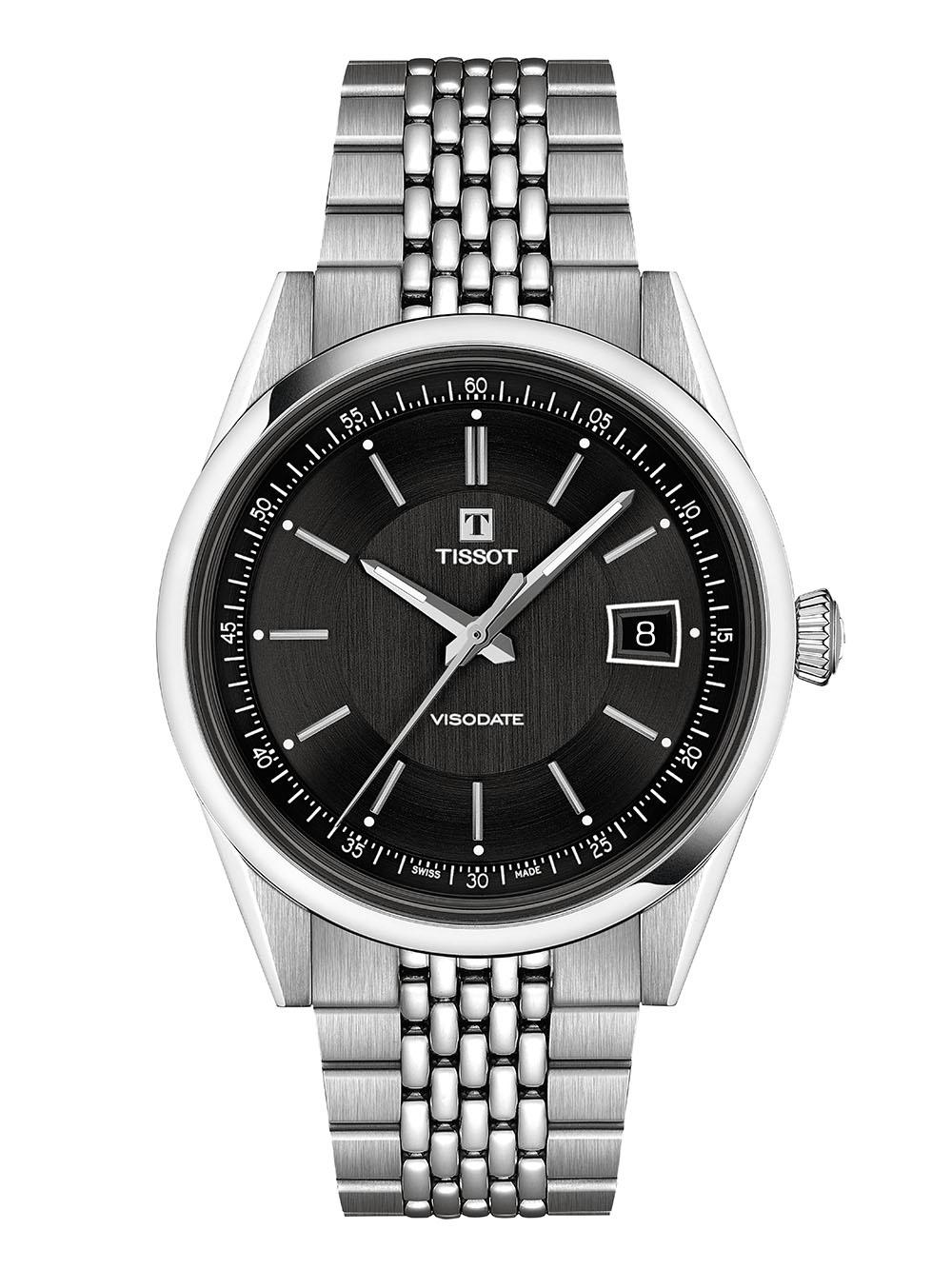
For pricing, the Tissot Visodate is £710 with leather strap and £775 on steel bracelet. That puts it between a standard PRX at £640 and a PRX special edition such as the Grendizer at £915. I think that’s a pretty accurate reflection of where the collection sits in the Tissot stable.
Price and Specs:
More details at Tissot.