The balance wheel is often described as the heartbeat of a watch. It’s the oscillating ring that houses a watch’s hairspring to regulate the movement of the hands. Hairspring technology has developed a lot over the centuries of watch design but for the most part they’re made from one of two materials: steel or silicon. But what if there was a third material you could use? That’s the question that Tag Heuer have spent 10 years attempting to answer and at last they are ready to show the world their new, patented TH-Carbonspring, presented in the Monaco Flyback Chronograph TH-Carbonspring and Carrera Chronograph Tourbillon Extreme Sport TH-Carbonspring.

Before we get into the specifics of the individual watches, let’s talk TH-Carbonspring in general. As the name suggests it is indeed a hairspring that is made from carbon, designed for regular production and mass use with precision. That last addendum is important because this project hasn’t just come from nowhere, Tag Heuer have spent a decade developing the technology and in that time, they’ve given us glimpses of what they’ve been working on. Most recently they showed a carbon hairspring in their unique piece for Only Watch in 2021, but more significantly they brought one to market with 2019’s Isograph. However, issues with production and precision led to a worldwide recall less than four months after launch.
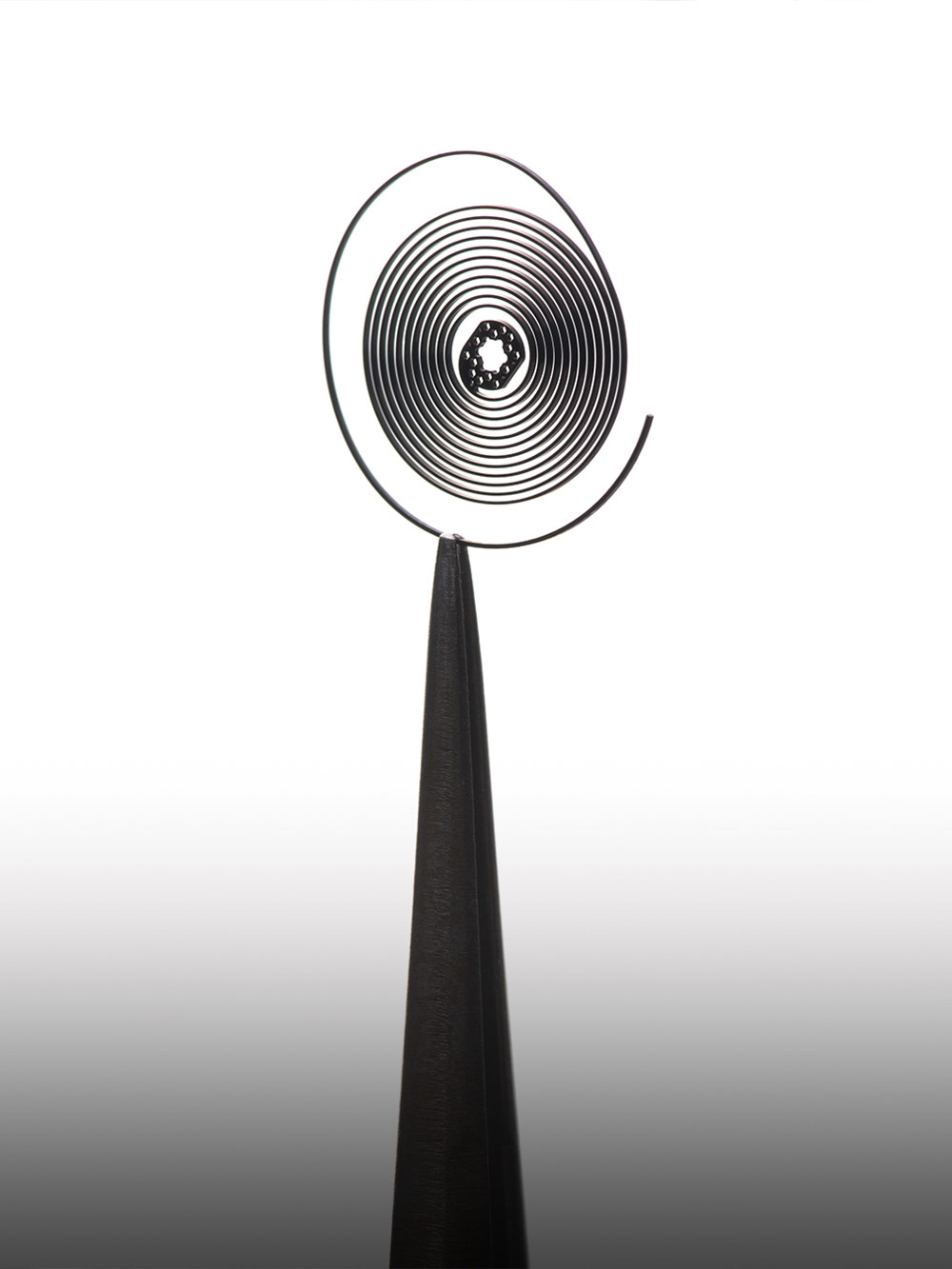
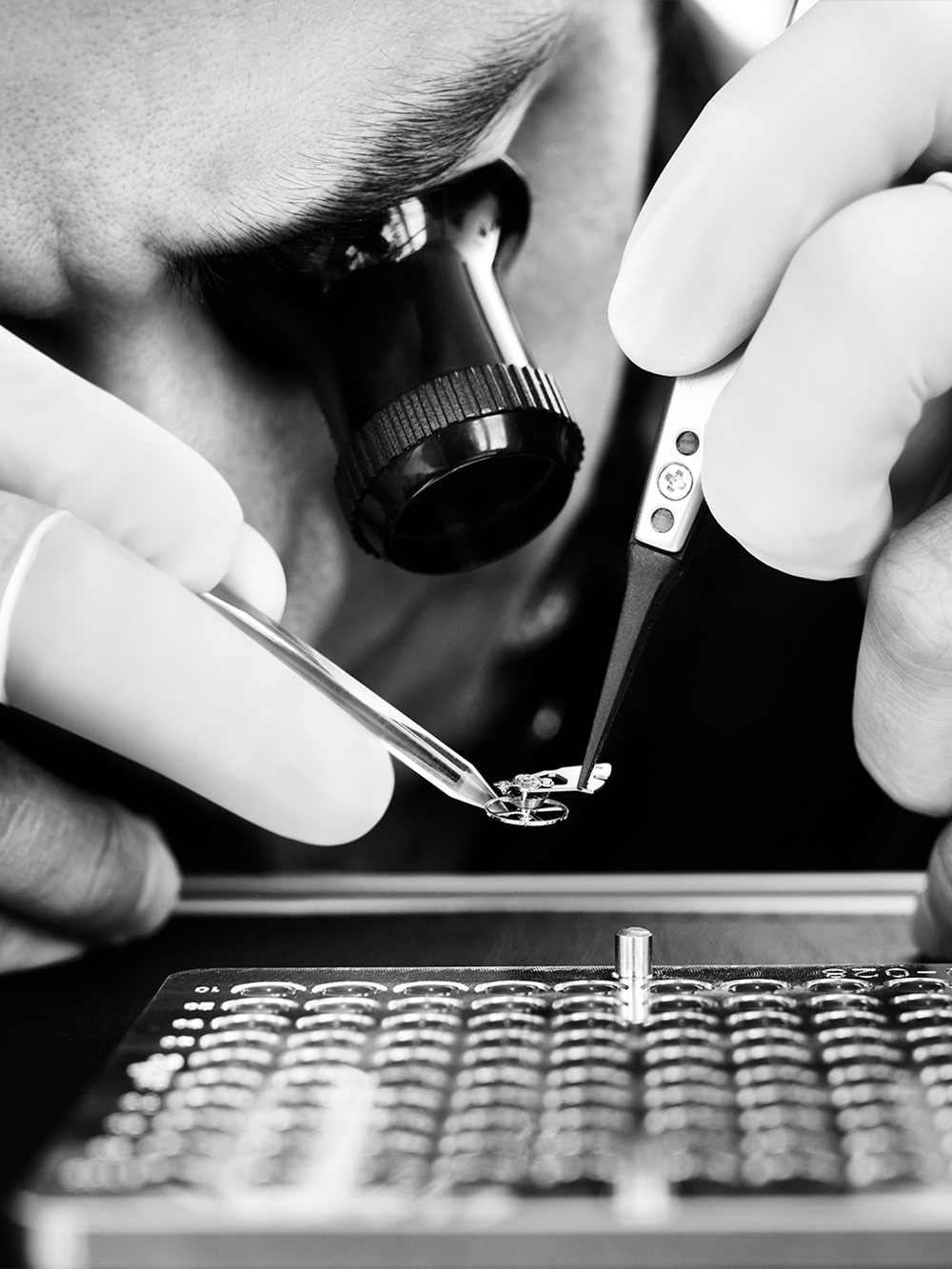
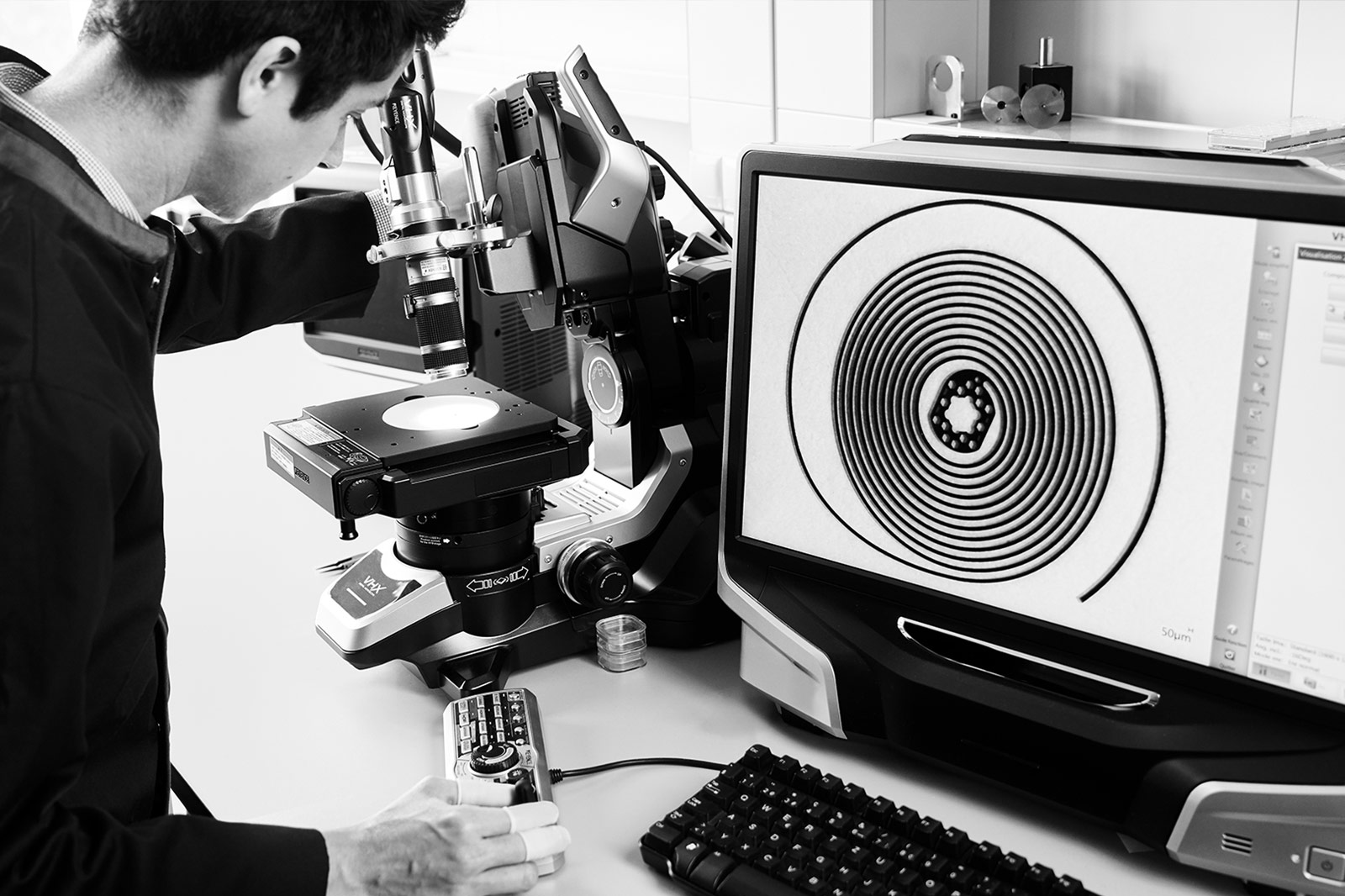
The TH-Carbonspring is therefore the modern successor to the Isograph and will hopefully deliver on all of the benefits we were promised back in 2019. After all, it’s the promise of those benefits and the potential of a carbon hairspring that have led Tag Heuer to pursue it so diligently despite many public setbacks. But that’s jumping the gun, what are the benefits of a carbon hairspring?
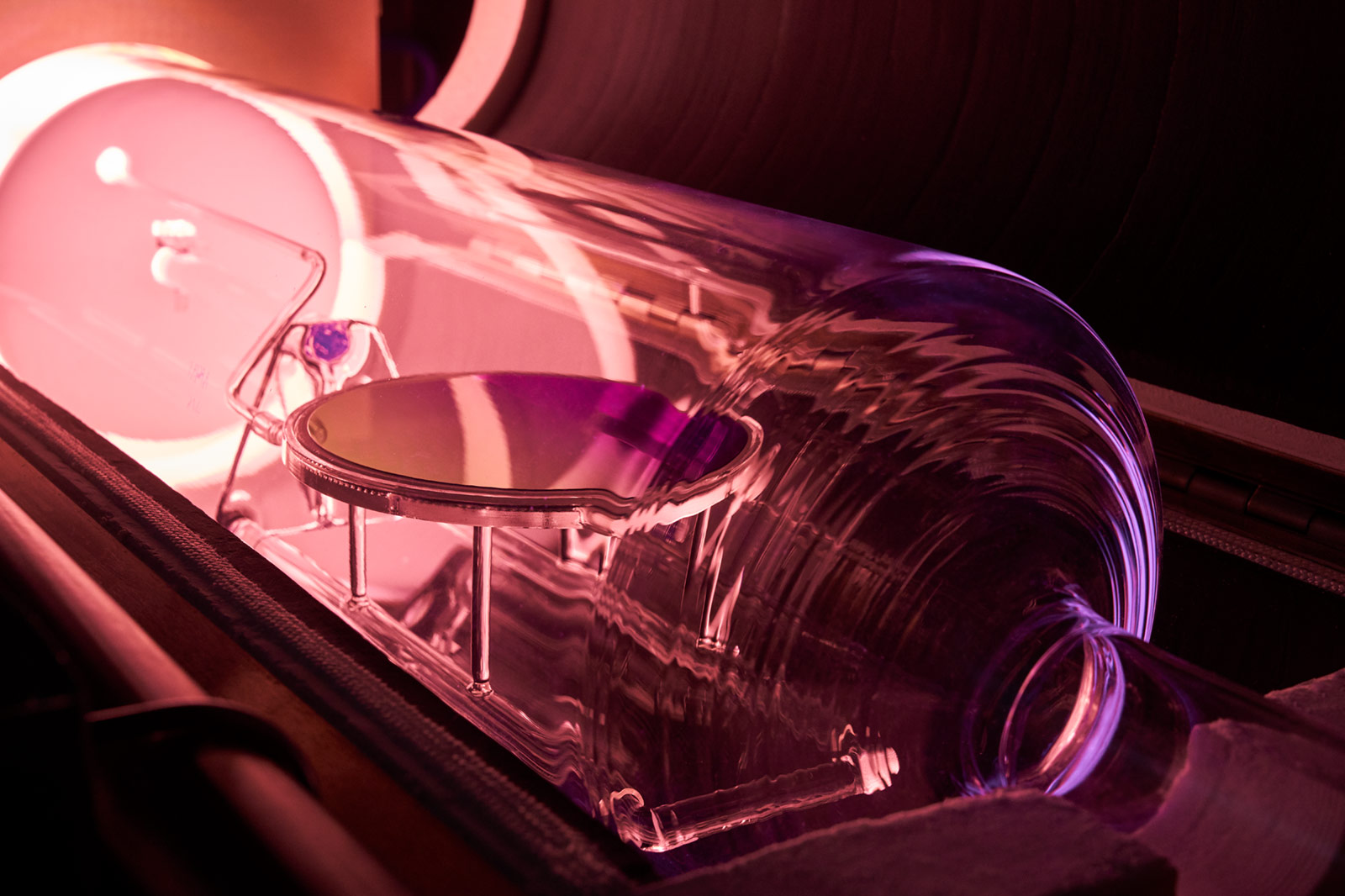
Like silicon, carbon is a non-ferrous material. That means it is completely unaffected by magnetic fields, which are one of the most common sources of watches losing accuracy in the modern world. For example, Apple recently patented a new lid for the MacBook that uses magnets to latch them closed, producing a constant magnetic field that WILL interfere with a steel hairspring. A carbon (or silicon) hairspring would be completely unaffected though.
Second, carbon is very lightweight, reducing inertia and friction within the movement to boost accuracy. The same is also true for silicon though meaning so far all of the benefits of a carbon hairspring also apply to silicon, so what’s even the point? Well, it comes down to this third attribute of carbon, it’s exceptionally shock resistant.

According to an interview given to Watchonista by Tag Heuer in 2019, during experimentation and testing, Tag Heuer subjected hairsprings of steel, silicon and carbon with up to 5G and where the steel bent and the silicon broke, the carbon remained intact. While that interview is in the context of the Isograph, that research is still a fundamental part of the TH-Carbonspring today. It also provides the important context for why carbon is worth exploring and is better than silicon.
Tag Heuer Monaco Flyback Chronograph TH-Carbonspring
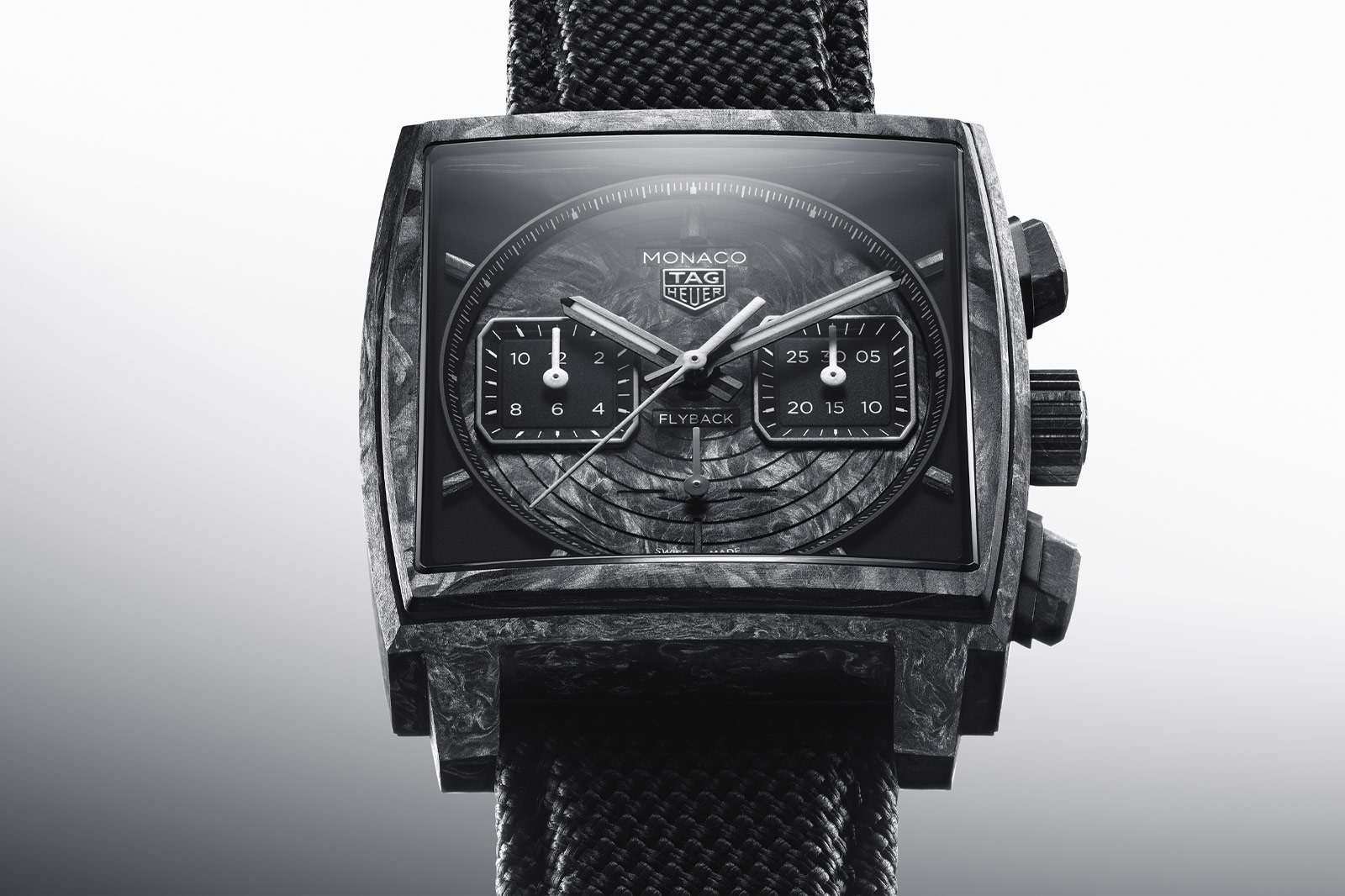
The first of the watches to house the TH-Carbonspring is the Monaco Flyback Chronograph TH-Carbonspring. The Monaco was chosen due to its iconic status within Tag Heuer’s range, making it a fitting choice for what Tag Heuer are hailing as the beginning of a new generation of horological development. The watch measures 39mm in black forged carbon with a matching carbon dial with spiral motif, emulating the hairspring inside.
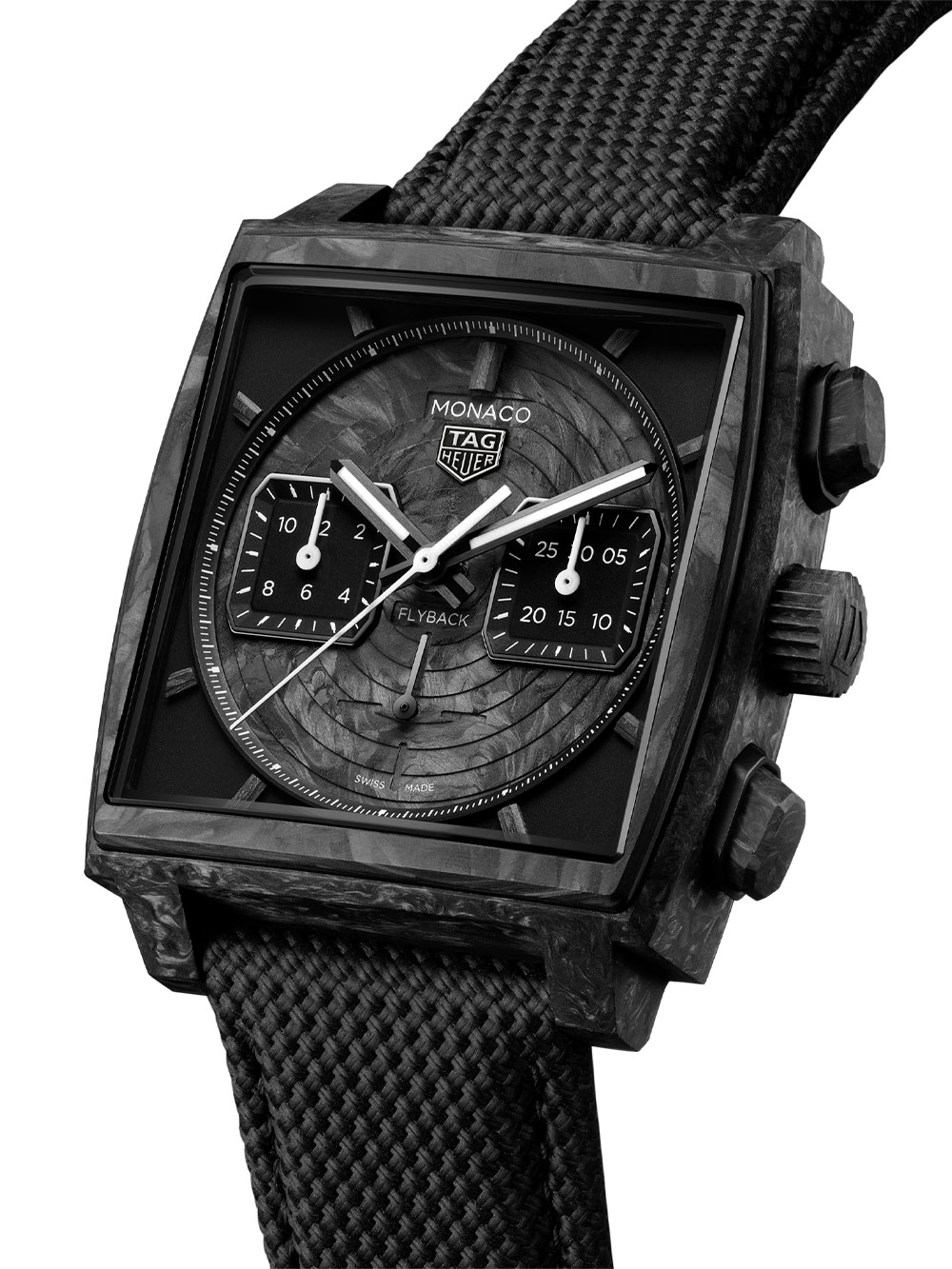
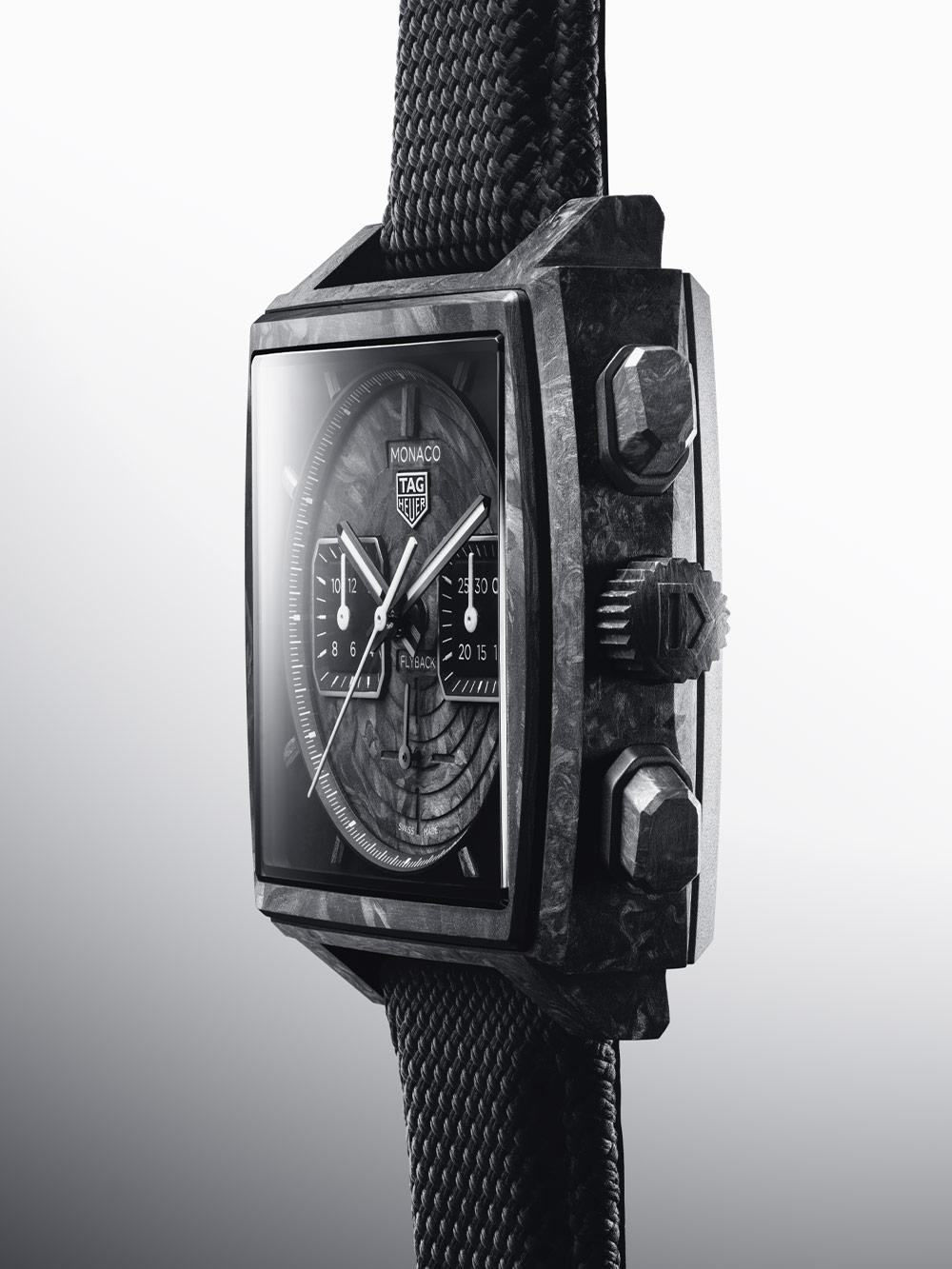
The hairspring itself forms part of the calibre TH20-60, an in-house chronometer movement with 80-hour power reserve. Given its improved shock resistance thanks to the TH-Carbonspring, you should be able to properly leather it around a race track – it’s only really in F1 that drivers experience 5G or higher, so assuming you’re not one of those 20 people, you should be fine. Although ironically it is probably Max Verstappen who’ll be able to first get his hands on one as a Tag Heuer ambassador. It’s also a limited edition of 50 pieces.
Price and Specs:
Tag Heuer Carrera Chronograph Tourbillon Extreme Sport TH-Carbonspring
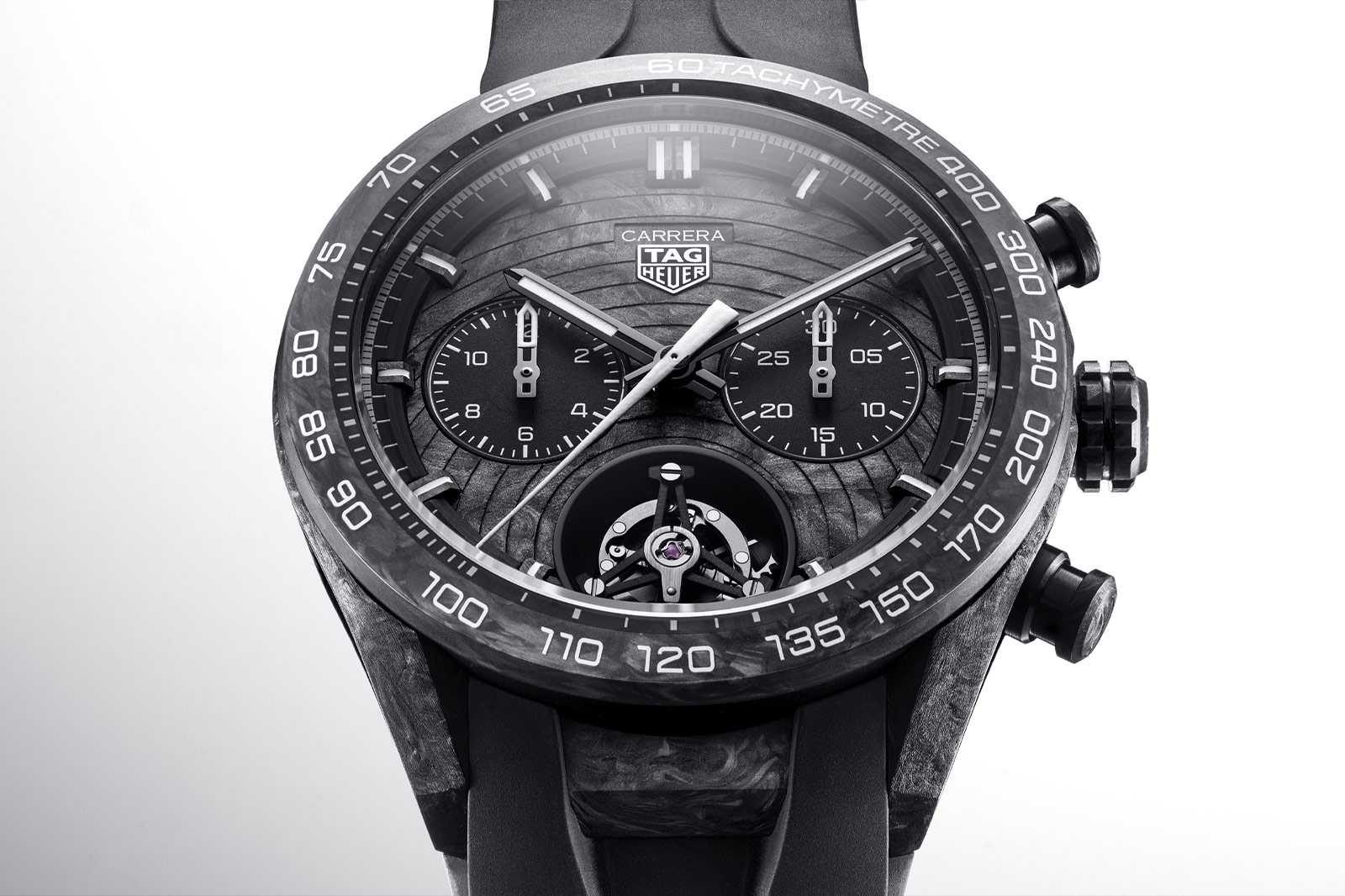
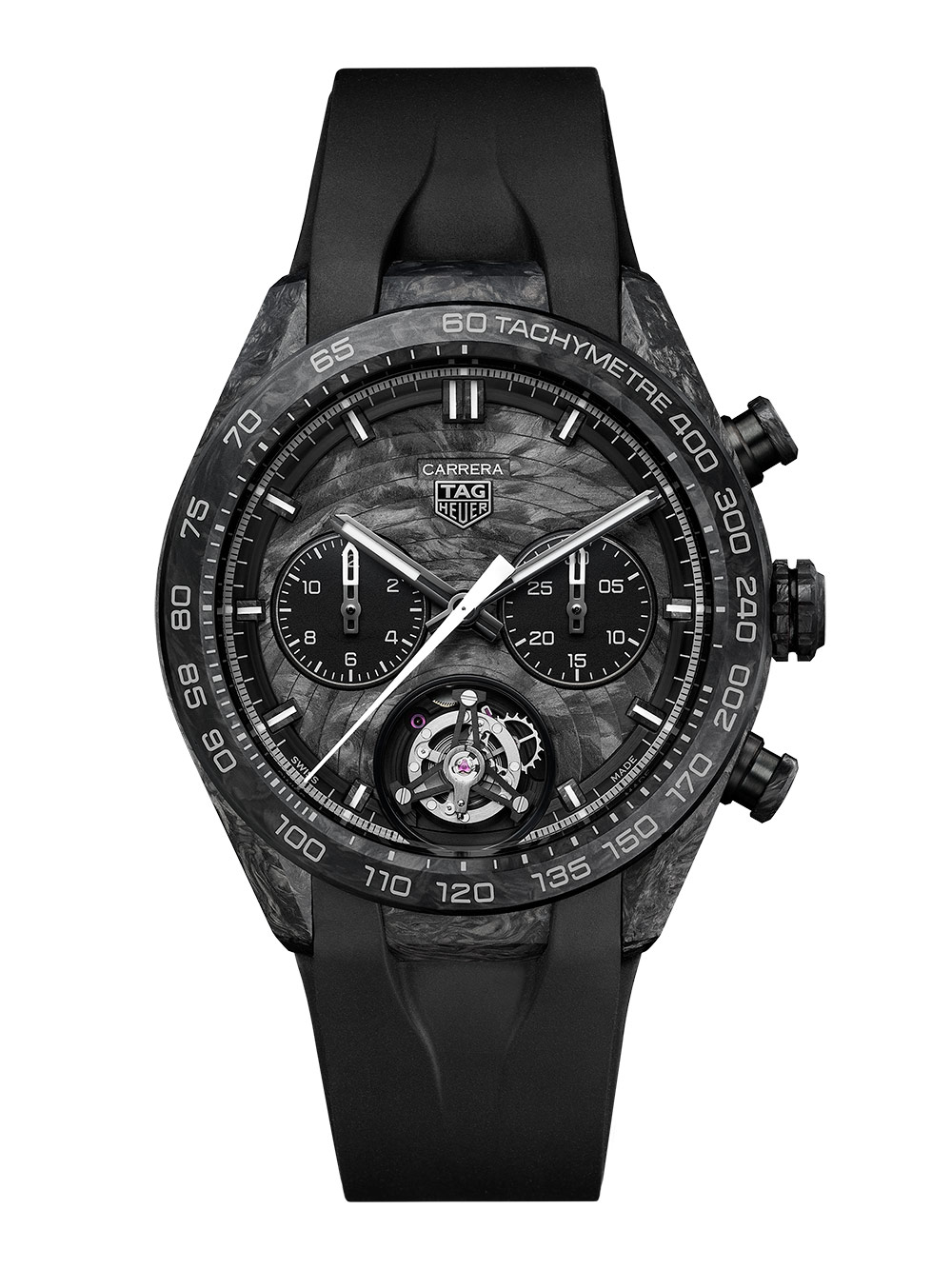
Second is the larger, 44mm Carrera Chronograph Tourbillon Extreme Sport TH-Carbonspring, which notably introduces a tourbillon into the mix. It moves the carbon hairspring from the back of the watch to the focal point right in its spinning cage at 6 o’clock. There isn’t a better way to show it off. Even the spiral motif of the carbon dial has been adjusted to radiate outwards from the tourbillon, putting the hairspring at its centre.
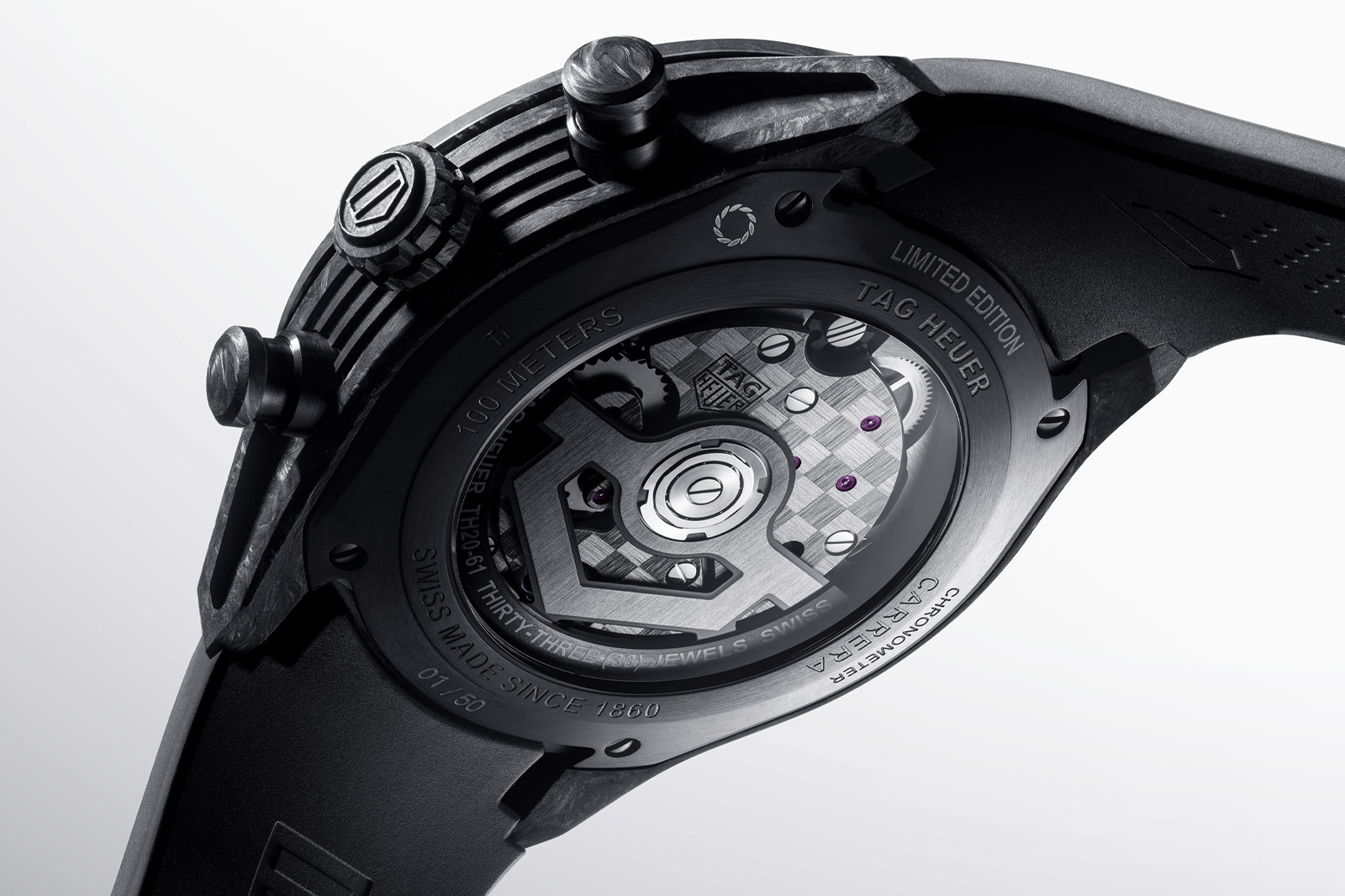
The movement here is the TH20-61, which is an automatic chronometer just like its Monaco counterpart but this time with a slightly lower power reserve of 65-hours. That’s because the constant motion of a tourbillon is very power intensive despite the lightweight properties of the hairspring. It’s also still a chronograph with 12-hour and 30-minute timers. Again, it’s a limited edition of 50 pieces.
Price and Specs:
More details at Tag Heuer.