Samuel Soleilhac is not a watchmaker. That might sound strange for the man behind an impressive new independent watch brand, but it’s an important part of his story. Because if he were a fully trained watchmaker, his debut watch, the Harmonie, might never have happened.
“My main focus is on bringing ideas into a design and turning a design into a watch that is technically feasible. The biggest challenge was to find the right people with the right knowledge, so I could learn from them.
“We are in an industry where we can find a lot of information in books, which is great. But sometimes, when we are looking for something very specific, it can be difficult to find it.”
Harmonie didn’t come out of chaos; that’s to say, it didn’t emerge fully formed from Samuel’s dreaming brain. Instead, it came like so many inspired ideas do from a different idea that didn’t quite work out. That idea was called Pendule.
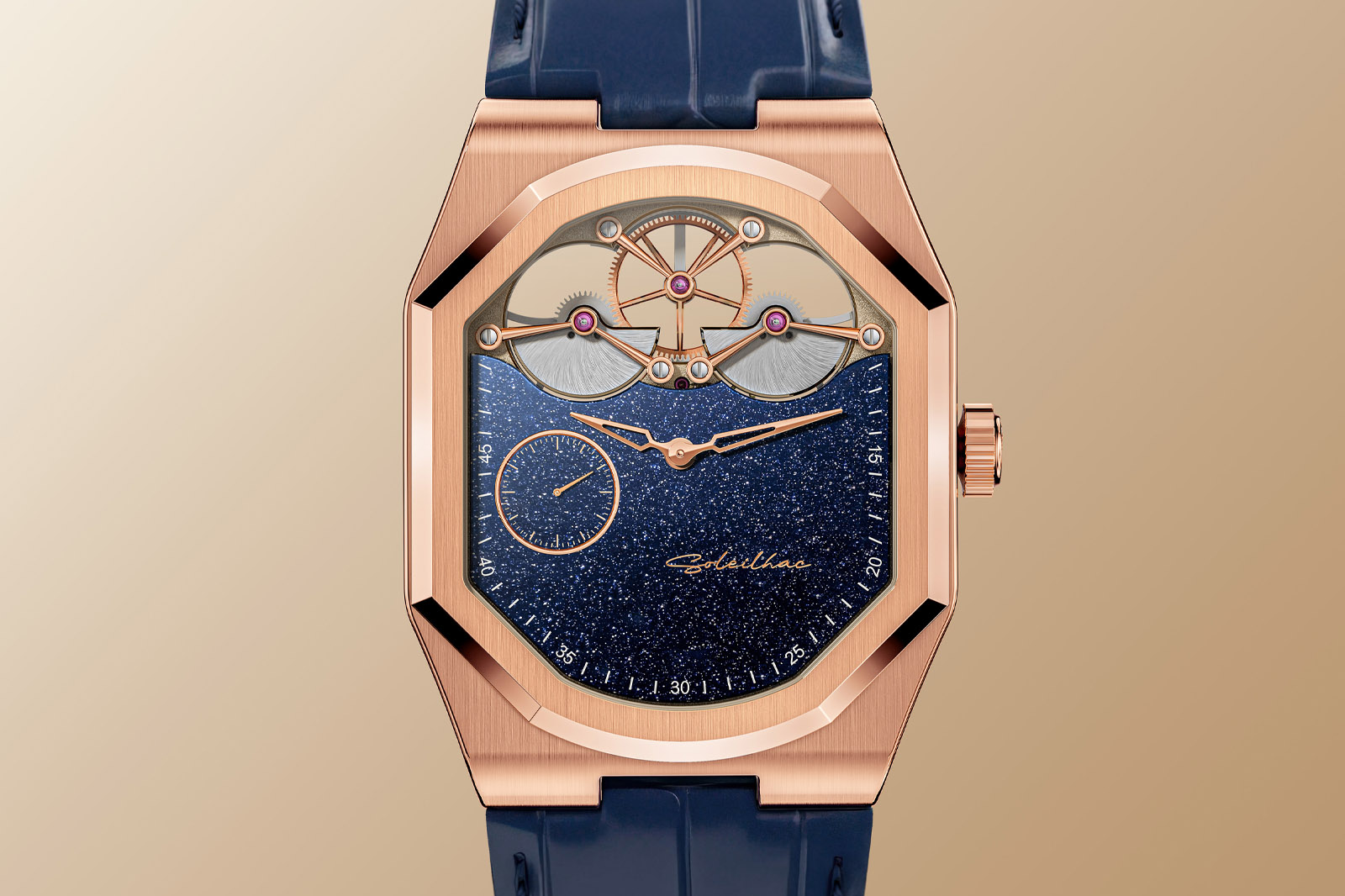
You likely don’t need an A-level in French to guess that Pendule translates to pendulum and if you’re thinking grandfather clocks, you’re on the right track. Pendulum-based timekeeping has been around since the first functional pendulum clock was invented in 1656 by Dutch scientist Christiaan Huygens.
The idea behind pendule, as Samuel puts it, was “to use the energy of the ocean on a boat. I imagined a clock on a boat that could wind itself using the energy of the waves. A pendulum was potentially interesting technically… so I tried to integrate it into a watch.”
It’s a bold move for an untrained watchmaker to tackle something that’s never been done before; it’s one reason we have so many watch designers – rather than watchmakers – creating revolutionary timepieces. But it wasn’t long before Samuel realised why pendulums and wristwatches don’t go well together.
“Because of the small size of a watch, the project became impossible; it was too light and the lever was too short. But that left me with space in the movement to make the winding work. That is when the idea of two micro-rotors was born, about a year ago.”

Normally, microrotors are there to take a few millimetres out of the thickness of a movement. Rather than a full rotor on the back taking up valuable real estate, they’re sunk into the movement itself. The downside is that because they’re smaller they can therefore generate less force. That in turn makes them less efficient.
Two microrotors winding a single mainspring addresses the system’s central weakness — insufficient winding mass. I’m not a watchmaker, so I can’t tell you if that makes it more or less efficient than a standard, full-sized rotor. But that’s just the thing: the efficiency is more a side benefit. The main reason for dual microrotors? It looks stunning.
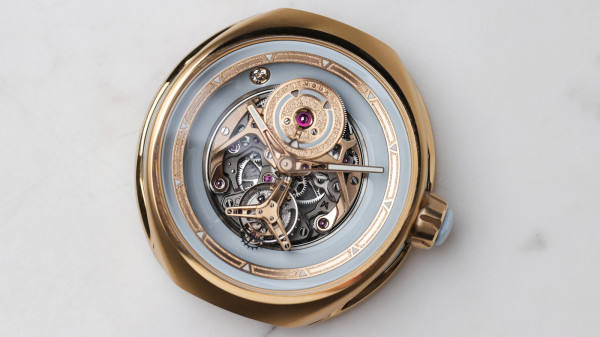
The Harmonie more than lives up to its name. While yes, it’s about those two microrotors working in tandem, the watch also has an aesthetic harmony. It doesn’t have anything you might call a traditional case shape, erring more towards the Daniel Roth school of contemporary sculptural design. Indeed, its bezel is a similar shape to the maestro’s famous tourbillon, just with a sportier, more angular case body.
The upper half of the dial is taken up by that dual rotor system, which is skeletonised clear through, emphasising the marine chronometer feel it all started with. It’s no surprise that this winding system takes up a huge amount of the movement, enough that fitting them in and keeping the architecture of the movement beautiful was one of the biggest challenges Samuel had with the movement.
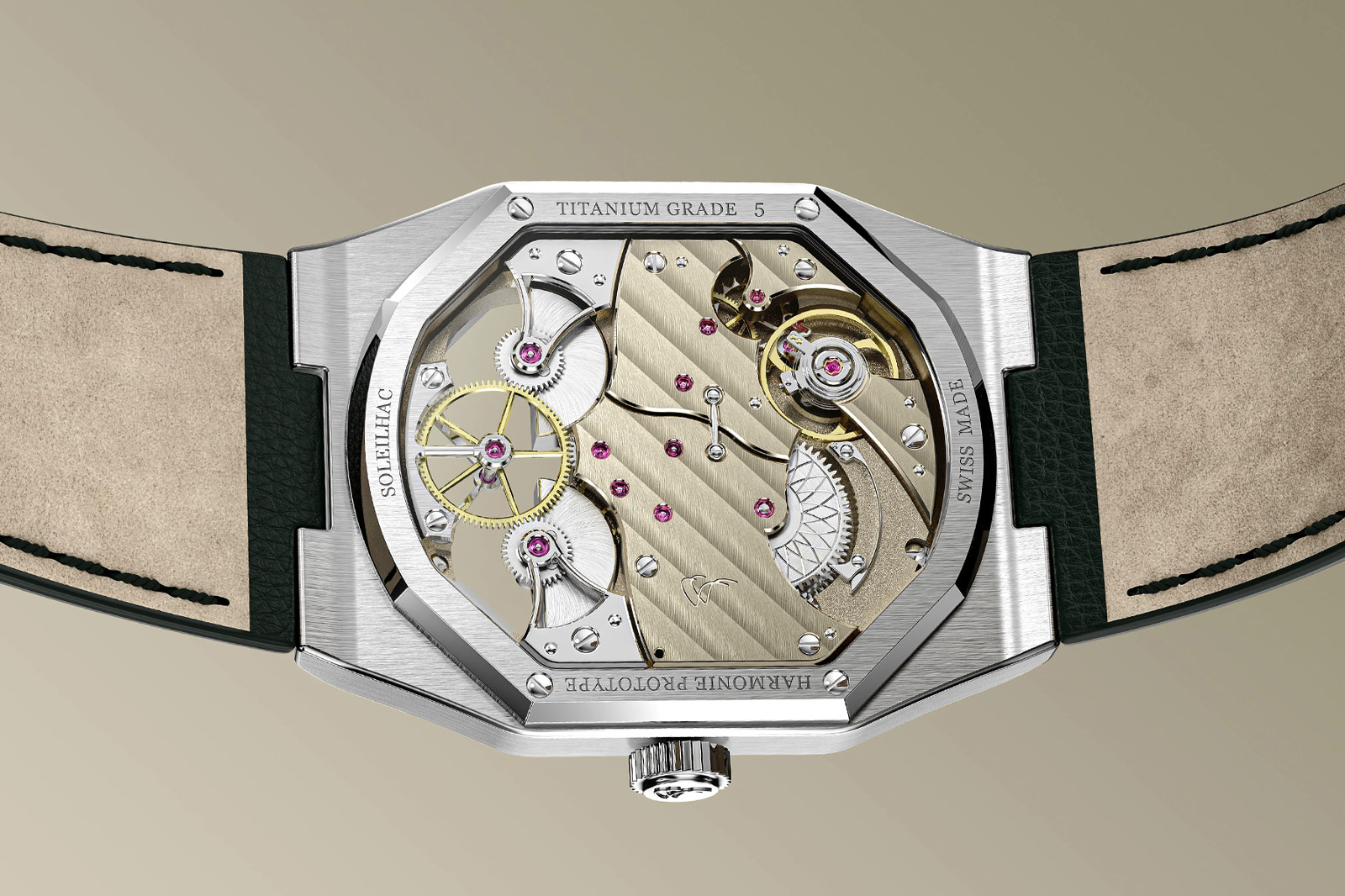
And yet, despite the spatial challenges there’s visually no lack of it. The rest of the dial is beautifully restrained, with a nine (ish) o’clock small seconds, the maker’s signature and a minute track. It rightly leaves the dual rotor mechanism as the centrepiece.
It’s worth noting now that the Harmonie is a souscription piece. That essentially means an early concept piece that funds future development. Soleilhac aren’t the first to do it this way; most modern icons of independent watchmaking – Journe, Dufour, etc. – did the same starting out. The idea behind a souscription isn’t just to build and sell a watch, but to refine that initial concept with feedback from collectors that believe in the project.
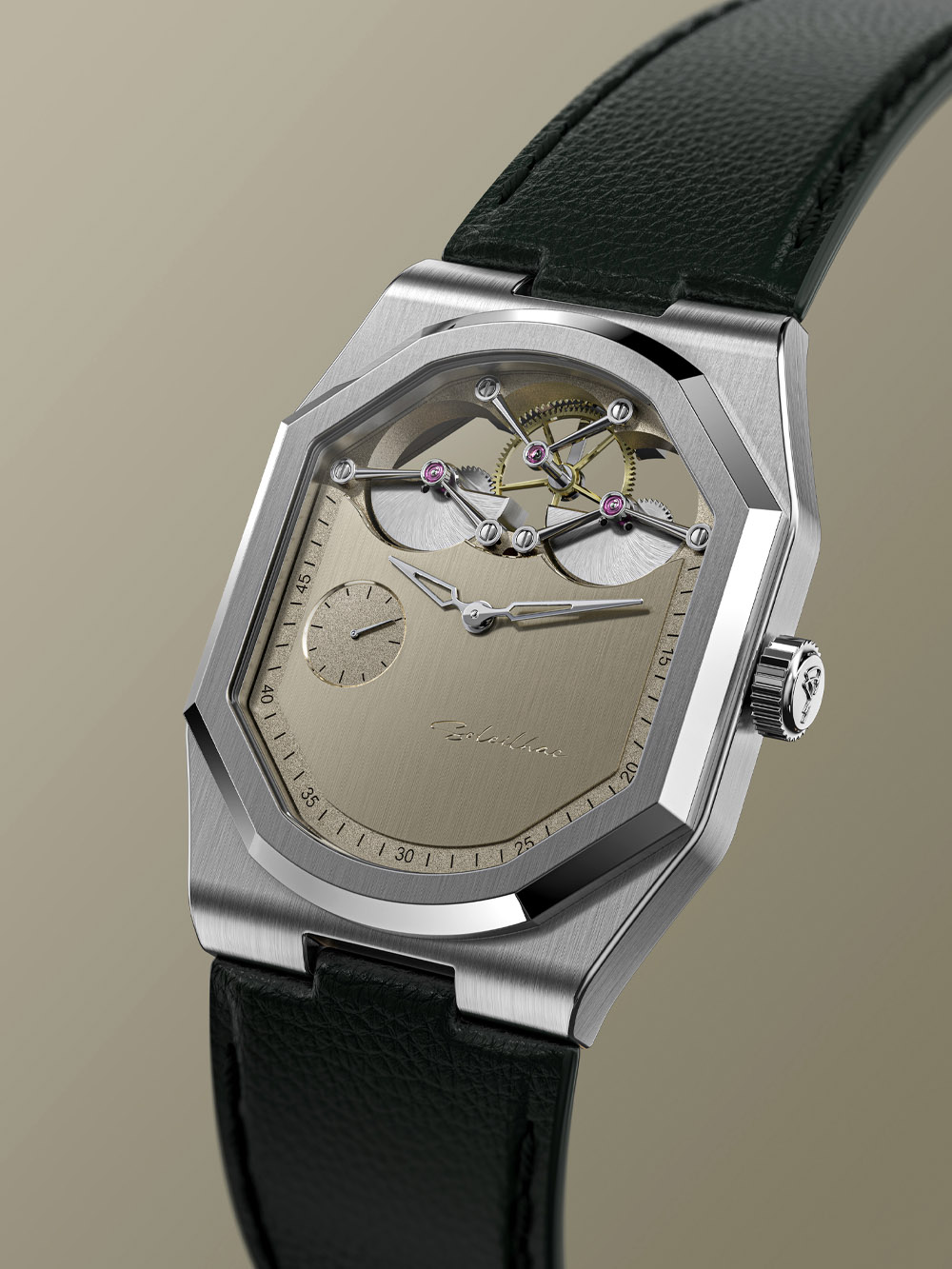
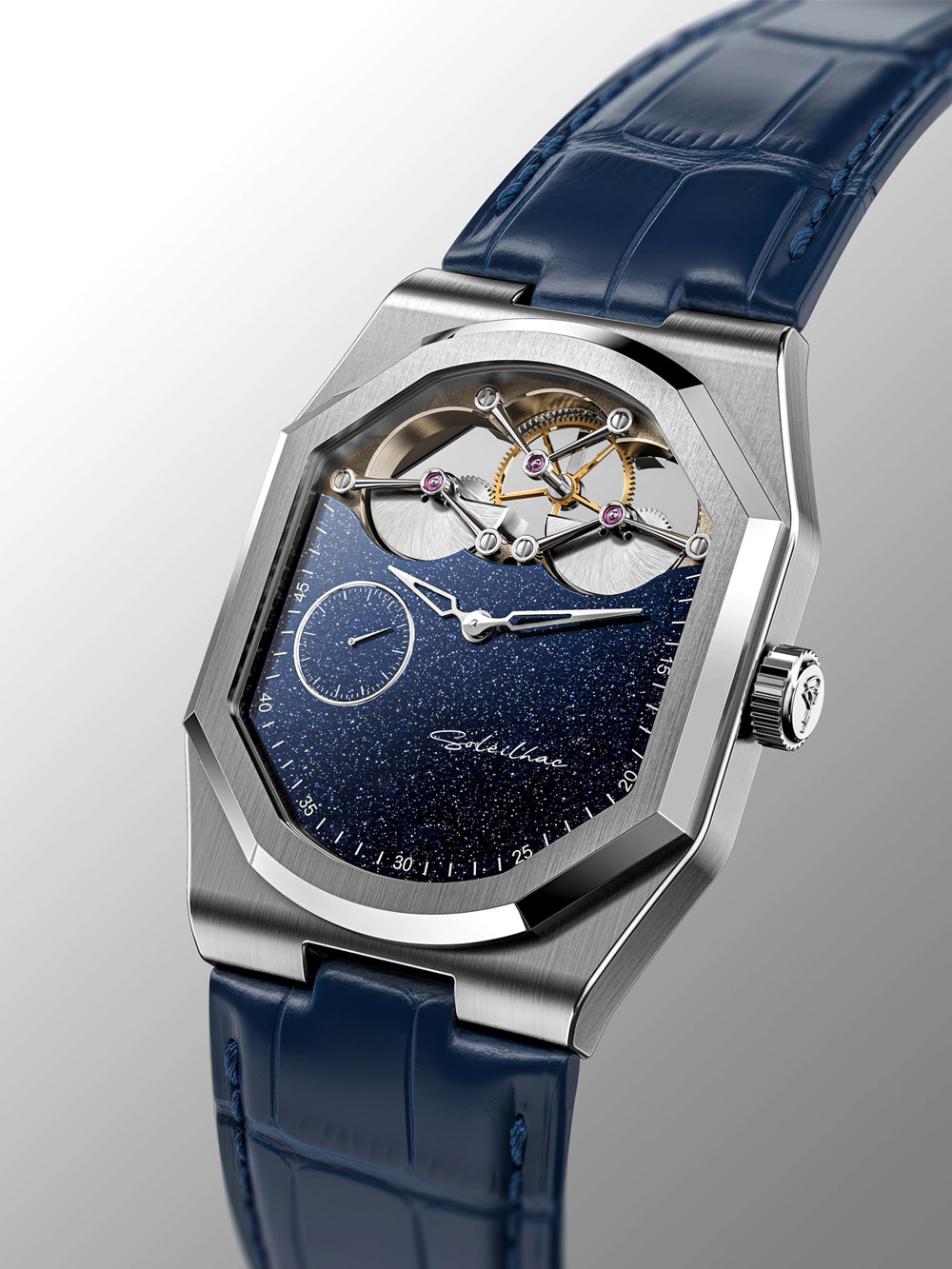
So, impressive though the Harmonie is at this point – it’s available in three variations in titanium or gold with a grey or aventurine dial – it’s yet to reach its zenith. The 150+ hours of craft behind each watch is unlikely to go down, but with delivery of the watches touted for the end of 2026, there’s plenty of time for refinement.
That said, only 18 pieces of the Harmonie, ranging from around £56,000 to over £70,000, are available. That’s across all variations as they’re made to order, but with Samuel’s future plans, there will be plenty more to come.
“I also have interesting ideas to explore for three to five different watches, especially the next one, which is becoming more and more real in my mind. Once the subscription pieces have been delivered, it will be time to work on this next project.” The Harmonie is just the beginning.
More details at Soleilhac.