With their mix of intensely modern skeletonisation, haute horological tendencies and sheer punch of presence, Roger Dubuis are as contemporary a watchmaker as they come. So, it comes as a bit of a surprise that they’re actually celebrating their 30th anniversary this year. And yet that three-decade timeline starts to come into focus when you look at the origins of Roger Dubuis and, more pertinently, just how far the brand has come.
It might be hard to see these days, but Roger Dubuis actually had some early similarities to Parmgiani. By that I mean that Mr Dubuis himself, like Michel Parmigiani, was initially taken with restoring timepieces, the idea of keeping those traditional crafts alive. But where Parmigiani was dedicated to the Golden Ration, Dubuis was all about expression. Indeed, expressiveness was the core reason for the partnership between Roger Dubuis and Carlos Dias. The pair wanted to build watches – using the traditional skills gleaned from restoration – in a distinctive and distinctly Genevan way. The result was the Roger Dubuis brand in 1995 and their first set of Perpetual Calendars in the Hommage and Sympathie collections.


Roger Dubuis Hommage & Sympathie, image credit: Ineichen
These were dramatic watches but still very much in the mould of traditional, Poincon de Geneve timepieces: guilloche dials, Roman numerals, classical complications. But behind them was a level of watchmaking as dramatic as their aesthetics. This included the Sympathie Bi-Retrograde, a squared cushion case containing a perpetual calendar indicated with retrograde displays.
Roger Dubuis was somewhat of a specialist in retrograde displays. During the 1980s, he worked alongside Agenhor’s Jean-Marc Wiederrecht to modernise and streamline the display, earning a patent in the process. So, when he launched his eponymous brand, it wasn’t a surprise to see Roger Dubuis’ bi-retrograde display front and centre, combined with a chronograph.

Roger Dubuis Too Much Collection, image credit: Sotheby’s
In the first 11 years of existence, Roger Dubuis ran through the entire high complication catalogue, adding minute repeaters, rattrapante chronographs, and tourbillons aplenty. But as the years rolled on, Roger Dubuis’ aesthetics grew more… excessively expressive. The Too Much collection with its funky, horizontally rectangle case is a bit of high-end vintage fun if you ever find one, but it didn’t take itself too seriously. That was the job of 2005’s Excalibur.
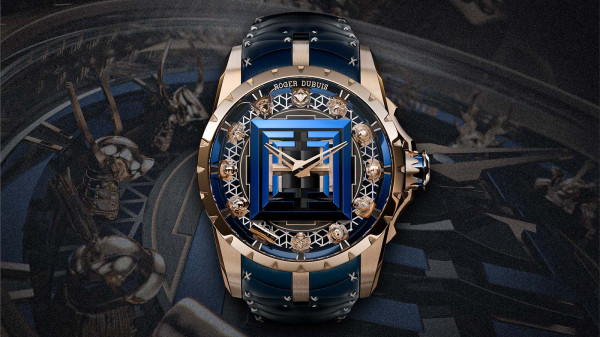
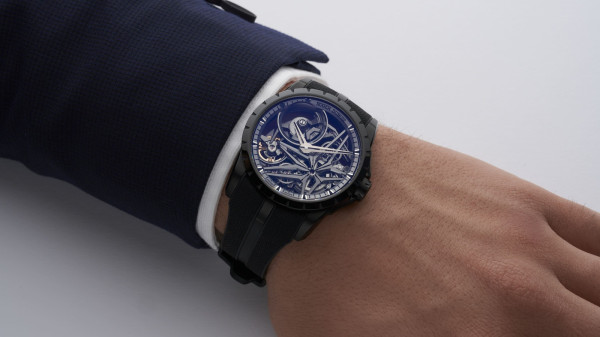
The Excalibur was a turning point for Roger Dubuis. It’s triple lugs, fluted bezel, strong silhouette and large, open dial, everything about it took the classic round watch to a dramatic new space. That space became far more literal, when over the years the Excalibur became the stage for Roger Dubuis’s skeleton obsession. Soon, that instantly recognisable star bridge became not just an aesthetic quirk but the brand signature.

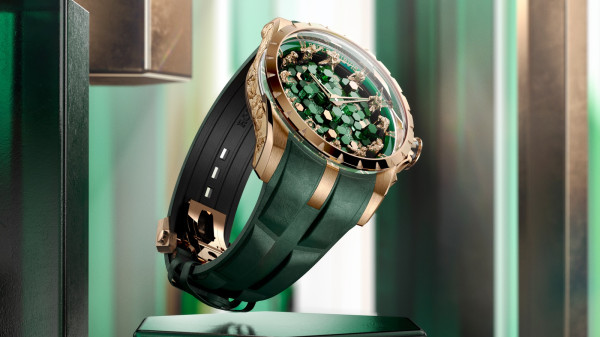
Roger Dubuis Excalibur Orbis Machina
As the figurative star of the Excalibur rose in line with its literal bridge, Roger Dubuis phased out their other collections. The brand was always focused on strict limited editions and stretching that across multiple collections just didn’t make sense. That’s why these days, you think Roger Dubuis, you think Excalibur. True, you probably also give a thought to things like the Knights of the Round Table or the Orbis, but while they’re semi-regular, they’re still rarities in both concepts and numbers. The star of the show is the Excalibur and long may it reign.
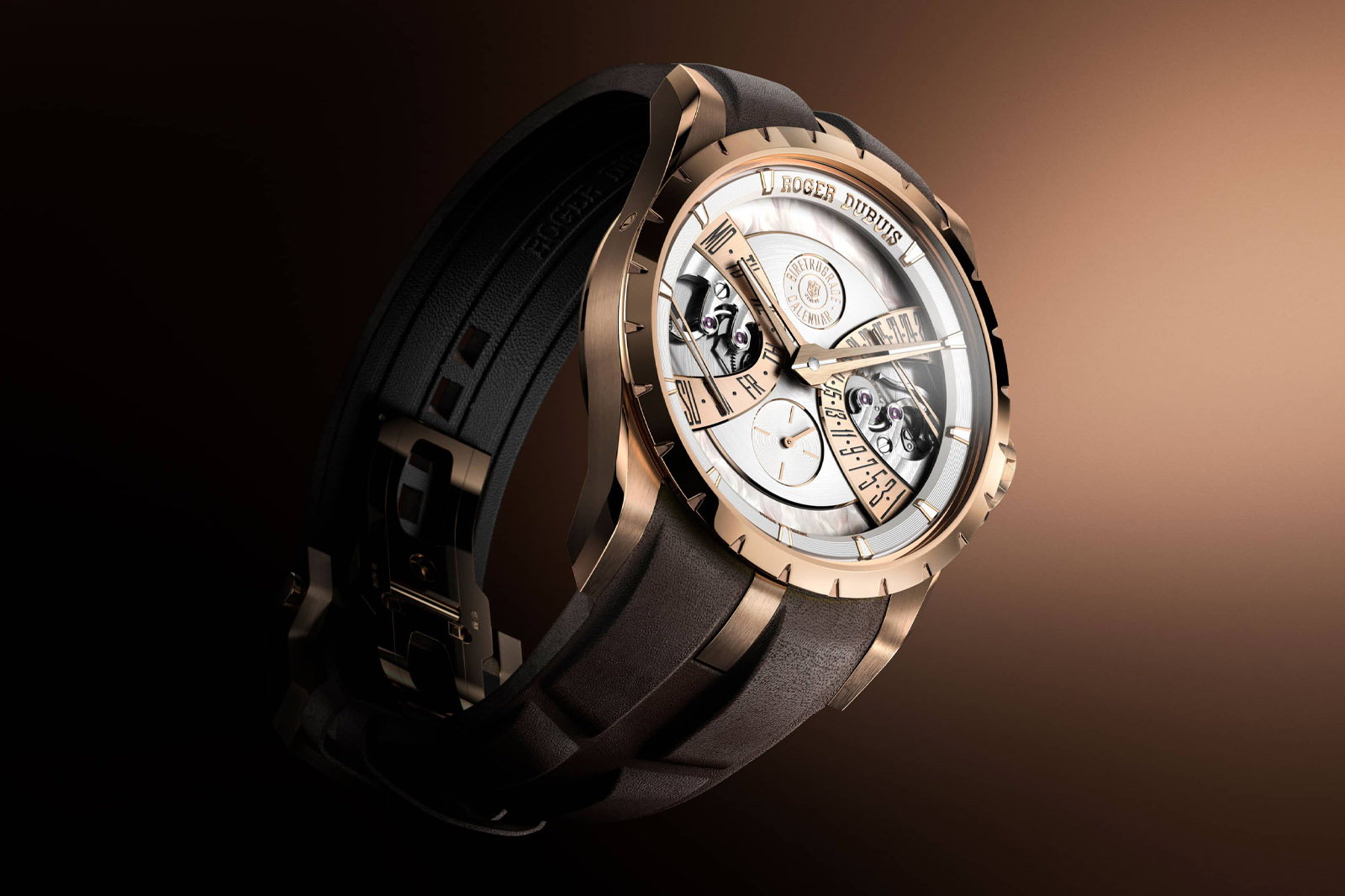
And yet, we’re in an anniversary year for Roger Dubuis and they have a slight tradition about that. There’s a reason I specifically called out the Sympathie Bi-Retrograde earlier as, every 10th anniversary, Roger Dubuis dusts off the concept for a celebratory timepiece. Case in point, the stunning new RDDBEX1179 Bi-Retrograde Calendar.
Roger Dubuis Bi-Retrograde Calendar RDDBEX1179
The calendar here is distilled to a day date function, with days on a curve at nine o’clock, date at three o’clock. As ever, these simple displays are anything but boring, contorting the numerals and letters to perfectly fit the dramatic curves extending into the centre of the dial. The space in the inner arch also reveals some of the RD 840 calibre’s mechanism underneath. It’s not skeletonised, but still offers a nod to that kind of overt, mechanical inclination.
The central dial is relatively pared-back by Roger Dubuis standards, with a small seconds subdial at six o’clock and a simple silver finish. But paired with the retrograde displays, the openworked sections, the outer dial and the rehaut leading to the Excalibur collection’s notched bezel, it’s a lot. Each new element builds up depth and visual complexity into something that feels very, very Roger Dubuis.
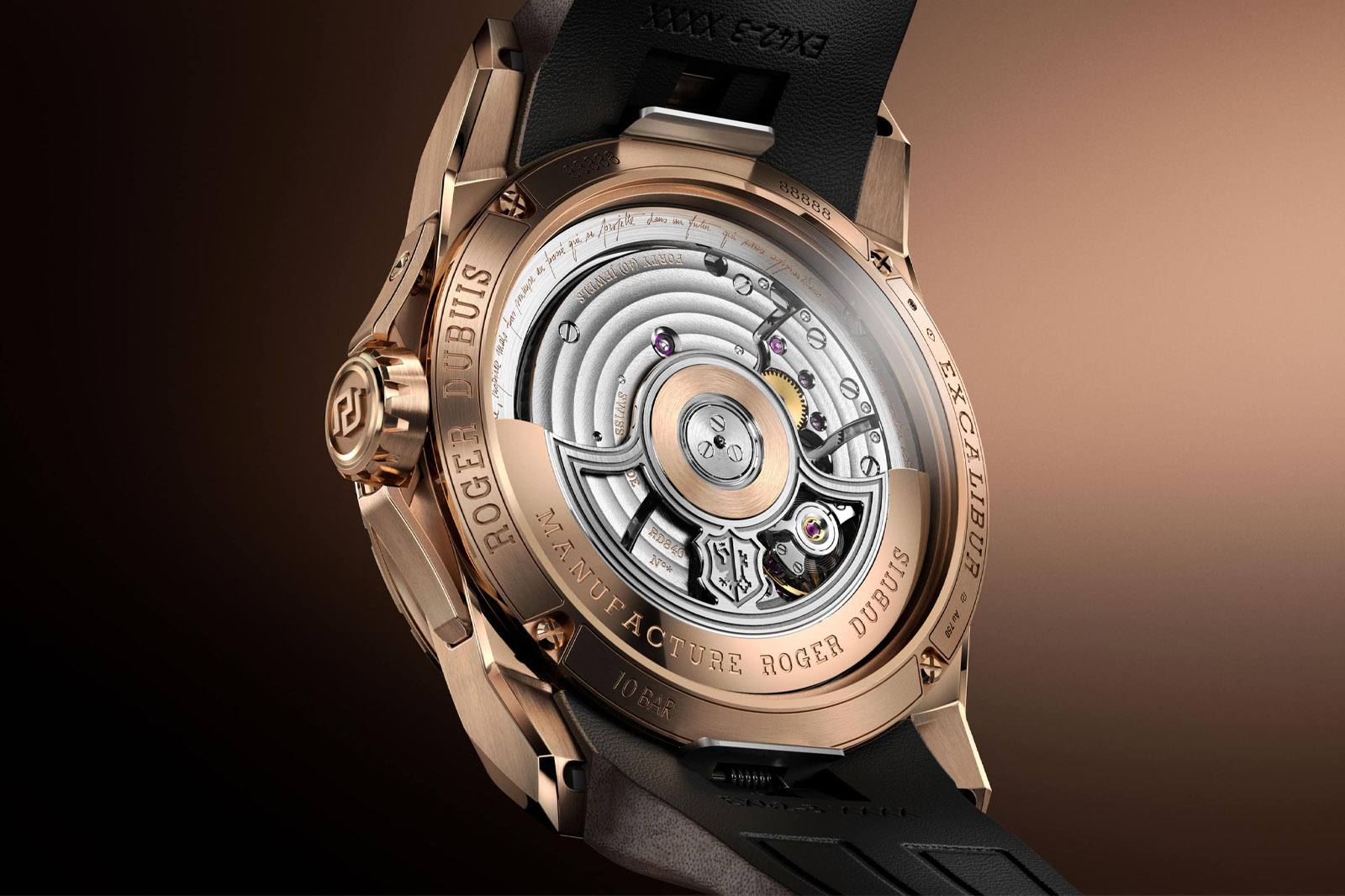
More importantly, the new watch is a nod back to the foundational mythos of Roger Dubuis both as a brand and a watchmaker. There’s a lot to be said about the raft of intensely skeletonised Excaliburs that define the modern watchmaker, but the anniversary Bi-Retrograde proves that there’s more to them than that. And with 30 years under their belt, it’s a hint that there’s plenty more anniversary Bi-Retrograde models to come.
Find out more at Roger Dubuis.