It has been 65 years since Yuri Gagarin became the first human to travel to space, a landmark moment in the history of exploration and understanding our place in the universe. It was in honour of that expedition that the Raketa watch company was founded, meaning that it is also Raketa’s 65th anniversary this year. In celebration of both events, they have launched the Raketa Baikonur, a wristwatch dedicated to space travel and designed for use by astronauts.
Starting with the case, it’s a large tool watch design at 42mm in steel with 200m water resistance. It has a smooth bezel and sharply angled lugs that emphasise the broad planes of its design. It’s also a dual crown model with one crown for setting and winding the watch and the other for rotating the internal bezel.
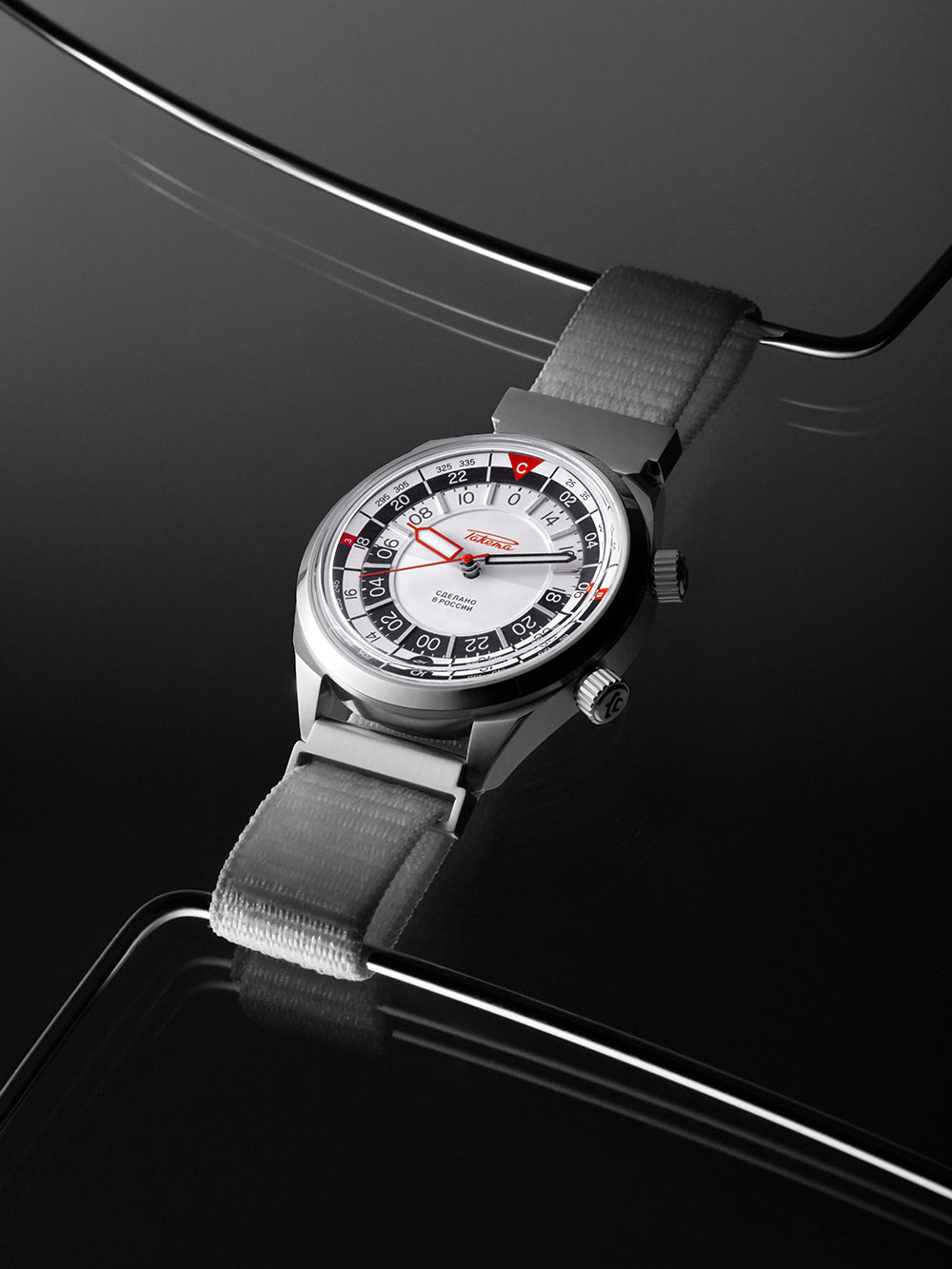

That internal bezel is fitted with two scales. On the extreme peripheral edge is a compass scale with degrees and the cardinal points displayed – designed so that when an astronaut arrives back on the planet, they are able to locate their position on Earth in case their electronic equipment was damaged by re-entry. The second scale on the bezel is a dual time zone 24-hour scale. The primary base of operations for astronauts currently is the International Space Station (ISS) which operates using the GMT time zone, so a second time zone allows astronauts to also track the time where they’re from in the world.
Interestingly, while the Raketa Baikonur has a dual time 24-hour scale, it doesn’t have an additional 24-hour hand like on most GMT watches. That’s because its primary timing scale is also 24-hour instead of the usual 12-hour. This is from the same logic as to why the Breitling Navitimer Cosmonaute uses a 24-hour scale: when you are in space you cannot rely on the day/night cycle as an indicator for time. Though the Raketa goes a step further than the Breitling by using a white/black indicator for daytime and night-time.
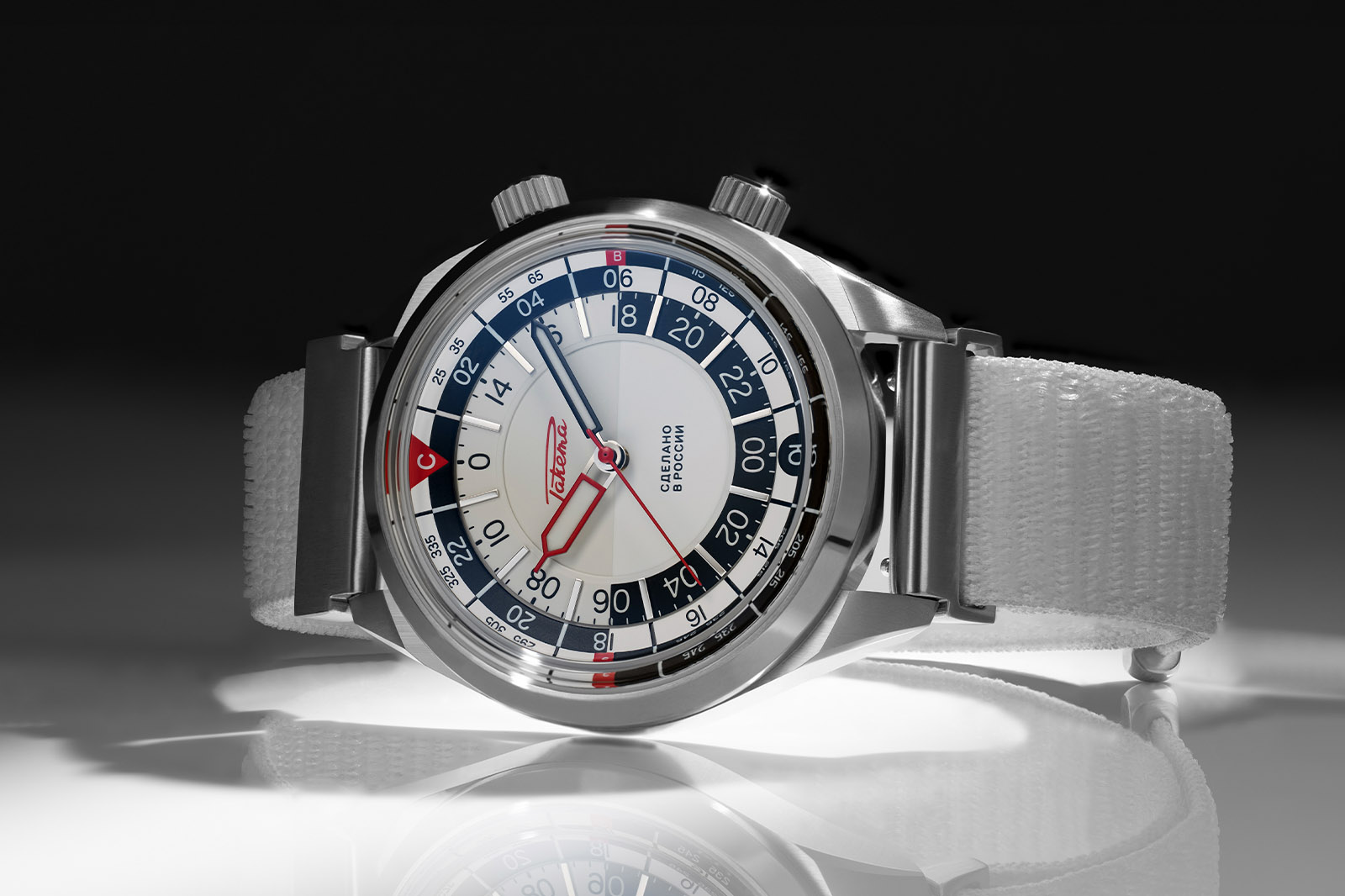
I also think that the display looks great. It manages to display quite a lot of information while maintaining a sort of retro-futuristic but also utilitarian aesthetic that looks like it wouldn’t be out of place in the recent Fantastic Four film. The utilitarian aspect is further emphasised by the Velcro strap, which is simply the most convenient option in space – though there is a leather strap alternative.
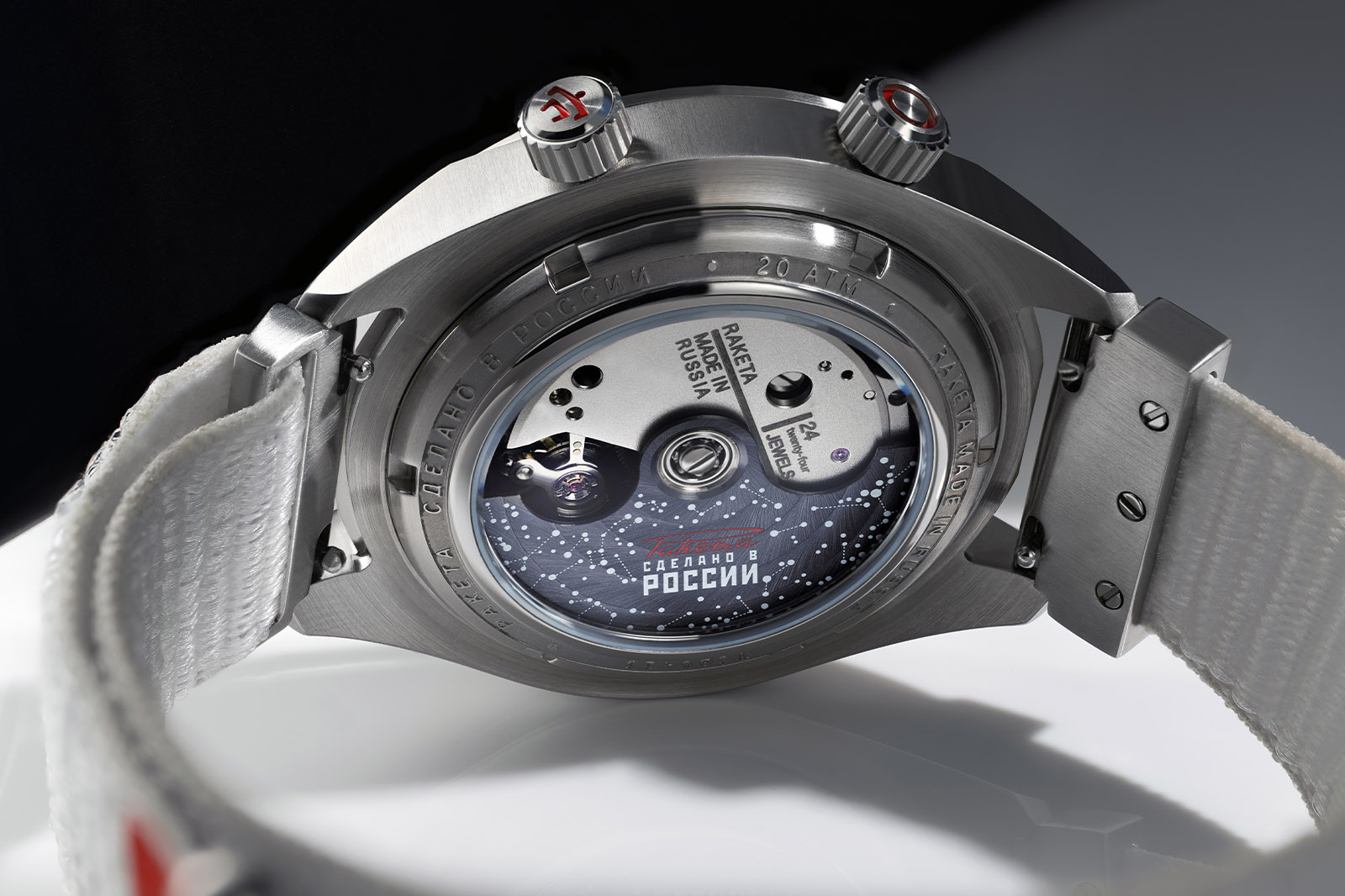
Powering the Raketa Baikonur is the Raketa in-house calibre 2624CА automatic with 40-hour power reserve and daily accuracy of -10/+20 seconds. It’s visible through the exhibition caseback where you can see that the rotor is decorated with starry constellations, furthering the space travel theme. Importantly, as automatic winding is less efficient in space the calibre has been developed with that in mind, so when you manually wind it using the crown, it decouples the self-winding system to prevent it from damaging itself.
The Raketa Baikonur is priced at €2,400 (approx. £2,090) and is available for pre-order now. And hey, with valentine’s day coming up, why not get one for the Cosmonaut in your life?
Price and Specs:
More details at Raketa.