I’ll admit a bias up front: pilot’s watches tend to leave me cold. Too many of them arrive in full costume with a 44mm case, a huge onion crown that would be more at home in a Lancaster and a Type B dial. The only things missing are the shearling jacket, the flying goggles, and a wearer shouting “chocks away”. Farer’s latest addition to the genre is a different animal. It’s subtle, and with the name of two aviation pioneers adorning it, it doesn’t need to shout to be noticed.
Those pioneers were Frank and Harold Barnwell, the brothers who built the first successful powered aircraft made in Scotland in 1909, when flying was less a hobby and more a dare. Harold became chief test pilot at Vickers and was killed testing the Vampire prototype in 1917. Frank designed the Bristol Fighter, the Bulldog, and the Blenheim, and died in a crash of his own in 1938. Nobody in that family needed a costume to prove they were aviators, and I suspect that’s why the Farer Barnwell doesn’t wear one either. It’s a pilot’s watch, but the genre is something it refers to rather than something that defines it.
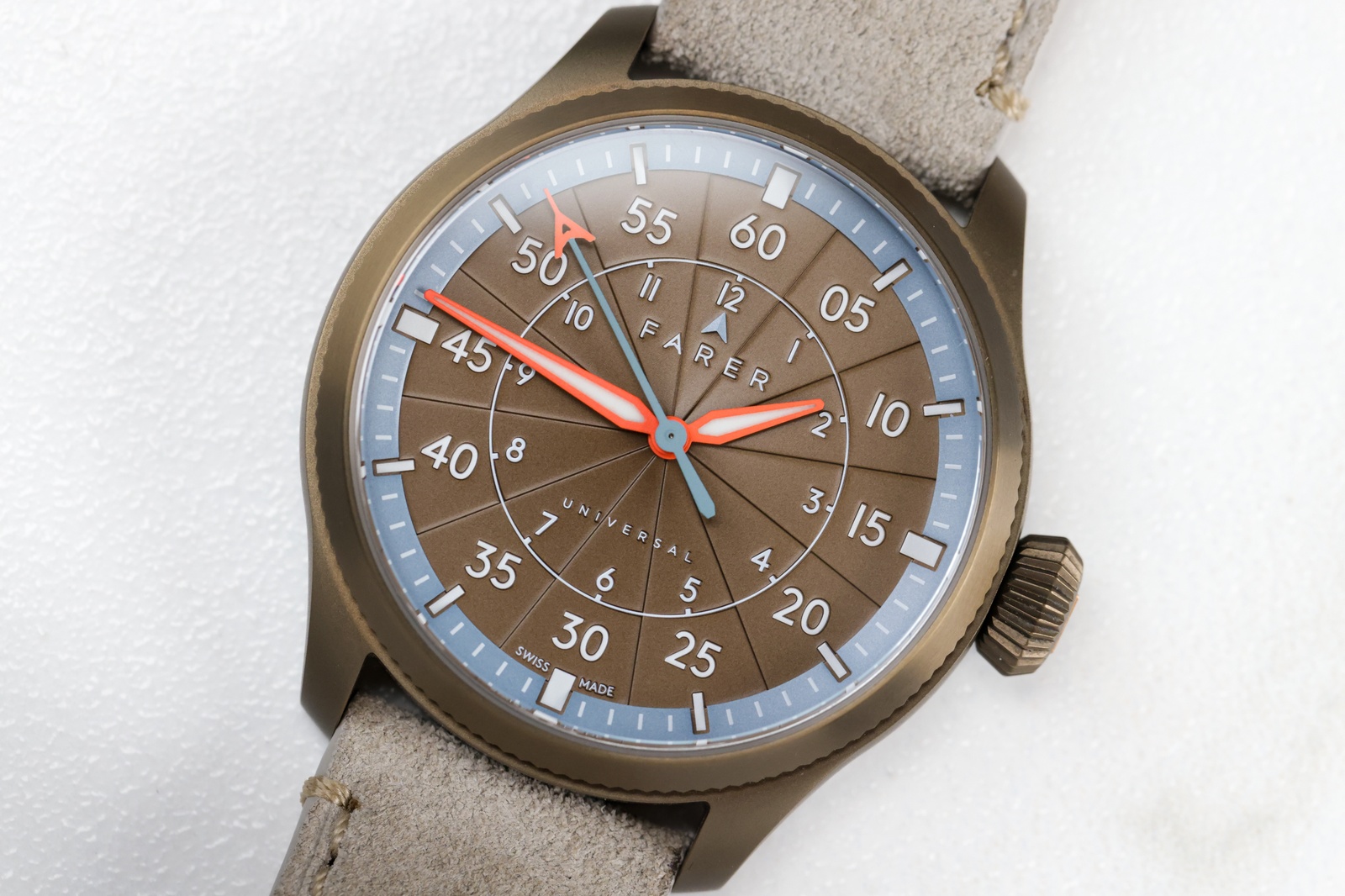

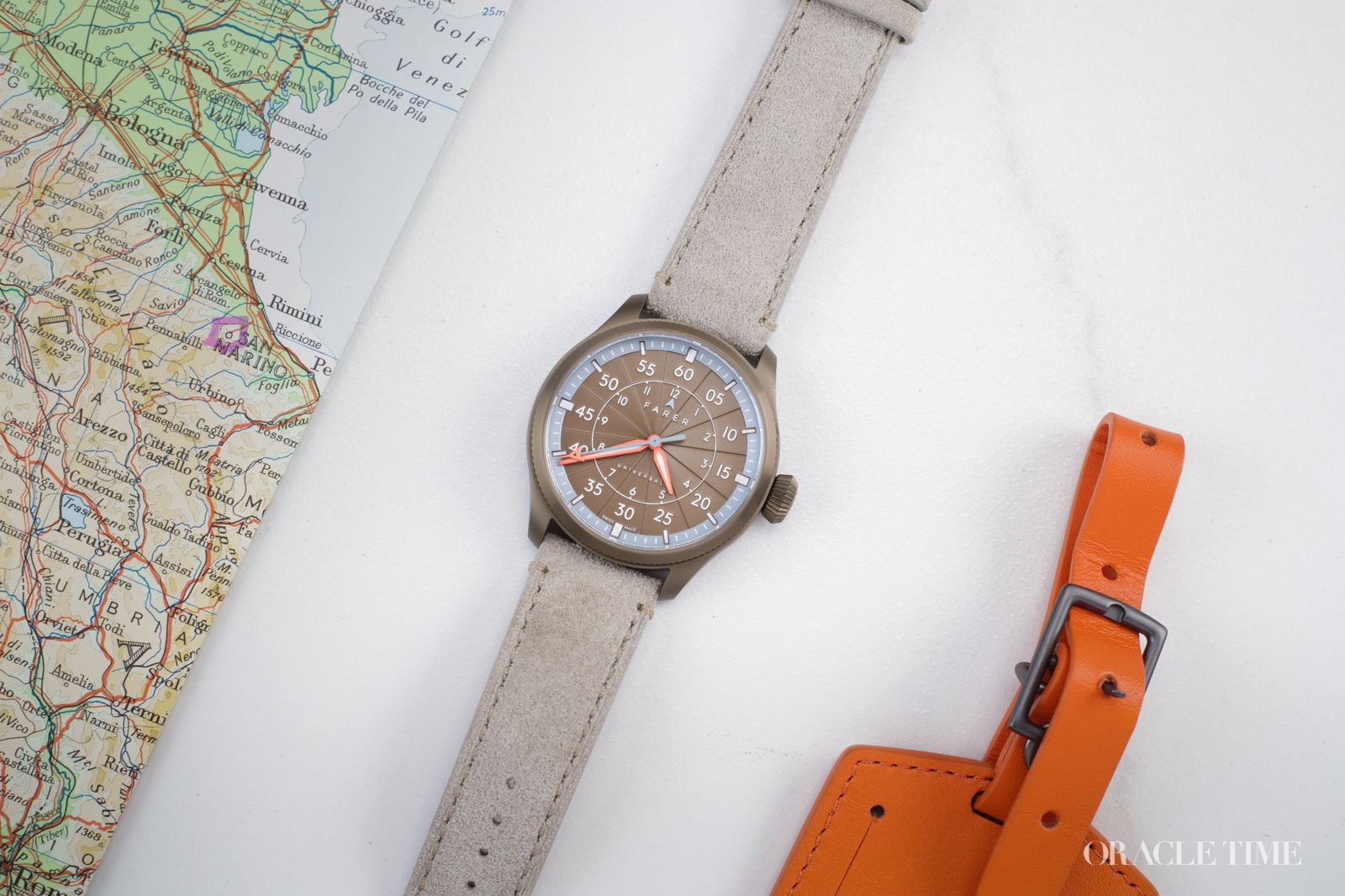
There are three signature pilot’s watch elements. It still has the Type B layout, the outsized minute track, and smaller inner hour ring that lets you read the minutes first. The handset is the lozenge type, the diamond-tipped shape that’s been standard issue since the 1940s, in orange lume to match the tip of the seconds hand. The bezel gets a coin edge, just where it joins the case and not in full, the one decorative flourish on an otherwise matte, bead-blasted case.
Where it stands out is the details. The dial is a warm, muted brown, closer to a well-used leather jacket than anything you’d find in a cockpit, and the hands are a hot orange that lands somewhere near coral in daylight. Against the brown they jump out, offering important legibility, which is the one thing a pilot’s watch has to deliver. The dial is properly layered too: a raised, angled minute track in sky blue runs around the outside, the hour scale sits inside it with indented markers.
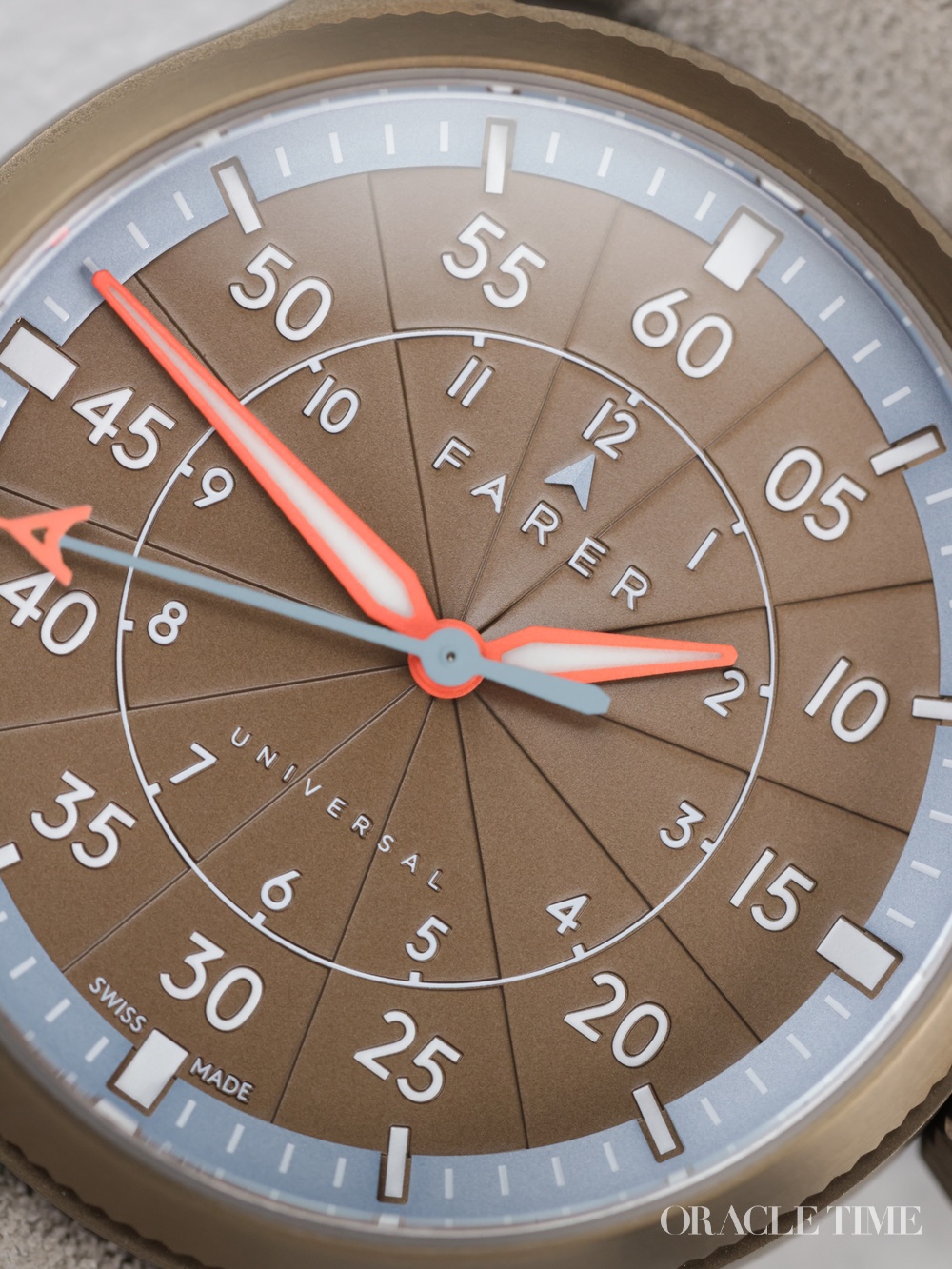
Underneath the lot is a 12-segment, three-dimensional pattern across the main plate of the dial. Each wedge slopes anti-clockwise in a way that Farer says is inspired by the fan blades of a jet engine. I’m not totally sold on this detail. It reminds me a little of a Trivial Pursuit counter, and I kept wondering what the dial would look like flat. Then again, I’m not sure it would have the depth without it, so I’ll call it a draw.
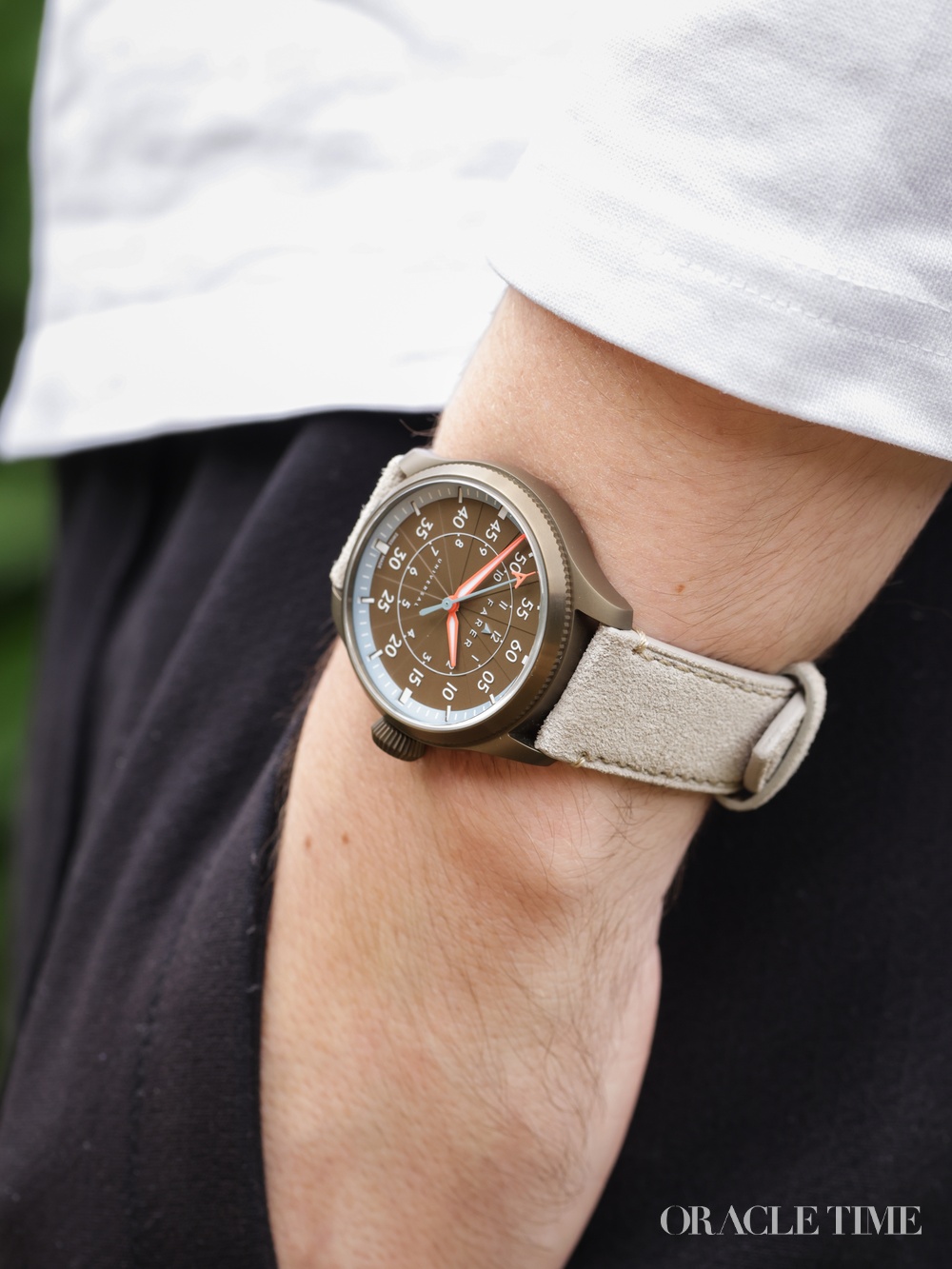
And here’s where I have to confess something. I got halfway through writing this review convinced the case was bronze. It isn’t. It’s grade 2 titanium with a burnished brown PVD coating, which means you get the warm tone of a bronze watch without the patina, the green wrist, or the weight. Bronze is lovely for about a fortnight and then it becomes a project. This stays exactly as it left the factory. The matte finish also means it’s not fussy about what you wear it with – on my washed-out blue jumper it looked like it had been chosen on purpose.
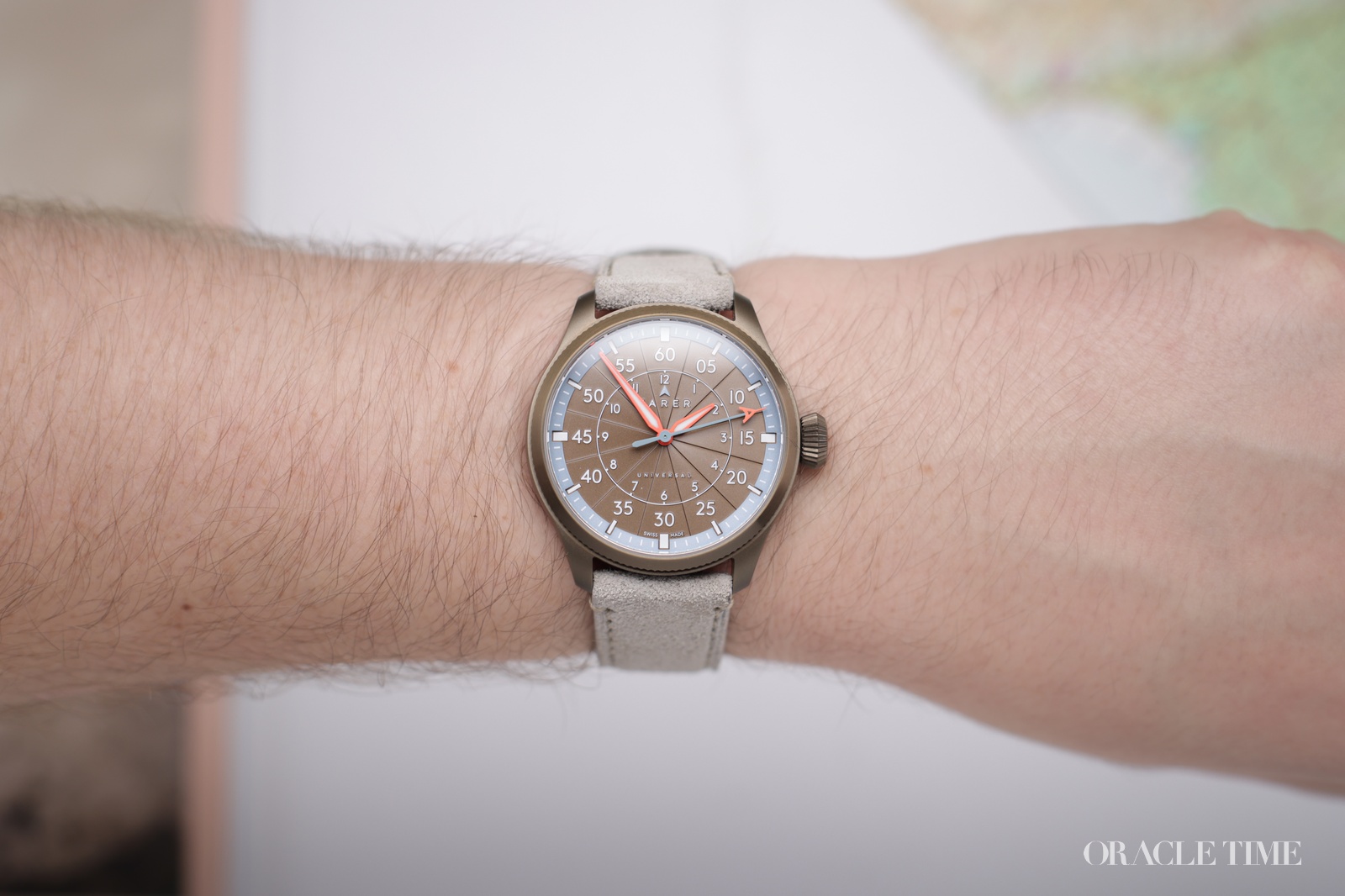
The sizing is close to perfect. 40mm diameter, 43mm lug-to-lug, and 10.9mm thick is the kind of spec sheet that appeals to my bang-average wrist, and the feel is helped by a short lug profile and a relaxed suede strap that needed no breaking in. The conical crown is big, as the genre demands, but not obtrusive, and the bronze cap on the end carries Farer’s ‘A’ logo.
100m of water resistance is the sweet spot for a watch like this, resilient enough that you’re not constantly worried about it without pretending it’s a diver. One thing that puzzled me on the dial was the word ‘Universal’ beneath the logo. It’s not a model name. It’s the second half of the company’s full name, Farer Universal, which has been there since the brand launched in 2015 and which somehow, I always forget about.
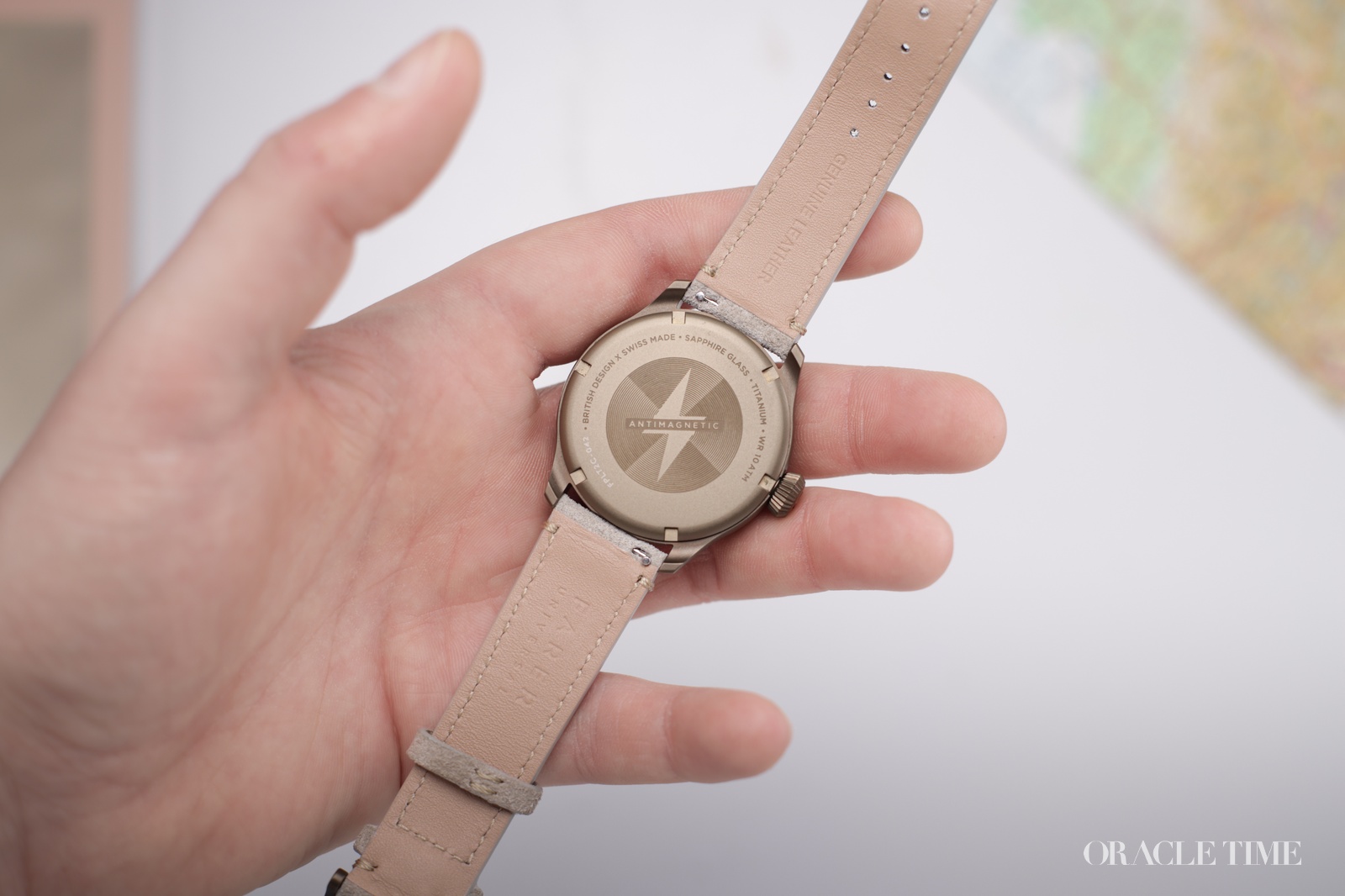
Flip it over and the screw-down caseback is engraved with Farer’s anti-magnetic marque, a quiet, textured bit of detail that refers to the soft iron Faraday cage around the movement. A cockpit is one of the most magnetic places a watch can end up, so the cage protects the Sellita SW300-1 inside to 500 Gauss, over eight times the ISO threshold for calling a watch magnetic-resistant. The SW300 is the slimmer, longer-running sibling of the ubiquitous SW200, good for 56 hours of reserve, and Farer specifies the Elaboré grade adjusted in four positions.
At £1,350 the Barnwell isn’t the cheapest Swiss-powered pilot’s watch you can buy, but it’s one of the few I’d actually wear. It sits in the middle ground between field and flight, which coming from someone who doesn’t like pilot’s watches, that’s about as high as the praise gets.
Price and Specs:
More details at Farer.