
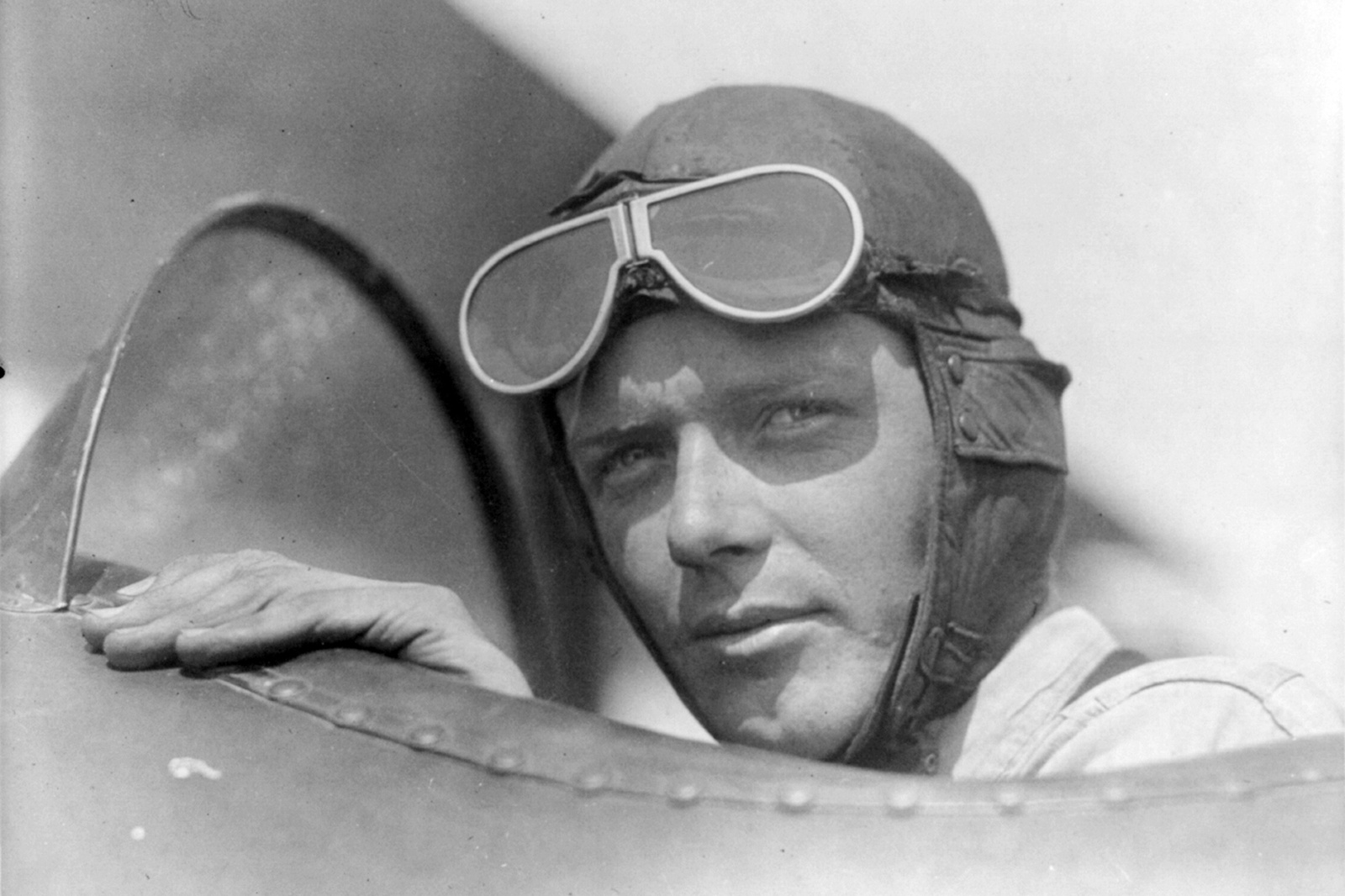
In 1927, Charles Lindbergh made aviation history. Up to that point the Minnesotan native had been trained in the U.S. Army Air Service and the nascent U.S. Air Mail, but on 20th May he set out on a journey slightly longer than his usual postal route: the 3,600 miles from New York to Paris.
Flying alone for 33 hours in the legendary custom-built monoplane, the Spirit of St. Louis, he became not just the first person ever to fly solo across the Atlantic, but set the record for the longest flight in history at the time. The plane was an incredible feat of engineering and the journey an incredible feat of navigation – not least because Lindberg was, excuse the pun, winging it.
Lindberg navigated via dead reckoning. In layman’s terms, he pointed his plane in the right direction and just kept going, using little more than a compass and crossed fingers. The fact that he made it at all makes it seem like he should have bought a lottery ticket the same day – a fact not lost on the pilot, especially when he was caught in a storm the following year. There was a gap in his knowledge that he needed to fill.
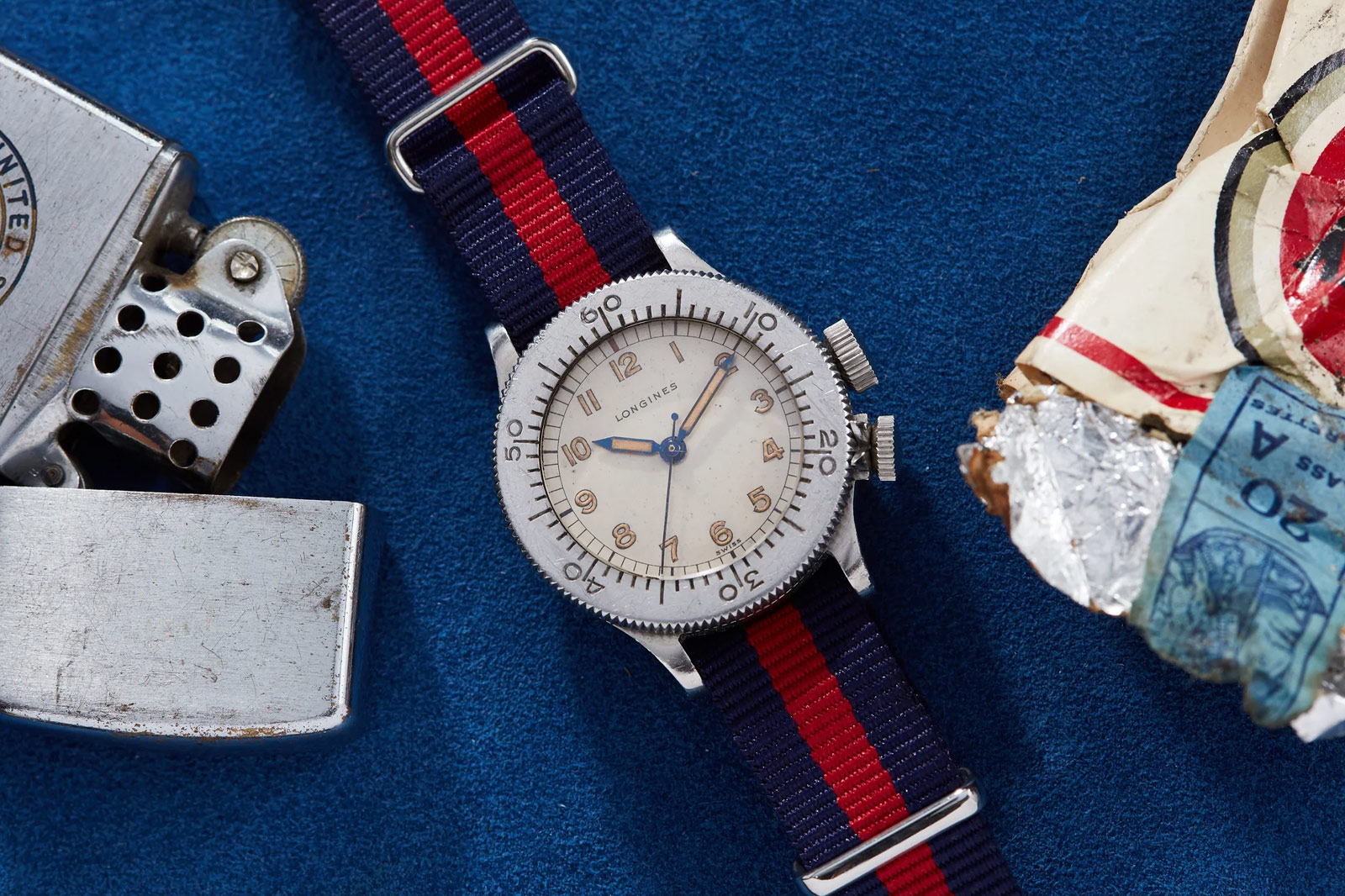
To that end, he went to Philip Van Horn Weems. Weems was a serious innovator in navigation and had invented methods and instruments to help cross the globe. Alongside literally writing the book on air navigation in 1930, he’s most famous for the Weems Plotter, a handy little instrument used to quickly plot courses. He also, however, invented the Second Setting Watch, developed with Longines. This, incidentally, was the first ever watch with a rotating bezel.
Lindberg already had history with Longines. The watchmaker timed his 33-hour flight as the official chronometer of the Fédération Aéronautique Internationale, so he had faith that the Swiss brand knew their ticks from their tocks. And when Weems showed him the Second Setting Watch, originally designed to synchronise radio signals, Lindberg’s own inner inventor got to work.
He wanted something similar in concept to the Second Setting Watch, but that could instead be used to calculate longitude via celestial navigation. After all, when you’re soaring above the clouds, the sun and stars are pretty good signposts that you’re heading in the right direction. The result of Lindberg’s idea was the imposing, 47.5mm Longines Hour Angle watch with its oversized crown and rotating bezel. So, how does it actually work?
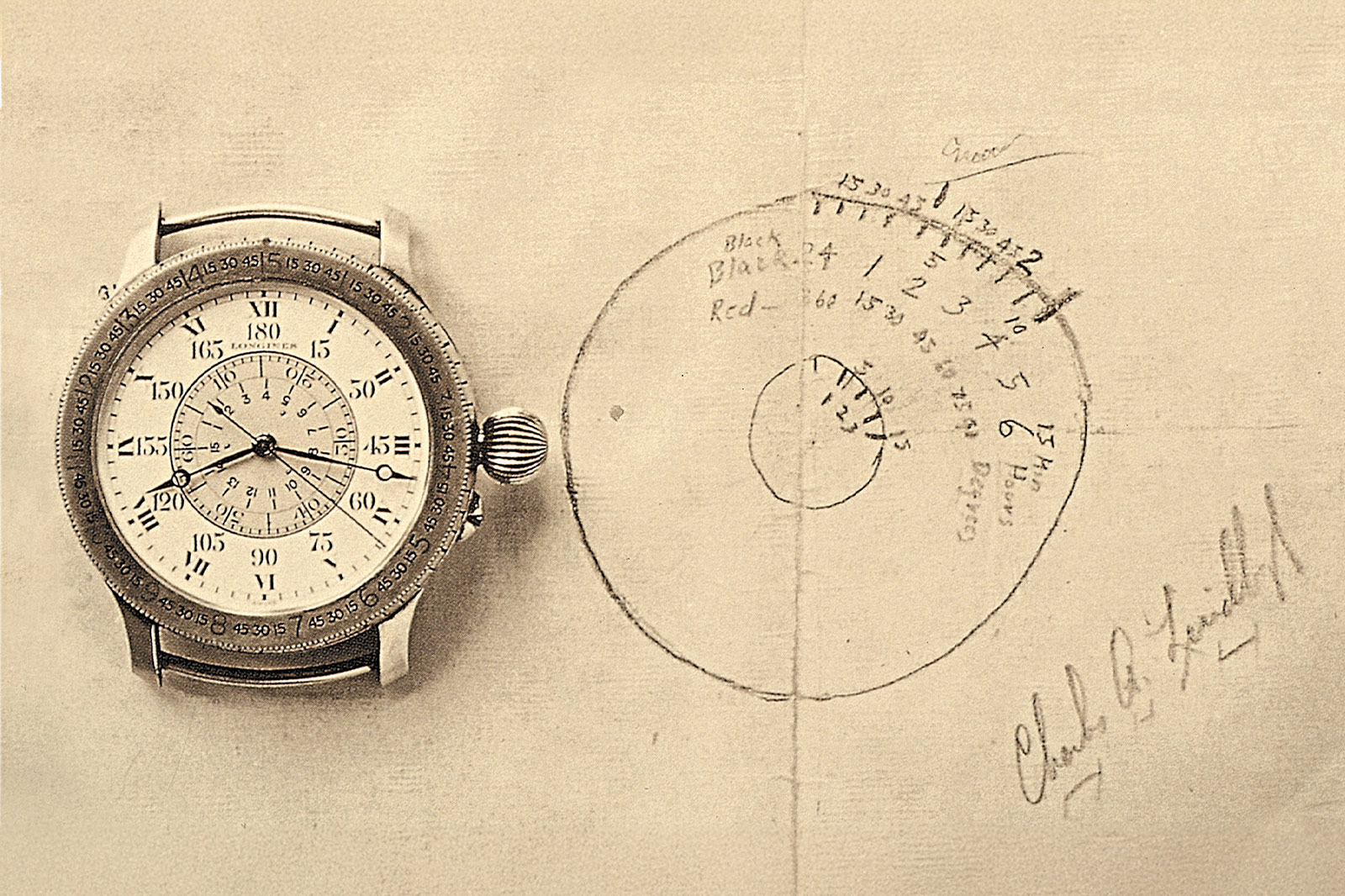
Hour angle is an odd term, but it essentially comes down to longitude. Every place on the globe can be denoted by coordinates of latitude and longitude and while the former is pretty simple to calculate – you can use a sextant for that which is a cool bit of kit in its own right – but longitude is notoriously more difficult. John Harrison won a lot of money for his marine chronometer making it possible. The Hour Angle watch makes things a bit simpler. Explaining how it works is less so.
First, you need to know the difference between mean time and true solar time. Not every day is exactly 24 hours in reality, but that’s not particularly convenient, so most of the time we assume that it is. In order to set the Hour Angle Watch’s bezel correctly, you move it back by the difference between the two. Lindberg and pilots of the time would have had an astronomical almanac with that number noted down.


From there, you look at where the hour hand is pointing on the inner 180-degree markings. Three o’clock would be 45 degrees, six o’clock would be 90 degrees, and so on. You then read the minute hand off the outer bezel you’ve previously set. Add the two together and you get the hour angle of Greenwich. Let’s say it’s 4:30 at the Royal Observatory; that would make the hour angle 67° 30`. You are now halfway through finding your longitude.
The next step is to do the same for your local solar time. As you’re using true solar time rather than mean time, you can put the bezel back to its default position, with the 15 at 12 o’clock. You can then use a sextant to work out the local time, set the time and read off the degrees once again. Let’s say local time is 2:45 in the afternoon; that’s 37° 30`. Finally, find out the difference between the two -a nice, round 30°. This is your longitude.
The Longines Hour Angle is a great tool for working all of this out and while Lindberg didn’t need it on his transatlantic Paris vacation, it became a useful instrument for early pilots. Perhaps more than that though, it was also one of the earliest watches with a calculating bezel, building on the Weems Second Setting watch before it and laying the foundations for dive watches and slide rule bezels to follow decades later.
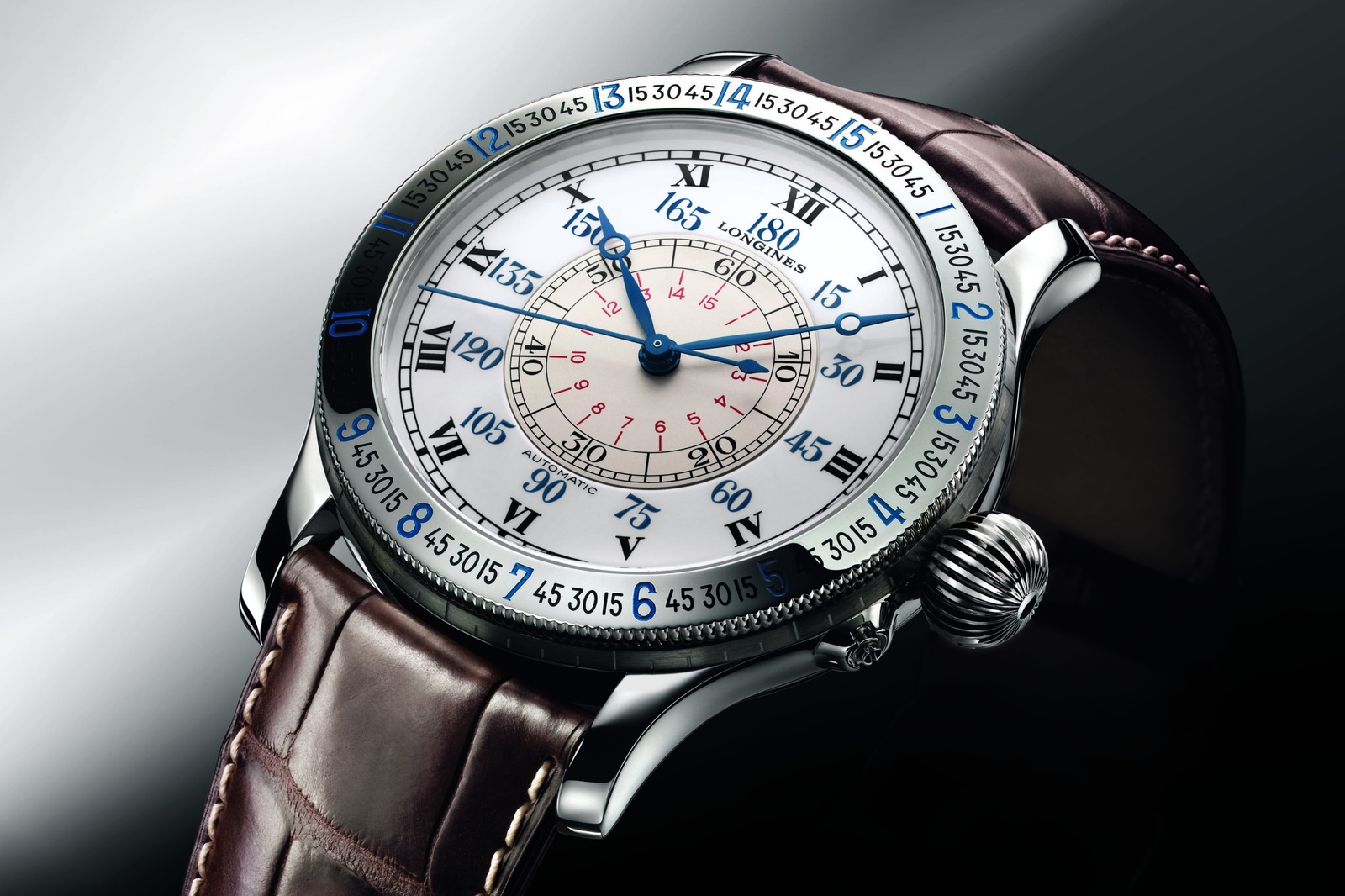
It’s also a fantastic looking piece of watchmaking history, and surprisingly one that’s not too expensive. Despite being nearly a full century old, you can get decent examples for around the £5,000 mark – though you’ll need to swoop in when you see one as they don’t come up often.
Fortunately, there are plenty of more modern versions. Smaller sized models from the ’90s will set you back £2,000, give or take a few hundred, and the current, 47.5mm version in Longines line-up is priced at £5,050 new. That last is a wonderfully faithful ode to the original, even if it lacks some of the romance of genuine navigational use. Either way, the Longines Lindberg Hour Angle is one of history’s finest timekeeping co-pilots.
More details at Longines.


Really enjoyable and well written article. I found it explained using the Hour Angle (not to be confused with the Kurt Angle) in a really accessible way.