Long before marketing departments turned tool watches into luxury symbols, some were simply just that, tools. No fanfare, no fluff, just dependable machines, worn by uniforms tasked on missions to fly, navigate, and survive. Among the quiet giants of that era sits Lemania, a name that never yearned for attention but earned its place in horological history through sheer technical excellence.
Tucked away in L’Orient, a tiny village in Switzerland’s Vallée de Joux, Lemania wasn’t about flamboyance. It thrived on movement-making, and for decades, it was the engine room of Swiss watchmaking. While Omega and Tissot often occupied centre stage, many of the most enduring chronographs were ticking thanks to Lemania calibres, including the Omega Speedmaster as well as complicated Vacheron Constantins and Patek Philippes – and even a recent Venezianico using NOS movements.

Lemania Series 1 Monopusher Chronograph, image credit: Analog:Shift
But where Lemania truly left its mark was in military chronographs, particularly those made for the British Ministry of Defence and the Swedish Air Force during the mid-20th century. These weren’t commercial releases. They were contract-built, purpose-driven watches built to strict spec sheets, designed to work in the most demanding conditions.
One of the most recognisable examples is the Lemania Series 1 Monopusher Chronograph, issued to the British RAF around the 1950s. Designated 6BB/924-3306, it features a 40mm stainless steel case with fixed lugs and a single pusher at two o’clock controlling start, stop, and reset functions. It’s powered by the hand-wound calibre 2220, a column-wheel movement prized for its reliability and ease of servicing.
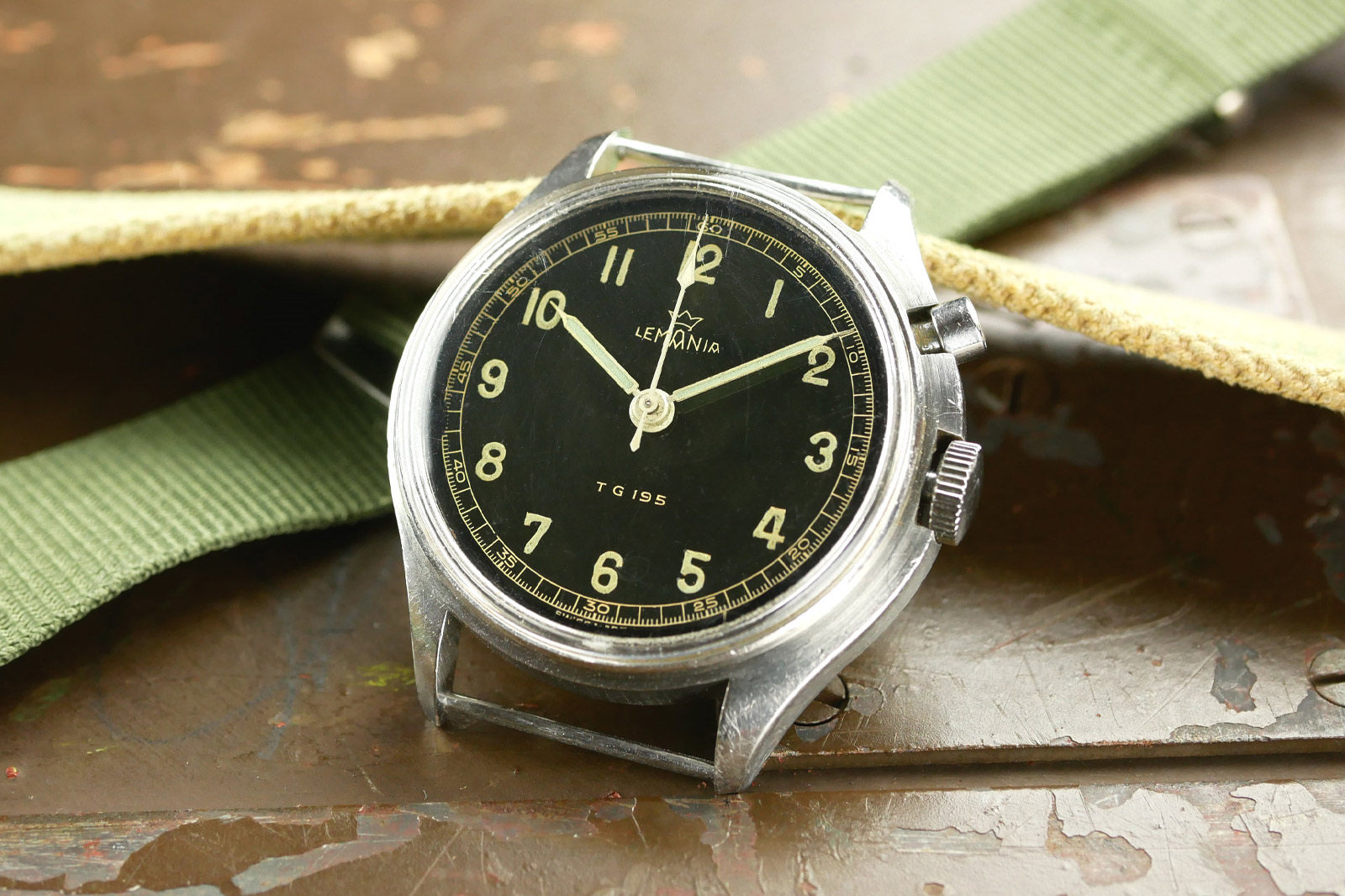
Lemania TG195, image credit: Finest Hour
These watches were built to strict military specifications with features such as matte black dials for legibility, Arabic numerals printed in stark white, and luminous paint carefully applied to the twelve and six numerals, plots around the dial, and syringe hands. Everything was functional. Even the asymmetrical case, with a slightly recessed crown, was a deliberate choice to reduce snagging and protect the winding mechanism during operation.
In the 1960s and ‘70s, Lemania introduced updated variants, such as the Lemania TG 195 and TG 195/2, developed for the Swedish military (Försvarsmakten). Despite appearing like monopushers, these are two-pusher chronographs, equipped with a flyback function. To operate these models, pressing the top pusher disengages the movement, pops the crown out, and resets the seconds hand to zero. The watch only resumes once the crown is pushed back in, a feature that is especially valuable for synchronisation and crucial in operational settings.

Lemania Calibre 2225, image credit: Auctionet

Inside these cases beat the Calibre 2225, another hand-wound column-wheel movement. Swedish Air Force-issued pieces often carry the three-crown insignia engraved on the caseback and, occasionally, the Tre Kronor marking on the dial, which makes them particularly desirable today. These models were typically issued to pilots flying Saab 35 Draken and 37 Viggen jets, and while it may just seem like a charming nickname, the watches were literal cockpit tools, and at 40mm, for the era, they were sized as such.
Meanwhile, the Lemania 5100-powered chronographs became standard-issue in the ‘70s and ‘80s for several NATO forces, including West Germany’s Bundeswehr. Though later than the hand-wound references, the automatic Cal. 5100 deserves its own mention. Designed for pure utility, it featured a central minute and second chronograph hand which is far more legible than traditional subdials, along with day/date complications and shock resistance that met military standards at the time.
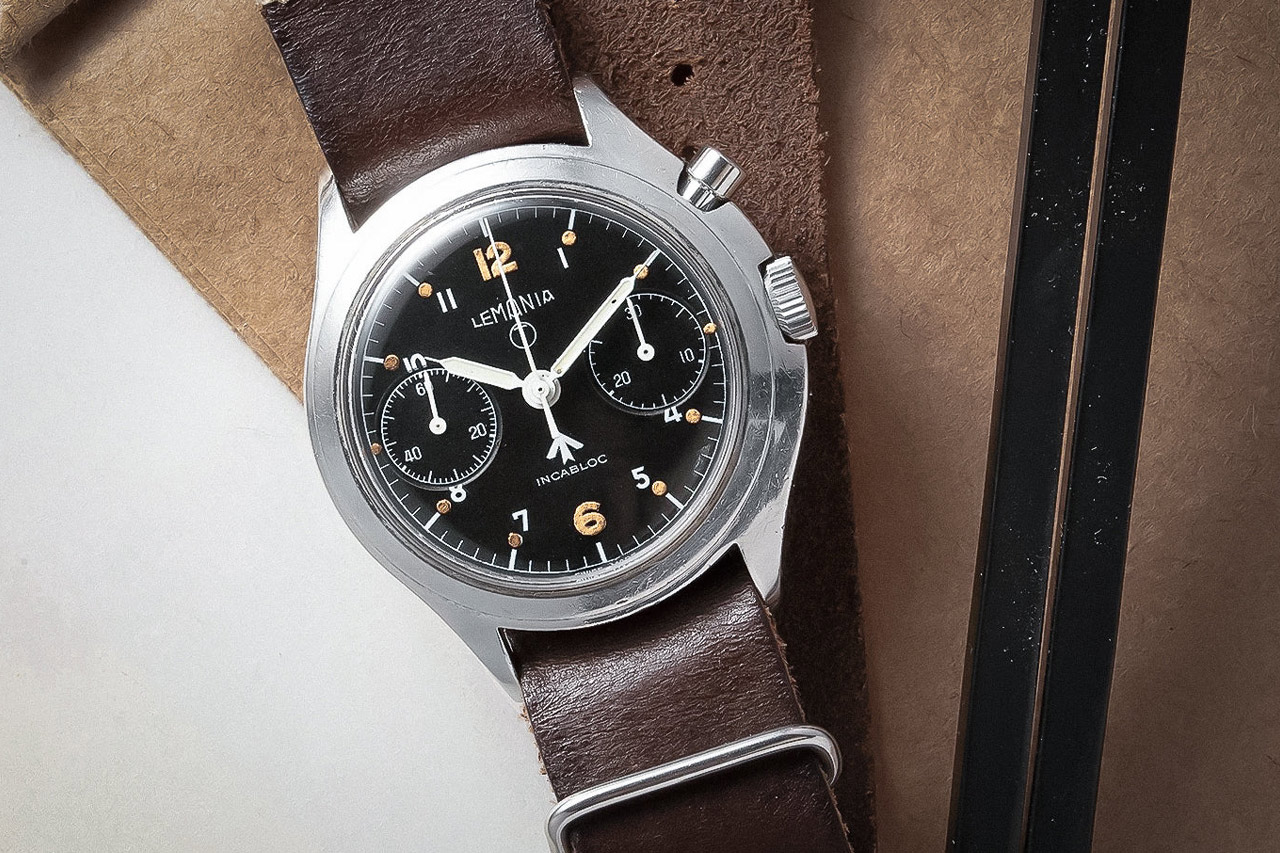
Lemania RAF Monopusher Series 3, image credit: Hairspring
What sets Lemania apart, even today, is its inability to cut corners. Whether monopusher or flyback, whether for the RAF or Swedish Air Force, each model reflected decades of mechanical experience boiled down to the essentials. They weren’t watches designed to be collectable, they became collectable because they were designed to last.
Even as Lemania’s name faded from dials as the business was absorbed into Breguet and eventually folded into Swatch Group, their calibres live on. You’ll find rebranded Lemania movements in watches from Heuer, Omega, Sinn, and others throughout the ‘70s and ‘80s. Chances are, if you’re hunting military chronographs from this era, you’re looking at Lemania architecture, whether it’s mentioned or not.
For collectors today, these watches offer a different kind of satisfaction. There’s no opulence, no polished bevels, no enamel dials. What you get is history. Provenance. And watches that were worn by real people doing important work.
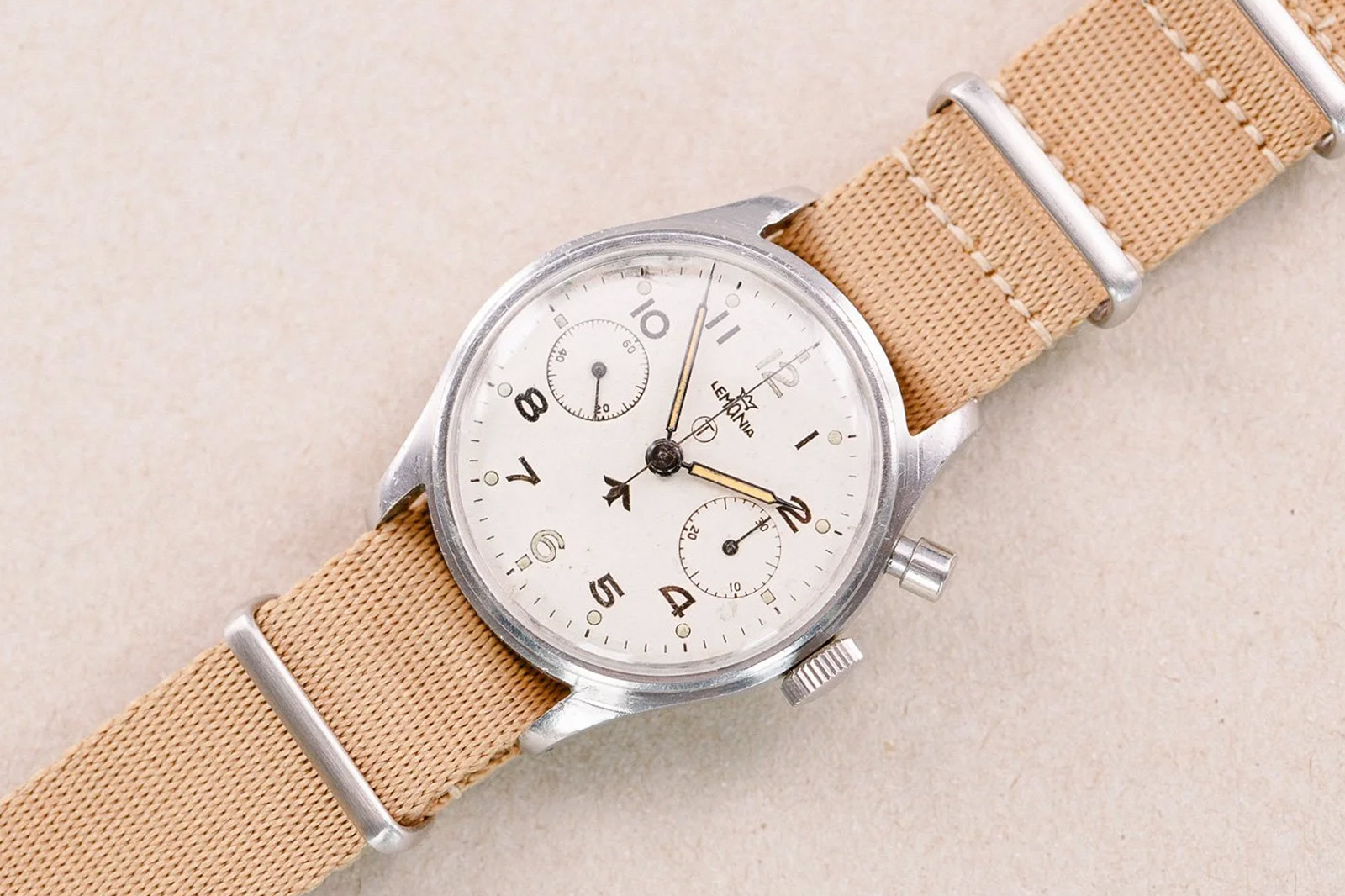
Lemania HS9 Military Royal Navy Fleet Air Arm, image credit: Orologium
For those in the market for a Lemania chronograph, start with condition. It may appear obvious, but many military watches were heavily worn and frequently serviced. Look for crisp case lines and dials with even patina. Avoid overly polished examples and beware of re-lumed dials as these strip the watch of its authenticity. The presence of military engravings on the caseback is crucial: for British-issued Lemanias, look for the Broad Arrow symbol and MoD reference numbers (like 6BB), while Swedish examples will often show the Flygvapnet designation or three crowns.
Originality is paramount. Many of these pieces were maintained under government contract, meaning some had parts swapped or updated during service. Matching serial numbers, untouched dials, and original hands go a long way in retaining both value and historical interest.
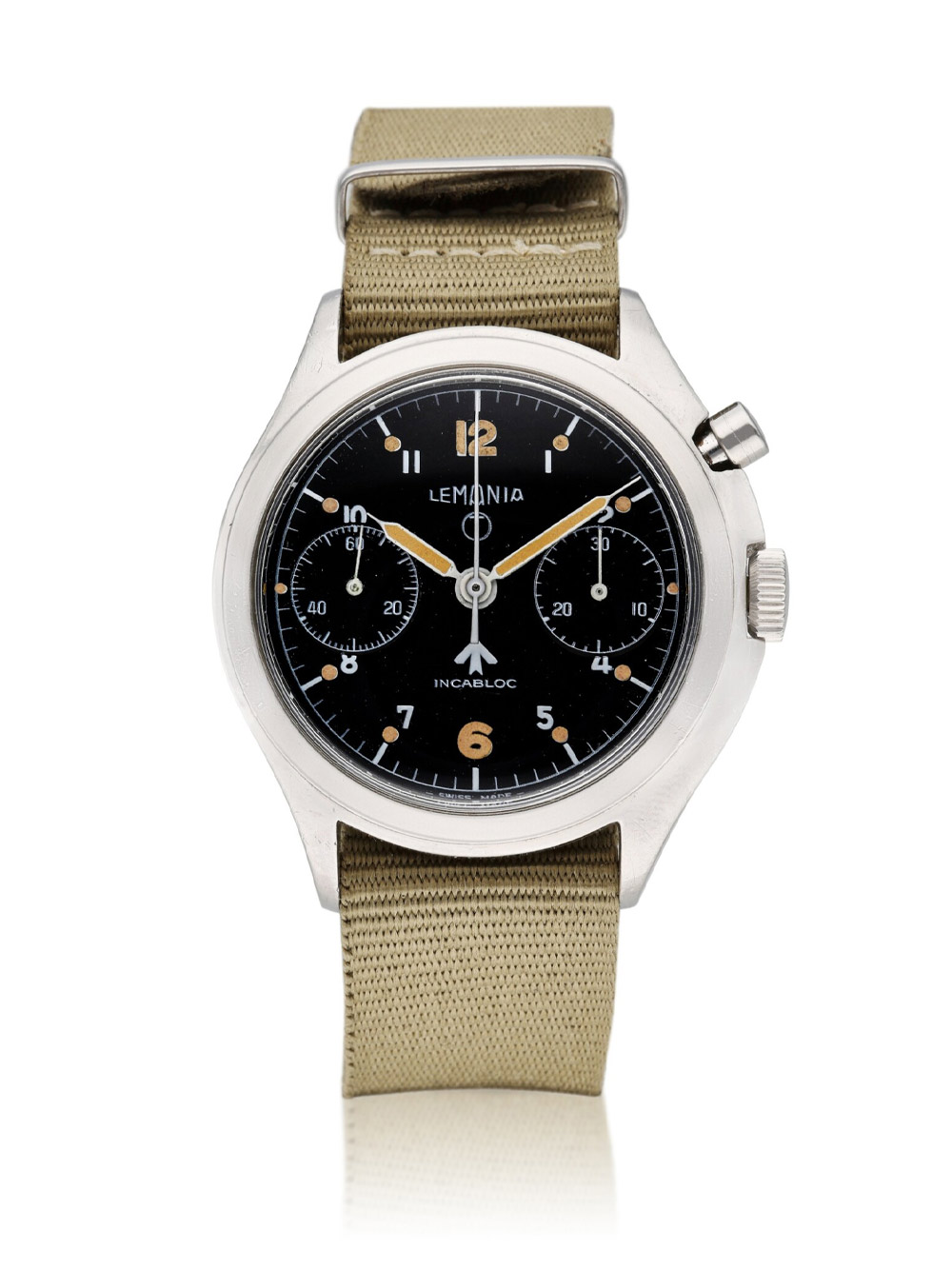
Lemania 6BB 924-3306, image credit: Sotheby’s
For 6BB/924-3306 examples, prices start around £5,000 and can rise to around £11,000. The likes of the TG 195 remain around the £5,000, whereas the 5100-powered Lemania models are around half again at £2,500.
Lemania’s military chronographs don’t clamour for attention but carry genuine significance. There’s a kind of beauty in their restraint, not the polished shine that begs to be noticed, but the quiet reliability of something made to last.