Are watches a good investment? It’s a common question and the simple answer is it depends on what you buy. Like most things the prices of new watches have risen over the years. A new Rolex Submariner in the 1950s cost less than £100 (or around £3,000 in today’s money) and now a Sub at retail is £9,550. However, some legendary watches have such star appeal that their prices have increased at a rate far beyond the rate of inflation and the rate of the brand’s price increases.
These legendary watches have seen their prices accelerate because they’ve captured the hearts of the watch collecting community thanks to their stories and their history. Take a look at Paul Newman’s famous Daytona which reappeared after many lost years and sold at auction for $17.8million. Other legends are born because they’re the origin of a lineage, such as the 5402ST being the first Audemars Piguet Royal Oak and starting a trend which is still in full flight today. These watches have established an emotional connection with collectors and it shows in their current prices. We’ve picked 6 legendary watches and are going to take a look at what they are worth today.
Rolex Daytona ref. 6239

Image credit: Phillips
The Rolex Daytona 6239 is perhaps the most well-known vintage watch among the collecting community. For many collectors it’s an end-game watch, if vintage Rolex and vintage Daytona are your thing. Originally produced in 1963, a steel 6239 would have cost approx. $200 (roughly £70 using 1963 exchange rates). In today’s money this would be equivalent to £1,875 which is surprisingly reasonable for a Daytona.
The watch has the recognisable Daytona configuration with a tri-compax chronograph subdials, pump pushers and tachymeter on the bezel. The dial is often described as ‘art deco style’ with box markers on the subdials and a contrasting minute track around the outer edge.
However, all of this isn’t what made it legendary. The 6239 was Paul Newman’s watch of choice and when his watch broke auction records in 2017 it sent the reference into the stratosphere. Today, the price of a 6239 is entirely dependent on condition and having original parts. For a good condition 6239, you will struggle to find one under £100,000. At a 2024 Christie’s auction in New York, one sold for $453,600 (approx £341,000). Compared to the 1963 price that’s a 226,700% increase. Not a bad return for a $200 purchase.
Omega Speedmaster ref. 105.012

Image credit: Omegaforums
Think Speedmaster and you think of the moon. The Speedmaster 105.012 is the definitive Moonwatch, it’s the reference worn by Buzz Aldrin and Neil Armstrong on Apollo 11 and was the first watch on the surface of the moon. Legendary status confirmed.
The Speedmaster’s release coincided with the Daytona 6239 and hit shop windows in early 1964 and was even roughly the same price. Meaning we have familiar figures of $200 (approx £70 using 1964 exchange rates) or £1,875 in today’s terms. It’s hard to follow being the ‘first watch on the moon’ but there were some other firsts that made this Speedy standout. It was the first Speedmaster with twisted lugs and the first to carry the word ‘Professional’ on the dial. Not that anyone was calling NASA astronauts amateurs beforehand.
During its four years of production there were a few subtle changes to things like the caseback, pushers and parts of dial text. Although, these minor variations don’t tend to have much impact on pricing today. Despite its legendary watch status the Speedmaster 105.012 has never hit the price heights of the Daytona and today you’ll find the Speedy around £12,000. At just over a 17,000% increase compared to the 1964 price that’s a fairly handy return on your investment.
Audemars Piguet Royal Oak ref. 5402ST
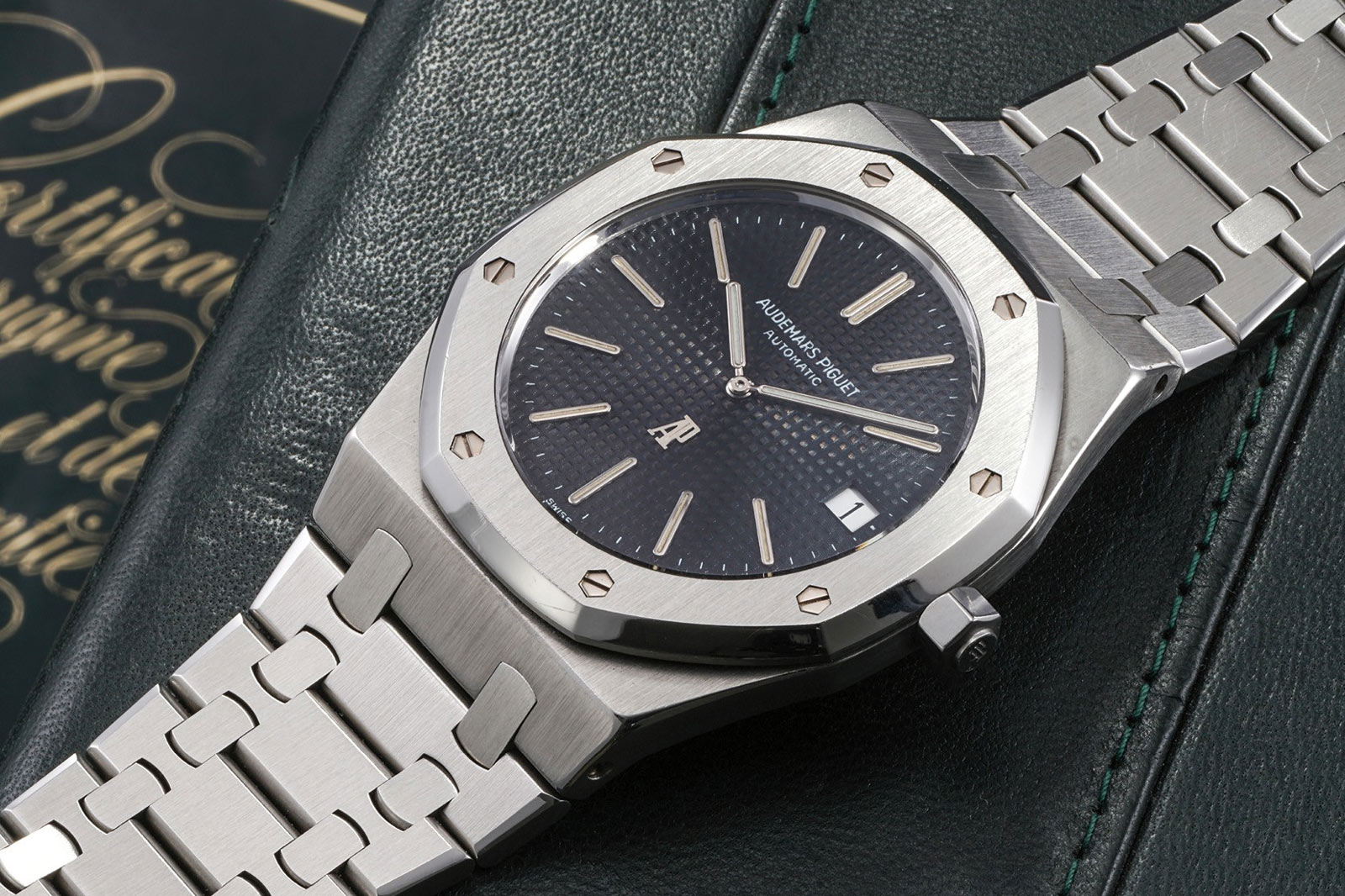
Image credit: Phillips

The Royal Oak is Audemars Piguet’s flagship collection with AP occasionally being accused of being a one watch brand. However, the Offshore and growing popularity of the Code 11.59 have quelled this chatter. The origin story of the Royal Oak though is Gerald Genta’s original design, the 5402ST.
Genta was a man with the Midas touch with almost everything he conceived turning to watchmaking gold. This 1972 Royal Oak release represents the birth of the steel sports watch phenomenon. It’s a legendary watch that sparked a trend that’s still around today and it did it with an octagonal case, exposed screws and approx. CHF 3,750 price tag (or £400 using 1972 exchange rates). If we translate that into today’s money it’s the equivalent of £6,750.
Today the most sought after 5402ST’s are the Series A cases. These were the first ones to roll off the production line. A good Series A will cost above £50,000 and can rise to six figures. At £50,000 you’re looking at a 12,400% increase on your initial purchase. Series B,C,D variants are also highly regarded by collectors but can be snapped up for slightly less.
Patek Philippe Nautilus ref. 3800
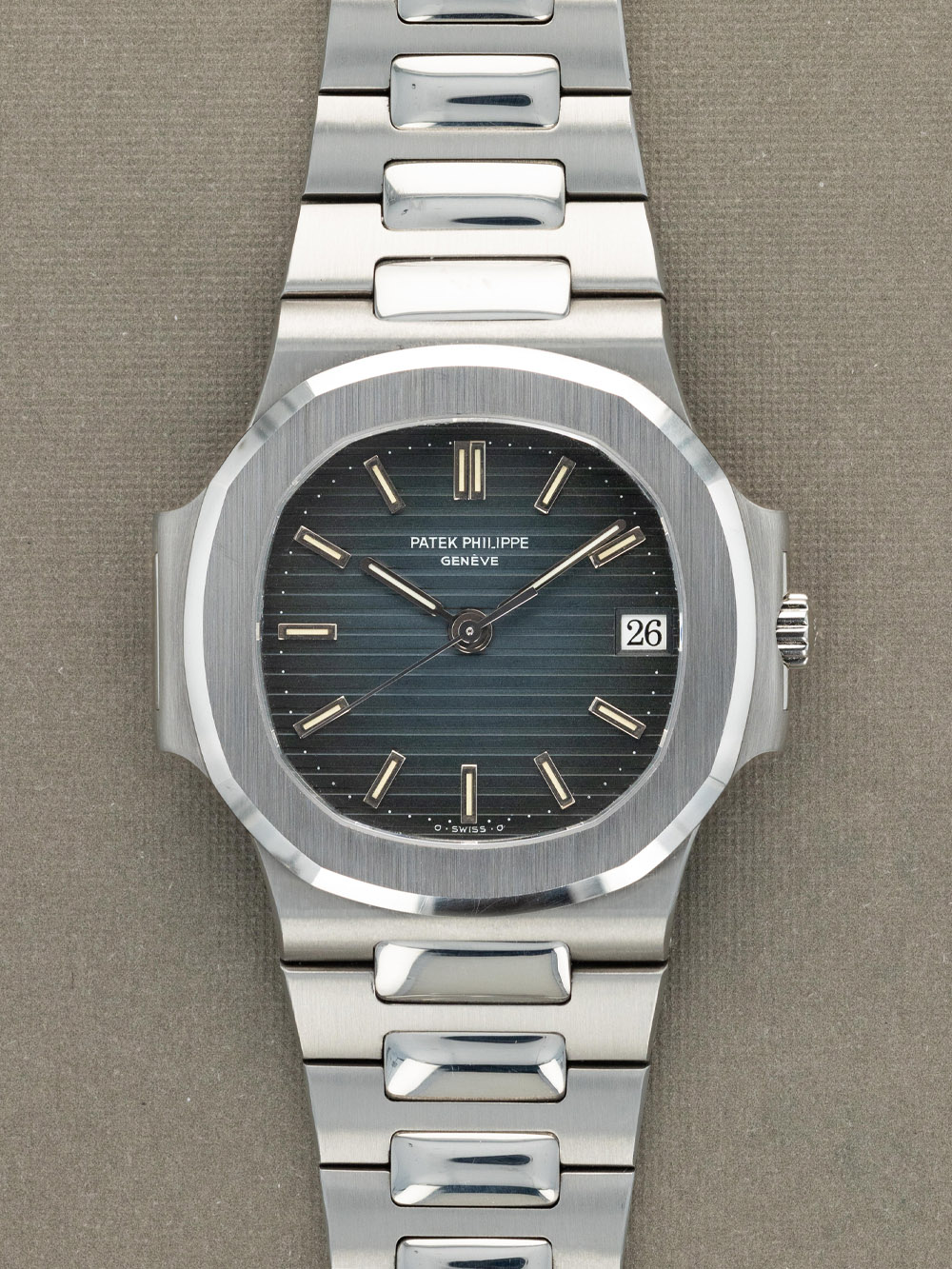
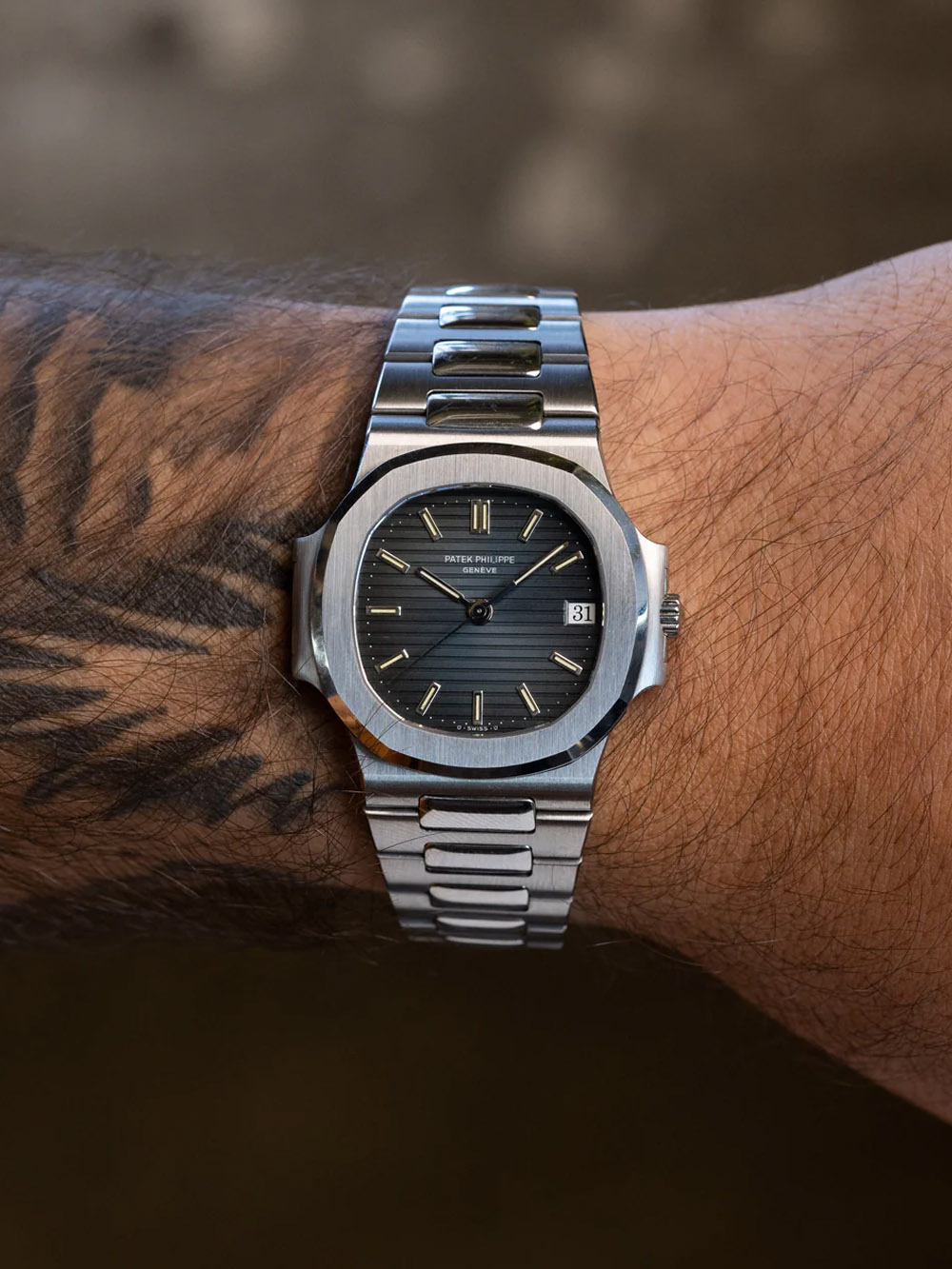
Image credit: Oliver & Clarke
Let’s keep riding the Gerald Genta hype train with the Patek Philippe Nautilus 3800. Unlike the AP above, the 3800 is not the original version of the Nautilus. The 3800 didn’t come around until the 1980s.
What makes this version of the Nautilus special is it’s the first Nautilus with a central seconds hand, instead of a small seconds. The central hand was a result of Patek introducing a new in-house calibre and would remain a key feature of the modern time and date Nautilus for decades. At time of release the Nautilus 3800 retailed for around $3,000 (£1,500 using 1981 exchange rates). Today the equivalent purchasing power would be £7,350 – a modern Nautilus having a retail price of £27,860 highlighting how much retail prices have changed.
A steel 3800 in today’s market sits upwards of £40,000 giving you over 2,500% in returns. It hardly seems worth it compared to the Royal Oak or the Daytona. Although the yellow gold commands a slight premium (£60,000) and some rarer exotic editions such as white gold, platinum or diamond set hour markers can fetch as much as £150,000.
Tag Heuer Monaco ref. 1133

Steve McQueen and the legendary Tag Heuer Monaco 1133
The realm of square and rectangular watches is rather small but their ruler is the Tag Heuer Monaco. Its unusual case shape first appeared in 1969 with the release of the reference 1133 and the standout was the 1133B. The ‘B’ signifying the blue dial.
The Monaco was one of the first automatic chronographs to hit mainstream production and on release the Monaco cost $220, the equivalent to £1,450 today. It was produced as part of the ‘60s arms race in the watch industry to create the first automatic chrono movement. This race saw Tag collaborate with Breitling, Hamiliton and Dubois-Dupraz to jointly create the Calibre 11. Up against Zenith and their El Primero a number of automatic chronographs flooded the market at the same time. But only Tag decided it was hip to be square.
To further accelerate the Monaco, Tag Heuer placed the watch on to the wrist of Steve McQueen for the film Le Mans. Cementing the Monaco as the ultimate racing watch. The image of McQueen in his racing overalls with the blue dial Monaco is now legendary. Today the 1133 would cost roughly £12,000. However, earlier this year a 1133B worn by McQueen in the film sold at auction for $1.4million (approx. £1.05million). That’s a 636,000% increase on the original retail price.
Rolex Submariner ref. 6538

Image credit: Phillips
The Submariner 6538 is a legendary watch and one of the most sought after Submariners among collectors. It’s most well known for being the ‘James Bond Submariner’ so if you want to know if Bond was a Rolex or Omega guy, he was a Rolex guy first.
Sean Connery first sported the 6538 in the 1962 Dr. No film and would go on to wear it in several other 007 outings. Whilst the 6538 wasn’t the first Sub it has become legendary thanks to its design and the introduction of the ‘Big Crown’. The oversized crown of the 6538 was a true testament to a tool watch design, making it easier for divers to use. Only produced from 1955 – 1959 it’s naturally rare and initially cost $150 – $200 (£55 – £70 using 1962 exchange rates). By today’s money we’re talking around £1,900, a modern Submariner costs around five times this.
As with most rare vintage Rolex the price has increased substantially in the current market and thanks to a few subtle variations the prices can vary wildly. A standard 6538 in average condition would be around the £50,000 mark, just a cool 71,000% return on your investment. However, some of the super rare ‘Explorer’ dial variations, which had 3-6-9 numerical hour markers, can fetch over £750,000.