In an industry obsessed with brand recognition, Jean-François Mojon has built one of Swiss watchmaking’s most influential companies by deliberately staying in the shadows. For nearly two decades, his workshop Chronode operated as what he calls “a discrete laboratory for creative complications” – almost invisible to collectors, known only to industry insiders. Today, that invisibility is shifting. Brands like Czapek and Hermès openly credit Chronode in their press releases, marking a fundamental change in how the Swiss watch industry acknowledges its hidden architects.
Speaking from his Le Locle atelier, nestled in the historic heart of Swiss watchmaking, Mojon reflects on this transformation with characteristic understatement.
Chronode occupies a unique position in watchmaking’s ecosystem. Neither a brand nor a simple component supplier, it belongs to that specialised category known as “moteuristes” – manufacturers of watch movements, the mechanical hearts that power timepieces. Whilst brands like Rolex design and market watches under their own names, moteuristes work behind the scenes, creating the complex mechanisms that make those watches tick. Today, the company employs 35 staff and produces approximately 2,500 to 3,000 movements and modules per year. Its client portfolio is impressive: Hermès, MB&F, Czapek, Cyrus, Breva, Favre-Leuba, Leica. “For us, when we have an order for 1,000 pieces, that’s already a large volume. We’re more in the range of a few dozen, or perhaps a few hundred.”
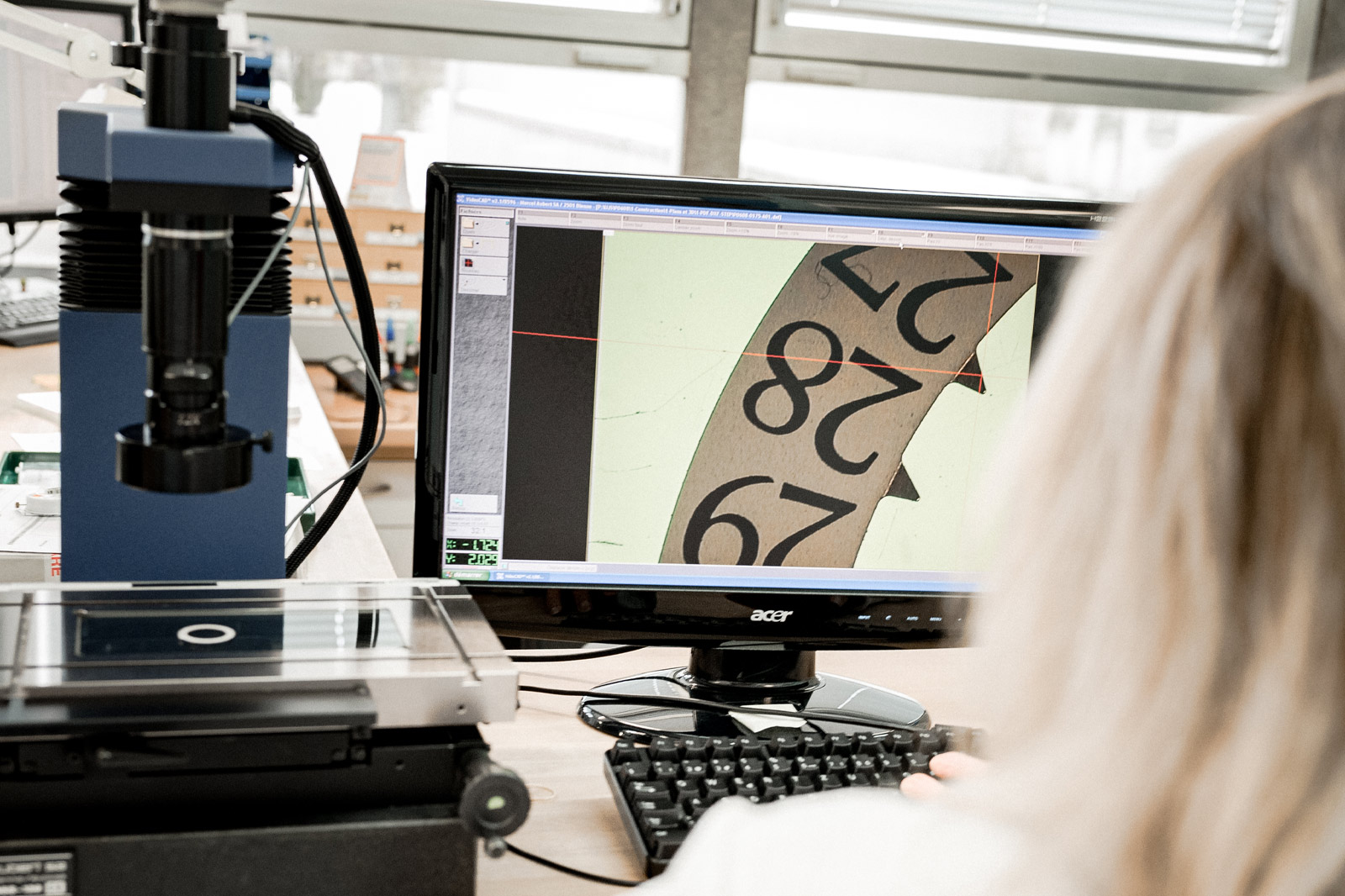
At Chronode, rigorous quality control ensures each movement meets demanding standards
Mojon founded Chronode in 2005, during what he recalls as a golden era for independent watchmaking. “Before 2008, we could do anything,” he remembers. “It was madness. Because there was a lot of money circulating. And then innovation. You could do incredible things.” His timing proved fortuitous – the period between 2005 and 2008 saw companies like MB&F also launch, partly driven by the Swatch Group’s decision to restrict movement supplies to external brands.
But Mojon’s approach to this visibility shift reveals his fundamental philosophy. “It’s not a problem for us if we are highlighted on some products,” he explains. “We also gained customers thanks to such visibility. So we don’t see any drawbacks from it, but we don’t look for it proactively either.” This measured response reflects a deeper principle: brands decide whether to communicate about their suppliers, and Chronode adapts accordingly.
This voluntary discretion reveals a unique company philosophy. Unlike other movement manufacturers who apply their visual signature – Vaucher engraves a star on its movements – Chronode refuses any distinctive mark.
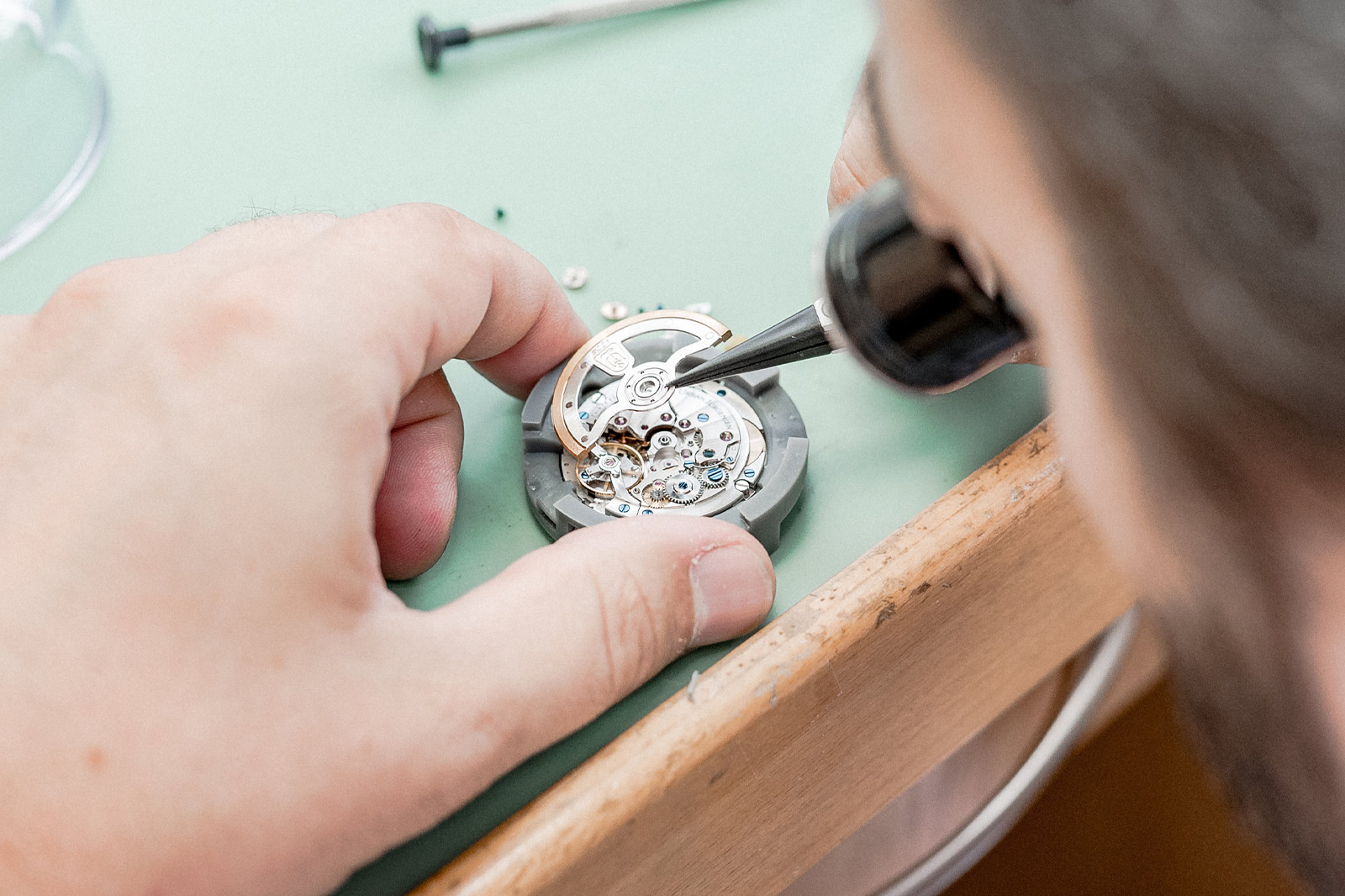
Chronode’s watchmakers handle pre-assembly, assembly, and fitting under strict protocols
What sets Chronode apart is its commitment to customisation over standardisation. “We have no product on the shelves that is ready to be delivered, as you can see,” Mojon states. “Everything we offer, even our basic movements, are different each time.” This philosophy extends to every aspect of production. Where industrial manufacturers like Vaucher produce standardised calibres in larger volumes, Chronode specialises in personalisation for small quantities – sometimes as few as ten pieces.
The company’s production process reflects this bespoke approach. “We are focussed on projects. We are focussed on customers. And that’s what drives the process,” Mojon explains. Each project begins with deep immersion into the client’s brand universe, moving through feasibility studies and 3D simulations to prototyping and hand-decoration. “If it’s something really new, we’re going to do a pre-study to determine: is it feasible? What dimensions will it take? What are the costs?” This rigorous approach ensures that “it’s up to us to adapt to the client’s request.” Chronode’s decorators, trained in-house, use traditional tools, such as gravers, chisels and polishing stones to transform functional components into precious, unique pieces. As well as blending modern CAD technology with traditional handcraft, which positions the company at the intersection of Swiss watchmaking’s past and future.
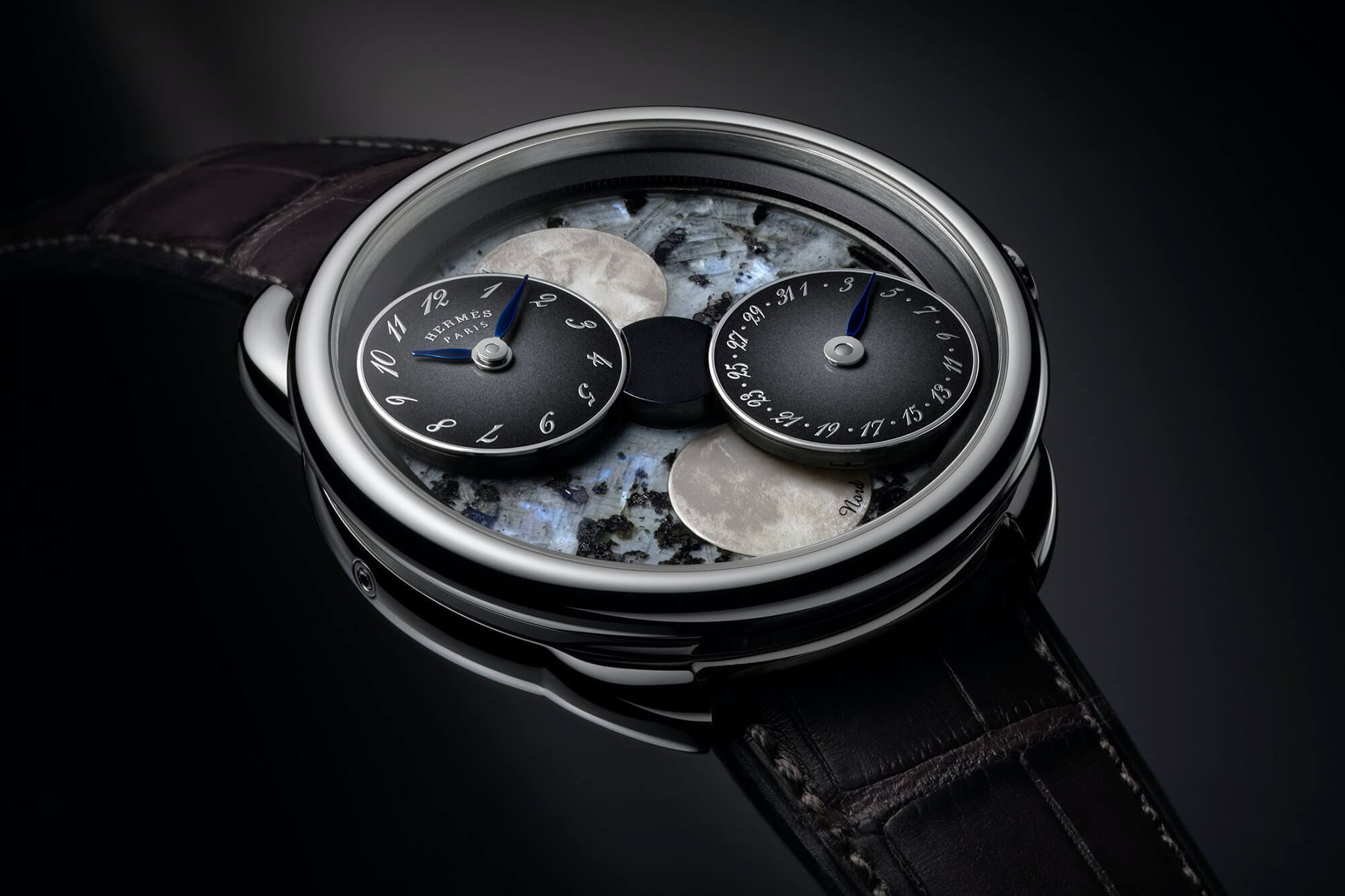
Hermès Arceau L’Heure de la Lune: Chronode’s expertise was crucial in developing the unique moon phase display, which features two stationary mother-of-pearl moons
This adaptability manifests dramatically in Chronode’s diverse client portfolio. For Hermès, the aesthetic demands complete minimalism. “There are no screws, no visible gears,” Mojon explains, pointing to a large poster of a Hermès Arceau L’Heure de la Lune on the wall behind. “It’s the brand that wants it that way. The technique is at the service of display, simplicity, and aesthetics.” The result is a movement where complexity hides beneath serene surfaces, like the L’Heure de la Lune, which Mojon describes as containing “a lot of technology, but ultimately not visible at all.”
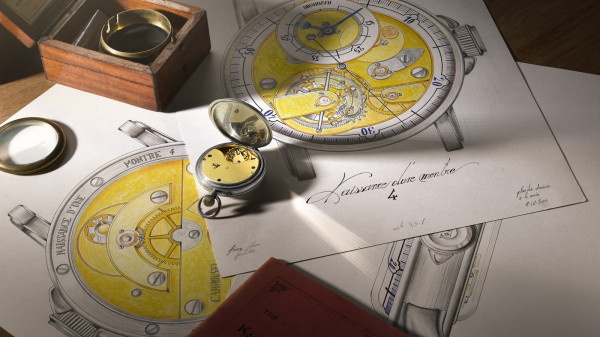
At the opposite extreme sits Czapek’s Limited Edition Rattrapante R.U.R, presented at Geneva Watch Days 2025. Here, Chronode puts mechanics centre stage with theatrical flair with visible gears and colour-changing elements: “the staging in this case was important,” as Mojon recollects.
The contrast couldn’t be starker, yet both creations represent authentic expressions of their respective brands’ DNA. “If we were a brand, we would be much less diversified in terms of products. And that’s what makes our job so rich. We can work with micro-brands, sometimes contemporary, classic, heritage brands. It’s this diversity that generates expertise and pride and enthusiasm for what we do.”

The Czapek Rattrapante R.U.R. uses a Calibre SXH6 movement developed with Chronode’s Jean-François Mojon. This split-seconds chronograph is uniquely showcased on the dial side
Mojon’s approach to innovation avoids traditional R&D departments, favouring instead a network of collaborators. “I see myself as a catalyst in the design process,” he explains. “When we look for ideas, we begin internally but also draw on a circle of specialist designers. They have the right kind of mind, the creative mind, and they are trained to make it work,” he adds with a smile.
This collaborative model extends to technology adoption. Chronode has embraced digital tools – CAD, computer simulations, 3D modelling – to replace the physical prototyping methods of earlier eras. “At the time, a few years ago, we made plastic models and then we tested the kinematics. Today, not at all. It’s all digital tools.”
Yet Mojon remains sceptical about artificial intelligence’s immediate potential in movement creation. “I think we are not yet ready to generate or build a new movement from tools like artificial intelligence,” he says. “There are a lot of constraints in a calibre. And there are a lot of choices that need to be made. Every design is complex and requires human ingenuity to find the best compromise of the parameters given.”
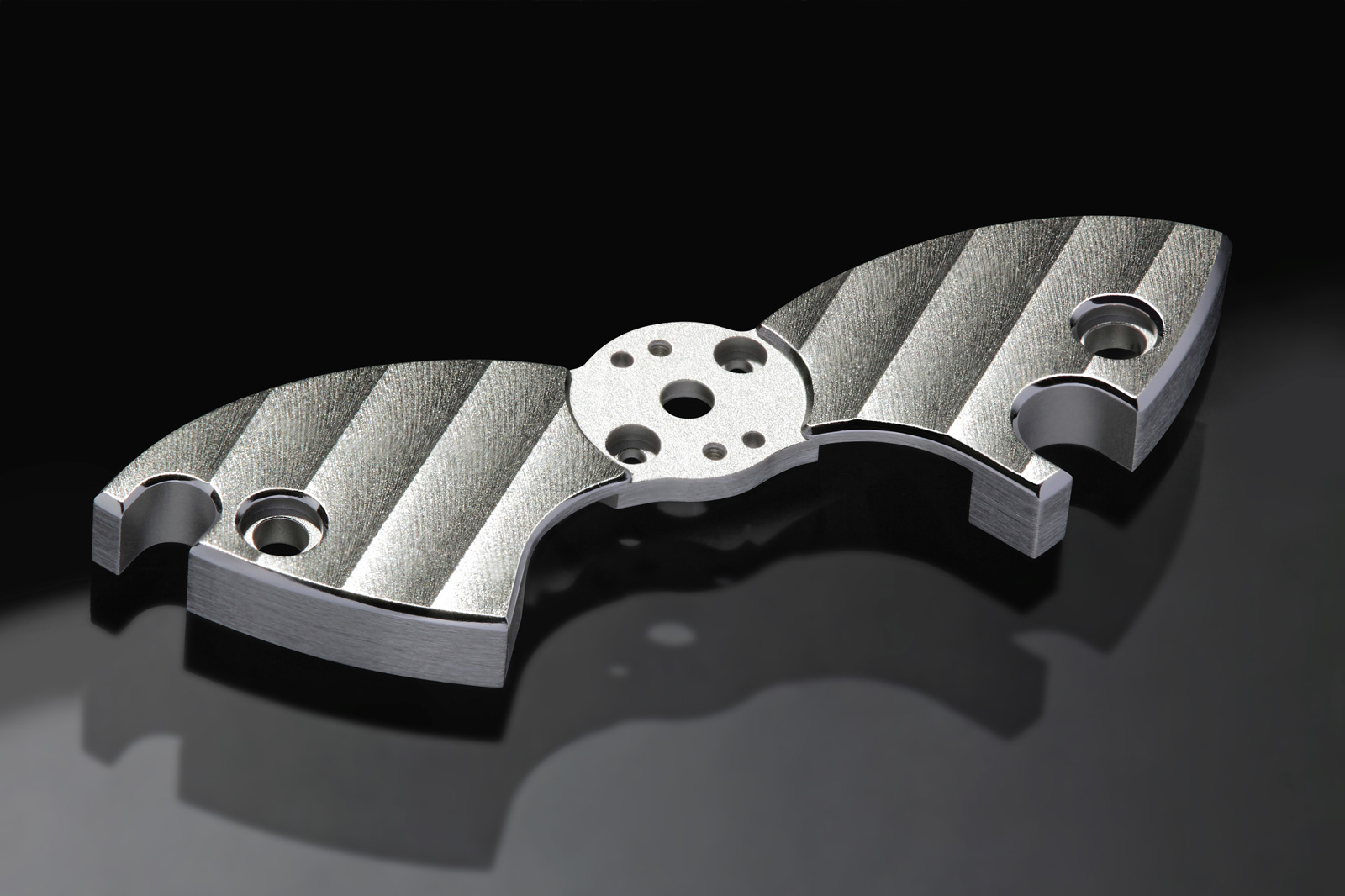
Using traditional tools – cabrons, chisels, polishing stones – Chronode’s trained decorators achieve flawless bevelled angles and mirror finishes that showcase Swiss horological excellence
Despite this technological evolution, traditional craftsmanship remains irreplaceable. When asked how to identify hand-finished work, Mojon points to the telltale signs: “If you look closer, you will see micro traces, subtle, very subtle vibrations. As soon as the craftsman’s hand touches the angle, you will see a very slight curve. These imperfections, visible at just 2.5x magnification or higher, as he demonstrates while handing me a loupe, represent the human touch that machines cannot replicate.
Mojon identifies three creations that best embody Chronode’s evolution over nearly two decades. The first breakthrough came with the Harry Winston Opus X in 2010. “It was the first time that we could make our own contribution from a production point of view. It was a complete product,” he recalls. “It’s a product that worked well. It also allowed us to get through the crisis of 2009.” The Opus X established Chronode’s reputation and earned recognition through the prestigious Grand Prix d’Horlogerie de Genève.
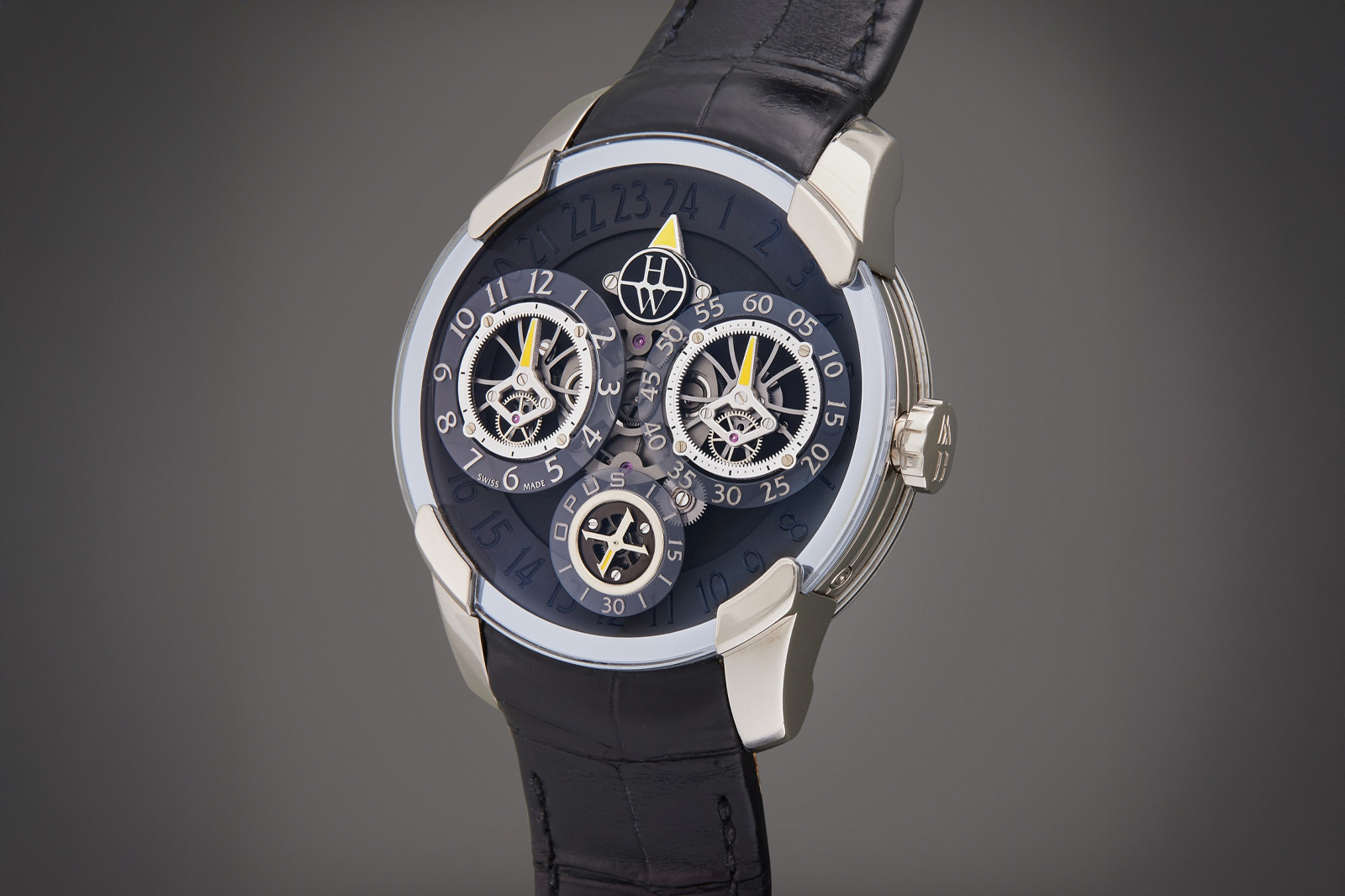
Jean-François Mojon brought his masterful engineering to the realization of the Harry Winston Opus X, image credit: Sotheby’s
The Hermès Arceau L’Heure de la Lune represents a different kind of success – sustained collaboration. First presented in 2019, it remains in production six years later. “That’s also interesting for us,” Mojon notes, “because every year there is a recurring production on these products.” This longevity reflects both the movement’s technical excellence and Hermès’s satisfaction with the partnership.
Most recently, the Cyrus Twin Orbital Tourbillon showcases Chronode’s accumulated expertise. “It is perhaps a bit of a culmination of everything we did for 17, 18 years that we were able to put in this project,” Mojon explains. The piece represents not just technical achievement but the maturation of Chronode’s distinctive approach to horological complications.
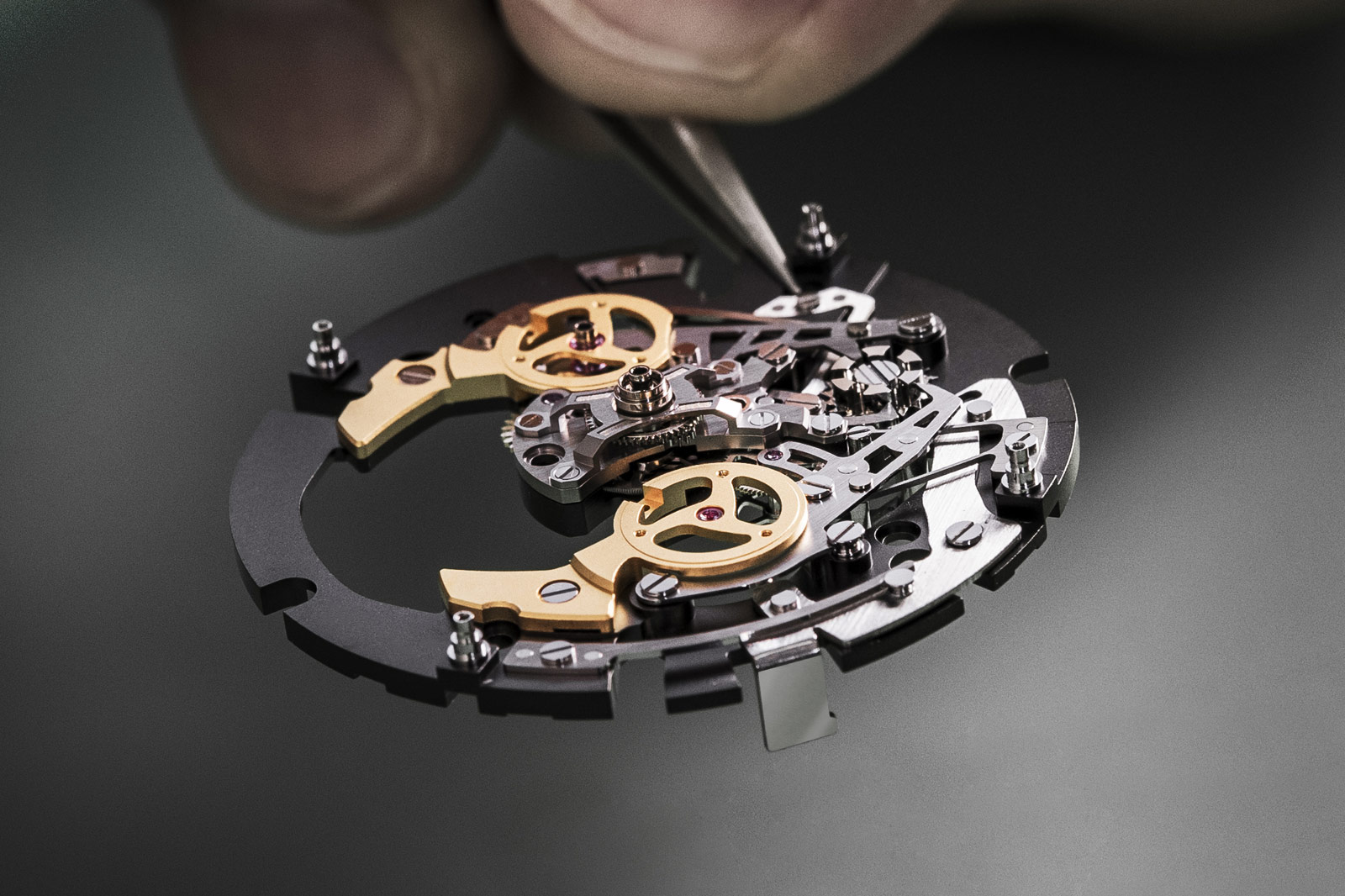
The Twin Orbital Tourbillon calibre represents Jean-François Mojon’s architectural mastery – a cumulative expression of eighteen years developing complex complications
Despite Swiss watchmaking’s current strength, Mojon detects troubling signs that recall past vulnerabilities. He acknowledges positive trends, such as young collectors and increasingly informed customers who demand transparency, but warns against complacency. “I still feel this industry reacts too slowly to crises or downturns. There’s a tendency to think we’re somehow set apart,” he notes. More worrying, he adds, is a creeping arrogance: “Sometimes we believe we’re almost invincible. We need to stay vigilant and constantly ask how we can keep improving.”
External threats are multiplying. Chinese manufacturers are developing complications with small volumes. Japanese companies like Grand Seiko demonstrate “incredible things.” Even the United States, under new policies, has approached Chronode about developing domestic watch manufacturing capabilities. “They want to develop schools, a complete watch industry to serve their own country.”
Mojon draws parallels with earlier crisis periods, particularly the skills gap of the 1970s and ’80s, when “an entire generation went untrained, leaving a major hole in expertise.” Switzerland eventually recovered, thanks in large part to Swatch Group’s decision to stop supplying movements to external brands, which pushed independents to innovate, but Mojon cautions against assuming such a recovery would be automatic today.
As Chronode marks its twentieth anniversary, Mojon’s measured optimism reflects both pride in Swiss watchmaking’s achievements and wariness about future challenges. His company’s evolution from invisible supplier to acknowledged partner mirrors broader changes in an industry learning to balance tradition with transparency. For Jean-François Mojon, the invisible architect, the greatest success may be ensuring that Swiss watchmaking’s next generation remembers that true excellence requires both confidence and humility.
More details at Chronode.