We’ve all seen the phrase ‘shock resistant’ bandied about in watches and most of the time the numbers are conceptual. By that I mean that they don’t really have any bearing on real-life concepts. Unless you have something to compare it to, how would you imagine what 5,000, 10,000 or higher amounts of G-Force even is?
For one, you can’t compare impacts to sustained Gs. A single millisecond of high G-Force can have very little impact on a person, while sustained pressure at just 6Gs can actually kill a person. When we talk about impacts, we mean short, sharp and sudden. But even then, 5,000Gs is a big number, but one that doesn’t really have a meaning.
To that end, we’ve tried to put a real-life spin on the numbers so that, next time the idea of shock resistance comes up, you can say exactly what kind of impact your prized watch can survive. Just don’t go testing it for yourself.
Under 500G
The single most common impact most of our watches go through is simply falling off a surface – usually a bedside table first thing in the morning – onto the floor. It doesn’t matter too much whether it’s carpet or hardwood, it’s rare that a modern watch short of an incredibly delicate high complication would even notice.
In terms of numbers, most falls come well under the 500G mark. If you’re unlucky, you might damage a vintage watch and at no point do you actively want a watch landing on its crown, but you probably don’t need to worry.
500G

When Roland Ratzenberger fatally crashed in the San Marino Grand Prix in 1994, he did so by hitting the barrier at 500G. That sounds like a huge jump and the idea that a watch goes through the same forces as an F1 car can be a bit daunting. The difference here is scale.
A Mantis Shrimp can shoot its claw at over 10,000Gs, but because it’s only 10cm long, it’s only particularly dangerous to other tiny sea creatures. As your watch is much, much smaller than a car, it doesn’t take much energy to put it through some intense Gs.
1,000G


If you’re clumsy enough to bang your watch into a wall, you’ll be putting your watch through 1,000Gs. Like every impact on this list, the number varies hugely depending on different factors. In this case, that means everything from how angry you are at your timekeeping to whether you have wallpaper or not.
All of those factors however come down to two major impacts on impact: speed and deceleration. Essentially, how quickly the object is moving and how quickly it comes to a stop. If the wall were to give way to your watch, you’re in a much better position than if it stops almost instantly.
5,000G

5,000Gs is roughly the impact a golf club has swinging into a ball – or in this case, a watch. The two aren’t so dissimilar in size that the comparison’s unwarranted. It’s obviously a massive impact and one that would hurt if you swapped the ball for a hopefully not similarly named body part.
The thing is, most modern sports watches are actually designed to withstand 5,000Gs. If you were to take off your Aqua Terra Gold edition and really put it through its thematic paces, it should survive. I can’t guarantee you’ll have a great game, and the more times you hit it, the more likely it is to cave, but it’s an illustration of the level of engineering that goes into even baseline watches. I wouldn’t try it with anything in gold or anything with a complication though.
10,000G
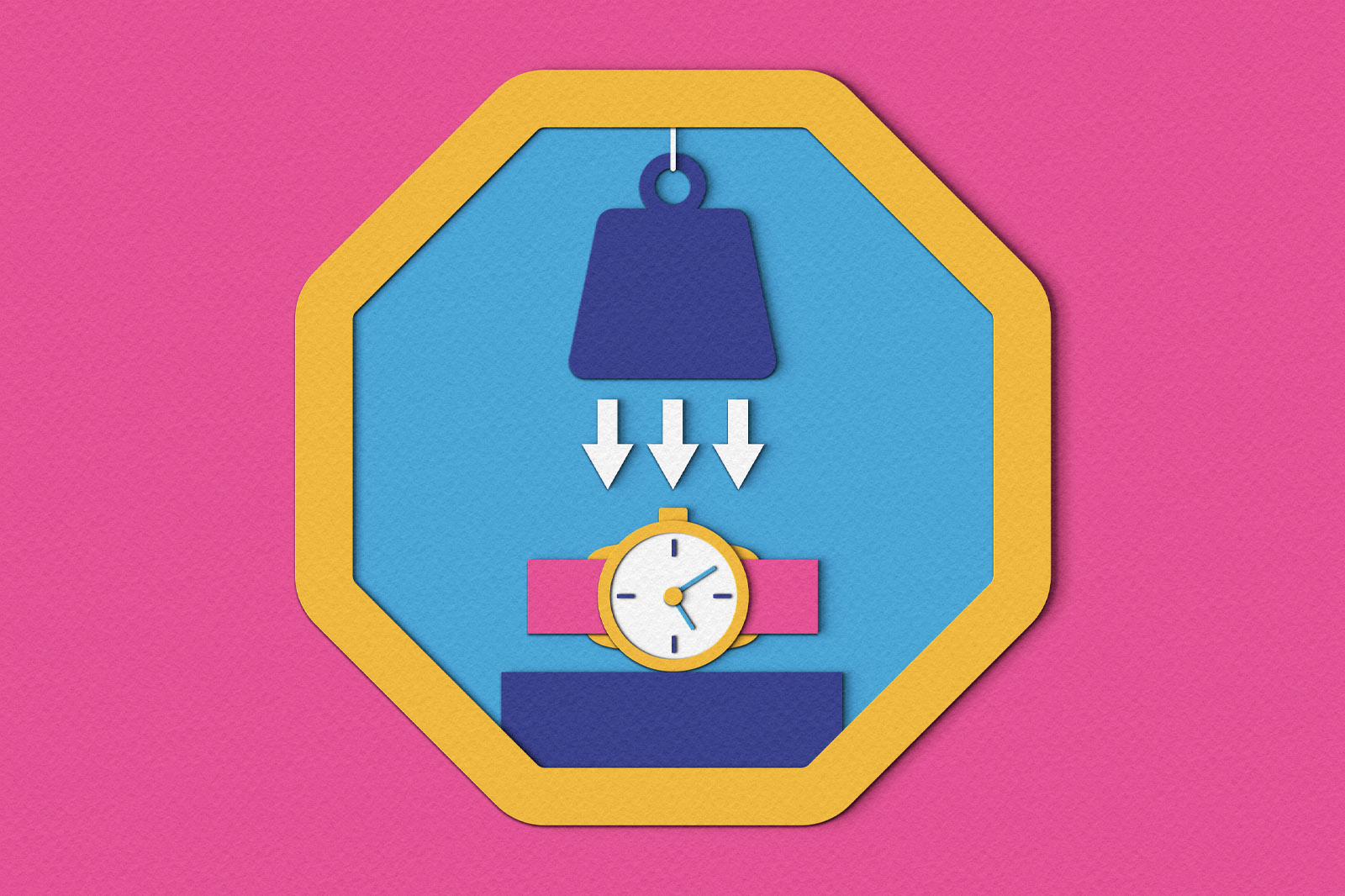
This is an odd one, because a scant handful of watches are able to withstand 10,000Gs of force, but those that can might be able to go higher. That’s because 10,000Gs is the max amount of force most impact resistance testing machines go up to. These machines drop weights onto watches to imitate Gs of force in a controlled environment. And given the uncontrollability of crazy high shocks, it makes sense that they’d cap it.
This is where some serious specialisation is needed. Just look at the effort that went into Certina’s new DS Concept, which brought their shock resistance up to 10,000Gs. At the higher end, there are also some tourbillons that can manage it, largely from Richard Mille (of course) but also IWC’s shock absorber models. Bear in mind, it’s not that they all have exactly the same shock resistance, being entirely different concepts, just that this is the usual testing cut-off. Some may be able to go even higher, but without building a bigger machine, we’ll never know.
12,000G

When a baseball batter hits a ball, it’s not just his bat that’s moving. At the same time, the ball is being powered towards him at speed. This compounds the G-force at the site of the impact into a number that would destroy nearly every watch ever built. There are however some that would survive.
Richard Mille’s RM27-04 developed for Rafa Nadal was tested to 12,000Gs, part of the reason they’re the first name in shock-resistant mechanical watches. But then there’s the IWC Big Pilot’s Watch Shock Absorber XPL, the non-tourbillon version, which survived 30,000Gs. If 500Gs is an F1 crash, just imagine what an impact like that would be if you scaled it up beyond a watch.
There’s a premium for these watches and so there should be, they’re mechanical marvels with engineering lavished on them like nothing else. But let’s be honest, if you really want a watch that can survive anything, just get a G-Shock. It’s in the name, after all.