Most modern watches are perfect travel companions. I don’t just mean the usual dual time and GMT watches perfected for the wrists of the jet-set. With improved shock resistance, magnetic resistance and a more robust and durable build quality, modern watches can survive even the most vindictive of baggage handlers. Vintage watches though, they’re another matter entirely.
It doesn’t matter whether we’re talking about an insane perpetual calendar or a streamlined manual-wind number, vintage watches are often much more delicate than their modern counterparts. Where a modern automatic can shrug off a fall from a side table, that could well be the death-knell for something well over 50 years old – as we discussed in our guide to shock resistance a few issues back.
It’s not just a big shock that’s an issue though. Intense temperature extremes, constant vibration, pressure, humidity, even magnetism can all cause havoc in your heirloom timepiece. And where do you get all of those things? On a flight. So next time you travel, beware: here’s what to keep in mind.
Airport Security

Nobody likes going through security, not least of all your watch, and there are two potential points of attack here, depending on whether you keep your watch on or put it in the tray.
The first risk is physical damage. The airport’s a high-pressure environment, and if someone gives an exasperated sigh as you’re putting your valuables in one of those cheap plastic trays, you may get flustered. Cue a waist-high fall onto a very hard airport floor. Fiddly buckles are especially vulnerable here and while that’s a risk wherever you go (at least that’s uncarpeted), rushing to put everything in a tray means chances of disaster increase dramatically.
Not that the watch is safe in the tray either. Old watches can be easily scratched, doubly so if they’re gold. Chucking your keys on top of your 1950s dress watch is a recipe for a scratched-up case and crystal both. They weren’t always made from sapphire, and earlier crystals are much, much easier to scratch than now. If you throw your overloaded cabin bag on top of it instead, things get even worse; something heavy can easily bend or dent the thin metal of a watch case.
Fortunately, most airports let you wear your watch through the metal detector these days, which for modern antimagnetic watches isn’t a problem at all. Indeed, metal detectors use such low levels of magnetism that only very delicate, easily magnetised balances will have an issue. You know, like those in very old vintage watches.
The best thing to do is simply to put your watch in a slim travel pouch and keep it in your bag, nicely packed before you head to security. You’ll know it’s safe, close by and won’t get magnetised, unless you back it next to… things we’ll get on to later. Or you could try avoiding security altogether by putting it in your hold luggage.
The Hold
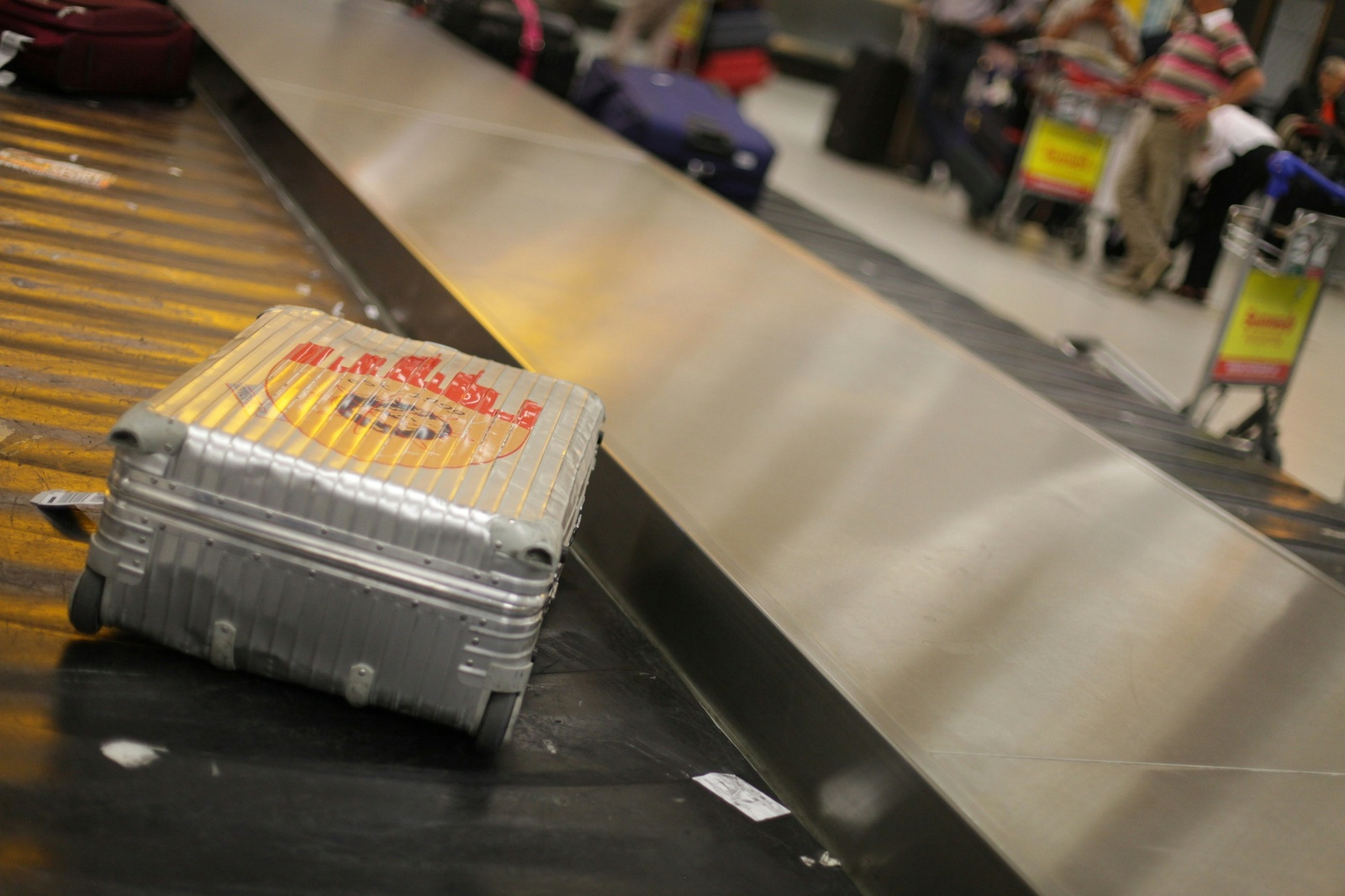
Forget the horror stories of baggage handlers smashing up suitcases for a moment and think about what a watch might actually go through in the hold. These days, airplanes heat and pressurize their holds, so we’re not talking about oils freezing or crystals popping off like you’re saturation diving. The issues aren’t that pronounced. But they are there.
Most holds go down to about 5°C lowest to avoid everything freezing, and while that’s not enough to really damage a watch, it’s enough to cause already weakened seals to crack and certainly to affect accuracy. More of a risk however is that of humidity. Changes in pressure while crossing through different weather patterns can cause condensation to build up under the crystal. This isn’t an immediate concern unless you need to read it, but water in the case can cause rust if left to its own devices.
Of course, there are the usual risks that come with a bit of turbulence. Bags smashing into one another don’t care about your valuables, especially if you’ve packed your watch a little too close to the edge of the suitcase. Then there are the constant vibrations of the plane, which can cause already compromised parts – screws, mainly – to become dislodged.
Really, none of these are risks if you regularly service your watch. Any decent watchmaker will be able to tighten everything up, make sure all the seals are working and keep an eye out for early signs of rust. You should be getting your vintage watch serviced regularly anyway, so the hold really isn’t that much of a risk. You are getting your watch regularly serviced, right?
The Cabin


Finally, we get to the cabin, where most of us wear our watches during a flight. Surprisingly though, this might be the most dangerous part of the plane for your watch, simply because of what else you take with you.
I for one need a pair of headphones, laptop and a host of other electronic devices with me to make a flight bearable, but you know what all of them have? Magnets. Speakers and headphones are the most obvious culprits, but the magnetic closure of a MacBook is actually a metaphorical serial killer when it comes to balance springs. Do not use the hand wearing your watch to close one.
While temperature and pressure issues aren’t quite as bad as in the hold, you’ll have the same sort of vibrations and shocks as down there, just with drinks trolleys and air hostesses more likely to hit you than other luggage.
What could spell disaster though is your watch coming off your wrist in your seat. The cabin carpet will stop it smashing on the floor, but if it falls between the seats, it can easily get into the moving parts of the chair, where all it takes is a careless lean back to crush your precious timepiece.
All you can really do here is be careful. Make sure your bracelet or strap is nice and secure, be aware of the magnets everywhere and try not to gesticulate to wildly after a couple of mile-high whisky and ginger ales.
The Conclusion

Watches aren’t nearly as vulnerable as they once were on a flight, and while vintage pieces don’t have the antimagnetism, shock resistance and humidity resistance of modern timepieces, they should still survive a flight as well (if not better) than you.
If you really want to be safe though, pack your vintage watch into your hold luggage in a nicely padded case and make sure you get it serviced regularly (which again, you should be doing anyway, particularly for vintage). There are still minor risks, as there are whenever you travel, but you’ll avoid any chances of a magnetised balance spring, eliminate the human error of dropping it somewhere and protect it from heat, cold and shocks as much as reasonably possible.
And if you’re looking for a decent travel case…