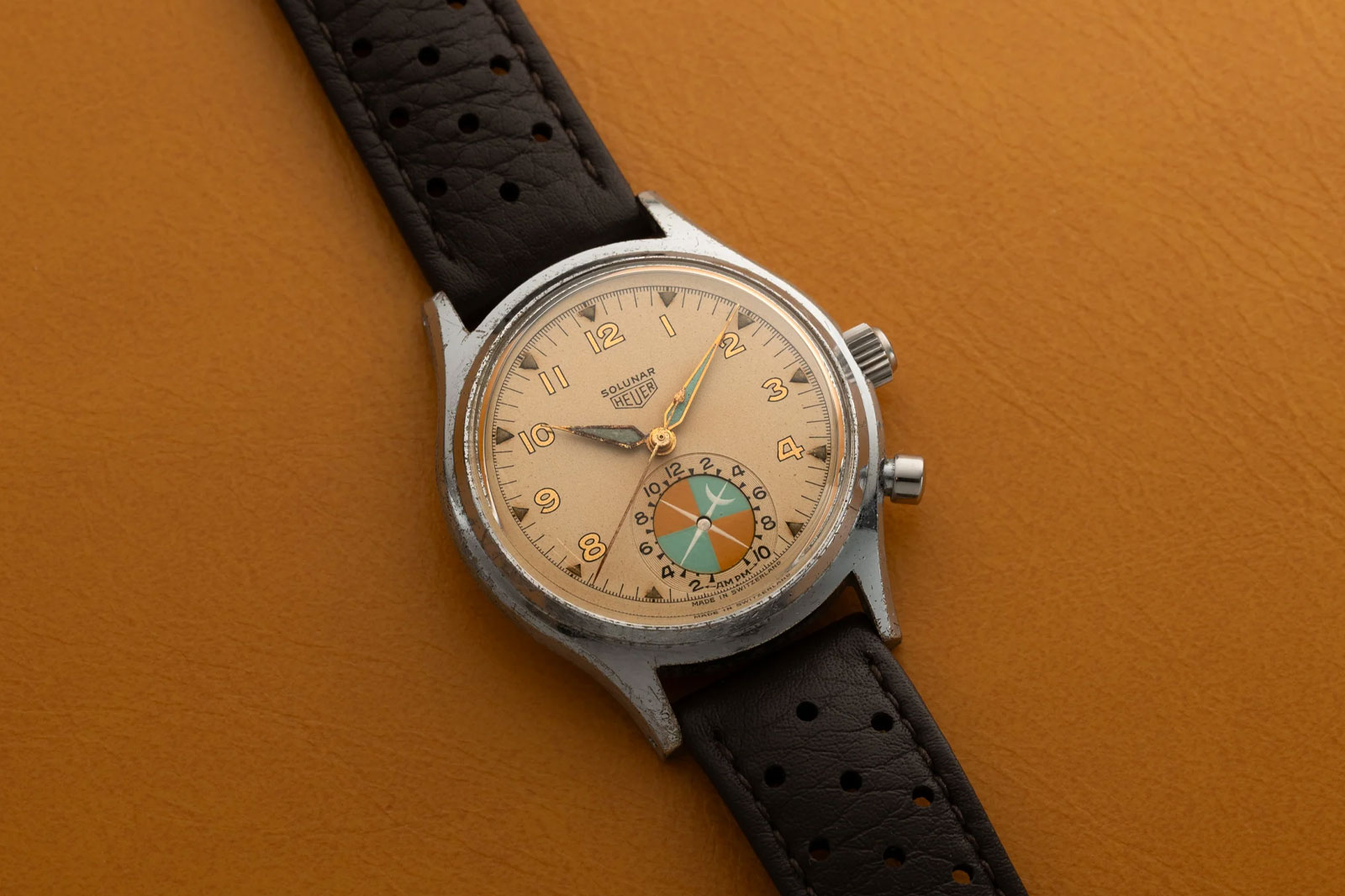
In 1947, a 15-year-old boy came home from school to find his father wrestling with a problem he couldn’t solve. Charles-Edouard Heuer had just taken a request from Walter Haynes, president of the upmarket American outfitter Abercrombie & Fitch, for a wristwatch that could display the time of the tides, but Charles-Edouard hadn’t seen the sea in years. He knew chronographs, but he didn’t know tides. That 15-year-old was, of course, Jack Heuer, and his solution to his father’s problem was to turn to his own physics teacher for assistance. Dr Heinz Schilt did the maths, the gear ratios, and mechanical calculations that turned a piece of American outdoor folklore into something a movement could physically do. The result, launched in 1949 as the Solunar, was Jack’s first documented contribution to the company he would go on to lead for two decades. Long before the Carrera or Monaco, before Jack Heuer became the man who reinvented Heuer as a motorsport brand, he was a teenager solving a tide problem for fishermen he’d never met. That’s a better story arc than most watch companies can claim, and today only the biggest Heuer fans know it.
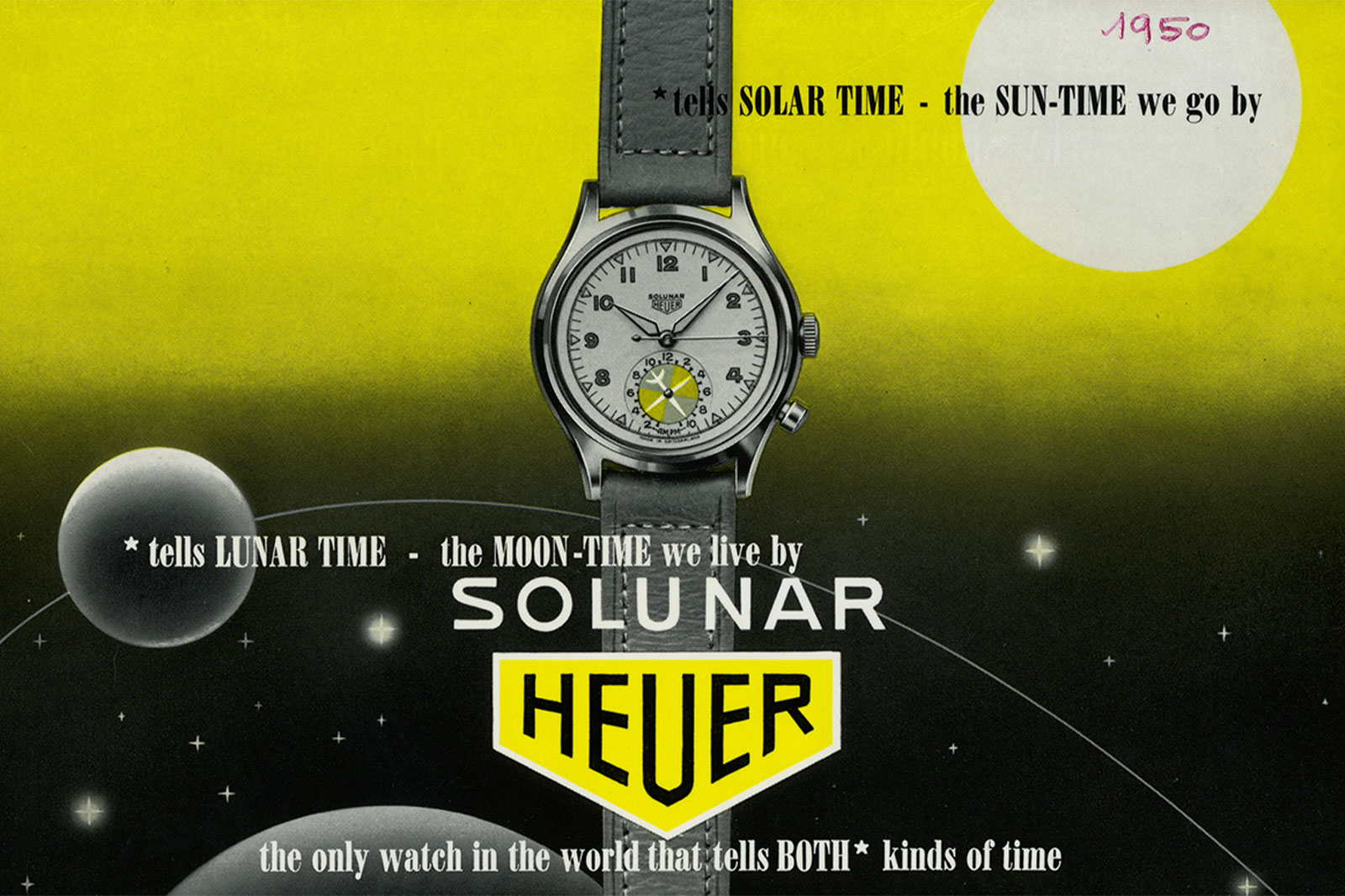
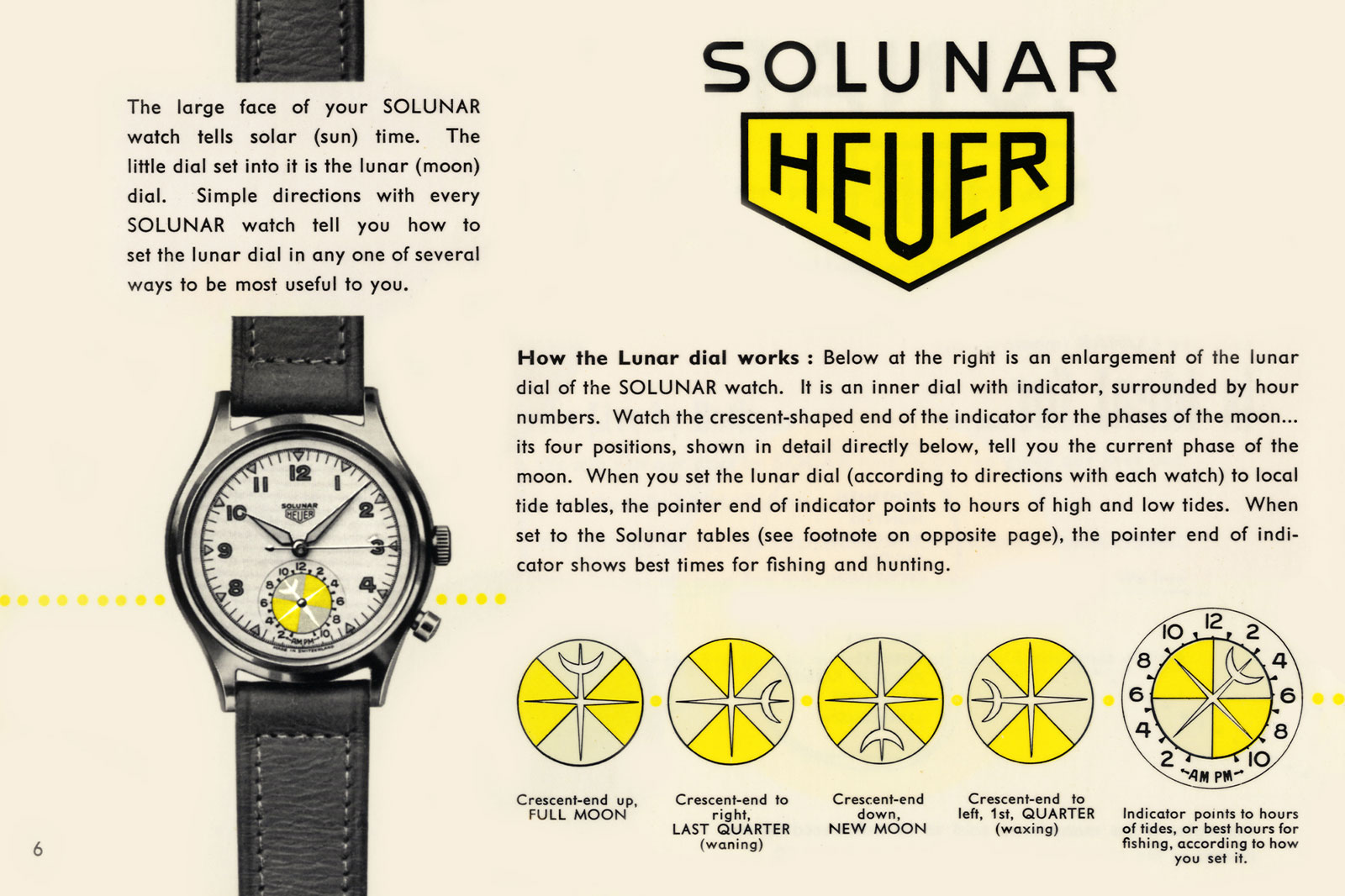
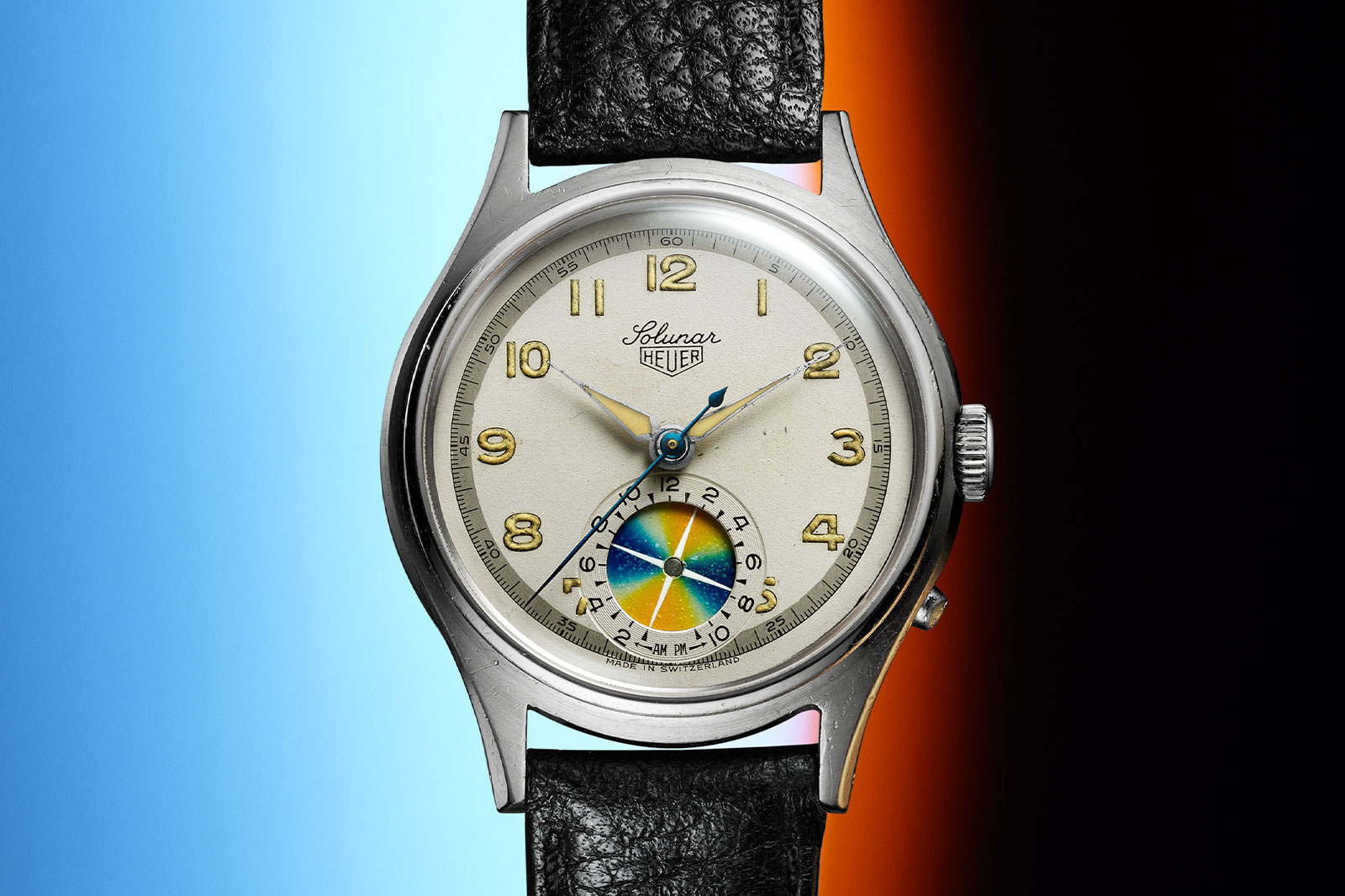
The theory behind the Solunar wasn’t tide prediction in the tabular sense divers or sailors would recognise. Devised in 1926 by an American outdoorsman called John Alden Knight, who first published his Solunar Tables a decade later, it argues that fish and game feed most actively at times governed by the combined position of the sun and moon. Knight built long written tables from the idea, with Heuer’s contribution being to put that information on the wrist, via a rotating coloured disc under an aperture at six o’clock, set and read against the wearer’s local coastline. The Solunar replaced a book with a glance – the same instinct that would later bolt Heuer stopwatches to rally dashboards.
Abercrombie & Fitch is known today as a behemoth retailer of fashion-leaning clothing, but before the name became a pillar of the high street, it was the outfitter of choice for Charles Lindbergh, Ernest Hemingway and Theodore Roosevelt, a store built for people who actually went outdoors rather than dressed for the idea of it. For that clientele, a tide watch wasn’t a novelty, but an innovation that made sense. Few survive in clean condition, and fewer still get talked about, largely because the watch sits outside the version of Heuer’s motorsport history that truly defined the house. But the Solunar is arguably more revealing of what Heuer actually was in 1949: a small watchmaking family taking on genuinely difficult measurement problems, wherever the client happened to find them, motorsport or otherwise.
The Solunar didn’t stay a curiosity for long. Through the early 1950s Heuer developed it into the Seafarer, sold initially in the US, with ‘Mareographe’ used in Europe, adding a full chronograph function so the wearer could read two high tides and two low tides directly off the sub-dials. The chronograph wasn’t an upgrade for its own sake – it shifted the watch’s appeal towards yachts. The new 30-minute counter, divided into five-minute segments, was built specifically for yacht racing, timing the countdown to a regatta start.
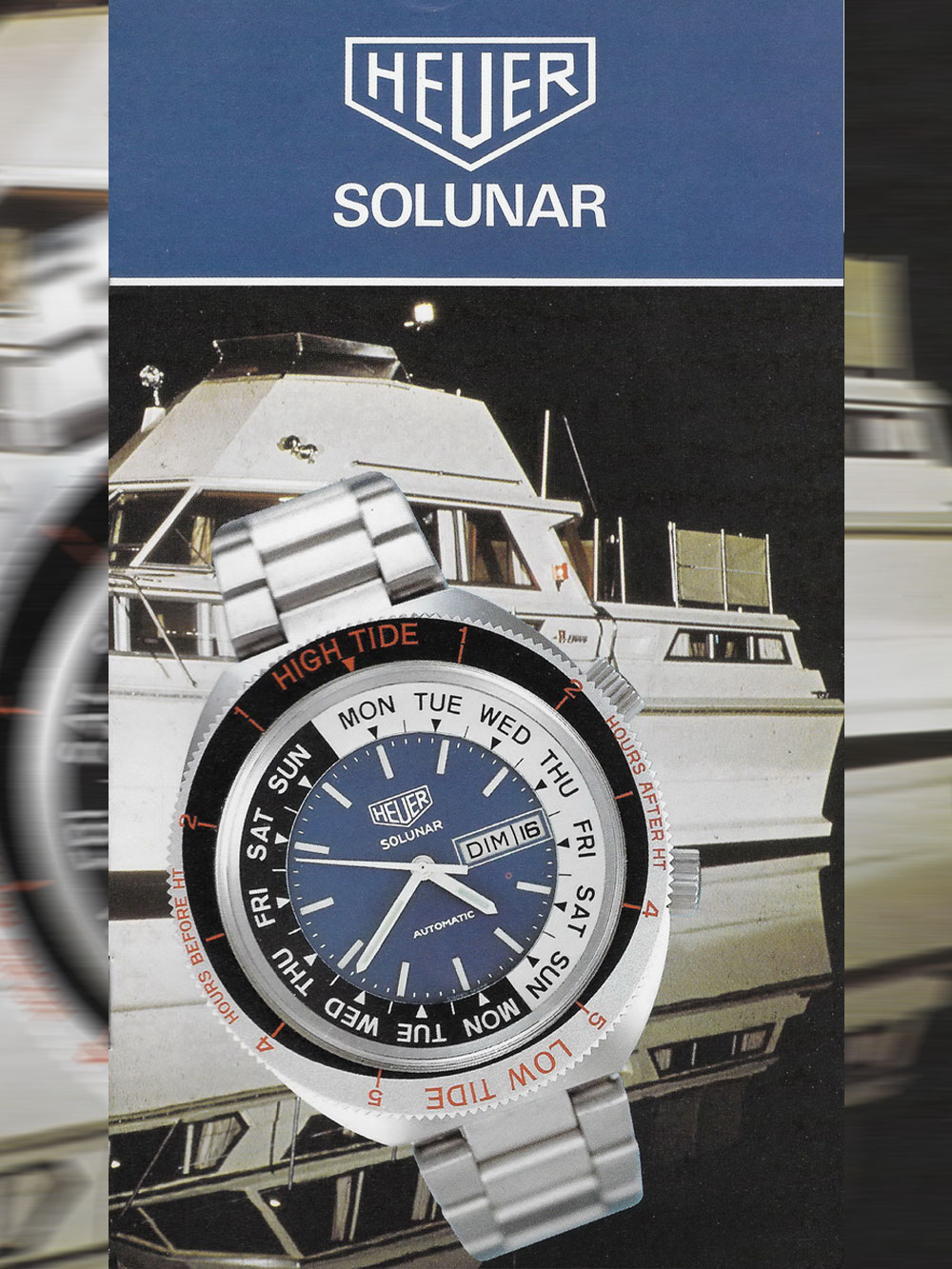
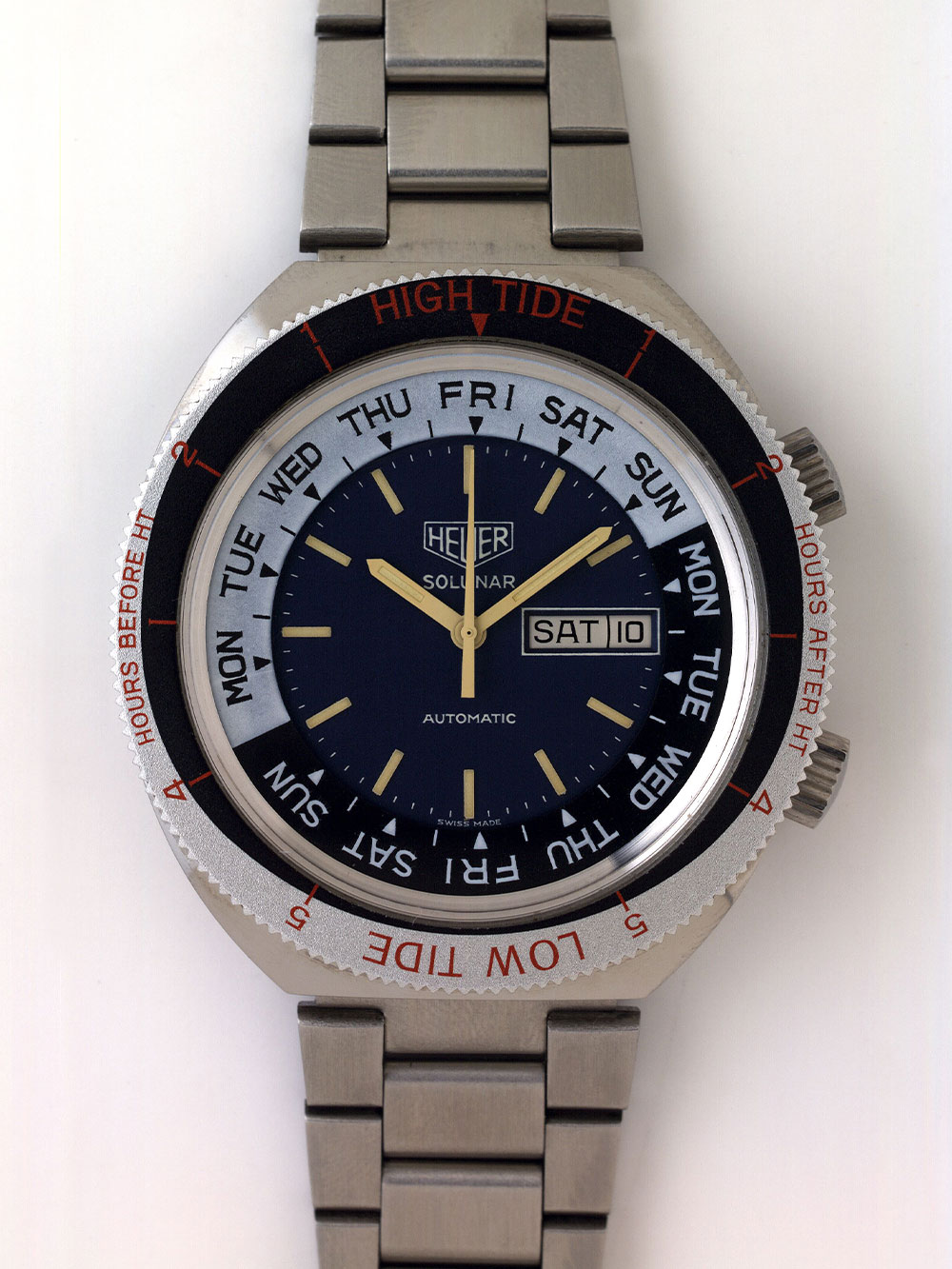
For anyone hunting one now, patience is required. There are no confirmed production figures for the Solunar, but it’s certainly a rare find in today’s market, with prices from around £4,000, depending on condition. Specialist dealers with top-condition examples typically ask upwards of £6,000. It’s also worth knowing before you begin your search that Heuer revived the Solunar name in the 1970s as an automatic day-date with a revolving tide bezel, reference 279.603, which appears more often on Chrono24 and collector forums from approximately £3,000.
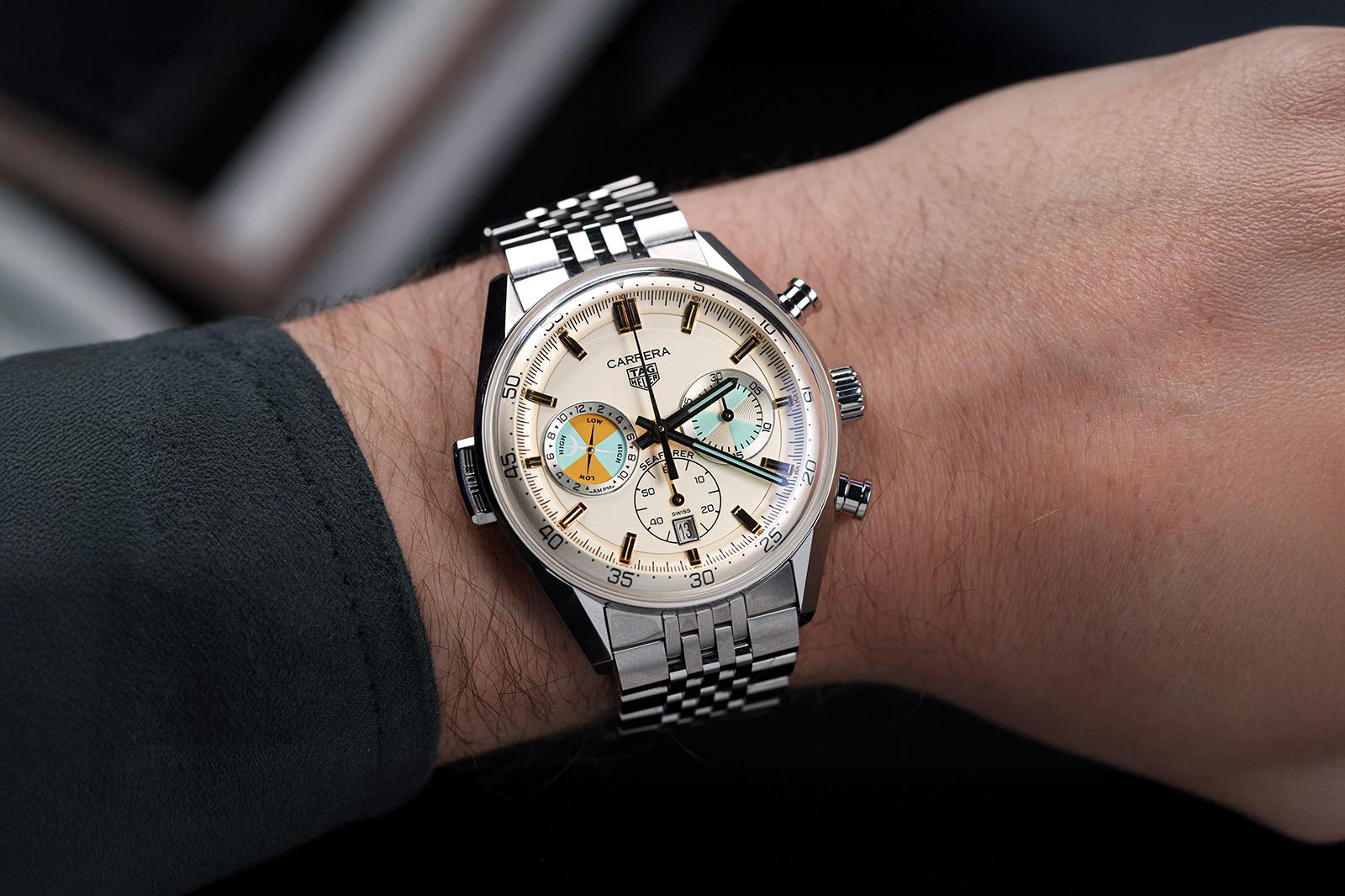
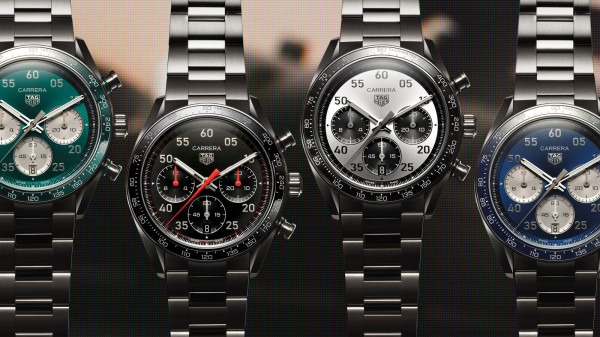
The tide disc no longer lives only in the history books, either. In 2024 TAG Heuer revived the Seafarer as a limited edition made with Hodinkee – 968 pieces, a nod to the 1968 reference 2446C that inspired it – and in 2026 brought it back again as a standing part of the Carrera range, non-limited this time, with the tide indicator in the Seafarer’s classic position at nine o’clock and finished in a teal named after Intrepid, the America’s Cup winner of 1967 and 1970 whose victorious 1967 campaign was timed with Heuer stopwatches.
Almost 80 years after a schoolboy and his physics teacher worked out the gear ratios, the calculation is still doing the same job on a wrist, now inside a movement built specifically to house it. For a brand whose reputation runs entirely through the language of speed, the Solunar is a slice of Heuer pedigree that’s equal parts charming and overlooked, a watch that measured the pull of the moon before its maker ever measured how fast anything went.