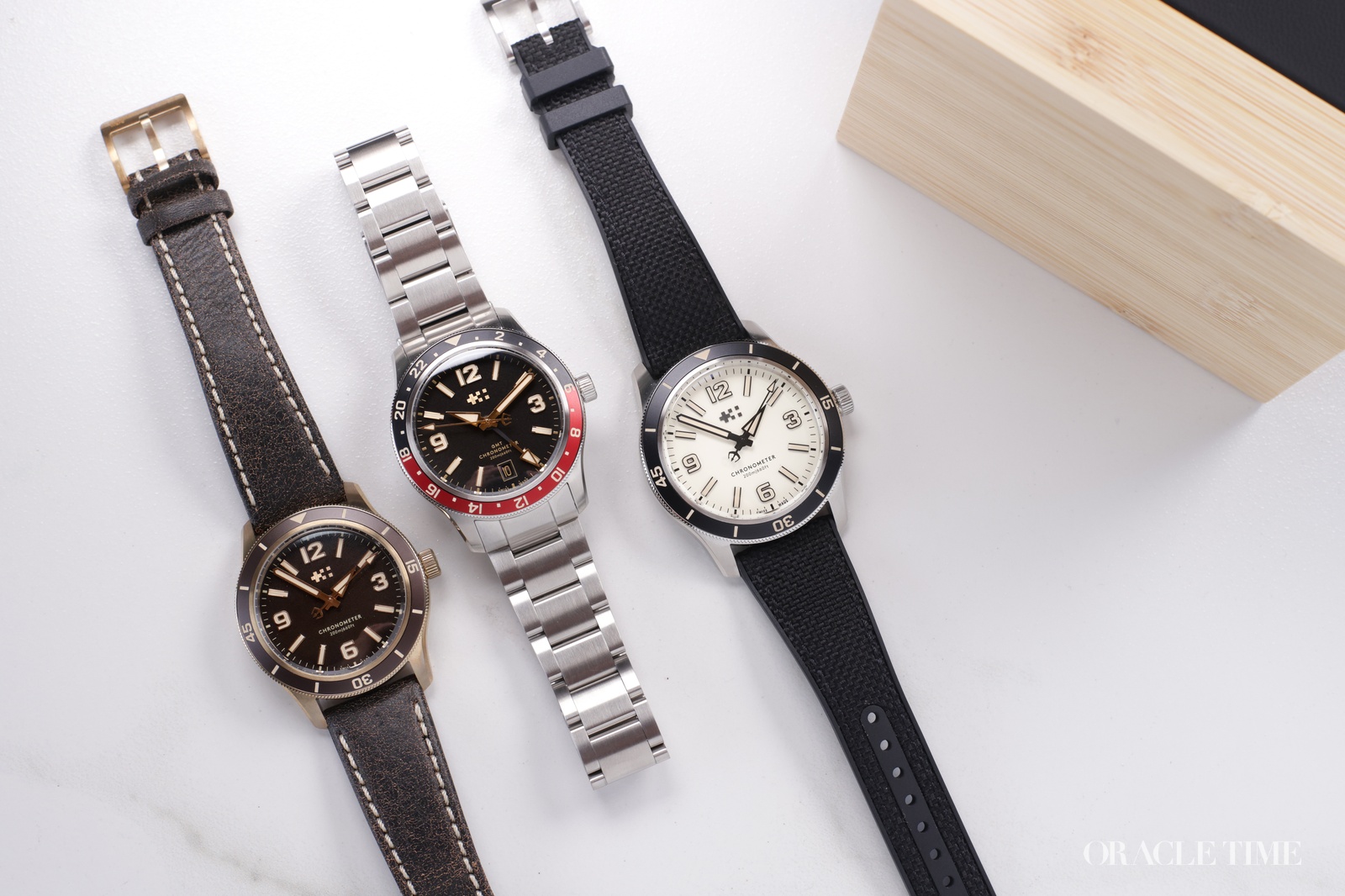
When Christopher Ward discontinued the C65 Aquitaine, it left many people wondering if it was the end of CW’s retro divers for good. Confidence was not restored by the brand’s focus on the Globolight infused Trident Lumiere and uber colourful Trident Reef. However, the retro-revival is here at last with the new C60 Trident Biscay, which arrives in three variants: Automatic, GMT and Bronze. It’s time to embrace the golden age of the skin diver rather than the modern tool-watch language that defines the rest of the range.
The name comes from the Bay of Biscay, the stretch of Atlantic between France and Spain best known for punishing currents and big swells rather than anything postcard-pretty. It’s a fitting reference: all three variants offer 200m water resistance and a screw-down crown and caseback, built to survive serious conditions.
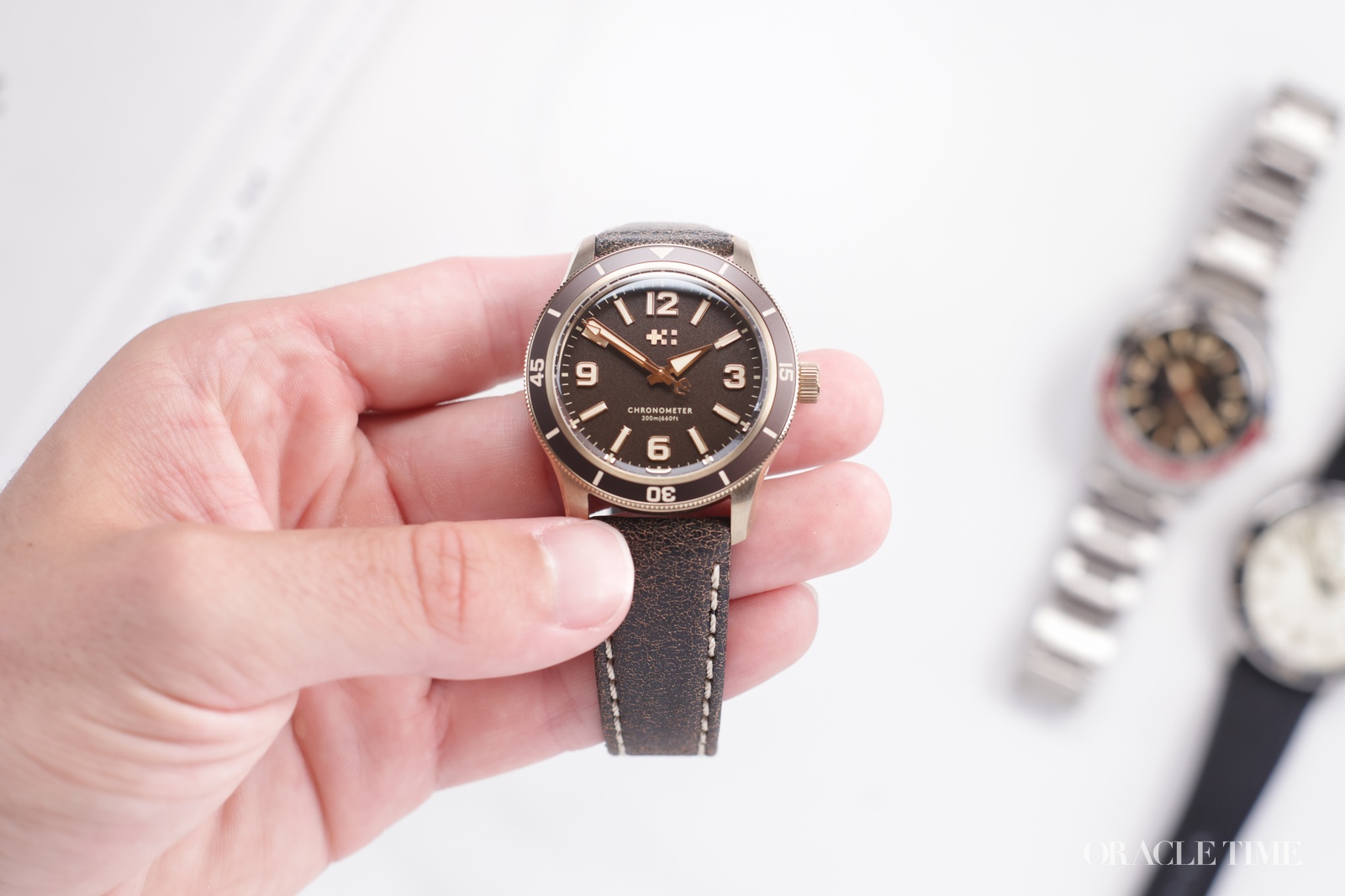
Focusing on the case first, it’s based on Christopher Ward’s Light-catcher case, related to the Trident Pro’s, but reshaped closer to the slimmer Lumière. The Automatic and GMT come in 39mm or 42mm while the Bronze is 39mm only. But the number that really matters is thickness: 11mm on both the Automatic and Bronze, slim for a 200m diver. I expected the 42mm to feel oversized, but the thinness pulls it in, meaning it wears smaller than the diameter suggests, sitting flatter on the wrist. The GMT gives a millimetre back at 12mm for its extra hand, a fair trade.
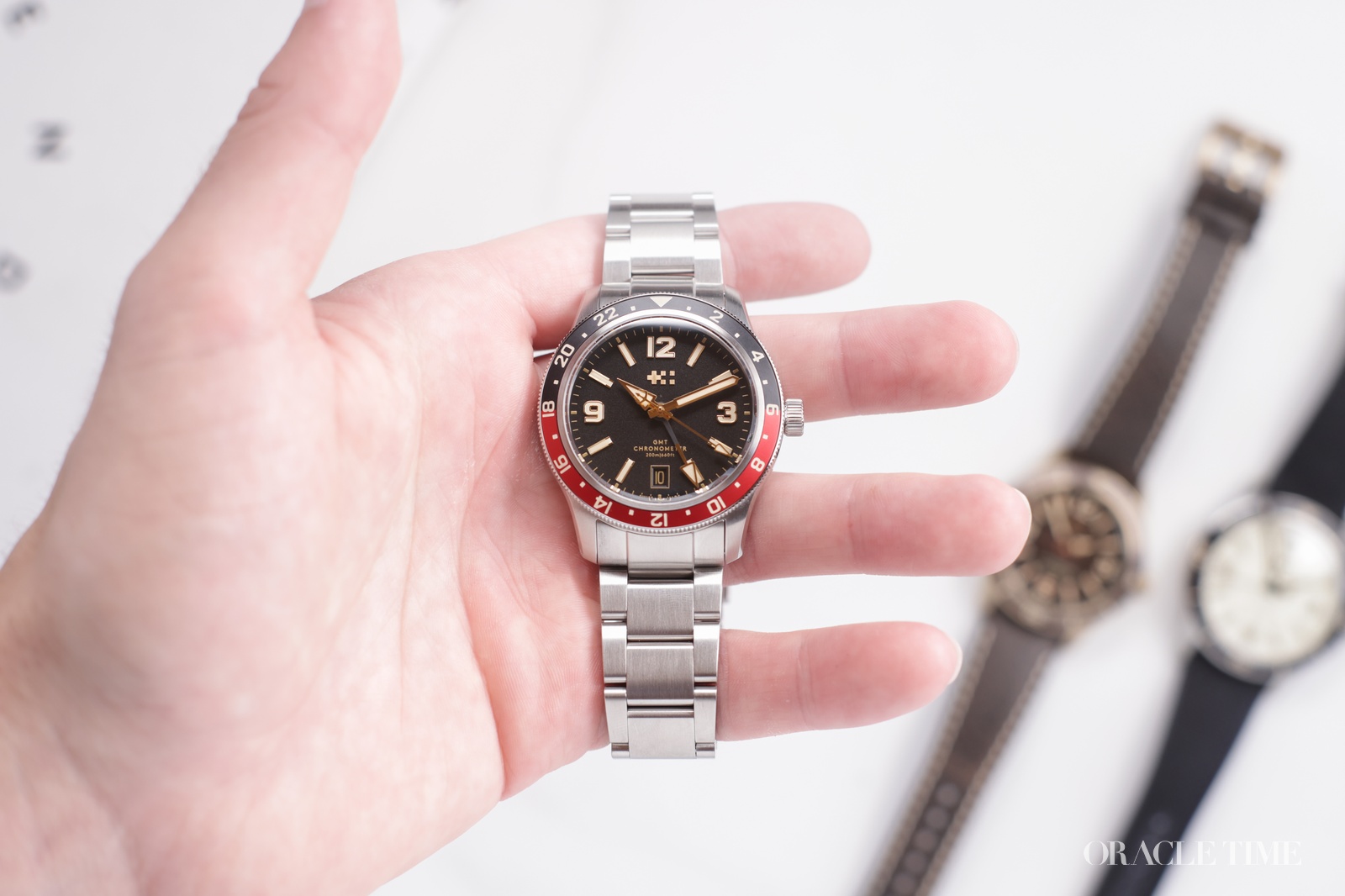
Looking at the bezel on the GMT, it’s impossible not to draw comparisons to Rolex’s two-tone GMT bezels or, closer still, Tudor’s Black Bay 58 GMT with which it shares a similar black and golden-brown colour scheme across the dial. But there’s more to the new bezel’s design than just its colour.
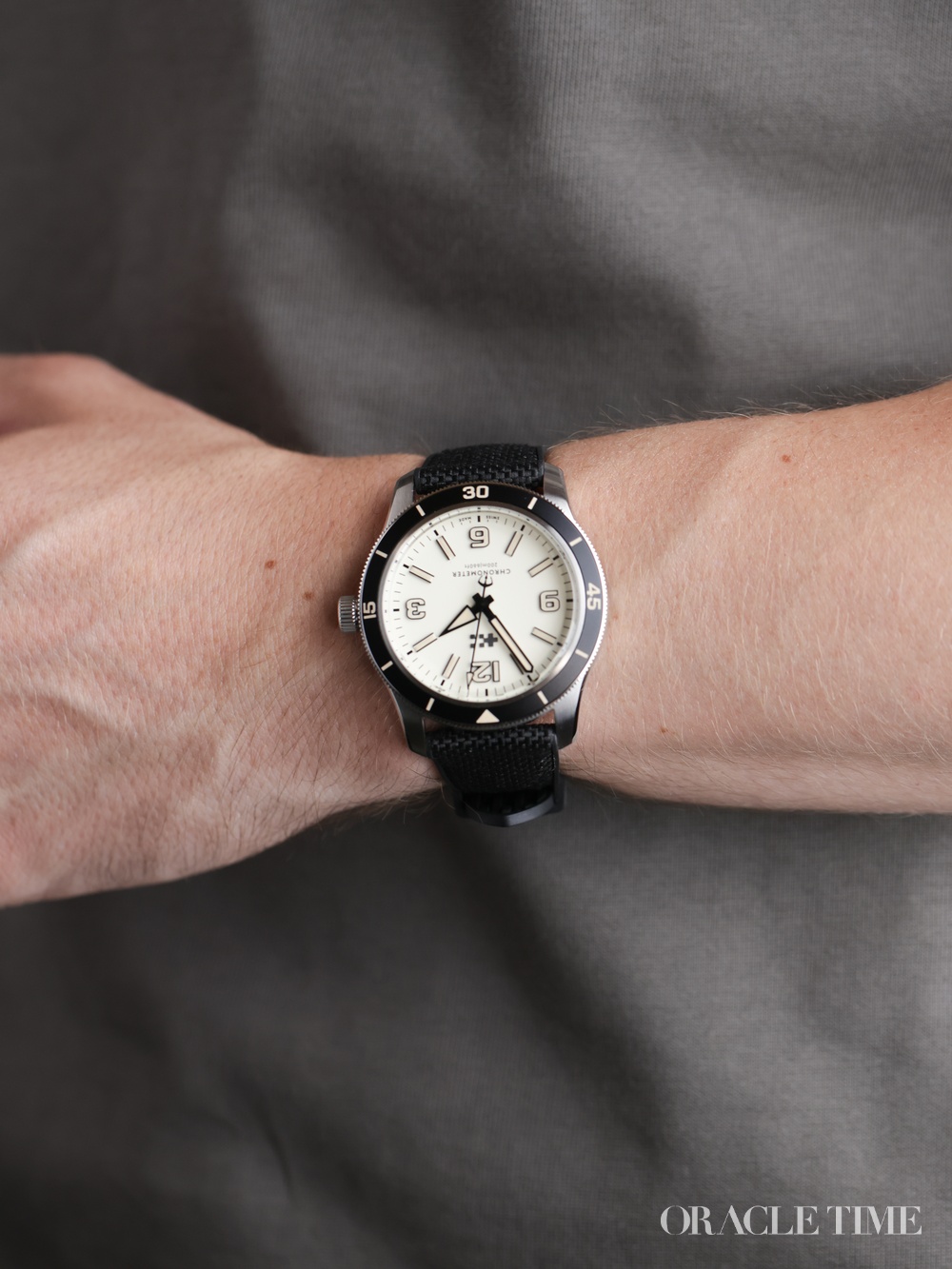
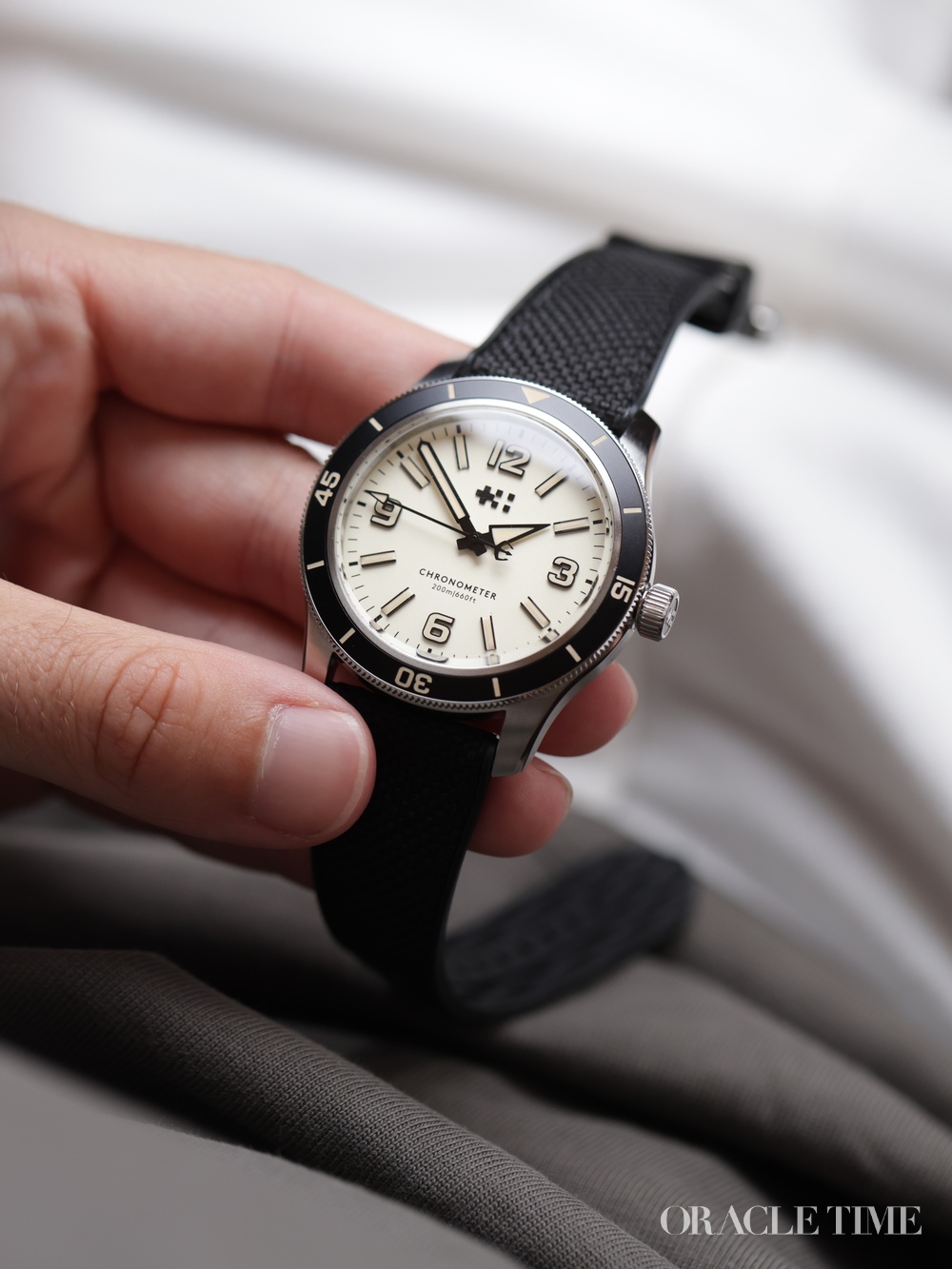
Christopher Ward has cut a new, more intricate tooth profile across every Biscay, giving it a better action as you rotate it. While the Automatic and Bronze use a unidirectional rotation, the GMT is bi-directional, making it quicker to adjust time zones. That bi-directional movement puts it outside ISO 6425’s dive-watch standard, which requires a unidirectional bezel so you can’t accidentally overstate your remaining dive time, but given the intention behind the complication, that’s no surprise. It’s also no issue for an everyday watch.
Before moving on from the case, I should address the black sheep of the family, or more accurately, the bronze sheep. Most bronze divers reach for industry-default CuSn6; Christopher Ward has instead gone with a marine-grade aluminium bronze – CuAl10Ni5Fe4 – built for actual maritime engineering. It answers the recurring complaint that bronze watches age too fast, and too severely, than owners sign up for. It develops a patina slower and more evenly, with far greater resistance to seawater corrosion. It also makes for a more monochrome look, as the chocolate-brown dial sits in the same tonal family as the case.
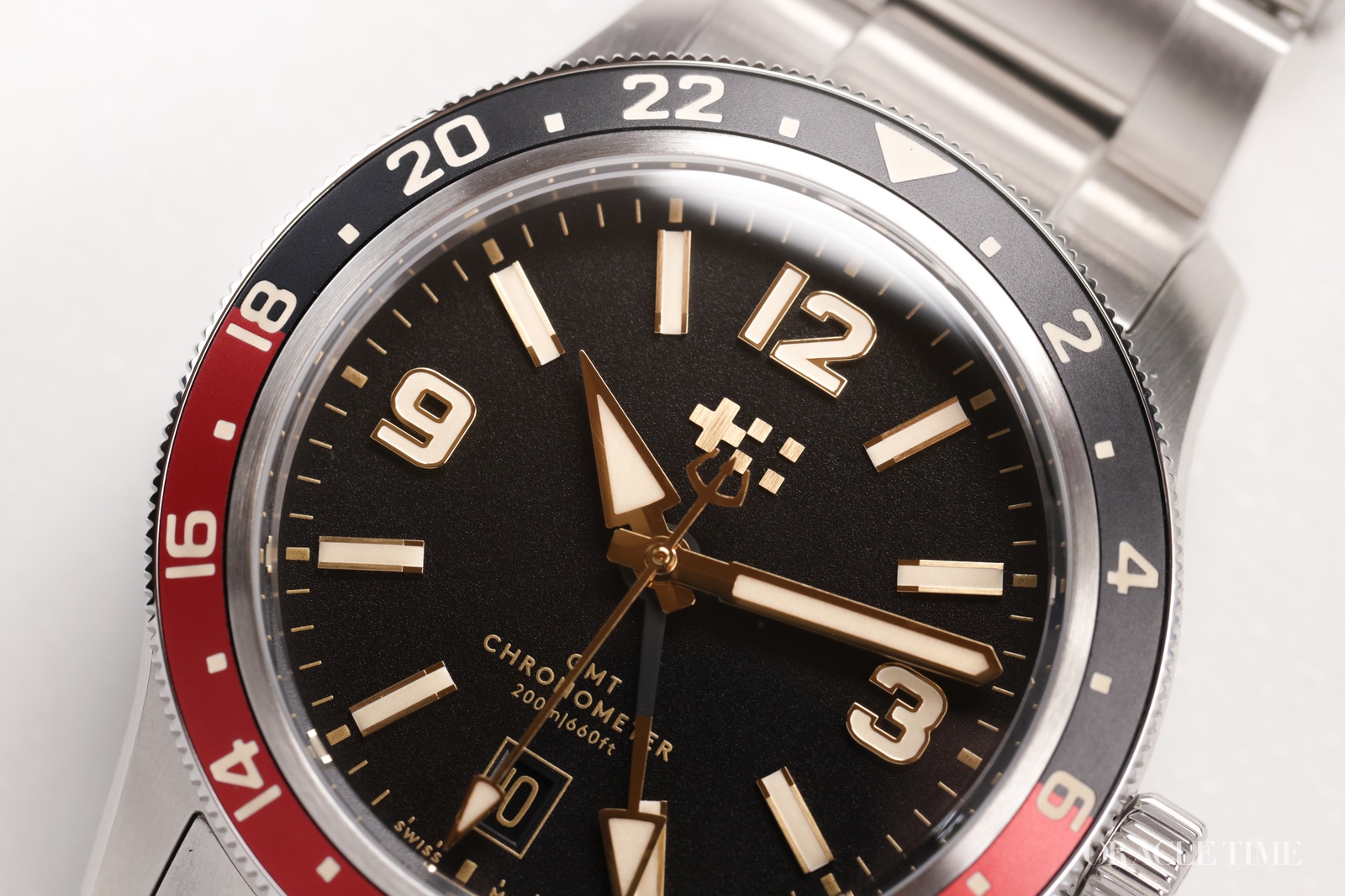
Across all three dials, the granular texture and individually applied Arabic numerals give real depth. But it’s the lume doing the heaviest lifting: Christopher Ward has filled the applied numerals, baton indexes and diamond-cut hands with a custom-pigmented Super-LumiNova Grade X1 BL in an off-white rather than the standard bright white, giving it the warm, aged glow of old radium lume.
The GMT drops the six o’clock numeral for a framed date window, and unlike the Pro 300 GMT, which only lumes the 12 o’clock triangle, Biscay’s GMT bezel lumes the numbers and dots too – a small but deliberate step up in after-dark usability.
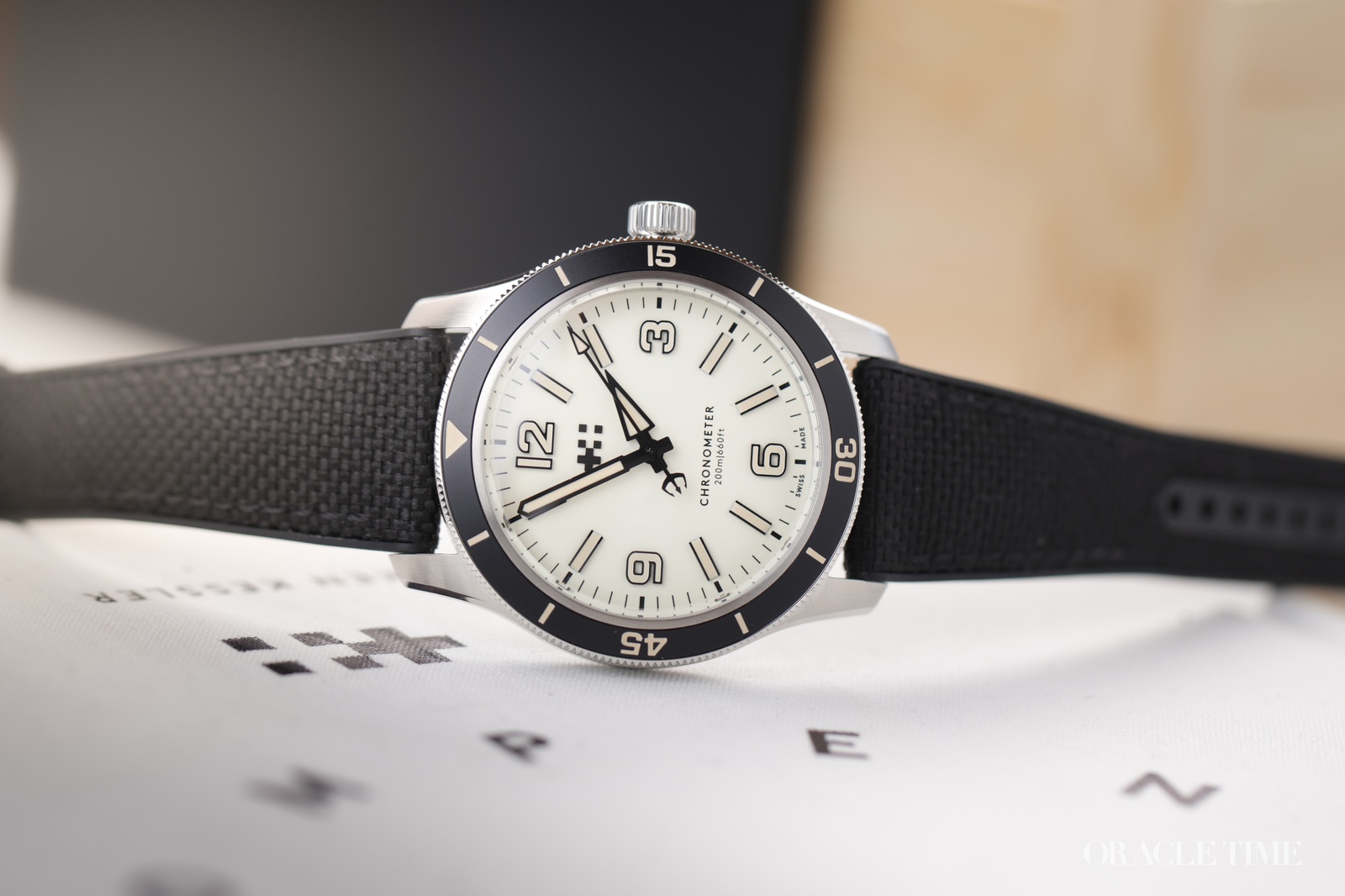
The Biscay collection lands with a suite of bracelet and strap updates too with the iLink bracelet, a new Hybrid strap, and a new Vintage Oak leather strap. The iLink isn’t brand new – it debuted on the Sealander back in April – but this is the first time it’s being rolled out as standard across a new model, present on every steel Biscay reference. It features hidden buttons that release a link with no tools, no pins, no scratches. It’s fiddly at first but a one-time job, and well worth it.
Brand new, though, is the redesigned Hybrid strap which tapers from 20mm or 22mm at the lugs to 16mm at the clasp, sitting flatter to the wrist with noticeably less bulk. The Vintage Oak is the most traditional of the three and the most cohesive when paired with the new dials making it the pick if you want to emphasise the retro look down to the clasp.
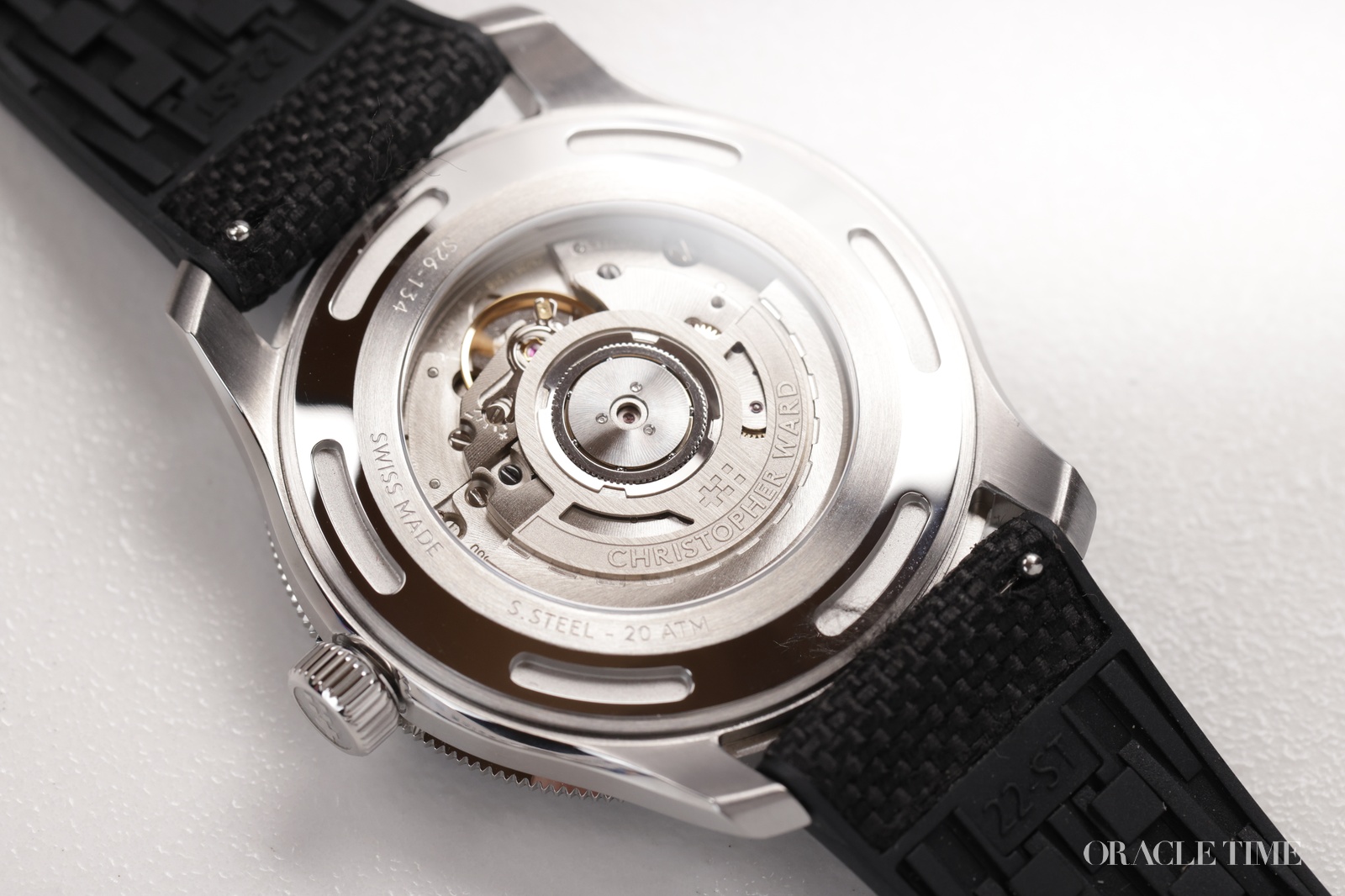
Movement-wise, the Automatic and Bronze run the COSC-certified Sellita SW300-1, while the GMT uses the SW330-2 for caller-GMT function, finished to élaboré standard with a new rotor design that’s visible through an exhibition caseback. 4Hz, 56-hours of power reserve and COSC’s -4/+6 seconds a day certification are solid numbers, nothing too flashy, but exactly what this watch needs.
From £1,330 for the Automatic, £1,430 for the GMT and £1,495 for the Bronze on strap, the Biscay should have Tudor looking over its shoulder. Christopher Ward has built a solid Black Bay 58 alternative – a proper heritage skin diver across three variants and two sizes. They might be COSC Sellita rather than an in-house METAS movement, but that’s exactly why they cost less than a third of the Tudor’s £4,400, making them excellent value for money.
Price and Specs:
39mm diameter x 12mm thickness, stiainless steel (GMT)
Sellita calibre SW330-2, automatic, COSC-certified (GMT)
Hours, minutes, seconds, date, GMT (GMT)
£1,430 (approx. $1,995) strap, £1,595 (approx. $2,220) Bader bracelet, £1,635 (approx. $2,275) Consort bracelet; Bronze: £1,495 (approx. $2,095) (GMT)
More details at Christopher Ward.