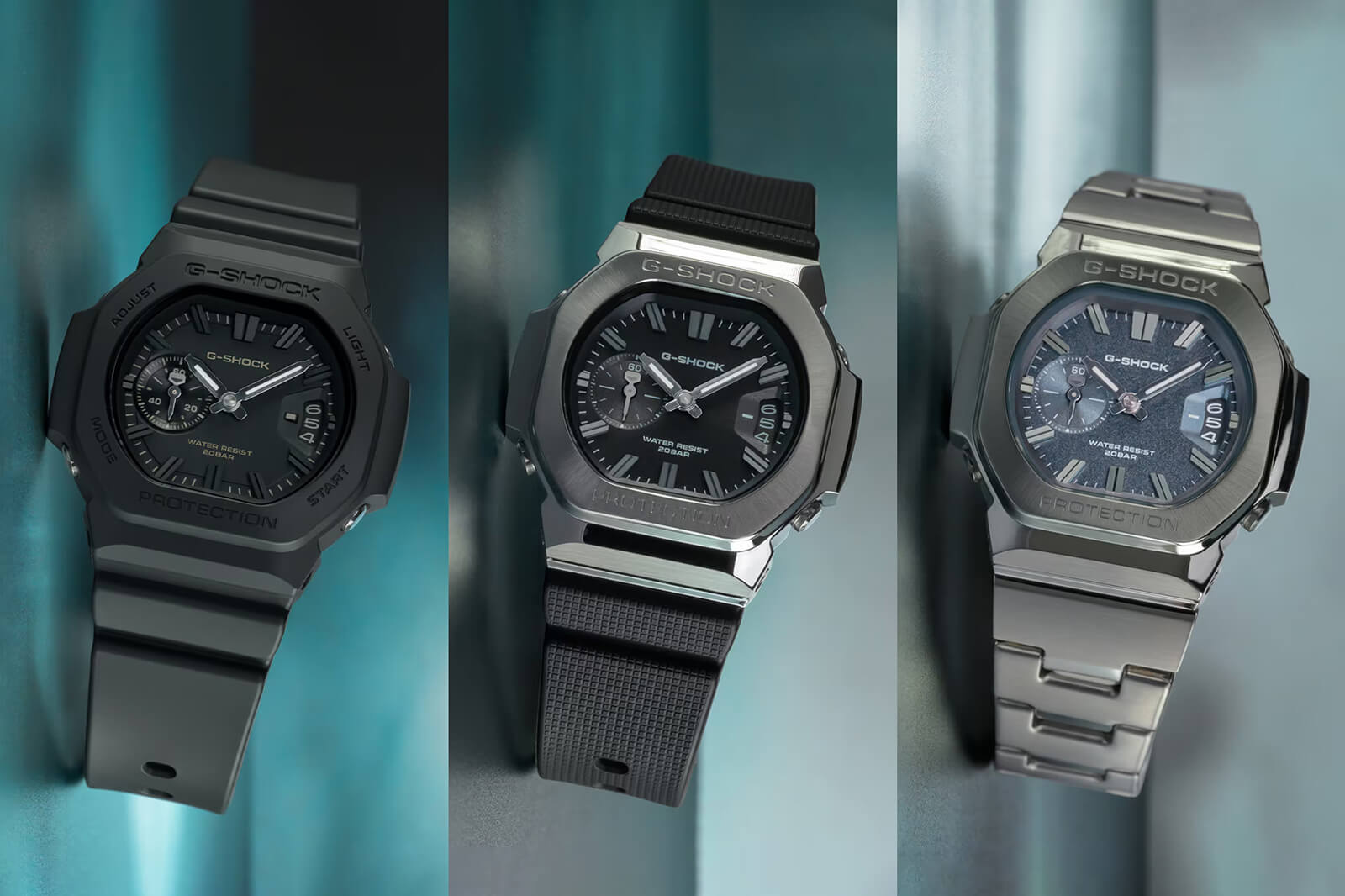
Casio’s gone back to where G-Shock started. The new G-Shock 2500 Series takes the DW-5000C – the original 1983 model, built around the idea of a watch that could take a drop without breaking – and reworks it as a fully analogue watch.
People are already calling it the “CasioNaut”, because that softened, rounded bezel can’t help but bring the Patek Philippe Nautilus to mind. It’s the flip side of the “CasiOak” nickname the GA-2100 picked up in 2019, where an angular, octagonal bezel echoed the Royal Oak. Round those same edges off and you land somewhere else entirely – still clearly a G-Shock, but one that’s borrowed a different luxury silhouette.
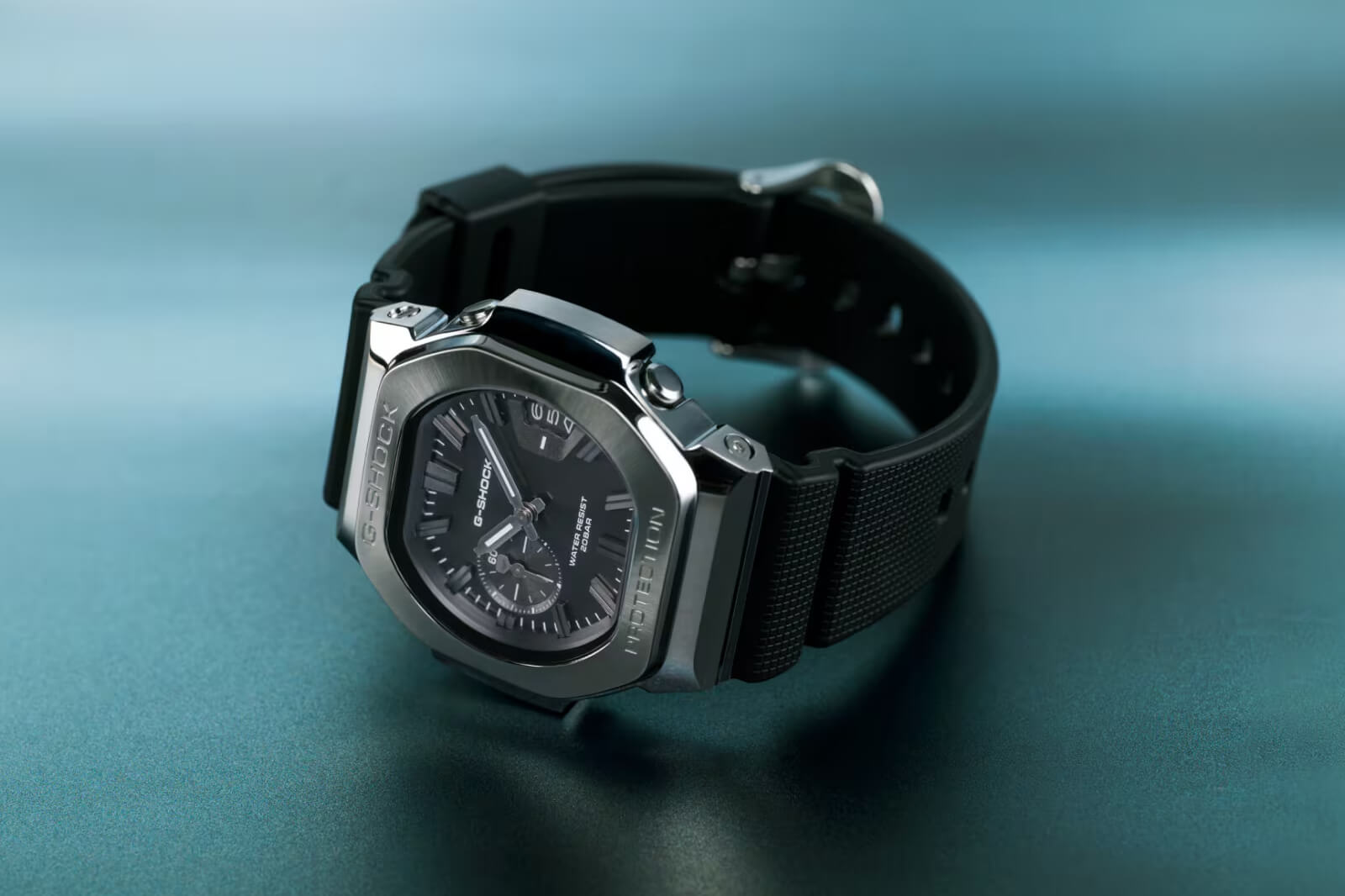
The collection launches with nine references across three builds, priced by material: all-resin (GAC-2500), a steel bezel on resin (GMC-2500), and a steel bezel on a steel bracelet (GMC-2500D). The GAC-2500 measures 46.7 x 44.5 x 12.7mm, and the GMC models 46.7 x 43.8 x 12.9mm. Every model gets a 200m water-resistant case, mineral glass and a CR1025 battery rated at roughly two years.
G-Shock GMC-2500 / GMC-2500D

This is the dressier end of the range, and the one making the strongest case that a G-Shock can pass for an ordinary analogue watch. The GMC-2500-1A and -1A8 pair a stainless steel bezel with a resin strap, in black and silver. The GMC-2500G-9A goes gold-tone on both bezel and dial. Move up to the GMC-2500D-1A and -1A2 and the resin strap gives way to a matching steel bracelet, with the two references distinguished by black and blue-grey dials.
Price and Specs:
G-Shock GAC-2500
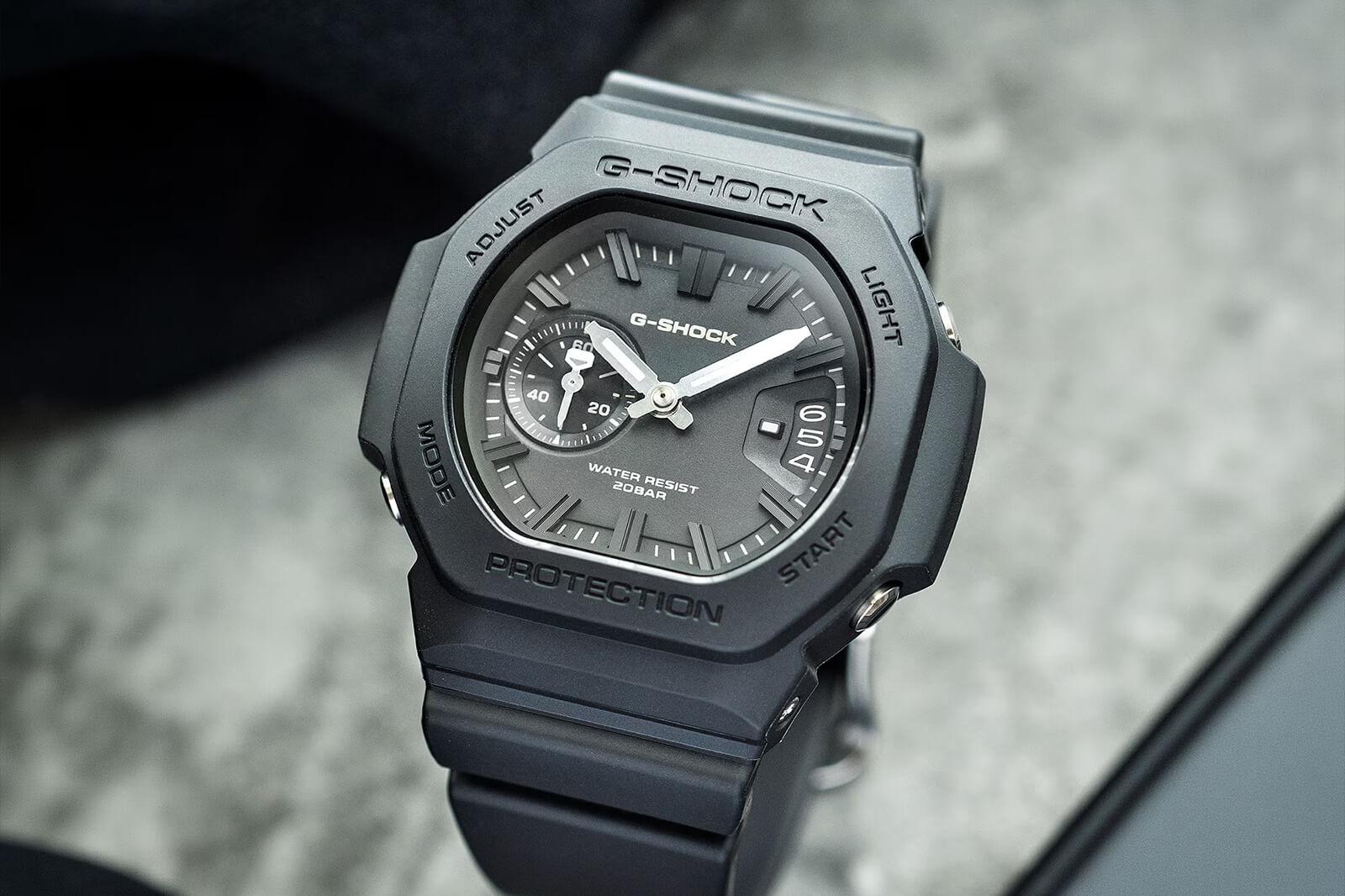

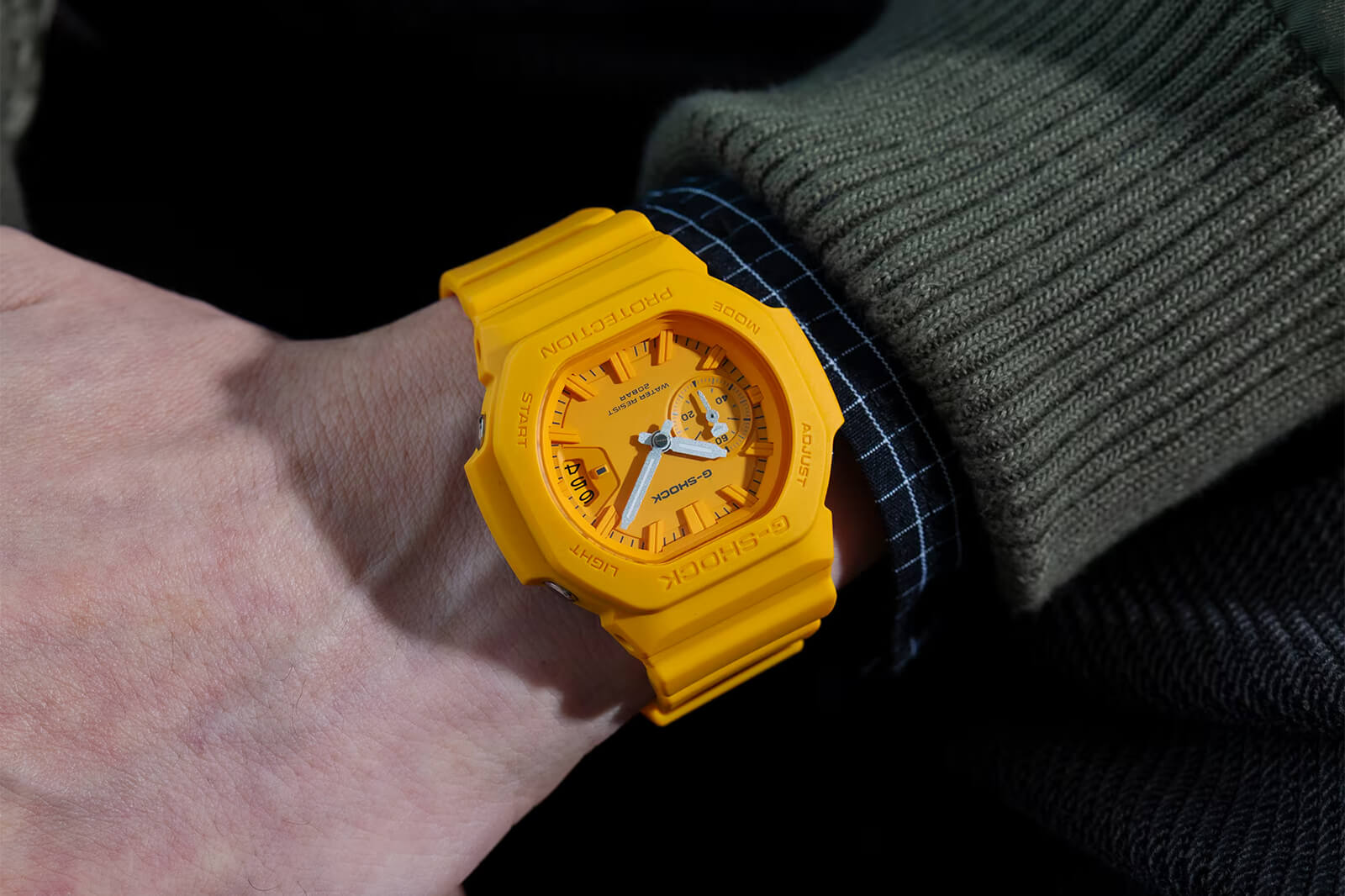
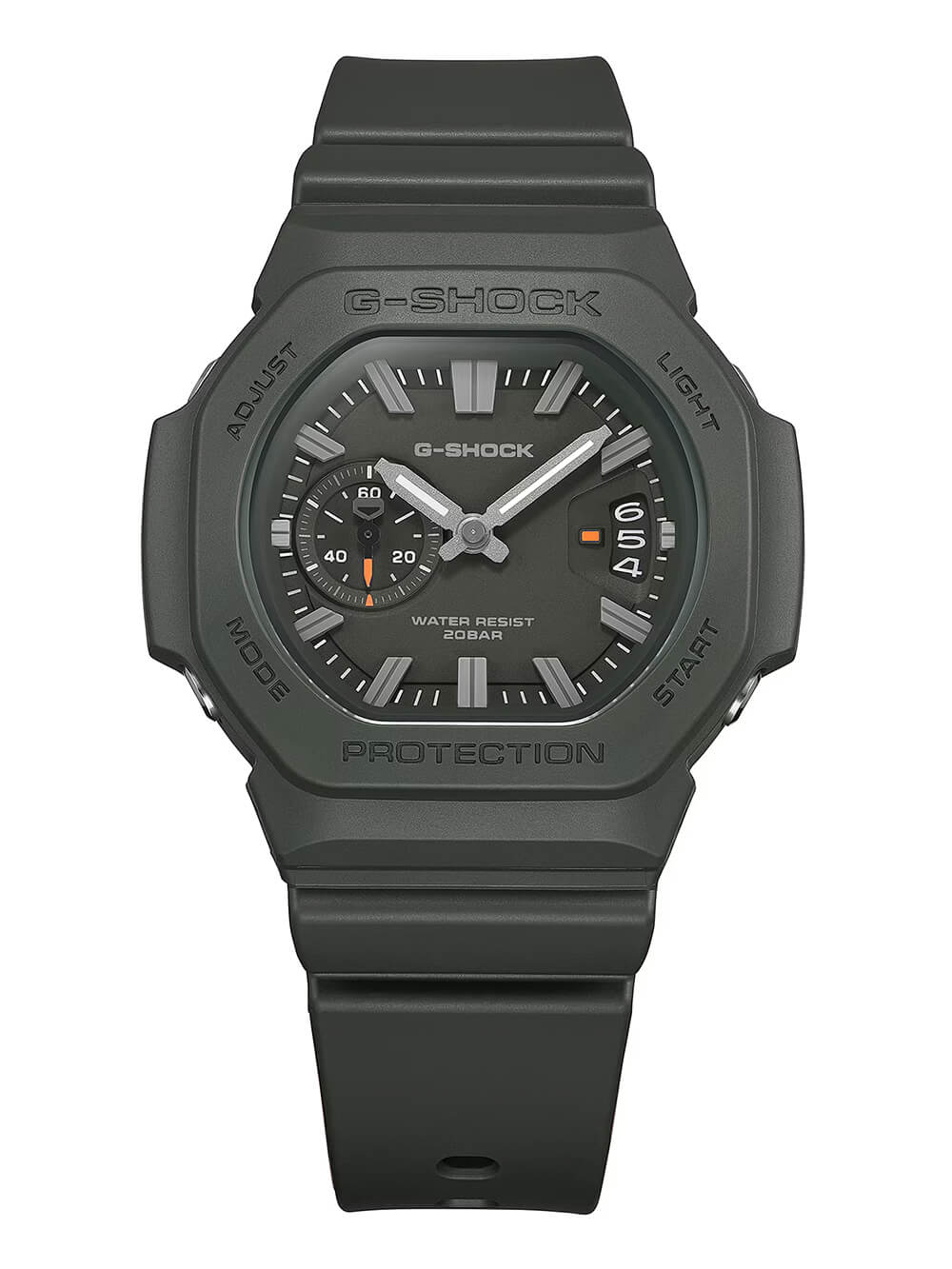
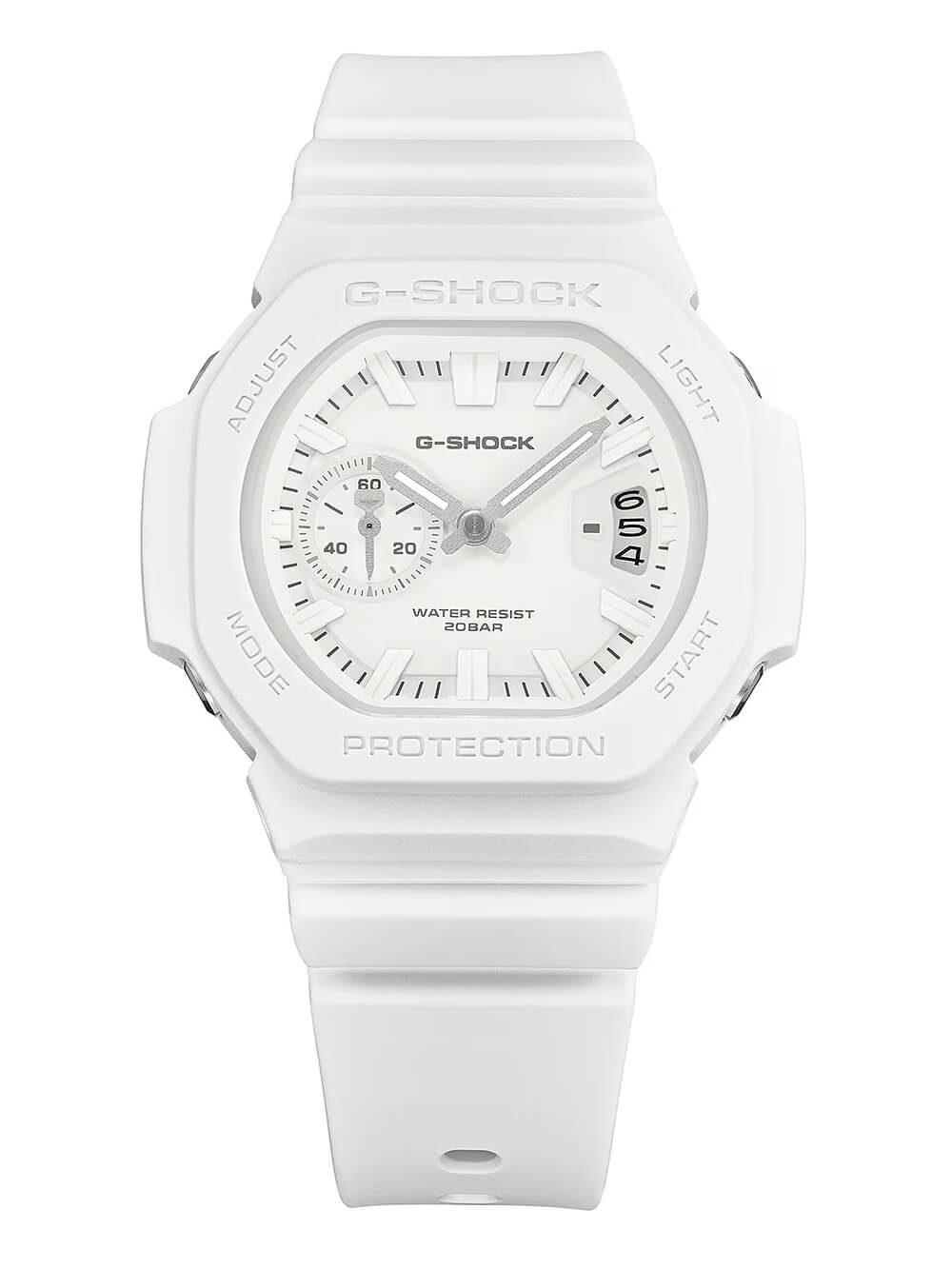
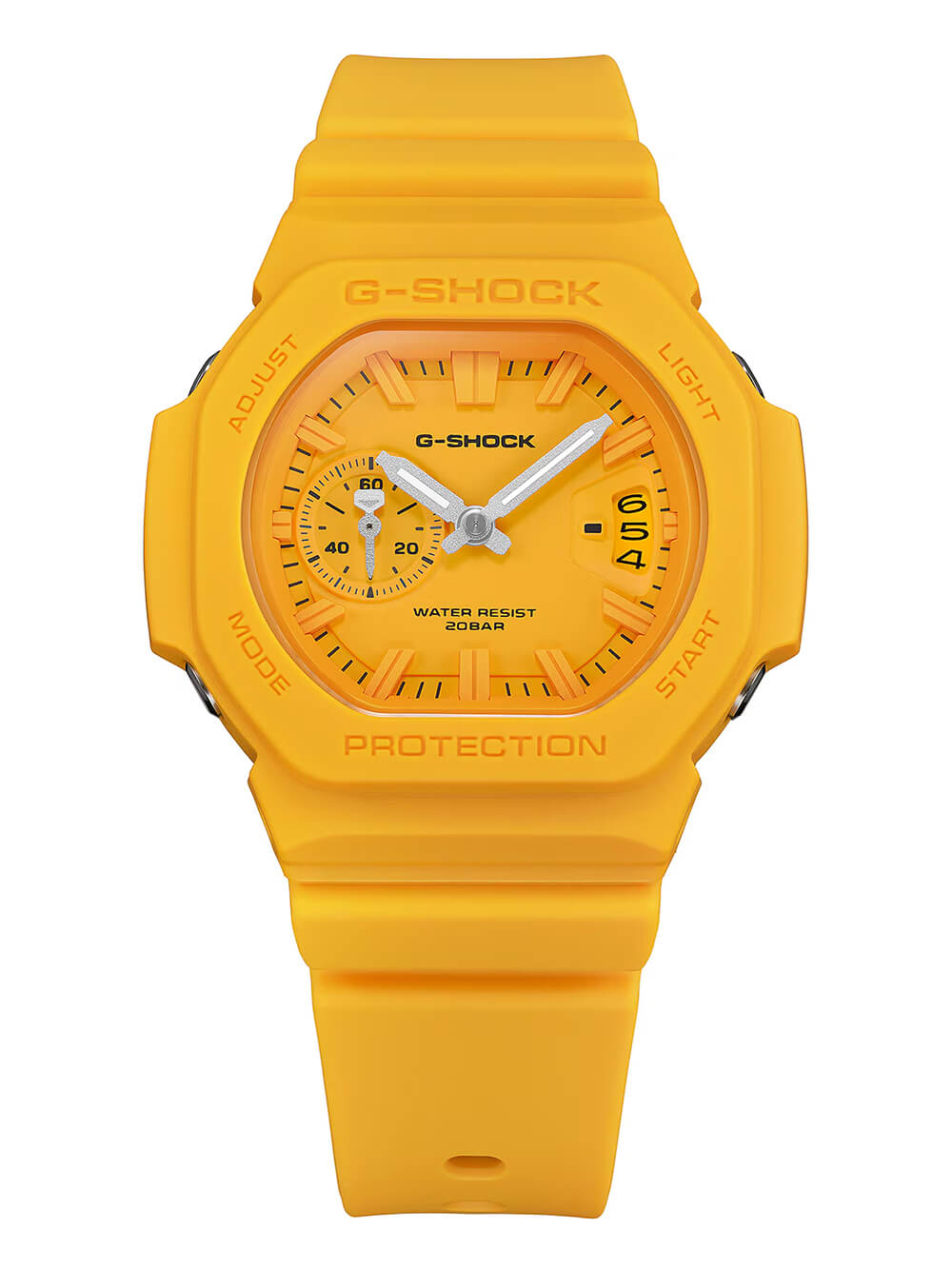
The GAC-2500 line is the more straightforwardly G-Shock of the three builds: resin case, resin strap, no metal anywhere. It comes in black, a very dark green, white and yellow, the kind of punchy, single-colour options G-Shock has built a following on over the decades. Where the GMC line is angling for versatility, the GAC range reads as the more direct descendant of the DW-5000C, leaning on colour rather than material for its character.
Every reference shares the same three functional updates. A Multi-Mission Date window at 3 o’clock is a three-cell display that shows the date, stopwatch elapsed minutes, or setting information depending on the mode – once you’ve set the year, month and day, Casio says it runs as a fully automatic calendar to 2099, no manual correction needed. At 9 o’clock, a small seconds hand can be stopped and restarted on demand, a sleep function Casio says reduces power consumption to extend battery life beyond its rated two years, without saying by how much.
Rather than being fixed rigidly in place, the minute hand is held by magnets – Casio calls it a Shock Release Hand – letting it shift under a hard knock to absorb the impact, then return to its correct position within a few minutes.
It’s a sensible move from Casio. The square DW-5600 and the GA-2100 ‘CasiOak’ have been reissued and recoloured so many times that an analogue take on the house’s actual origin story is the fresher move, and leaning on the 1983 original rather than another CasiOak variant gives the 2500 Series its own reason to exist, nickname aside.
Casio’s announcement didn’t include prices, but they’re emerging region by region. US pricing has surfaced via the G-Shock U.S. price list: $145 (around £110) for the resin GAC-2500 models, $280 (around £210) for the steel-bezel GMC-2500, climbing to $300 (around £225) for the gold-tone GMC-2500G-9A and $350 (around £260) for the steel-bracelet GMC-2500D. None of this comes from an official Casio America announcement, so treat the figures as credible but unconfirmed. Timing’s firming up, too. Casio’s product pages are live and marked for November 2026, the series has already launched in India, and US listings show an estimated date of 6 November, with the UK launch reported for 7 November.
Price and Specs:
More details at Casio.