Breguet is a storied name in watchmaking history, inventor of the tourbillon, populariser of the wristwatch and today a bastion of classical haute horology. But recently they’ve been showing a few hints of surprisingly forward-thinking horology: the magnet-utilising Classique 7225 for example. Now they’re striking out in a decidedly experimental direction with the… well, it’s called the Expérimentale. Go figure.
So, what’s experimental about the Expérimentale? Well, it’s less about the individual elements as pushing them to the nth degree. I’ve already touched on the Classique 7225, which not only used a magnetic escapement, but leveraged it to up the frequency to an insane 10hz thanks to the lower friction. By why magnets? Well, the greatest problem with minute mechanics is friction. It slows moving parts, dissipates energy, damages components, the lot. The faster a part moves, the greater the problem and no part of a watch moves quicker than the balance – and specifically, the balance staff.
This is the part that touches the rest of the movement and turns back and forth as the balance spring coils and uncoils. Normally it’s held in two places, right at the bottom and with a collar partway up. You can’t drop the bottom part, or it just won’t stay in the movement, but Breguet have dropped that collar. Because even though it has a ruby bearing for incredibly low friction, there is one thing that has lower: air. So, a pair of magnets keep it in place, lowering friction, resulting in lower wasted energy, lower wear and tear on a very delicate part and the chance to say your watch has magnets in it. As we all know, magnets are very, very cool.
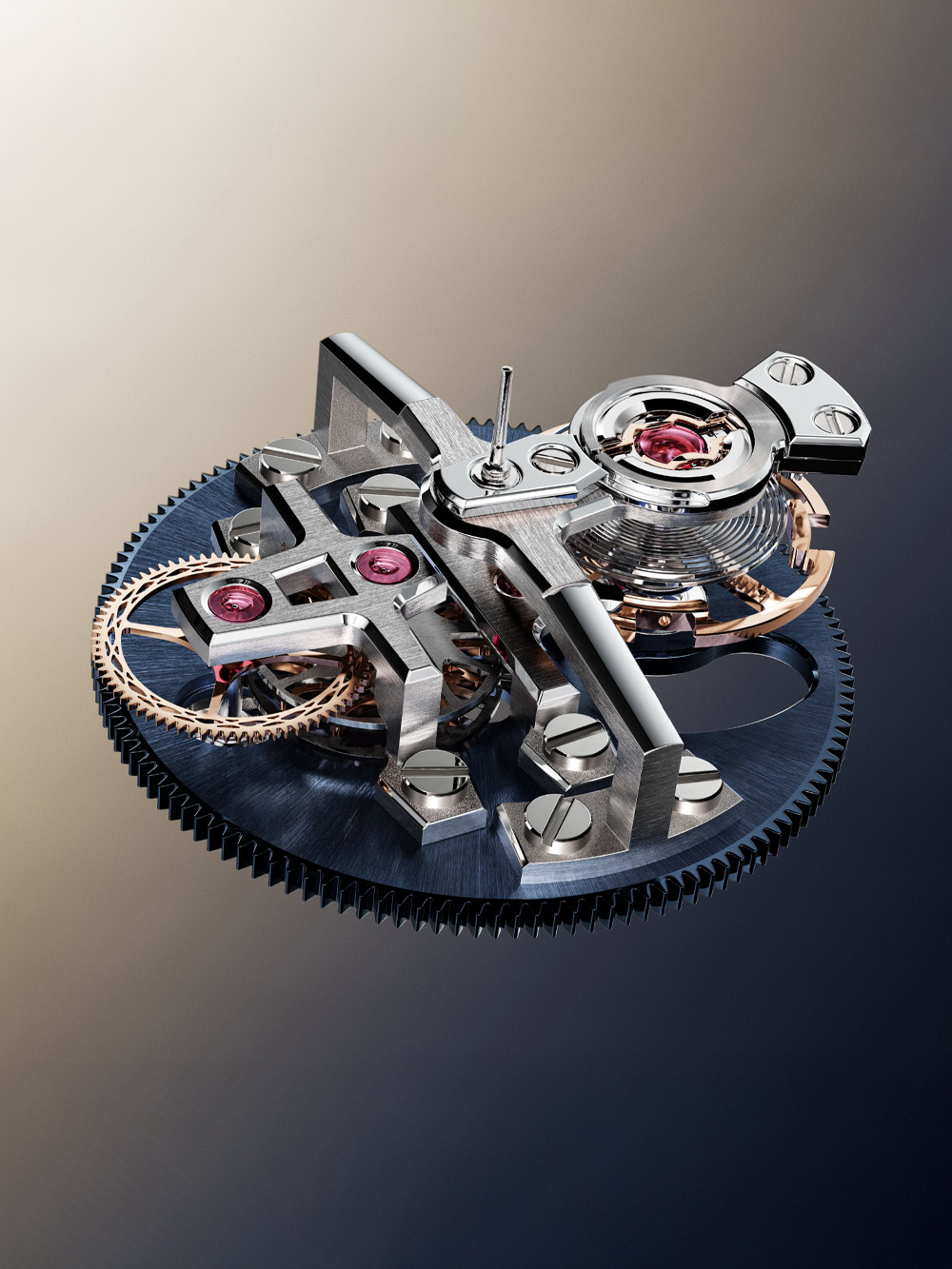
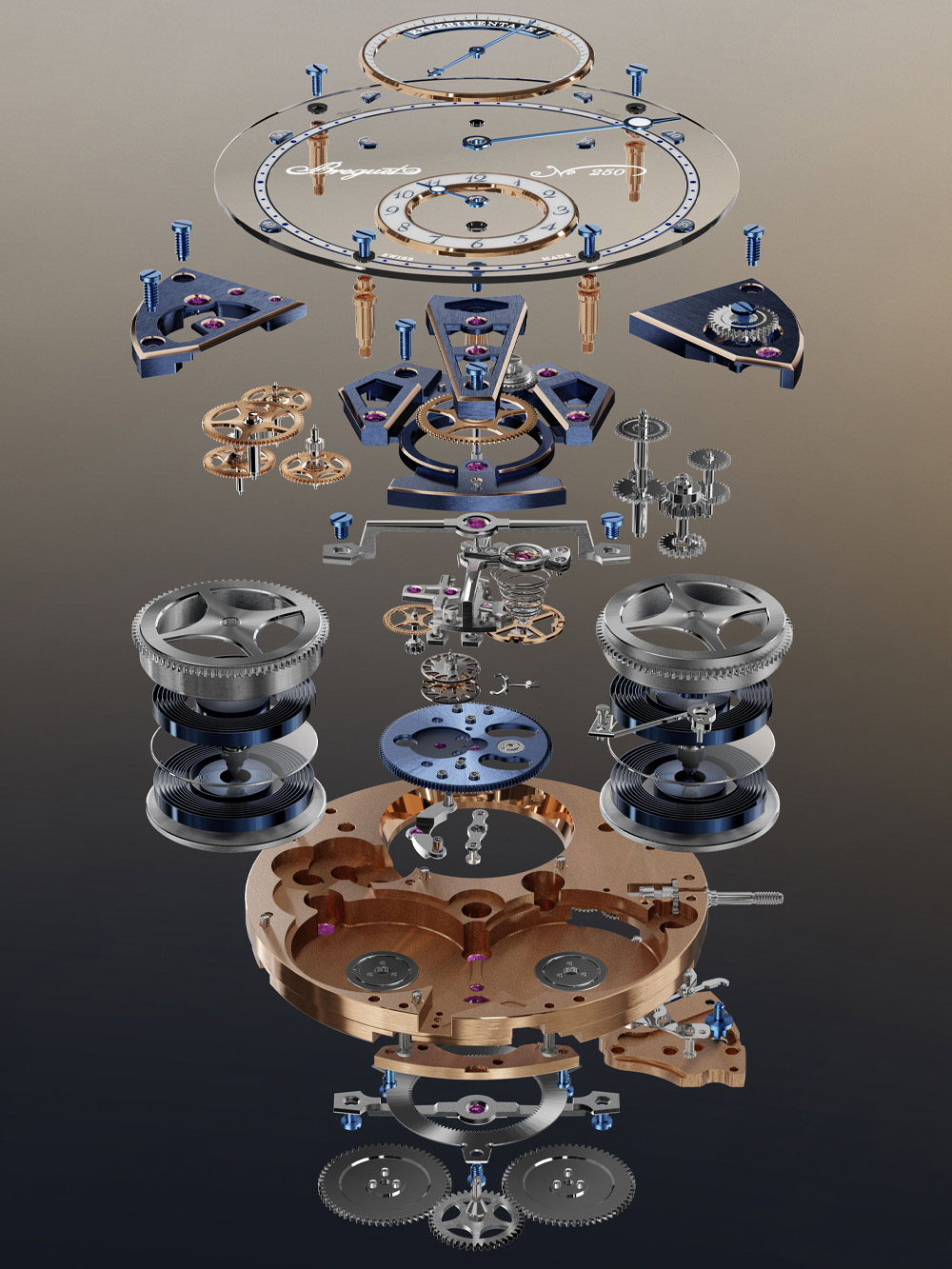
However, in the Expérimentale, they’ve reprised the novel (not to mention gloriously counterintuitive) magnetic escapement and thrown the kitchen sink at it – if your kitchen sink was made from a tourbillon and constant force mechanism.
Adding a tourbillon to a movement like this is no mean feat. First and most obviously, it needs to be completely anti-magnetic so that the whole magnetic system doesn’t impact the watch’s regulation. Fortunately, Breguet has been using silicon components for a good long while. More importantly though it mustn’t negatively impact the watch’s timekeeping at low power reserve levels.
How would it? I hear you ask. A tourbillon’s supposed to increase accuracy! Well, yes but only when there’s enough energy in the movement. Otherwise the extra movement of the tourbillon can disrupt the level of torque you want. Breguet’s new 10Hz tourbillon has a mechanism that decouples it at lower torques, allowing the watch to keep on trucking without impacting accuracy. Given the tourbillon has a flatter curve of impact, it’s a pretty interesting solution that amounts to a constant force mechanism.
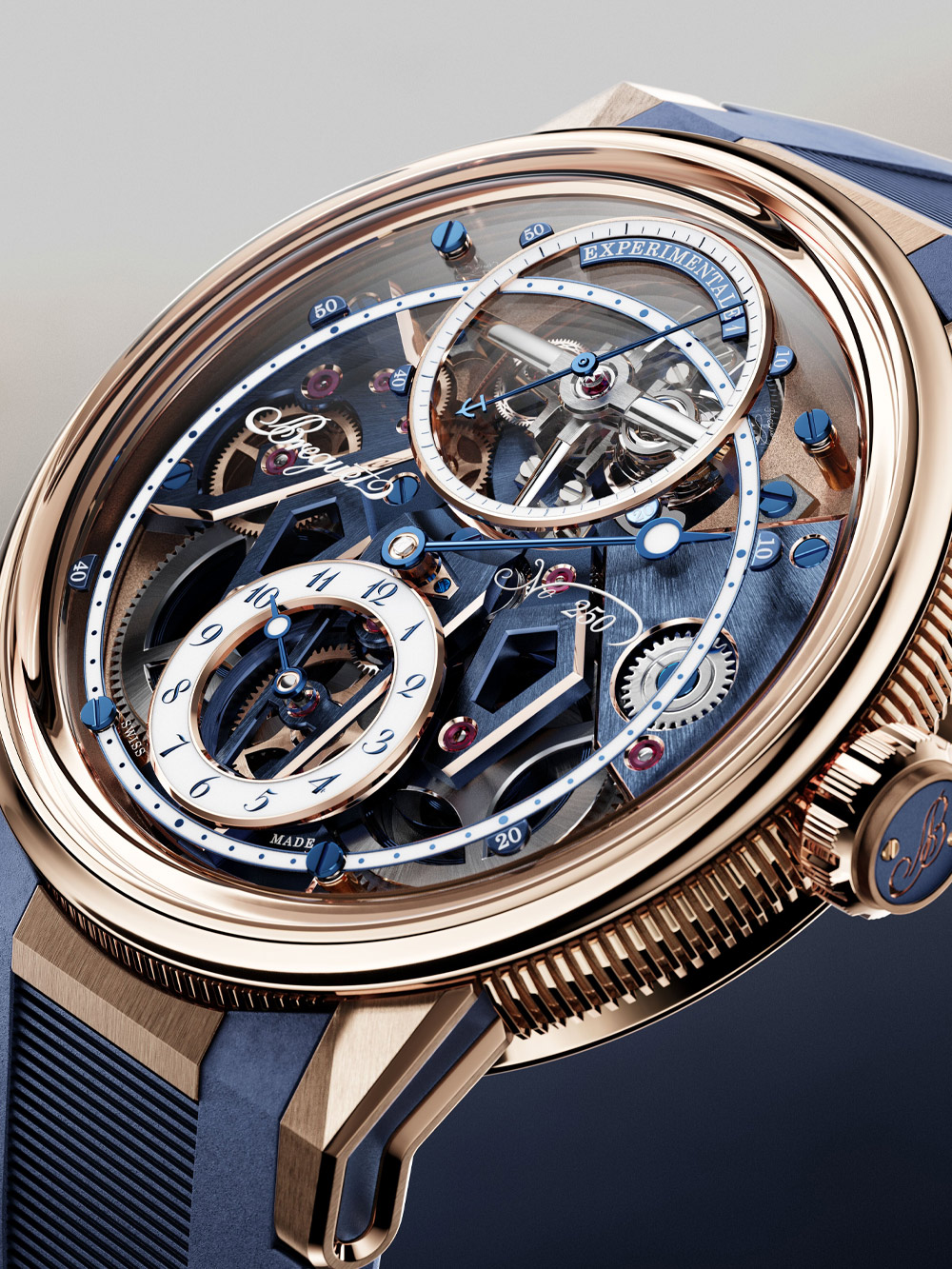
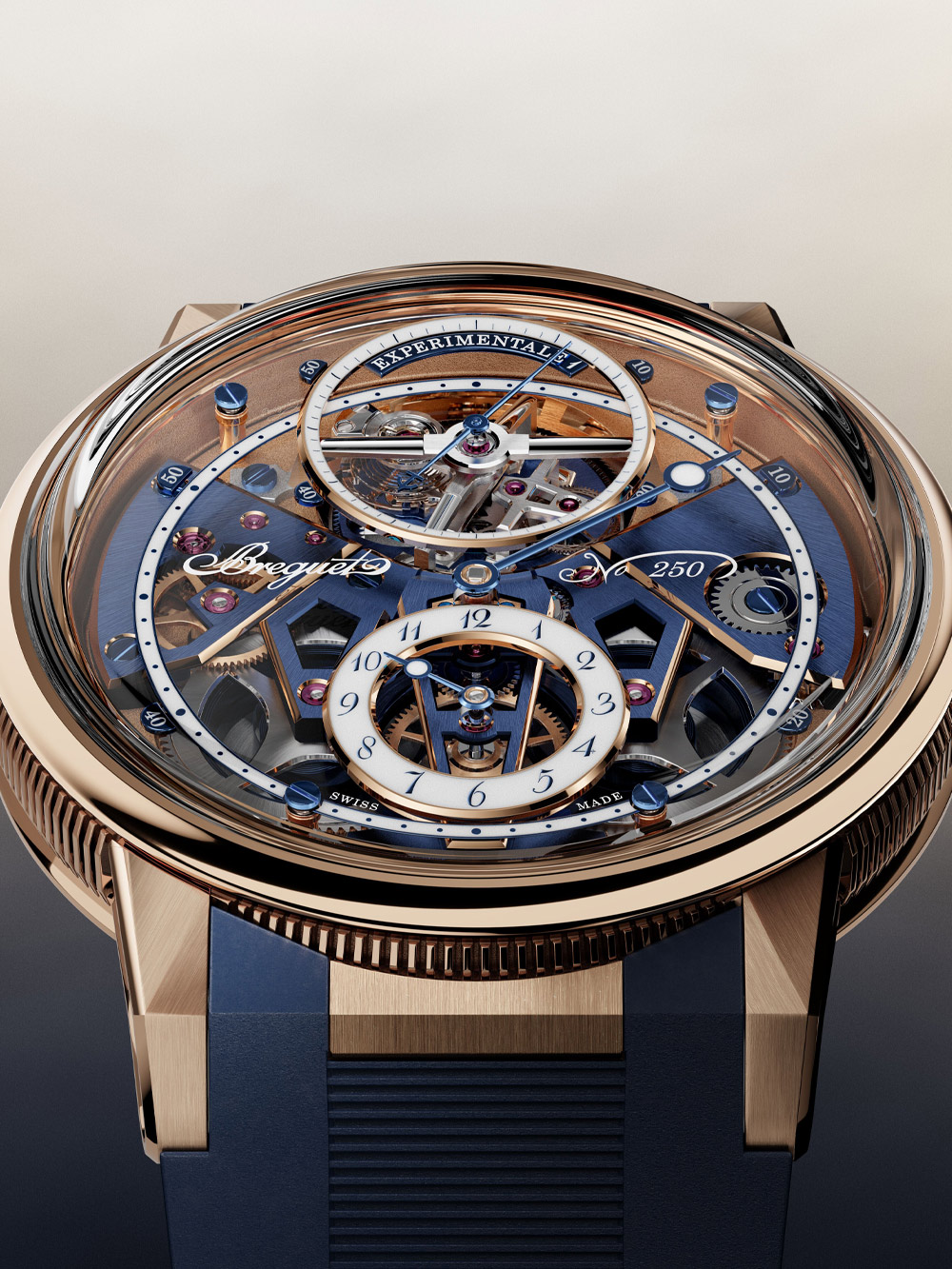
The fact that the tourbillon operates at 10Hz in the first place is also incredible. Most tourbillons work at 2.5Hz, so this is four times faster, which in watchmaking means it’s more accurate. According to Breguet, it falls into their ‘scientific’ category but strip away the marketing speak and that means +/-1 second a day.
To power all that is a patented twin barrel, series-coupled across two levels. In short, smoother, steadier power transference and a bigger power reserve – specifically 72-hours. Given the energy requirements here, even with the lowered friction of the magnetic escapement, that’s impressive. It’s still manual-wind so you need to keep it topped up, but that much easier to do given that it’s weekend proof.
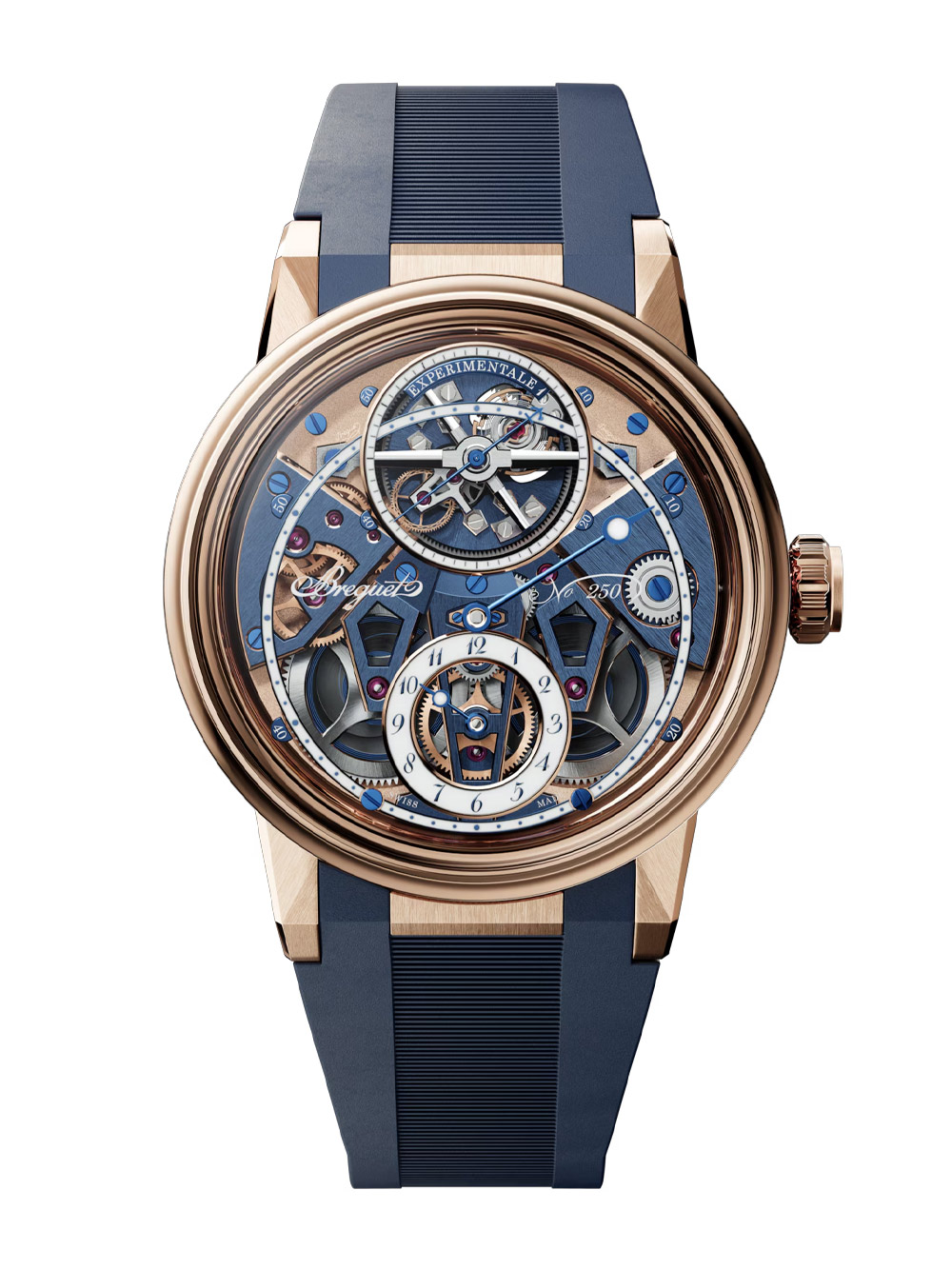
All of this provides the kind of technical and mechanical precision you expect an open dial for and, voila, an open dial for the Expérimentale. With blued bridges and screws, rose gold plates and rubies and enamel rings for the dull drudge of actually reading the time. It’s technically a regulator, with seconds run on the tourbillon at 12 o’clock, minutes in the middle and hours at 6 o’clock. It’s perhaps not the easiest thing to read in the world as the blued hands blend in a touch to those bridges, but the depth here helps out massively.
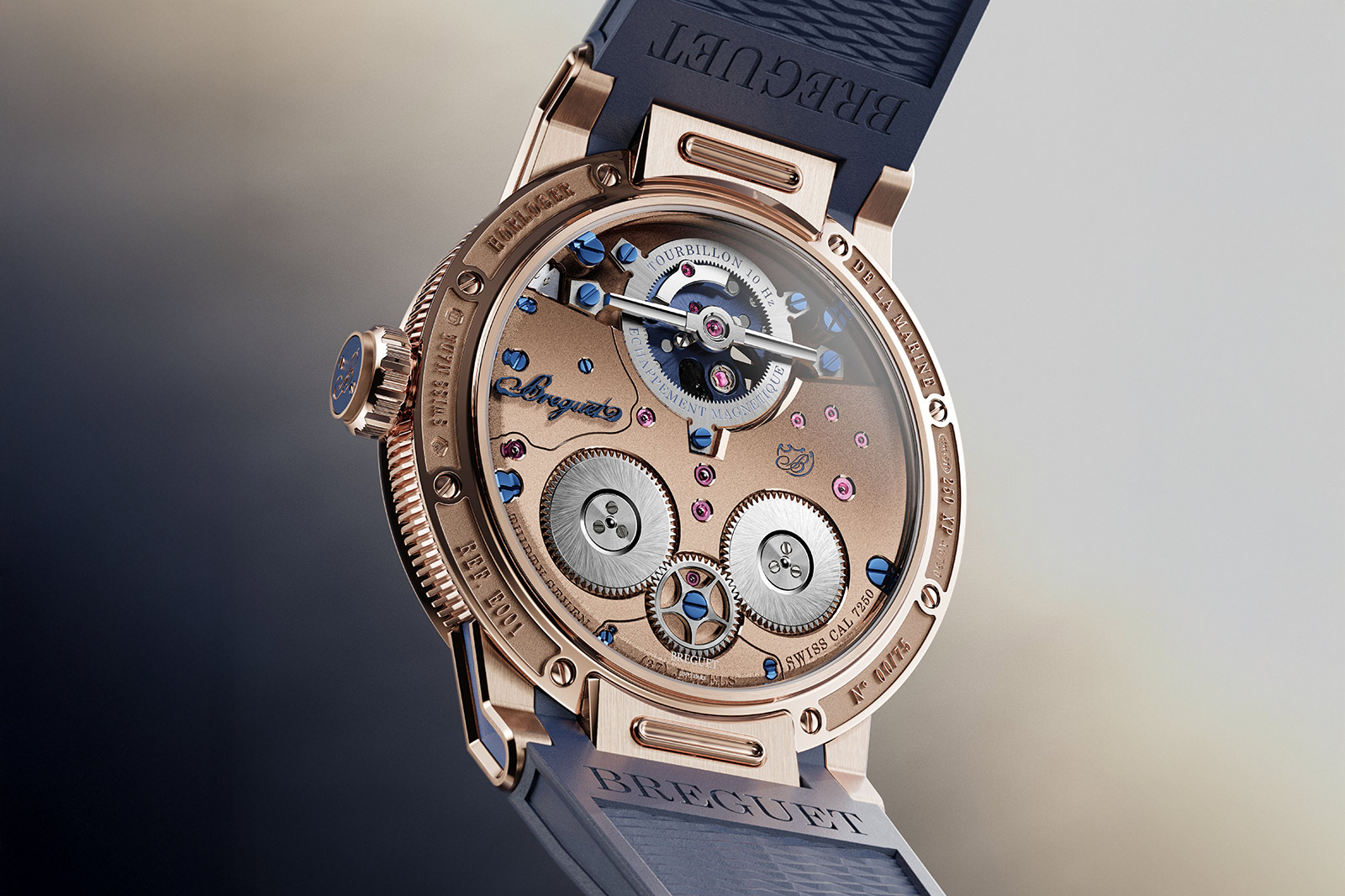
All of this is housed in a substantial 43.5mm case in Breguet’s eponymous 2025 gold alloy. It takes its design cues from the marine chronometer-inspired Marine collection (Breguet’s names are more straightforward than their complications), but through a much more modern lens. Those starkly faceted lugs are more Ulysse Nardin Blast than your ‘average’ Breguet – and I’m here for it.
The caseback is actually a little less mechanically spectacular than the front, but it’s still impeccably done (Breguet has their own version of the Geneva seal to live up to, after all) with frosted surfaces and a kind of flat symmetry that scratches an itch in my brain I didn’t know was there.
Priced at ‘if you need to ask…’ and limited to 75 pieces, the Expérimentale is a shiny new showcase of Breguet’s technical skill. It’s pretty modern but still feels very Breguet. Must admit that it also has me slightly worried: It’s been an almost exhausting anniversary year for the maison, what else do they have up their sleeve?
Price and Specs:
More details at Breguet.