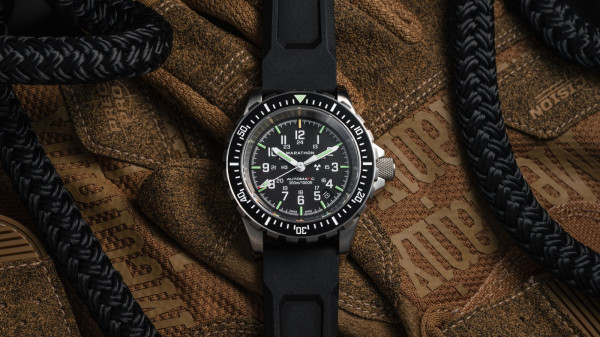
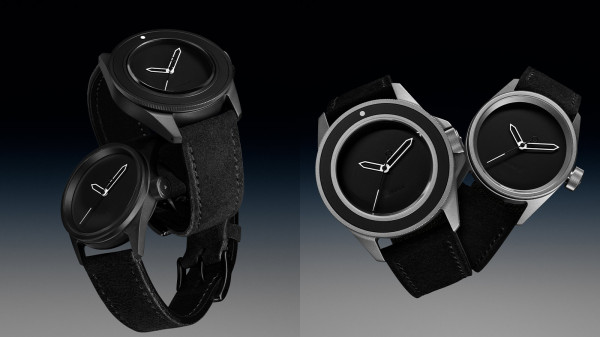
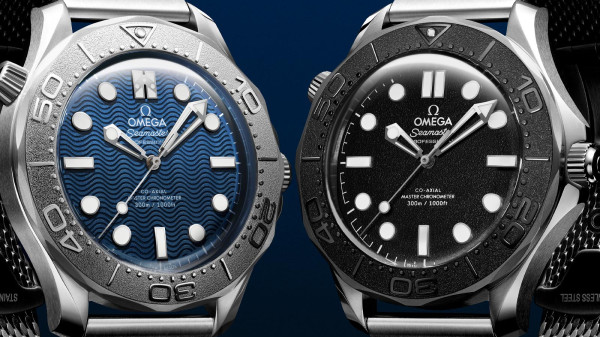
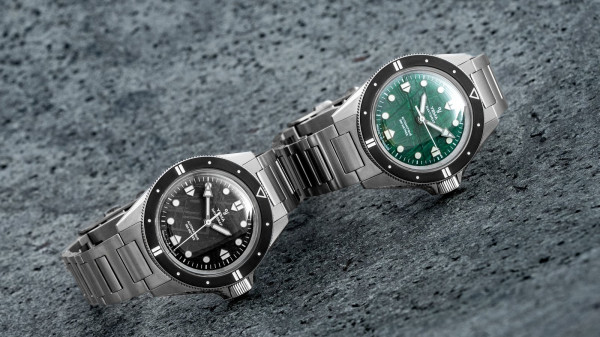
The love for a dive watch is a special kind of obsession – endless, evolving, and deeply satisfying, and that search for the “ultimate” dive watch feels almost mythical. Just when you think you’ve found the perfect one, another detail, another function, or another piece of history pulls you deeper into the world of horology.
This article, however, is not just about celebrating dive watches or recounting their history. Instead, it focuses on one of the most defining and fascinating features of these timepieces: the dive bezel. This seemingly simple rotating ring is more than a stylistic flourish; it is a true tool that serves a purpose, a circular form that follows function. Each type of bezel reflects the needs of real divers and the innovations of watchmakers over decades of development. Understanding these differences offers a richer appreciation for what makes each dive watch unique.
A Brief History of the Rotating Bezel
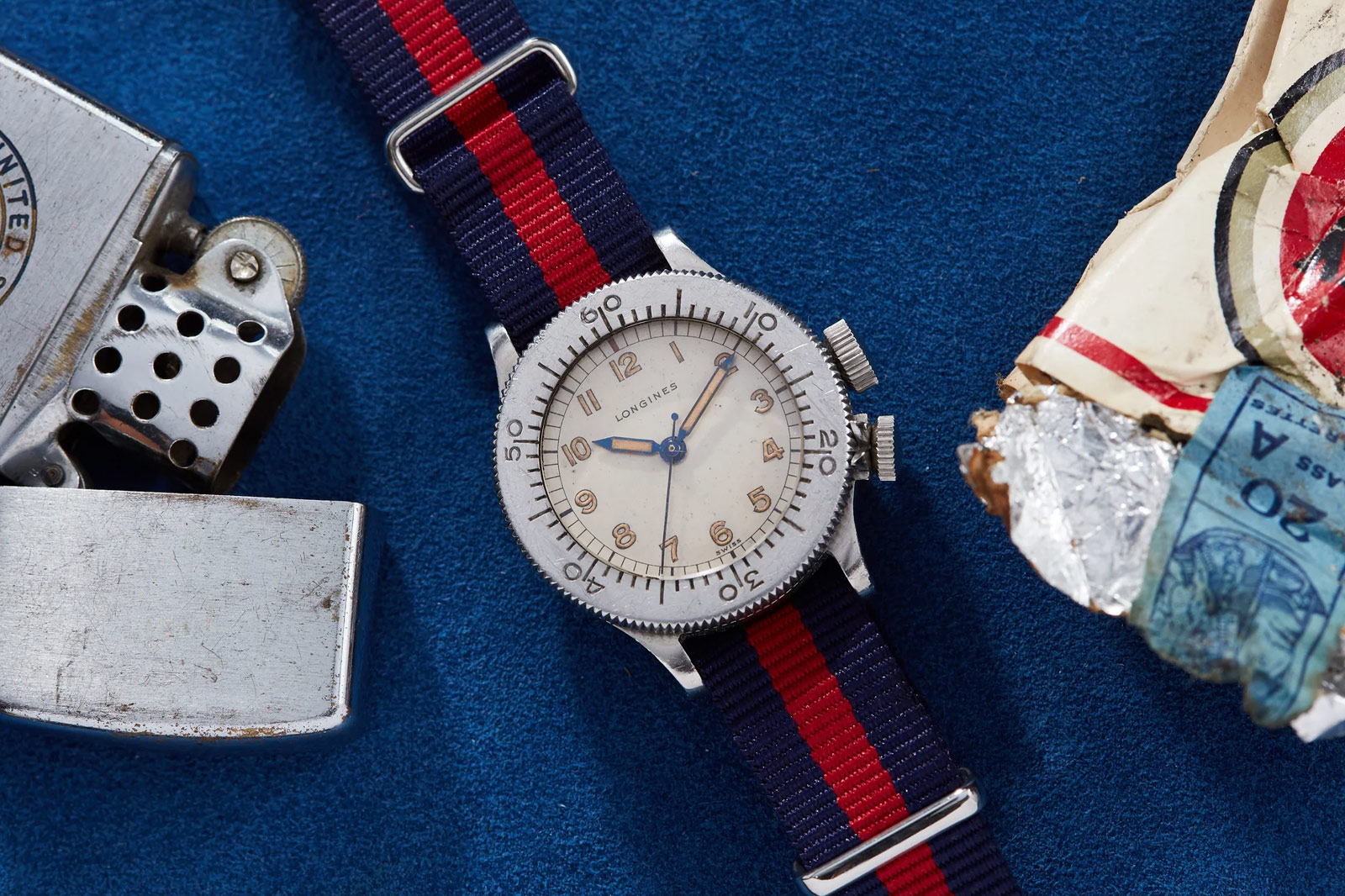
The Longines Weems Second-Setting Watch, introduced in 1929 with rotating bezel
The rotating bezel was born in the skies. In the late 1920s, Philip Van Horn Weems crafted the first functional version to help aviators navigate with pinpoint accuracy. Prior to this, it was harder for pilots to synchronise their watches precisely with their radio which meant even small timing errors could throw off their navigation calculations by miles.
By the early 1950s, this idea had now plunged into the depths: Blancpain’s Fifty Fathoms debuted a pioneering unidirectional bezel, transforming a pilot’s timing aid into a diver’s lifeline. Its rotating ring allowed underwater explorers to track their remaining air with unprecedented safety, ensuring that an accidental knock could only shorten, never lengthen, the measured dive time.
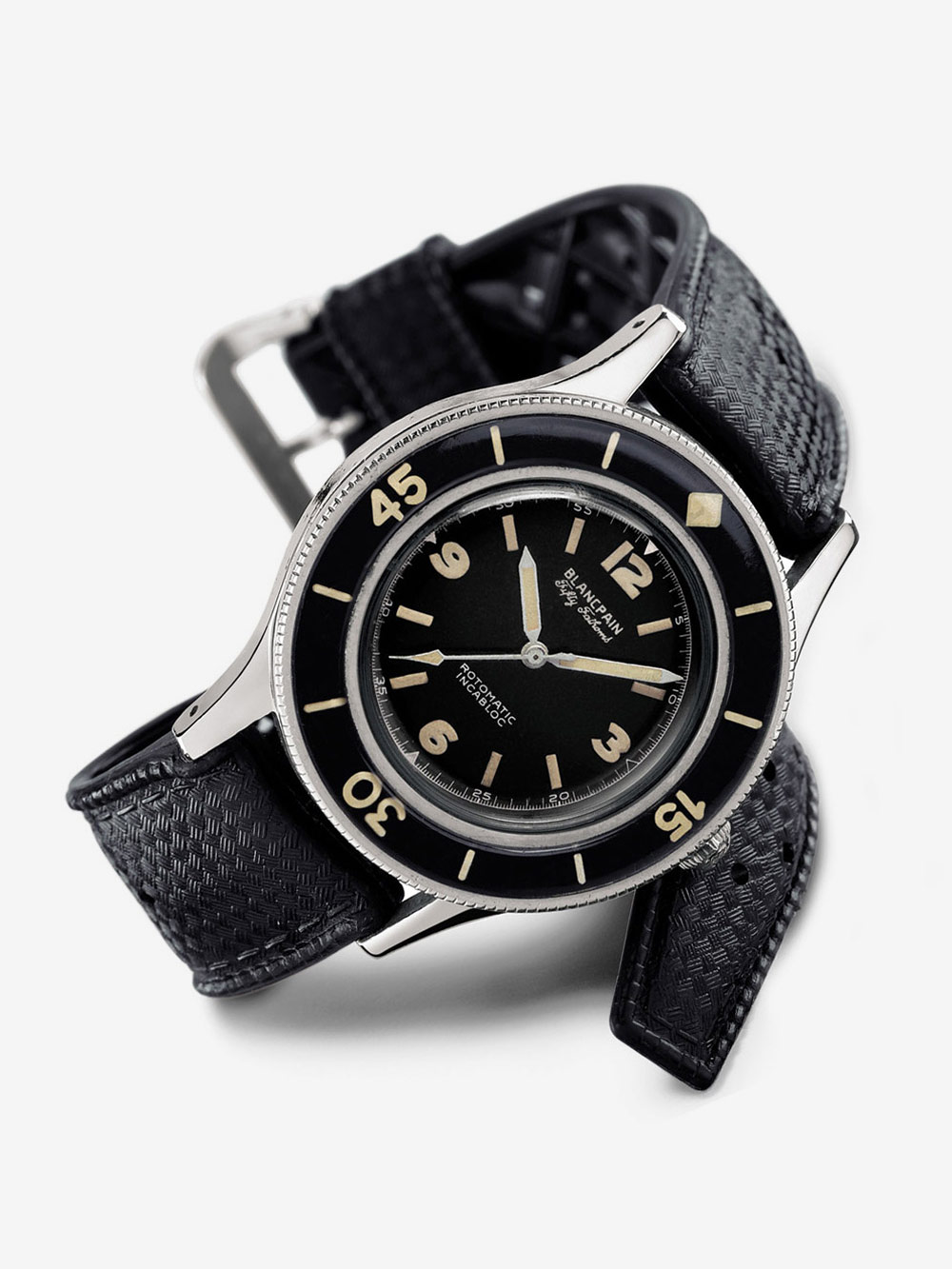
Blancpain Fifty Fathoms (1953)
Rolex’s iconic Submariner followed shortly after, refining the concept with robust engineering and unmistakable design. Together, these watches didn’t just accompany the rise of recreational and military diving – they defined it. Their bezels became essential instruments of underwater survival, setting the course of history for virtually every dive watch that followed. Bezel materials have come a long way since then, evolving from lightweight, easily replaceable aluminium to ultra-durable ceramic, prized for its scratch resistance and vivid, lasting colour. Today, Blancpain’s sapphire-covered bezels merge clarity with toughness, perfectly marrying modern engineering with vintage inspired style.
Unidirectional vs Bi-directional

Rolex Submariner
One of the most ubiquitous features of a standard, modern dive watch is the unidirectional bezel. The Rolex Submariner, (which is often viewed as the gold standard of the category), exemplifies this. Its bezel rotates only counterclockwise, using a ratchet mechanism, a safety feature designed to protect divers. When a diver sets the bezel to track elapsed time underwater, an accidental bump cannot make the remaining time appear longer than it is. The bezel can only shorten the perceived remaining dive time, ensuring the diver does not overstay their oxygen supply by miscalculating elapsed time.
However, this was not always the case. Earlier watches, including some older Rolex models, featured bidirectional bezels. These could rotate both clockwise and counterclockwise, making them easier to dislodge and more dangerous when it happened. Today, this risk has essentially eliminated the bi-directional bezel from diving watches, instead finding a home in applications unrelated to diving. Rolex still uses bi-directional bezels today, but mostly for aviation and travel watches, such as the Rolex GMT-Master II.
Military Timing Scales

Tudor Pelagos FXD case
Moving to more specialised territory, Tudor, Rolex’s sister company, offers a fascinating departure from the traditional diver design with the Pelagos FXD. This watch was developed alongside the French Navy (Marine Nationale), and its bezel is a countdown timer rather than the usual elapsed-time design. Combat divers often move underwater in timed segments, adjusting course at preset intervals. A countdown bezel allows them to align the marker with the required time and count backward until the bezel reaches zero, signalling a change in direction. Instead of tracking how much time has passed, it tracks how much time remains, which is an essential difference for the work these divers perform.

Serica 5303 PLD has a DT-Max scale bezel
There are then even more highly specialised bezels like the DT-Max scale bezel found on the Serica 5303. This bezel includes two separate scales. One indicates depth in metres, while the other shows the maximum safe working time at that depth. This system was originally designed for the French Navy’s explosive ordnance disposal units. Divers working with explosives underwater need to know instantly how long they can safely operate at a given depth without risking decompression issues. With one glance, the bezel provides both the depth and the safe working duration, making it an ingenious and efficient tool. It is remarkable how much practical information can be compressed into a small metal ring.
60-Click vs 120-Click

The Vertex M60 Aqualion has a 60-click bezel
Another aspect of dive bezels that enthusiasts love to debate is the difference between 60-click and 120-click mechanisms. A 120-click bezel has double the number of detents in its ratchet system, allowing for more precise alignment with minute markings. This finer adjustment can be useful for activities requiring exact timing, whether diving, cooking, or any other timed task. These bezels also tend to feel smoother and more refined, which gives them a slightly more premium character in the eyes of many collectors.
On the other hand, 60-click bezels are often found on vintage dive watches and modern watches inspired by them. They produce chunkier, more tactile clicks that some divers prefer because the heavier feedback makes the bezel easier to operate in challenging conditions. They are also mechanically simpler and can sometimes be more durable. While they lack the precision of 120-click bezels, they are perfectly adequate for real-world diving, where timing is usually measured in whole minutes rather than fractions.
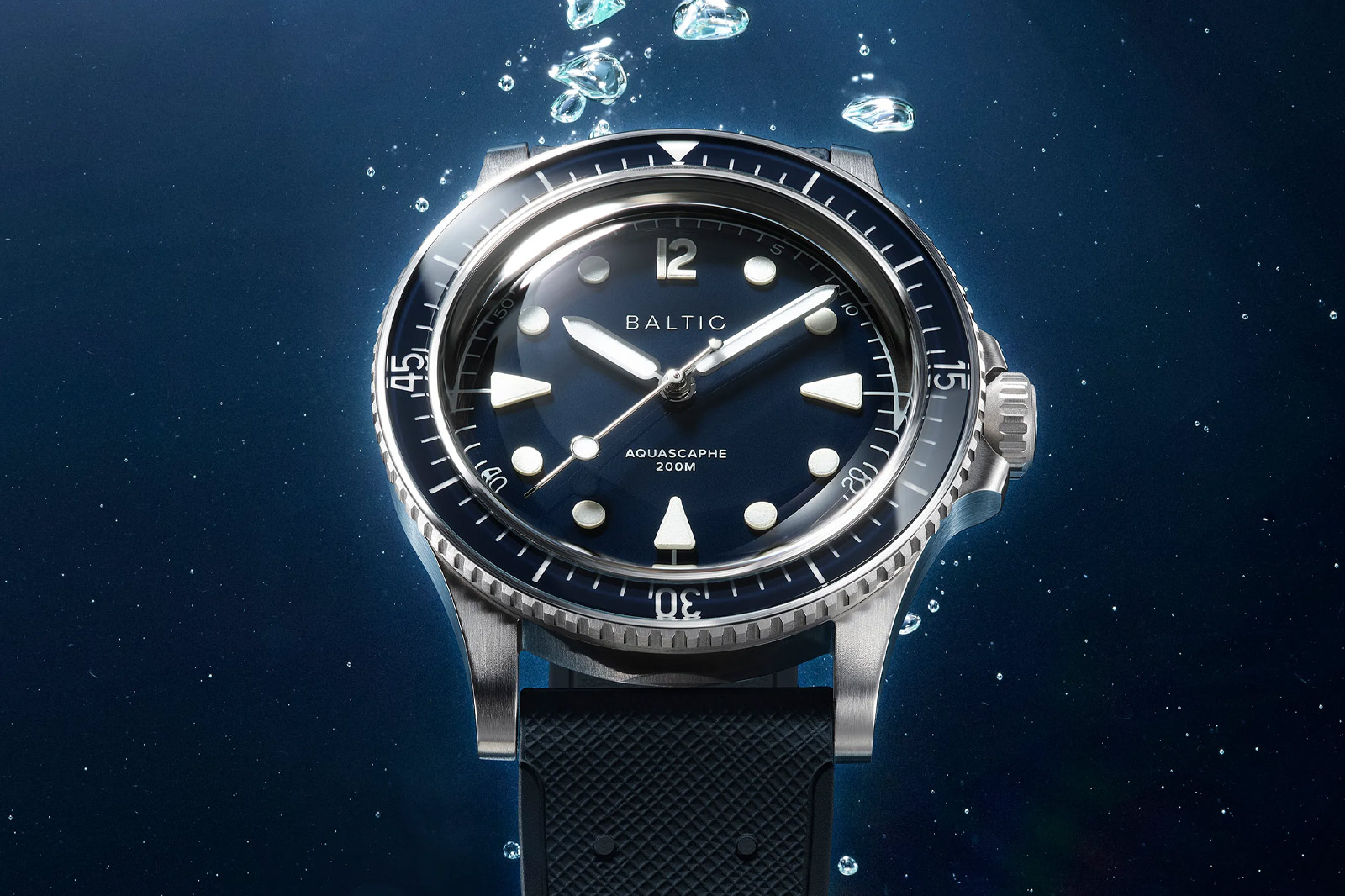
The Baltic Aquascaphe MK2 has a 120-click bezel
Ultimately, the choice between bezel types comes down to preference, purpose, and appreciation for the tool’s heritage. Some favour precision and smoothness, others enjoy the rugged, purposeful feel of a classic setup. Bezels of all styles are found on iconic models from Seiko, Rolex, Omega, Tudor, and many others, proving that there is no single perfect approach, just different philosophies.
In the end, the dive bezel is far more than a decorative ring. Whether it takes the form of the iconic unidirectional design of the Submariner, the mission-driven countdown system of the Pelagos FXD, or the highly specialised DT-Max configuration of the Serica 5303, each bezel tells a story. It reflects decades of innovation, the evolving needs of professional divers, and the passion that collectors continue to bring to the world of horology.
For enthusiasts, the journey into understanding these details is part of the everlasting fascination. In the world of dive watches, the exploration truly never ends.