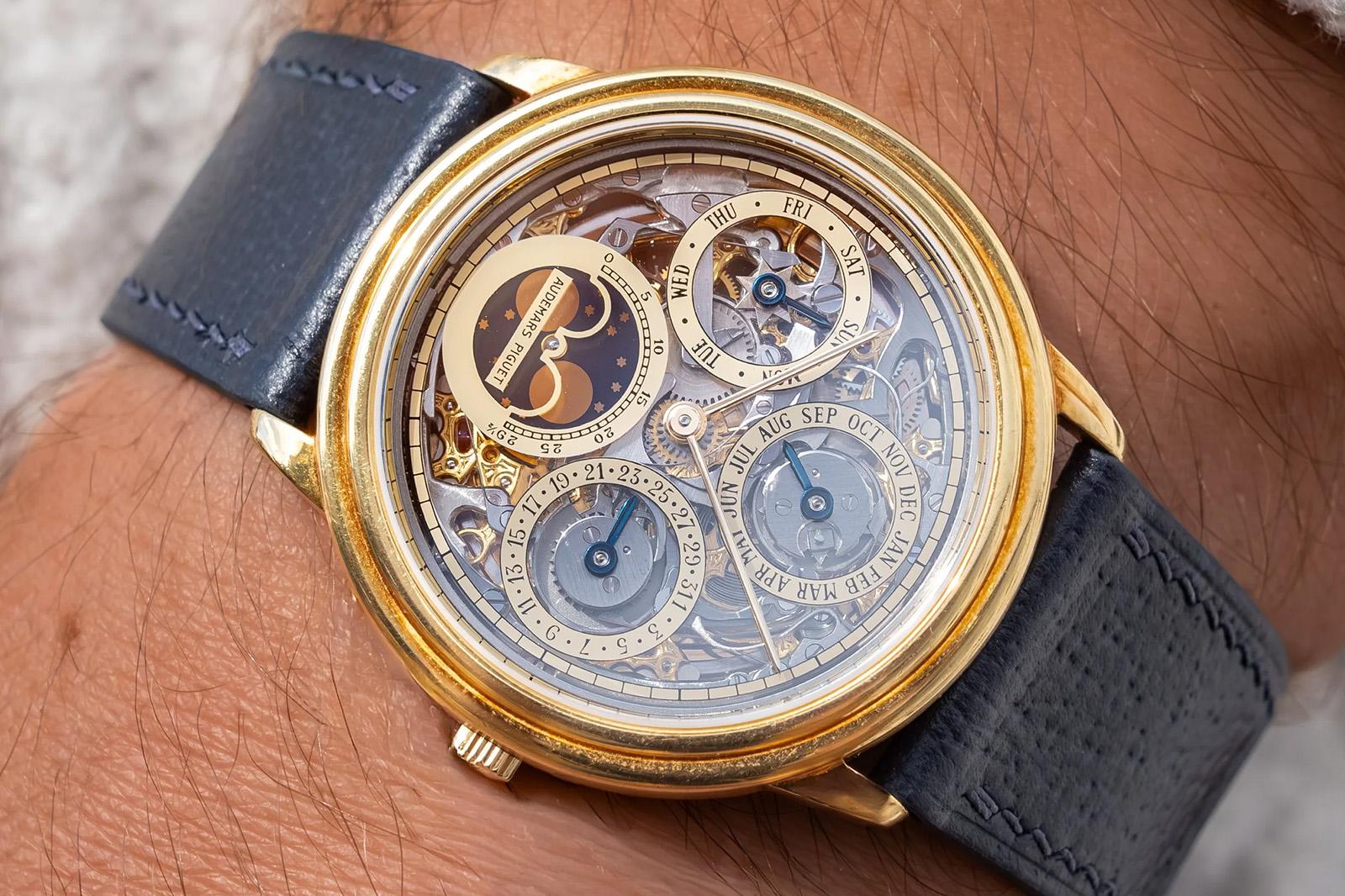
Twentieth-century watchmaking was shaped by disruption. Economies shifted, quartz shook the foundations of mechanical tradition, and efficiency often came at the cost of ornamentation. Yet in the Vallée de Joux, Audemars Piguet continued to invest in decorative craft when others were stepping away. At AP, skeletonisation has never been treated as indulgence but as discipline, a way of proving that when mechanics are stripped bare, they can be as structurally beautiful as they are functional. Giving rise to the popularity of Audemars Piguet skeleton watches and defining modern skeletonisation.
Long before openworked dials became a marketing trope, Audemars Piguet was shaping bridges by hand, bevelling internal angles and turning movements into architecture. While other manufacturers explored the concept earlier, AP’s approach in the 20th century was rooted in traditional métier d’art: engraving and finishing executed not by machine but by artisans. One of the earliest expressions of this philosophy arrived in the 1930s, when the house produced openworked pocket watches in extremely small numbers – early proofs of a capability that would define much of what followed.

Throughout the following decades, Audemars Piguet followed the industry’s natural shift towards the wristwatch. By the 1950s, references such as the 5036 Skeleton were advertised as a ‘watch with a view’. Priced at $920 at the time – the equivalent of roughly $11,000 today, or around half the price of a new car – these pieces positioned openworking as both a decorative and technical pursuit.
By the 1960s and ’70s, as modernity accelerated and design codes shifted, skeletonisation at Audemars Piguet found new confidence. Ultra-thin movements became canvases. Calibres were reduced to their essential geometry before being painstakingly opened by hand. Bridges were chamfered to sharp internal points, wheels floated within negative space, and light moved through the mechanism as though it were part of the design brief. Models such as the 5542 and movements like the gold-plated Calibre 2120SQ became cornerstones of AP’s skeleton work, with each movement requiring around 150 hours of hand cutting and finishing.

This philosophy had first appeared in the 1970s with the 5442 and evolved through references such as the octagonal 4122 in 1980. Its culmination arrived with the integration of skeletonised ultra-thin movements into the 1986 Royal Oak 25636, where the Calibre 2120SQ demonstrated that transparency and craftsmanship could coexist even as quartz technology challenged traditional horology. The Royal Oak’s industrial exterior framed a delicate interior, creating a compelling tension between sports-watch robustness and haute horlogerie finishing.
Collectors often gravitate toward the more celebrated openworked perpetual calendars and grand complications, but several lesser-known pieces from the late 20th century deserve equal attention. Skeletonised time-only references were produced in limited numbers, typically in yellow gold, and are now distinctly desirable in today’s collecting scene. These watches were not headliners at the time, yet today they represent the kind of reference that seasoned collectors trade quietly.
Audemars Piguet also explored skeletonisation within its perpetual calendars during the 1980s and 1990s. References such as the 25668BA openworked perpetual calendar arrived two years after its Royal Oak counterpart, housing complicated mechanisms in a slim, classically proportioned case. These watches offer a different expression of transparency – less focused on decorative engraving and more on structural legibility. Calendar wheels and levers became visible architecture, polished and bevelled to exacting standards. While they rarely command the same attention as integrated-bracelet Royal Oaks, they showcase the house’s commitment to technical and artistic integrity.
Technically, skeletonising a movement is an act of restraint disguised as decoration. Remove too much, and stability suffers. Remove too little, and the visual impact is lost. AP’s watchmakers developed an intuitive understanding of where mass could be sacrificed and where it must remain. Every bridge became both support and sculpture. Every bevel caught light not by accident, but by intent.
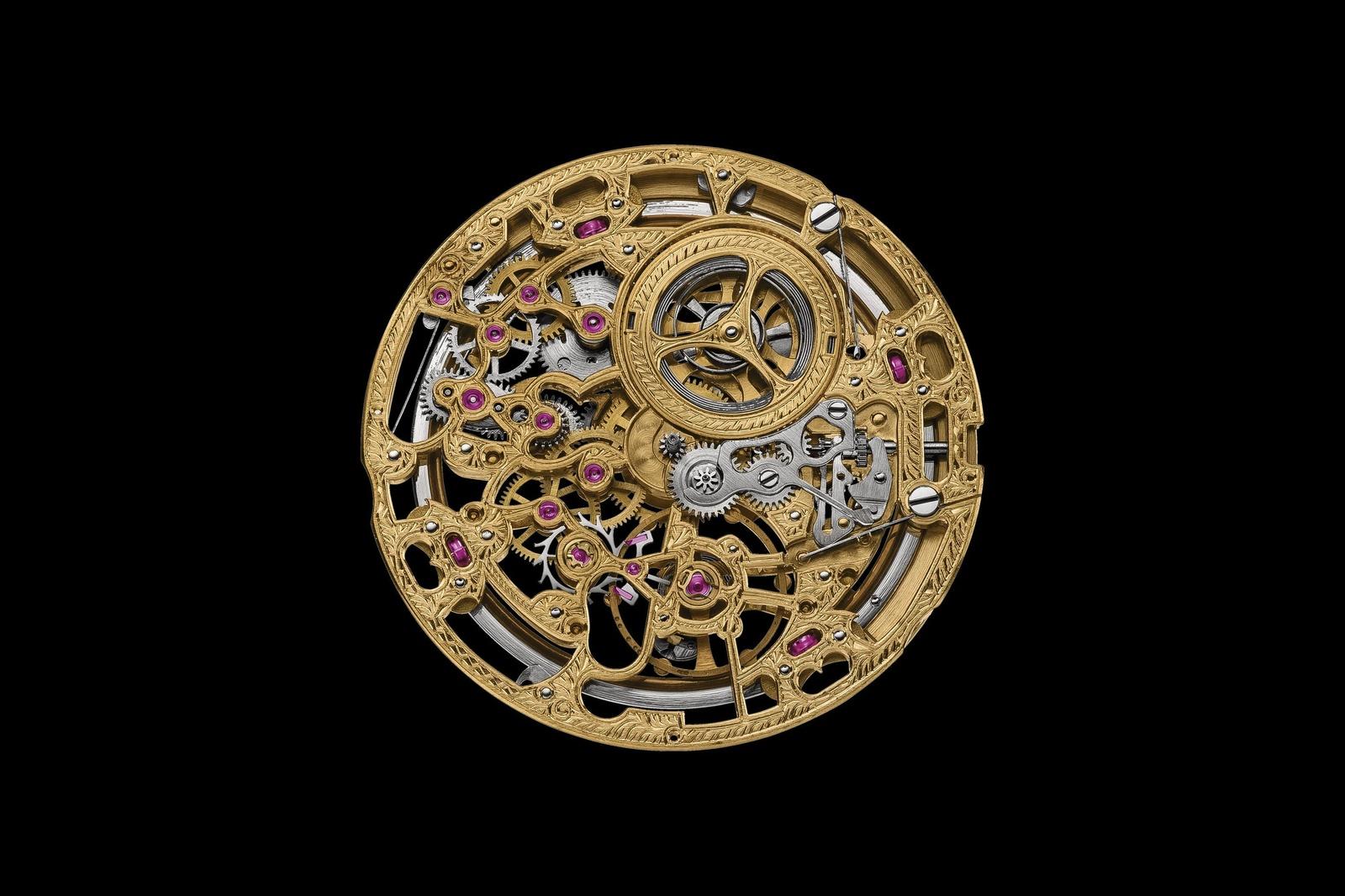
By the turn of the millennium, skeletonisation had become a recognised pillar of the brand’s identity. Unlike houses that adopted openworking as aesthetic shorthand, Audemars Piguet’s 20th century efforts remained rooted in substance. They linked pocket watch traditions to modern sports icons and to contemporary haute horology. The Audemars Piguet skeleton Royal Oak references of the 1970s and ’80s informed the grand complications of the ’90s, while perpetual calendars demonstrated how mechanical complexity could be revealed without sacrificing elegance.
That lineage has left a trail of undervalued references across the neo-vintage market – watches where the craft far outweighs the current asking price.

For collectors willing to look beyond the obvious grails, few skeletonised time-only pieces compete with the Jules Audemars collection, specifically the 15058BC. At 36mm, this reference is particularly compelling: the skeletonisation is paired with a solid guilloché surround housing the markers, delivering legibility alongside transparency. The 15058BC is not one you see every day, but when white gold examples surface, prices sit around a very reasonable £12,000.

Another neo-vintage Audemars Piguet skeleton highlight is the reference 14232BA. This skeletonised time-only piece measures 36mm in yellow gold and pairs its openworked movement with a classical dial surround in a sunburst finish, balancing transparency with traditional legibility. The 14232BA is finished to an exacting standard across every visible surface. For collectors, it represents an accessible entry point into AP’s openworking tradition without the premium attached to more recognised references. These trade around the low teens.
In a similar vein, the 5442 ultra-thin skeleton models from the 1970s are equally rare, though at 32.5mm they wear more classically on the wrist. To find one, the best approach is to reach out to specialist dealers but expect to pay approximately £15,000.

![Ulysse Nardin Introduce Freak [One Blue Enamel] and Freak [One Guilloché] for 25th Anniversary](https://oracleoftime.com/wp-content/uploads/2026/09/Ulysse-Nardin-Freak-ONE-Featured-600x337.jpg)
