The watch industry and secondary market has been dominated by the sports watch more or less since the archetype had its boom in popularity in the 1980s. Because of this, the dress watch has been squeezed out of being one of the most popular wristwatch archetypes. However, across the past year the dress watch has seen something of a resurgence, but how impactful is that resurgence really? Here’s the breakdown of the dress watch secondary market according to the Global Wrist Watch Report by Watchfinder & Co.
Off the bat, the most important statistic is that dress watch sales have grown on the secondary market last year. They now represent 7.2% of pre-owned sales. By comparison, sports watch sales have softened by 3.9% across the same period, down to 50.4%. Given those statistics, dress watches have a long way to go before they overtake sports watches as the most popular archetype. Ultimately seeing any growth at all is still positive and it’s continued, steady growth that will indicate any significant shifts in the buying habits of collectors.

The next question is why are dress watches seeing an increase in purchases? According to Ben Staniforth, the UK Country Manager at Watchfinder & Co. “After years of steel sports watches dominating the headlines, collectors are rediscovering the quiet confidence of the dress watch. Dress watches offer compelling value, timeless design and great versatility. This is especially true for models in precious metals, where current pricing in the pre-owned market presents an even more attractive proposition, resonating strongly with buyers who are becoming more style-conscious and investment-aware. It’s less about making a statement, and more about making a considered choice.”
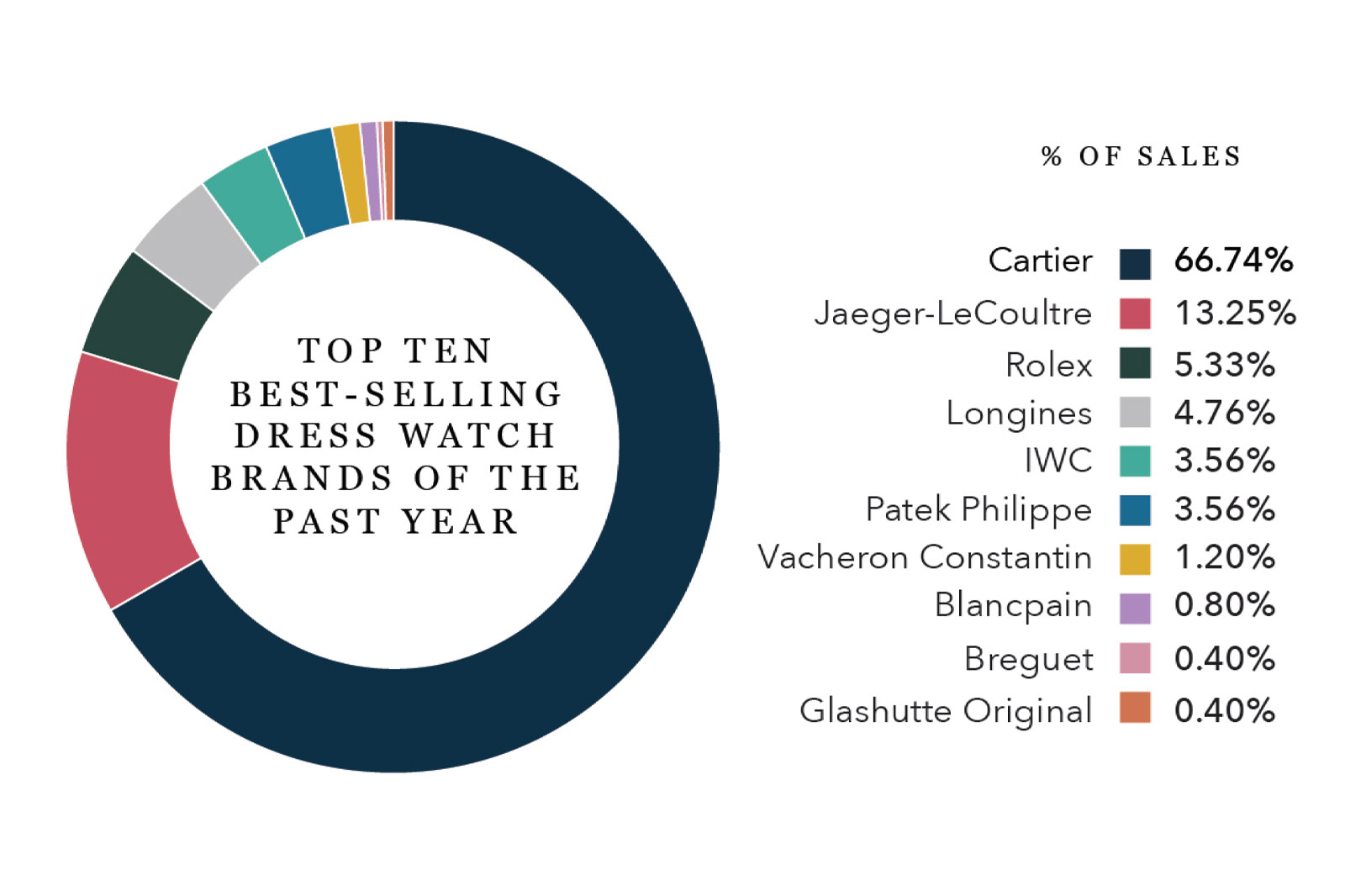
We’ve looked at the what and the why, but what about the who? Which brands and which watches are the bestselling pre-owned dress watches? Starting with brands, Cartier sits at the top of the mountain by a significant margin, representing a whopping 66.74% of dress watch sales. Rounding out the top 5 are Jaeger-LeCoultre at 13.25%, Rolex at 5.33%, Longines at 4.76%, and then IWC and Patek Philippe both at 3.56%. After that, brands quickly drop off to representing less than 1% of dress watch sales.
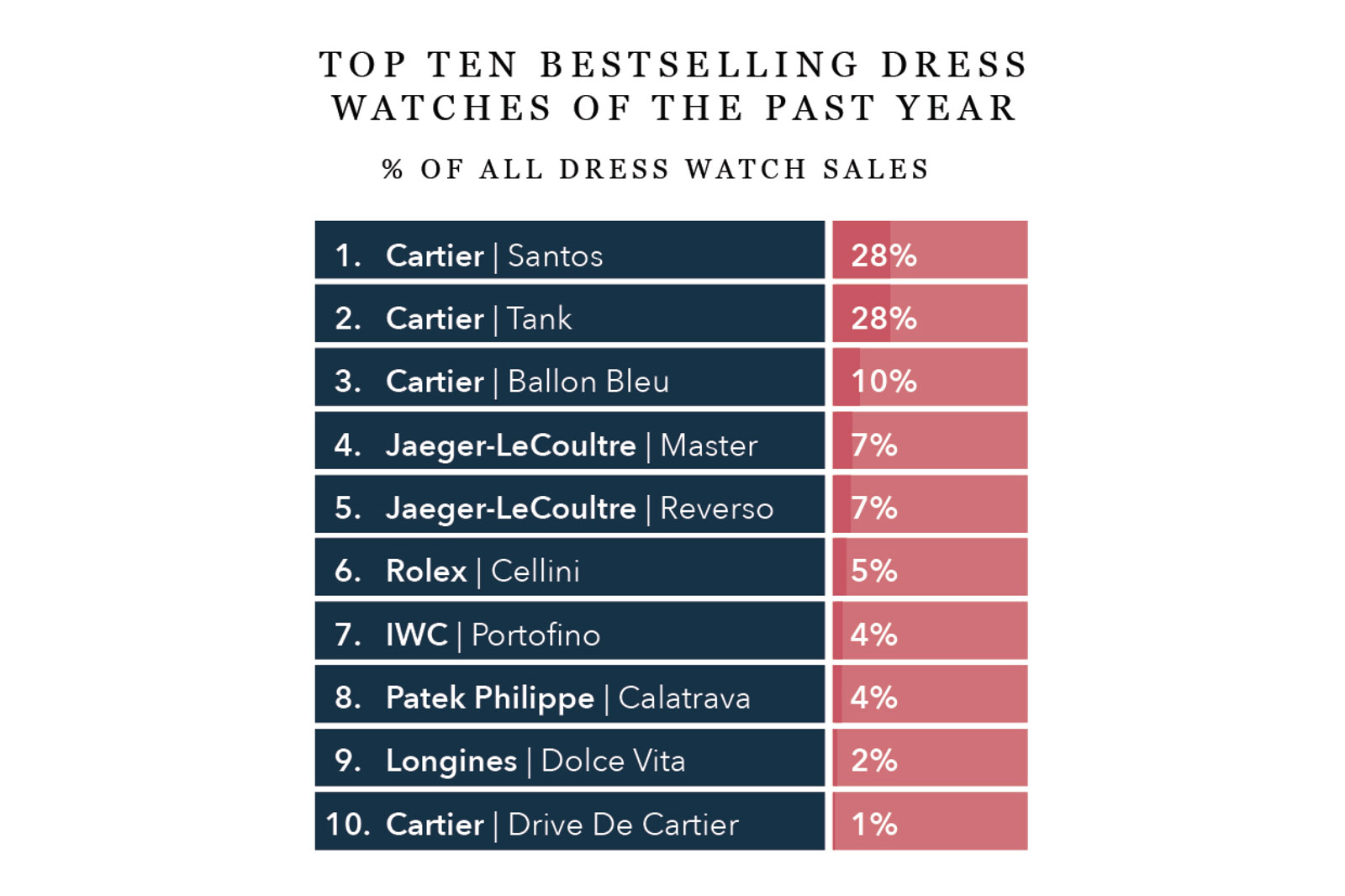
For specific models, the Cartier Santos and Tank are tied as the most popular dress watch followed by the Ballon Bleu. JLC stake their claim with the Master and Reverso, then Rolex with discontinued Cellini. Completing the top ten bestselling dress watches are the IWC Portofino, Patek Philippe Calatrava, Longines Dolce Vita and Cartier Drive de Cartier.
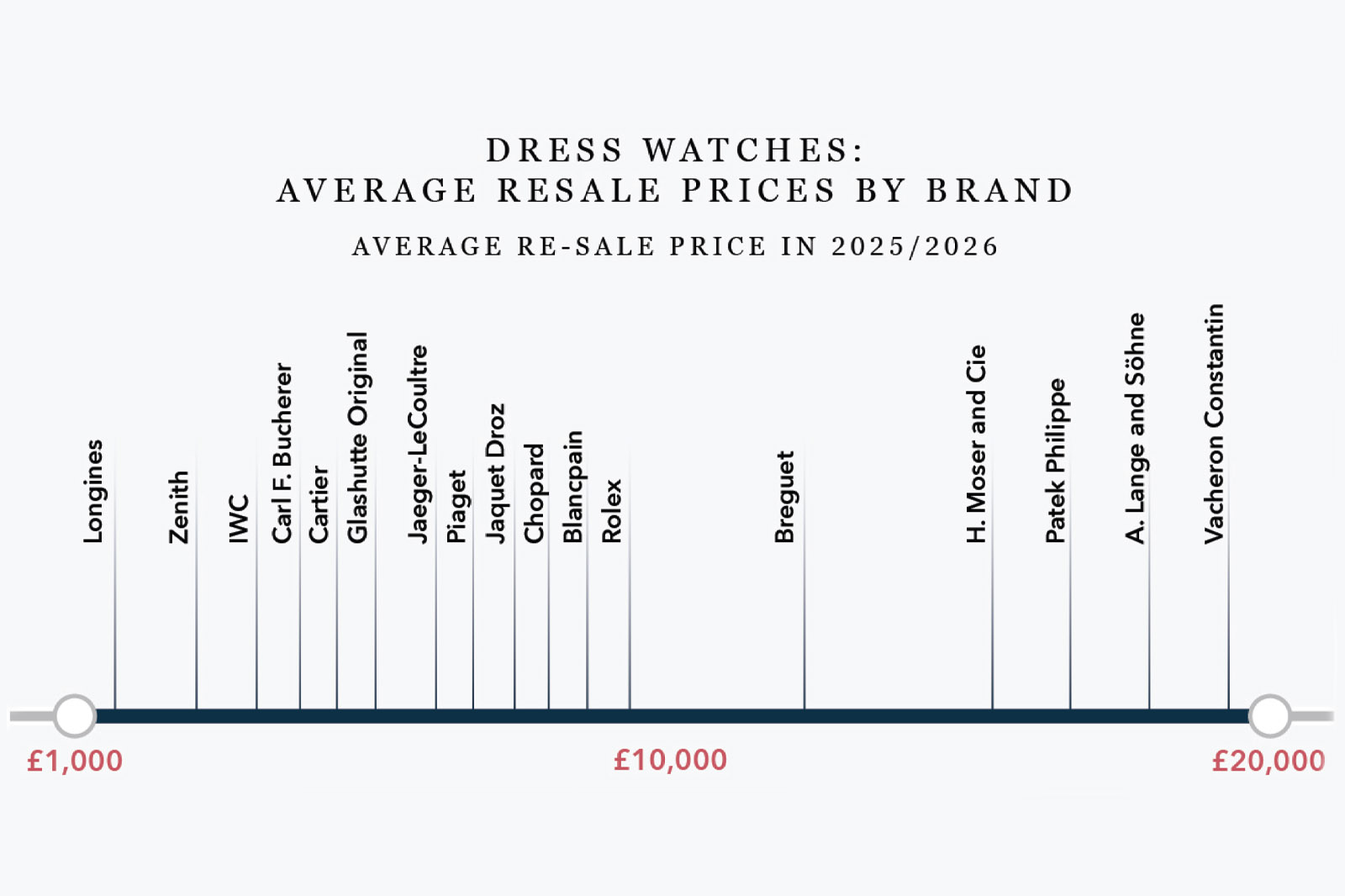
What’s interesting about those popular brands and watches is that the top of the list is actually occupied by dress watches on the more accessible end of the spectrum. Pre-owned Cartiers have an average resale price of approximately £5,000 with IWC and Longines both sitting below that. Though it’s also important to note that while extraordinarily expensive watches represent a lower volume of sales, they also represent a larger proportion of monetary value in the sector. Which is why the industry is becoming more polarised between hyper accessibility and hyper luxury.