

It has occurred to all of us that having watches as a hobby is quite niche. The deeper into watches we get, the narrower these niches become and we end up self-identifying as different types of watch enthusiast. For me, it has always been vintage but now it is chronographs; either those really messy text-covered ones from the 1930s and 1940s (think Minerva or Tissot) or more recently, those from the 1960s, significantly Universal Genève and Heuer’s offerings (swoon.)
Unfortunately, I’m not the only person that goes weak at the sight of these watches and their prices have risen hugely in the past decade. There is an alternative, albeit infinitely less wearable, if we look to the predecessors of the chronograph watch. More homeware, less wristwear, might I suggest the stopwatch and dashboard timer as alternatives? Bear with me, as these can be found for less than a dinner out with friends.

Omega Timekeeping
With a chronograph wristwatch, you can measure speed, distance and heartrate, and time races; human, animal, nautical and automotive. Chronographs might be sports watches through and through, but their history goes a little further back than you may have assumed. The more modern chronograph as an entity seems to have emerged in the very early 19th century; there is one recorded as being created for use in astronomy (by Louis Moinet) and one for horseracing for example (by Nicolas Mathieu Rieussec.)
Prior to that, in the very late 17th century, master horologer Samuel Watson made one to allow accurate heartrate measurement. When it comes to 20th century timers, or stopwatches, there are a few that are here to remind us that some of our favourite brands existed before the wristwatch came to dominate.


Handheld stopwatches dominated in their mechanical form until the 1970s as you might expect, when the advent of quartz technology changed the whole watch industry forever. Interestingly, when you look for a history of the stopwatch, articles on the subject leap from the earliest examples to their wristwatch successors, forgetting that the handheld stopwatch continues to this day. There are collectors for stopwatches out there of course, and it is those with provenance, a proven history of use, that excel at auction.
More than wristwatches, stopwatches with a story have a greater crossover into the collections of non-horology enthusiasts. Think of sports history nuts and recent auction results for a Roger Bannister-related Lemania stopwatch (£26,000) and one gifted to William Ling, World Cup referee in 1954 (£3,600.) I was lucky enough to handle one recently by Omega, an Olympic model, from the 1960s. Steeped in provenance (it was owned by an official timekeeper for the Commonwealth Games among other events), this one soared past its estimate selling for over £3,000. Generally, however, you can pick up a stopwatch (without a biography) from brands like Omega from around £50 at auction.

Heuer Dashboard Autavia
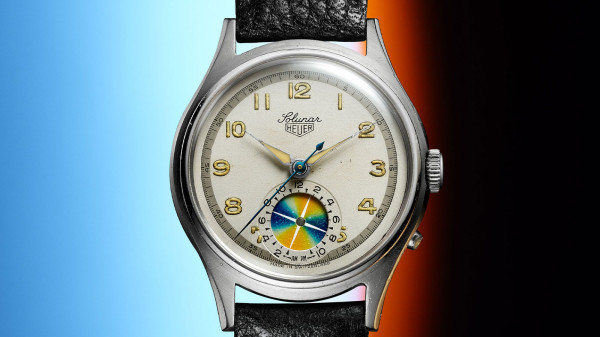
I am now going to embrace this opportunity to talk about Heuer (I will take any and all excuses.) Founded in 1860, the brand is credited with creating the first dashboard timer in 1910. In this, we see the stopwatch take a step forward in its evolution; a necessary one to serve a new need for time measurement in the automotive and aviation fields. These instruments told the time (in a single time zone), and displayed measurement of trip duration.
In the 1930s, the brand then offered the Autavia to market, a dashboard timer with one of the most satisfying names, a combination of automotive/auto and aviation. This one was of course the predecessor to the beloved Autavia wristwatch, one of the lamented expensive watches we are looking for an alternative to. Heuer dashboard timers can be found at auction for around £500, cool in their monochrome utilitarian beauty. Compared to the Autavia wristwatch, usually falling between £3,000 and £15,000, this is affordable.
There is no question, you cannot wear your dashboard timer or stopwatch to that nice meal out I mentioned earlier. But you will definitely be able to afford to get there, and pay for your meal, instead of having to stay home with your costly wristwatch equivalent.


I have a stopwatch with the name on the face Charles Churchill & co ltd , and was wondering if it is worth anything