Cartier is probably the most famous French watch brand in the world, or beyond that probably one of the most famous watch brands in the world full stop. In terms of brand recognition, it punches well above its weight, standing alongside Swiss giants like Rolex, Vacheron Constantin and Patek Philippe in terms of prestige. In fact, in the Morgan Stanley Watch Industry Report from February 2025, Cartier was the second highest earning watch brand behind only Rolex. But what are the watches that have made them an industry giant? Let’s dive into this beginner’s guide to every Cartier model.
Tank

The watch most synonymous with the brand is the Cartier Tank. Debuting in 1917, it helped to define many of the core components of what we today associate with Art Deco design. It’s rectangular shape, railway minute track, shapely Roman numerals all helped to make it iconic. The inspiration for its shape came from new Renault tanks that were in use on the Western Front during World War One, a pretty off-the-wall take for a Parisian jeweller at the time.
Since the early 20th century, the Tank has been iterated on time and time again to the point where it’s now a family of watches full of interesting cousins and related designs. The most quintessential versions of the watch are:
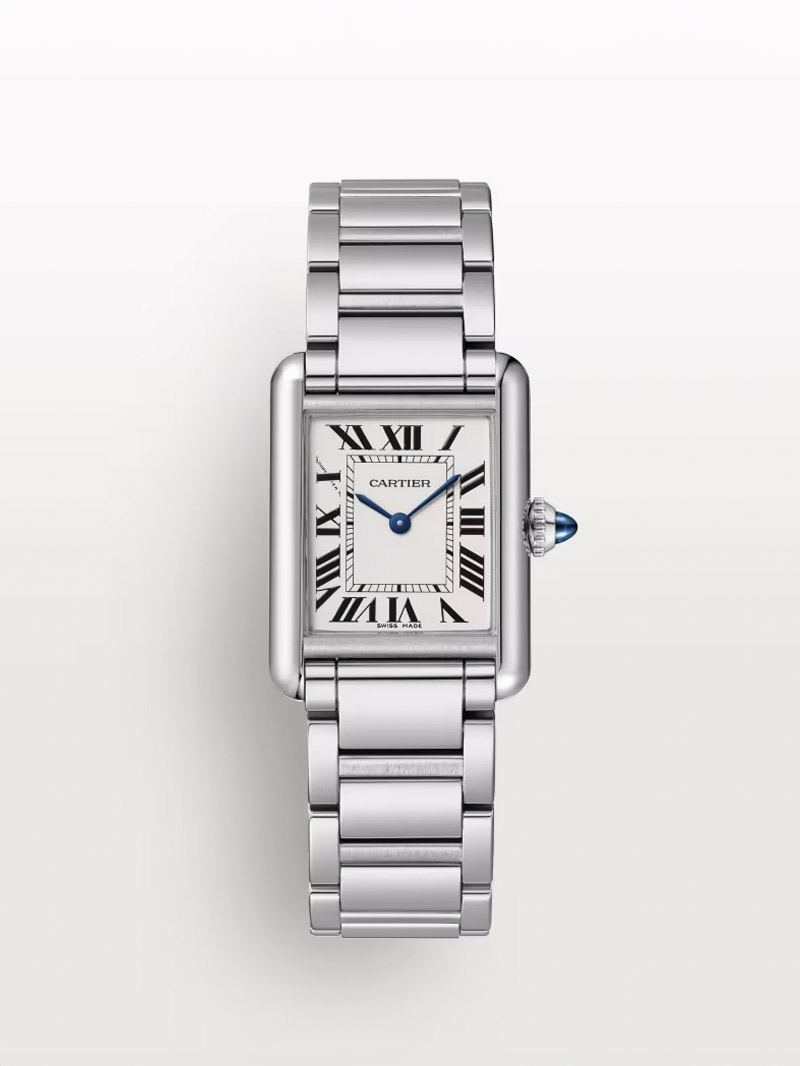
Tank Must
The Must was a response to the 1970s quartz crisis when high end watchmaking was flagging, offering a new entry-level option that was more accessible while retaining the signature Cartier styles.

Tank Louis Cartier
The Tank Louis Cartier dates back to the 1920s and was one of the first major redesigns of the collection that was still in its infancy, it softened the design with rounded edges and more curves.

Tank Normale
The Normale is essentially the remake of the original 1917 version of the watch, with period accurate proportions and style.
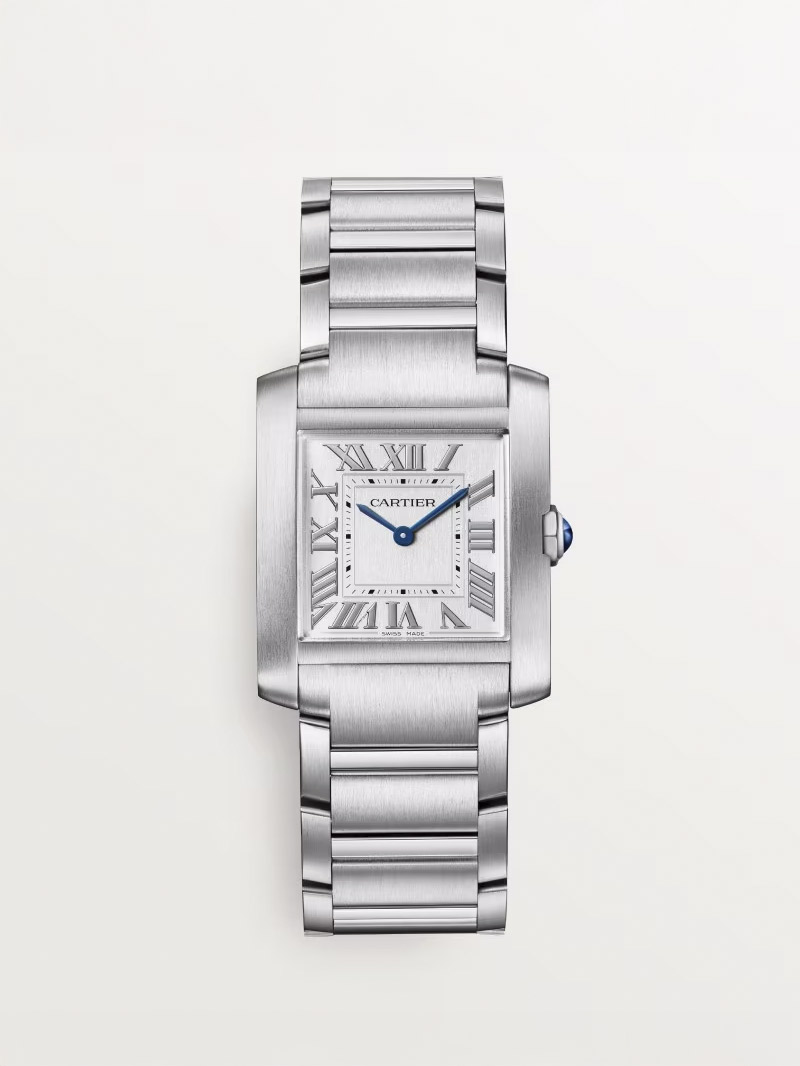
Tank Française
The Française adds a squarer profile to the model that feels sportier though it’s by no means a sports watch. The use of brushed finishing rather than polish supports this.
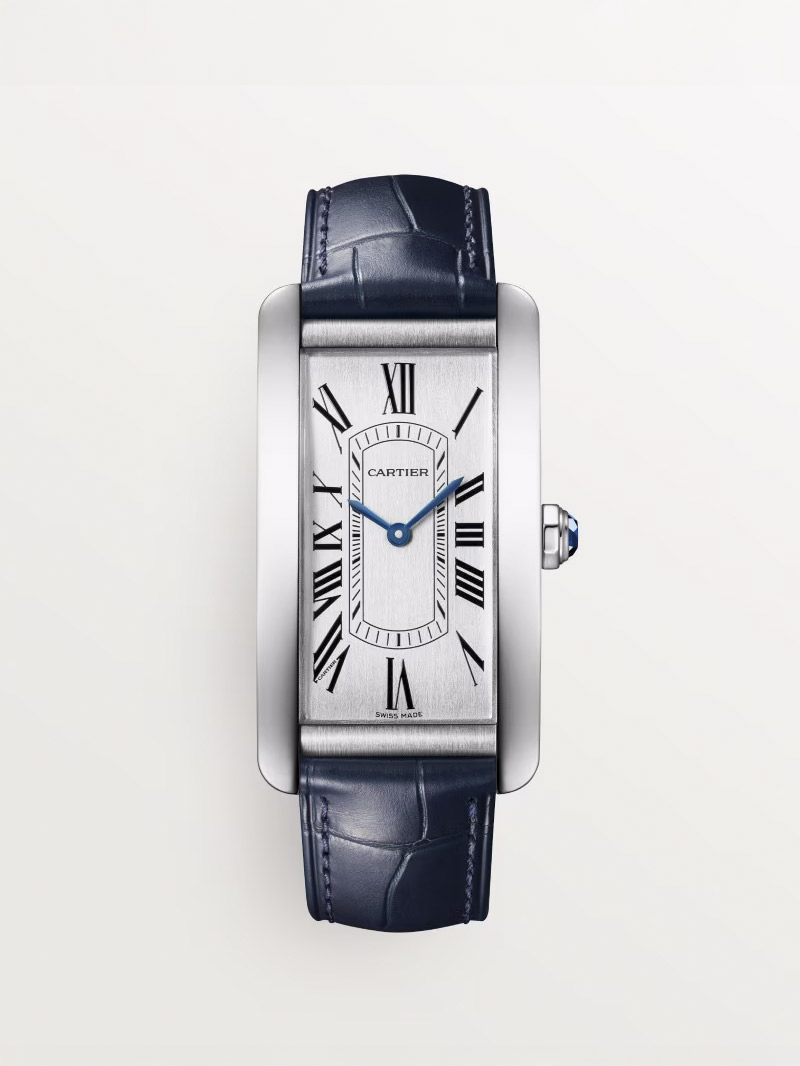
Tank Américaine
If you want a Tank that’s even more of an exaggerated rectangle, the Américaine elongates it into a longer, thinner design.
A returning feature of Cartier’s collections will be the Privé sub-collection, which is Cartier’s annual capsule collections of low production quantity watches that can be drawn across the breadth of their collections. I mention it now because one of the most sensational watches of 2025 was the Cartier Privé Tank à Guichets, a jump hour version of the Tank that turbo boosted interest in jump hour displays, turning them into a major trend of 2025 watch design.
Santos / Panthère

Following the Tank, another of Cartier’s well-known collections is the Santos, named after Brazilian pilot Alberto Santos-Dumont. Alberto was among the earliest aeronauts to pioneer winged flight and the development of the plane, earning global fame to the point that Cartier developed a watch specially for him. As such, this watch – the Santos – is the very first known example of a pilot’s watch. A tool watch archetype designed to assist pilots.
It’s a far cry from what we consider a pilot’s watch by modern standards, but you can see the intention and thought behind it that led to the pilot archetype. Its square design makes it nice and broad to improve legibility while the exposed screws and thicker bezel give it a more industrial, rugged quality that doesn’t mind if it gets banged around a cockpit a bit.
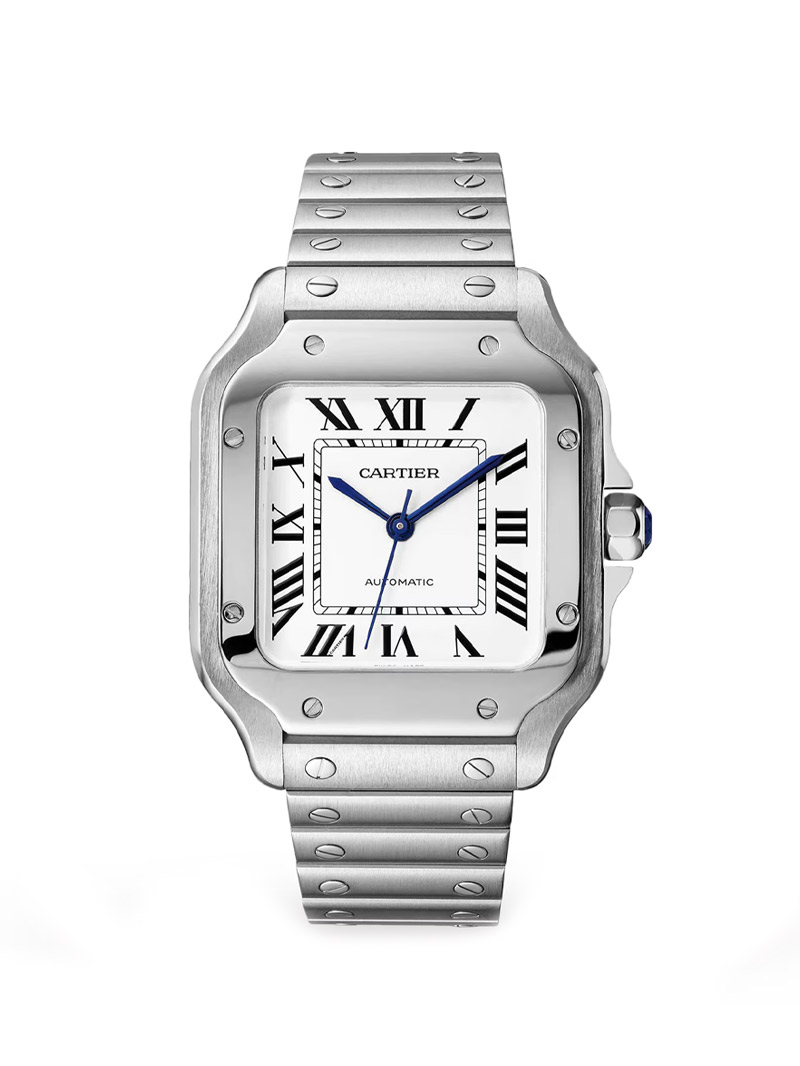

While the core design is more homogenised than the various types of Tank, it’s actually a more versatile model in terms of the complications and styles of display it’s available with. There are standard time-only models but also chronographs, dual time displays, skeleton dials and skeletonised micro-rotor versions. Making it a darling of the red carpet due to its versatility and slightly more macho appeal for male celebrities. The Panthère is like a cousin to the Santos that instead focuses on being on the brand’s signature jewellery lines, with the same square design but smaller proportions and more curves across the bezel and crown guards giving it a more elegant flair.
Crash / Baignoire

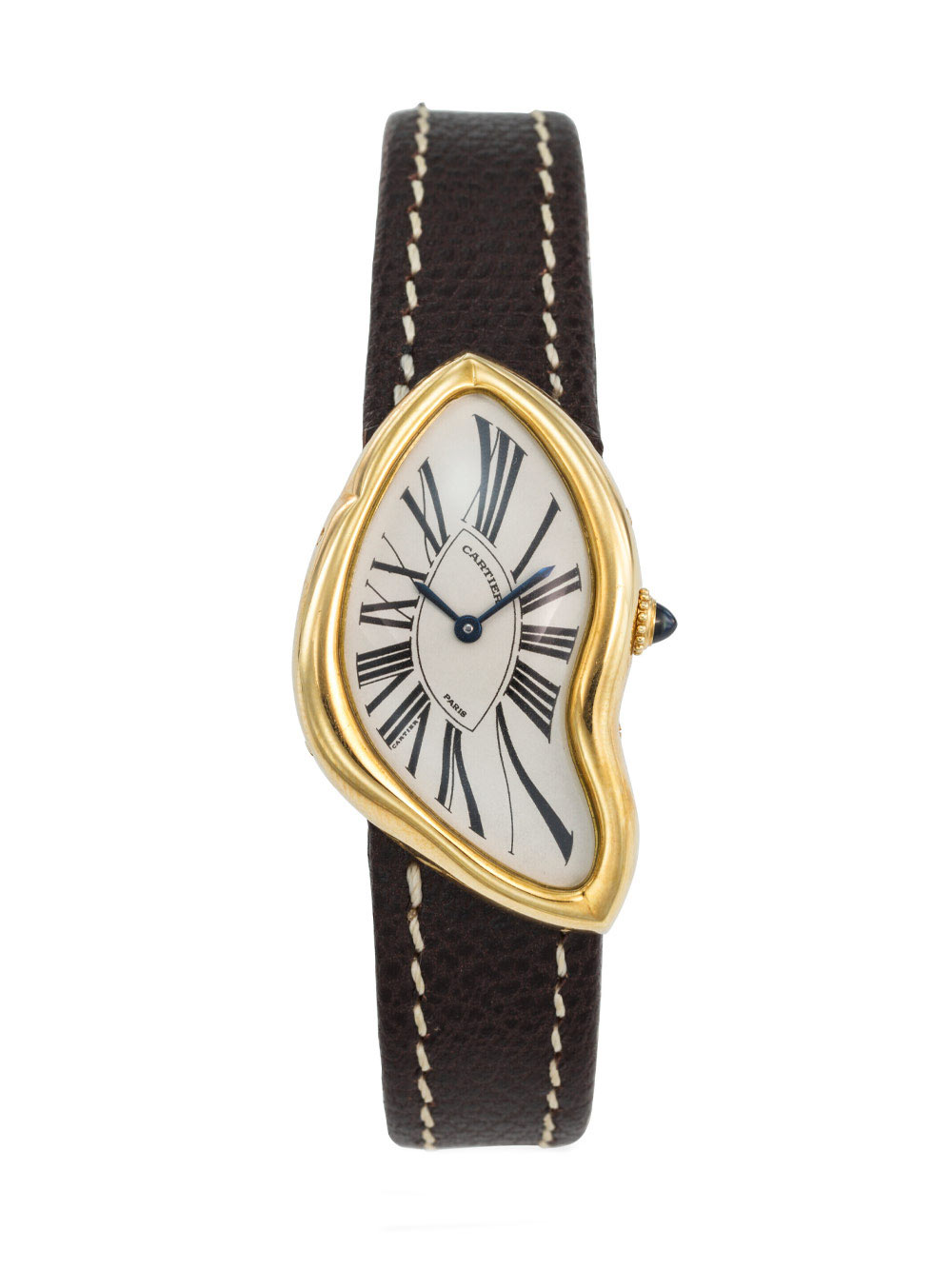
Cartier Crash, image credit: Loupe This
The Cartier Crash remains one of the single most hyped watches around. It emerged in 1967 designed by Jean-Jacques Cartier and Rupert Emmerson from the London branch of the brand. While stories circulated that it was inspired by an actual Baignoire that had been half melted in a car crash, or perhaps it was a riff on a Dali painting, the reality is that it was simply a design dreamt up and produced by Jean-Jacques. Though it is true that the Baignoire was the starting point, now deformed with pinched ends and kinked middle.
An initial run of only 12 Crash watches were produced, after much pain in production due to the unusual shape of the case. At the time they weren’t a huge success for the brand as they weren’t cost effective – requiring a lot of time and investment from the workshop while having a price similar to watches that were much easier to produce. However, that exclusivity and shocking design led to just the right amount of publicity to make them an icon many years later. Since that original run of 12 it has been revisited multiple times and is currently available exclusively as a special order.
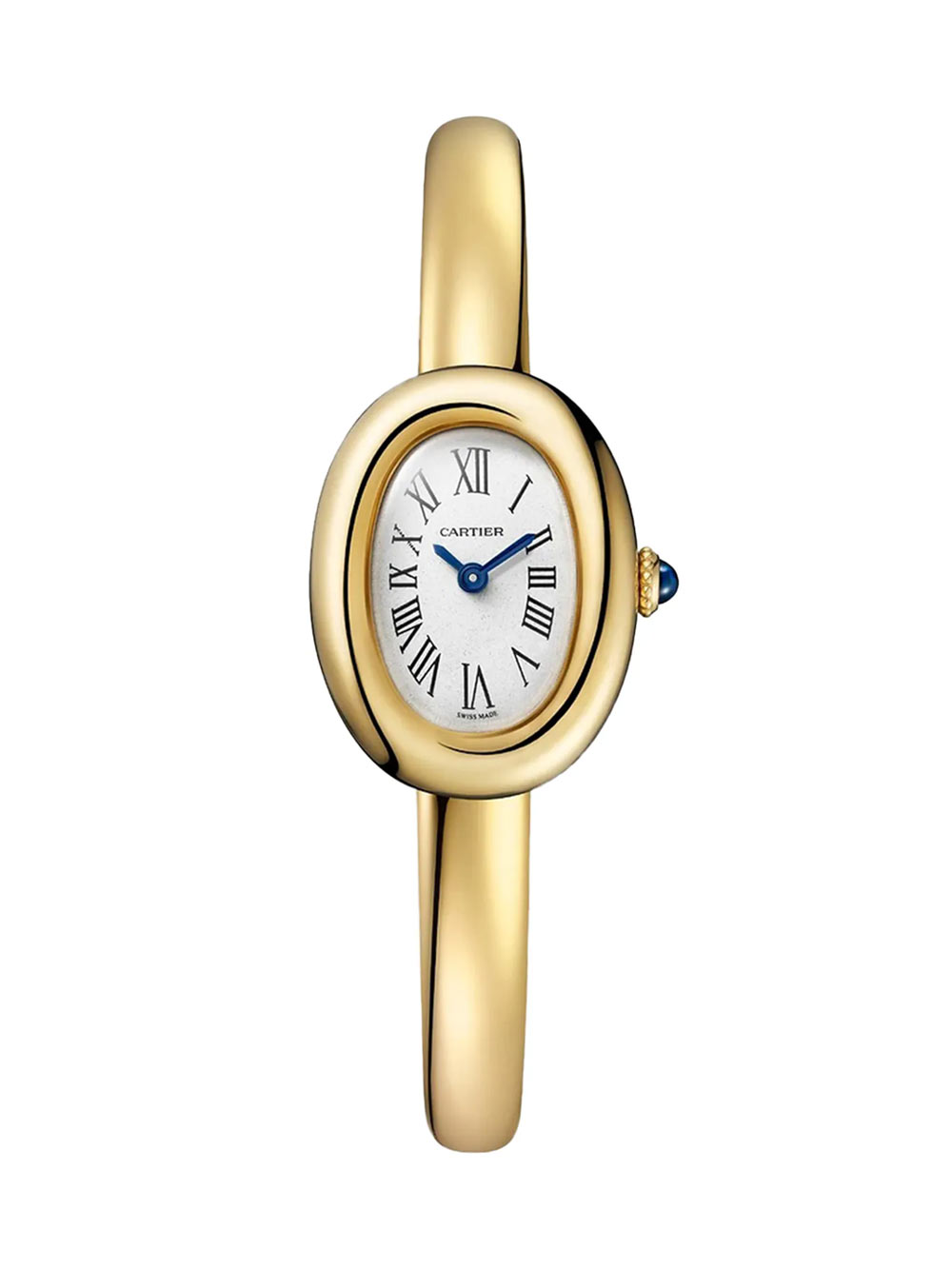
I do have to put my hands up and admit that saying the Crash was based on the Baignoire is an anachronism. The Ovale cintré watch wasn’t renamed to the Baignoire until the 1980s. Today it’s a very feminine collection with petite sizes and plenty of gold and diamonds, the archetypal jewellery watch that’s as much a stylish accessory as a practical timepiece.
Ballon Bleu
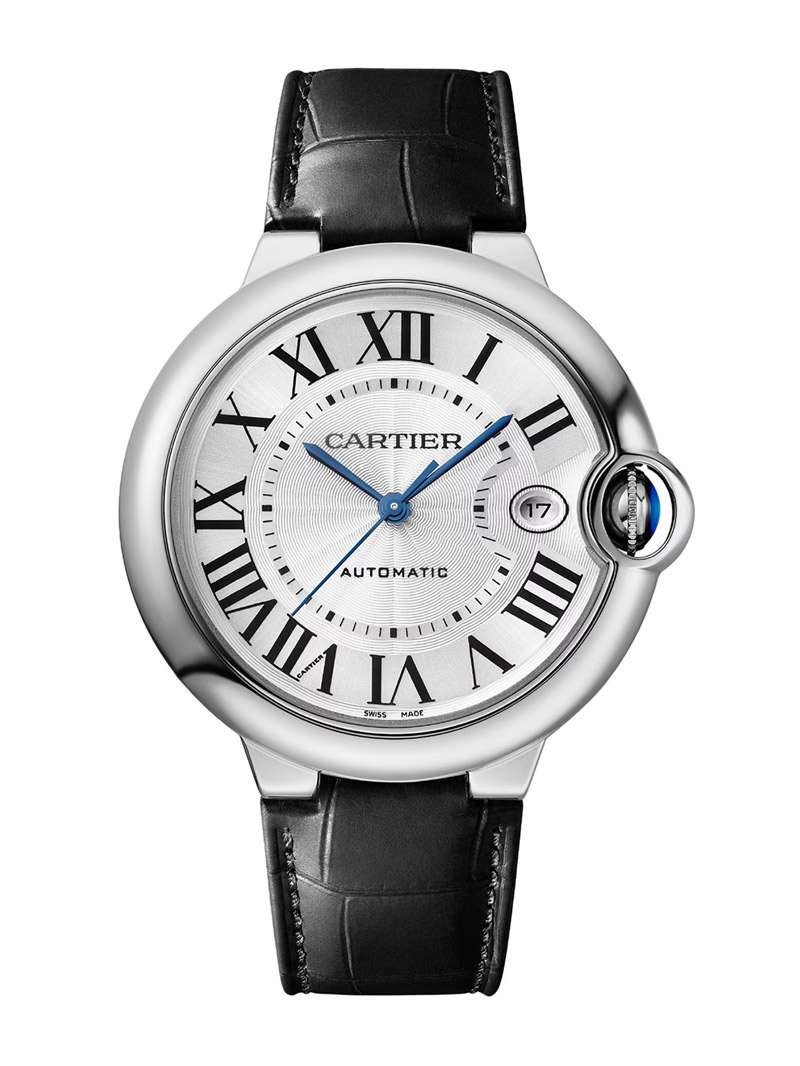
Where the Tank is a very unisex design, the Ballon Bleu is the one that perhaps more than any other features his & hers distinctions, with 28mm quartz editions sitting side by side with 42mm mechanical ones. It has a very distinctive design with the broad, circular case punctuated by the inset crown and pronounced guard that warps the shape of the dial and minute scale.
Thanks to the larger crown you can also see more of the cabochon sapphire that sits at its centre. Though arguably it actually stands out on the more prominent crowns of collections like the Tank and Santos. It’s a unifying feature across the breadth of Cartier’s collections that has become something of a signature design.
Privé

As I briefly mentioned in the Tank section, Cartier produce an annual capsule collection that draws from a wide range of Cartier’s past and present collections, meaning that in any given year you might see a short-lived revival of some of their discontinued ranges. This is actually a concept Cartier have been doing since the 1990s though it has had various names, starting with the Collection Privée Cartier Paris, then the Cartier Fine Watchmaking Collection and now simply Privé since 2018.
Some of the key models included the Prive range in recent years include the Cartier Cloche with its asymmetrical case featuring a combination of straight and curved edges, and the aforementioned Tank à Guichets with its jump hours display. Others include the Tank Asymétrique, Tank Chinoise, Cintrée, Rotonde and Tonneau. The now greatly reduced Pasha collection with its distinctive lugs might be a great pick for the future.
Mystery
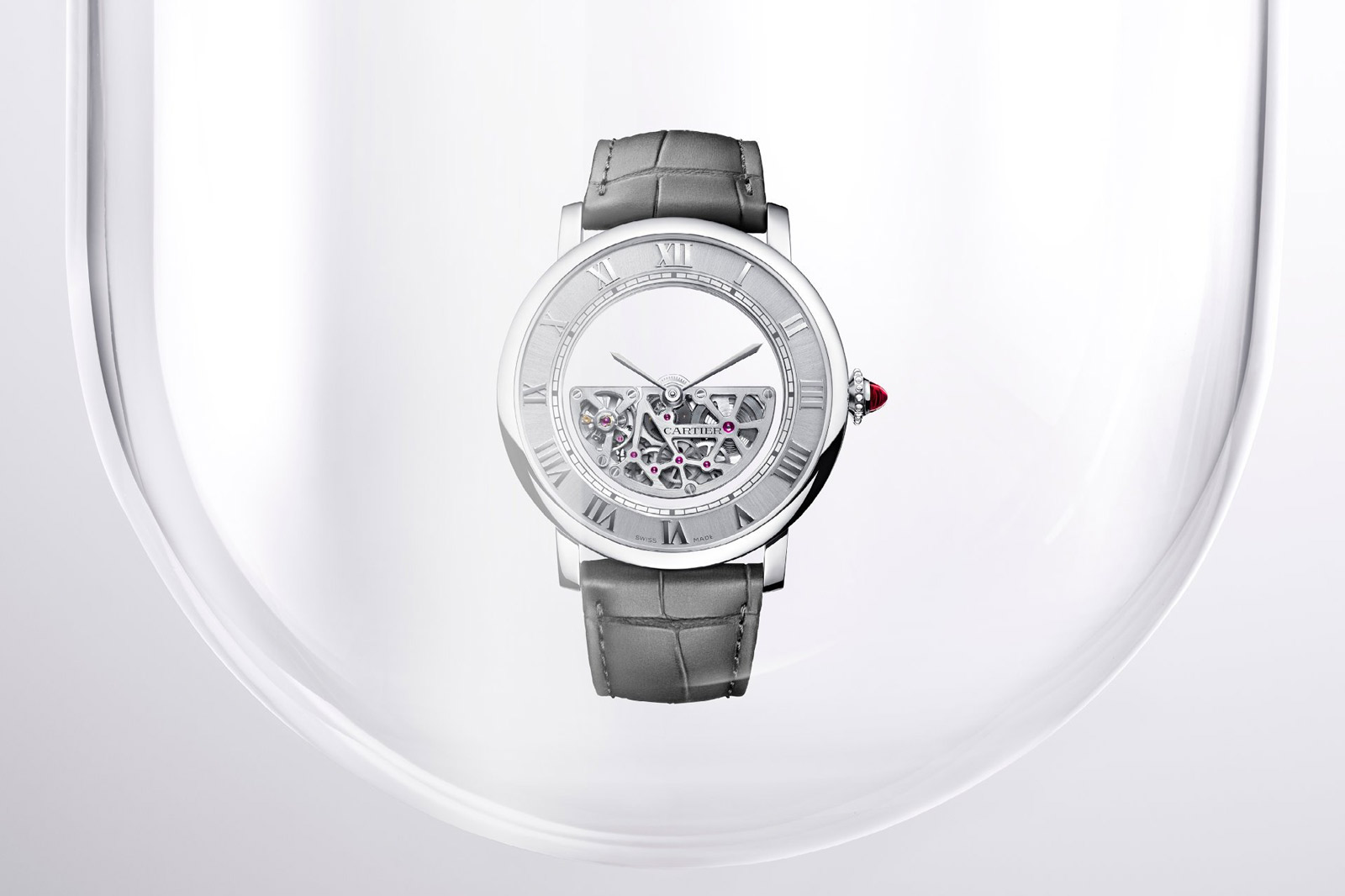
Cartier’s Mystérieuse are among their most intriguing creations, where the point of the design is to make the watch look as if it’s impossible and shouldn’t work. For example, the Masse Mystérieuse has a movement where the entire structure of the calibre is housed within the rotor, allowing the entire device to rotate in the case white the hands stay fixed in the centre. Meanwhile the Rotonde de Cartier Mystery has a completely transparent subdial with floating central hands that don’t appear connected to any mechanism and yet still function.
The Mystery line traces its origins back to 1912 and the creation of their first Mystery Clock, which was the first to use the seemingly impossible floating hands. If anything the clocks are more impressive than the watches as there is so much more space and area of transparency with no sign of a movement.