Like dial colours and complications, case materials can have a bit of a moment too. Over the last few years for example, titanium’s been on the up for its pretty intuitive benefits of light weight and strength. But of all the metals cycling through the zeitgeist I can’t say I ever expected Damascus steel to be in the limelight.
And yet, over the past 12 months, we’ve seen a glut of beautifully grained metal cases at various levels of accessibility, including the double metallurgical threat of Damascus titanium. But while the metal may be forge-hot right now, the current crop of wavy steel watches are late to the party. The Swedes got here a while ago.
Back in 2007, watchmaker Patrik Sjögren met bladesmith Johan Gustafsson. On the one hand you had the fine mechanical ingenuity of a horologist, on the other the deep knowledge of Viking-era forging. Together, they decided to create a watch brand that leveraged both skillsets in truly Scandinavian fashion – and the result was GoS and in 2012, they became the first brand in the world to use a full Damascus steel case.
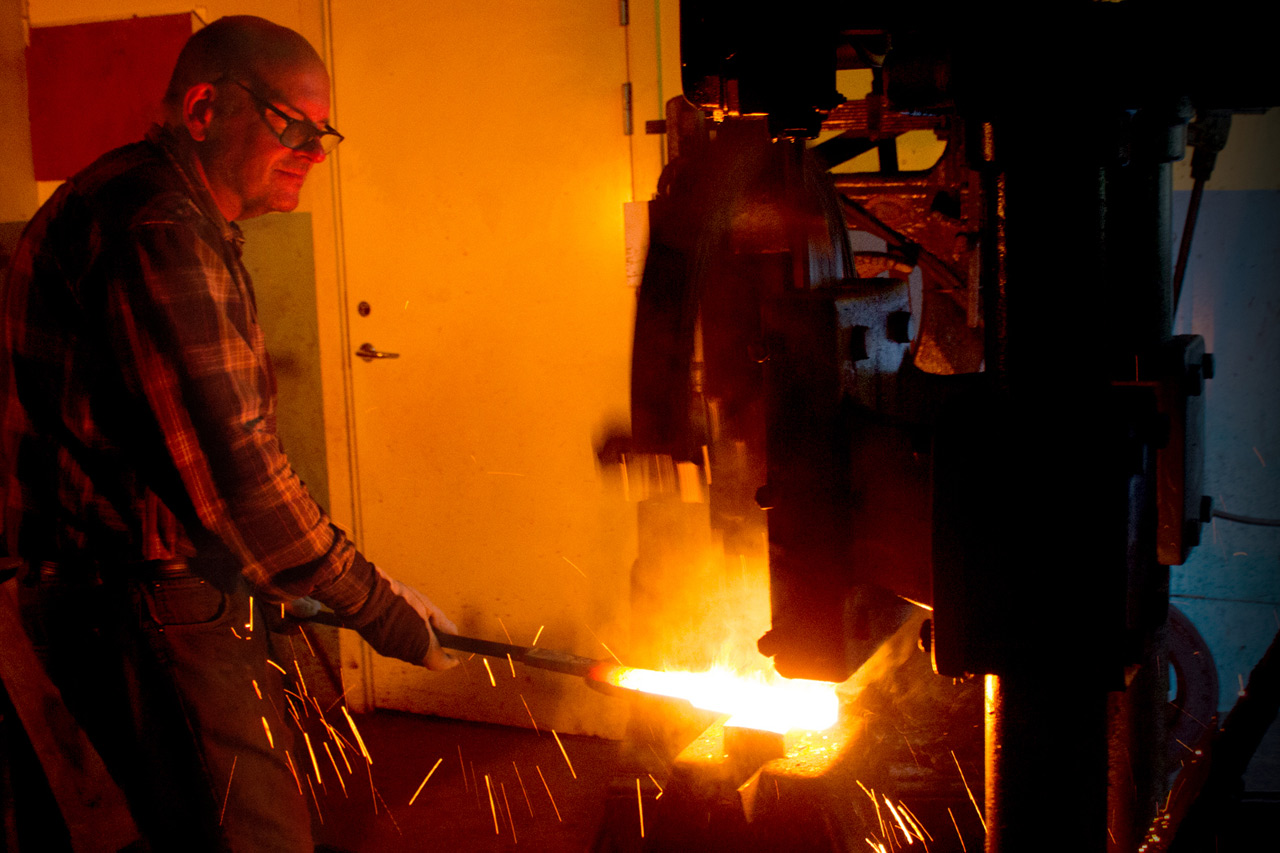
By now you may be wondering, what exactly is Damascus steel? Otherwise known as pattern-welded steel, it’s a technique that various cultures around the world discovered independently – but for GoS purposes, let’s look at the Vikings. In trying to get an advantage over their enemies, Viking bladesmiths realised that, by layering two different types of steel and folding them together over and over, they could create a stronger composite material. This allowed their swords to be longer, lighter, sharper and overall better.
This strengthened composite steel also had the side-effect of creating a particularly lovely pattern, especially when slightly etched with acid to bring the grain out. These swords became a symbol of pride for the Vikings that wielded them; there are stories of them quenching them in beer and reading omens in the individual patterns. Whether or not that’s true, Viking swords still survive today and look as spectacular now as they did then.
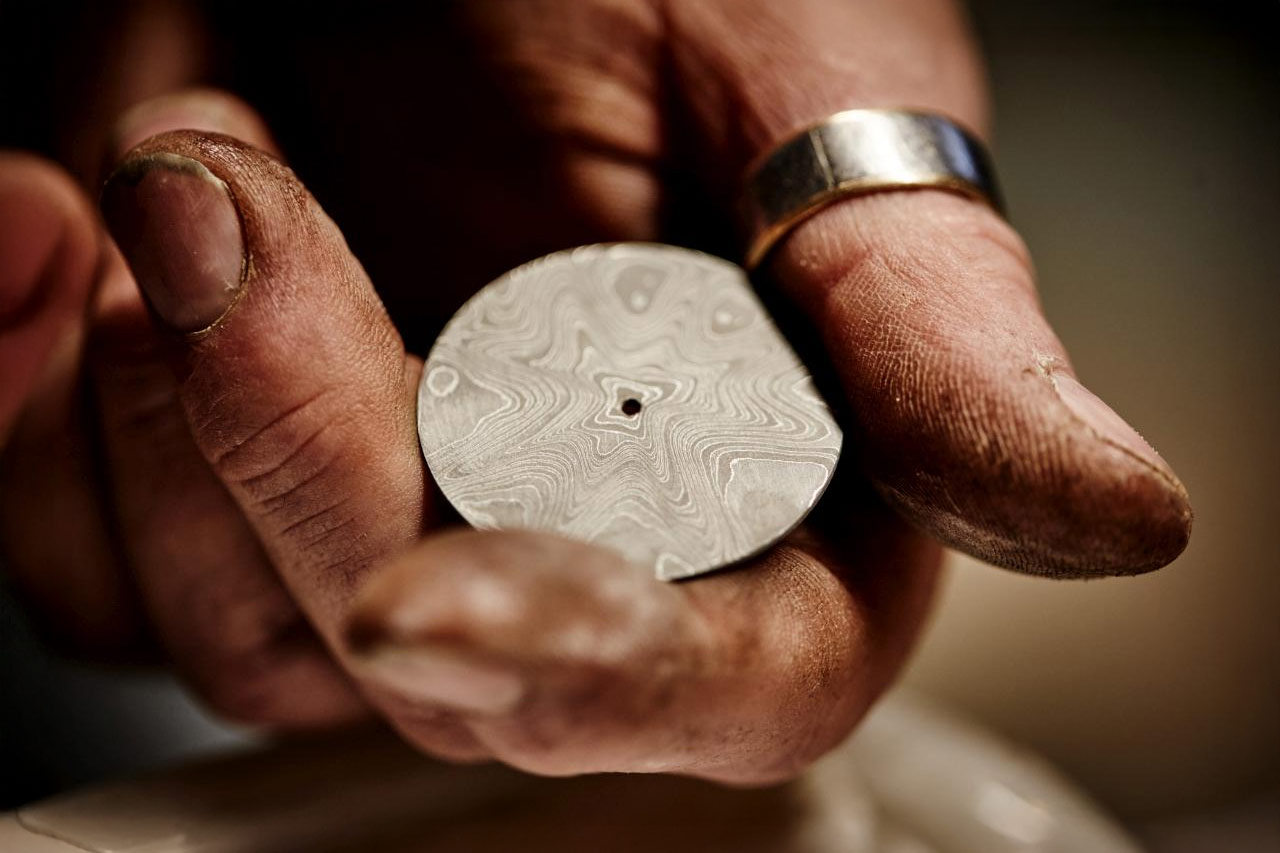
This however is just one of the methods GoS use in their Damascus steel. That’s because each watch actually uses two different types of steel because of the metalsmith’s number one enemy: corrosion.
The pattern-welded steel of the old Vikings is beautiful and strong, but prone to corrosion. It’s perfect for interior parts – dials, bridges, rotors – especially when polished, etched and heat treated (as GoS do). But for the wear and tear a modern watch case goes through, you need stainless. Fortunately, Conny Persson, GoS’ current bladesmith, isn’t the only Swede working in Damascus steel; the experts at Damasteel are right on their doorstep. And so, GoS commissioned the foundry to create a new type of stainless Damascus steel specifically for their cases.
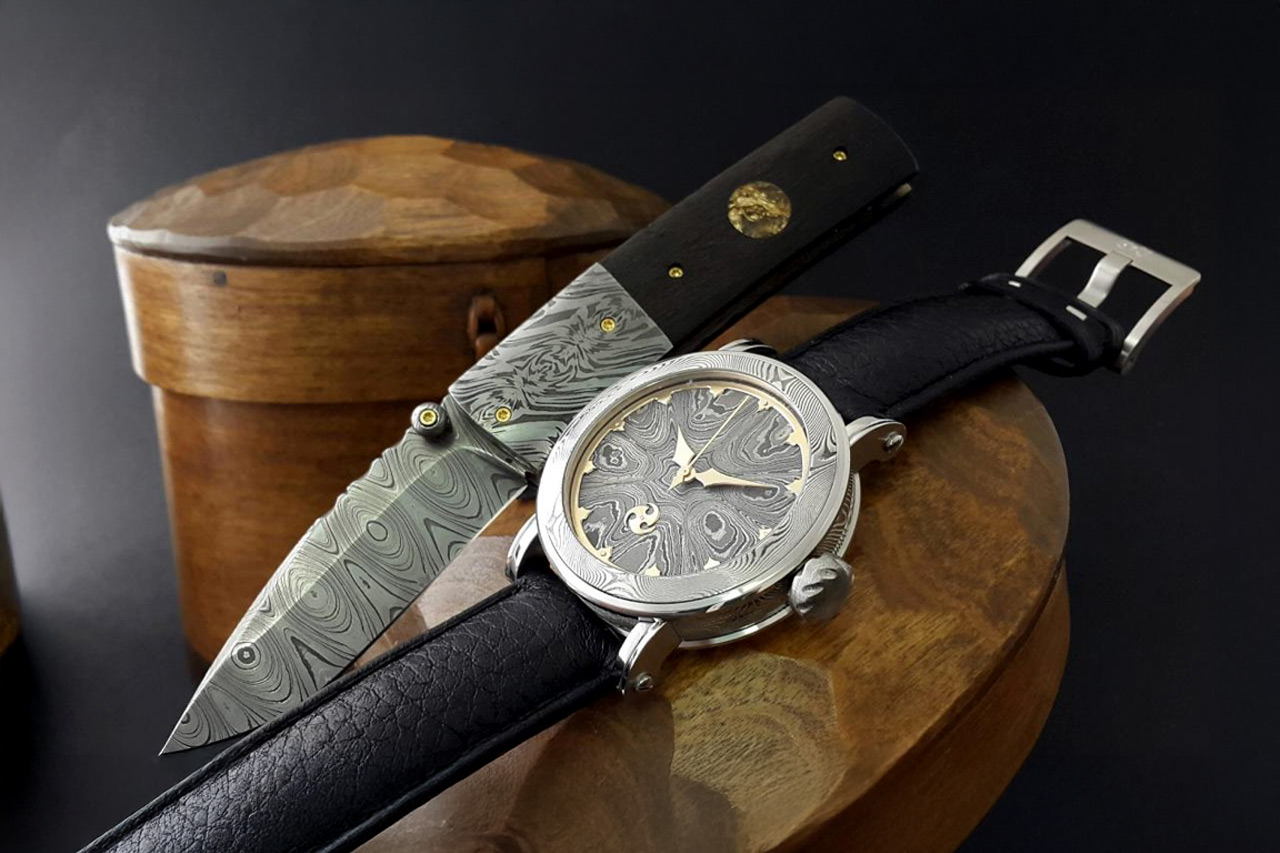
By combining Damasteel cases in stainless Damascus steel with pattern-welded interior parts, GoS was able to launch the first proper Damascus steel watch in 2012’s Nordic Seasons collection. They quickly followed it up with 2013’s Winter Nights, which included Damascus steel bridges to the movement and the rest is (recent) history.
Sure, other brands have attempted Damascus steel since then. Both Sinn and Christoph Claret jumped aboard early and launched their own Damascus models a couple of years after GoS. But they just didn’t strike the same chord. They had a similar pattern, but without the aesthetic nuance of what the Swedes could do; they used the pattern more like a natural grain to be revealed than a controllable aesthetic.
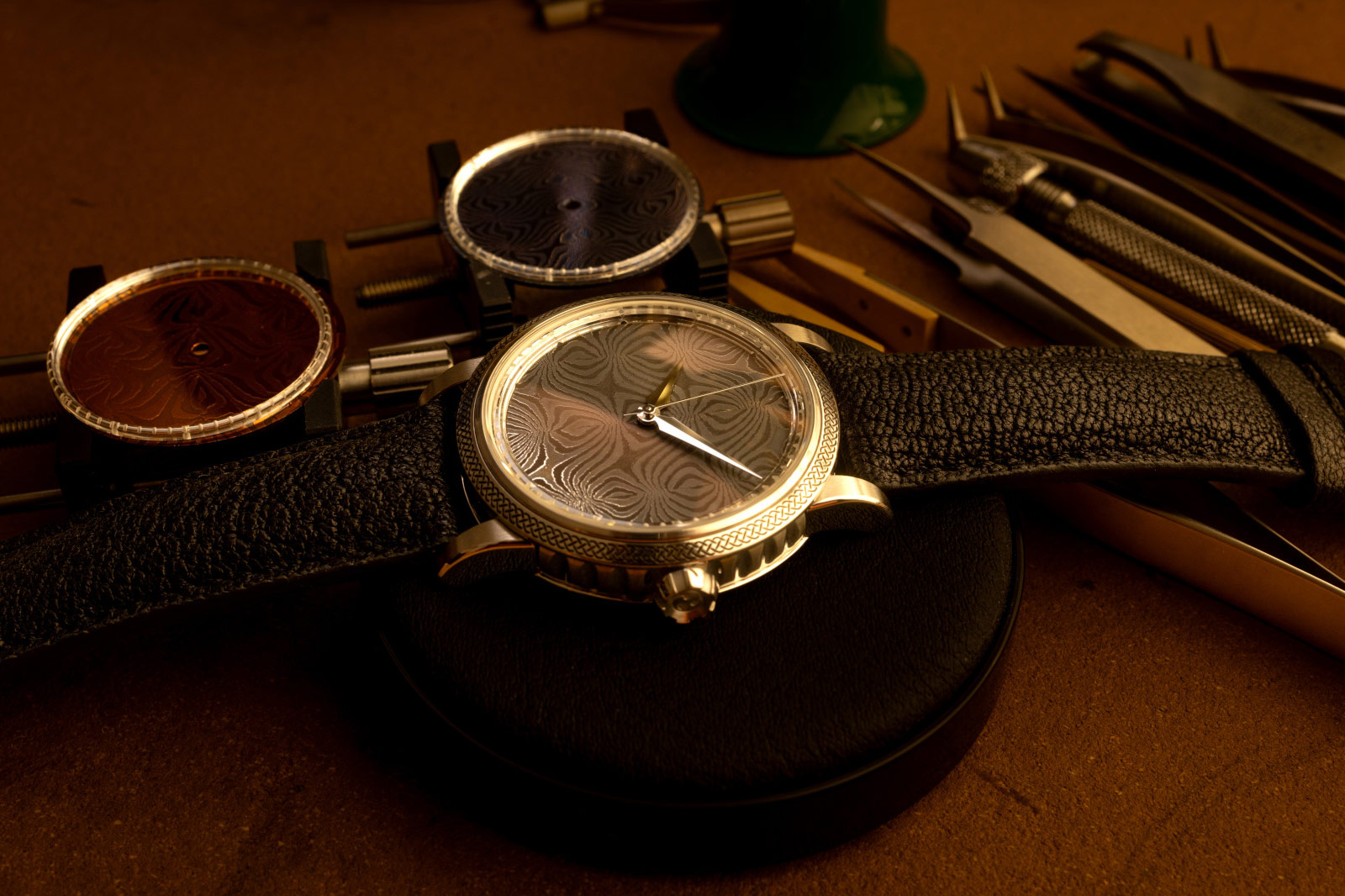
If you look at the dials of the Fullerö Sword collection, you’ll see what I mean. They’re not just covered in random wavy lines but instead have a kind of kaleidoscope pattern that’s completely intentional. Not only did the brand intersperse layers of nickel between the steel, but they forged a grand total of 17 layers together, to get a much more intricate, richly textured pattern.
And yet not even a specialist like GoS can rest on their laurels for long – particularly when a brand like Franck Muller is on their heels. In late 2024, the iconoclastic tourbillon obsessives re-dressed their Vanguard in Damascus steel and it was spectacular. The difference between what Franck Muller achieved and others failed to was contrast. Their case wasn’t just a vague grain in the metal but was instead comprised of thin, bright waves of metal. Needless to say, Patrik and Conny sat up and took notice.
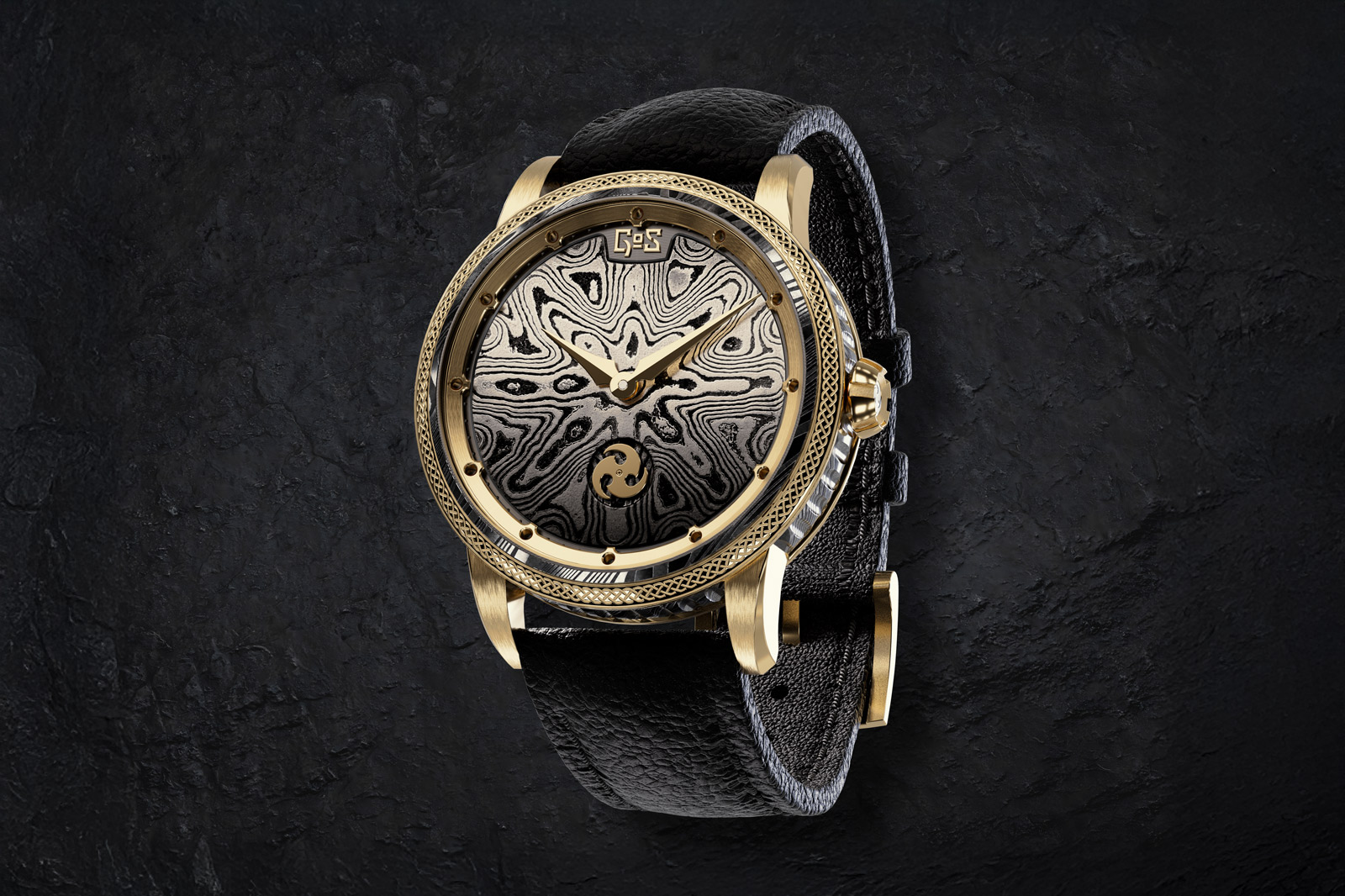
Now in their 3rd generation of Winter Nights collection, a follow-up to that seminal 2013 model, GoS are raising the bar once again. The problem was that stainless steel doesn’t work with the most common acid-based contrast treatments. That’s kind of the point of the metal. But it can be patinated using an oxidisation liquid. Patrik realised that he could alternate the usual acid etching and polishing with this darkening to heighten the contrast in the cases, emphasizing the layered nature of the metal like never before.
It’s also the completion of a dream for the brand, combining their Damascus dials with a Swedish-made gold case for the first time. It measures 41.5mm in diameter with a thickness of 12.1mm at its tallest, curving down to 8.1mm sides. Inside is the calibre GoS03, manufactured for them by Schwarz Etienne with an 86-hour power reserve.
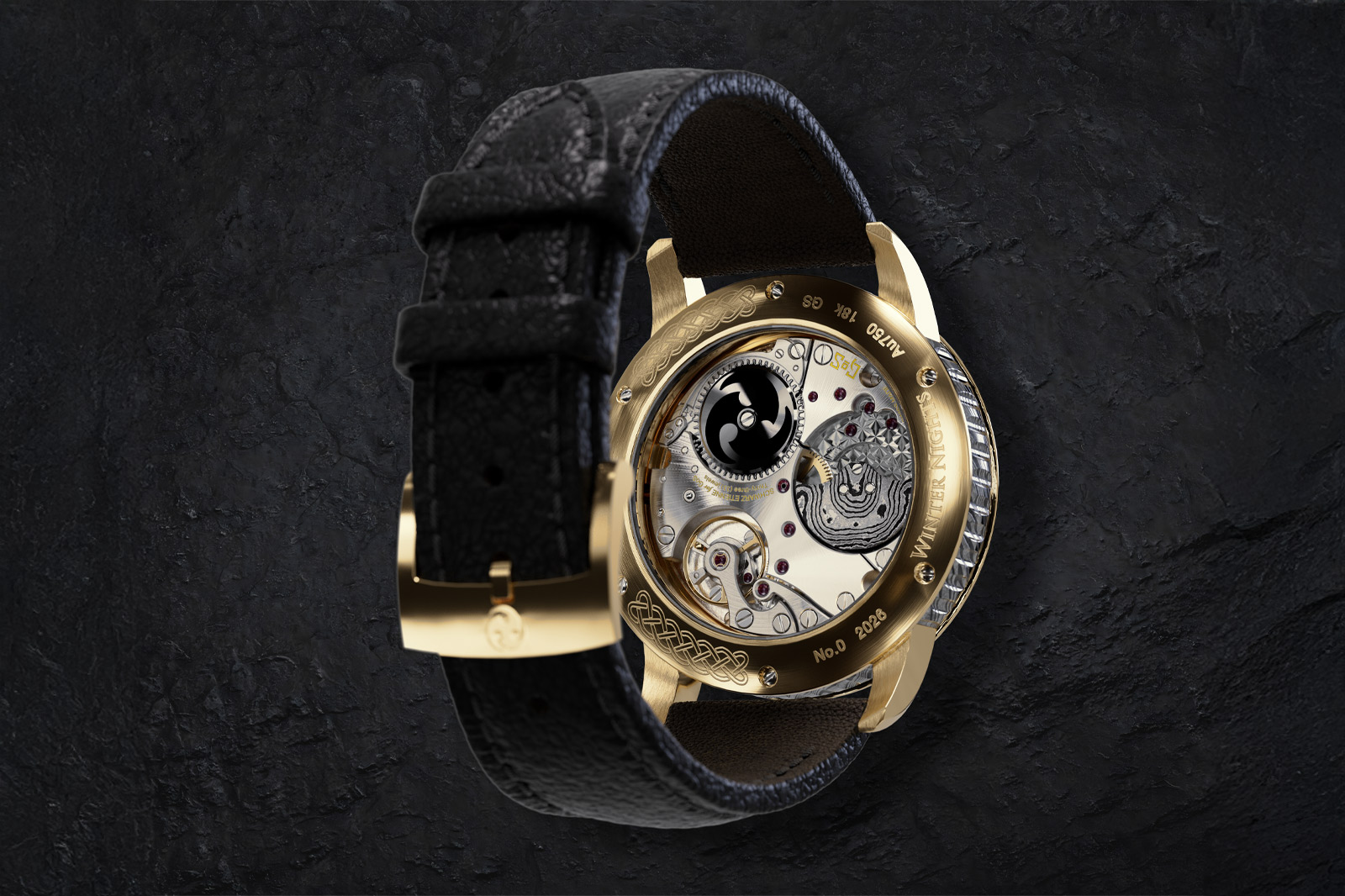
The results speak for themselves. GoS has always been at the forefront of the Damascus steel niche, pushing their dials into ever more beautiful aesthetic realms. With the new Winter Nights, they’re doing the same with the cases. It’s not just beautiful, but thematic too. To the ancient Vikings, the long winter nights were a time of reflection and transition – and by returning to the collection, GoS are reflecting on what makes them who they are.
The answer? The best Damascus steel watches in the world.
Price and Specs:
More details at GoS.