There is something inherently captivating about a watch that comes alive in the dark. A fully luminous disk on the wrist, one where the entire dial is coated in a glowing compound. To me, they evoke the bioluminescence of deep-sea creatures, an aesthetic which prioritises absolute legibility while also indulging in just a hint of theatre.
These radiant dials are admired nowadays as design statements or collector curiosities, yet their origins are far more pragmatic. Long before becoming a visual calling card for modern microbrands, full-lume dials emerged from necessity.
Their history is intriguing to track, from their origins as indispensable Second World War naval tools, to the surfacing of a curious prototype, and their rise as a defining feature of the boom in commercial and military diving. And we’ll see how this history places modern interpretations in a whole new light.
Stowa Kriegsmarine Navigation Watch

You may know the Stowa brand as one of the manufacturers of the 55mm Flieger-handed behemoth Luftwaffe B-Uhr pilots’ watches of the mid-1940s. The revival brand today certainly pull their design cues primarily from their aviation heritage.
But between 1938 and 1940 (over a decade before ‘dive watches’ became a thing), the German Kriegsmarine – an arm of the German Navy – commissioned Stowa to produce wholly luminous deck watches to be issued aboard their fleets of U-boats. These deck watches were the more portable auxiliary timekeepers which slowly replaced marine chronometers on ships.
By day, the watch itself is fairly bog-standard. It’s the typical crown-at-twelve, plated brass-cased deck watch of the era – essentially an oversized pocket watch – fitted with a navigation-grade movement, large black numerals and a handsome sub-seconds.
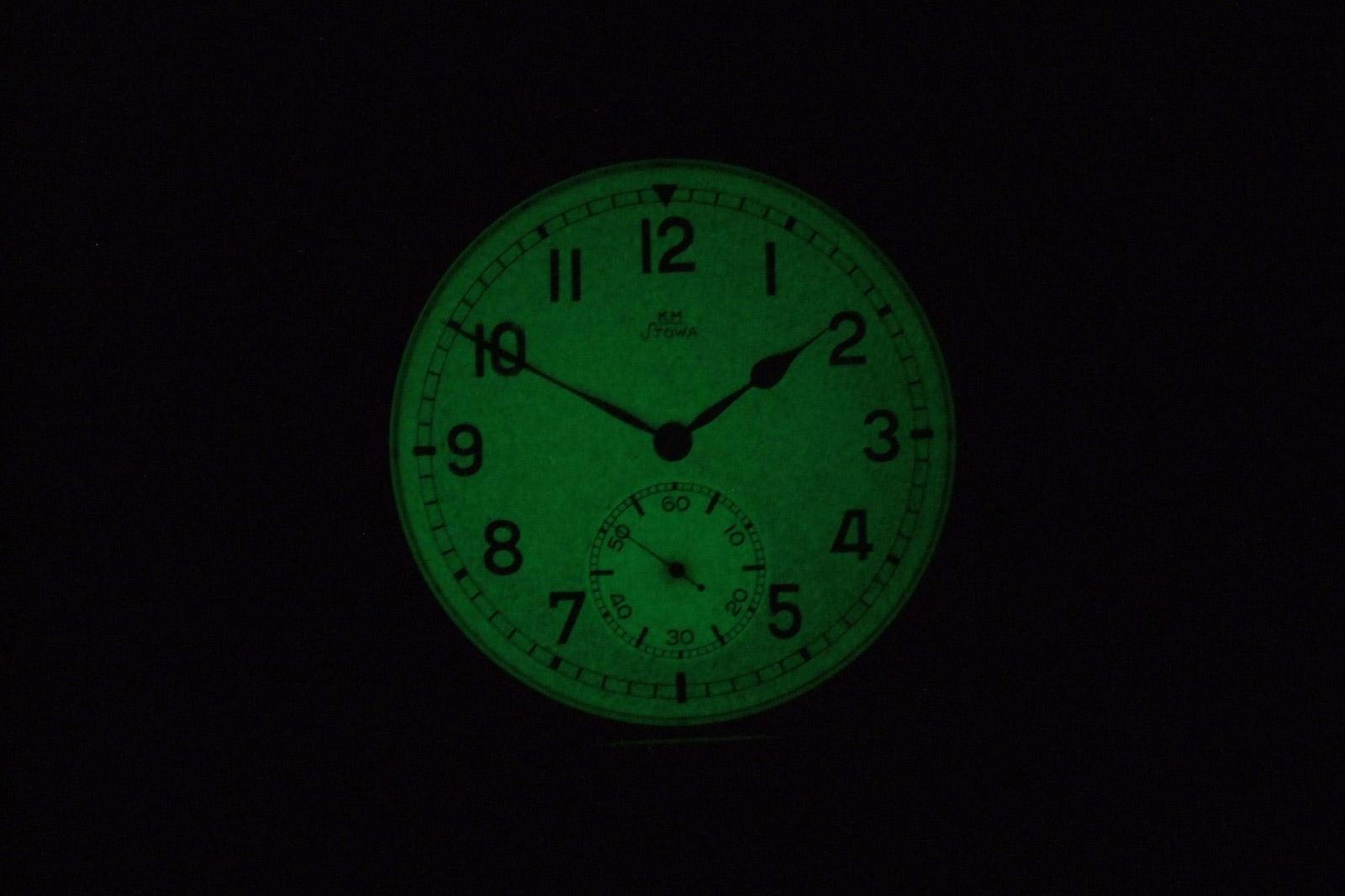
But to aid in the low light conditions necessary for the U-boat’s operations, Stowa used a genius combination of zinc sulphide and copper in the dial’s lacquer to make it fully luminous. The clever chemistry was innovative, as the luminous paint of the time, radium, would not only be prohibitively expensive but also extremely radioactive when coated across a full dial.
Large black numerals over the luminous dial made the Stowa ultra-legible. Perhaps this was prioritised for viewing from a distance, as the deck watches were often mounted at the front of the ship, or to be easy to find if they became lost or went overboard.
Enicar Star Diver Prototype
Legibility has been the goal for dive watch design since their invention in the early 50s. Blancpain worked with France’s defence ministry to maximise the legibility of the Fifty Fathoms for combat swimming units, and Doxa innovated the orange dial in 1967 as apparently the most legible colour at low-light depths.
The next logical step, surely, is more lume. But the nervousness around radioactive paints, along with the added production costs, continued to make a full-lume dial difficult to execute.
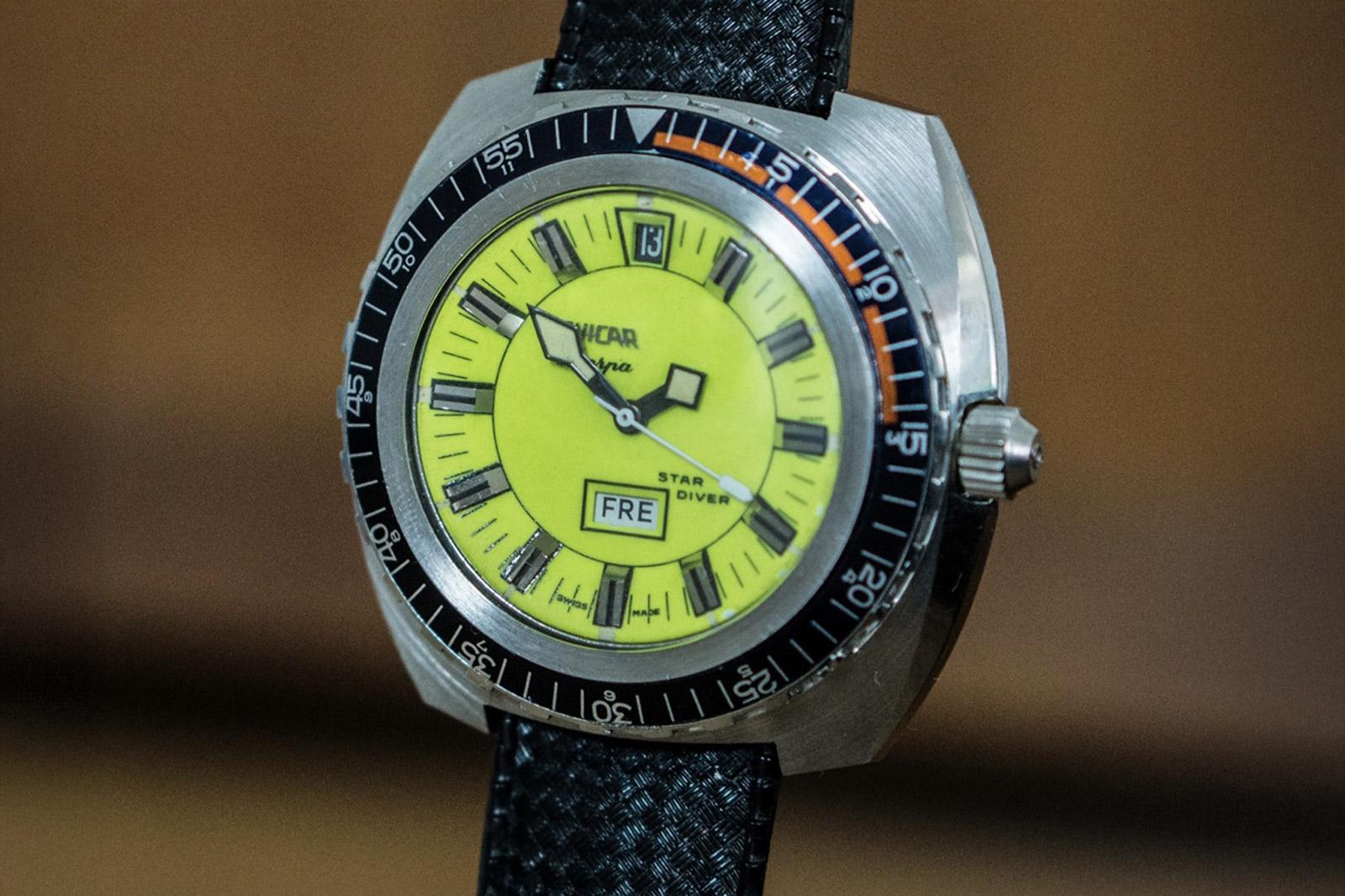
Enter the respected yet often overlooked Swiss watchmaker Enicar founded in 1913. Their Star Diver line emerged in the late 1960s and early 1970s as the successor to the brand’s earlier dive watches, forming part of Enicar’s broader Sherpa family of robust sports and professional tool watches.
Thanks to the research of leading Enicar authority Nico, proprietor of enicar101.com, we know the brand was experimenting with photoluminescent dials as early as the beginning of the 1970s. This full-lume dial prototype never appeared in period catalogues, suggesting it was an exploratory exercise rather than a commercial release. As far as current research indicates, it may well represent the earliest example of a full-lume diver ever produced, albeit only in prototype form.
Tag Heuer Diver Professional Night Diver
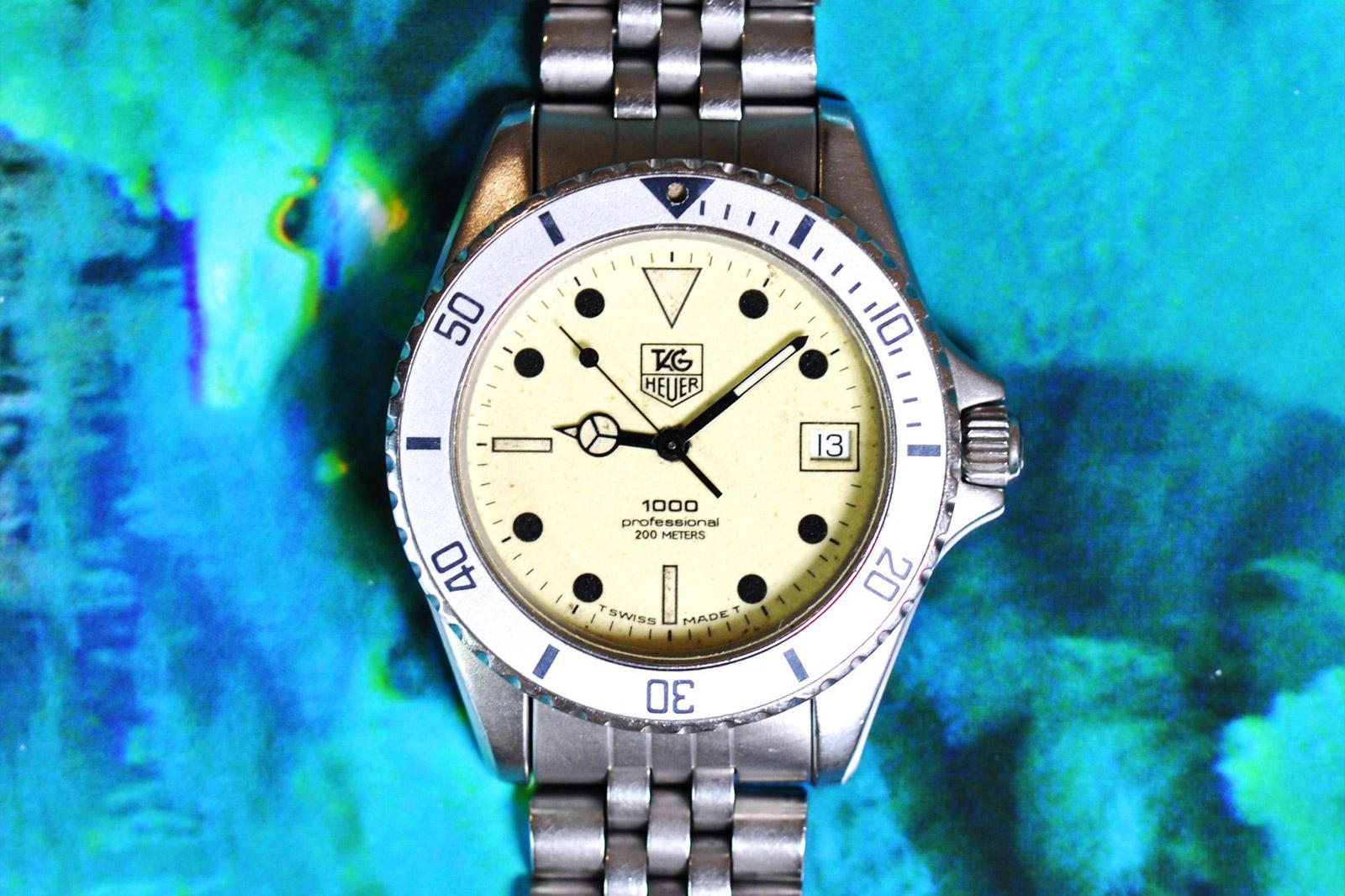
In the early 1980s, during the tumultuous advent of the quartz crisis, Heuer was able to weather the crisis thanks to popular demand for their quartz divers range: the Diver Professional. And in 1983 (most sources cite only mid-1980s but Tag Heuer’s blog gives 1983 specifically) they created a diver with a fully luminous dial, achieving legibility the likes of which had never been seen before.
It earned the nickname “Night Diver”, and is regarded as the first production watch with a full lume dial. It was an instant hit among professional and commercial divers, and earned pop culture stardom the year after its release on the wrist of Timothy Dalton in the aptly named The Living Daylights.
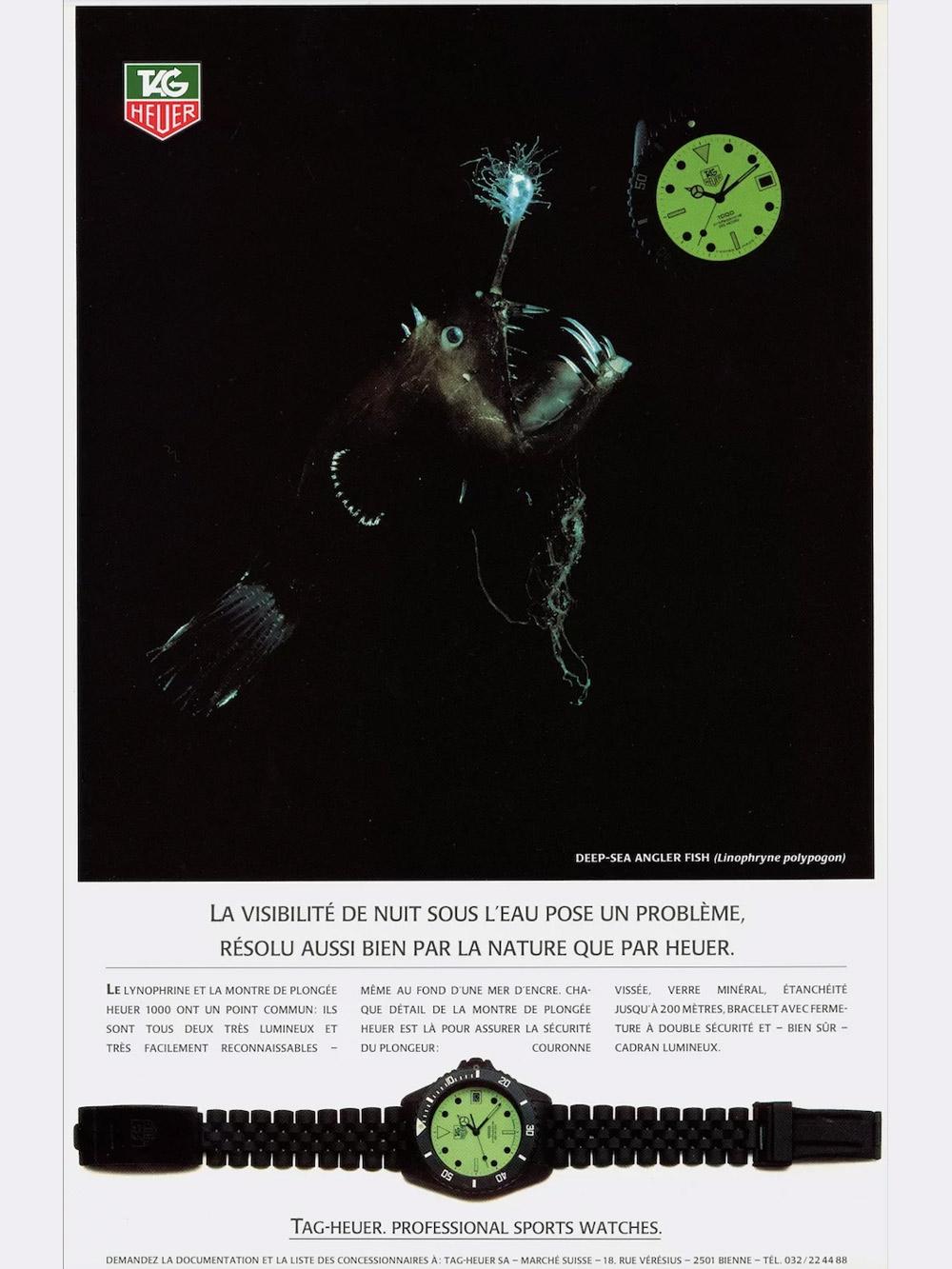
Plenty of other brands followed suit during the quartz dive watch craze. Full-lume dials start to pop up from the late 80s from brands such as Nautilus and Zodiac.
Evidently, the Night Diver was such an effective solution to the dive watch legibility problem that the Marine Nationale issued a small batch of Night Divers from both Heuer and Zodiac to their base in Brest and also to their dive school. Of course, big bright watches could conceivably undermine a soldier’s camouflage, which might make their use by the MN seem unlikely. But that’s where stories of soldiers wearing their watches with the dial inward or even using covers comes into play.
Timex Indiglo

I think it’s worth including Indiglo in the story of the full-lume dial. When Timex first equipped their watches with the technology in 1993, it didn’t just excite ten-year-olds; it also found its way onto the wrists of everyone from Bill Clinton to Navy SEALs.
One of my earliest memories with a watch, one which instilled in me that childhood fascination (which still won’t go away), was the Indiglo dial of my Dad’s Timex Expedition. I can still faintly recall lying in bed at night as a kid, giving the crown a gentle push with my index finger, and watching the dial come to life.
The technology debuted on the Ironman range, a line known to have been favoured by U.S. special forces units before digital tool watches became widespread within the community. It’s interesting to compare this practical, user-controlled illumination with the MN’s Heuer Night Divers of the 90s, whose permanently glowing dials could potentially compromise camouflage. With Indiglo, SEALs could choose exactly when to illuminate their watch, and when to remain discreet.
Today

For the modern side of things, I’ll leave you with Michael’s run-down from last summer. Still, amid the curious and sometimes party-piece interpretations dreamed up by brands today, it’s easy for the tool-watch history of the full-lume dial to be overlooked.
Seen in that light, Heuer’s revival of a full-lume Aquaracer clearly nods to the original Night Diver, while Studio Underdog’s pocket-watch collaboration with Christopher Ward may well draw a quiet line back to a German naval deck watch.