

John Harrison’s H4 Marine Chronometer, image credit: National Maritime Museum, Greenwich, London
In November last year I had the privilege of attending a private showing of John Harrison’s H4 marine chronometer at No. 11 Downing Street. Organised by the British Watchmakers’ Guild, the event included a talk by well-known author and historian Jonathan Betts, who described H4 as the ‘father of the modern wristwatch’. A bold claim and one which Jonathan substantiated with his boundless knowledge of both Harrison and British horological history.
For anyone with an interest in watches, John Harrison’s groundbreaking marine chronometer is something to behold; a work surpassing genius. From his H4 in the 18th century to the modern revival of the industry, British watchmaking has evolved through challenges and opportunities, and despite a lot of own goals. Our genius for invention has often been dogged by our almost equal skill at snatching defeat from the jaws of victory.
But, today, a quiet renaissance places us on the cusp of a major resurgence of British watch culture. It’s why we founded the Alliance in 2020, with the aim of gathering all our watch and clock makers to work together and define our future.

Portrait of John Harrison by artist Thomas King (1767)
Today, without our former manufactories, British watchmaking is very much a creative sector. Virtually all our member brands design in-house and so, while watch manufacturing in Britain remains a distant dream for us, we’re witness to the emergence of some of the most exciting new microbrands in the world. Similarly, our more established brands are regularly evolving their watch designs with more playful interpretations of their house-style. As I look across the watches being produced, there is a distinctly British style emerging and it’s why I am currently gathering a watch design working group from our member brands to help us understand this direction in which we’re heading.
British provenance and our reputation in watchmaking is founded upon a tradition of innovation from the 18th and 19th centuries, and a typical history lesson through this storied period of invention tells us that around 75% of the inventions that make a modern mechanical wristwatch tick are British. However, outside the realm of the artisan horologists, I feel that the influence of popular culture and advertising in the 1970s and 1980s remains a critical but often overlooked factor in shaping attitudes toward British watch brands today. These decades, more than any other, kept the concept of a British watch alive in the hearts and minds of consumers at a time when British manufacturing had almost entirely moved offshore.
Today, it means that we have two parallel lanes of British watchmaking — the horologists and the brands. And, as our ultimate horologist, Roger Smith has been oft quoted, “you can’t rebuild a sector doing what I do,” – making 18 watches a year, entirely in-house and with staggering levels of hand-crafted skill.
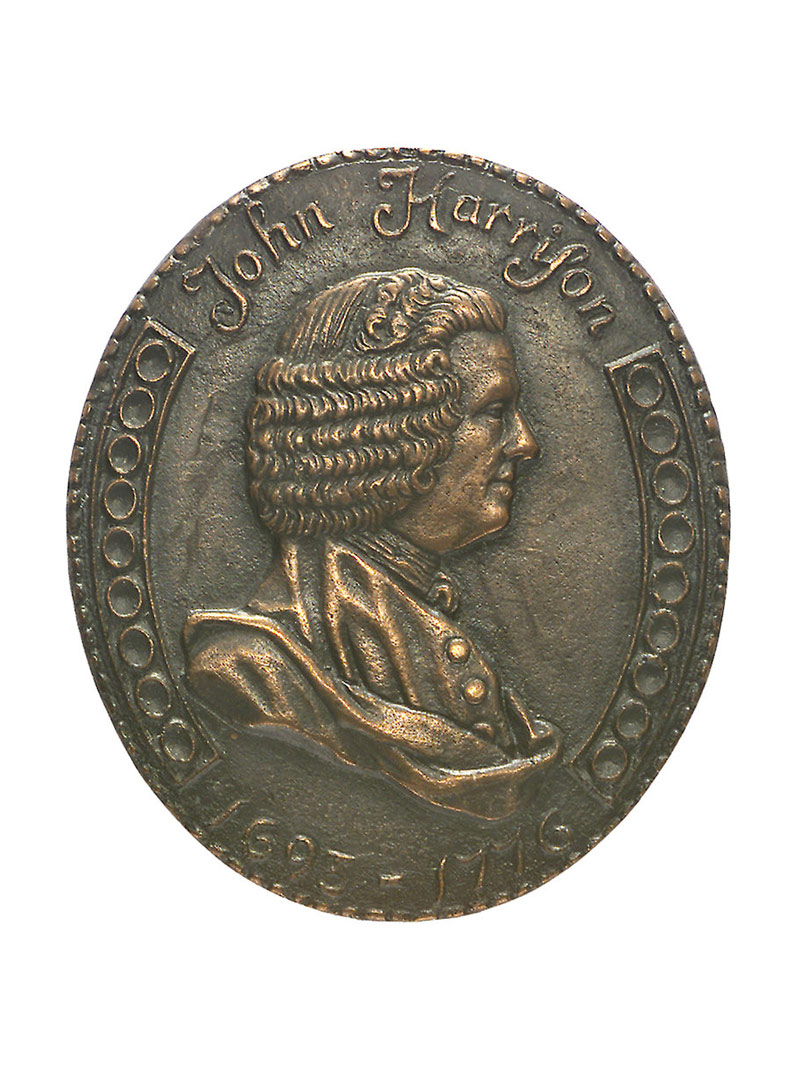
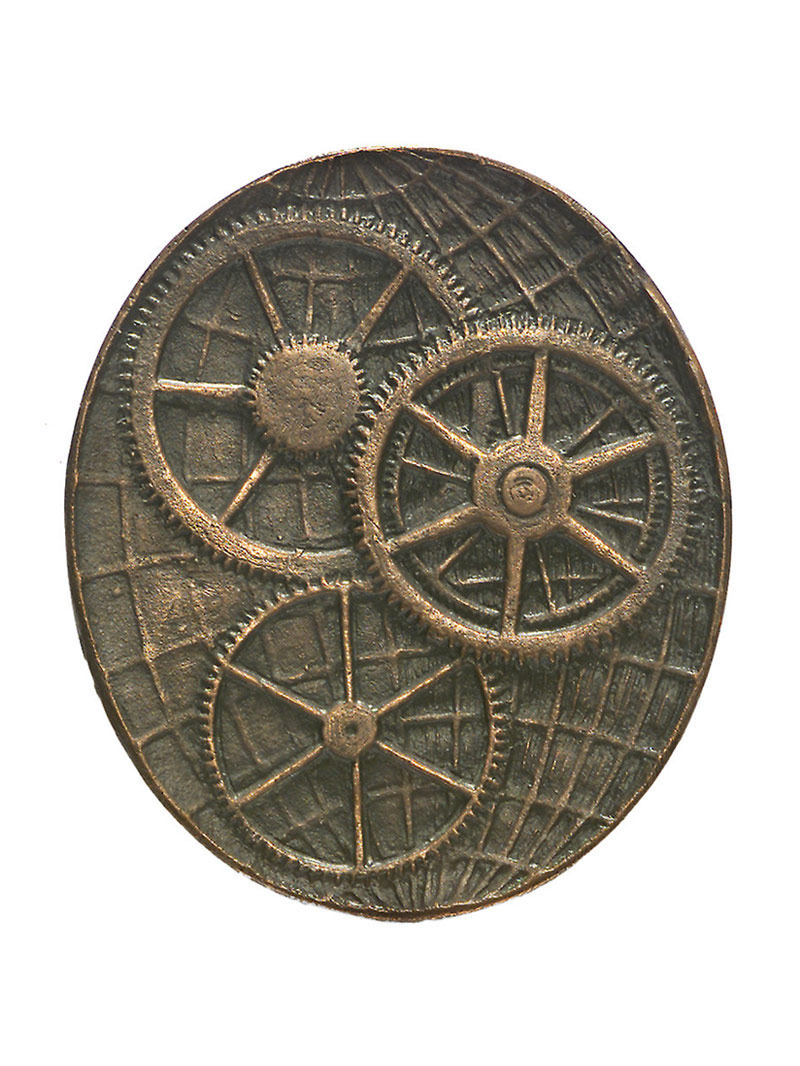
Medal commemorating the bicentenary of John Harrison’s death, image credit: National Maritime Museum, Greenwich, London

But, let’s take things back to Harrison, a carpenter-turned-clockmaker from Yorkshire who solved one of the most pressing challenges of his time: determining longitude at sea. In the 18th century, sailors often ventured into uncharted waters with only rudimentary tools to determine their position. The consequences of navigational errors were disastrous, leading to shipwrecks, loss of life, and ruined trade ventures.
On a foggy night in 1707, over 2,000 soldiers were killed when a misjudgement of longitude caused their four ships to sink after clashing with rocks on the Scilly Isles. This prompted urgent action and the British government passed the Longitude Act in 1714, offering a prize of £20,000 (a lottery-sized sum today of around £3.5m) to anyone who could devise a reliable way to calculate longitude.

John Harrison’s H1, H2, H3 and H4, image credit: National Maritime Museum, Greenwich, London
It was John Harrison, working doggedly over decades, via H1, H2, (with a further 19 years on his H3) who finally triumphed, despite famously being hindered by his own perfectionism and the very Longitude Board which had commissioned his work. Harrison’s creation, the H4 marine chronometer, was revolutionary. Unlike previous attempts at solving the longitude problem, the H4 was portable, incredibly precise, and resistant to the movement of ships on rough seas. When it was tested on sea voyages, it performed with astonishing accuracy of one second in a month, proving Harrison’s ingenuity and ushering in a golden age of watchmaking in the 18th and 19th centuries during which Britain would reign supreme.
London became synonymous with horological excellence; a hub of master craftsmen being pushed sometimes with bitter rivalry to produce watches of artistry and breakthrough precision. The contributions of figures like Thomas Mudge, who invented the lever escapement — a mechanism that remains central to mechanical watchmaking — demonstrated the extraordinary innovation at work.
Whereas Harrison and Mudge made a handful of chronometers in their lifetimes, John Arnold picked up the baton, making several hundred to a high standard by focusing on the more difficult horological work, while farming out the more routine aspects to a number of skilled craftsmen.


Thomas Mudge and his perpetual calendar (1764), image credit: The Trustees of the British Museum
This age of invention meant that, by the start of the 19th century, Britain was the first watchmaking powerhouse, producing half the world’s watches. The label ‘Made in England’ carried immense weight, signifying innovation, quality and expertise. Yet, this devotion to artisanal watchmaking through the singular mastery of the individual was ultimately a vulnerability. As the industrial revolution transformed manufacturing in Switzerland and America, British watchmaking now found itself at a disadvantage. While Swiss and American companies embraced new methods to mass-produce watches, British horology remained rooted in small artisan workshops and handcrafted production.
In terms of building our industry, this was akin to us hanging on to illuminating manuscripts while the rest of the world got on with printing — and it led to our sharp decline. By the end of the 19th century British output had halved while the global market had grown exponentially to millions of watches.
However, in 1905, against the uphill struggle facing our declining sector, a new watch company was founded in London by Hans Wilsdorf, his sister, and his brother-in-law, Alfred Davis. Initially named Wilsdorf and Davis, the company specialised in importing Swiss watch movements and placing them in high-quality watch cases crafted by other manufacturers. These early creations were ‘white labels’, bearing the names of the jewellers who retailed them, rather than Wilsdorf and Davis.

Hans Wilsdorf, Rolex’s founder, 1942
No doubt frustrated by this, Wilsdorf had two visionary ideas. Firstly, he began to see the potential of the market for wristwatches. Now this was at a time when pocket watches were still the norm and wristwatches were considered rather effeminate for men. Wilsdorf’s other big idea was to encapsulate the qualities of precision, reliability, and elegance within a brand, which he registered in London in 1908, as Rolex.
Rolex quickly gained recognition for introducing the world’s first certified chronometer wristwatch in 1910. However, in 1919, the company moved its operations to Geneva, Switzerland, struggling with the economic challenges of post-World War I Britain, including high taxes and import duties. Wilsdorf’s genius was his intuitive understanding of brands. In parallel, the story of British horological innovation continued and would eventually merge with Rolex’s.
Having returned from the trenches, a watchmaker called John Harwood moved to the relative tranquillity of Douglas on the Isle of Man to set up a tiny watchmaking workshop. I must admit that I had not even heard of John Harwood until I was asked, in 2019, by the Isle of Man Post Office to help them produce a postage stamp set to commemorate the small island’s famous watchmakers, George Daniels and Roger Smith. In researching this project, I came across John Harwood’s name and his exceptional, yet unheralded contribution to the British story.


Harwood Automatic (1929), image credit: The British Museum
During 1923, Harwood noticed that there was a recurring problem of dust and moisture getting into watches through the exterior opening for the hand-winding mechanism. He began to wonder whether it was possible for a watch to wind itself through the natural movement of being worn on a wrist. One day he observed children playing on a seesaw and this inspired his eureka moment – to use accumulated kinetic energy to tension the spring of a wristwatch.
On 1 September 1924, the Swiss Confederation in Berne awarded him Patent No. 10 65 83 for his invention of the first self-winding wristwatch. He founded The Harwood Self-Winding Watch Company and worked with Swiss company Fortis to manufacture his watches, which went into production and became available in 1928. After having made approximately 25,000 watches, John Harwood sadly went out of business in 1931 as a casualty of the Great Depression. Rolex, meanwhile, was now thriving in Switzerland – especially having adopted Harwood’s Self-Winding Mechanism. Although they recognised John Harwood’s contribution in an advertisement in 1956, the self-winding mechanism became synonymous with Rolex, and I expect many (myself included) would have assumed it was Rolex’s invention.

John Harwood Stamp from the Master Watchmakers of the Isle of Man collection
Coming from the Isle of Man it was poignant for me that, until we commemorated John Harwood in the stamp set, nothing had ever been done to recognise him in the community. Harwood had disappeared from the history. My own efforts to research John Harwood were therefore difficult; to find even a useable portrait of Harwood for the stamp proved impossible, but thankfully a call for help to Justin Koullapis at the British Horological Institute saved the day. Justin managed to track down John Harwood’s descendants and we secured a single portrait of this great yet forgotten innovator.
Despite this, the final knockout blow for British watch manufacturing eventually came in the 1960s with the Quartz Crisis. Quartz watches, powered by batteries rather than mechanical movements, offered unparalleled accuracy at a fraction of the price. Brands like Seiko revolutionised the industry, flooding the market with inexpensive quartz timepieces. The disruption was swift and brutal, forcing countless traditional watchmakers out of business. Britain, already weakened by decades of decline, saw the near-total collapse of its domestic watch industry. By this point, production had already moved largely offshore, with brands relying on imported parts and movements.
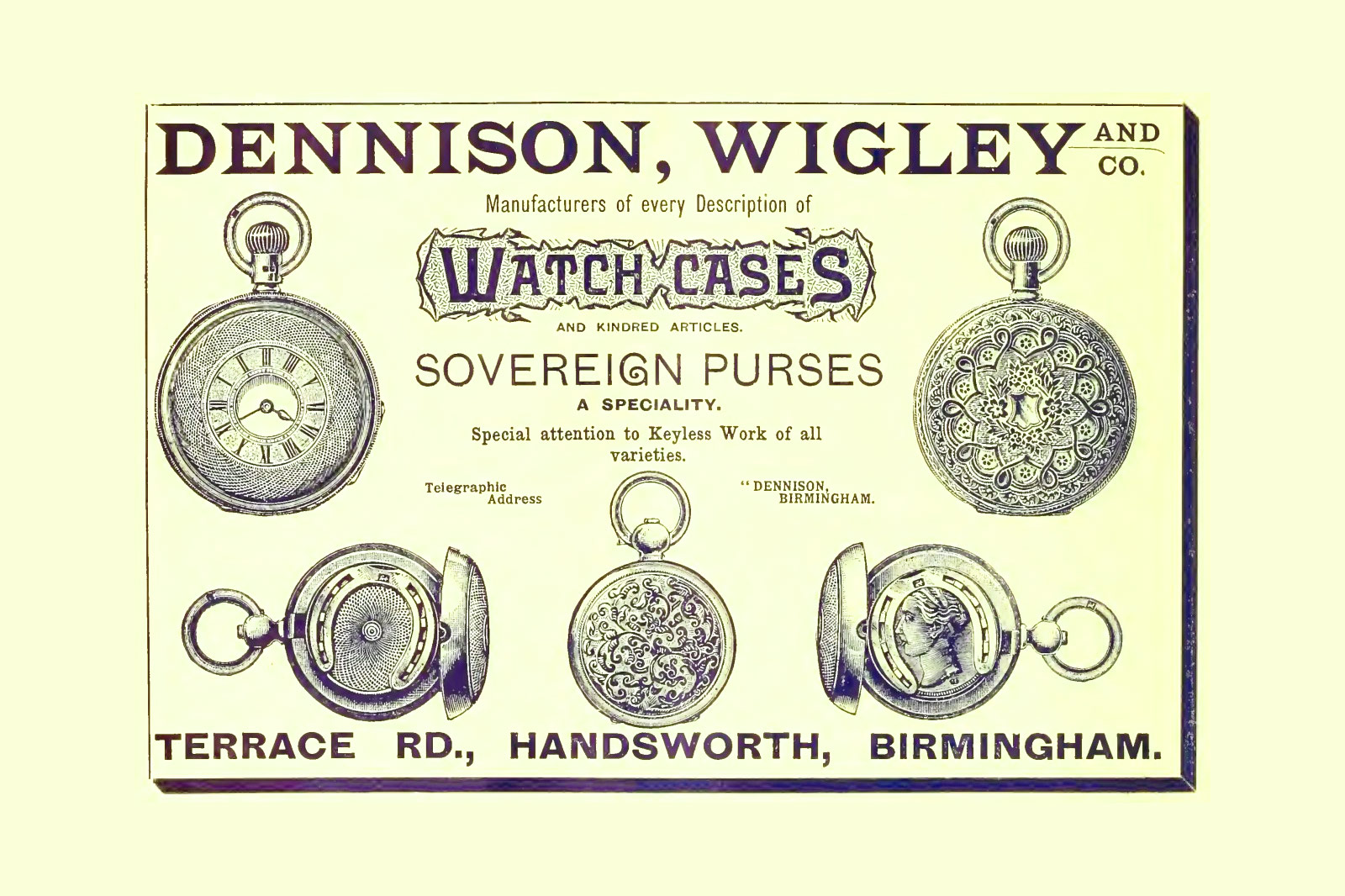
Dennison & Wigley Advertisement (1894)
The last vestiges of Britain’s once-great manufactories closed successively in 1967 with the insolvency of the Dennison Watch Case Company (which had supplied major Swiss brands like Omega, Rolex and IWC and has now, incidentally, been revived); and then when Smiths Industries finally ceased watch production in 1979.
Yet, even as watchmaking disappeared from Britain’s manufacturing landscape, British brands found a way to endure. Their survival was not tied to factories or mechanisms but to something far less tangible: the power of brands to become mirrors for popular culture and people.
As far back as the 19th century, wit, whimsy and surrealism (often with a slice of the macabre thrown in) were the inspiration for writers like Edward Lear and Lewis Carroll. From the nonsense and satire of music hall to the bizarre and sinister world of Doctor Who, this uniquely British perspective became embedded in pop culture during the 20th century. The roots of absurdist lyrics, married to rich music and visual stimulus in progressive rock bands like Genesis can surely be traced to the ‘topsy-turvy’ worlds of Gilbert & Sullivan.
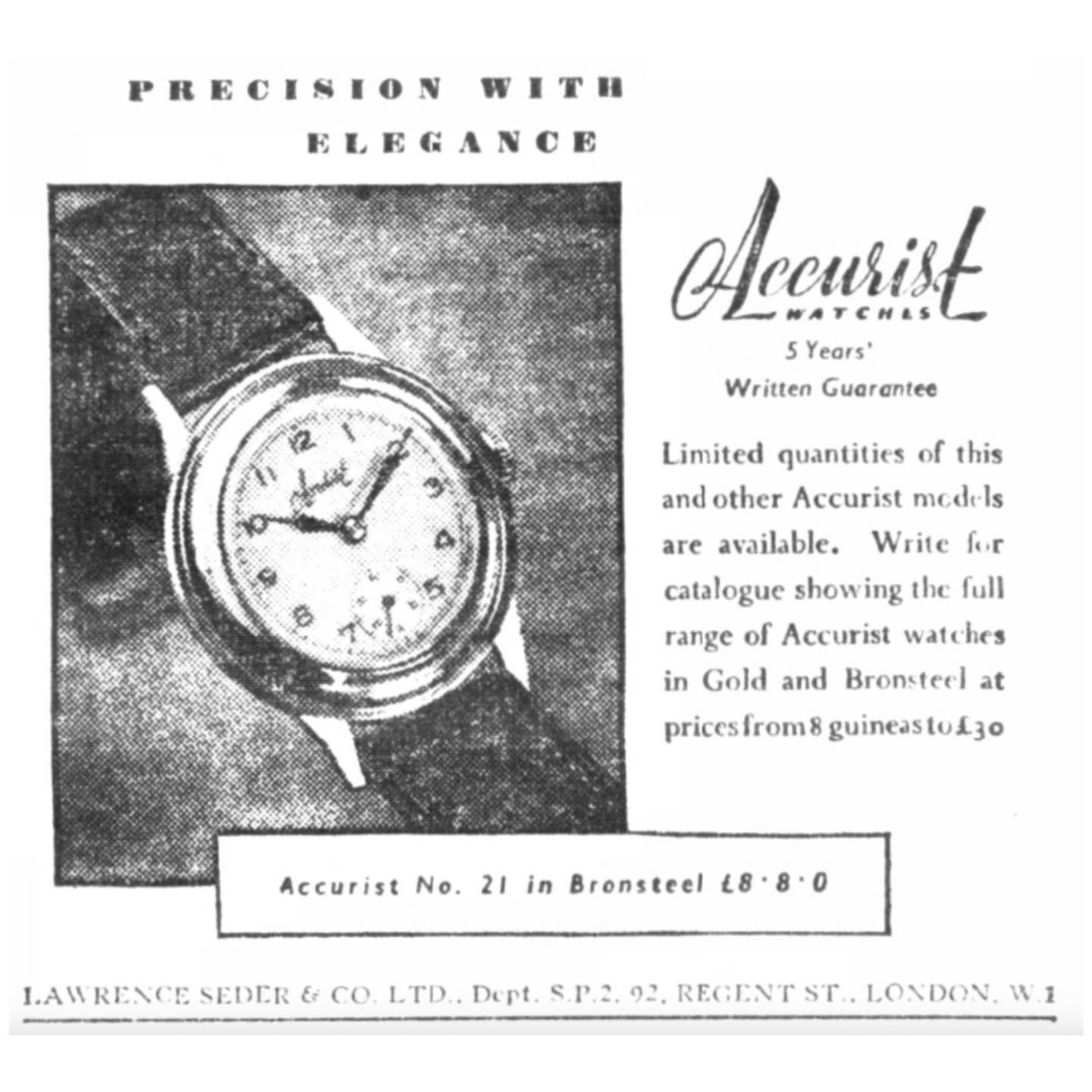
Accurist Advert (1946)
Back to the seventies. British watch manufacturing turns its lights out just as George Daniels begins his lone quest to invent, gain acceptance of his co-axial escapement and take the mechanical fight back to quartz. But two British brands — Accurist and Sekonda — also succeed in keeping watches in the British public’s imagination by infusing this uniquely British sense of fun and irreverence into their brand personalities. In doing so, I believe they informed many of our brands today.
Accurist, founded in 1946, remained a Loftus family business until Time Products acquired the brand in 2014 to complete its impressive stable along with Sekonda and Limit. Since the sixties, Accurist has repeatedly innovated and can be credited with not just some era-defining advertising, but also the clever launch of sub-brands.
The most notable of these has to be the Old England range. Produced by Accurist, it was the brainchild of Richard Loftus and was launched worldwide in 1967. The brand name somewhat belies the products which, as fun, colourful, cheap-yet-chic and fashionable, predated Swatch by about 20 years. Representing a vibrant new teen culture, Old England watches became a craze which was embraced by celebrities such as Twiggy, the Beatles, Elizabeth Taylor, and even Princess Anne.
In 1978, Accurist produced a series of seminal ads with the Lonsdale Advertising agency, featuring John Cleese – the so-called “Accur-ankle, Accu-wrist” campaign. This is at the time of Fawlty Towers, when John Cleese (notable Python alumni) was probably one of the most recognisable and beloved faces in Britain. The campaign was anarchic, proudly silly, and the antithesis of contemporary Swiss brand advertising. It was perfectly British.
Accurist’s ability to casually insinuate the brand into everyday British life was epitomised when, in 1986, they sponsored the Speaking Clock phone service. By the end of its first year, the Speaking Clock had received 13 million calls who heard English actor and former telephone exchange worker Brian Cobby confirm that “At the third stroke the time, sponsored by Accurist, will be…” So, given that the Speaking Clock provided the time by which everybody checked their own wristwatches, Accurist cleverly reinforced its own image as a dependable, quintessentially British brand.
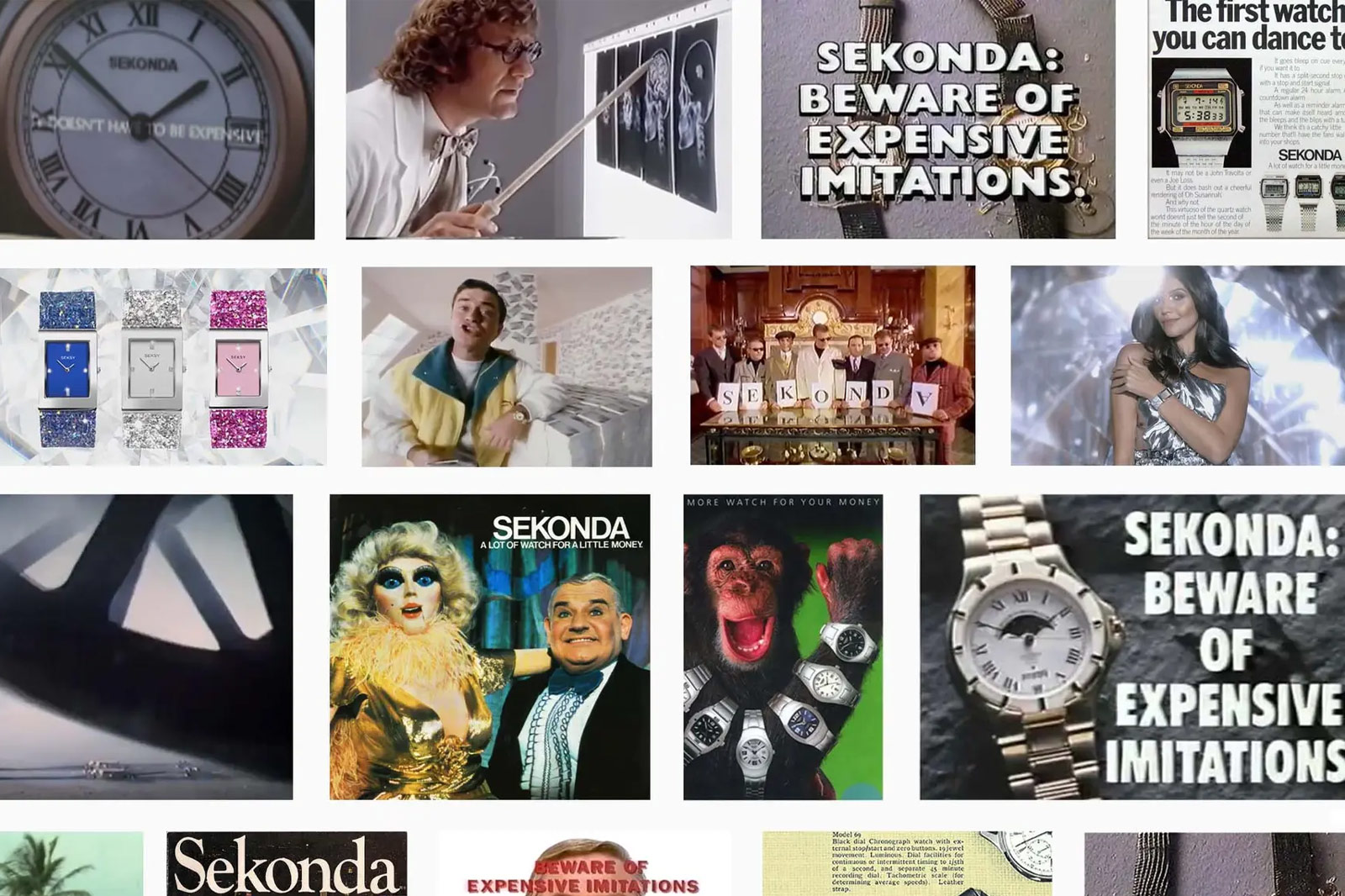
Meanwhile, Sekonda took an entirely different approach. Founded in 1966 as an importer of Soviet-made watches, Sekonda prioritised affordability and accessibility. By the 1980s, Sekonda had become a household name thanks to its bold and funny advertising campaigns starring another household name comedian in Harry Enfield. In a market increasingly saturated with quartz watches, Sekonda distinguished itself, not through technical claims as per their Swiss counterparts, but through wit and relatability.
Ads bearing slogans like, “Beware of expensive imitations” poked fun at the luxury watch market, appealing to Britain’s love of self-deprecating humour. Sekonda presented itself as the smart, no-nonsense choice — a watch for everyday people who valued style without pretence.
These campaigns struck a chord. Accurist and Sekonda may not have been producing watches domestically, but they succeeded in keeping watches culturally relevant during an era of change. By tapping into British values of relatability, wit, and identity, these brands ensured that watches remained more than just functional tools. They became talismans of British personality, pride, and a celebration of our shared sense of humour.

Christopher Ward showcased their watches at British Watchmakers Day including the limited edition C1 Moonphase ‘Mission to Maidenhead’
Today, British watchmaking is enjoying a renaissance. Brands like Bremont, Christopher Ward, Fears, Farer, Mr Jones, and more recently, Studio Underd0g are leading this revival. Each has a unique approach but look beneath the surface and you will find a shared DNA.
Founded in 2002, Bremont’s success lies not just in their technical achievements but in its storytelling. Each watch carries a narrative that speaks to Britain’s adventurous spirit. In the earlier days, founders Nick and Giles English embodied some of the audacity and spirit of Richard Branson. Business was the adventure. Now led by Davide Cerrato, Bremont is squaring up directly to the Swiss with a maturing proposition.
Christopher Ward, launched in 2004, took a more disruptive path. By pioneering the direct-to-consumer model, they made high-quality watches more accessible, bypassing traditional retail markups. The brand wore its Swiss engineering on its wrist from the outset but has infused this with a uniquely British spirit of conviviality. I was amazed to learn that founder Mike France still hand-signs every watch that leaves their new HQ in Maidenhead. When you consider that Christopher Ward is now by far Britain’s biggest watchmaking brand, that is some commitment to that core ethos of remaining accessible.
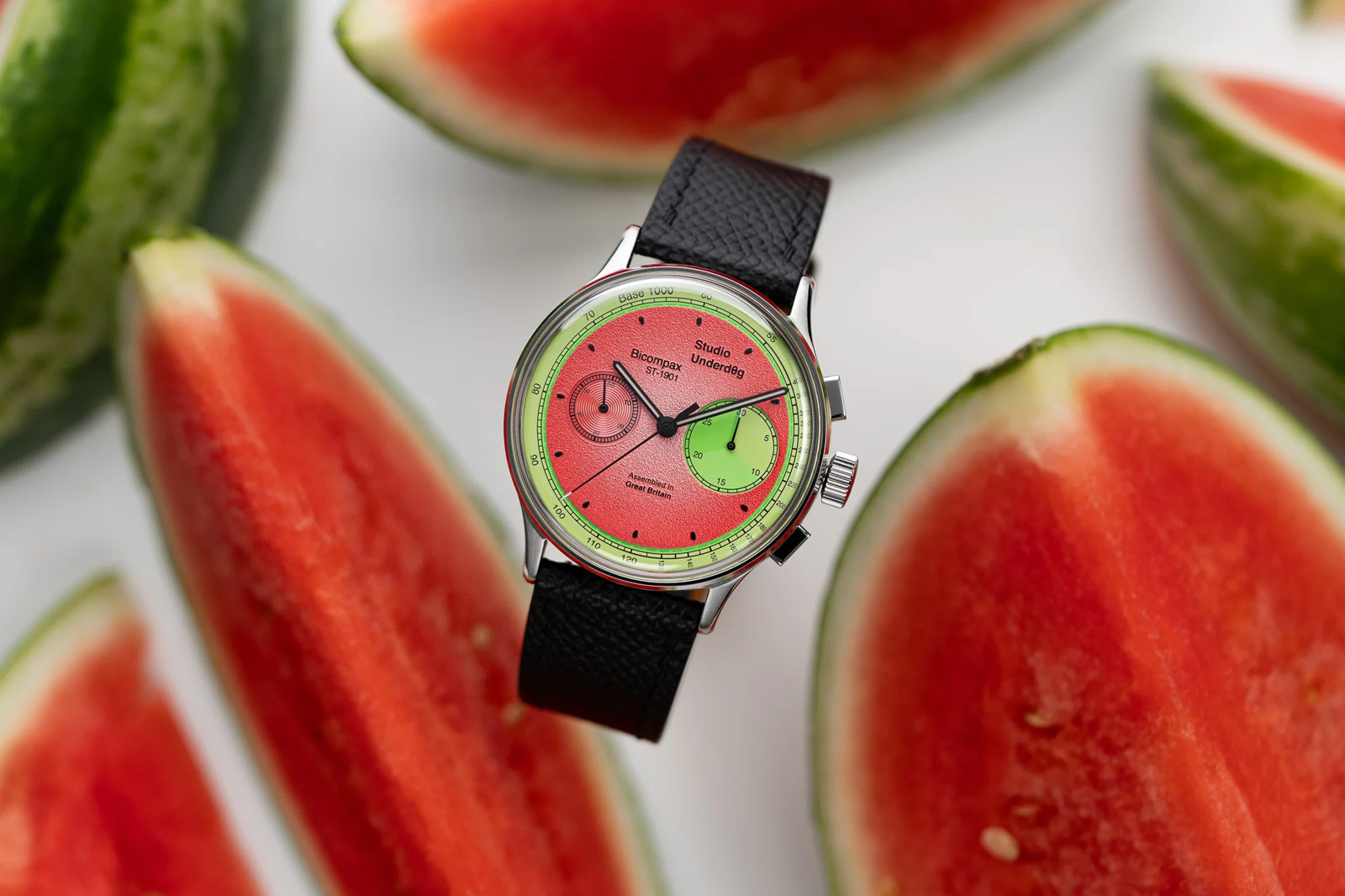
Studio Underd0g Watermel0n
From a design perspective, Mr Jones and Studio Underd0g are the epitome of the influence of British pop culture. Mr Jones watches are guaranteed to put a smile on their owners’ faces with their witty collaborations with artists, which are substantially hand-finished in their London studios. Watches like A Perfectly Useless Afternoon and Berry late are quintessentially British in their irreverent but clever design wit.
As for Studio Underd0g, whose founder Richard Benc started the brand with the avowed aim of poking fun at the luxury watch market, it’s hard to envisage any country other than Britain creating watch phenomena inspired by Watermelons and Pizzas.
Whether you collect a Roger Smith for hundreds of thousands, or an Accurist for hundreds, you’re part of the same club. The success of Britain’s modern brands owes everything to our history of craftsmanship and innovation, but it also draws heavily on the cultural legacy of the 1970s and 1980s. Accurist and Sekonda showed that a watch could be more than a precision instrument; it could be a statement of identity, humour, and pride.

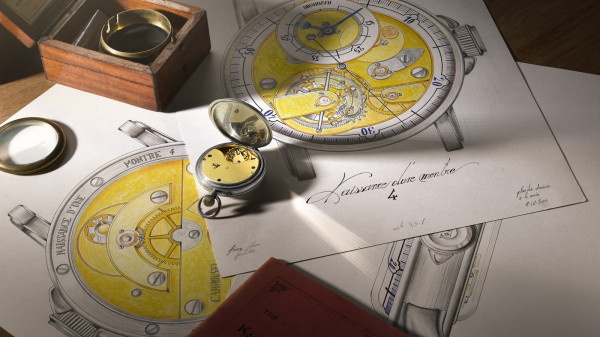

John Harrison’s H4. Accurate to 1 second a Month. Let the world know about our extraordinary horological history.