
OISA 1937 has been positioned as Italy’s mechanical watchmaking renaissance poster child. Originally founded in 1937 by Domenico Morezzi, the company ceased operations in 1978 during the quartz crisis. In 2018, Carlo Boggio Ferraris (Morezzi’s grandson) resumed operations, reviving Italy’s only mechanical movement manufacturer with heritage and “Made in Italy” pride. The compelling narrative included a Locman partnership for market credibility and ambitious promises to challenge established Swiss suppliers.
The narrative is seductive, but I want to understand the reality what OISA represents today. So, I drove to an industrial complex east of Pavia to see, first-hand. the Italian movements being built with components from the same suppliers as Swiss top-tier haute horology brands.
OISA 1937 Production Reality: 300 Movements Per Month Capacity

Walking into the OISA facility, the first thing that strikes you is the deliberate scale. This is not a Swiss manufacture with hundreds of employees; it has seven people, three CNC machines, and a very honest assessment of capabilities. Far from the 2,000 movements previously publicised.
“We can make about 300 movements per month with our current setup,” COO Giancarlo Rota tells me, handling a freshly finished calibre 29-50. “Not 2,000. That was always the theoretical capacity with different machinery. Right now, 300 is reality.”
That reality comes with several caveats. Actual sales don’t yet match the 300-per-month production capability, and custom projects (modifications, bespoke finishing, limited runs) make up an important part of what gets produced. With additional machinery and investment, Giancarlo estimates they could eventually scale to 10,000 units per year, but for now, the growth is intentionally measured.
I had been expecting startup optimism about scaling up. Instead, I got exact numbers: real output, real constraints, and a business model built around quality rather than volume.
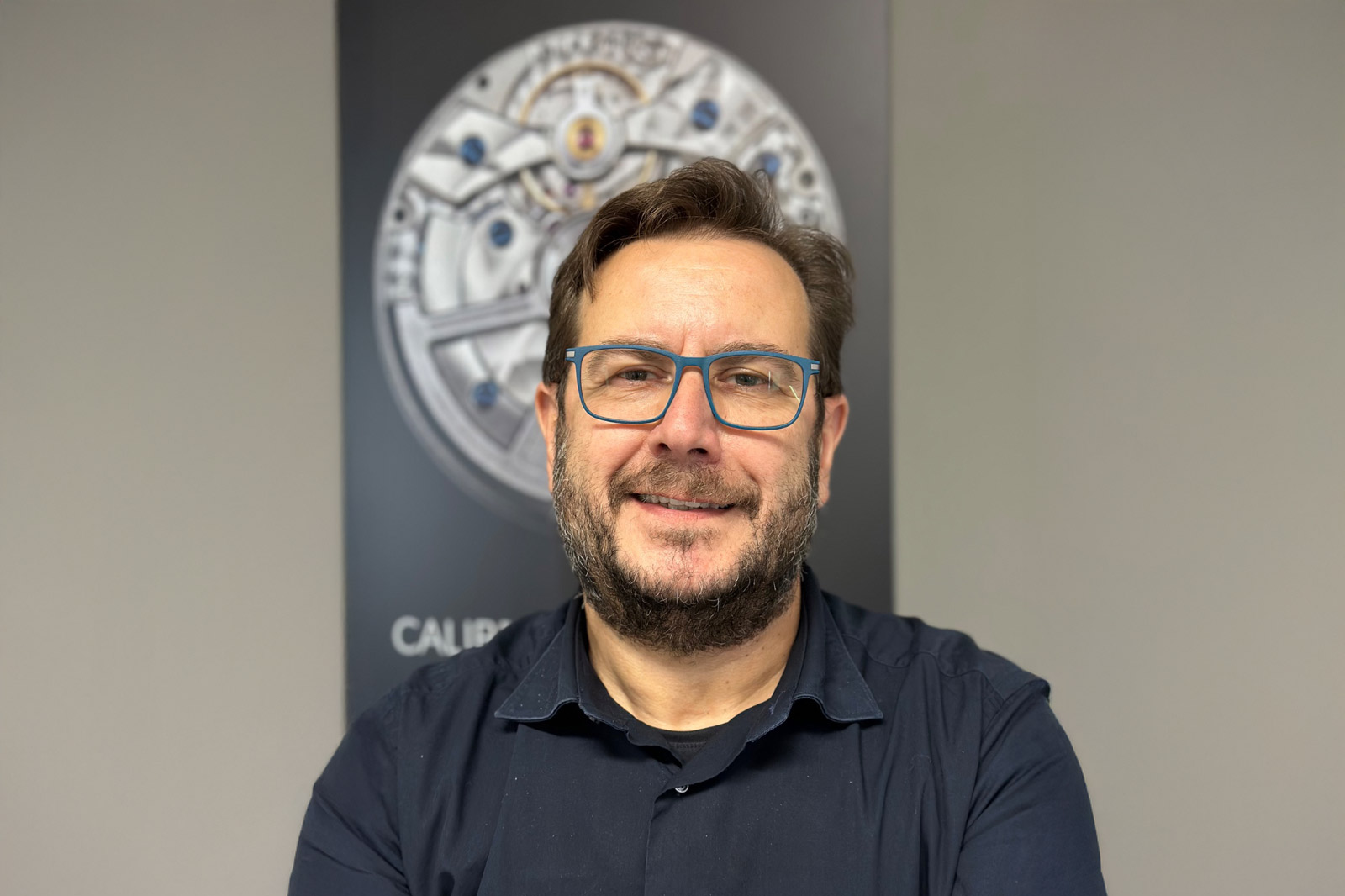
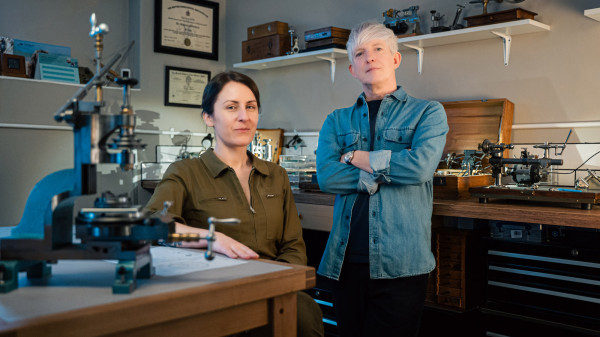
Benedetto Perrotta, CEO of OISA 1937
Then came the ownership acknowledgement explaining why recent OISA coverage felt incomplete. “Locman exited last year,” Giancarlo explains matter-of-factly. “So did Carlo Boggio Ferraris, the founder’s grandson. Different visions for where the company should go.”
Whilst it may have appeared in some reporting, it was never presented as a clear or formal update. The Locman partnership had been central to OISA’s story (their first major client, their bridge to the Italian market). Now they are gone.
The current ownership structure reads like a startup strategic shift: CEO Benedetto Perrotta (the technical founder) maintains majority control, with two private individual investors and Giancarlo each holding smaller stakes. A recent equity crowdfunding campaign brought in retail investors: watch enthusiasts wanting a piece of Italy’s horological renaissance.
“We’re completely independent now,” Giancarlo says, with both pride and uncertainty.
OISA 1937 Movement Components: Swiss Suppliers for Italian Manufacturing

Rhodium-plated calibre ’29-50 Cinque Ponti’ (’29-50 five bridges’) with hand-bevelled edges and perlage visible under the balance wheel.
Holding the calibre 29-50 “Cinque Ponti” in your hand, you immediately understand what OISA is actually selling. This is not a budget movement masquerading as luxury; it is a legitimately high-end calibre assembled in Italy rather than Switzerland.
The specs tell the story: Incabloc shock system, Générale Ressorts mainsprings, Crelier jewels, Kif regulation system. These are the same suppliers serving haute de gamme brands, and the top tier of Swiss manufacturing. The balance wheel features a variable inertia system and is sourced from a top-tier supplier, typically found in significantly more expensive movements. “A standard ETA balance wheel costs a fraction of ours,” Giancarlo notes. “We’re not competing with ETA.”
The finishing work is genuinely impressive. Every bridge receives hand anglage from craftsmen trained by someone who spent over a decade at A. Lange & Söhne. The Côtes de Genève decoration, the perlage, the mirror-polished steel: this is legitimately haute horlogerie finishing.

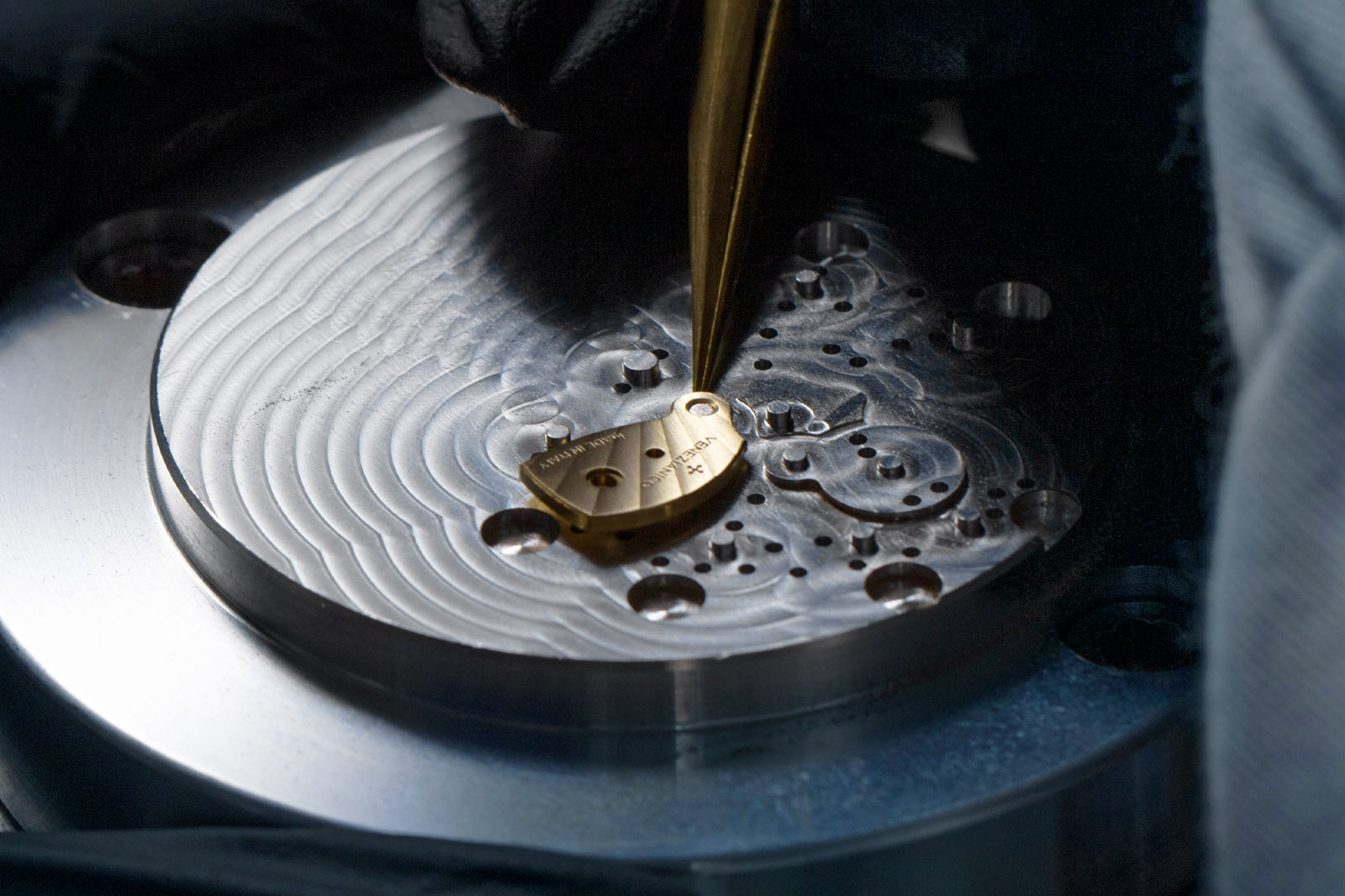
The application of decoration and finishing techniques on the movements is a hand-made process at OISA 1937.
But here’s where the “Made in Italy” story gets interesting. OISA manufactures the bridges and main plates in-house, handles all assembly and finishing, performs final regulation and quality control. Everything else comes from Switzerland.
“The supply chain doesn’t exist in Italy,” Giancarlo admits. “I spent weeks trying to find someone who could make a 0.7mm screw. In Switzerland, that’s a phone call. Here, it’s impossible.”
The reality hit when he described their nickel-plating disaster: 100 bridges sent out for finishing, only 20-30 usable when returned. “We had to throw away 70-80 pieces,” he says. “That’s months of work, because we can’t just call another supplier down the street.”
Italian Watch Movement Pricing: Premium Components vs Market Reality

Watchmakers assemble the movements, perform regulation, testing and final inspection.
This is where OISA intersects with harsh market realities. A high-spec movement like the “29-50 Cinque Pointi” with its level of finishing and component quality needs to end up in a watch selling for €4,000–€6,000 to make economic sense. In Italy, exactly two brands can realistically support that positioning.
“The maths is simple,” Giancarlo explains. “We’re premium-priced because of our component choices and finishing level. If you want a movement with a high-grade balance assembly and hand anglage on every bridge, this is what it costs.”
The microbrand market, which includes names like Baltic and Furlan Marri and typically operates in the €500–€3,000 segment, simply can’t absorb OISA’s pricing. It’s not a failure of marketing; it’s fundamental economics.
Interest from higher-end independents (those operating above the microbrand tier but below traditional haute horlogerie) was evident during OISA’s participation in the most recent EPHJ salon in Geneva. These design-led and engineering-driven makers recognised that OISA offers something genuinely different from standard supplier movements. “Large-scale movement manufacturers won’t do hand anglage,” Giancarlo notes. “They won’t customise bridge shapes. We will, because that’s our business model.”
OISA 1937 Complete Watches: From Movement Manufacturer to Titanium Timepieces

Venezianico Redentore Utopia
Without Locman, OISA has reimagined its approach. The most successful recent collaboration illustrates their direction: Venezianico, the Italian micro-brand achieving remarkable growth.
“They wanted their own calibre,” Giancarlo explains, showing me the made-to-order 29-50 powering Venezianico’s limited editions. When they launched their 100-piece limited edition with the custom OISA movement, it sold out in minutes.
The most significant development is OISA’s move into complete watchmaking. This November, they will launch their first complete timepiece: a titanium watch powered by their new calibre 29-60 automatic movement.
“It will be the first watch with an Italian automatic movement,” Giancarlo tells me, handling a 3D-printed prototype of the 40mm titanium case. “We’re not rushing this. We want to do it right.”
The specifications reveal OISA’s commitment to their movement philosophy. The titanium case is being manufactured by an artisan near Como, maintaining Italian production without compromise. Thickness stays under 12mm despite the automatic movement’s height. Dual straps will be included, with potential titanium bracelets if they can source it to their standards.
“We could launch tomorrow with components from anywhere,” Giancarlo explains. “But that’s not who we are. If we’re making watches, they have to follow the same principles as our movements: quality first, proper sourcing, no shortcuts.”
The €4,000-€4,500 pricing positions it where OISA’s value makes perfect sense. The transparent caseback is a given; when your core competency is movement finishing, hiding it would be counterproductive.
“The movement is our DNA,” he continues. “Everything else has to meet the same standard. We won’t dilute what we’ve built by rushing into watchmaking.”
New Italian Watch Movements: OISA 1937’s Automatic Calibre Development

The calibre 29-60 Automatic features ‘Michelangelo’ decoration on both the tungsten, gold-plated bidirectional rotor and the bridges. The rotor system operates on ceramic ball bearings, whilst perlage decoration adorns the main plate beneath the balance wheel.
The calibre 29-60 automatic represents OISA’s first completely new development since launch. “We built it as a module on top of the 29-50 base,” Giancarlo explains. “The time train is proven, so why reinvent that? But the automatic winding system is completely new.”
One standout feature of the 29-60 is its tungsten rotor, which is optimised for winding efficiency rather than cost savings: an example of OISA’s consistent prioritisation of performance over compromise.
More intriguing is a development Giancarlo revealed to me during our interview: a collaboration with an independent engineer on a completely new escapement and regulation system. “It’s genuinely innovative,” he says. “Something that doesn’t exist in the market currently.” The outcome of that collaboration is expected to debut in 2026, adding a bold technical dimension to OISA’s future trajectory.
A moon phase complication, also planned for 2026, represents another development milestone, not because of market demand, but as a demonstration of OISA’s capability to go beyond standard three-hand calibres.
Italian Mechanical Watchmaking: OISA 1937’s Manufacturing Strategy


OISA 1937 Serie Skeleton
After spending a day with the actual numbers and honest market assessment, the OISA story becomes more nuanced than media narratives suggest. This is not a triumphant return challenging Swiss dominance. It is something more interesting: a genuinely high-quality operation finding its niche in the gaps of the Swiss system.
Supply chain limitations are real and unlikely to change. But within those constraints, OISA has carved out something unique: Swiss-quality movements with Italian finishing sensibilities, genuine customisation capabilities, and now complete timepieces embodying the same philosophy.
“We’re not trying to be the next Rolex,” Giancarlo tells me. “We’re trying to be the best at what we actually can do. Whether that’s movements for other brands or our own watches, the standard stays the same.”
That consistency (in component choices, finishing standards, and quality expectations) makes OISA’s expansion into complete watchmaking feel like natural evolution. The November titanium watch launch will be telling. Not just as a product, but as a statement of what Italian horology could become when built on genuine technical competency rather than marketing romanticism.
As our conversation winds down, I ask Giancarlo to describe OISA in three words. He pauses, considering.
“Giovane, innovativa, caparbio,” he says finally. “Young, innovative, stubborn.”



Really interesting story. I hope they can succeed