

Let’s have a look back at the rich horological past of the grand old USA. It’s a story that could be called the rise and fall of American Watchmaking in the 19th and 20th centuries, and to steal from Star Wars: A New Hope. American 19th-century watchmaking emerged as a response to Europe’s dominance in precision timekeeping. Fuelled by the efficiency of industrialisation, wartime demand, and pioneering engineering, the U.S. became a global leader in watch production before ultimately succumbing to foreign competition.
The Birth of an Industry

In 1850, Aaron Lufkin Dennison partnered with Edward Howard and Samuel Curtis to establish the American Horologe Company in Roxbury, Massachusetts, which was later renamed the Waltham Watch Company. Their first successful model, the Waltham Model 1857, introduced interchangeable parts —a revolutionary concept that reduced costs and improved reliability. During the Civil War (1861–1865), demand for durable, accurate watches saw Waltham supplying Union officers with its William Ellery model, solidifying its reputation as competitors, like the Elgin National Watch Company (1864), emerged in Illinois. Pioneers that are sadly absent from today’s market.
Some of these early American manufacture brands are still around today though. For example, in 1892, the Hamilton Watch Company from Lancaster, Pennsylvania appeared. Like many of its day, the company specialised in railroad chronometers, such as the Hamilton 992. On the same theme, our latest watch collaboration, the Ball x Oracle Time Engineer II Dazzle, is from a brand founded by Webb C. Ball in 1891. Ball established strict railroad timekeeping standards, inspecting watches for accuracy and durability and “Ball Certified” became a mark of American excellence. During this period, it is also notable that Henry Ford’s assembly line innovations inspired and influenced the watch factories of the day, offering production speeds and weekly output far surpassing what European manufacturers could muster.
Depression, War and Crisis
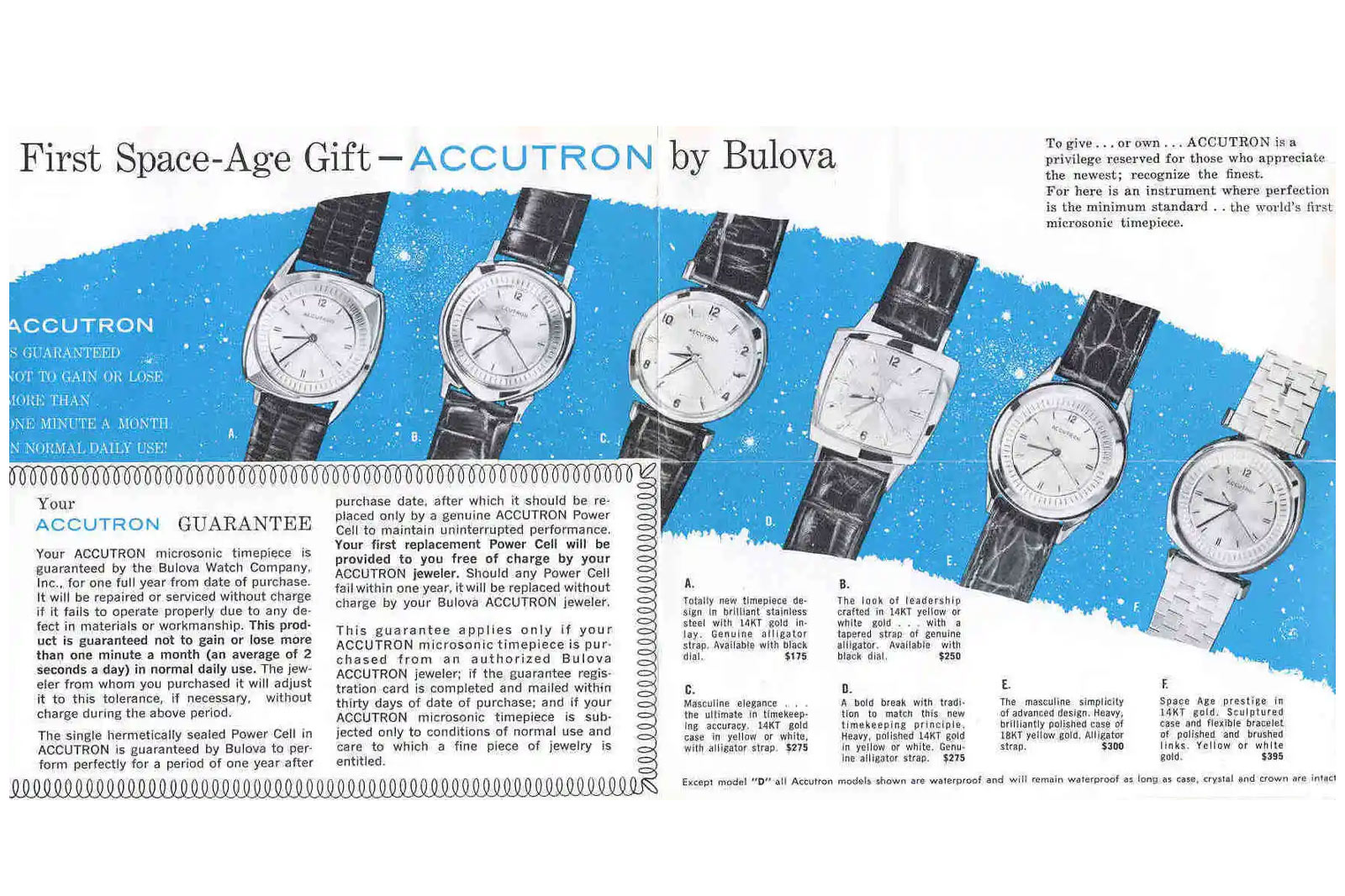
The Great Depression devastated many watchmakers, as it did virtually every American industry, but many were able to cling to life. World War II revived demand for their products and companies like Bulova (founded in 1875 by Joseph Bulova) supplied the U.S. military with rugged A-11 pilots’ watches, earning the nickname “the watch that won the war.” Post-war, American innovation continued with innovations like the Bulova Accutron (1960), the world’s first electronic watch. However, like the Swiss industry, the Quartz Crisis of the 1970s devastated mechanical watchmaking, and American companies, slow to adapt, collapsed or were sold.
Those that did survive, brands like Ball, Hamilton and Bulova, may still offer great value for money, but they are no longer produced in America. Having moved base to Switzerland or further afield in Japan, Hong Kong or China. In short today they are American in name but not American-made. But that is not the end of the story for American watchmaking as there is a new breed of independents on the rise. Within the past couple of weeks, watchmaker Josh Shapiro and the Cornell Watch Company released new watches that prove a point. It is possible to move beyond the accessible, often Chinese-manufactured ease of Microbrand success and embrace the challenges of increased in-house, small-scale production right at home in the USA.
Infinity Series Pure by J.N Shapiro Watches


Josh Shapiro has risen to distinction with his take on classicism, boasting intricate, traditionally crafted guilloche dial work. It’s in the same vein as RGM and our home-grown bespoke watches by Garrick, and I will not claim that $26,000 is affordable, but with the sum of its hand-finished parts it sure feels like it. It distils Josh Shapiro’s intricate craft down to an eminently wearable 37mm size. With a dial centre featuring Shapiro’s trademark Infinity Weave guilloche pattern and signature hands, it is a slim and discreet talisman that speaks volumes about the brand’s distinctive style. “We put more work into the dial and hands than most brands do for an entire watch at this price point,” Shapiro emphasises.
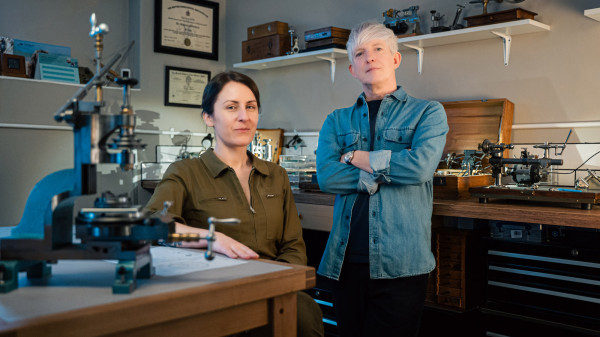
All guilloche at Josh Shapiro’s workshop is done by hand on rose engine lathes, like Swiss artisans would have done a century or two ago. This is one of the reasons each of the Pure iterations will only be made in 18 examples and are planned for delivery within 2025. One features white gold hands on a blackened zirconium dial, the other with rose gold hands on a frosted silver dial. Each watch showcases J.N. Shapiro’s commitment to the time-consuming craft of making watches on a small scale and is crafted by a team of 14 in a 7,000-square-foot workshop. The Pure features the 90-hour power reserve of a La Joux-Perret F200 movement and is a svelte 8.4mm thick, including the crystal. Consider this a beautifully executed entry ticket to the world of Josh Shapiro, whose brand’s catalogue includes the Resurgence, featuring the Manufacture movement, with bespoke options starting at around $70,000.
More details at J.N.Shapiro Watches.
Lozier by The Cornell Watch Company
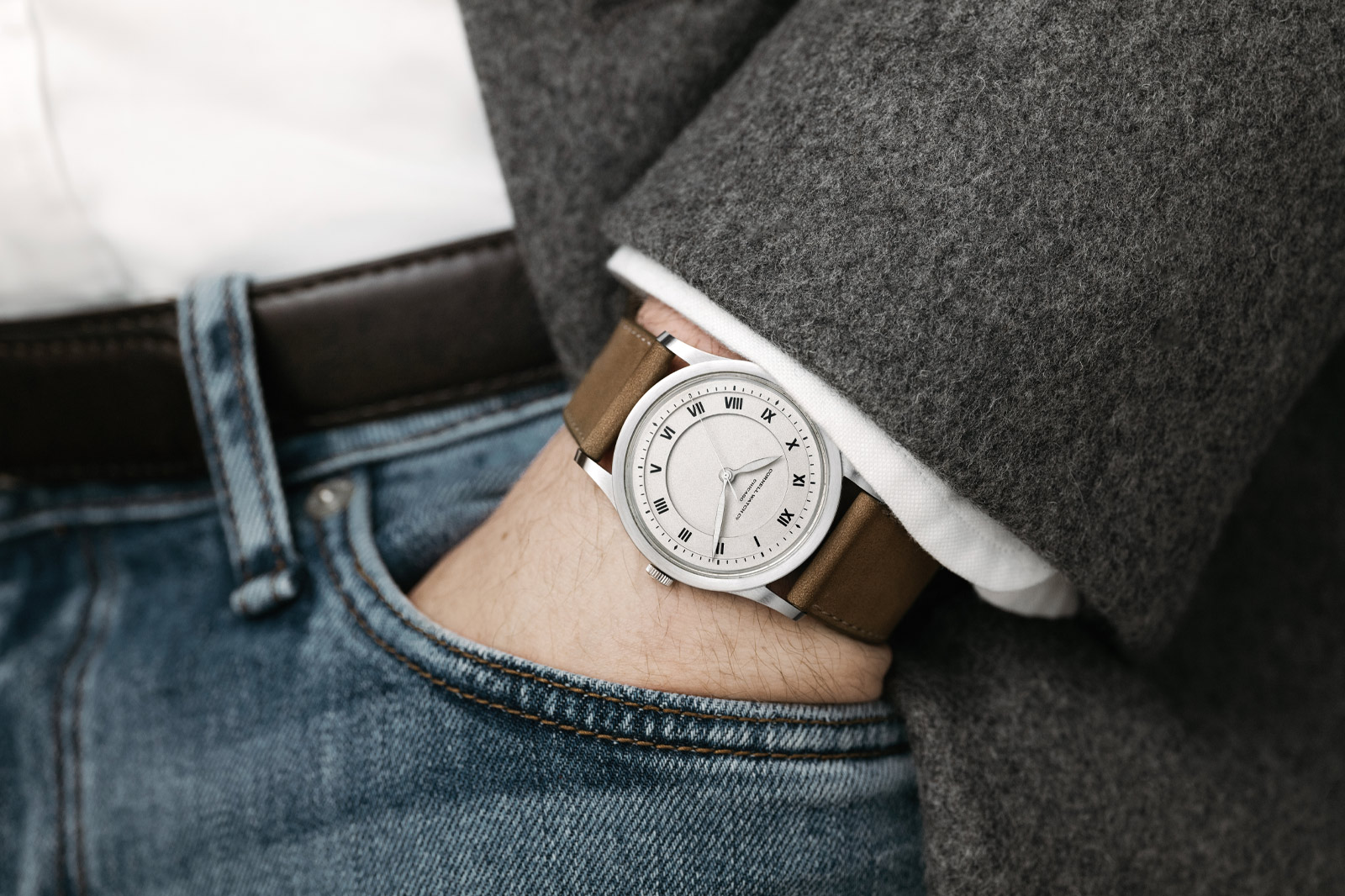
The Cornell Watch Company has roots dating back to 19th-century Chicago, being founded in 1870. However, its brief success was cut short by the Great Chicago Fire and subsequent financial troubles. John Warren, a Chicago collector, revived the brand in 2024, and released a new small-cased design that caught my eye. More recently, the Lozier is a cool departure from the brand, still keeping it within a vintage context but sans the pocket watch dial aesthetics of their first model. In fact, it looks similar to a few Japanese independents, but has a 37.4mm small-cased language all its own.
As a small brand, John Warren’s Chicago-based Cornell Watch Company has the inspiration to move into full US-sourced production eventually. The Lozier features a proven Sellita SW300 movement, but the rest is home-grown, right down to a proprietary typeface design for the Roman Numerals, called Chicago Roman. The minimal-chic case has been manufactured on IWC-standard CNC machines at Hour Precision in Ohio, and this is also the case for the crown, German silver dial and ‘Cornell Leaf’ hands. At $6,200, the Lozier represents a strong showing of small-scaled industrial force, and its three-step dial has a distilled sense of perfection. We might not be seeing American-made movements and the like yet, but the first pebbles of the American renaissance have started rolling and a landslide is sure to follow. So long as tariffs don’t unintentionally nip it in the bud.
More details at Cornell Watch Company.



Great article on the new boys in American watchmaking, – the background history of the American watch market and sad demise of the greater part of said industry was interesting and profound.
I’m a big fan of Bulova watches and have a few in my collection, one of which dates back to the late 1930’s, not only is it beautiful, it also still keeps fantastic time, so a testament to their longevity and accuracy. I also have an Accutron ll which it is claimed to have an incredible accuracy, far greater than many “high end” Swiss watches. WRT the accuracy of Bulova watches, I am led to believe that they were also used on the Apollo 15 mission and also by the pilots of the CIA high altitude cold war spy planes over Russia, so further acceptance of this brand.
But now to the new boys initial offerings. Sadly I personally see these as a bit bland when compared to certain European micro brands, and at a price point that defies logic. But, let us be hopeful that others are able to support these twin ventures.