In the late 1980s, Ulysse Nardin was at a crossroads. Once renowned for their beautiful marine chronometers, the quartz crisis had hit them hard. They were struggling and were looking for a way to get back on the map – and in 2001’s Freak, they instead found themselves charting entirely new territory.
The 2001 Freak is a legend of contemporary haute horology and made a legend too of the man behind it, watch designer Ludwig Oechslin. It’s worth noting however, that Oechslin was never the first port of call for then-CEO Rolf Schnyder. It was simple serendipity that brought the two together.
“When he came to Lucerne to see master watchmaker Jörg Spöring,” explains Oechslin, “I was working in the atelier on an astronomical clock, an astrolabe. Rolf examined the piece carefully and was interested not only in the mechanics, but in the conceptual approach behind it. He asked a very direct question: ‘would it be possible to create something like this as a wristwatch?'”
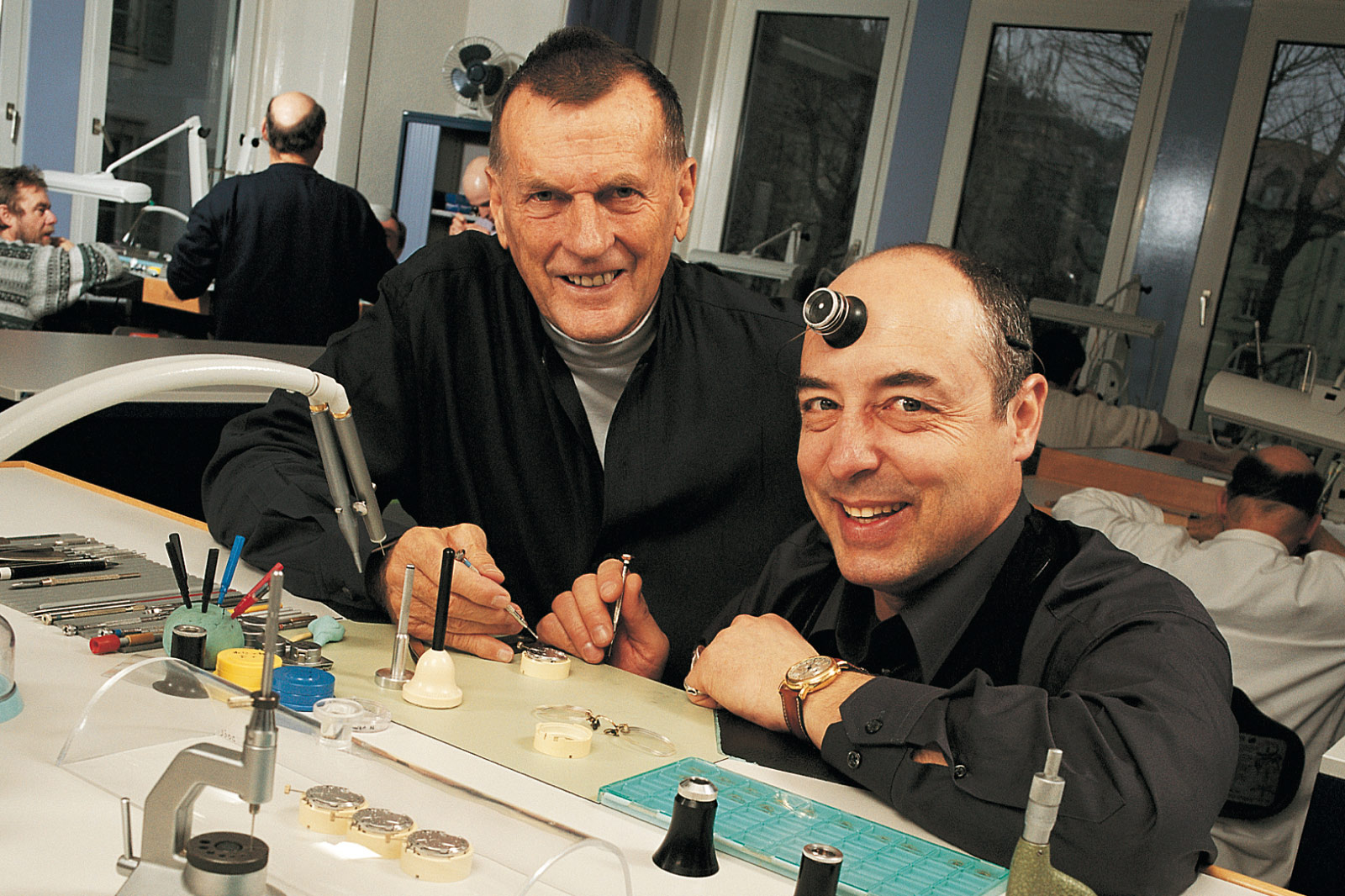
From there, Oechslin was recruited for a series of Ulysse Nardin high complications, dubbed the Trilogy of Time. While the three watches – the Astrolabium Galileo Galilei, the Planetarium Copernicus and the Tellurium Johannes Kepler – were high horology at its finest, it wasn’t until 2001 that Oechslin made what would become his most enduring contribution to watchmaking.
In some projects, the design comes first, the name second. Not so with the Freak. Ulysse Nardin wanted something disruptive from the ground-up and Freak was the internal code-name, like Blue Harvest for Return of the Jedi. But as Oechslin says, “the name “Freak” was itself a lightning bolt.” And the name stuck.
The Freak’s initial prototype didn’t come out of the blue. The idea of a rotating movement was taken from a piece by the tragically under recognised Carole Forestier-Kasapi. In 1997, she won the Prix de la Fondation Abraham-Louis Breguet with a crownless watch concept in which the mainspring was housed in a huge barrel that stretched the diameter of the case, set using the bezel. It was a completely original interpretation of how a watch works. It was, in essence, the proto-Freak.

The problem was it was nowhere near a production timepiece. It was a handmade proof of concept, designed to illustrate Forestier-Kasapi’s technical ideas, not to actually hit the market. One of the biggest issues was that it took a lot of energy to operate but didn’t have room for a large enough mainspring. Then, it made its way into the hands of Oechslin.
“I made the rotating movement serve as the time display,” says Oechslin of the development. “The barrel, turning once every 12 hours, indicated the hours, while the movement itself, rotating once per hour, showed the minutes. At that point, it became not just provocative, but a fully functional and readable watch.”
Suddenly Forestier-Kasapi’s disruptive concept became an intuitively readable watch, its carousel movement doubling as an indicator. It was still a technical showpiece, but one that could be scaled onto collectors’ wrists.
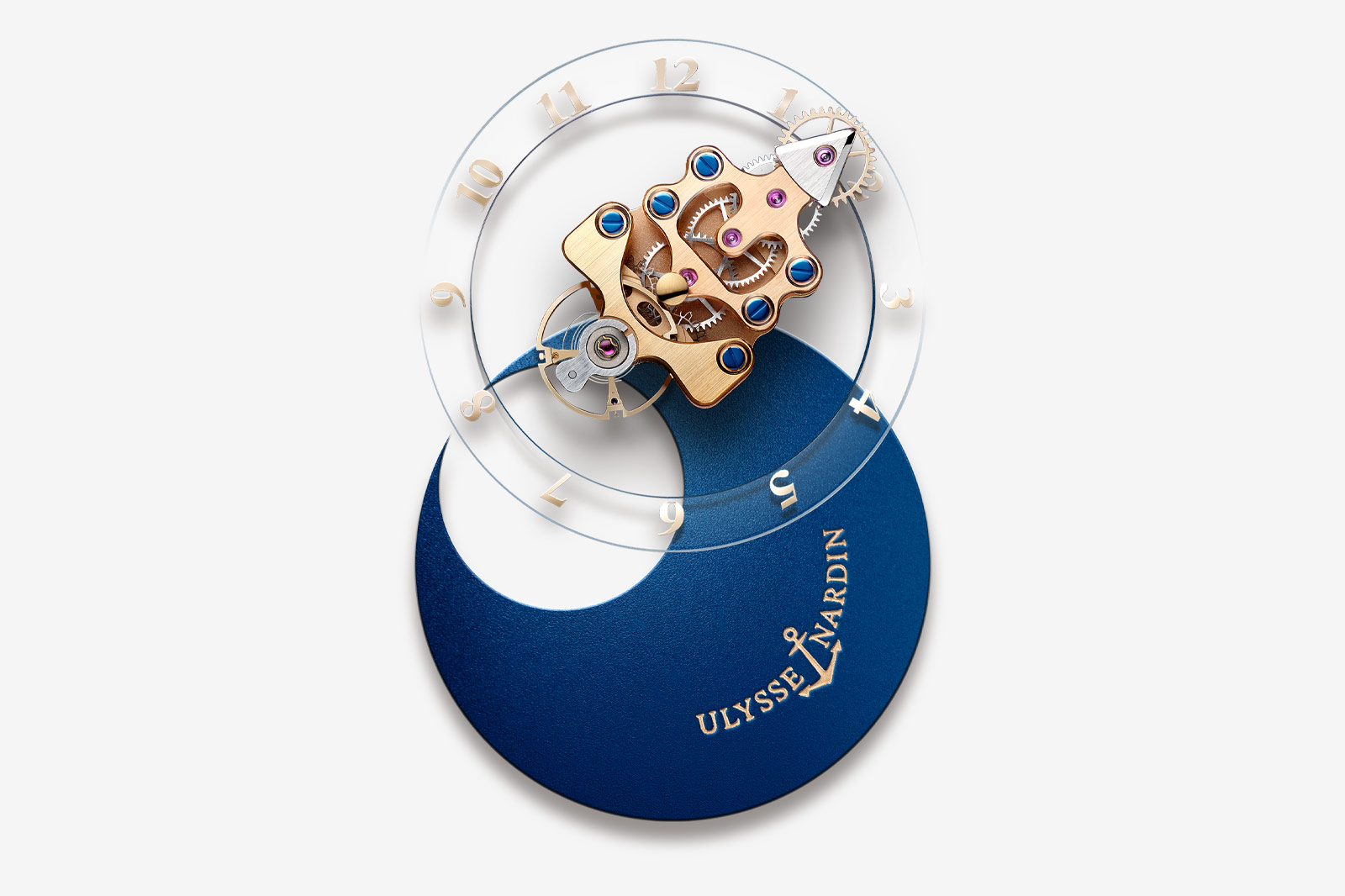
It’s worth noting that, along with moving the timekeeping to the centre, Oechslin added two other advancements to the Freak. The first was to bring the mainspring central too and put it underneath the movement. This helped with “energy control”, as the watchmaker puts it, the new location allowing for an exceptionally long mainspring, thus upping the power reserve to an impressive seven days. It fixed arguably the biggest problem with Forestier-Kasapi’s original concept, even if the necessary caseback winding system proved a little awkward to interact with. The second advancement, however, was more groundbreaking: silicon.
The inclusion of silicon wasn’t arbitrary; it came from the development of Oechslin’s own new escapement. The Freak didn’t necessarily need a new escapement to work, but the mechanism was the talk of the industry, ever since Omega industrialised the Daniels Co-Axial escapement in 1999. And so Oechslin came up with a novel, dual-wheel version called the Dual Direct Escapement. While its accuracy performed well in tests, its aluminium wheels just didn’t last. They just weren’t built to cope with the force. And so, Ulysse Nardin turned to silicon.
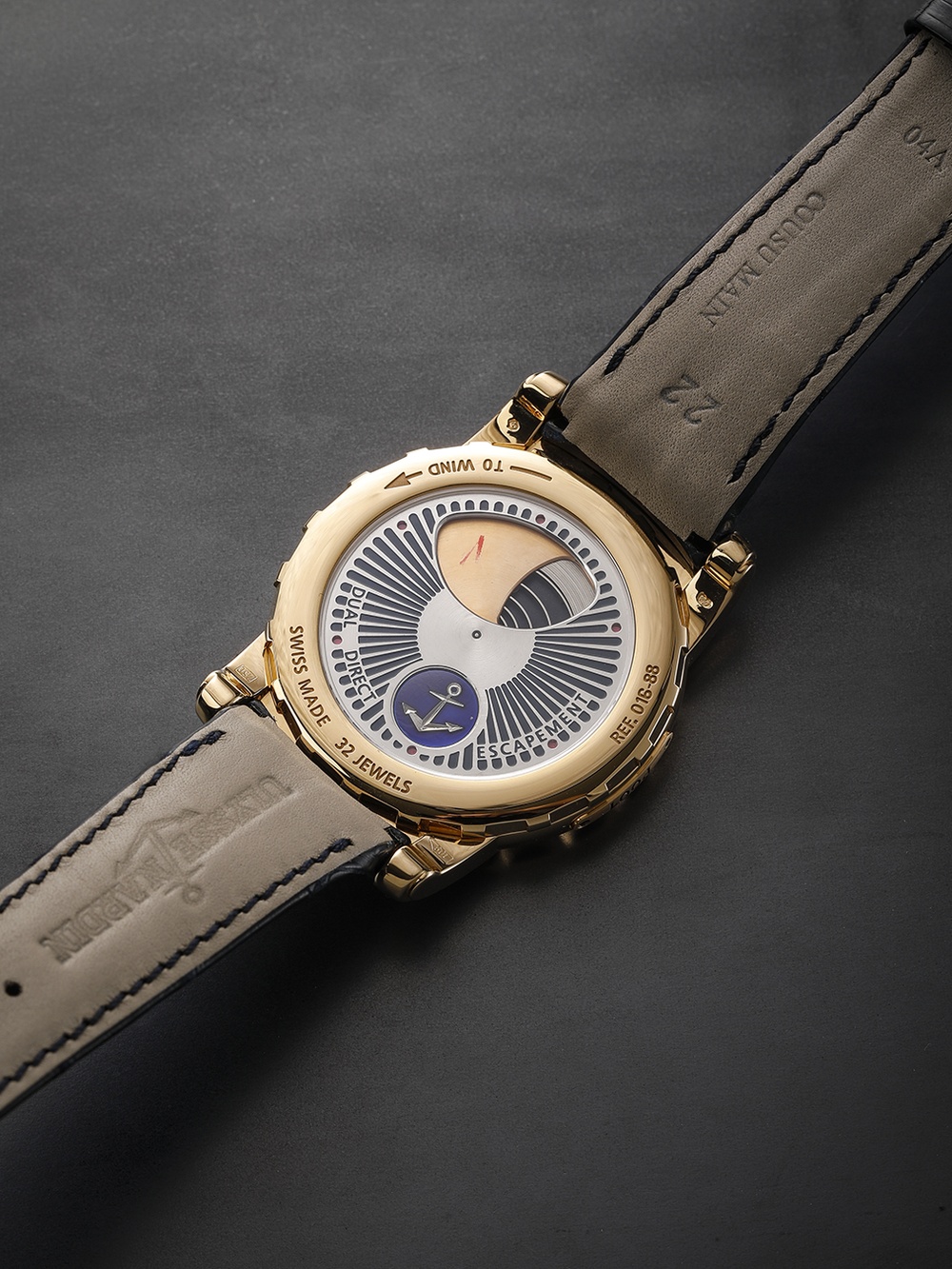
Silicon is perfect for watchmaking. It’s resistant to temperature, corrosion, magnetism, friction and shocks. It can also be formed into incredibly complex shapes, far more delicate than anything that could be made by hand. It solved the final problem of Oechslin’s new movement – at least, for now.
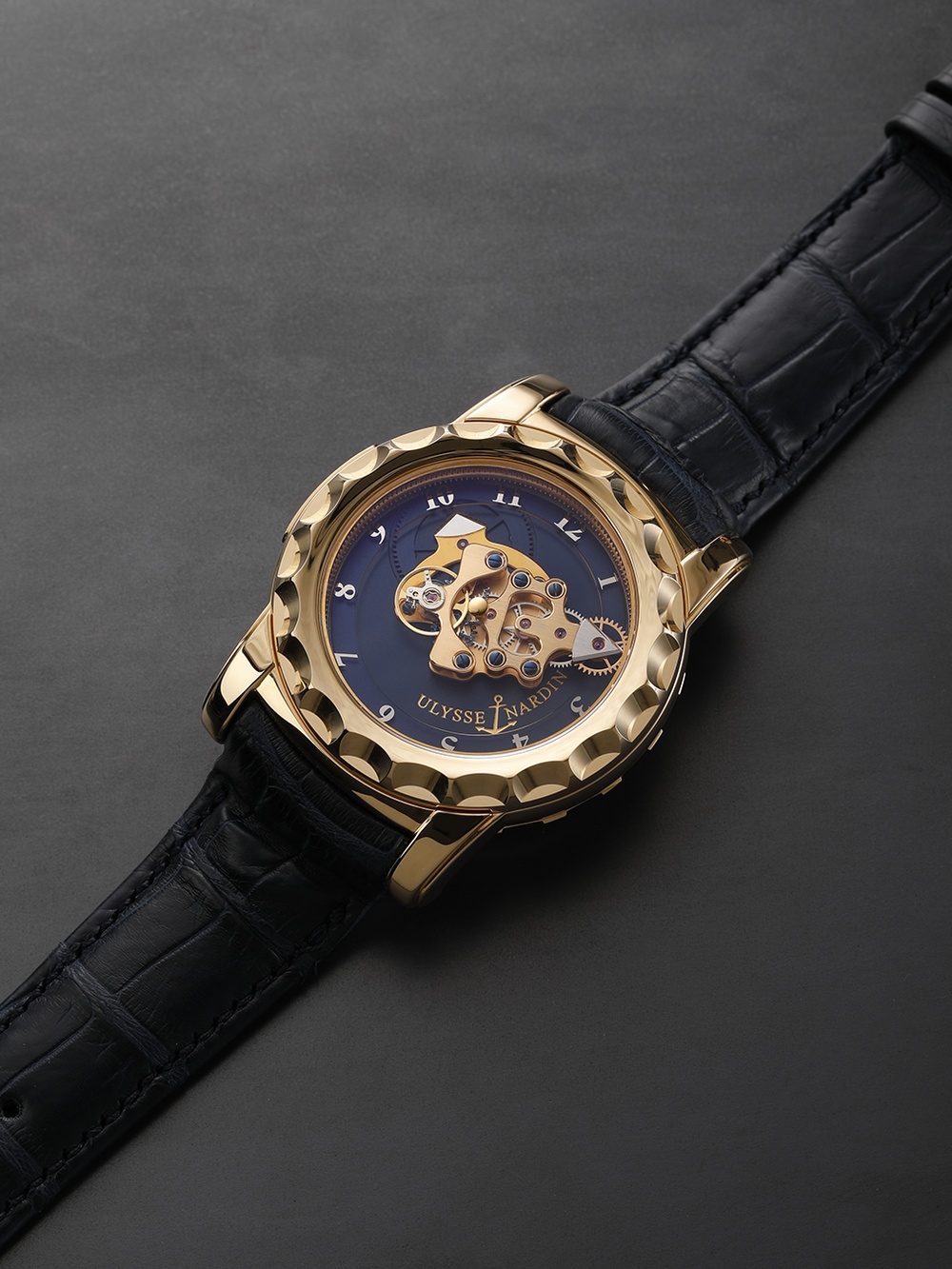
That movement kept Forestier-Kasapi’s time-setting bezel setting system, though Oechslin refined the aesthetics, adding a bottle cap-like wave to not only allow an easy, precise grip but as a nod to Ulysse Nardin’s underexplored maritime heritage. Indeed, despite its genuinely disruptive concepts, there’s a clear line from the UN marine chronometers of the 1800s directly to the Freak.
In 2001, the Freak finally hit the market and changed modern watchmaking. It wasn’t just a product of rigorous horological study, but one of the stars aligning. But the renowned polymath is also a historian of timekeeping, the man who reconstructed the ancient Antikythera mechanism. So, what does he say of his opus’ place in the history of watchmaking?
“The Freak appeared at a time when classical mechanical watchmaking was returning after the Quartz Crisis. The focus then was on rebuilding traditional know-how. With the Freak, this know-how was not only restored, but reconsidered.”
It wasn’t all rosy for the 2001 Freak however. Like any true disruption, there were significant teething problems that came from its untested innovations.
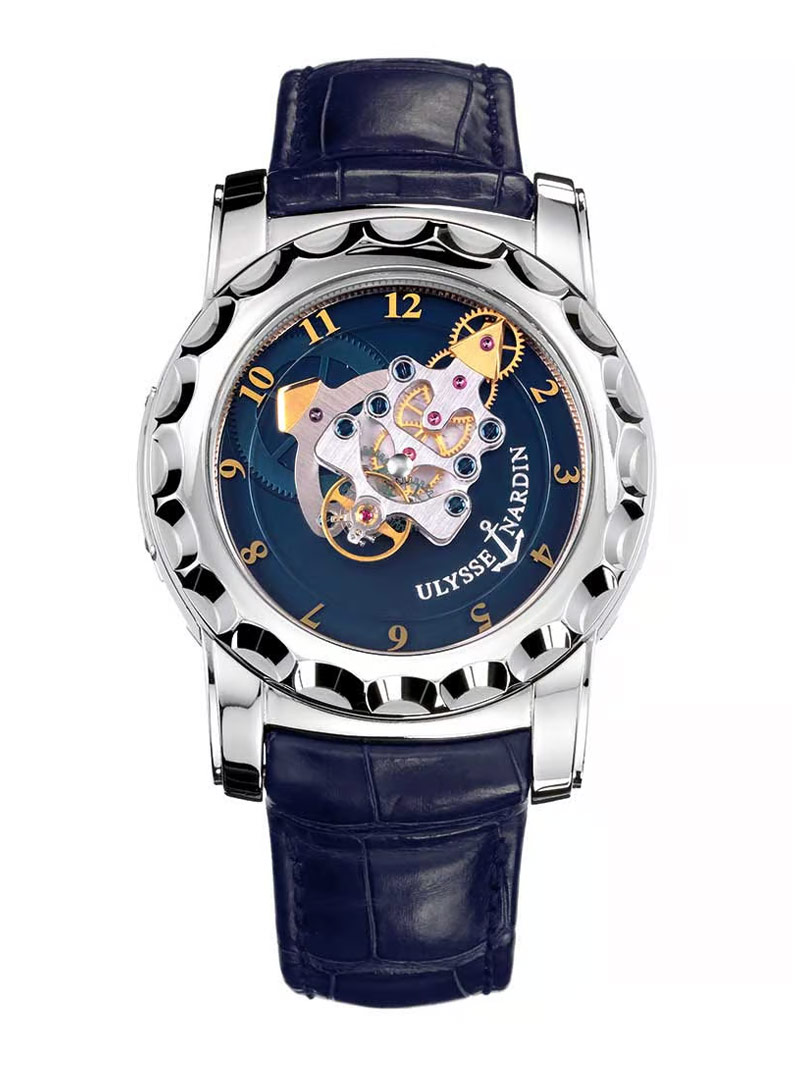
First and most obviously, was the setting crown. Rather than being kept in place by teeth, the crown was only held in place by friction. This meant that it was frustratingly easy to nudge and unintentionally un-set the time, especially given the size and prominence of the bezel.
Then there was Oechslin’s new Dual Direct Escapement. It performed well in tests, and the new silicon components brought genuine advancement to the industry, but in the field, it was worryingly prone to malfunction. It seems like in the perfect conditions of the lab it was a superior approach but lacked the stability to live in the real world.
These were serious problems for early adopters of the Freak, despite the watchmaker fixing them in the next generation of watch. In the decades since, Ulysse Nardin had continued to iterate with numerous versions of the design, ranging from the entry-level Freak X Titanium, priced at £23,750, all the way up to £142,010 Freak S Enamel.

It’s perhaps surprising then that you can get an original version for a good deal less. Depending on condition (which given the volatility of the movement can vary wildly) you can buy one for around £18,000 preowned. Given the importance of the first Freak, that’s a lot of watch for the money – and Oechslin himself is unambiguous about which version he himself prefers:
“Each evolution of the Freak introduced new technical solutions and pushed the concept further. After its launch, the Freak developed its own dynamic, with continuous innovation over the years. In my opinion, many versions are technically impressive in their own right. However, the original Freak remains the purest expression of the idea. It was the most radical step, and in that sense, for me, remains the strongest.”

![Ulysse Nardin Introduce Freak [One Blue Enamel] and Freak [One Guilloché] for 25th Anniversary](https://oracleoftime.com/wp-content/uploads/2026/09/Ulysse-Nardin-Freak-ONE-Featured-600x337.jpg)