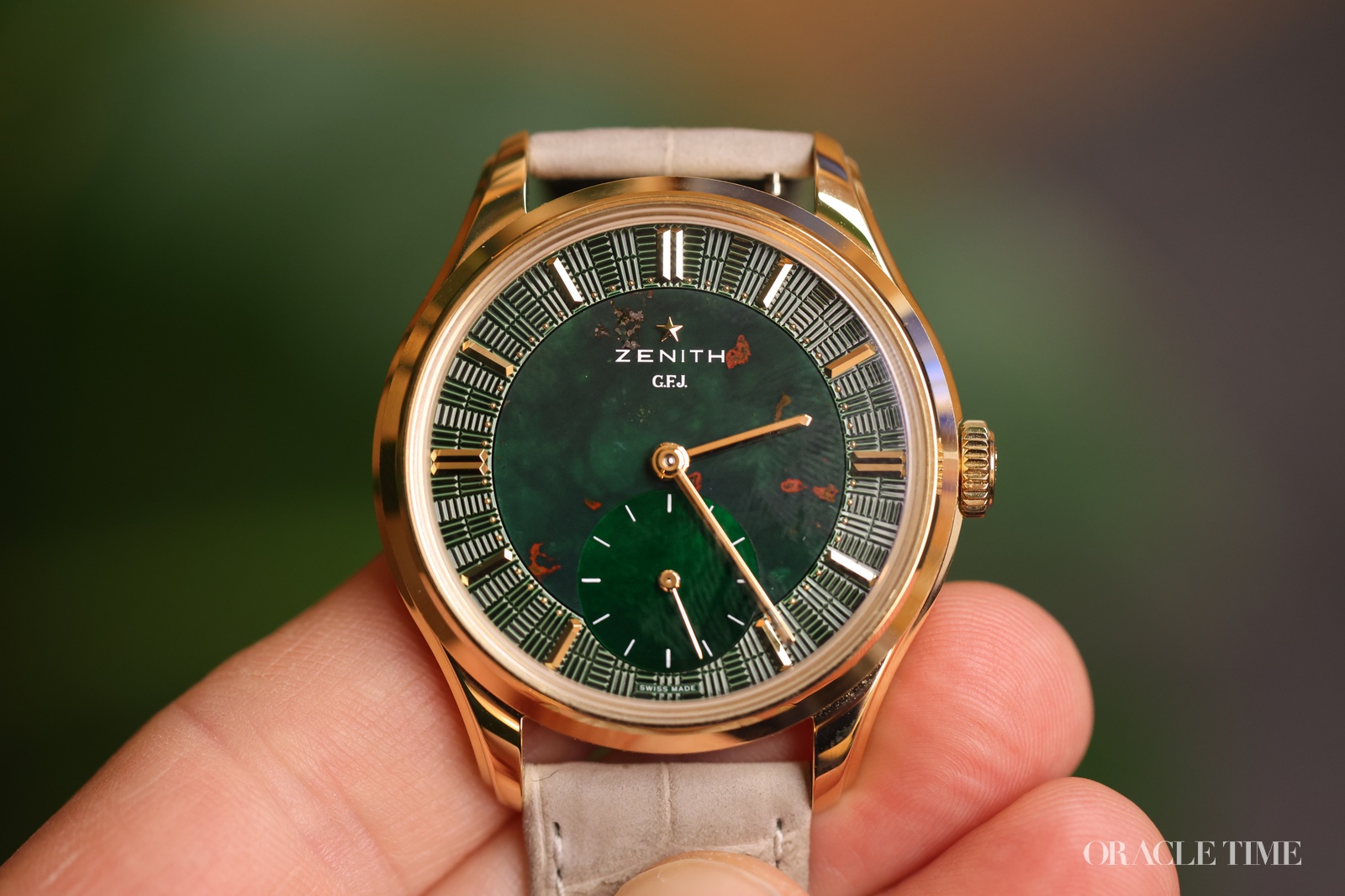
Zenith has launched two new G.F.J. editions at Watches and Wonders 2026. The headline release (and the one we got nice images of in the limited timeframe) is the G.F.J. Bloodstone in yellow gold, limited to 161 pieces at £45,800. Alongside it is a rarer sibling: the G.F.J. in tantalum with a black onyx dial and baguette-cut diamond indexes, limited to 20 pieces at 73,900 CHF (approximately £70,100). Both run the re-engineered Calibre 135 – the hand-wound movement that took the Chronometry Prize at the 2025 GPHG, and whose original 1949 version still holds the record for five consecutive first prizes at the Neuchâtel Observatory between 1950 and 1954.
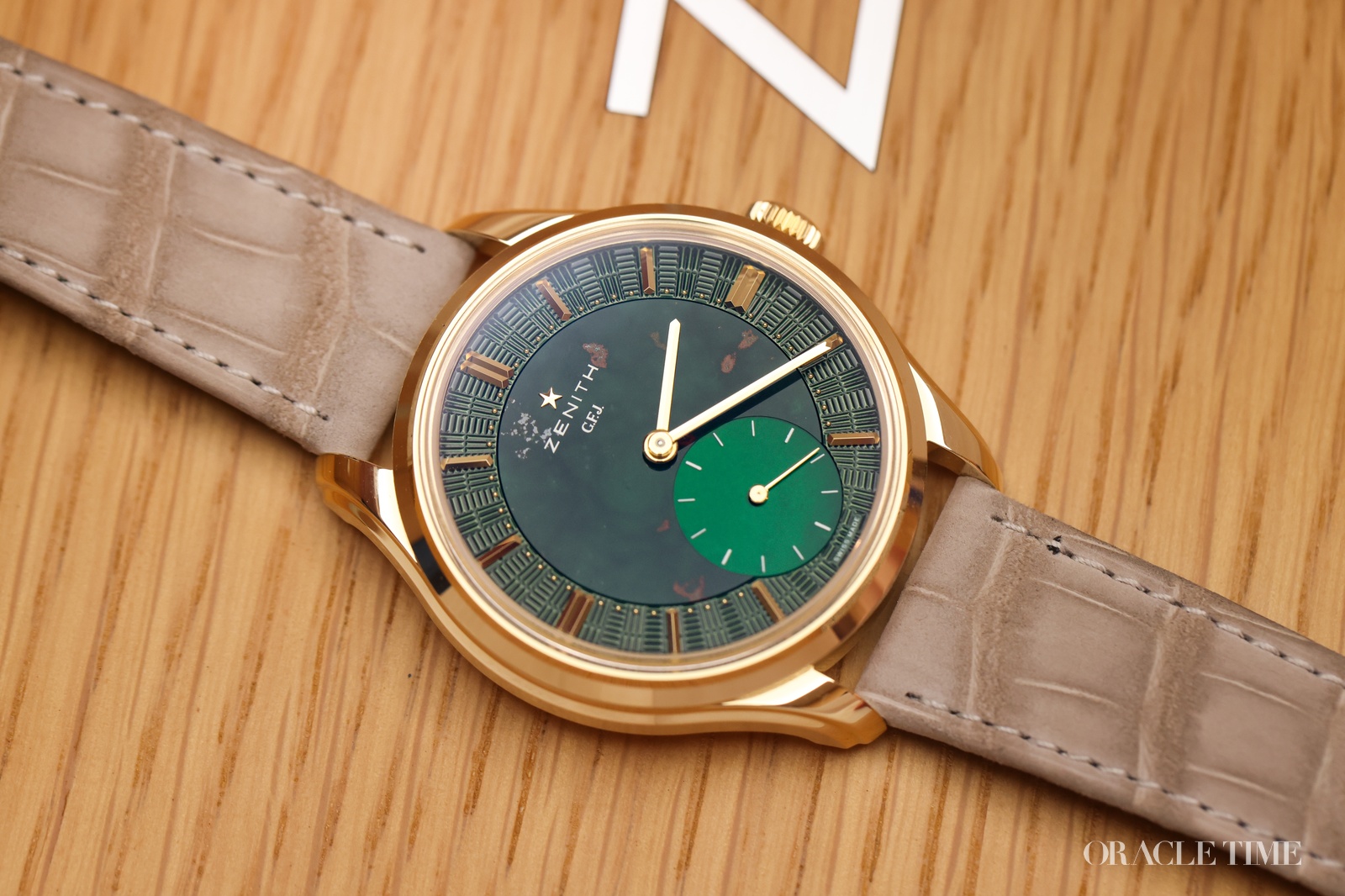
Last year’s blue-dial version was deservedly the hot Zenith release of 2025. For my money, this green-dial bloodstone version is even better. Bloodstone is a dark green chalcedony flecked with iron oxide, and the whole appeal of it is the imperfections – the veining runs differently on every slice, the red inclusions cluster in their own patterns, and the overall tone shifts from forest green to near-black depending on where the light catches. You can clearly see these strong iron oxide imperfections in our hands-on imagery.
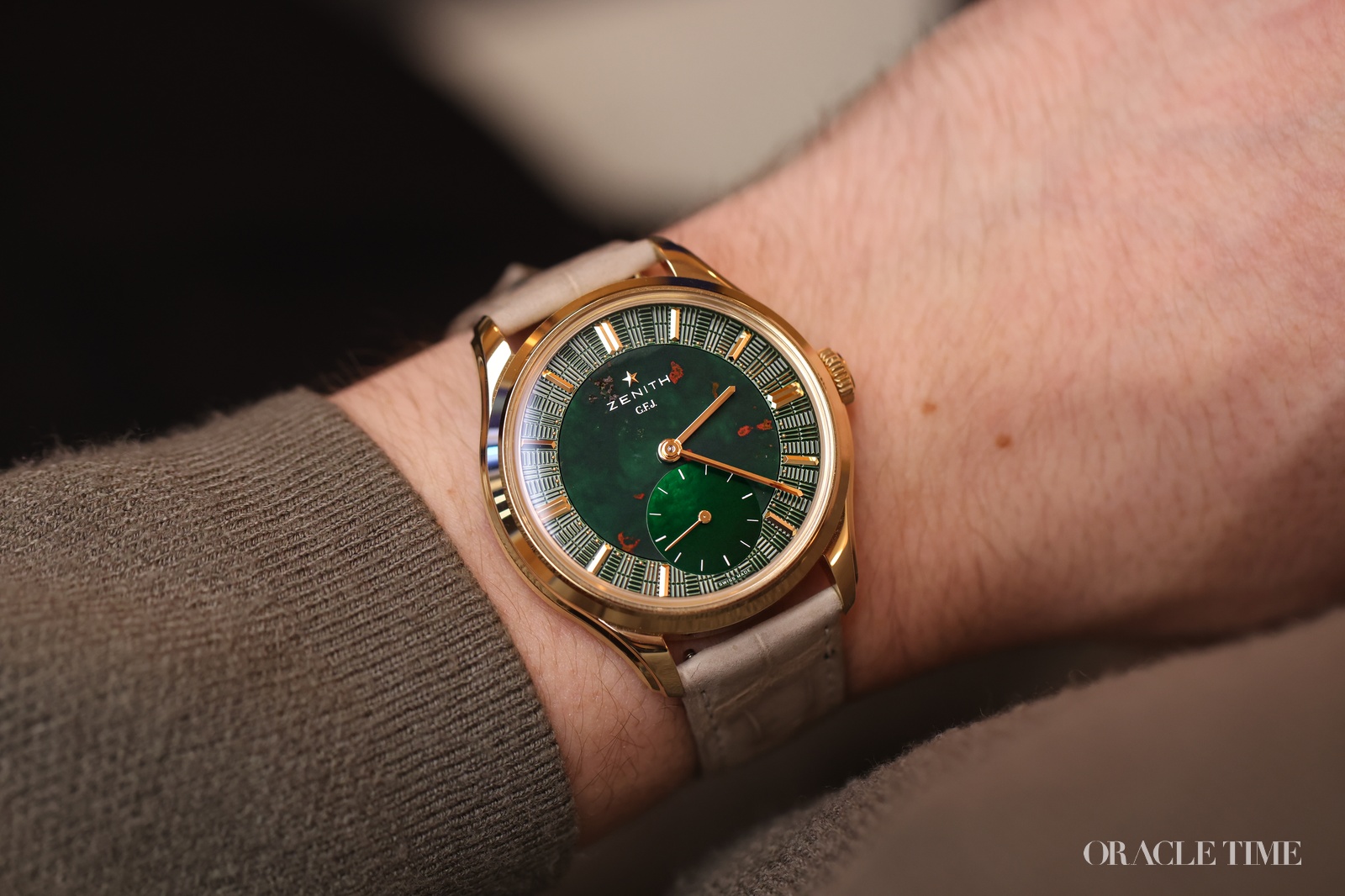
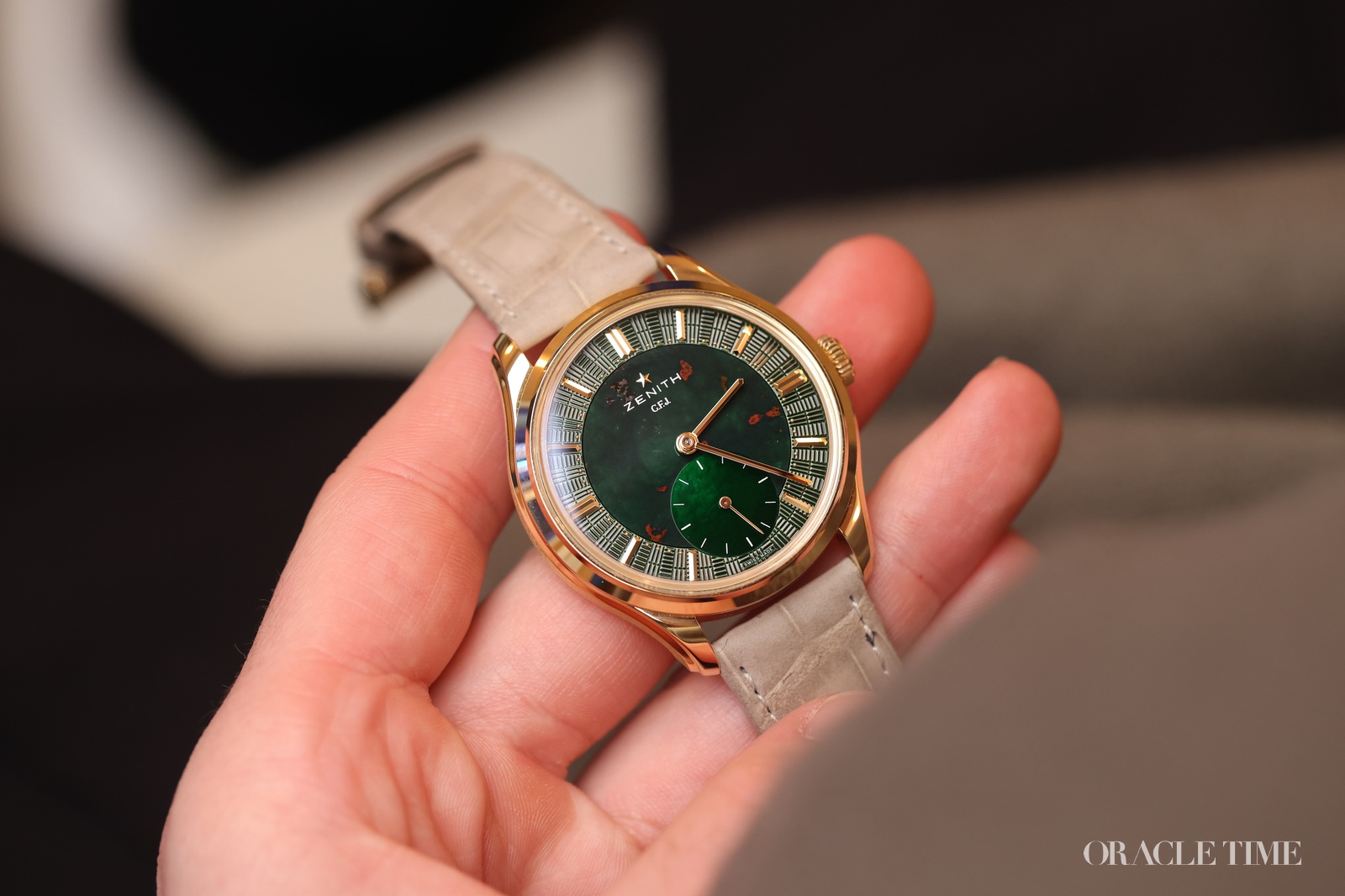
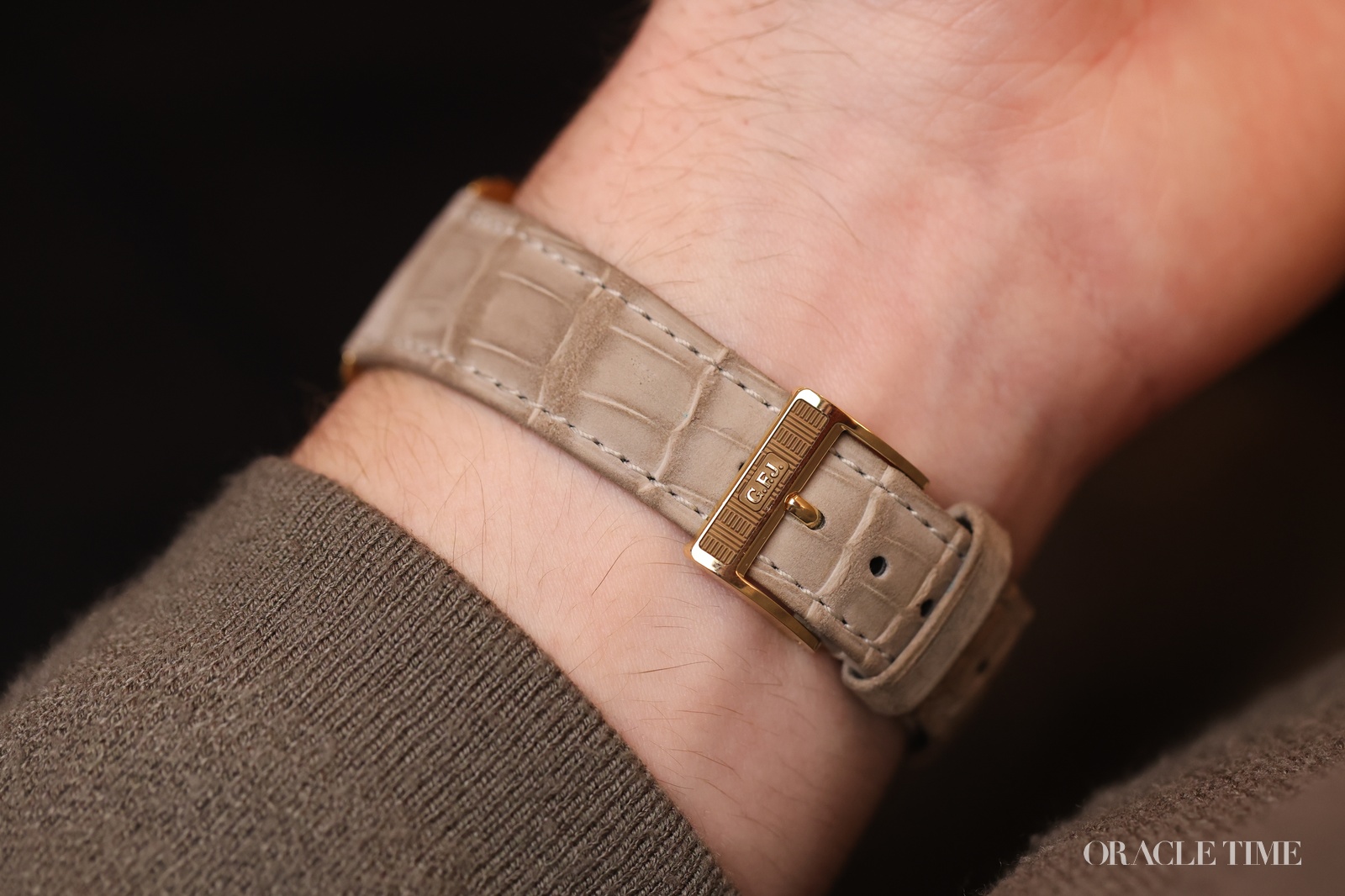
On the wrist it’s slim and properly wearable – no change from the 2025 edition. The 39.15mm case is 10.5mm thick with a 45.75mm lug-to-lug, and the stepped bezel and curved lugs reference 1950s observatory chronometers. In yellow gold it’s much warmer than the previous edition. The grey nubuck strap is an unexpected colour pairing – neither overtly gold-watch-traditional nor stone-dial-matchy – but it works, and the pin buckle has been finished to echo the brick-motif guilloché on the dial. At six o’clock, an oversized small seconds counter in mother-of-pearl. The brick pattern around the edge is a direct reference to the façade of the Zenith Manufacture in Le Locle. Yellow gold applied markers and faceted yellow gold hands make the watch very legible.
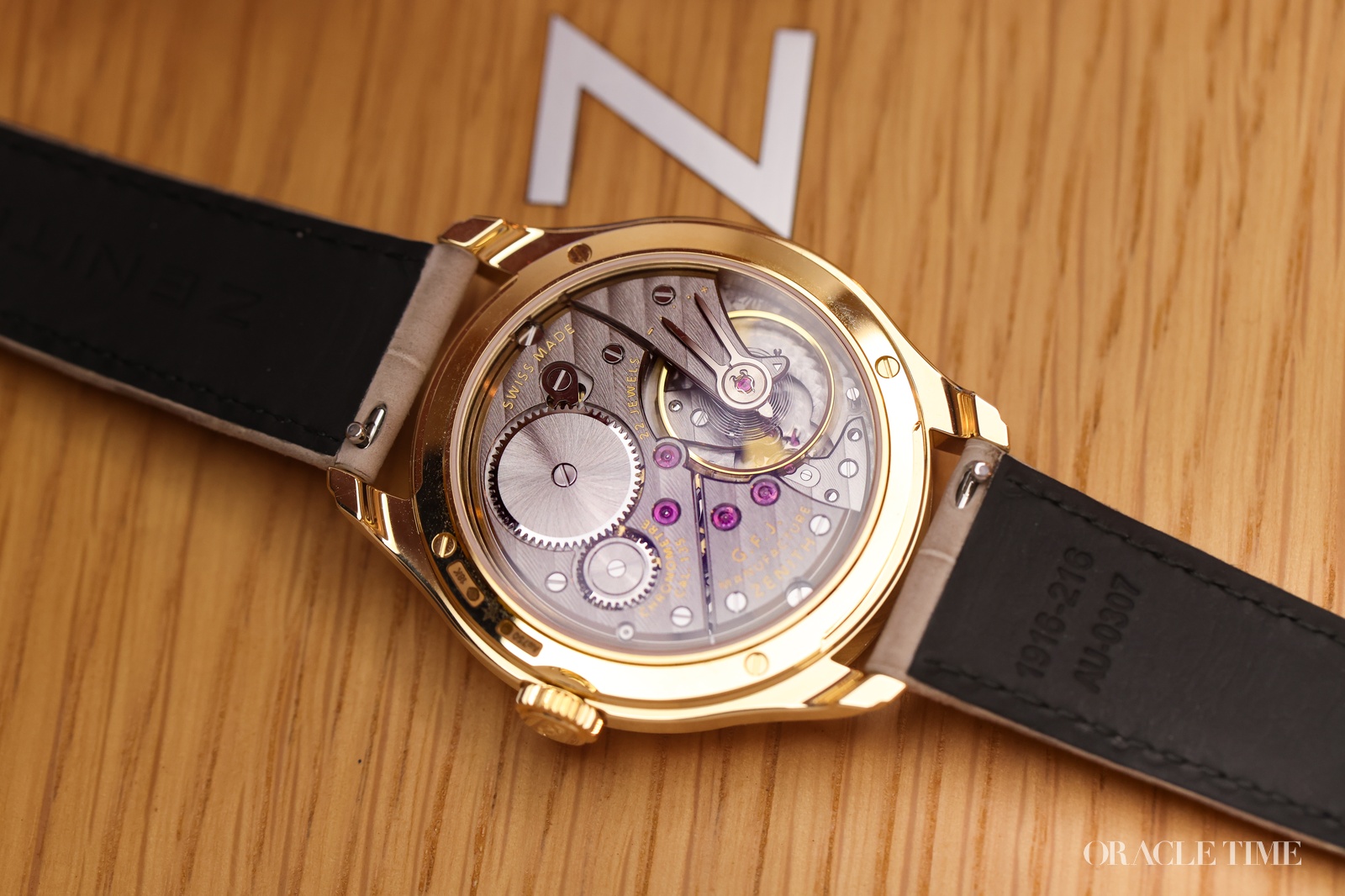
Flip it over and you see why the G.F.J. earns its place. The Calibre 135 carries its oversized balance wheel and offset centre wheel over from the 1949 original architecture, but the finishing here is new – broad Côtes de Genève in a dark ruthenium tone with yellow gold engravings, rather than the lighter finishing of the previous edition. 18,000 vph (2.5 Hz), 72-hour power reserve, Breguet overcoil, stop-seconds, and COSC certification to +/- 2 seconds per day. The finishing is, frankly, gorgeous.
Shown alongside the bloodstone is the tantalum version. Tantalum is blue-grey, exceptionally dense, corrosion-resistant and notoriously difficult to machine – rare in watchmaking precisely because it fights the tools at every stage. The dial centre is black onyx, with a grey mother-of-pearl small seconds counter and eleven baguette-cut diamond indexes totalling 0.45 carats. Hands are 18ct white gold. The movement is identical to the bloodstone. It’s the more distinctive of the two on paper, but in the metal the bloodstone is the one I kept coming back to.
Two questions hang over both watches. The first is the LE pattern. A year ago, Zenith released the anniversary G.F.J. and took the Chronometry Prize. Twelve months later, here are two more references. The 161 is presumably a nod to Zenith’s 161st year since founding, but annual variants on “limited” editions are the industry norm now, and the word means less each time. The second is how long the stone dial trend has left. Every brand is doing them in 2026 – aventurine, meteorite, malachite, lapis, tiger’s eye, onyx, petersite, bloodstone, the list goes on. Trends end. Speaking personally, as someone who collected semi-precious stones as a kid, I hope this one lasts. But when the tide turns, the G.F.J. Bloodstone will be judged on the underlying watch rather than the dial material that sold it.
On those terms it holds up. The Calibre 135 is one of the very few movements in series production with a chronometry record that actually means something, the proportions are right, and the finishing through the caseback is exceptional. At £45,800 the bloodstone is priced where a watch of this construction and legacy deserves to be. It was one of my favourites of the entire fair, and the one I would buy from Zenith’s 2026 line-up if the maths worked.
Price and Specs:
More details at Zenith.


Not for me, I think of a clumsy artist who has splashed paint every time I see it.