The El Primero has been a benchmark chronograph movement since 1969, when Zenith launched it as the world’s first automatic, integrated high-frequency calibre. It was good enough that Rolex based the Daytona’s movement on it from 1988 until the in-house 4130 arrived in 2000. Today’s version still beats at 5Hz, still measures 1/10th of a second, and can now be seen doing both inside the new Chronomaster Sport Skeleton – a watch whose case proportions, pump pushers and three-link bracelet sit within touching distance of the most coveted chronograph on the planet. Rolex has never made a skeletonised Daytona. Zenith – whose movement once powered the watch itself – just did.
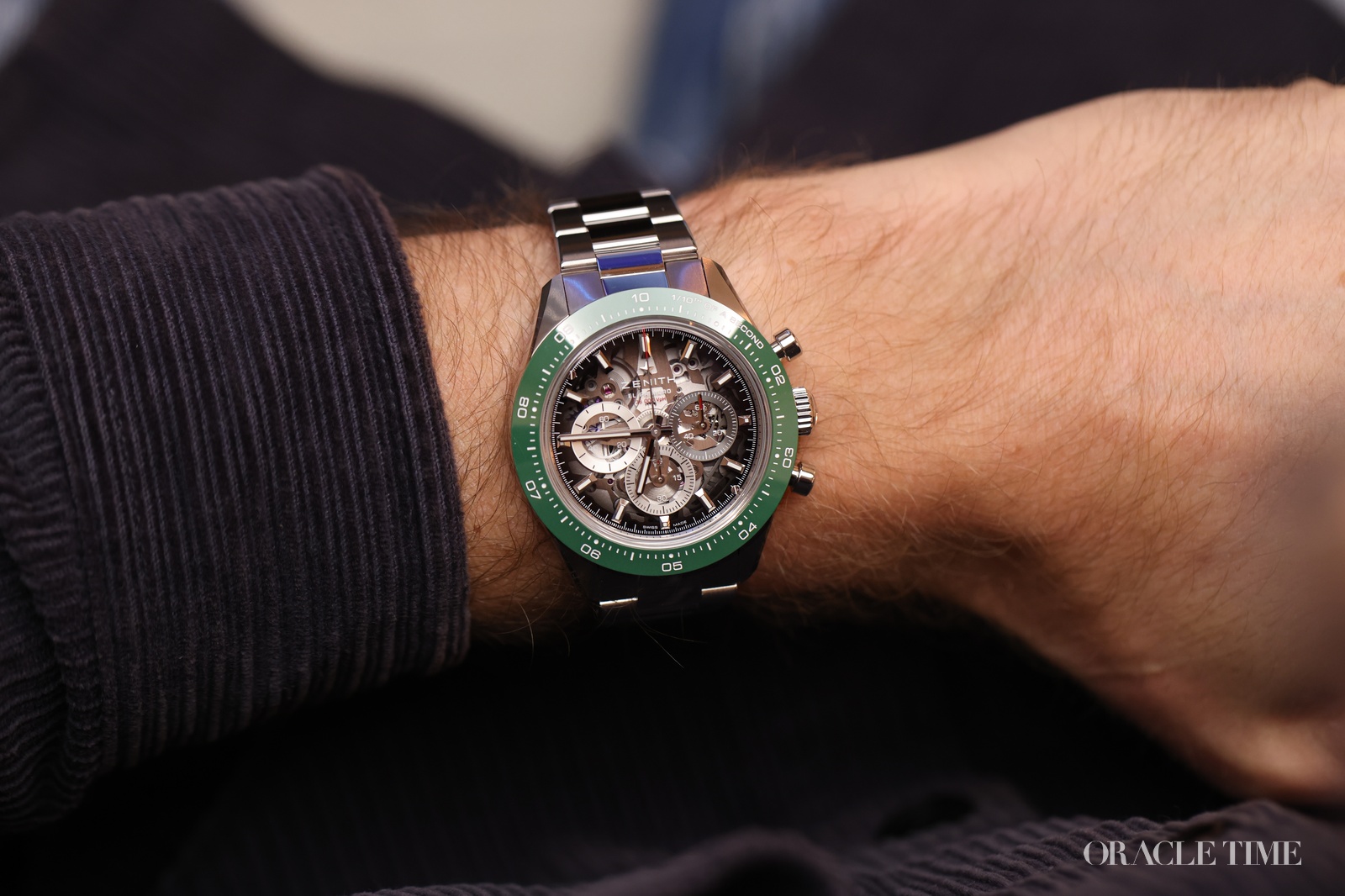
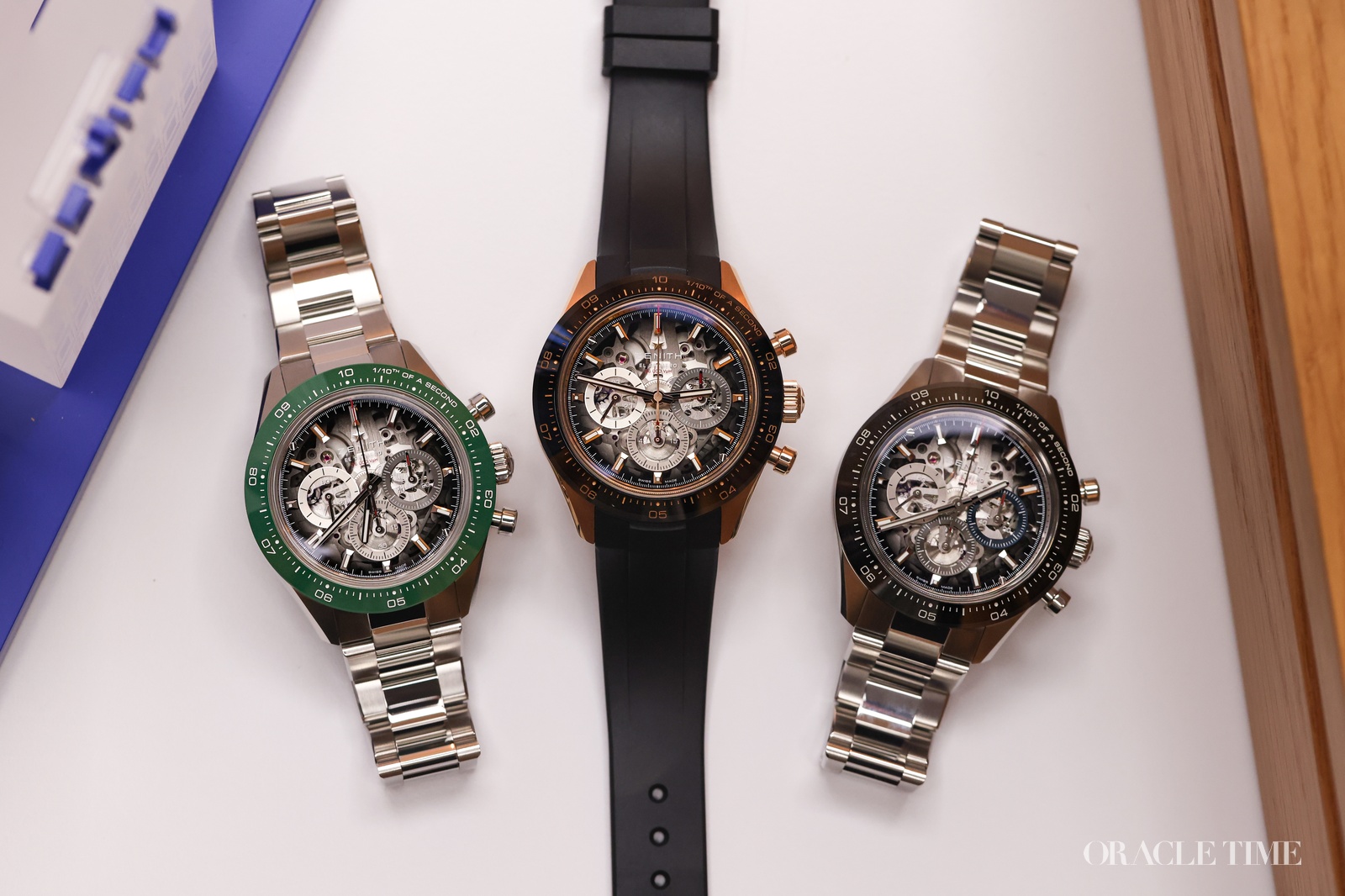
At Watches and Wonders 2026, the Chronomaster Sport Skeleton arrives in four references: steel with a black ceramic bezel, steel with a green ceramic bezel, rose gold on rubber, and a ten-piece limited edition in rose gold with a diamond-set bezel on a matching gold bracelet. All of them use the openworked El Primero 3600 SK, all of them measure 41mm, and all of them carry that 1/10th-second graduated bezel that turns the 5Hz frequency into something you can actually read.
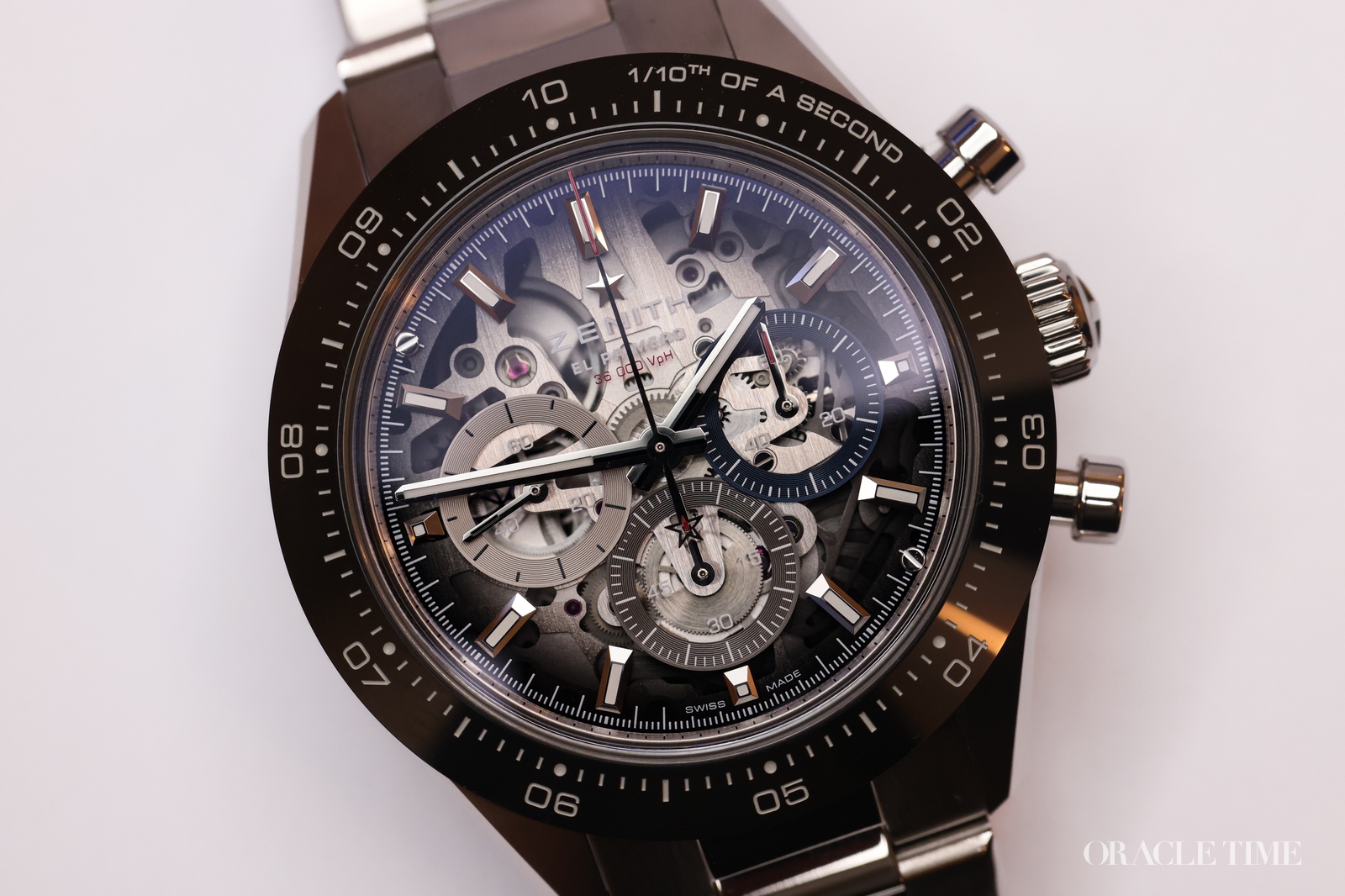
In the metal, the first thing I notice is that the skeletonisation is more visual than literal. The press release talks about a sapphire dial that grades from black at the periphery to transparent at the centre, and that’s accurate, but it understates how layered the view is. You don’t see straight through to the caseback. What you see is depth – the column wheel finished in blue, the horizontal clutch architecture, the geometry of the bridges – it’s busy, but the legibility is still there. It reads as openworked rather than a true skeleton.
The rose gold on rubber is the surprise of the four. At £27,200 it’s not a casual purchase, but on the wrist, it feels considered rather than ostentatious. The rubber strap takes the weight of the gold case down to something genuinely wearable, and the black bezel keeps the bling in check. It’s my favourite of the range, even if my budget doesn’t stretch that far.
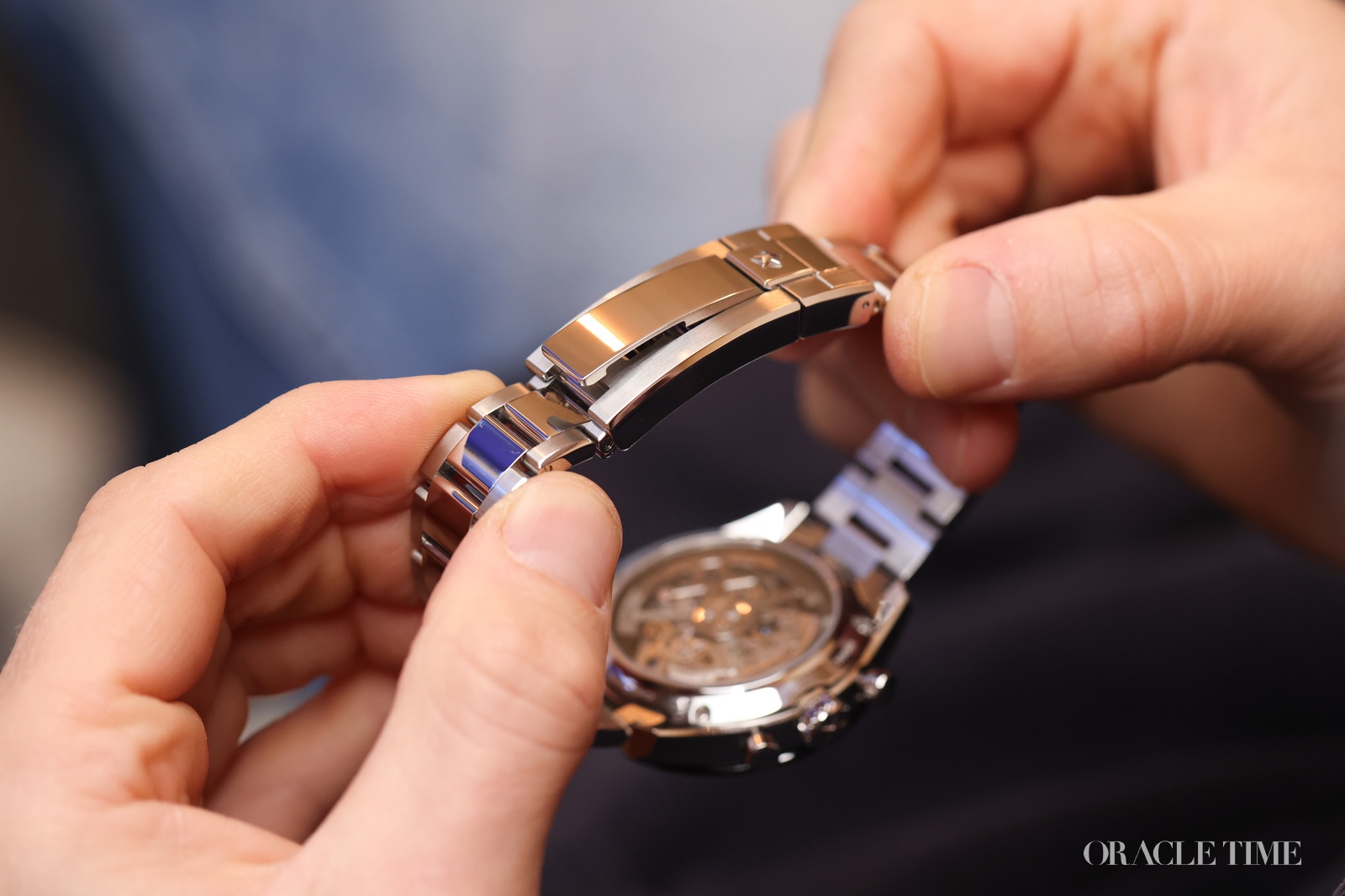
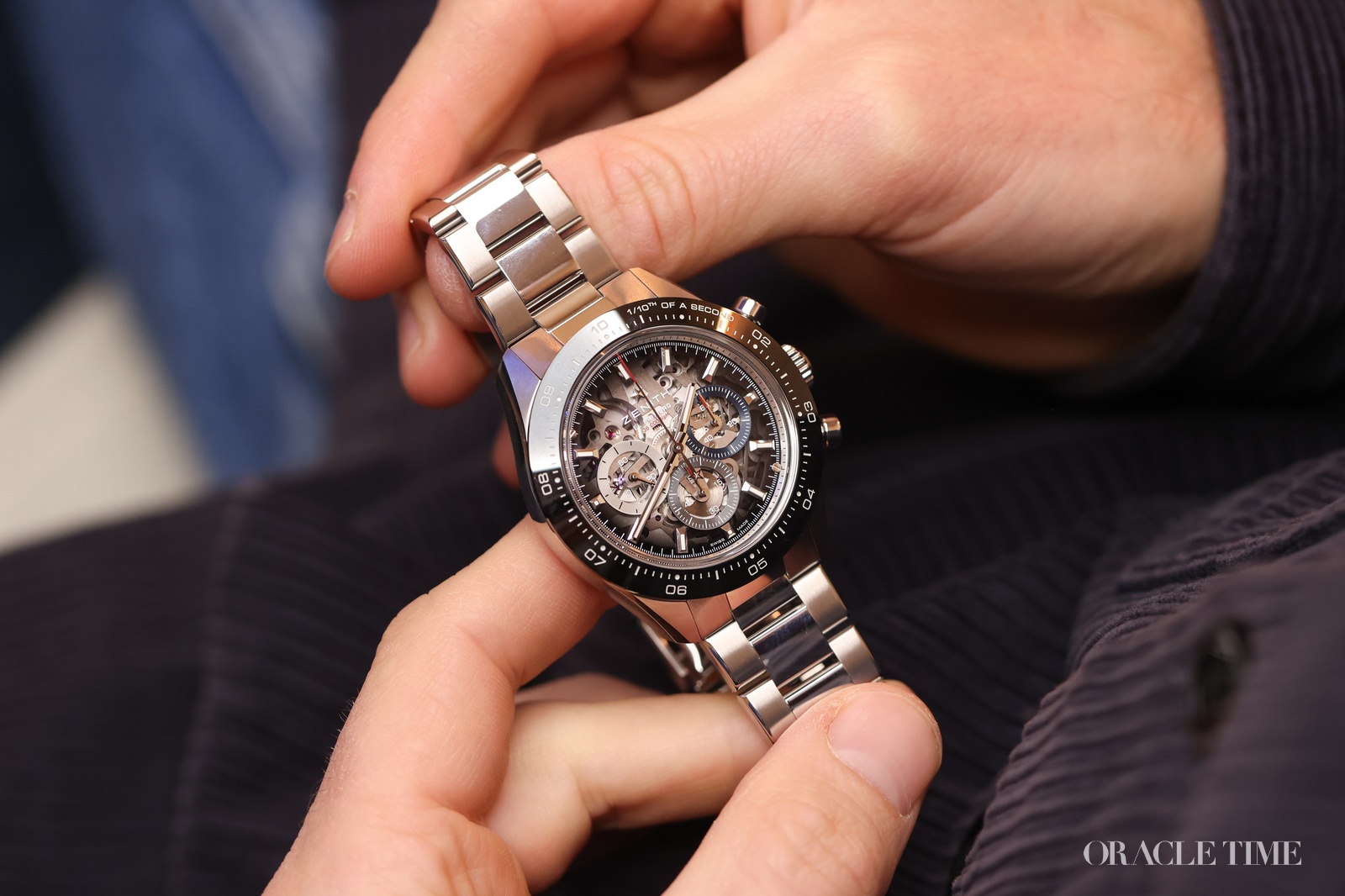
The other quietly significant piece of news is the new ZENCLASP folding clasp, with a tool-free micro-adjustment that resizes the bracelet on the wrist in 2.5mm steps. Zenith says it can be retrofitted to existing Chronomaster Sport bracelets, which is music to the ears of anyone who’s already bought in. We tried it in our appointment. It works really well and feels way less fiddly than some other solutions.
Then there is the elephant in the room. The Chronomaster Sport launched in 2021 to real, sustained hype – the kind that pushed grey-market premiums on the steel references well beyond retail. That hype has cooled. Resale values across the existing Chronomaster Sport line have softened considerably over the last eighteen months, and at the time of writing there are already a couple of steel and black versions on Chrono24 at £13,500, which is 1k below the £14,500 price listed on the official Zenith website. They might be anomalies, but it also could be a sign of where the grey market is pricing them.
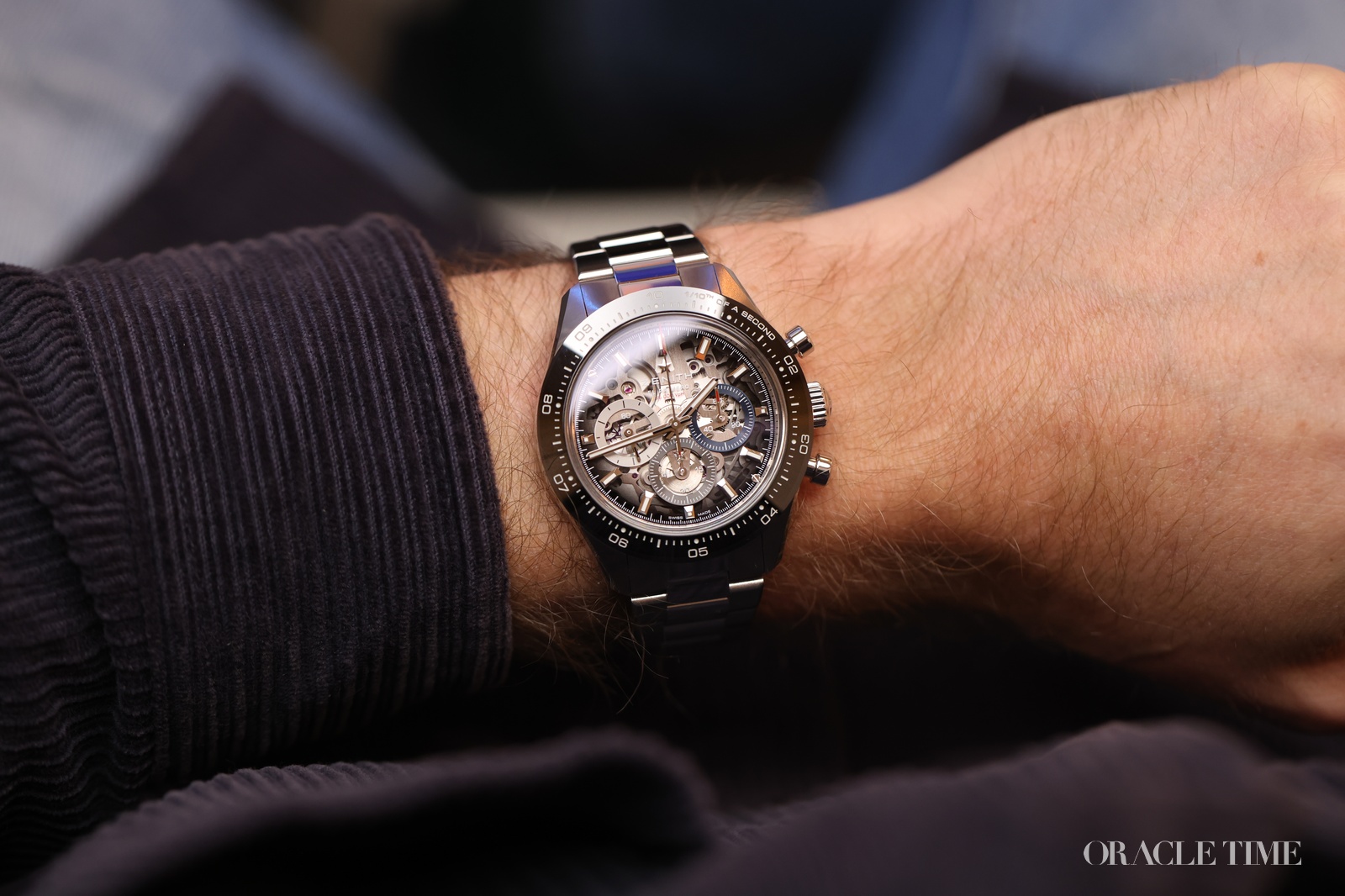
None of the market issues make these bad watches, however. The El Primero is still one of the great series-production chronograph calibres; the sizing is correct, the openworked dial keeps its legibility, and the new clasp pulls its weight. The diamond-set rose gold limited edition is the one priced for collectors rather than enthusiasts at £96,300. The other three are aimed squarely at buyers who want the Daytona-adjacent experience and either can’t or won’t play the Rolex allocation game. But maybe I’m under-playing the Chronomaster there.
Price and Specs:
More details at Zenith.