
Rolex Ref.1680 Submariner, image credit: Sotheby’s
If you’ve dipped your toe into the waters of vintage watches then you’ve no doubt come across the term ‘patina’. It’s a word thrown around readily by collectors, retailers and auction houses to describe aging timepieces. But what does it actually mean, and why is patina desirable in vintage watches?
To offer a simple definition of patina, it’s the aging process of a watch that causes its aesthetic, often its colour, to change. You’ll most commonly see this patina effect across the dial, bezel and lume plots. In certain situations it can occur on the case and bracelet as well, but this is heavily dependent on the metal being used. The colour changing effect can happen for several different reasons and it’s important to note that some are considered good and others not so good in the collecting world.

This Omega Speedmaster has a distinct brown patina dial. However, it later turned out the watch was a fake highlighting the challenges of vintage watch buying, image credit: Phillips
Despite Patek Philippe’s claim, ‘you never actually own a Patek Philippe, you merely look after it for the next generation’ your watch won’t be looking showroom shiny when you hand it over. Throughout the years a natural aging process of the materials will occur, the hues and colours generated through this natural process are the good kind of patina.
Vintage pieces were produced with materials which, now decades old, have been treated to years of sun exposure, heat changes, oxidation and the other elements of everyday life which are all part of natural ageing. It’s also worth remembering that vintage watches were produced in times when production, materials and technology were nowhere near as sophisticated as they are today.
Dial paint is one example. The paint used by brands in the past would be considered not fit for purpose by modern standards and thanks to sun exposure, it can change the dial completely. This form of patina is referred to as a ‘tropical’ dial with many examples of black dials turning brown, white dials turning yellow and reds to pinks and even orange.

Steve McQueen’s Tag Heuer Monaco, image credit: Sotheby’s
Elsewhere you’ll see similar aging effects with lume plots. Rolex used radioactive tritium for lume until the late 1990’s and these watches have all but lost their sharpness and degraded to a cream or dull yellow colour.
Moving to the case and bracelet the most common signs of aging are dents and scratches but watches made from bronze or silver also exhibit chameleon-like colour changing abilities. Both these metals will tarnish as they oxidise with the air and interact with skin. A heavily tarnished bronze can turn a funky green colour and it’s something brands like Tudor are embracing with their modern watches.
These types of patina are the result of a watch ageing gracefully and collectors love this romance. There are other ways a watch can patina which aren’t quite so noble and you may want to avoid. The big one is water damage. Unsurprisingly submerge a 50-year-old watch in water and it’s going to do some damage, creating water marks and causing components to rust. A watch in this condition isn’t going to be desirable, however it’s a fine line between sexy patina and just plain damaged.

Paul Newman’s Rolex Daytona Ref. 6239, image credit: Christie’s
So, why do collectors love patinated watches? The first reason is authenticity. Us watch lovers are a nostalgic bunch and getting hands on with a vintage time piece that has been untampered with and shows signs of a life well lived only proves its authenticity. If Paul Newman’s famous Daytona had been fully restored and polished I highly doubt it would have sold for what it did. The white dial had aged to a creamy yellow colour which shows the age and only adds to the story.
These new colours give vintage watches a unique look as no two patinas are the same. Many collectors are on the hunt for something that’s one of a kind and a patina scratches that itch. If you buy a new Omega Speedmaster today it will be identical to the guy who purchased the Speedy 20mins before you. However, find a Speedy from the 1980’s with orange patina hour markers and a fading dial and it could be a one of a kind.
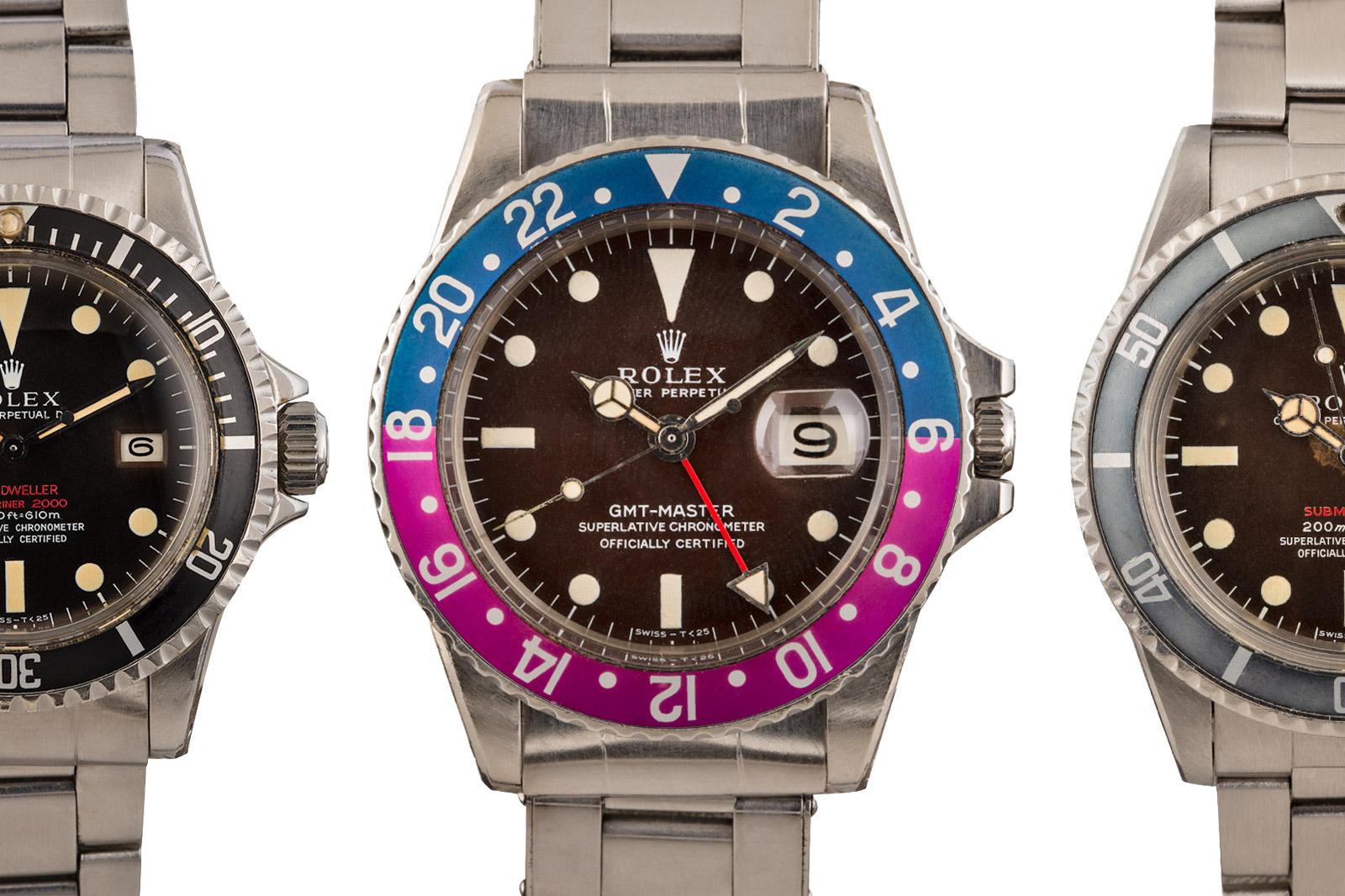
Rolex GMT Master Ref. 1675, image credit: Bob’s Watches
We also can’t forget that collectors’ love of patina is also reflected in its value. There is a premium placed on watches that have a strong colouring or a particularly prominent feature. The Rolex GMT Master ref. 1675 has a quirky patina that changes the red portion of the ‘Pepsi’ style bezel to a fuchsia colour. It’s a result of a manufacturing mistake where the material in the bezel has poor UV resistance, hence over time the red has turned to bright pink and for collectors the pinker the better. Strong 1675 ‘fuchsia’ watches can set you back over £30k whereas a less prominent version could be low 20s.
In short there’s a premium and desirability for vintage watches that have aged well and aged naturally, there’s no need for the botox and filler here.


Common opinion has always been that buying a piece that is extremely expensive is a “flex” however in my opinion the true “flex” is purchasing something that no one else can because it is not available or because it is unique. Vintage and Patina are the best way to do that.