Morgan Stanley and LuxeConsult recently published their ninth annual report on Swiss wristwatch market data. While the headlines love to talk about the comparative performances of brands year on year and all the flashy statistics about turnover and profit (Rolex continue to dominate, Cartier is doing surprisingly well, Audemars Piguet had a resurgence because of the hype built by their anniversary last year, Omega and Swatch Group are slipping badly, Christopher Ward entered the top 50 Swiss-made brands for the first time) one of the sub-themes of the report that I haven’t seen people talk about in depth is the trend towards restricted watch supply and increased scarcity.
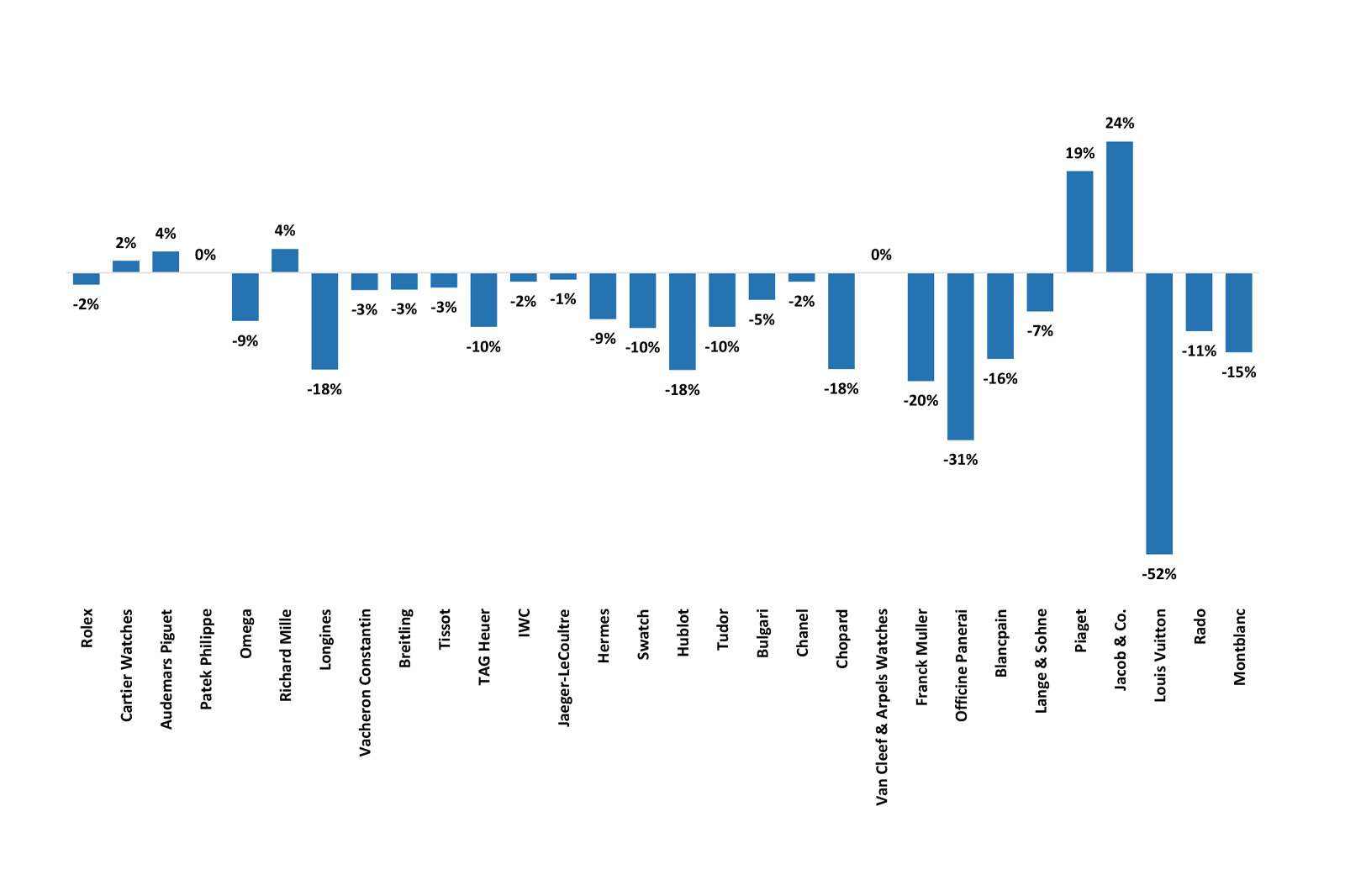
To give some context to this, Rolex’s volume of units declined by 2% to 1.15m, Swatch volumes declined 10% and the story is the same across the Swatch group with reductions of 18% for Longines and 9% for Omega among many others. Overall, the report estimates that total industry volume of watches exported has decreased to 14.6m, a decline of 4.8% since 2024. It’s also an overall decline of 51% since the previous peak in 2011. There are simply less new watches in the modern watch environment.
Premiumisation

There are several reasons that the industry is producing less watches. The first of those reasons is a phenomenon called “Premiumisation”. Effectively, brands are producing fewer watches but they’re producing more expensive watches. The primary case study here is Louis Vuitton, who are currently in the peak of their transition period from a widely available fashion watch brand to a haute horological powerhouse thanks to La Fabrique du Temps. They have absolutely slashed their production volumes by an estimated 50% year on year while at the same time average sale price (ASP) has increased by 100%, with those current figures sitting at 12,000 watches and CHF 13,750.
The incentive to enact premiumisation is clear. Watches above CHF 50,000 accounted for 37% of export value and 89% of growth in 2025 while representing a volume of only 1.4%. In comparison, the Swatch Group with their mid-range and accessible prices represent approximately 60% of watch volumes but saw a majority of losses from its brands – propped up almost exclusively by Omega, their most premium brand.
Demand


Since we’re talking about Swatch Group already, the second case study for the increase in watch scarcity across the Swiss industry is Longines. Where the decrease in Louis Vuitton’s volume of watches is an example of clearly intentional business restructuring, Longines has the appearance of a victim to market forces. They were once the darling of the Swatch Group thanks in a large part to their extreme popularity in overseas markets and particularly China, but China has subsequently proven an unreliable market and demand has collapsed. This has coincided with a period of ambitious price increases (+50% since 2019) to capitalise on their overseas popularity while at the same time unstable management has seen rapid CEO replacements with three in the span of a decade.
The result of which is that is they’re selling less watches overseas and less watches at home because they’ve been supplanted by the likes of Frederique Constant who have snuck into the price bracket Longines occupied before those price rises. Effectively Longines is stuck because they can’t become more premium as they would begin to compete with stablemate Omega and they can’t go backwards because of competition from microbrands and accessible independents.
Reducing supply in hopes that demand recovers is the most logical route available to them. Specifically, they reduced volume by 18% down to 780,000 units in 2025, coinciding with an equal sales drop of 18%. The effect of which is they have dropped out of the CHF 1bn sales club for the first time in over a decade, achieving only CHF 920m in 2025.
Collector Impact

The most significant impact of decreased watch supply on collectors is a rapid polarisation of the Swiss watch industry. Watches will continue to become more exclusive, and prices will continue to rise – expect the limited edition sales tactic to persist. Especially with premiumisation meaning brands are intentionally excluding mid-range buyers.
An additional side effect of reducing production is that there will be less variety – the report mentions that Tissot is being held up by the singular tent pole of the PRX and more brands are likely to rally behind their best sellers, restricting choices. Also leading to further vulnerabilities if those best sellers stop selling.