
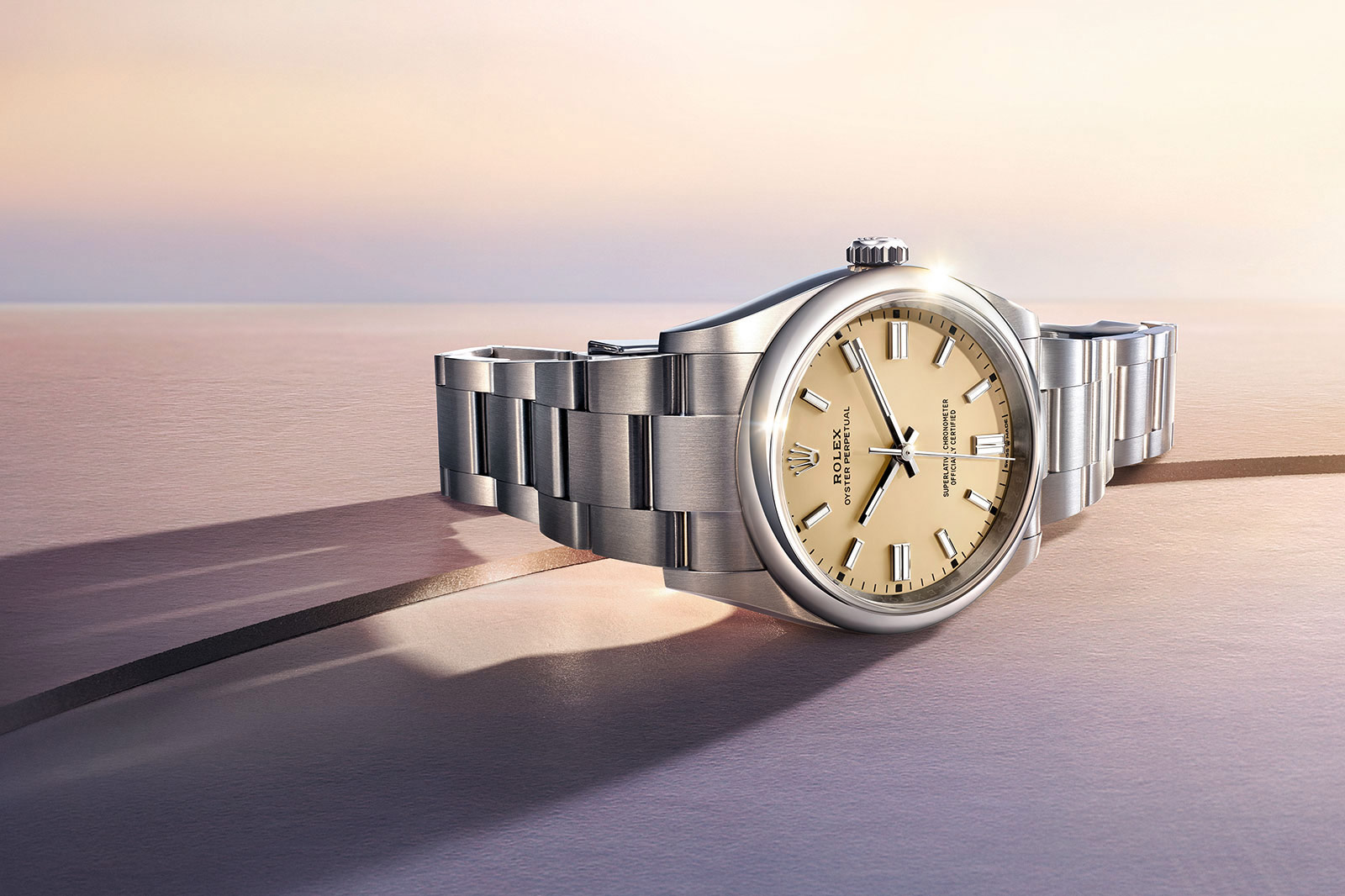
I would love to tell you I stand around at Watches and Wonders and people-watch, but I don’t. You are more likely to see me running, as I did this year, towards the Rolex booth, double-booked and not about to miss the celebration tote everyone else was carrying. Sixty brands in four days, a magazine to fill, images to take. The trends only appear afterwards, in the camera roll. Pastels, say. Rolex put lavender and beige on the Oyster Perpetual last year, TAG Heuer did Formula 1s in ice cream colours, Fears joined in, and Oris had got there years earlier with the Cotton Candy Divers Sixty-Five. Each of them, on the stand, feels like the most singular object in the world. Step back and they have plainly grown in the same landscape, brands moving in step without ever speaking. The core collections, the watches that pay the bills, move together. The question is why, and the honest answer has several parts. None of them is theft.
Lately certain brands have been accused of copying designs or, to put it more Frenchly, homaging. Some of the criticism lands, and the scrutiny has made the watch world sharper for it. But shouting copycat for followers is as lazy as stealing an idea, and most accusations misunderstand how a watch gets built.

Start with the calendar. From sketch to stand, it has a two-year lead time, so when a handful of brands arrive with a sector dial in the same season, those decisions were taken years earlier, by people who had not seen one another’s work. What they had seen was the same inspiration. The same few dial and case suppliers pitch the same finishes to every brand on their books, so a trend often starts on a supplier’s sample tray rather than a designer’s sketchpad. That is the first reason they move in step: everyone is guessing at the same future, from the same parts bin, on the same timetable.
Then there is the form of a watch itself. Wearing something on one part of the body, built to do one or two jobs, means the archetypes were settled long ago. The last new one arrived in 1972, when Genta drew the Royal Oak, then the Nautilus. Within five years Girard-Perregaux had the Laureato, IWC the Ingenieur SL and Vacheron Constantin the 222, drawn by Jorg Hysek. That gave us the faintly absurd category of the luxury sports watch, not for sport at all, merely sporty. Add diver, pilot, chronograph, calendar, dress and field and the archetypes are set in stone. A trend can only move within those shapes, so everyone who follows it lands close together.
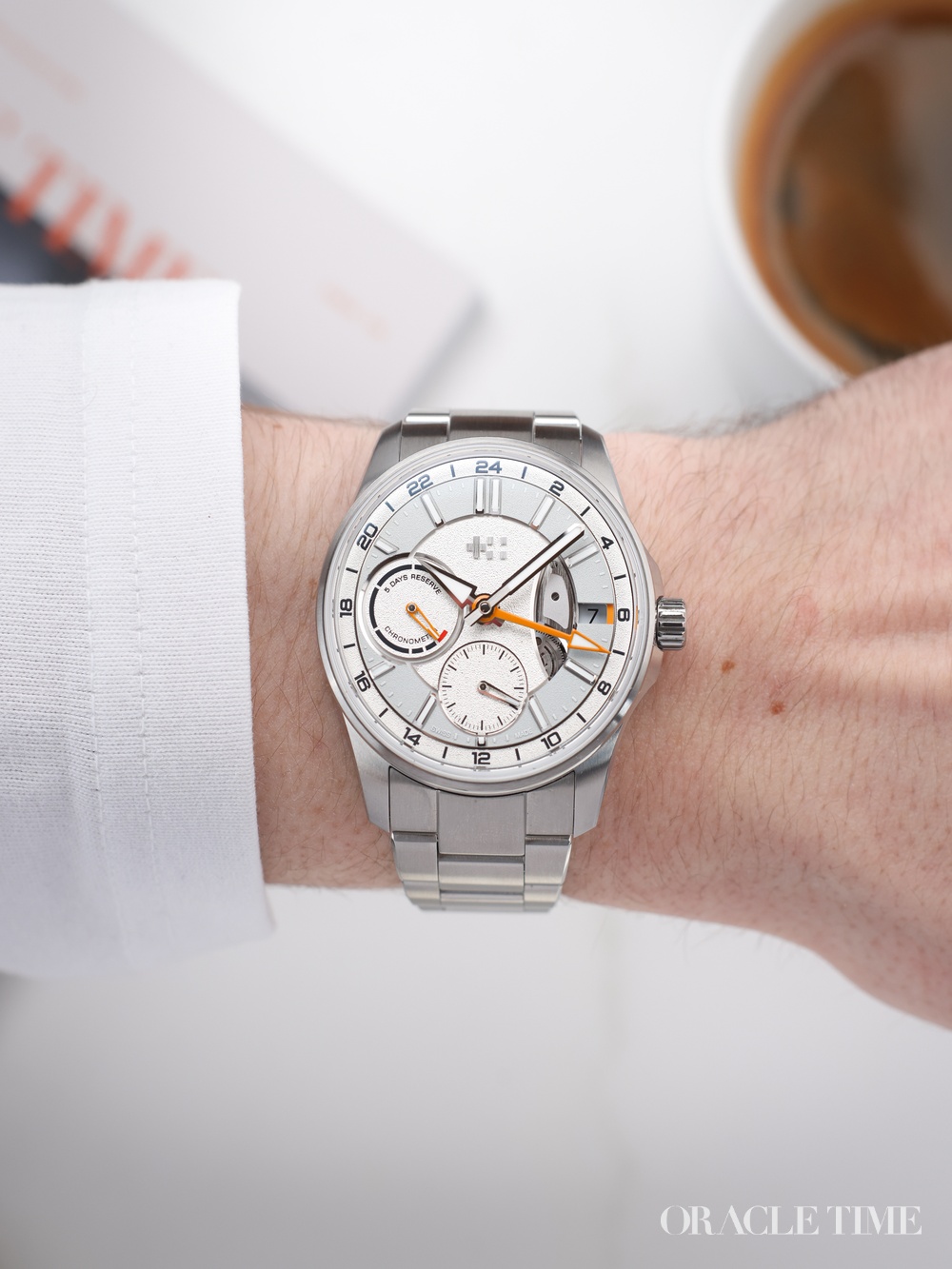
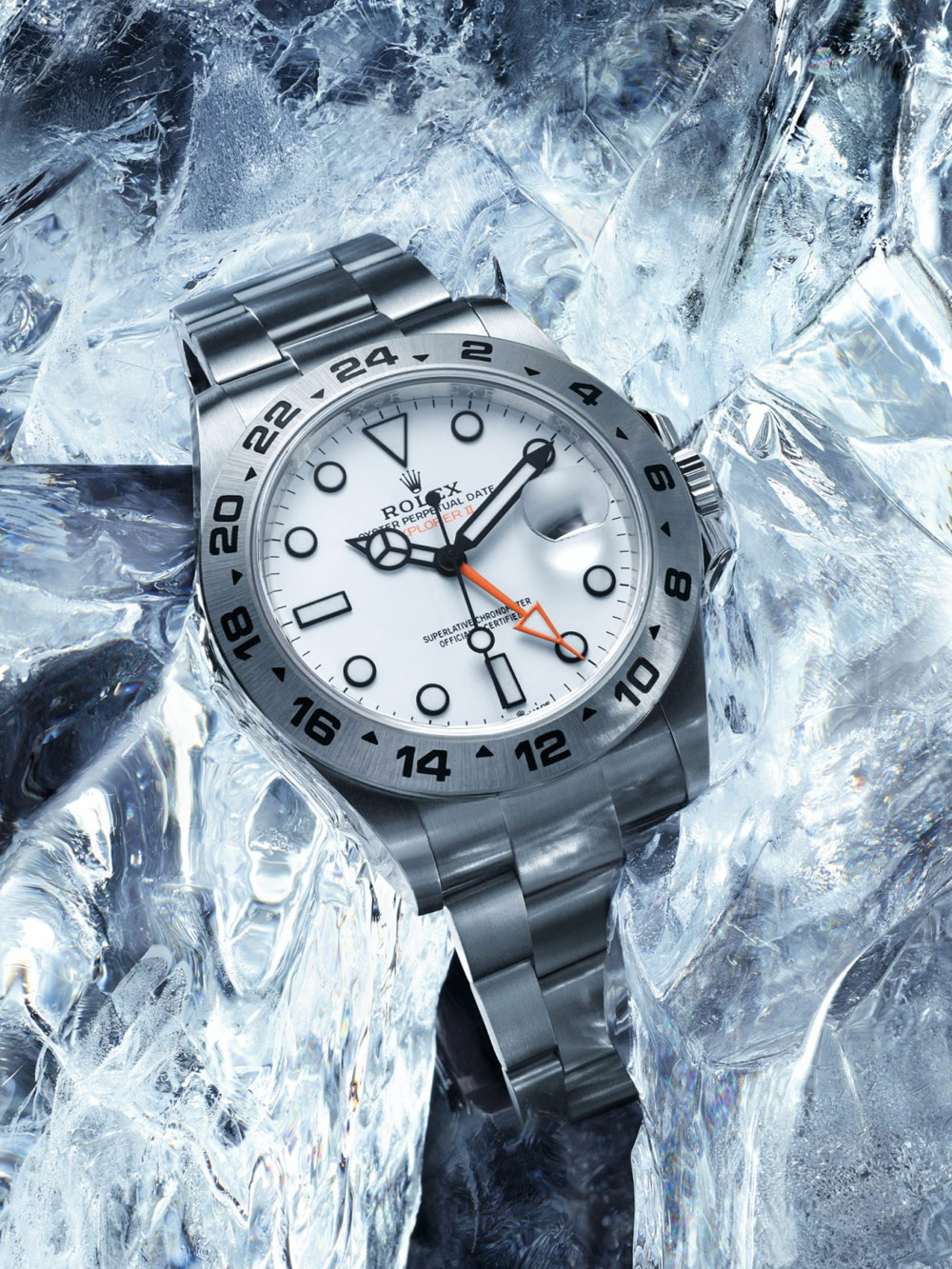

Then there is function. Take the Christopher Ward C63 Sealander GMT, exhibit A in the recent criticism, and the Rolex Explorer II it is accused of resembling. Both carry a 24-hour hand and a fixed 24-hour bezel because that is the simplest way to read a second time zone on a watch built to be knocked about. Rearrange them and they work worse. Where a watch has a job, the job dictates the features of the watch, and two brands solving the same problem will often come to the same conclusion.
Where a watch has no job, consumer appetite takes the lead. For example, the integrated steel sports watch is a design object dressed as a tool, so nothing functional forces one to resemble another. But, when Chopard, Bell & Ross, Czapek and Tissot all launched one within three years, the likeness came from every product manager in Switzerland reading the same appetite for something steel and crisp, and answering it the safe way. There was room to differ: Marcus Eilinger’s H. Moser Streamliner, drawn from 1930s locomotives with no lugs, resembles none of them. But a different brief is a risk, and most brands facing the same buyer at the same moment take the same safe route. That is not copying. It is a hundred people choosing the obvious answer independently. It is also why the genuinely new so often comes from outside the watch industry: Max Bill was a Bauhaus artist before Junghans put his dial on a wrist in 1961, and Singer’s Track1 is drawn from Singer Reimagined. Insiders inherit the vocabulary. Outsiders do not know which words they are supposed to use.
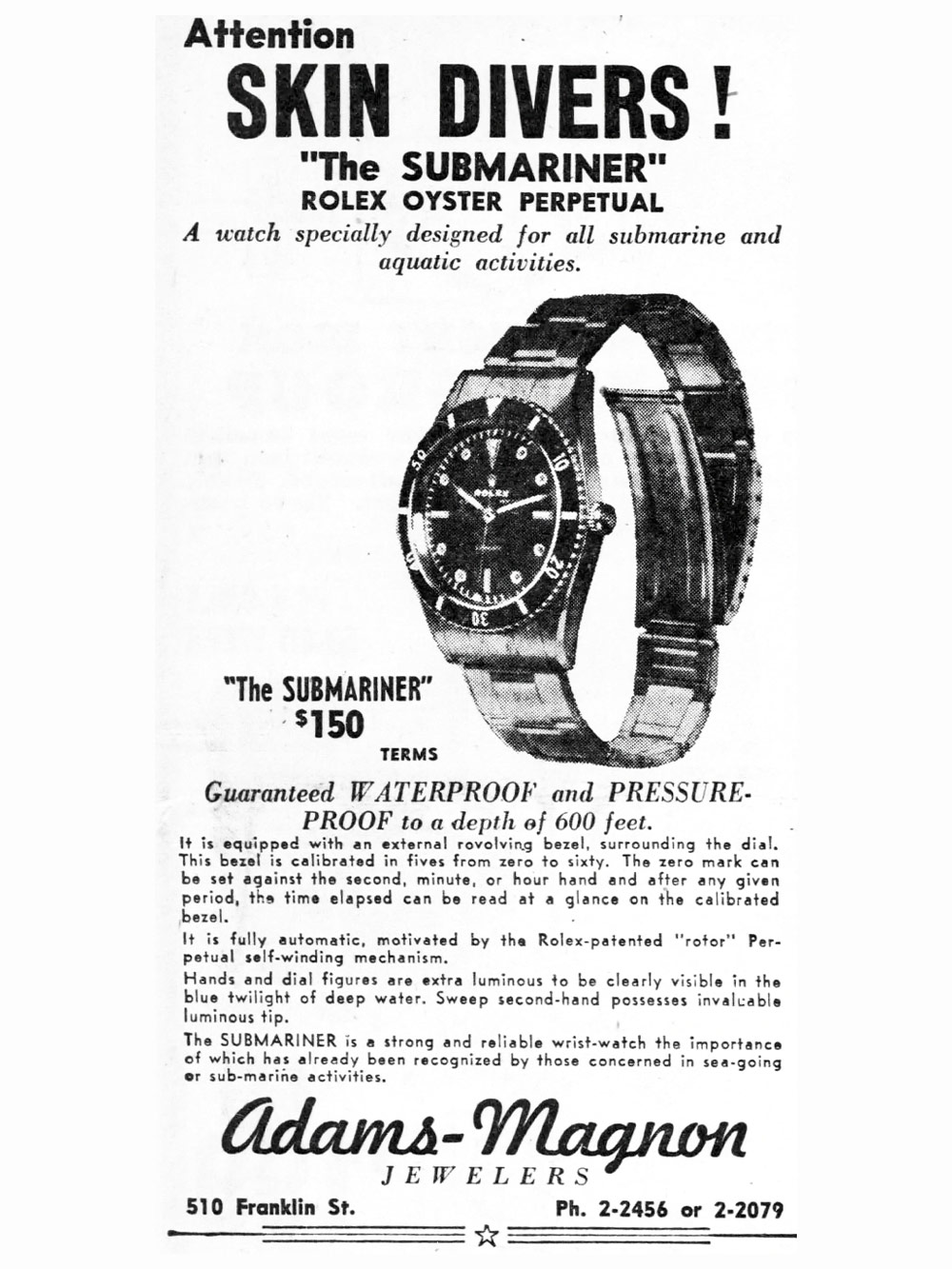
Another design challenge is that the best silhouettes are already taken. Archival designs like the Tank, Reverso, Royal Oak or Submariner are shapes so settled they are owned rather than made, updated by the millimetre and strictly off limits to anyone else. By necessity, a silhouette has to be fair game, because there are only so many of them. What isn’t fair game is copying a signature: eight exposed screws over a tapisserie dial, the ears of a Nautilus, the Mercedes hands of a Submariner. Borrow the shape and you are working in a tradition. Borrow the signature and you are hoping nobody looks. With the signatures fenced off, everyone else crowds into the narrow space between them.
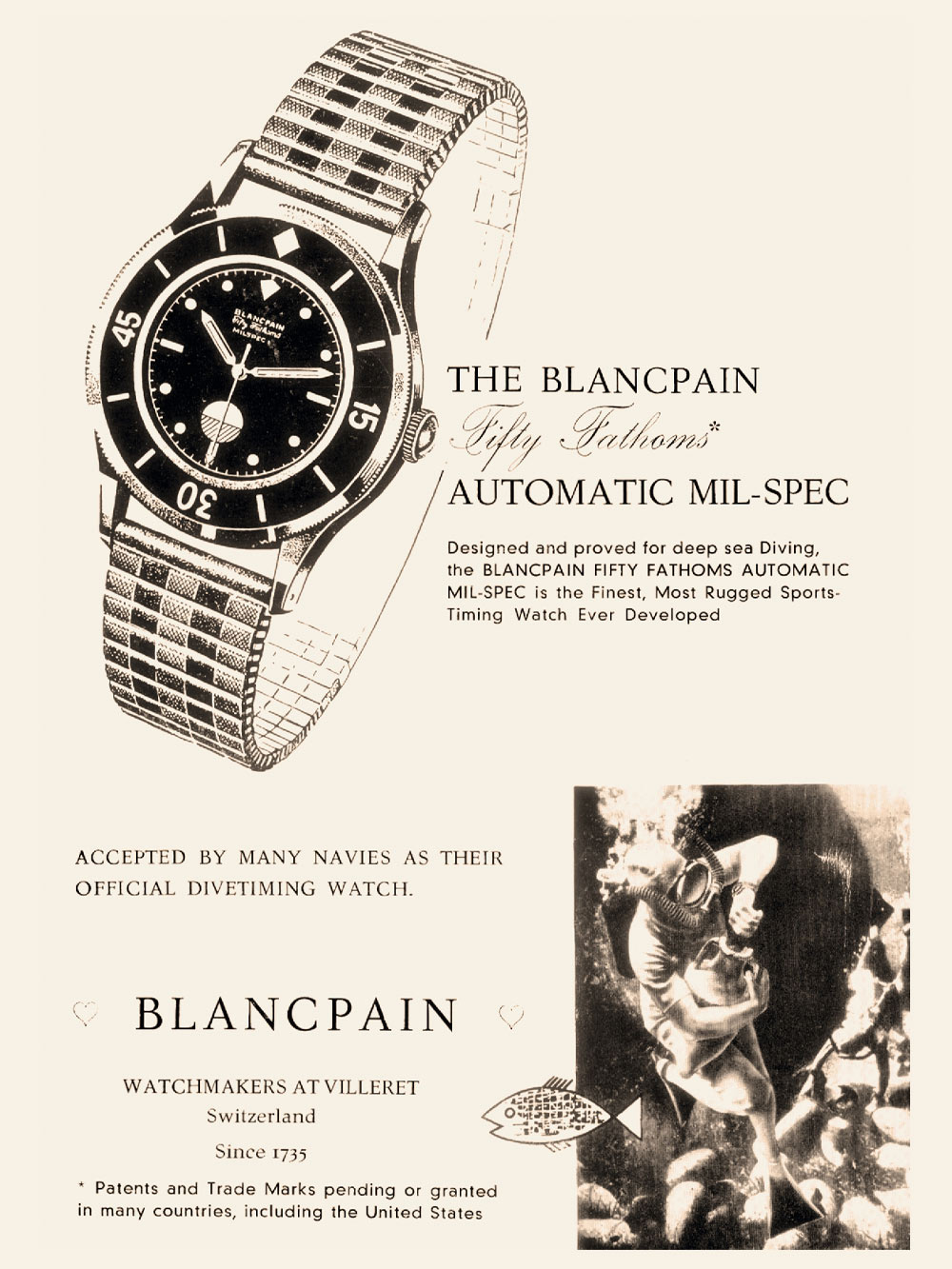
And the fence was not always built by the first to arrive. History is written by the victors, and no victory in watchmaking is more complete than the Submariner’s. Yet when Rolex showed it at Basel in 1954, Blancpain’s Fifty Fathoms had already spent a year on the wrists of French combat divers, and Zodiac’s Sea Wolf had beaten it to the shops as well. Everybody knows the Submariner. Almost nobody outside the trade knows the Sea Wolf. Every brand knows that history and its lesson: being first earns nothing, being remembered earns everything. So they follow the trend and spend the money on being remembered.
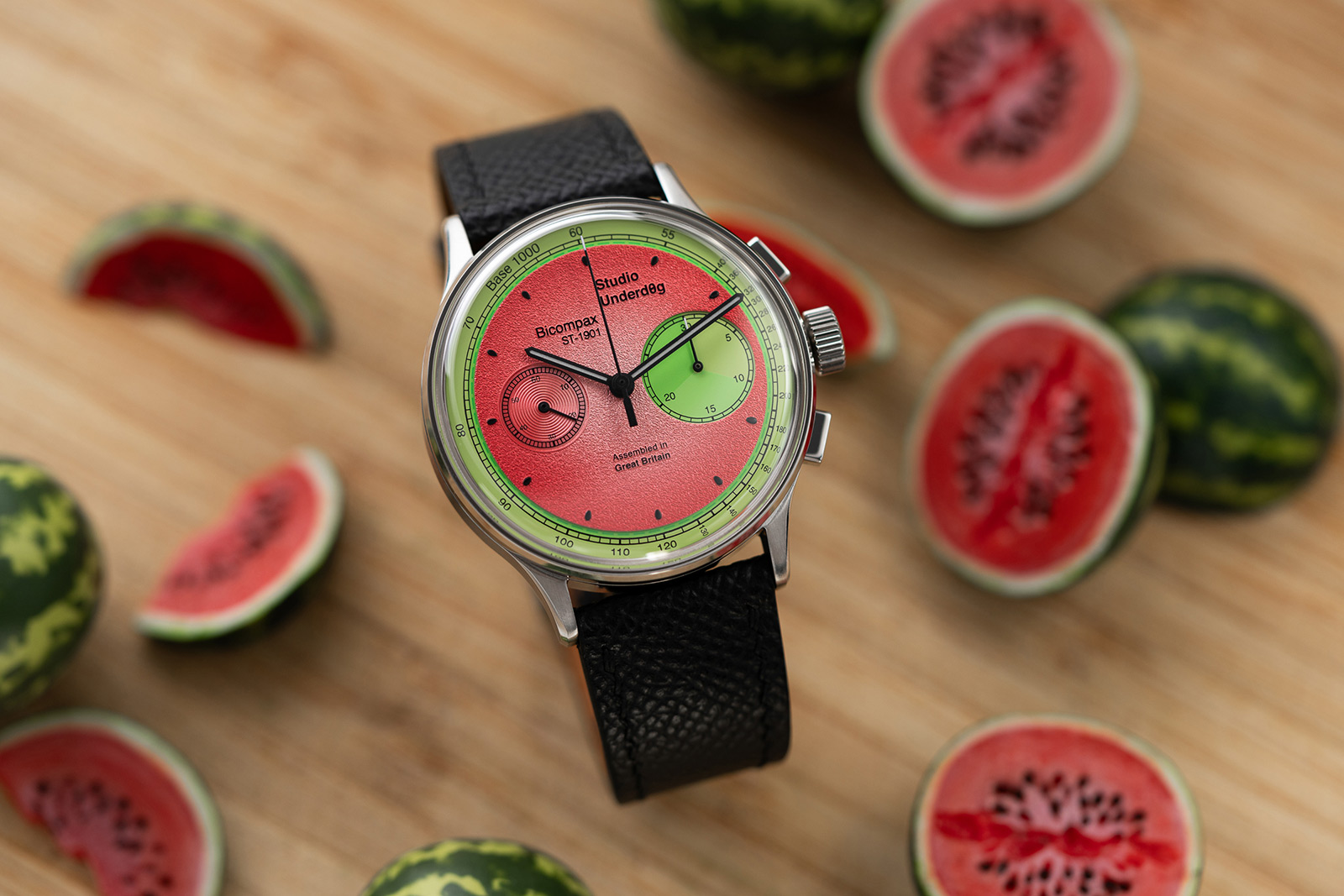
Which leaves the most human reason. Originality is expensive when you have something to protect. Studio Underd0g arrived with a dial that looked like a slice of watermelon, Farer with colours no Swiss board would sign off, and the playfulness the big houses now sell in pastel arrived at the small end first, because the small end had no archive to embarrass. The risk with anything truly original is that 90 people in 100 hate it. See Chaykin’s frog-faced regulator for Louis Erard, or Roger Dubuis putting twelve knights around a table and calling it a dial. You do not need everyone to love you, which is rather the point. But a brand with a century of heritage and a hundred boutiques needs most people not to hate it, and following the trend is how it makes sure.
It was never only the watches. Late last decade every brand in Switzerland, blue chip and bargain bin alike, decided their films needed a drop. For two years, two centuries of quiet Swiss craft was soundtracked like an uncool uncle at a rave. Nobody accused anyone of copying a trailer. We just agreed never to mention it. The industry moves as a herd in everything it does, and only in dial design does anyone call it plagiarism.
So that is why watch brands follow the same trends: the same samples on the same timetable, a form finished fifty years ago, function drawing the tools and appetite drawing the rest, the best shapes fenced off, history rewarding the remembered over the first, and originality a risk only brands with nothing to lose can afford. David Bowie put it best. “I’m not an original thinker. What I’m best at doing is synthesising those things in society or culture, refracting those things and producing some kind of glob of how it is that we live at this particular time.” If art arrives from nowhere, every resemblance is theft. If it is refracted from what is already around you, resemblance is what creating looks like. Designers may have a muse. Brands never have. A brand has a bench, a supplier list, a two-year lead time and a P&L to consider. I suspect the loudest voices in the row have not thought about it this hard. But then thinking hard has never been the quickest route to an audience.
