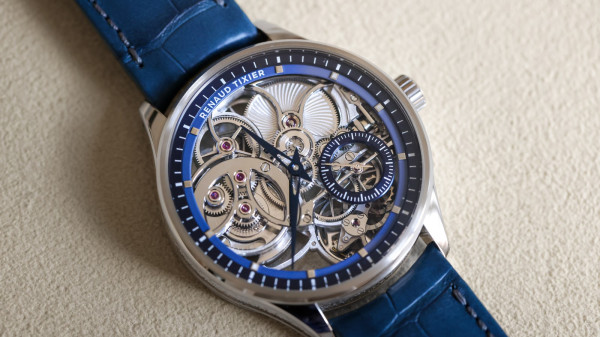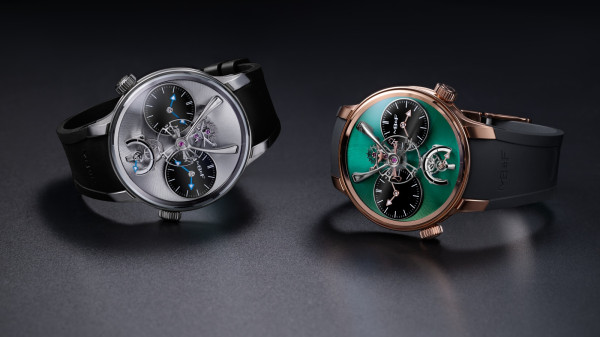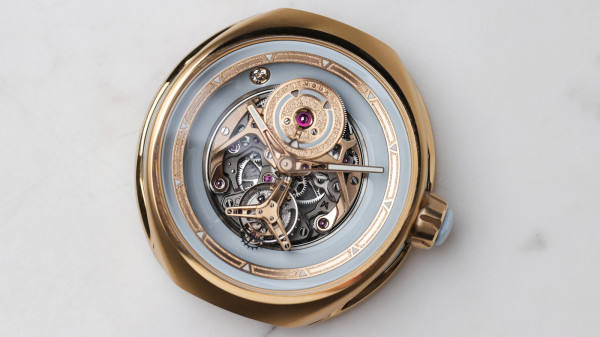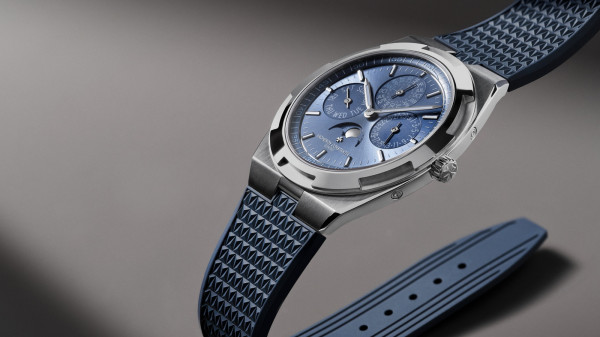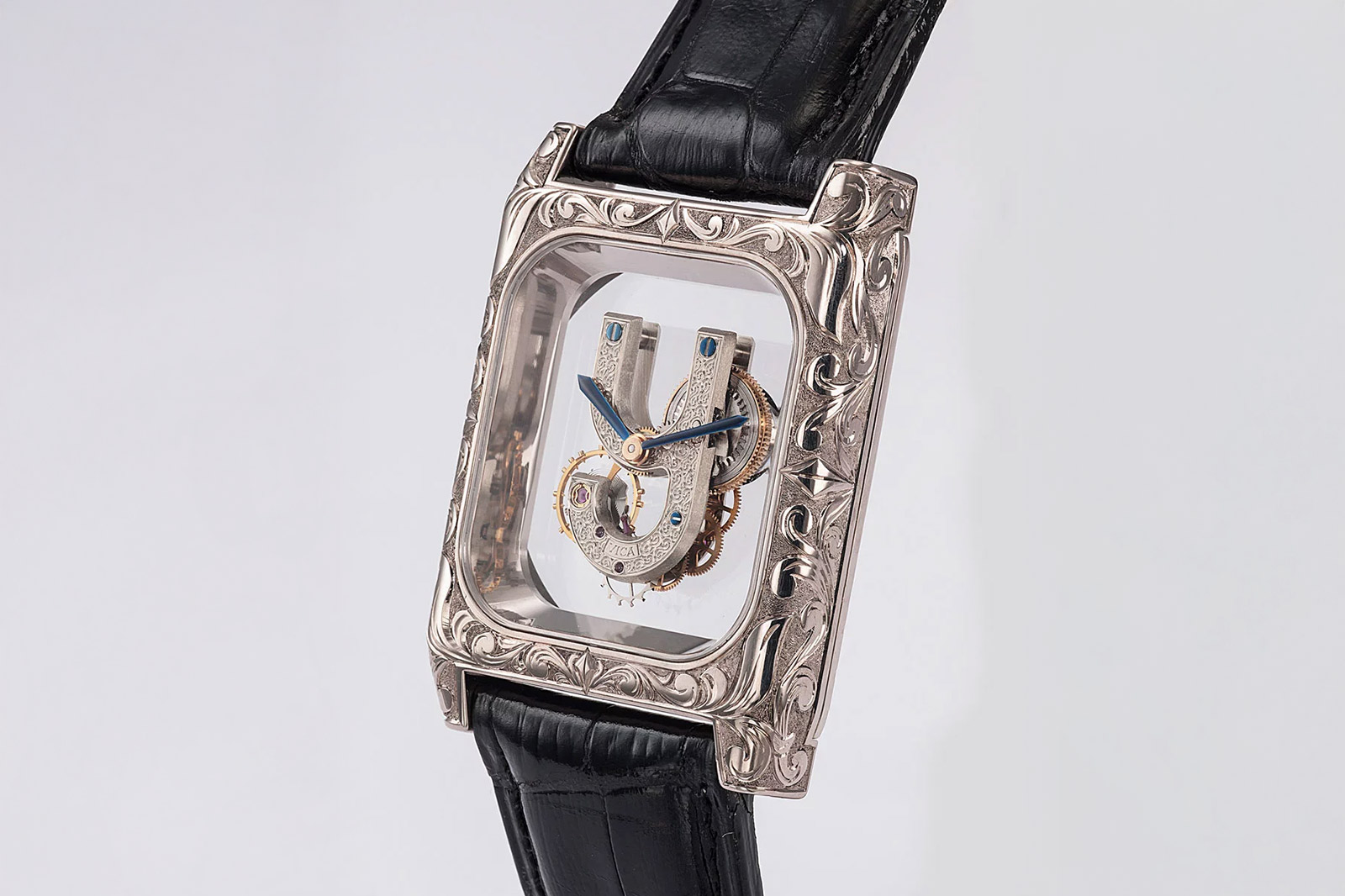
You know what a watch movement looks like. Even if you’ve not seen one outside a case, you can look at the back of most luxury watches and get a good little snapshot through an exhibition caseback. Sure, specific calibres mix things up; they might place the various components in different parts of the watch, incorporate funky complications, create space so that they can lean on the word ‘architectural’. Then there are the watches of Vincent Calabrese – and architectural doesn’t even come into it.
Shaped movements are nothing new. Fairly often you’ll see rectangular movements designed to fit rectangular cases. But ‘shaped’ barely comes into what Vincent Calabrese does, with movements stripped down to their most fundamental elements and turned into mechanical art pieces. It’s an incredible approach to watchmaking – and yet the watchmaker’s modern Space collection didn’t come out of nowhere. In fact, it started with the under-recognised modern icon that is the Corum Golden Bridge – the story of which was born from frustration.

Back in the 1970s, Calabrese was working primarily as a watch repairer. Born in Naples, he’d been in Switzerland since he moved there in 1961 to avoid Italian military service and by the early ’70s, he was repairing prestige watches in Crans-sur-Sierre. Then one day, a client asked him to repair a watch – but just the case, ignoring the movement. That’s perhaps more understandable than it seems; movement repairs can be expensive, and this was at the height of the quartz crisis, mechanical watches were starting to feel a bit outdated. But for a proper watchmaker like Calabrese, it was all but an insult.
And so, Calabrese took it upon himself to design a watch where the movement wasn’t just a timekeeping necessity but was the whole point of the watch. The result was a 45-part, linear movement the world had never seen before – presented at the 1977 Inventors’ Fair in Geneva. Corum spotted it and three years later the first Golden Bridge was presented at Baselworld 1980.
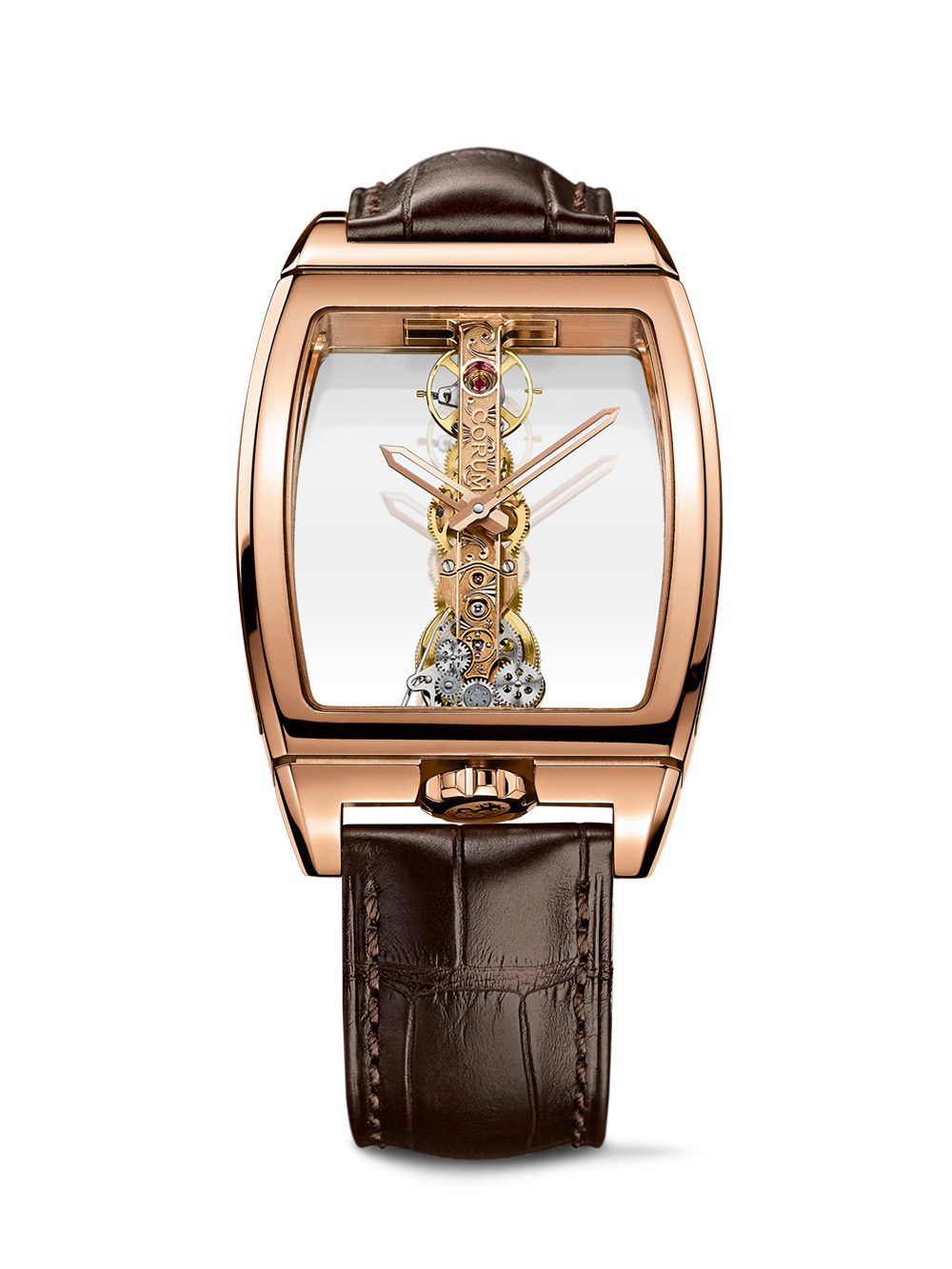
It’s hard to explain just how against-the-grain this was. As I mentioned, the quartz crisis was in full swing and brands were struggling to keep up, adapting or dying left, right and centre. The idea that someone would build a watch that highlights its mechanical nature felt… counterintuitive, not least because it took seven patents to build. And yet it was an immediate success. Coming from a watchmaker that had never actually been formally trained, it was a career-defining feat.
The Golden Bridge is still a firm favourite among horological aficionados, but for Vincent Calabrese it was just a starting point. Just a year after Corum presented their version, the independent watchmaker one-upped with Les Personnelles. The first watch in this new collection was more than a linear movement fixed at both ends of the case. Instead, it outlined the letter H, floating in a void of sapphire crystal. Calabrese turned an already mind-blowing movement into a mystery watch – and it was stunning.
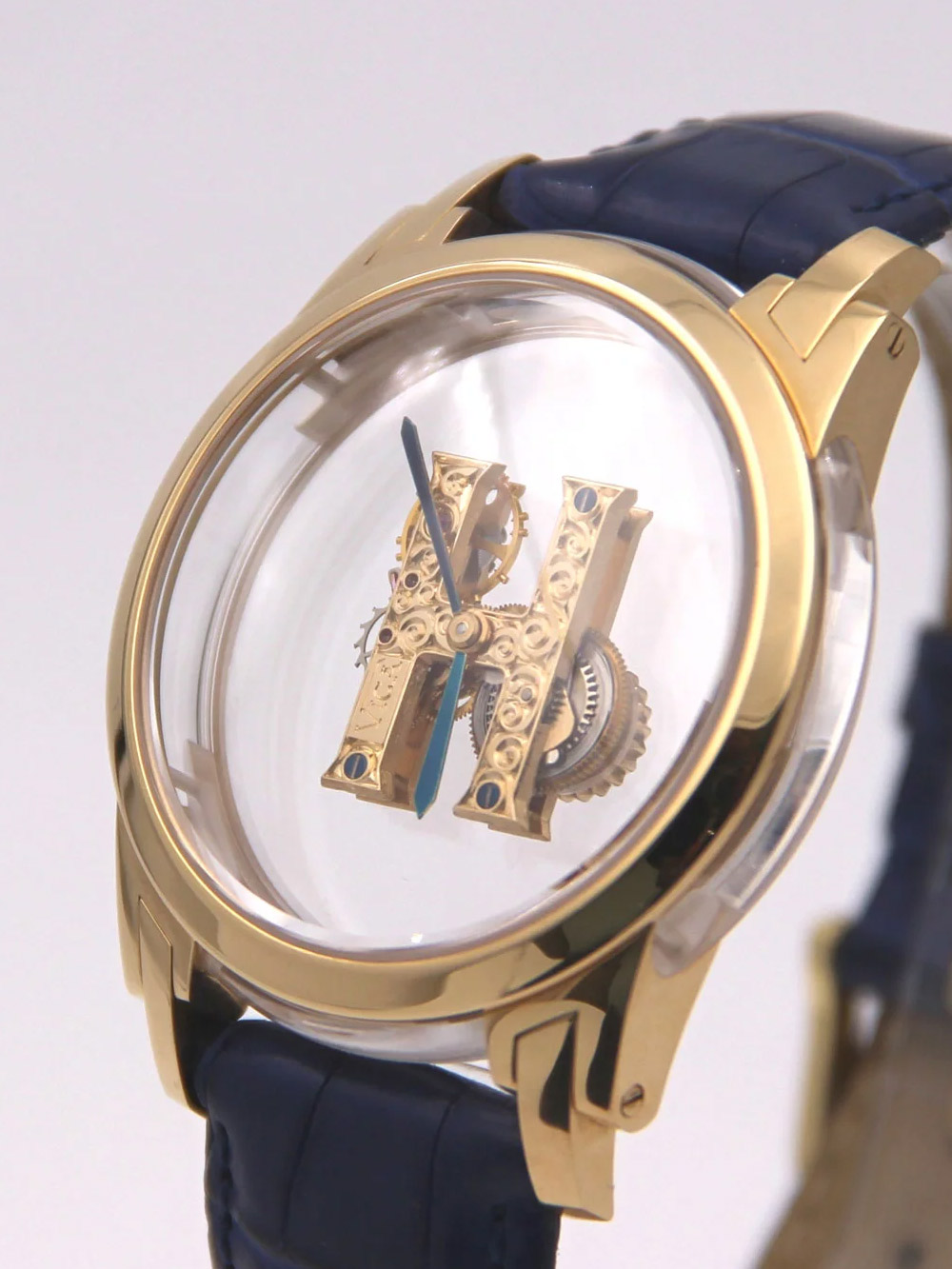
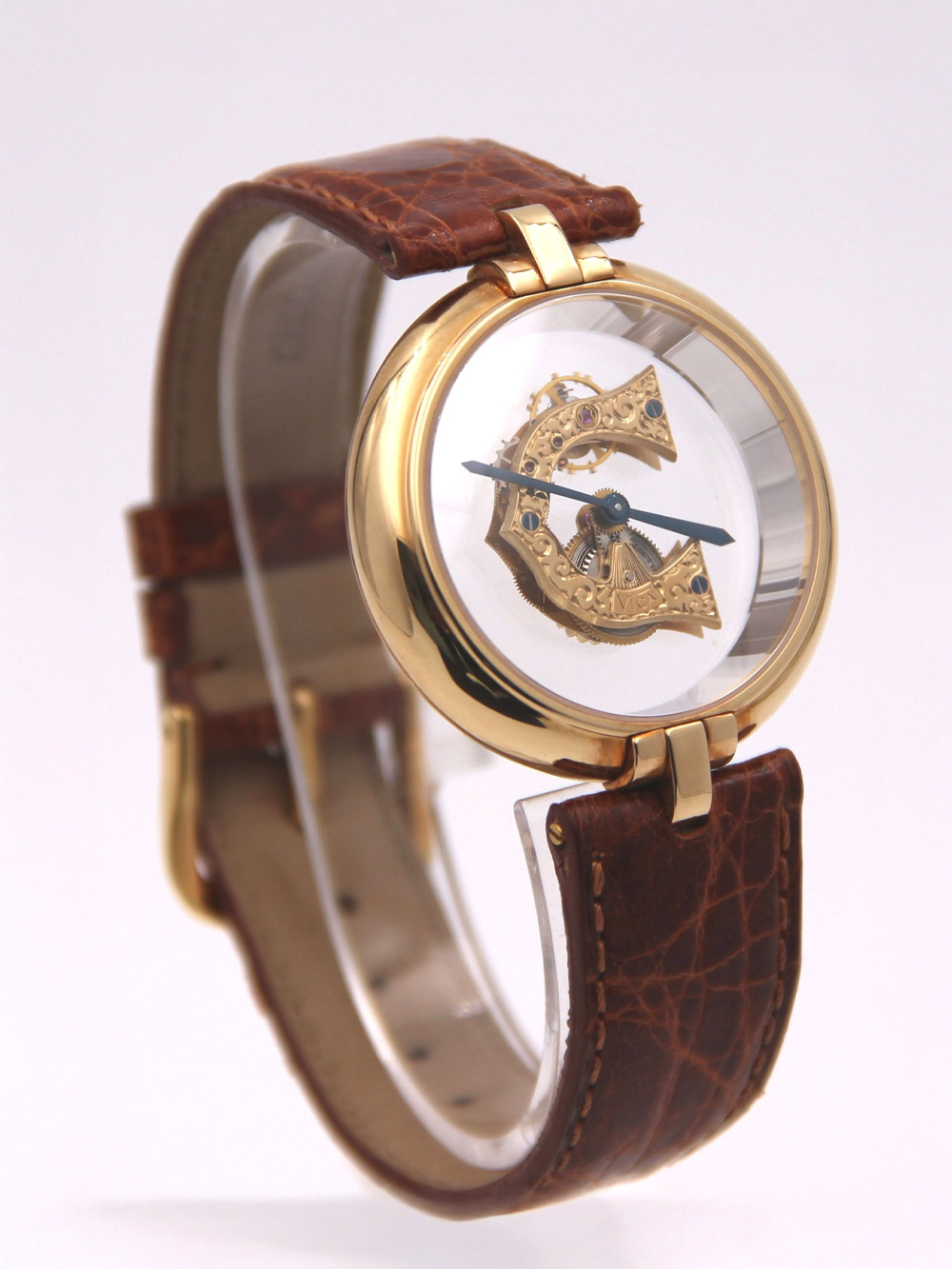

Les Personnelles became a status symbol among a certain level of watch collector, creating movements in various letter shapes like a haute horology monogram. And yet Calabrese still felt like there were untapped collectors out there. He needed a way to promote not just his own work, but independent watchmaking as a field. As his first movement showed, he’s always been a ‘dive right in’ kind of guy, and so he teamed up with Svend Andersen – of Andersen Genève – to found the Académie Horlogère des Créateurs Indépendants (AHCI), in 1985. To mark this event, Calabrese amped up his unique breed of spatial watchmaking by adding a tourbillon into the mix. That’s one hell of a way to celebrate.
At the same time, Calabrese was still working with other brands alongside developing his own watches, and in 1986 he created his biggest contribution to horological canon in the Blancpain Flying Tourbillon. As a refreshed, ‘flying’ denotes a tourbillon that’s only supported from below, appearing to float and even these days is considered a pinnacle watchmaking flex. It makes sense then that a watchmaker that builds watches centred on floating movements would have a thing or two to say about the flying tourbillon – and while the original pocket watch version was created by Alfred Helwig back in 1920, this was the first time it had been seen in a wristwatch.
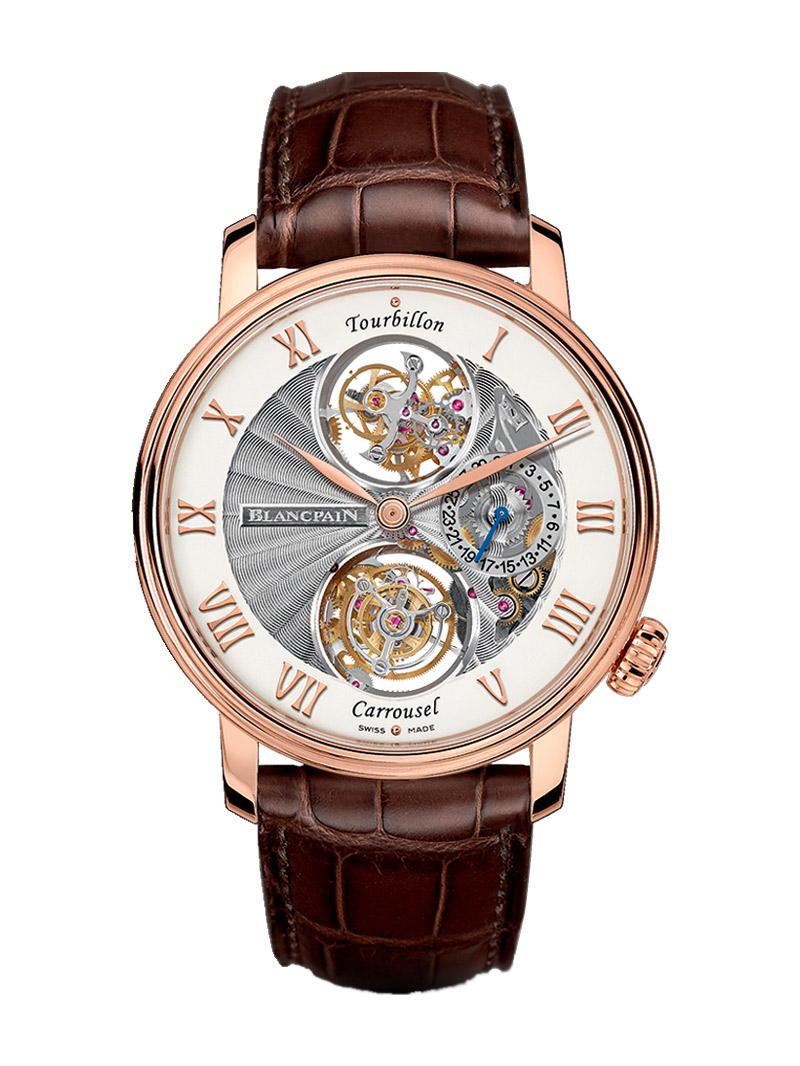
Of course, it didn’t take long for Calabrese to incorporate the shiny new complication into his own collection, and in 1988 he launched the aptly named FLYING TOURBILLON. Still, the relationship with Blancpain continued through the decades, to the point where the Swiss giant actually bought the Vincent Calabrese brand in 2008. It was a situation that didn’t last that long, with the watchmaker himself striking out on his own again in 2012; but in the years between, Calabrese still managed to register nine patents for Blancpain. The man just doesn’t stop.
Over the years, Vincent Calabrese has broadened his aesthetic and while there may be an emphasis on playfulness and jump hours, it’s as eclectic a collection as you might expect from a watchmaker that filed nine patents in three years. But the independent watchmaker will forever be associated with his Space Collection, presenting movements in the shape of letters, symbols and mythological creatures. It’s not hard to see why. Not only did this unique approach to movement design make a meteoric impact nearly 50 years ago, but there’s still nobody making anything else like it.
So, next time you think you know what a watch movement looks like, think again.
More details at Vincent Calabrese.