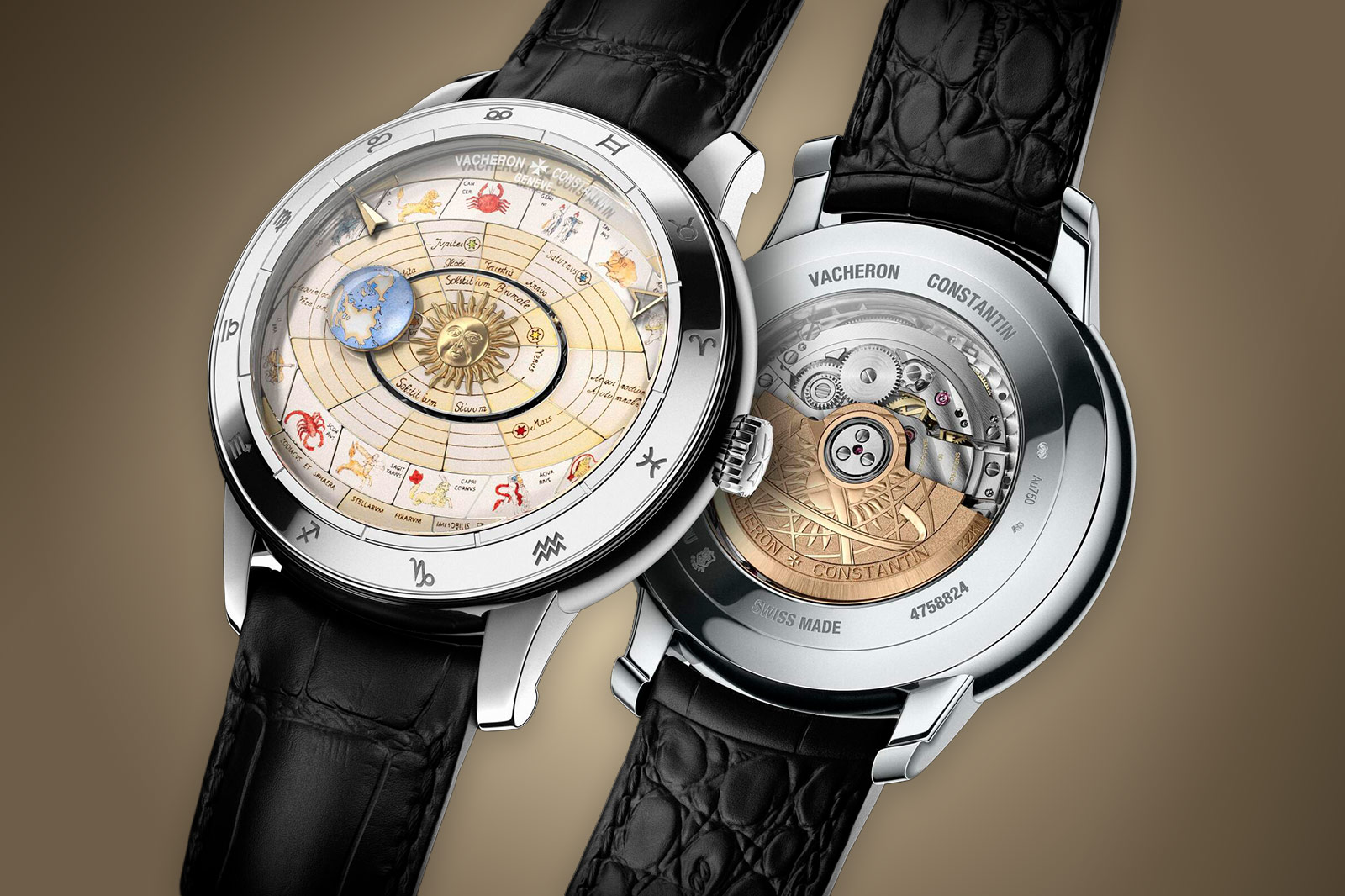
Among horology’s holy trinity, Vacheron Constantin is arguably the most art-minded, and to my mind the one that has made art most nearly a vocation rather than a sideline. The evidence is institutional rather than anecdotal. It keeps its own Métiers d’Art workshops, where enamellers, engravers, guilloché specialists and gem-setters work alongside the watchmakers. It runs Les Cabinotiers, its atelier for unique and bespoke pieces, named for the Genevan artisans who once worked in ‘cabinets’. And since 2019 it has been a formal partner of the Louvre, a relationship that has produced watches inspired by the museum’s antiquities and a service by which a client may choose a work from the collection to be reproduced on their dial.
That is the house. The Copernicus, shown at the Salon International de la Haute Horlogerie in Geneva in January 2017 with Swiss exports down for the second year running, is the clearest account I know of what it means by art. To see what that art is for, we have to go back nearly five centuries.
Copernicus, Cellarius and a Dangerous Idea
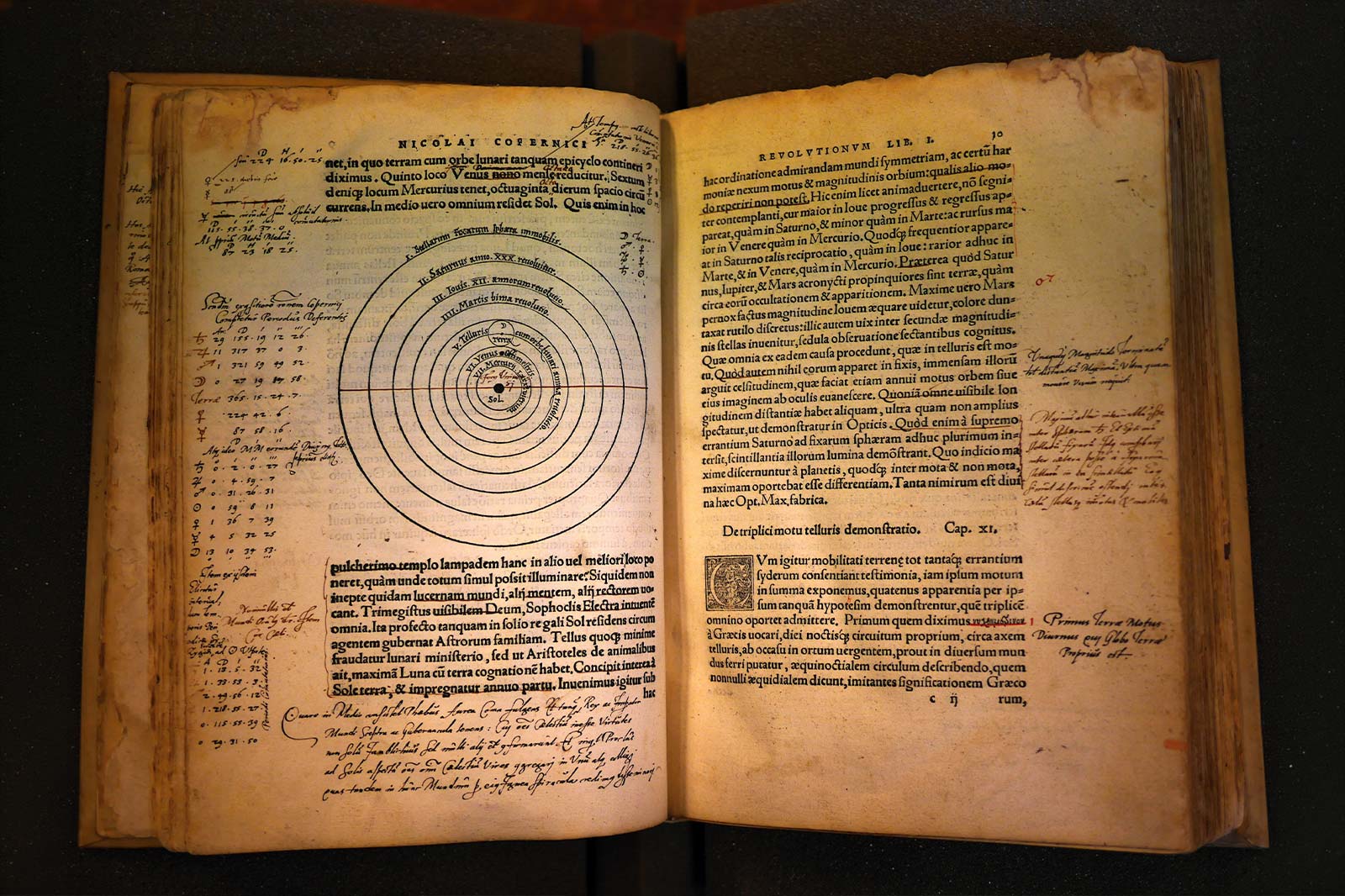
Nicolaus Copernicus, a canon of Frombork cathedral and a man who did nothing in a hurry, circulated a sketch of a very dangerous thought some time before 1514: that the Earth moves and the sun sits at the centre of things. Then, for the better part of three decades, he said nothing further. De revolutionibus orbium coelestium reached a Nuremberg press only in 1543, dedicated, with some nerve, to Pope Paul III, and carrying an unsigned preface from the man overseeing the printing, assuring readers that the whole business was no more than a convenient piece of arithmetic. Copernicus is said to have been handed the finished pages on the day he died.
The idea travelled because of the pictures. The finest appeared in Amsterdam in 1660, compiled by Andreas Cellarius, a schoolmaster rather than an astronomer, in his Harmonia Macrocosmica: a celestial atlas of richly coloured copper engravings setting the universes of Ptolemy, Tycho Brahe, and Copernicus side by side. The Copernican plate has the Sun blazing at the centre, the planets wheeling outward and the zodiac wrapped around the whole, and its title still called the system a hypothesis, 117 years after Copernicus’s death. It is from Cellarius, rather than from any painting, that Vacheron’s dials take their cue. Yet a picture, however fine, does not move, and for that the maison needed a movement.
Calibre 2460 RT: How the Earth Orbits the Dial
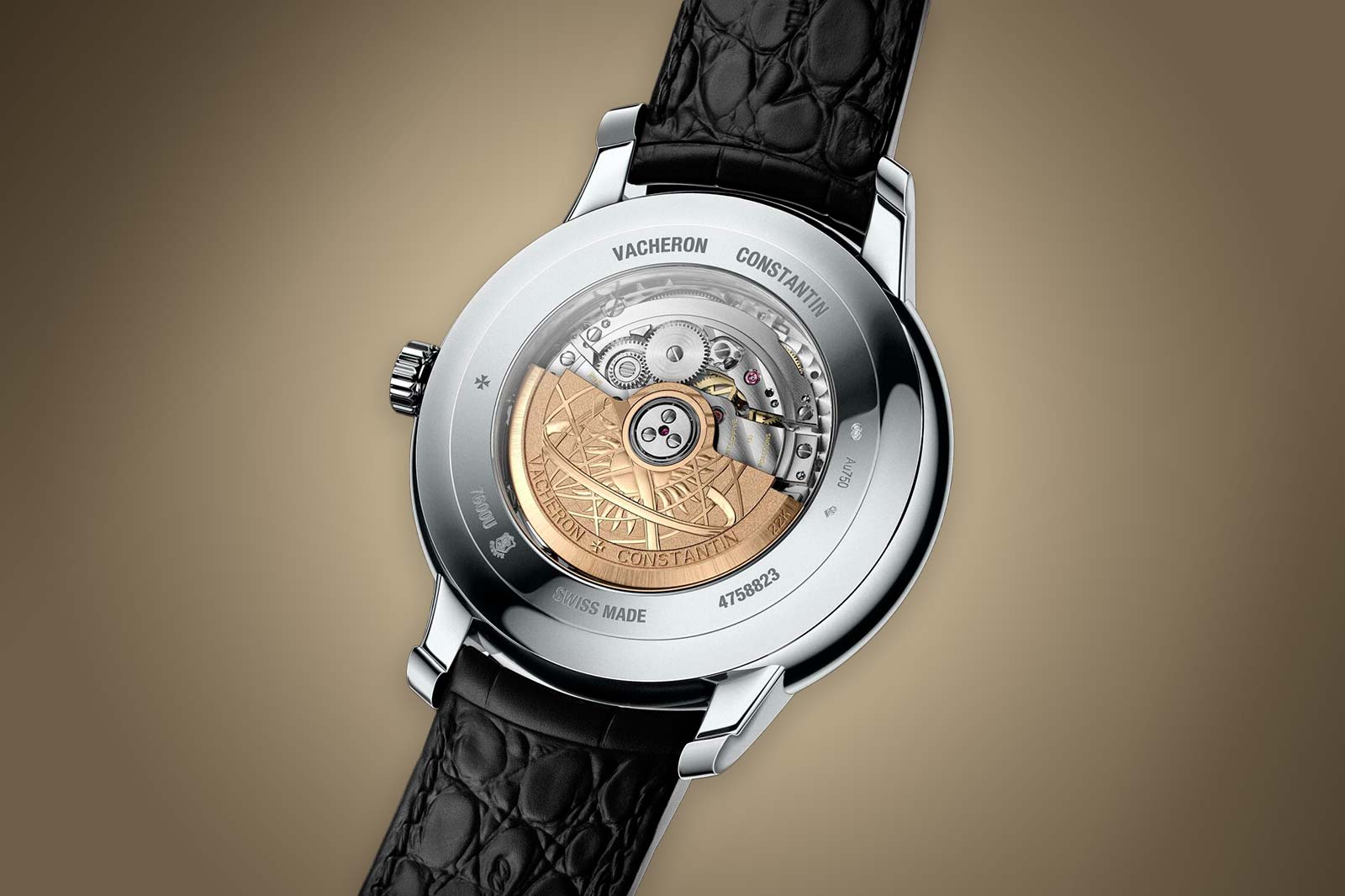
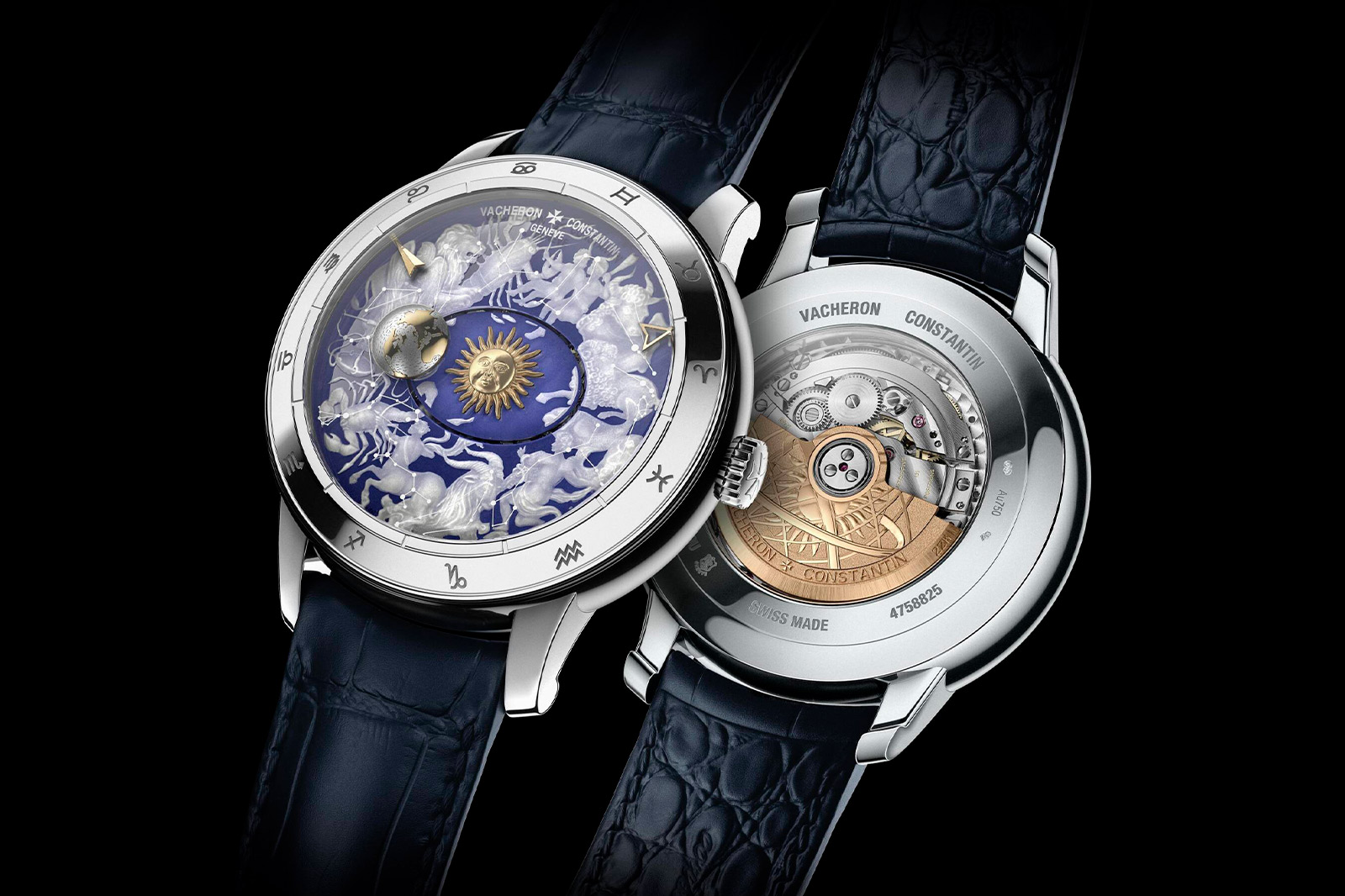
Calibre 2460 RT took three years to develop in-house. It is a self-winding calibre of 352 components, built on the 2460 base, and it sits in a 43mm white gold case under reference 7600U. A domed Earth, 6.8mm across, rotates once every 24 hours, so doing duty as a day and night indicator, and travels around a hand-engraved pink gold Sun once every 365.2421898 days, the length of the tropical year, so that its position against the zodiac gives the season. The difficulty lies in the geometry. A circle would have been simple. An ellipse, which is the path the planets really follow, asks the Earth to sweep around the dial while moving away from the centre and back again, a two-axis motion that calls for its own assembly of gears and levers.
It has not been asked to do it again. Nine years on, the house confirms that the Copernicus complication “has not been revisited since its introduction in 2017”, though the 2460 base beneath it has gone on to carry plenty else. Forty watches, one mechanism, never repeated.
Set exactly, the gear train will be out by a single day in roughly 8,000 years. Whether anyone has ever set it exactly is another matter; it is adjusted by thumb at the crown, and I doubt any owner has. Yet a gear train built to outlast several civilisations is a statement of intent, and the dial says the same: the hours and minutes have been sent to the periphery on two small gold arrows, while the cosmos takes the middle.
Three Métiers d’Art Dials: Grand Feu Enamel, Engraving and Sapphire
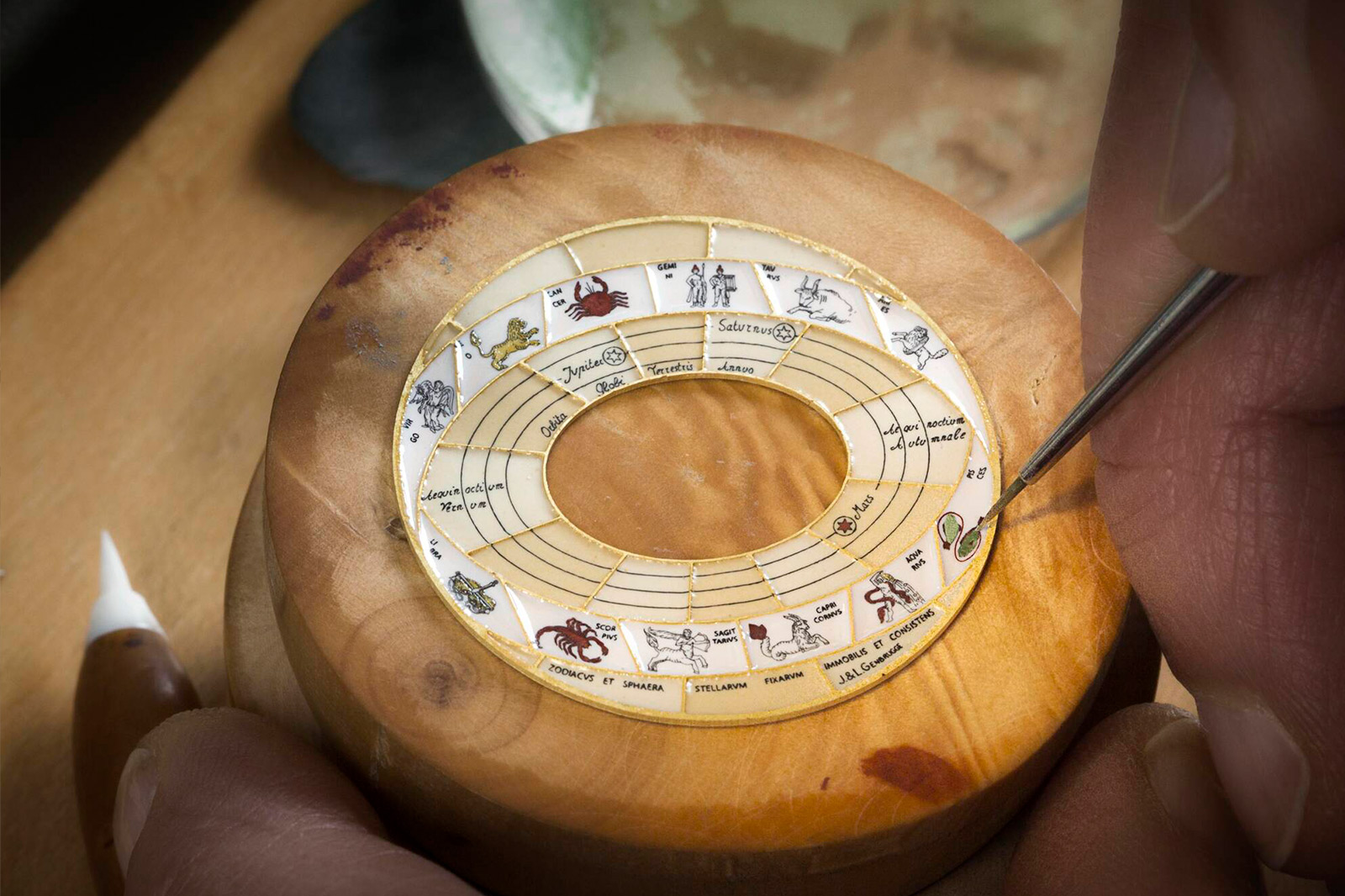

Enamelling and guillochage all but disappeared from public view in the 1970s and ’80s, and of the early ’90s Christian Selmoni, now Vacheron’s Style and Heritage Director, has recalled simply: ‘nobody wanted them.’ Vacheron did, and in the mid-2000s it brought enamelling, engraving, guillochage and gem-setting under its own roof. The Copernicus watches are what that decision looks like when it is applied to a single subject three ways over.
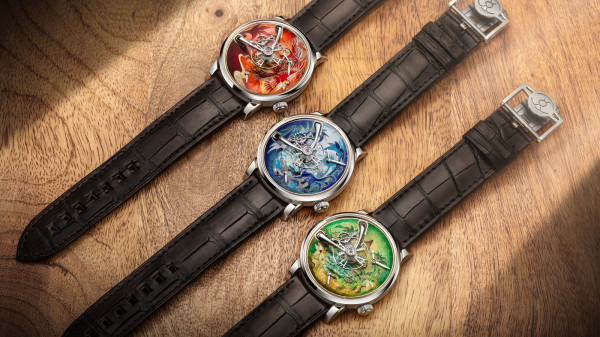
The grand feu enamel version, of which there were 10, begins as a disc of 22-carat gold. The outlines are drawn with a quill, the colour is laid on with the finest of brushes, and the whole is fired again and again over more than a month, each visit to the kiln putting the entire dial at risk.
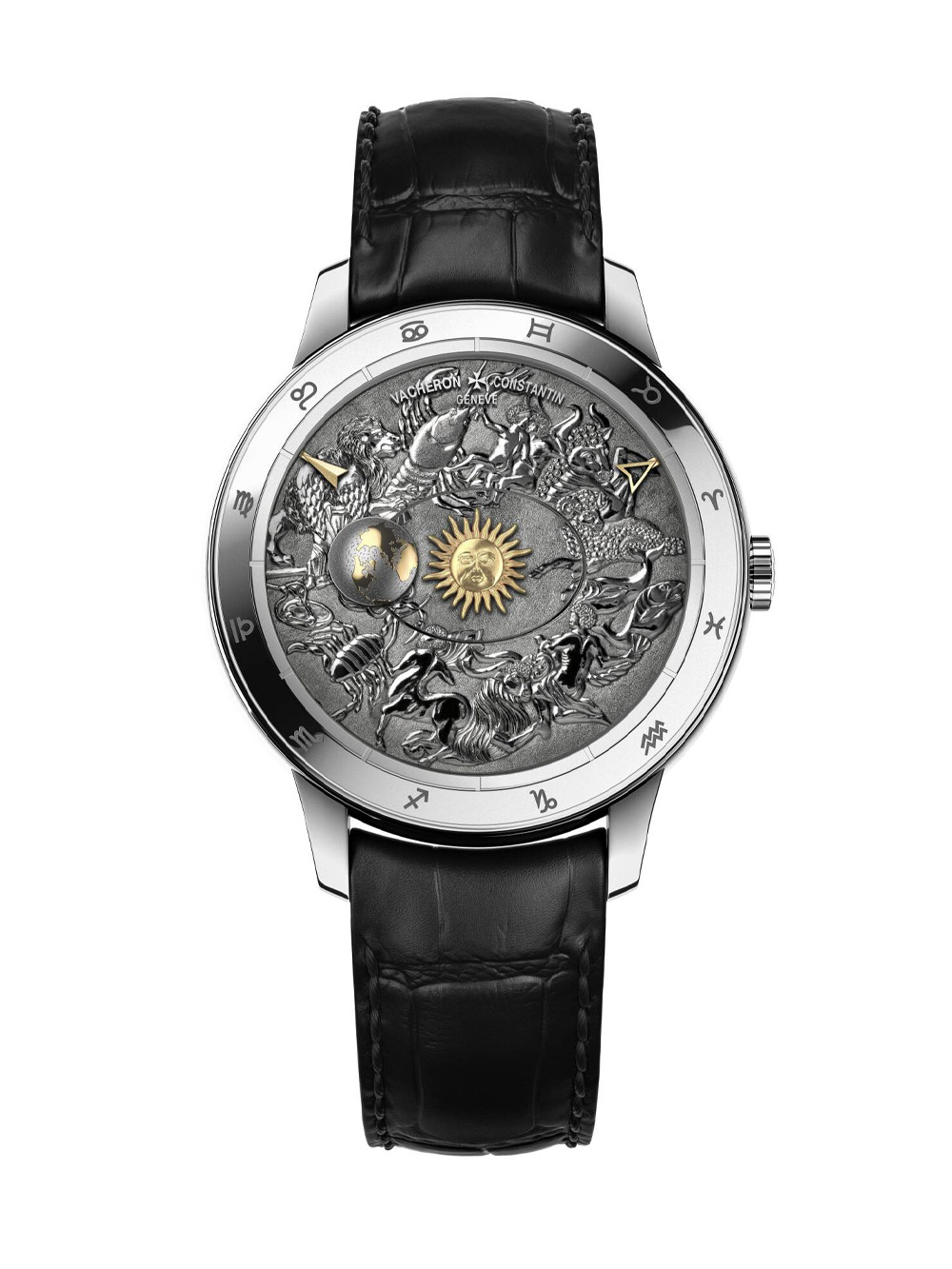
The hand-engraved version, also 10, knots the 12 zodiac signs together in polished relief so tightly that they seem to be wrestling, like a fragment of ancient frieze.
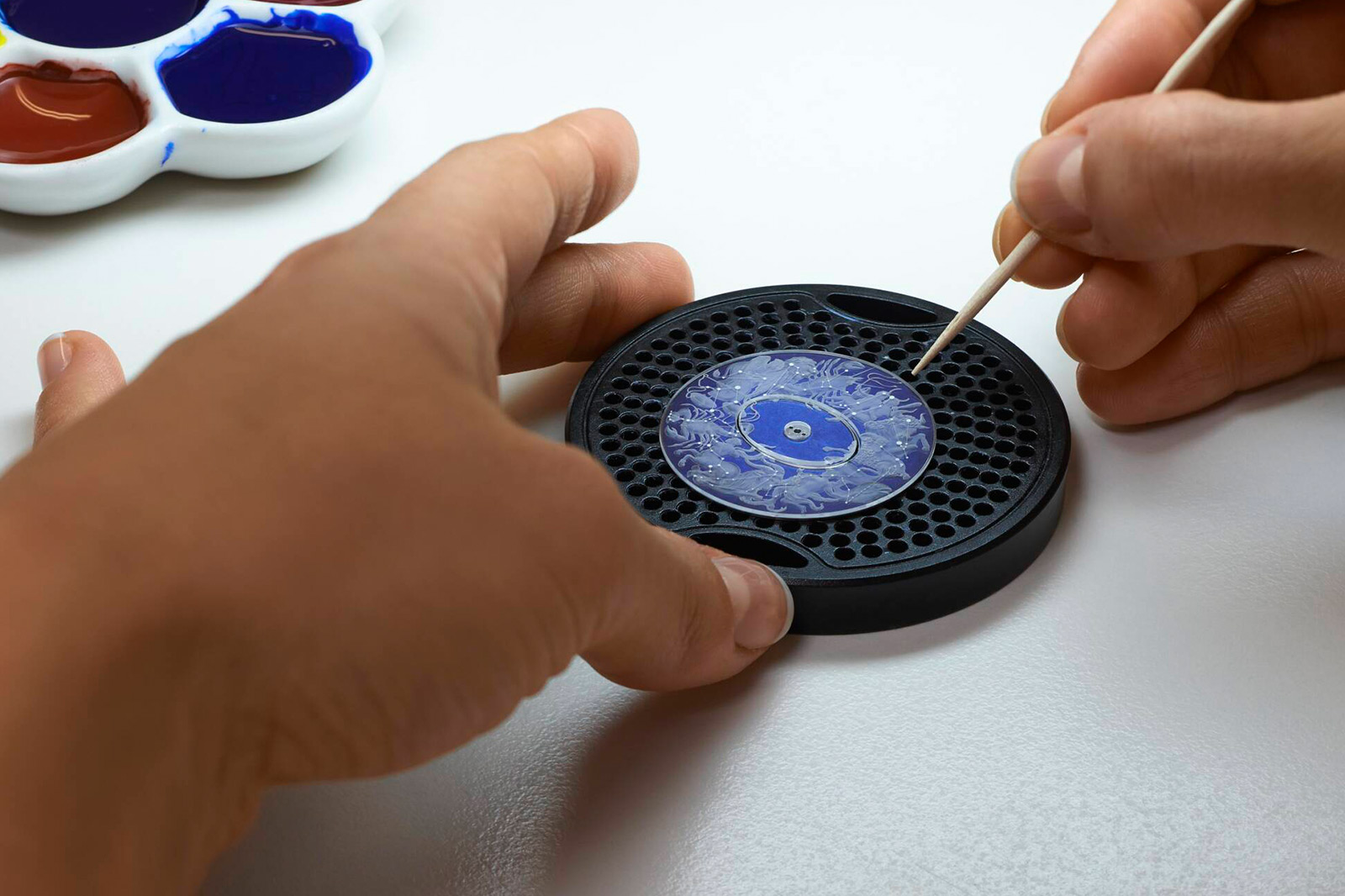
The sapphire, of which there were 20, floats a disc of sapphire over midnight blue, laser-engraved and then finished by hand, each sign overlaid with its true constellation in luminous paint, so that after dark the star map begins to glow.
In the workshops at Plan-les-Ouates I was told that a single case engraving occupies one person for around six months. Each Copernicus was delivered with a magnifying glass, which tells you how confident the house was of what the loupe would find.
The Economics of Métiers d’Art in 2017
It is worth remembering what else the world was doing in 2017, which was buying screens and steel. In the final quarter of the year, on analysts’ estimates, Apple shipped more watches than the entire Swiss industry, and in October a steel Rolex once owned by Paul Newman fetched $17.8 million at Phillips. Against that background Vacheron’s then chief executive, Juan-Carlos Torres, announced a year given over to chiming and astronomy, and the Copernicus was its work of art.
At launch prices of CHF 150,411 for the enamel, CHF 114,318 for the engraved and CHF 102,310 for the sapphire, the edition of 40 comes to roughly CHF 4.7 million, against three years of development and weeks of handwork on each dial. Selmoni put Vacheron’s annual output at about 25,000 watches in 2015, which makes the Copernicus perhaps 0.16 per cent of a year’s production. He calls Métiers d’Art the brand’s ‘creative playground’, and a halo would be the commercial word: it earns attention (the Copernicus was shortlisted for the Grand Prix d’Horlogerie de Genève’s Artistic Crafts prize that year), keeps rare skills in employment, and offers the most devoted collectors something to covet.
Why Vacheron Never Repeated the Copernicus
Follow the thread back and the pattern is hard to miss. A canon sat on an idea for 30 years and saw it in print only as he lay dying. A German-born schoolmaster in Holland mapped it a century later. Three and a half centuries after that, a Geneva maison set it in motion in enamel, gold and sapphire. Call it a halo if you like. A halo only works if what sits beneath it is real, and a dial that spends a month in and out of the kiln is about as real as this trade gets.
In 1819 François Constantin wrote to his partner the line that became the house motto: ‘do better if possible, and that is always possible’. The house still trades on it, and in 2017 it took him at his word. It has not stopped: at Homo Faber in Venice this year it showed six concept watches that, by its own account, put artisans and techniques together “in ways that had never been explored before”. The Copernicus sits in the archive, done once and left alone. That, too, is a kind of statement.
Frequently Asked Questions
What is the Vacheron Constantin Copernicus Celestial Spheres?
The Métiers d’Art Copernicus Celestial Spheres 2460 RT is a Vacheron Constantin watch launched at SIHH in January 2017. Its dial is a heliocentric display: a small Earth turns once every 24 hours and orbits a gold Sun once a tropical year, while the hours and minutes are read from two gold hands at the edge of the dial.
What are its specifications?
Calibre 2460 RT, self-winding, 352 components, 27 jewels, 4Hz, approximately 36 hours’ power reserve, in an 18-carat white gold case of 43mm by 12.9mm with a sapphire caseback. References 7600U/000G-B212 (grand feu enamel), 7600U/000G-B211 (hand-engraved) and 7600U/000G-B226 (sapphire).
How much did the Copernicus Celestial Spheres cost?
At launch, CHF 102,310 for the sapphire dial, CHF 114,318 for the hand-engraved dial and CHF 150,411 for the grand feu enamel dial.
What inspired the dial?
Andreas Cellarius’s Harmonia Macrocosmica, a celestial atlas published in Amsterdam in 1660, whose Copernican plate places the Sun at the centre with the planets and zodiac around it.
Why does the Earth follow an elliptical orbit?
Because that is the path the planets really follow, as Johannes Kepler showed in 1609. Copernicus himself used circular orbits, so the watch is more accurate than the system it is named after.
Is the Copernicus complication still made?
No. Vacheron Constantin says the complication has not been revisited since its introduction in 2017, although the 2460 movement family beneath it remains in use.