Every serious collector has at least one watch in their box that makes visitors pause mid-sentence. You know the one. They glance at it, tilt their head slightly, and then ask the inevitable question. What on earth is that? The Seiko Fieldmaster Contra 2C21- 0800 lives for that moment.
It is not conventionally attractive, nor does it pretend to be elegant. And it certainly does not care whether you think it is practical. This is a watch that exists because, at one point in time, Seiko was brave enough to ask not whether something should be made, but whether it could be made at all.
The Fieldmaster comes from an era that now feels almost fictional. A time before satellite navigation, before phones, before your wrist buzzed politely to tell you where you went wrong. Back then, navigation required effort, attention, and occasionally a mild argument over which way was north. This watch was designed for that world. A world where being prepared actually mattered.
Seiko, in the late seventies and early eighties, was operating at full confidence. Quartz had upended the industry, demand was exploding, and innovation was moving faster than anyone could keep track of. Instead of playing it safe, Seiko leaned into experimentation (something they have started doing again via the Power Design project). Some ideas turned into icons. Others turned into fascinating dead ends. The Fieldmaster sits proudly in the latter category.
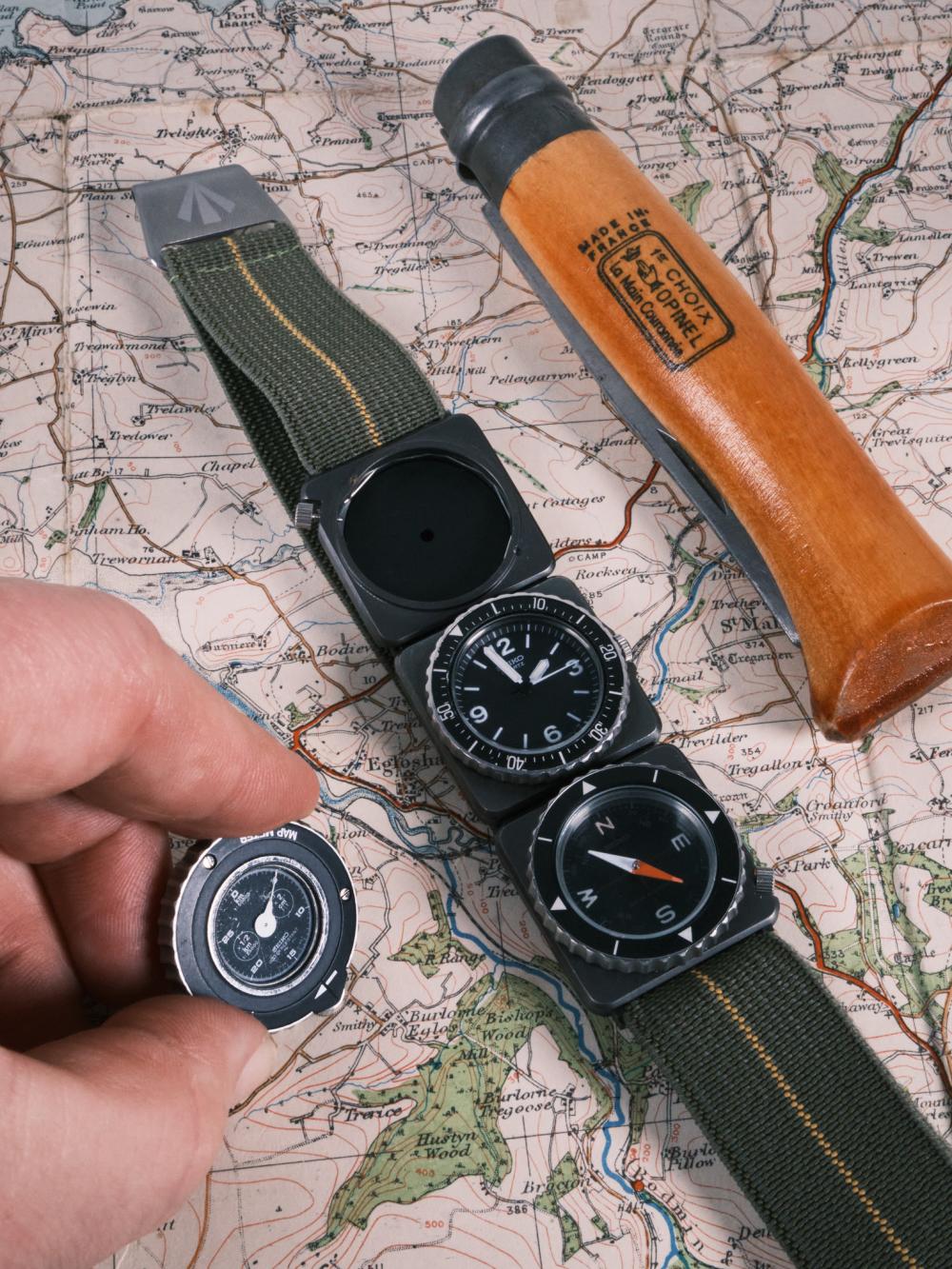

Seiko built the watch around its 2C21 quartz movement, a calibre originally designed for smaller watches. At first glance, the choice seems unconventional, but viewed within the broader concept, it makes perfect sense. The movement’s compact, efficient, and reliable nature gave Seiko the freedom to create something modular rather than bulky. From the outset, this was not a single-purpose tool. Seiko designed it to adapt.
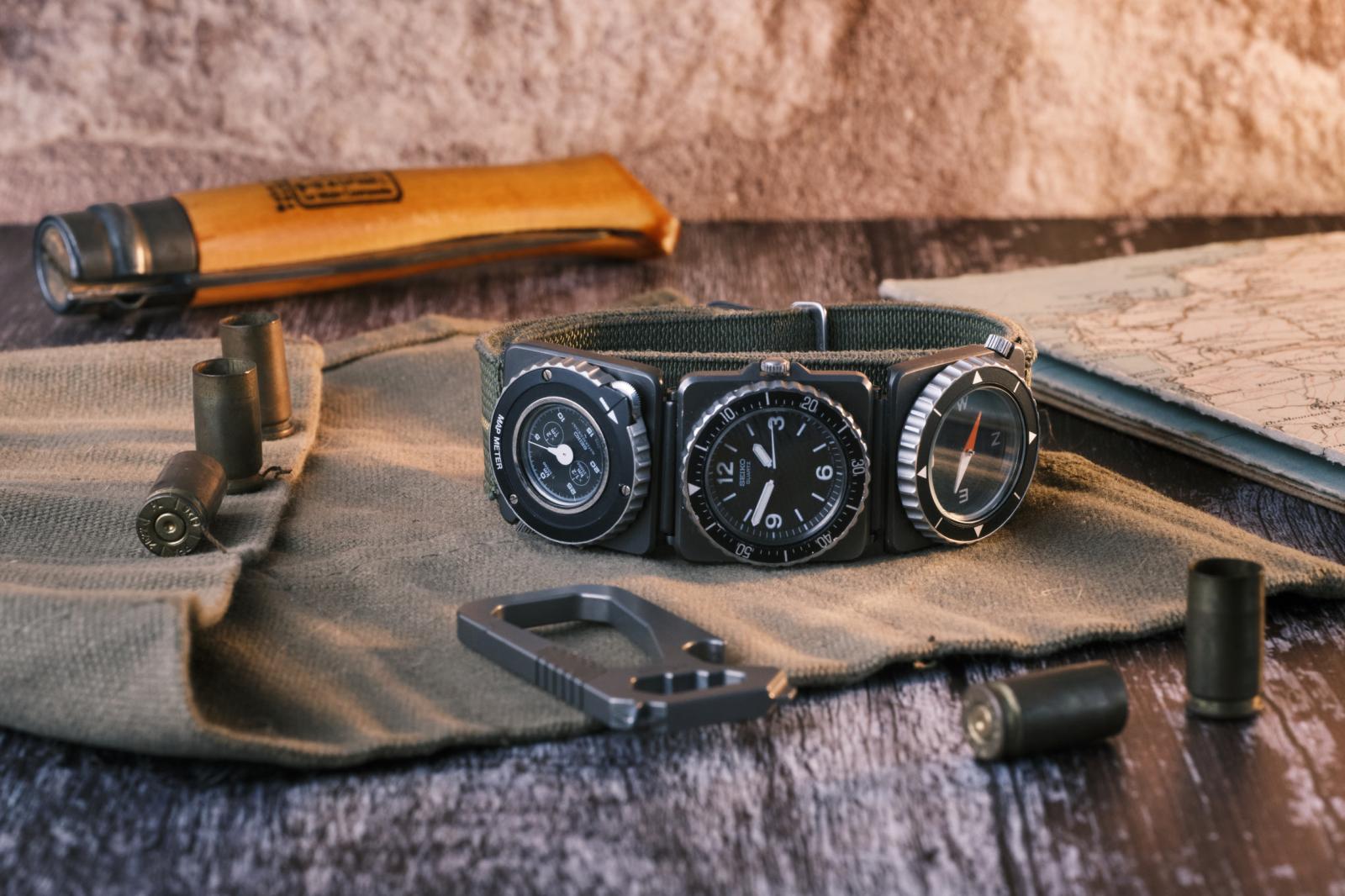
The design leans fully into that idea. Seiko hinged two PVD-coated stainless steel cases together, turning the watch into a wrist-mounted toolkit. The upper section carries the timekeeping module, while the lower section swaps out to accommodate different tools as needed. It functions simultaneously as a watch, a survival aid, and a small-scale engineering experiment.
Depending on market and availability, Seiko fitted that lower module with a compass, an opisometer for measuring distances on paper maps, or, in the Japanese domestic market, a compact digital alarm timer. Buyers outside Japan had fewer options, reinforcing the sense that this was a product of its moment, conceived before global uniformity became the standard.
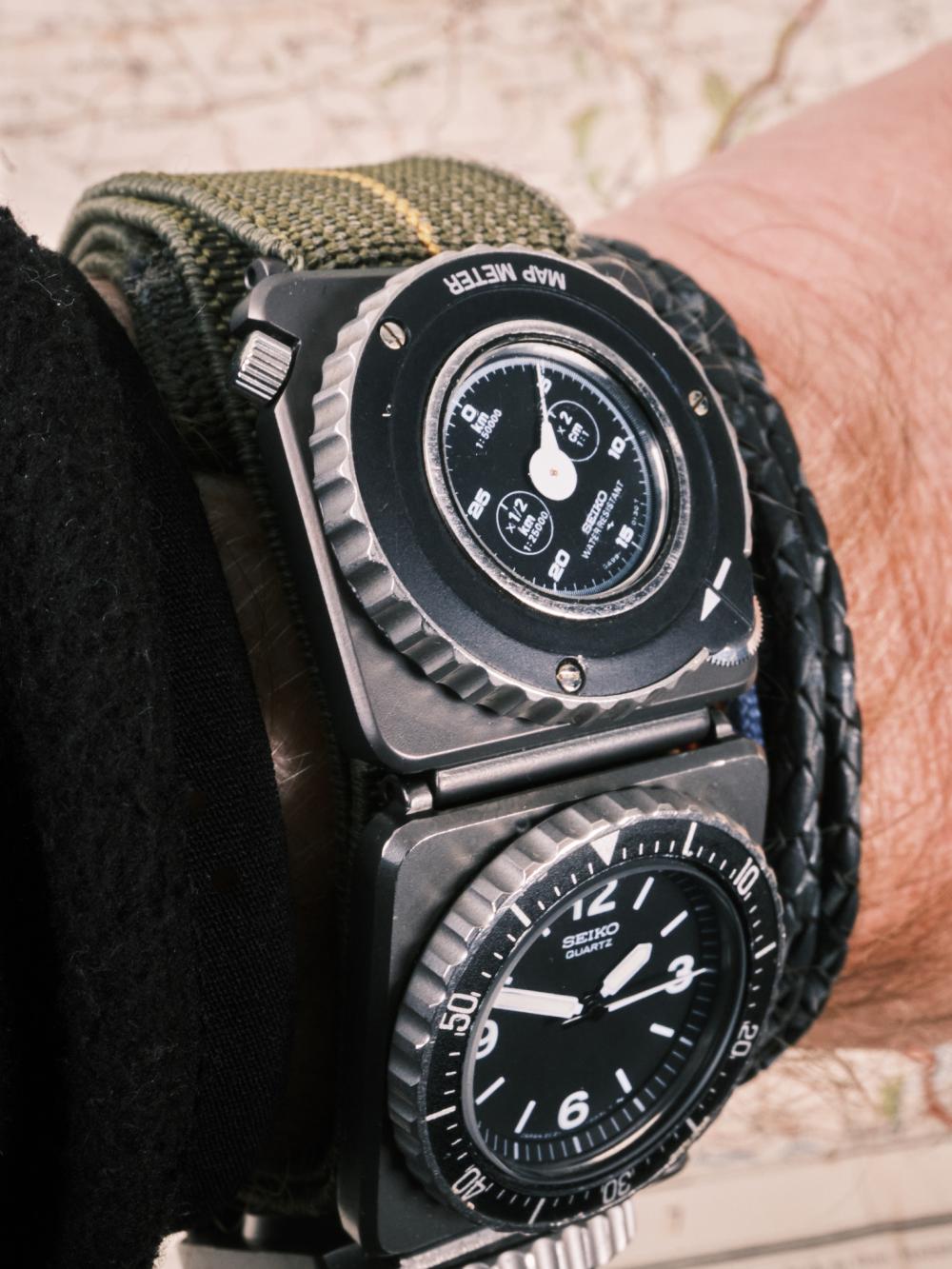
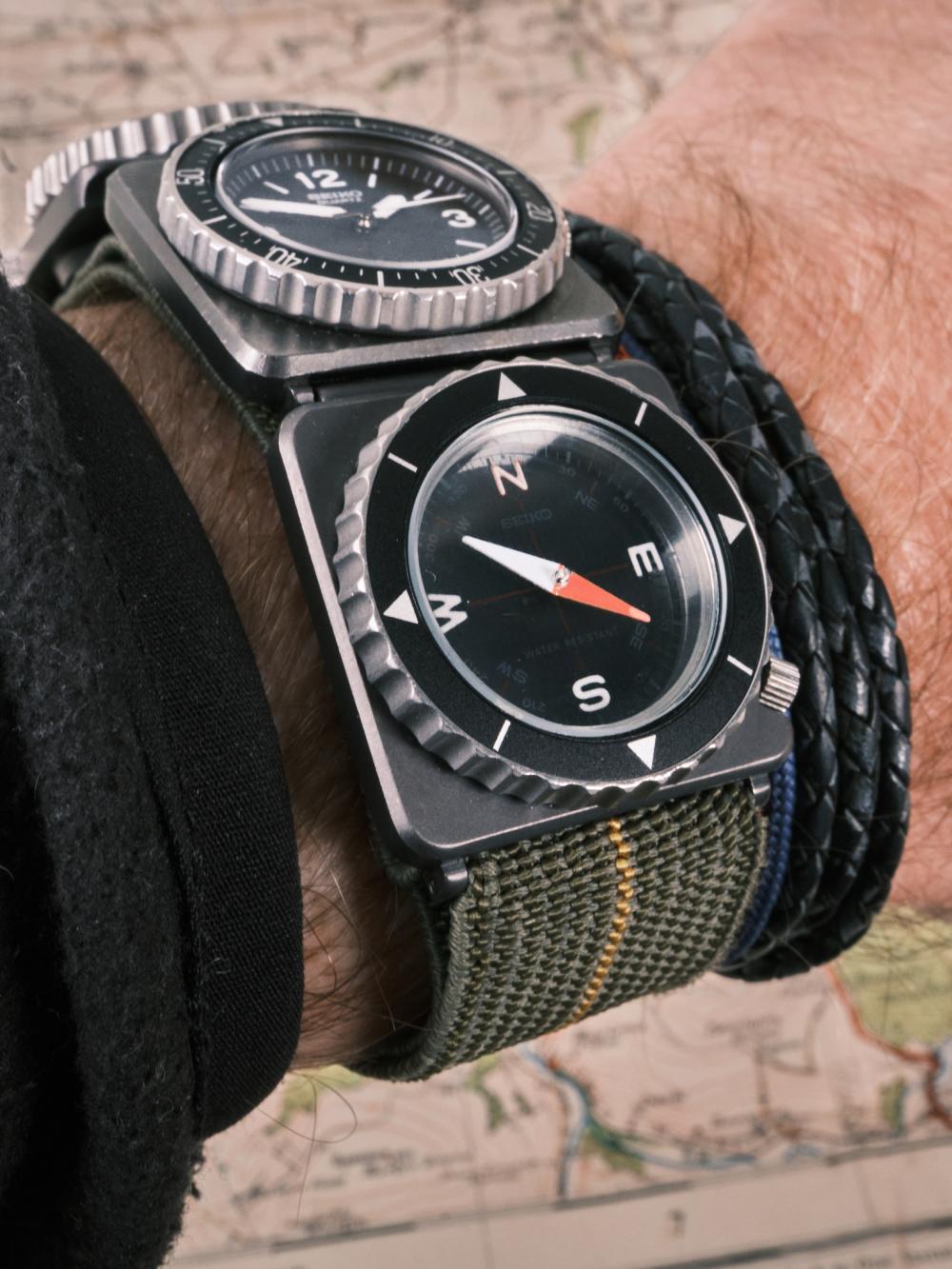
Despite its ambition, the Fieldmaster failed to connect with buyers. Its 28mm case and even smaller accessory window put many people off immediately. Collectors dismissed it as too small, too clever, and simply too strange to take seriously. At a time when tool watches needed to look tough and imposing, the Fieldmaster did the opposite. It felt restrained, almost apologetic, and as a result, it slipped quietly out of sight… but the story doesn’t end there.
At the height of the Cold War, escalating tensions in Central America drew the United States into Nicaragua, where it backed the Contra guerrillas. Through a network of covert operations and deeply questionable decisions, money and equipment poured into the region. Among the surplus supplies were Seiko Fieldmaster watches, sourced from Japan and issued to fighters operating in the jungle.
The story is uncomfortable and reflects poorly on all involved. Yet it permanently reshaped the Fieldmaster’s reputation. Almost overnight, this overlooked quartz experiment acquired a new identity. Collectors began referring to it as the guerrilla watch, a nickname that stuck and wrapped the watch in a layer of myth no marketing campaign could ever replicate.
Today, collectors actively chase the Seiko Fieldmaster Contra. Not because it outperforms modern watches technically or impresses with traditional refinement, but because it captures a moment when watchmakers embraced bold ideas, odd solutions, and unapologetic experimentation. Tracking down a well-preserved example takes real effort, and completing a full set of modules proves even more challenging.
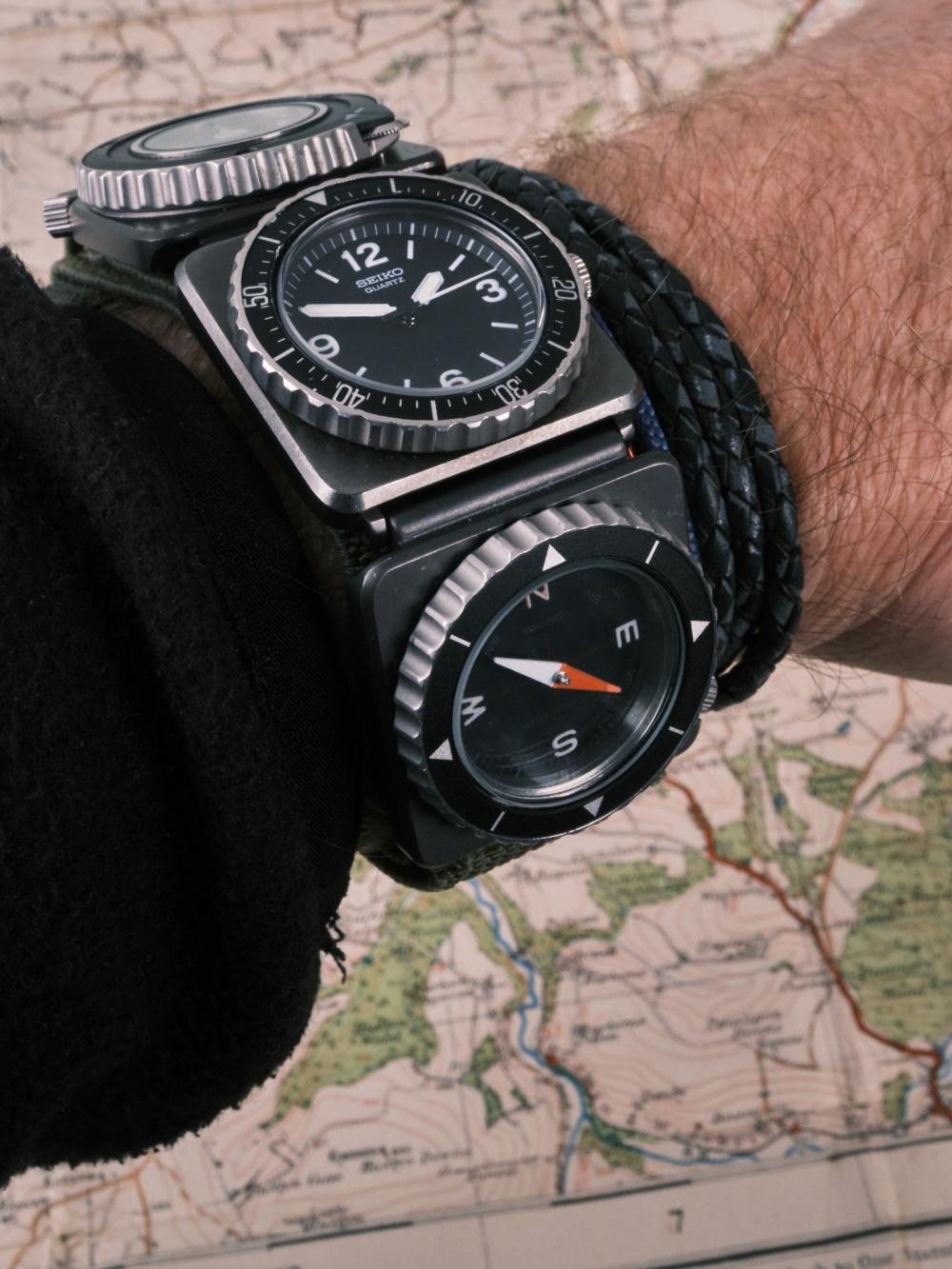
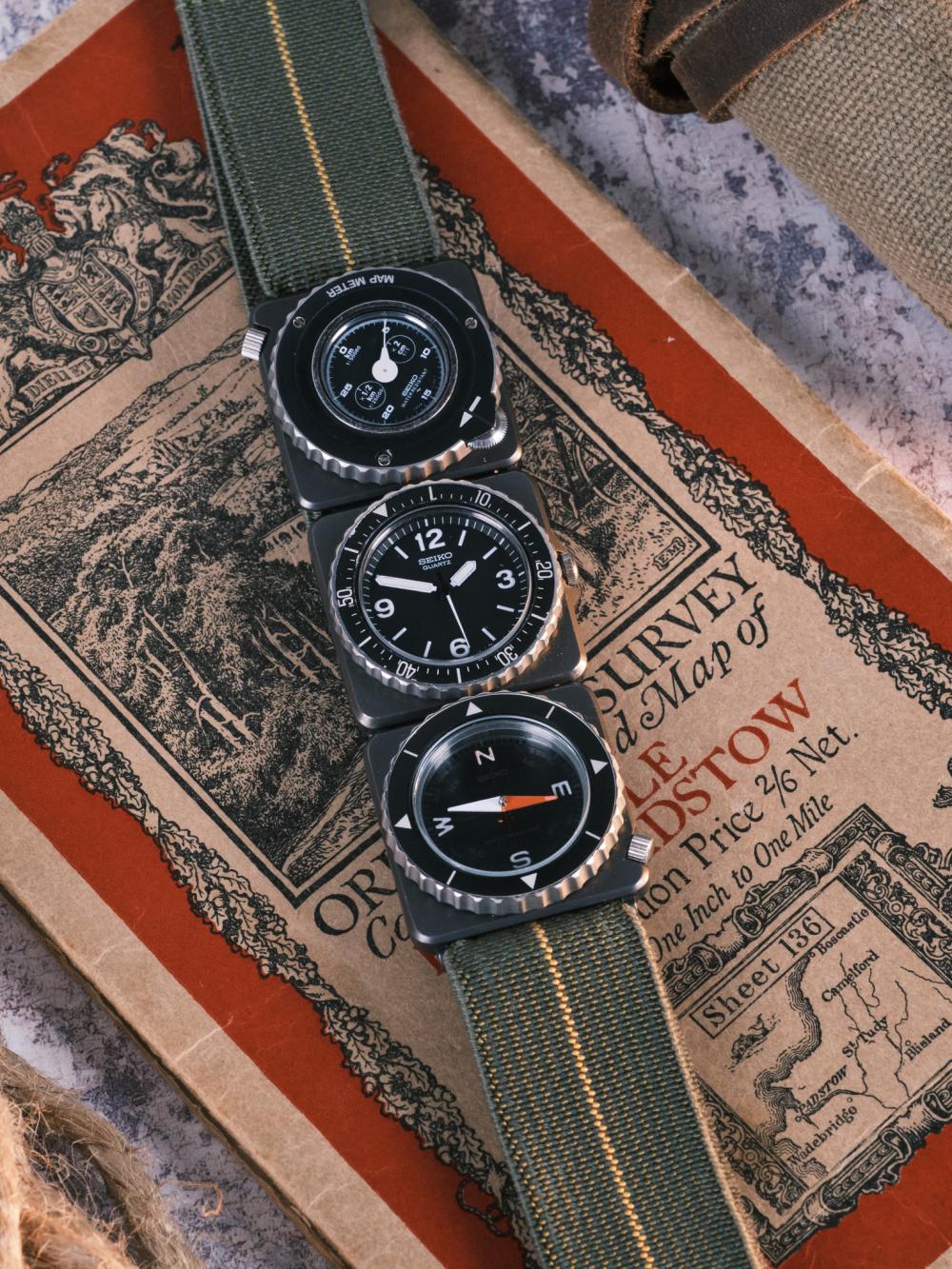
I managed to secure a spare lower case fitted with an opisometer, which feels like the most honest setup for a watch built around navigation. The LCD alarm module still escapes me, but that hunt forms part of the attraction. The Fieldmaster rewards patience and curiosity. It offers no shortcuts and no instant satisfaction.
Wearing the Fieldmaster today is an exercise in contradiction. It is functionally obsolete in a world dominated by smartphones and satellites, yet it feels more purposeful than many modern releases. It invites questions. It sparks conversation. It refuses to be ignored. More than anything, it serves as a reminder of a different mindset within watchmaking. A time when Seiko trusted its engineers enough to let them explore ideas without worrying whether they would sell in massive numbers. Not every experiment succeeded, but the ones that didn’t often became the most interesting in hindsight.
The Seiko Fieldmaster Contra is not a watch you buy for convenience. It is a watch you own for the story, the curiosity, and the quiet satisfaction of wearing something that exists purely because someone once said, let’s try this and see what happens. And honestly, the watch world could use a bit more of that spirit today.