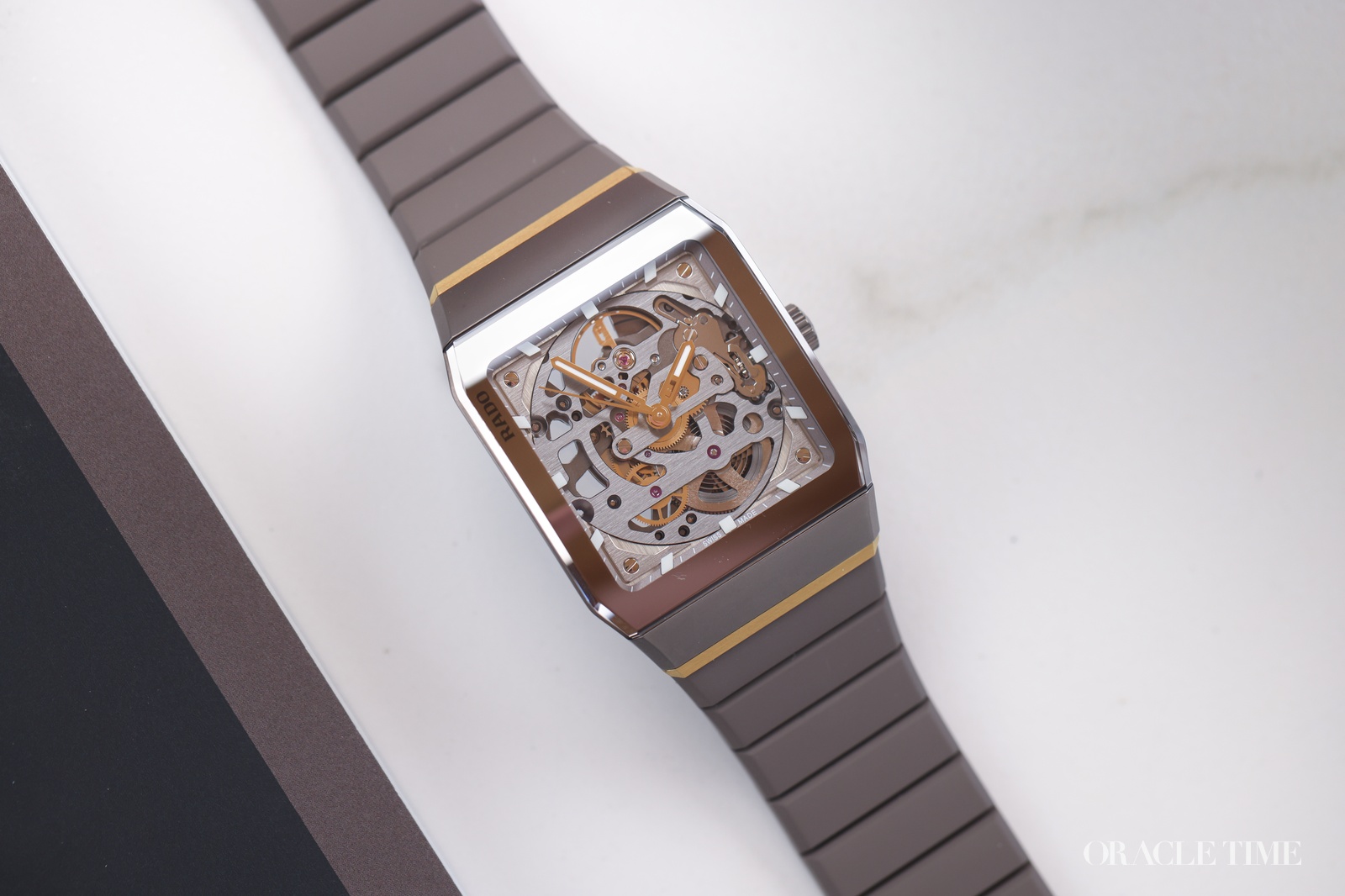
It wasn’t too long ago that Rado were focusing on the Captain Cook to the exclusion of anything but the occasional funky True Thinline model. Now though, they’ve been delving into their back catalogue and the 1980s-inflected Anatom is one of their coolest models to date. Now, to celebrate 40 years of High-Tech Ceramic, it’s back in skeleton form.
The modern Anatom is already an anniversary watch. The original model was launched in 1983 in New York with the pomp of an Andy Warhol collaborative artwork. That original watch mixed ultra-hard tungsten carbide with a quartz movement. However, in 1986 it was updated in high-tech ceramic, hence its place here.
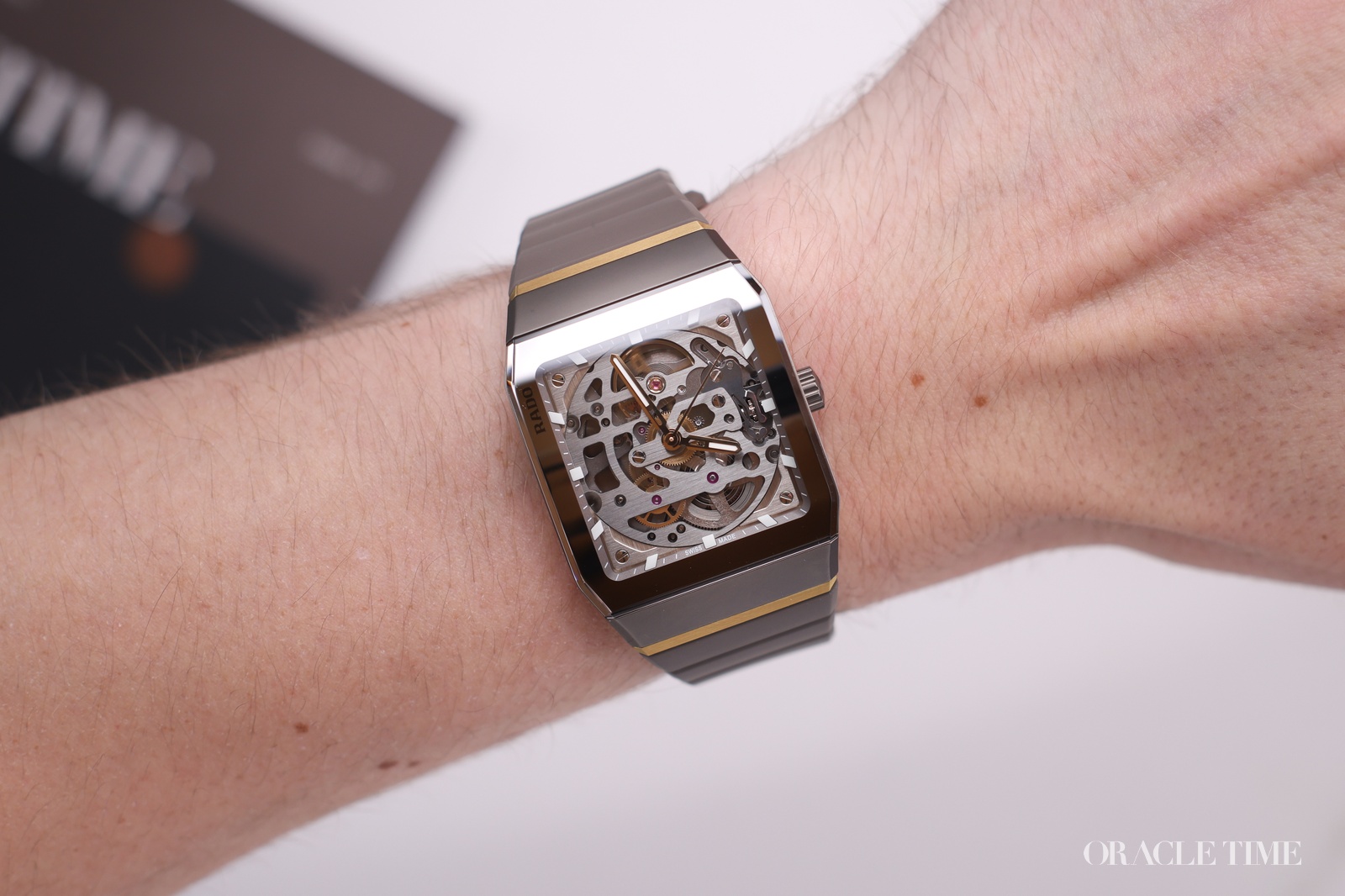
What set the Anatom apart however wasn’t its case material, but how that case was built. It was designed as the most ergonomic watch ever built – hence the eponymous contraction of Anatomical – and the large part of that was down to the crystal. Rather than the usual flat sapphire crystals or even the faceted version on the Diastar, this cylindrical, convex glass flowed from one edge of the case to the other. It was cool to look at and beautiful on the wrist – and the new Skeletonised version does little to change that.
First, the case. At 33.5mm across, the squared case is 11.5mm high and 46.3mm long of grey, plasma-finished ceramic. This isn’t just coloured ceramic, but ceramic that once fired goes into a superheated stream of plasma that alters its fundamental chemical composition. It’s incredibly cool and still has that inimitable tactile yet ultra-hard feel of ceramic.
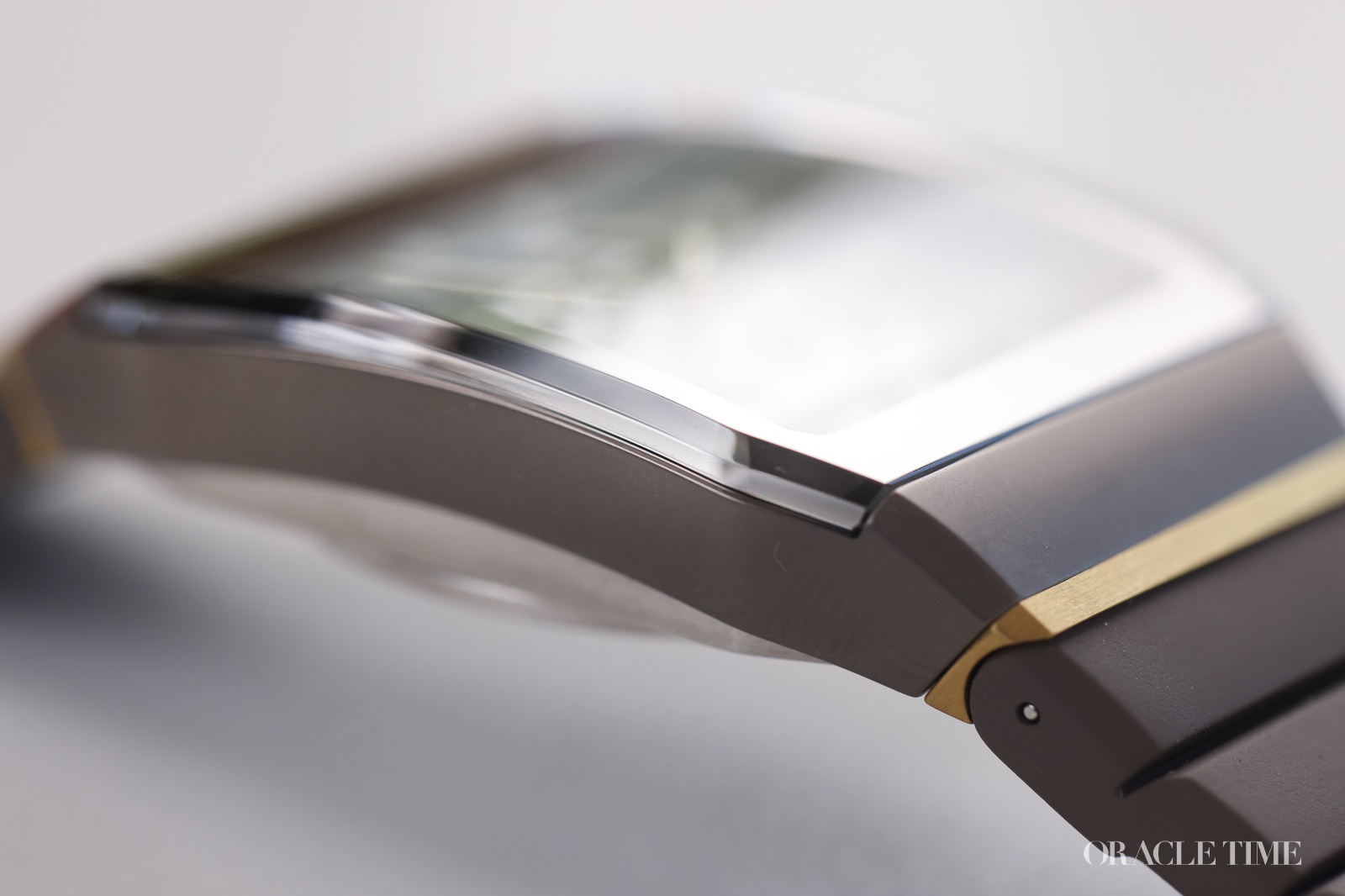
From the front, its construction looks relatively simple, a rectangle that flows into a bracelet via retro PVD gold end-links. From the side however it looks completely different. Not only do you see the real drama of the curve, but you can see where the metallicized edges of the crystal meet the case and where they don’t. It’s an OCD satisfying level of engineering all bent to the end of a comfortable watch.
And comfortable it is. I previously fell in love with the full ceramic bracelet, but honestly the case-matched rubber strap here is likely a better shout for warm weather heading into summer. It’s the same strap the 2023 models came on and has been moulded to have ‘links’ like the proper ceramic bracelet. It looks great in contrast to pops of gold and is supremely comfortable.
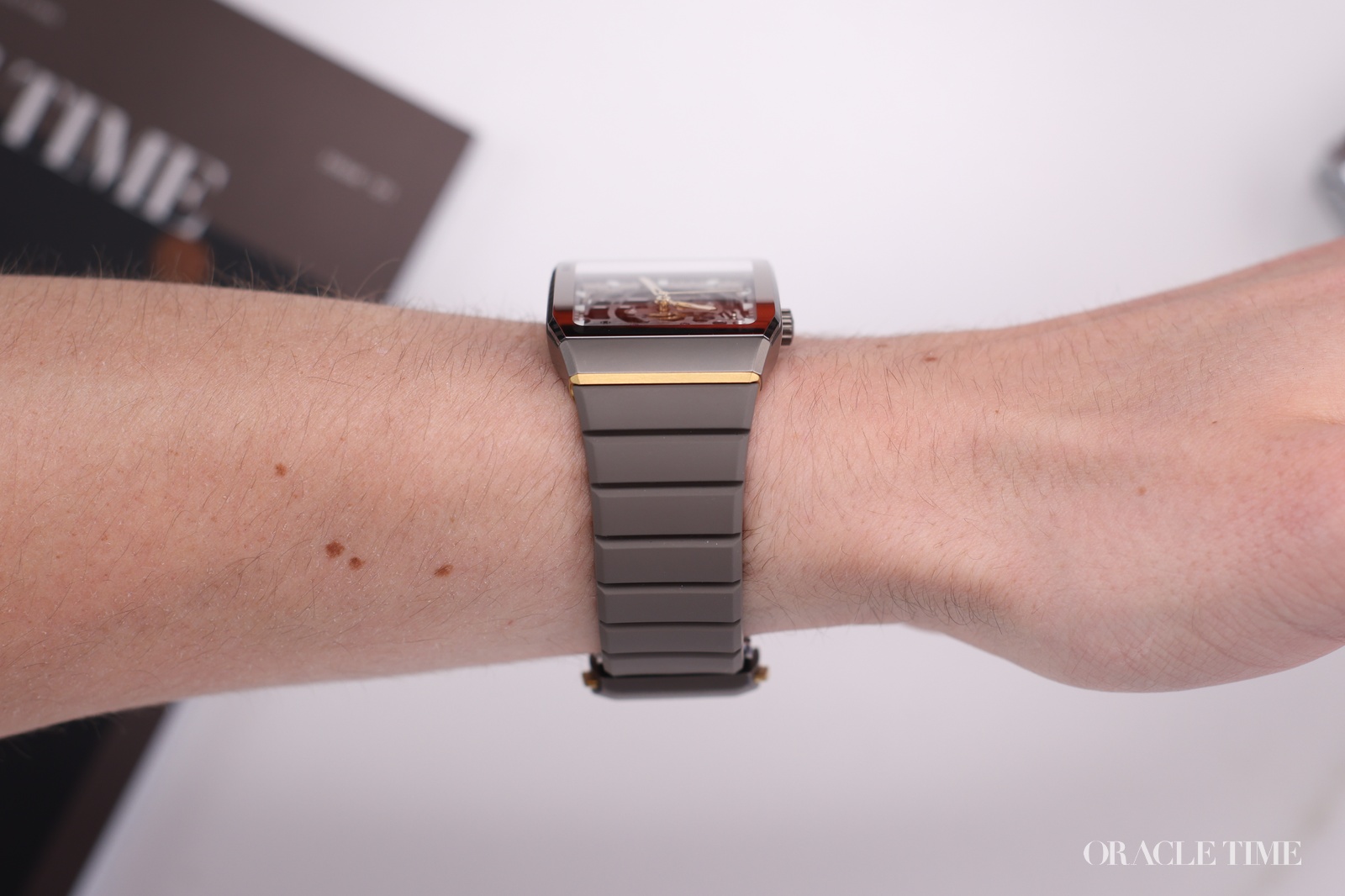
In fact, I’m not sure I’ve come across a more comfortable ceramic watch than the Rado Anatom. The shape, the feel of the ceramic, the way it curves over the wrist, the soft rubber strap, it all adds up to the kind of watch you barely feel. Could it be more so in lightweight titanium? Perhaps, but then you lose the solidity that comes from ceramic. It’s strange to think that in the 40 years since the Anatom’s debut, there aren’t many watches that equal it in terms of comfort and none at this price point.
I’m not normally a fan of skeleton dials but this is one of the few instances that really nails it. It is a true skeleton in that you can see clear through it, but there’s enough in the way that it’s an emphasis on transparency more than a window onto a hairy wrist. The brushed bridges are also in a similar hue to the plasma ceramic for a monochrome look that suits its flowing construction, and the mix of straight lines and curves actually makes use of the material that’s not been machined away. The gold hands match the end-links and the movement’s gold wheels for a subtle bi-colour look, but it’s hard to call this a retro throwback anymore.
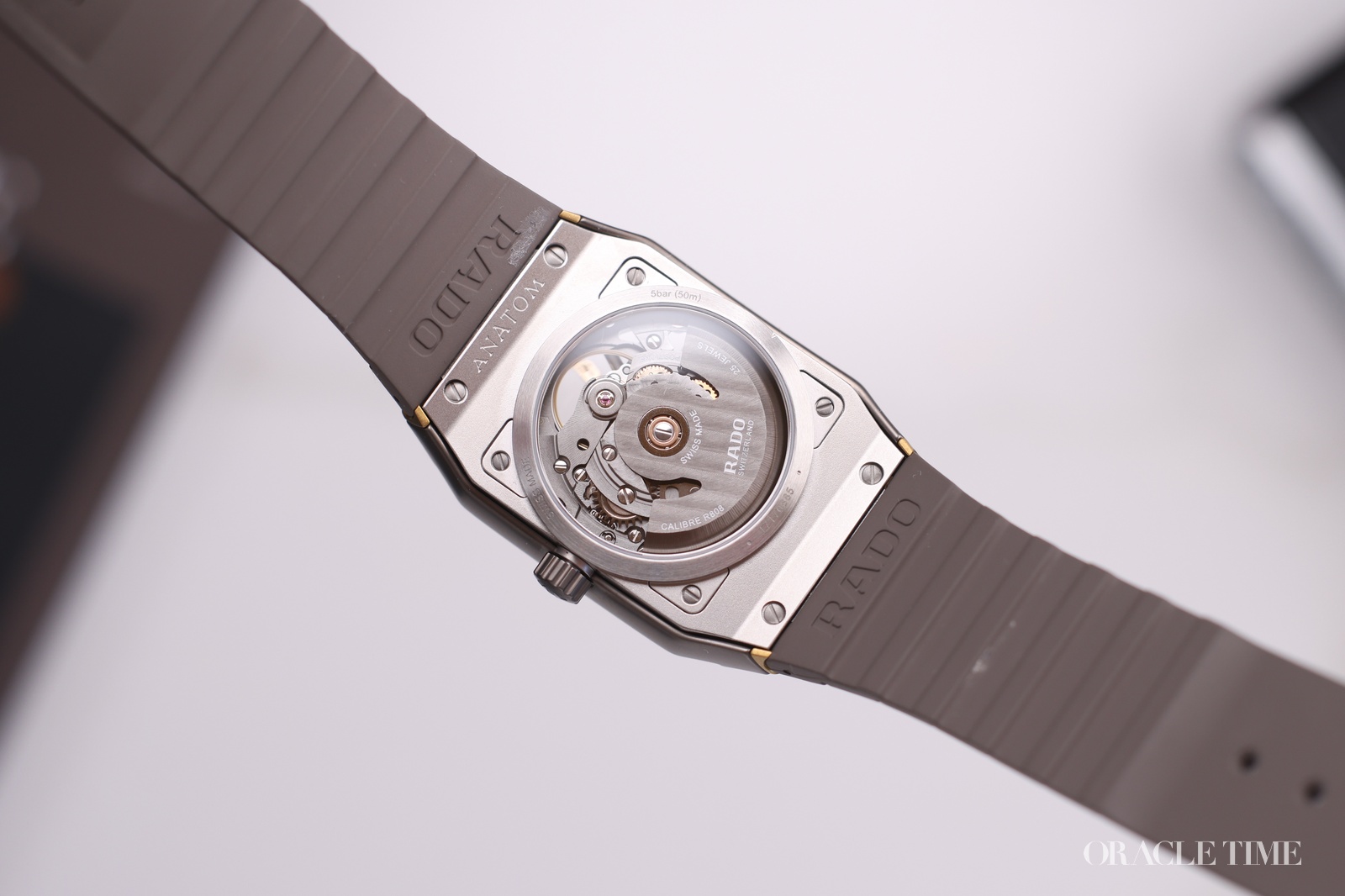
A lot of that look gets lost on the caseback where it’s mostly obscured by a rotor and honestly, the standard round exhibition caseback is a disappointment compared to the view from the front. But the movement itself – the ETA-based R808 is still a solid movement with a weekend-proof 80-hour power reserve. It’s a good thing this is the kind of watch you won’t want to take off.
Having discussed the new Anatom Skeleton with a few of my colleagues here at Oracle Time I’m well aware not everybody appreciates the collection in the same way I do. And it is a very specific, very 1980s look that tool watch purists or 1950s classicists just won’t get. But between the comfort on the wrist, the flowing crystal and the sleek, modern, monochrome look with a few pops of retro yellow gold, it’s a pitch-perfect update of an ’80s classic that deserves more love.
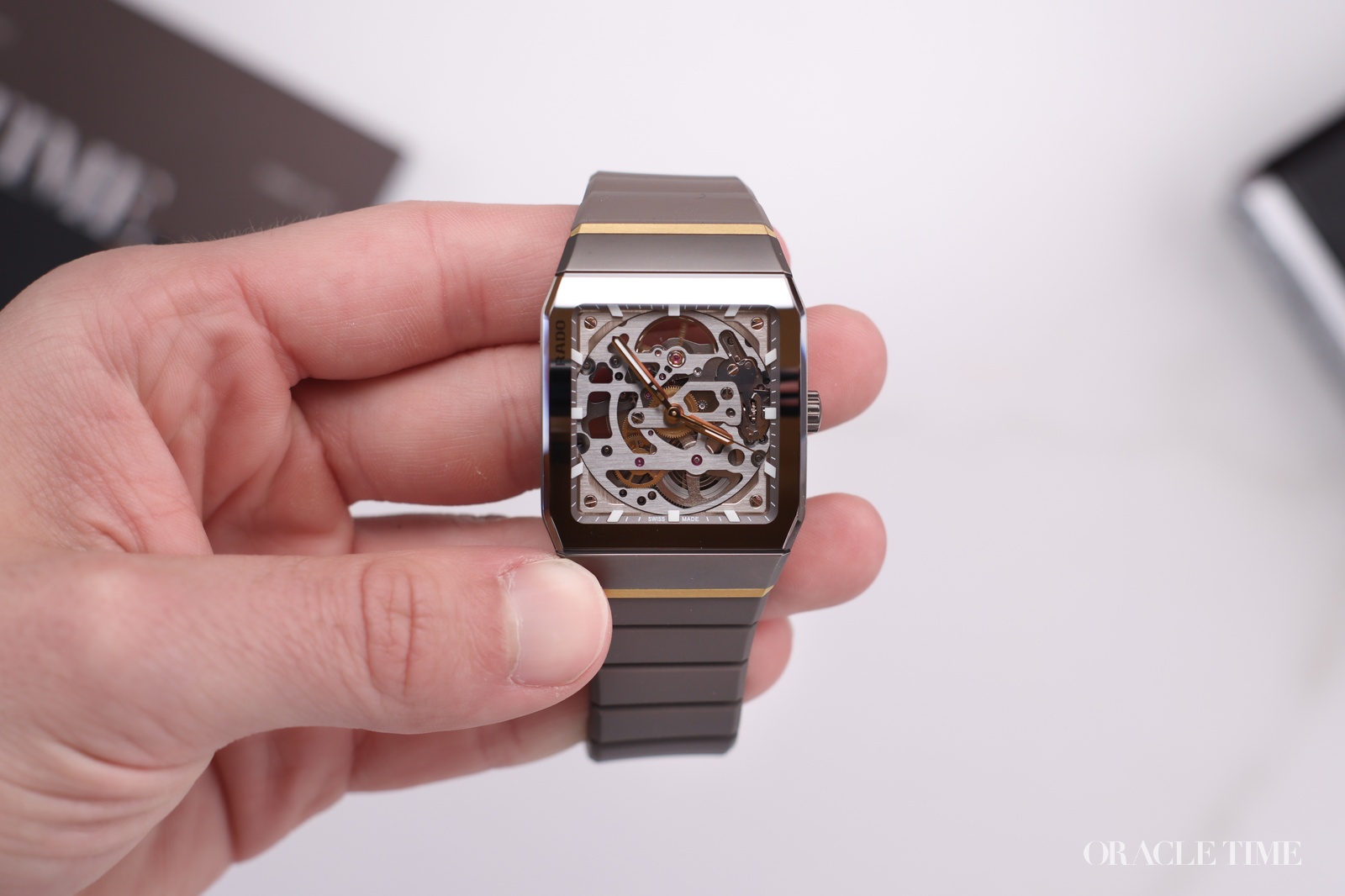
Priced at £3,800, it’s also well-priced for a ceramic watch with a solid movement and should do Rado well. I would like to see a full ceramic bracelet as an option though honestly, having worn this for a few days, I’m genuinely not sure if I’d take it over the rubber. If I hadn’t just nabbed myself a vintage Rado Golden Horse, this might well be high on my wishlist.
Price and Specs:
More details at Rado.


Your Rado watch is truly beautiful. The design of this model is outstanding, and it looks incredibly elegant on your wrist. Rado has done an amazing job creating such a classy and sophisticated timepiece