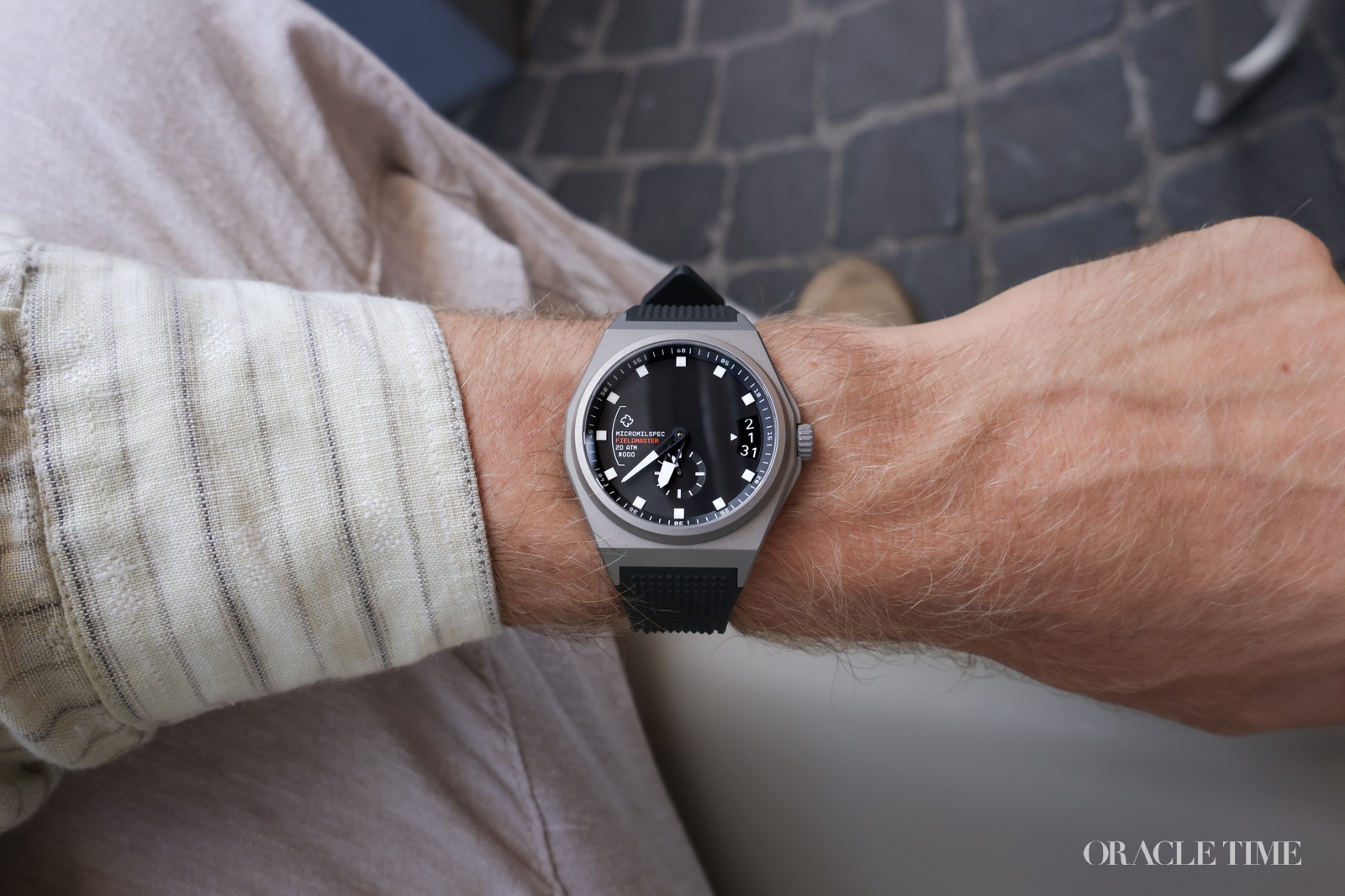
Micromilspec is a much older brand than you might initially think. While they became prominent in the microbrand scene around 2024, they have been producing service watches for the military since 2019 – it’s just that in 2024 they began to also cater towards a civilian audience. Their newest watch, the Fieldmaster, is born out of their experience producing military watches in those early years.
The Fieldmaster specifically traces its lineage to a research project known as the ‘Field Test Program’ undertaken by Micromilspec from 2019-2022. They kitted out 30 serving military personnel with prototype watches and received feedback on the designs across the three year period. Three years is long enough for every small niggle and annoyance with a watch to reveal itself to the wearer and that was entirely the point of the program. The field watch archetype as we know it today is largely based on concepts and ideas that were established in the 1940s, so Micromilspec wanted to learn if the requirements of people serving in the field since then have changed.
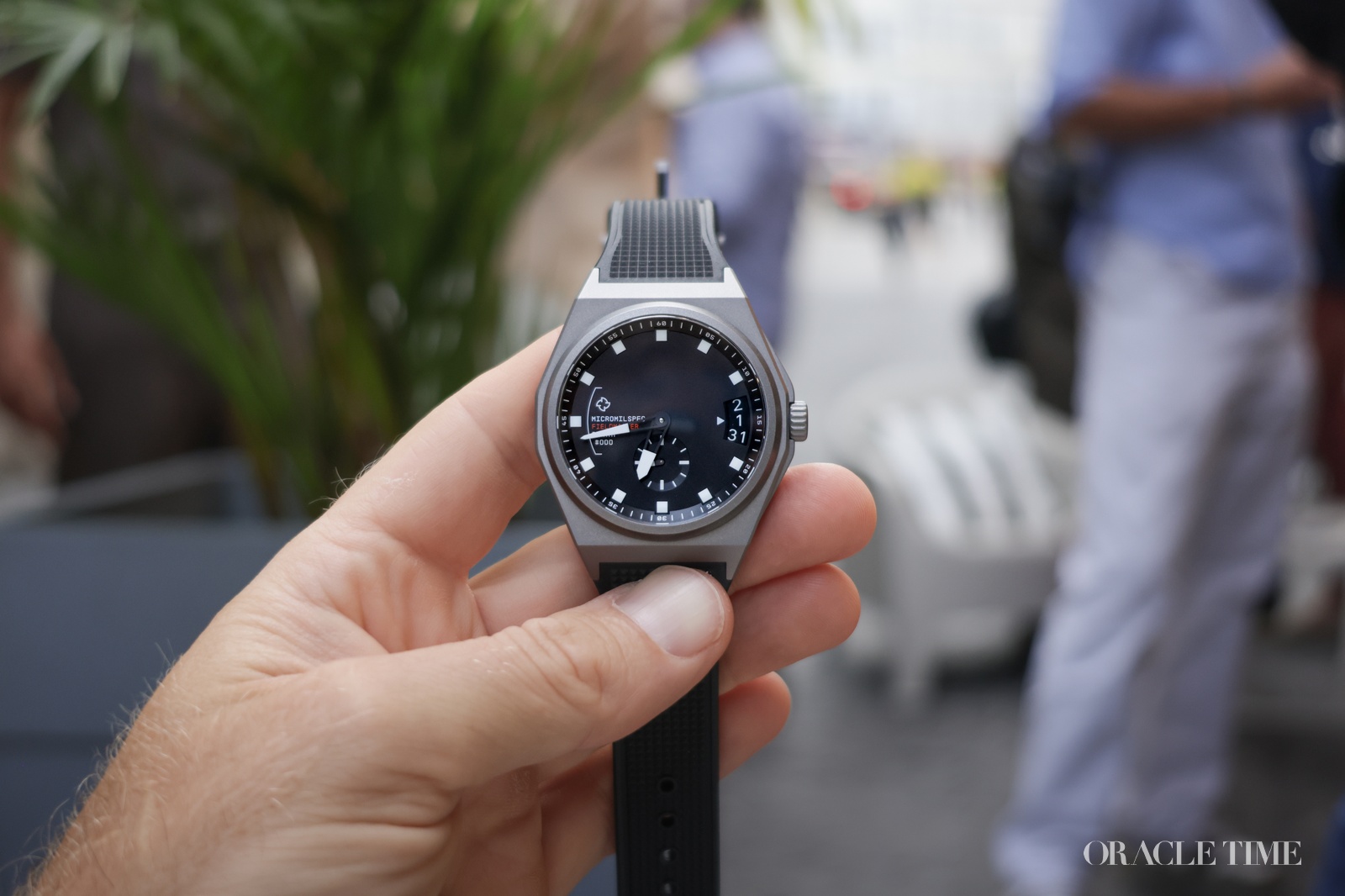
The first discovery is that there are some things that designers in the 1940s got right: legibility and wearability are king. Micromilspec have enlarged the hands and indexes to an almost extreme degree so that they are as easy to read as possible. That goes for the central minute and hour hands, square hour markers, small seconds subdial and date window. They’re also made from lumicast, a luminescent material that provides low light readability.
Deciding to use a small seconds subdial was also a result of their findings in the program. On the surface, the inclusion of an additional subdial appears to clutter the dial, which they have been so diligent in keeping as clean as possible. However, having a sweeping centre seconds proved to be much more problematic because when the seconds hand crosses over the hours or minutes, it becomes momentarily harder to read those indications precisely. An example of a design element that might seem counterintuitive to a layman but makes sense when in the hands of professionals.
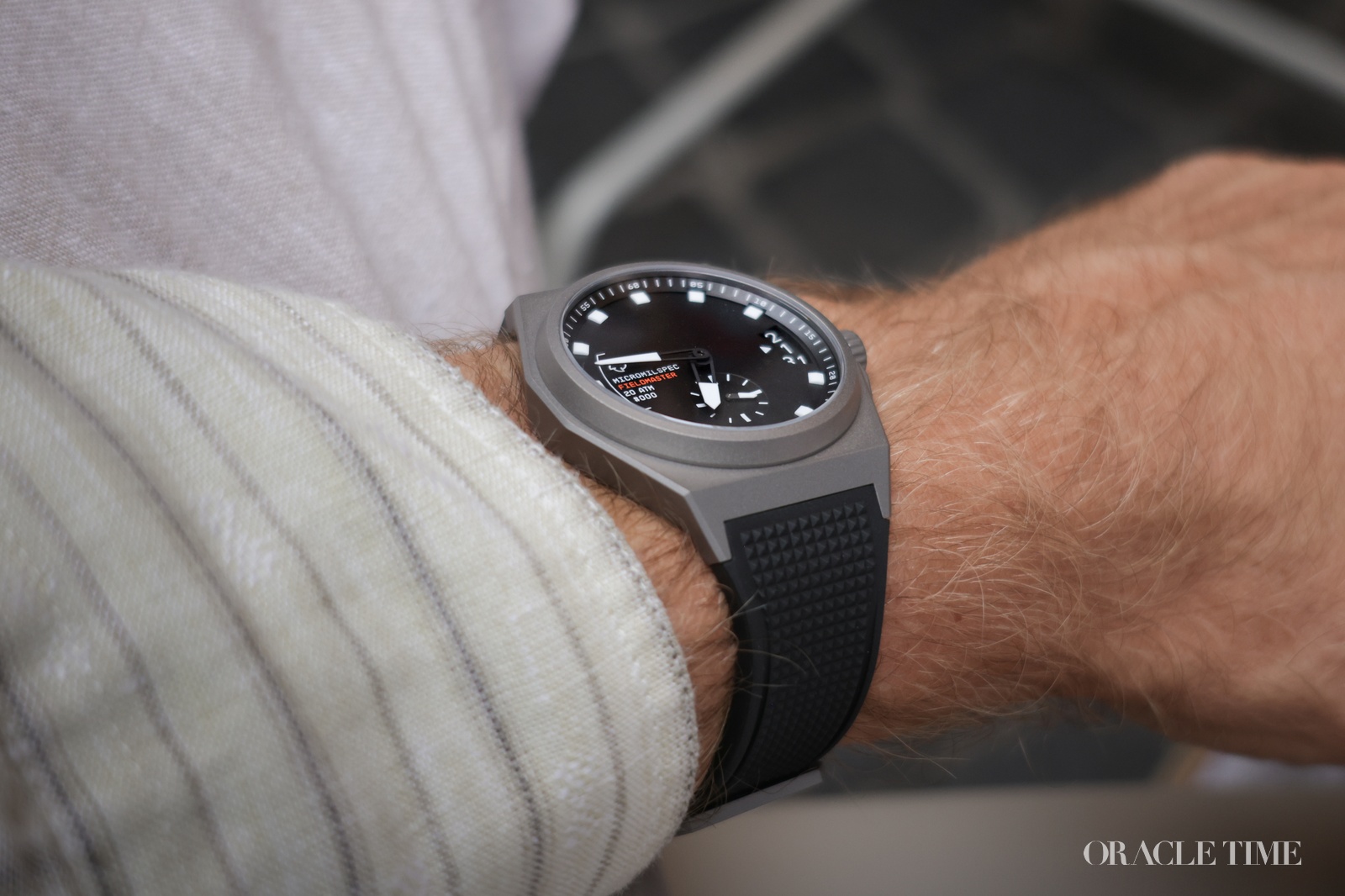
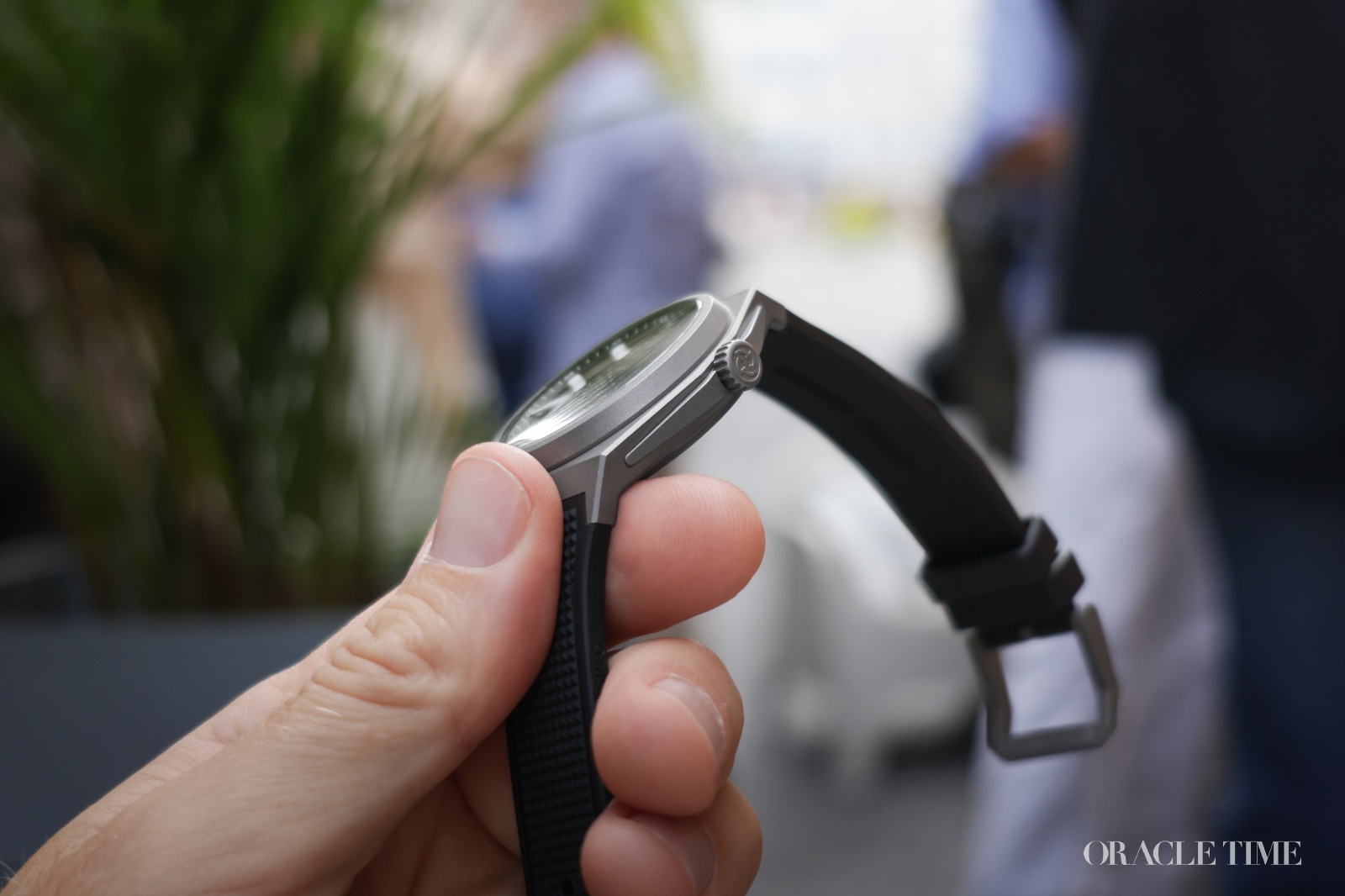
The choice to keep the case as understated as possible is born from the same desire to put practicality first. A smooth, fixed bezel helps to deflect blows away from the sapphire crystal while also removing the extra point of failure that a rotating bezel represents. To match, the casebody itself is also flat and smooth so that sharp objects glide off it rather than catching on an overengineered (and unnecessary) facet.
For choice of the Micromilspec Fieldmaster’s case material, titanium emerged as the natural choice. Its good strength to density ratio makes it lightweight, so it’s more comfortable to wear for extended periods of activity. Additionally, proportions of 40mm diameter x 11.2mm thickness keep it well balanced – large enough that the dial is easy to read while small enough not to impinge on wrist mobility. The case also has a 200m water resistance rating. It’s available in a choice of natural titanium finishing or with a gunpowder DLC coating. It’s also presented with either a rubber strap or a titanium bracelet that’s finished to match the case.
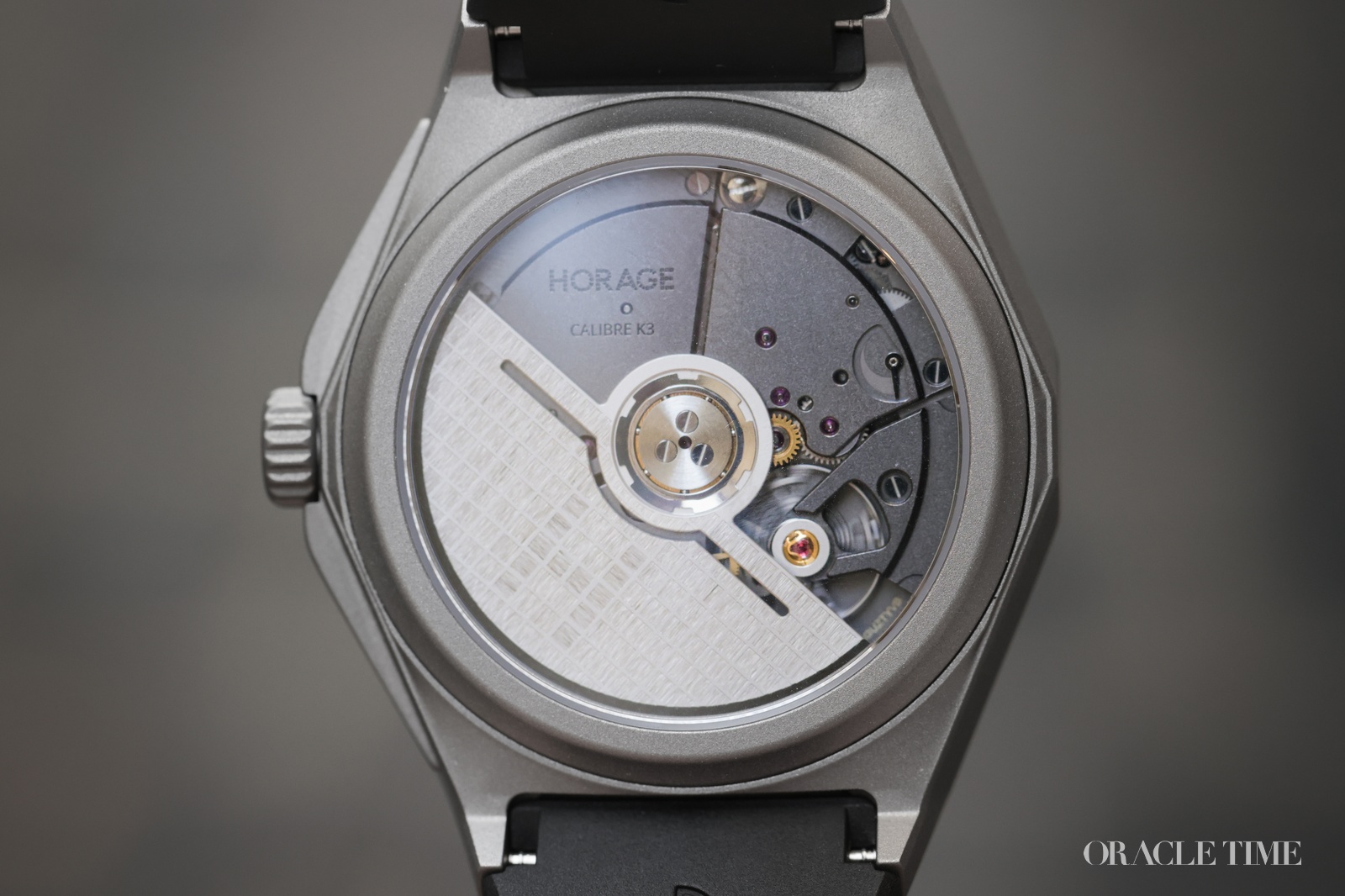
One of the major considerations that emerged as a difference between field watches in the 1940s and the 21st century is the importance of anti-magnetic field protection. The proliferation of electronic equipment in modern militaries means that watches come into contact with powerful magnetic fields far more often. As such, Micromilspec went on a search to find a suitable anti-magnetic movement without skyrocketing the price to an untenable degree.
The solution is the Horage K3 movement that debuted in the DecaFlux in 2025. Horage introduced the K3 with the express intention to supply it to other brands that were interested in the precision and benefits of silicon movements but that didn’t have the resources to produce one themselves. To my knowledge, this is the first time that the K3 is being used in a non-Horage watch and bringing that goal to fruition. The K3’s silicon escapement and hairspring are inert to magnetic fields, meaning their precision and reliability are completely unaffected by magnetic field rich environments.
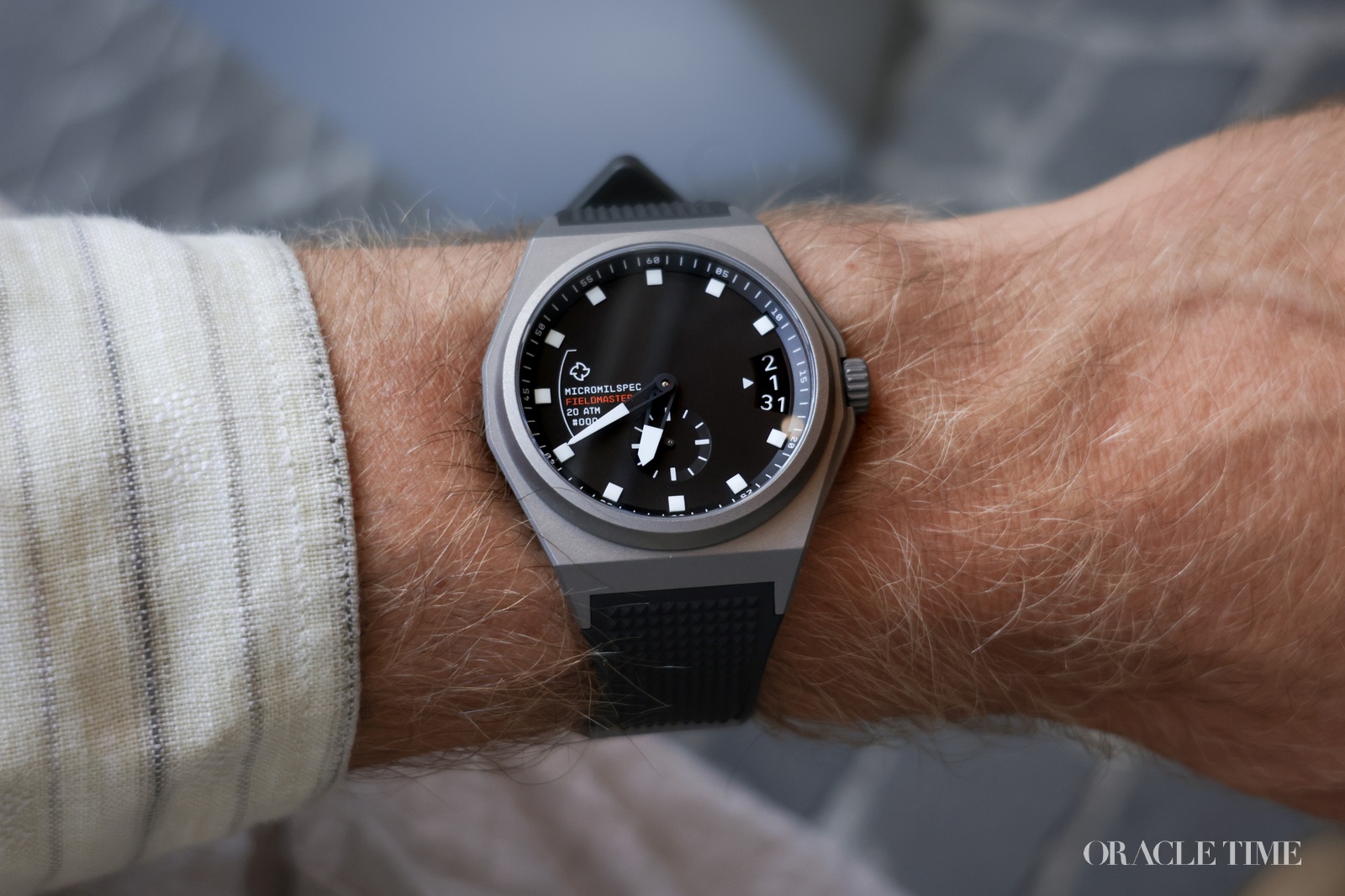
There’s another reason that Micromilspec were interested in the K3 and that’s the power reserve. At 100-hours it lasts four days between windings, and it was found during the Field Test Program that that’s the golden length of time for an active service person. When the watch gets stowed away in a pack during travel between service locations or when it’s not being actively used on missions, four days is ideal to ensure it won’t need resetting when it’s put back on the wrist. While that is nice for convenience, the program threw up the fact that it’s actually more important for accuracy – ensuring that it keeps continuous time with its -4/+6 seconds per day precision rather than allowing for potential errors caused by manual time setting.
For pricing, the Micromilspec Fieldmaster is €2,755 (approx. £2,365) on rubber strap or €3,400 (approx. £2,920) on bracelet – that goes for both the titanium grey and DLC editions. That straddles the 2025 Horage DecaFlux price which was CHF 2,750 (approx. £2,500). At that price it’s a serious bit of kit rather than an affordable tool watch that you can wear for a season and then retire. But as we know from the attention to detail paid to the three year Field Test Program, these watches are all about long term use and they are built to live up to that brief. As a final note, the Fieldmaster is not a limited edition but will be produced in limited annual batches of 75 pieces.
Price and Specs:
More details at Micromilspec.


Love this piece, I’ve been looking into getting a 2nd Horage, this actually might be the next move.
Let’s take a moment to acknowledge what Horage is starting to do this year Formex Aria partnership and now this, hats of to the Andreas and Tzuyu!