IWC have been incredibly busy ahead of Watches & Wonders 2026 with over a dozen novelties being introduced in Geneva. There has been a comprehensive update to the Petit Prince sub-collection and Ingenieur that we will discuss in separate articles, but for right now we’re going to focus on their myriad other collections and releases. That includes the first production Ceralume model following 2024’s concept watch and a series of Pilot’s Watches including the new Venturer Vertical Drive designed for use in space, which is where we’ll start.
IWC Pilot’s Venturer Vertical Drive
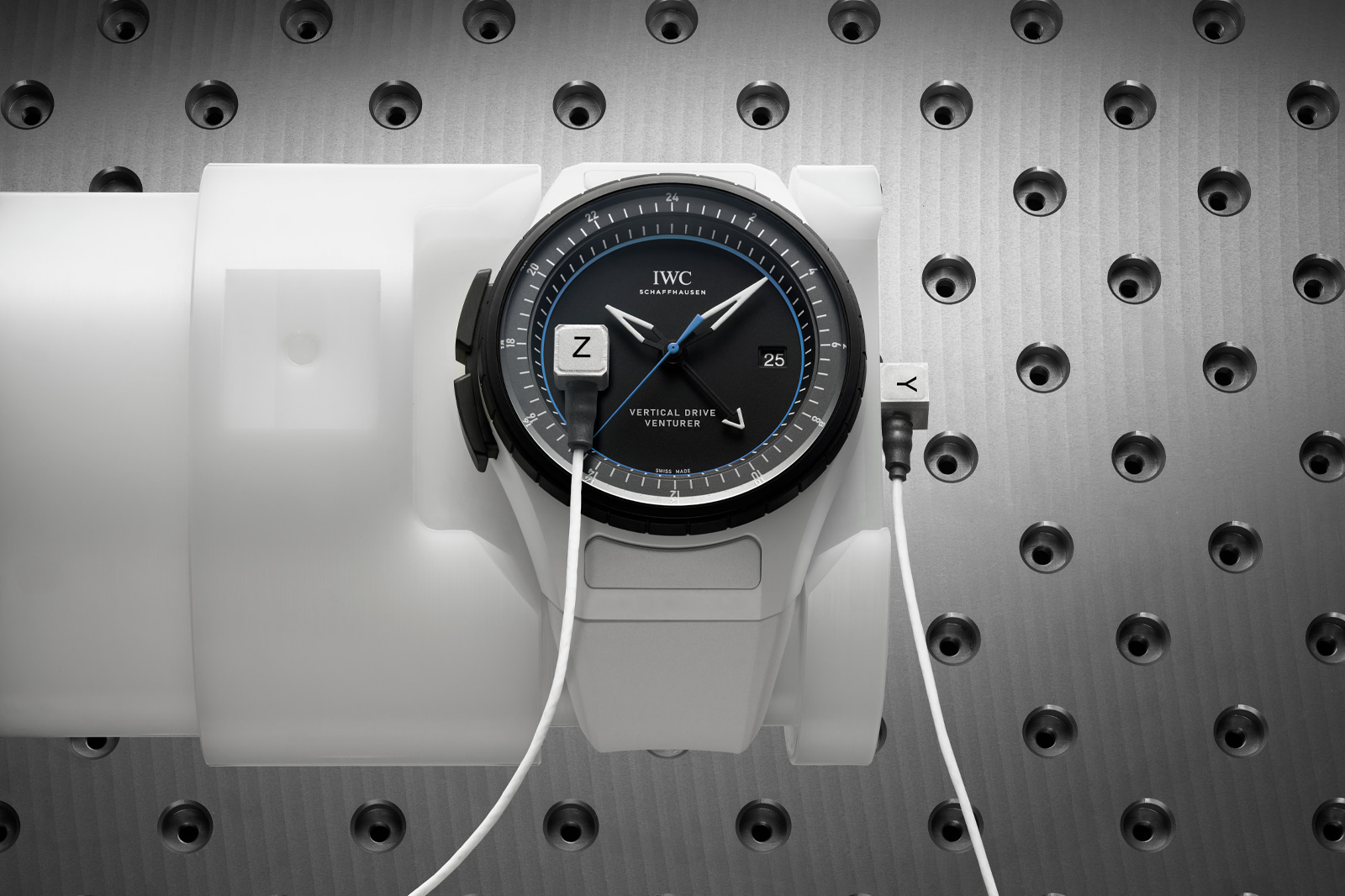
Off the bat, the Pilot’s Venturer Vertical Drive doesn’t look like any other IWC Pilot’s Watch in existence. It has a bold 44.3mm ceramic case in white with integrated FKM rubber strap paired with a black dial and ceratanium bezel giving the piece a strong contrast. Crucially there’s also no signature Pilot’s Watch crown at 3 o’clock while a rocker switch is positioned on the edge of the case at 9 o’clock.
This unusual design is because the Venturer Vertical Drive has been built from the ground up for use in space. Specifically, it’s designed to be able to be used, set and wound while wearing a space suit during a space-walk – meaning it has to be completely operable while wearing thick gloves. For that reason, IWC have developed a crownless system where every function of the watch including winding and time setting can be done through the rotating bezel. The rocker switch lets you pick between those functions. The movements of the bezel are translated into the movement via a vertical drive clutch, which is what gives the watch its name.
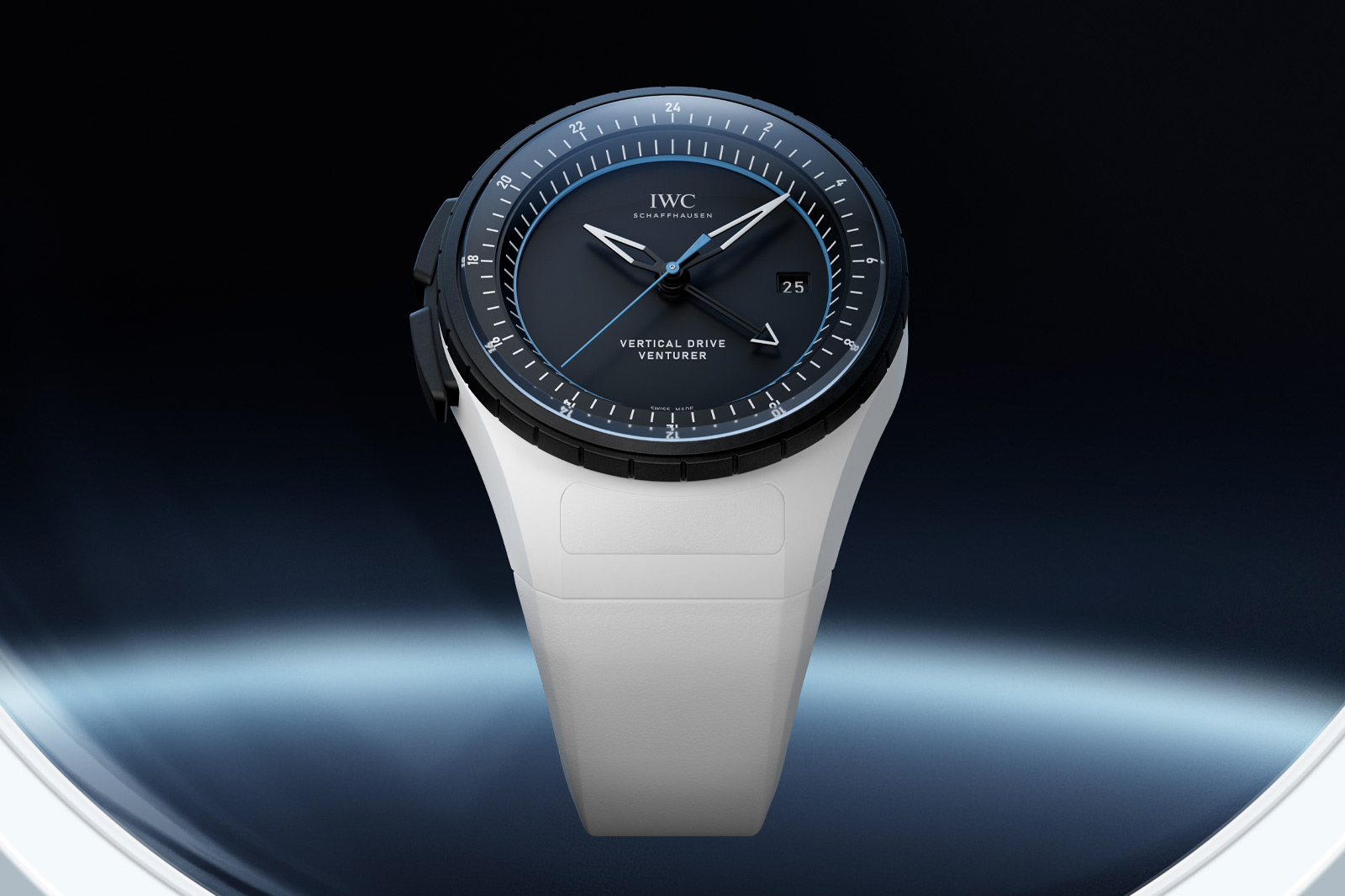
For the display, it’s actually a GMT watch with central hours and an additional 24-hour hand. This is for the same reason that the Breitling Cosmonaute uses a 24-hour display – in orbit an astronaut can experience as many as 16 sunrises and sunsets in a 24-hour span so keeping track of days and nights is very difficult. A 24-hour display set to UTC helps keep you in a routine. There’s also a date window for the same reason. The actual layout itself is super minimalist and easy to read, which is what you want from a tool designed to be read while you’re floating in the void. It has blue accents and green lume as a thematic tribute to Earth.
The movement inside is the calibre 32722 with 120-hour power reserve, which can be wound automatically by the movement of the rotor inside or via rotating the bezel. The case is designed to protect it from the immense acceleration of take off as well as the temperature fluctuations of space. The watch has earned official certification for spaceflight by Vast, a commercial space company and IWC’s brand partner. The watch is priced at £22,600.
Price and Specs:
IWC Big Pilot’s Watch Perpetual Calendar Ceralume
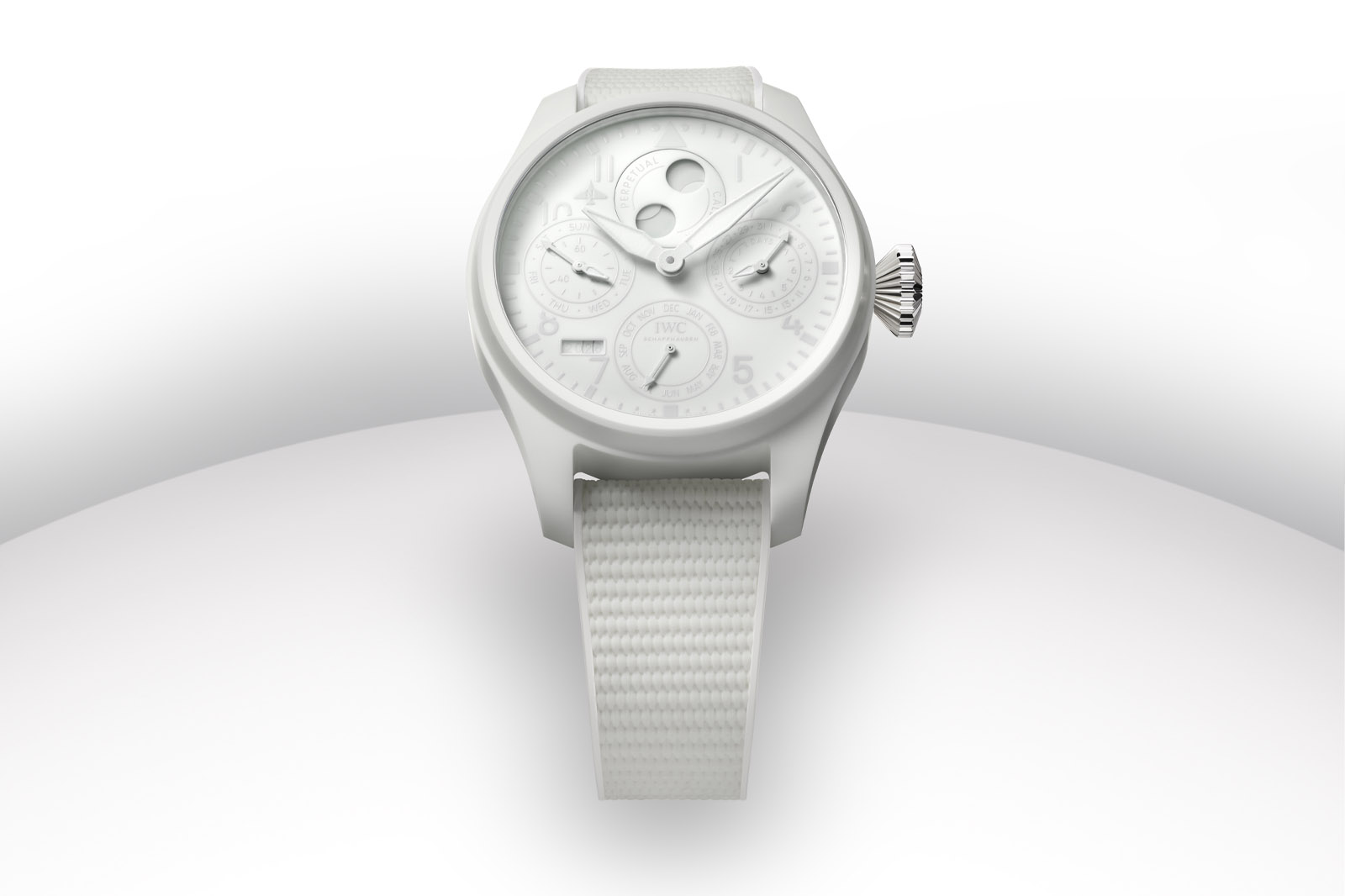
Lume is an often-overlooked area of innovation in watchmaking but there are developments all the time. Whether that’s a new grade of Super-LumiNova with new colours and greater intensity, or a material like Globolight that lets you sculpt hands and hour markers from luminescent material. In 2024 IWC introduced their next major development in lume with a concept watch worn by Lewis Hamilton, Ceralume, luminescent ceramic. Two years later and it’s a concept design no more with the launch of the 250-piece limited edition Big Pilot’s Watch Perpetual Calendar Ceralume.
The very large 46.5mm diameter x 15.9mm case body is made entirely from Ceralume, emitting a blue glow in low light conditions. The crown and caseback ring are made from stainless steel, which makes sense as those are the places that most often come into contact with your skin, so that the white material doesn’t start to look grubby. To keep up with the style of the Ceralume case, the watch has a full lume perpetual calendar display, which is pretty cool in and of itself.
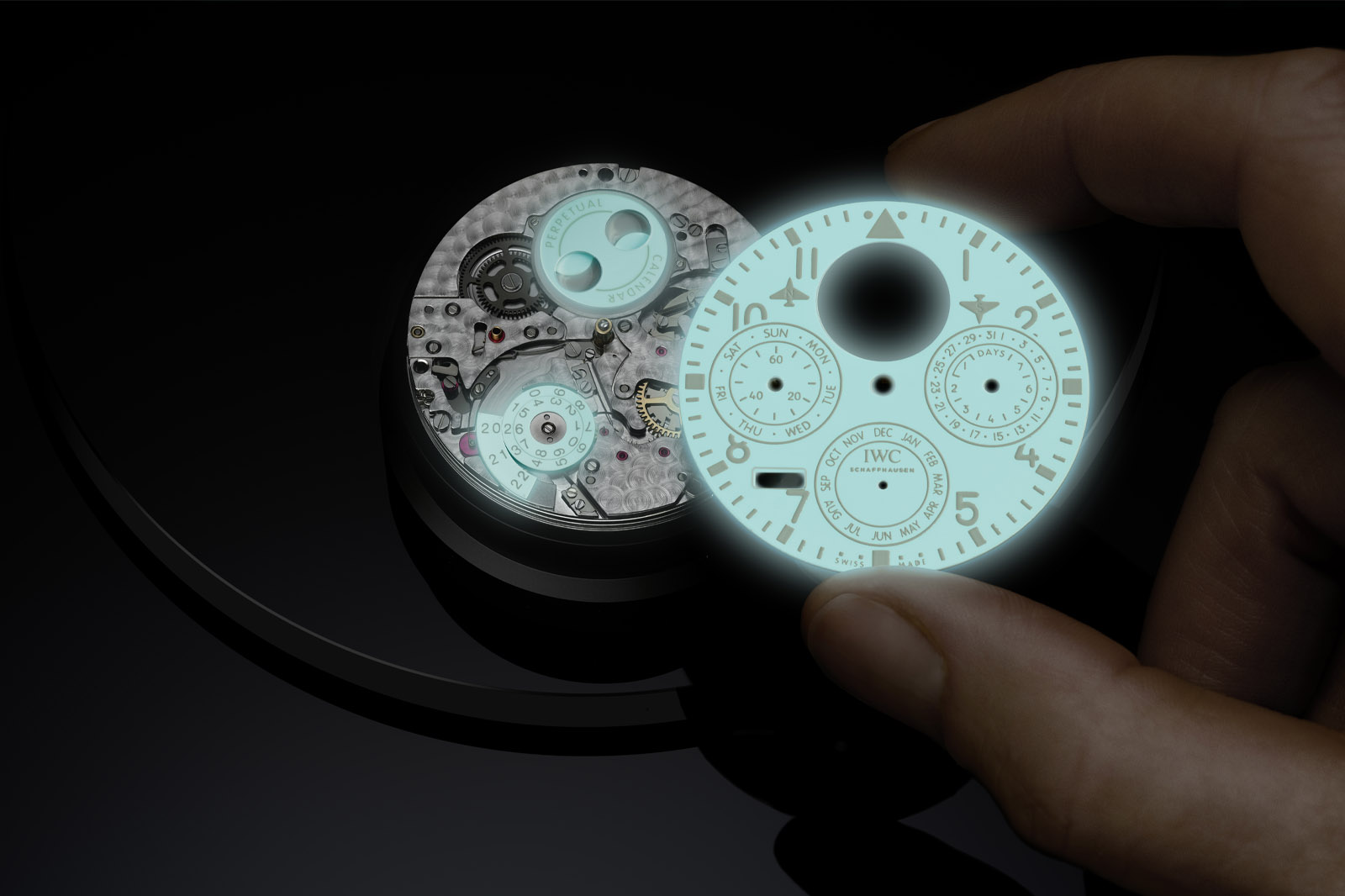
Powering the watch is the calibre 52616 with 7-day power reserve, which is really good for a perpetual calendar. It’s also automatic winding making it even easier to keep the watch topped up to prevent the calendar function needing continual resets. Between the perpetual calendar movement and innovative materials, it’s priced at £61,300. Speaking of resetting perpetual calendars…
Price and Specs:
IWC Big Pilot’s Watch Perpetual Calendar ProSet


One of the perennial troubles with perpetual calendars is that while they are awesome pieces of engineering, they can be quite tricky to actually live with. In order to actually make them perpetual you need to keep them constantly wound so that they don’t go out of synch with the actual calendar and if they do stop, resetting them is an arduous task often involving an instruction manual the size of a small novel and all manner of corrector buttons and hidden doohickies. A problem IWC have sought to overcome with the new IWC Big Pilot’s Watch Perpetual Calendar ProSet.
While the Perpetual Calendar display is familiar, the internal structure of the calibre 82665 has been redesigned from scratch to make setting the watch as easy as possible. In IWC’s words, it’s ‘based entirely on gears with multiple functional layers and flexible, extendable and retractable fingers.’ The upshot of which is that the whole calendar can be adjusted forward and backwards by just the crown.
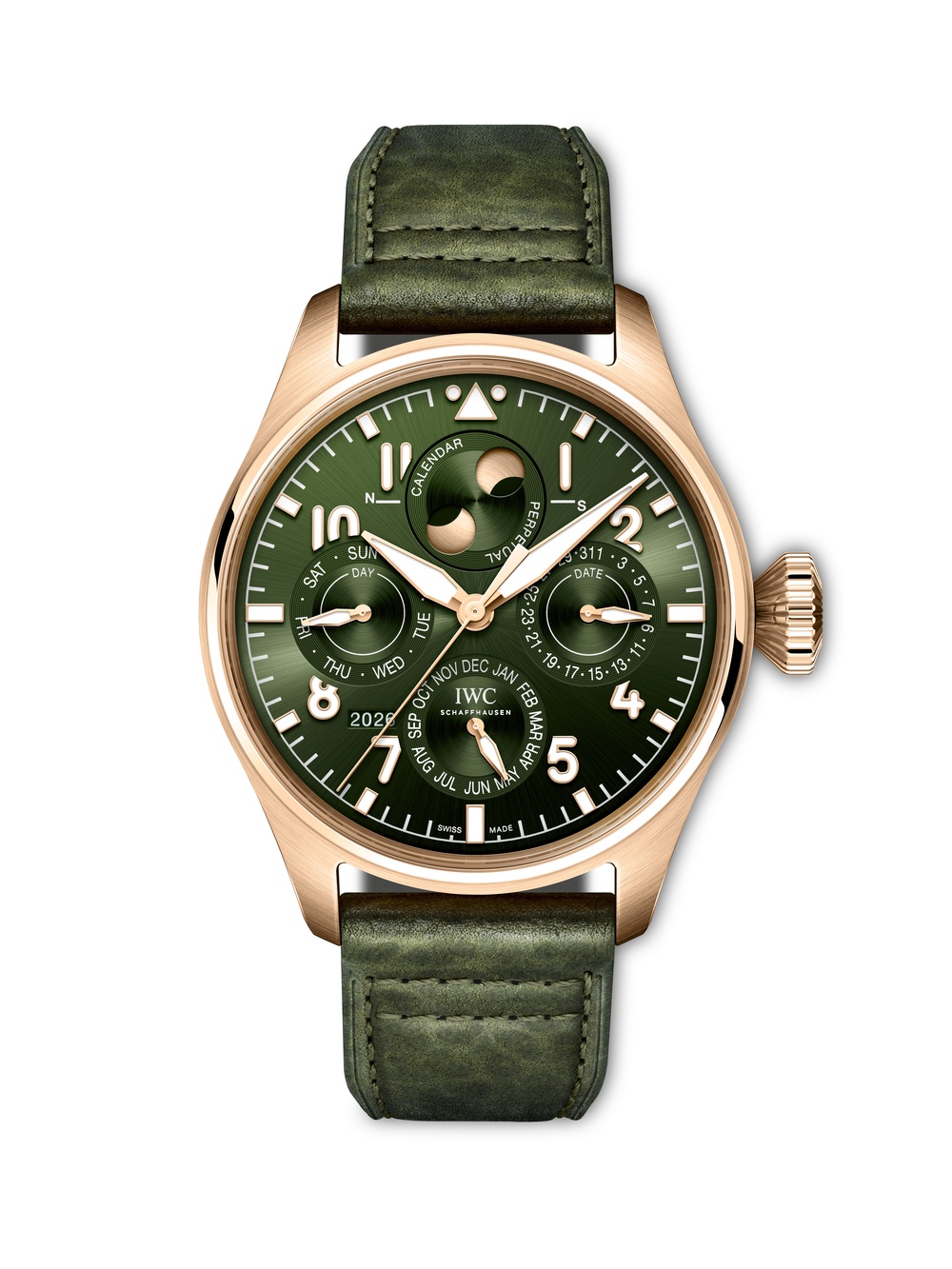
There are three models being introduced with this technology. A 42.9mm white ceramic edition, a 42mm steel Le Petit Prince version and finally a 42mm rose gold edition. The prices range from £29,500 – £43,000 depending on the version.
Price and Specs:
IWC Big Pilot’s Watch Constant Force Tourbillon
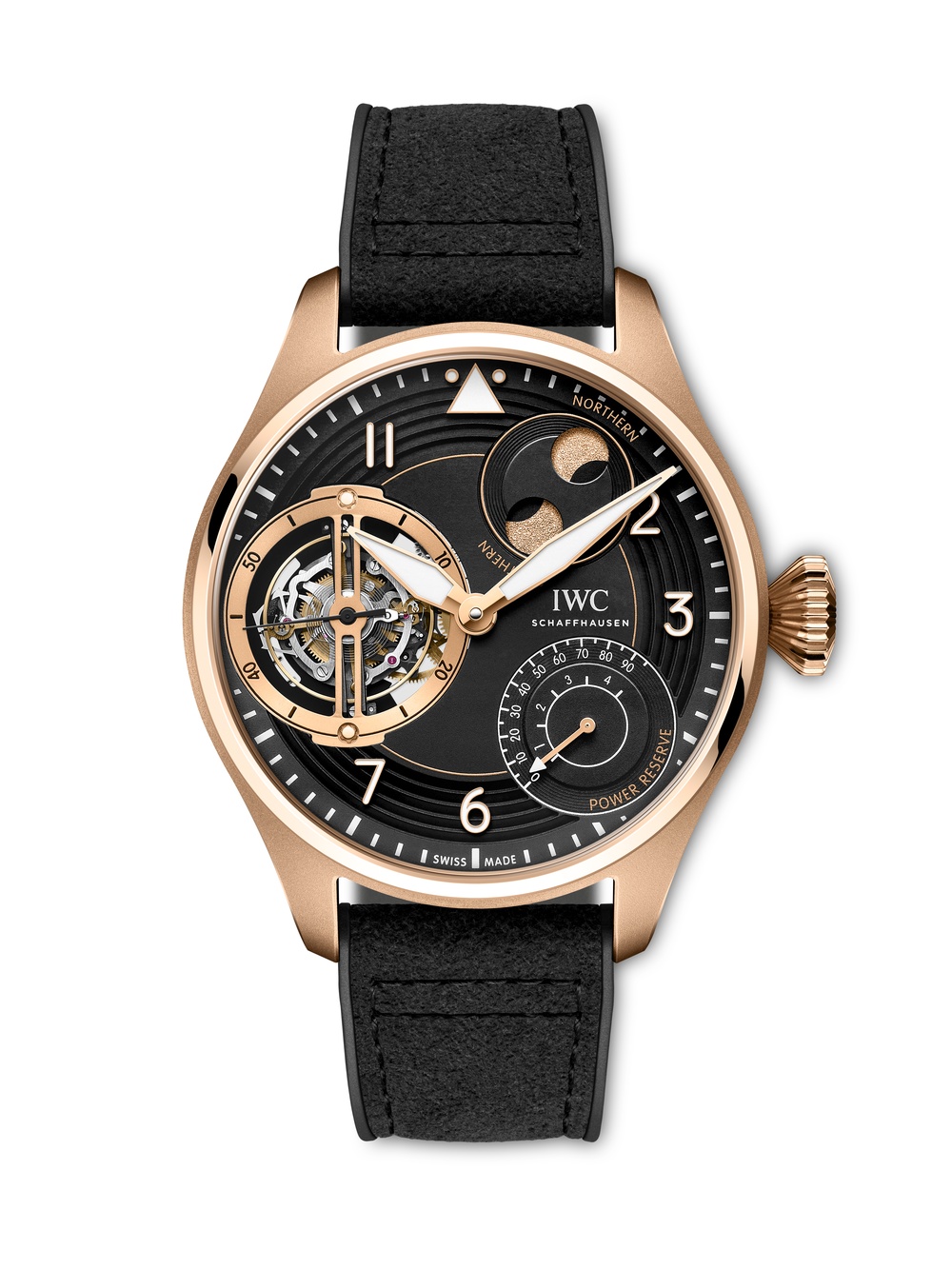
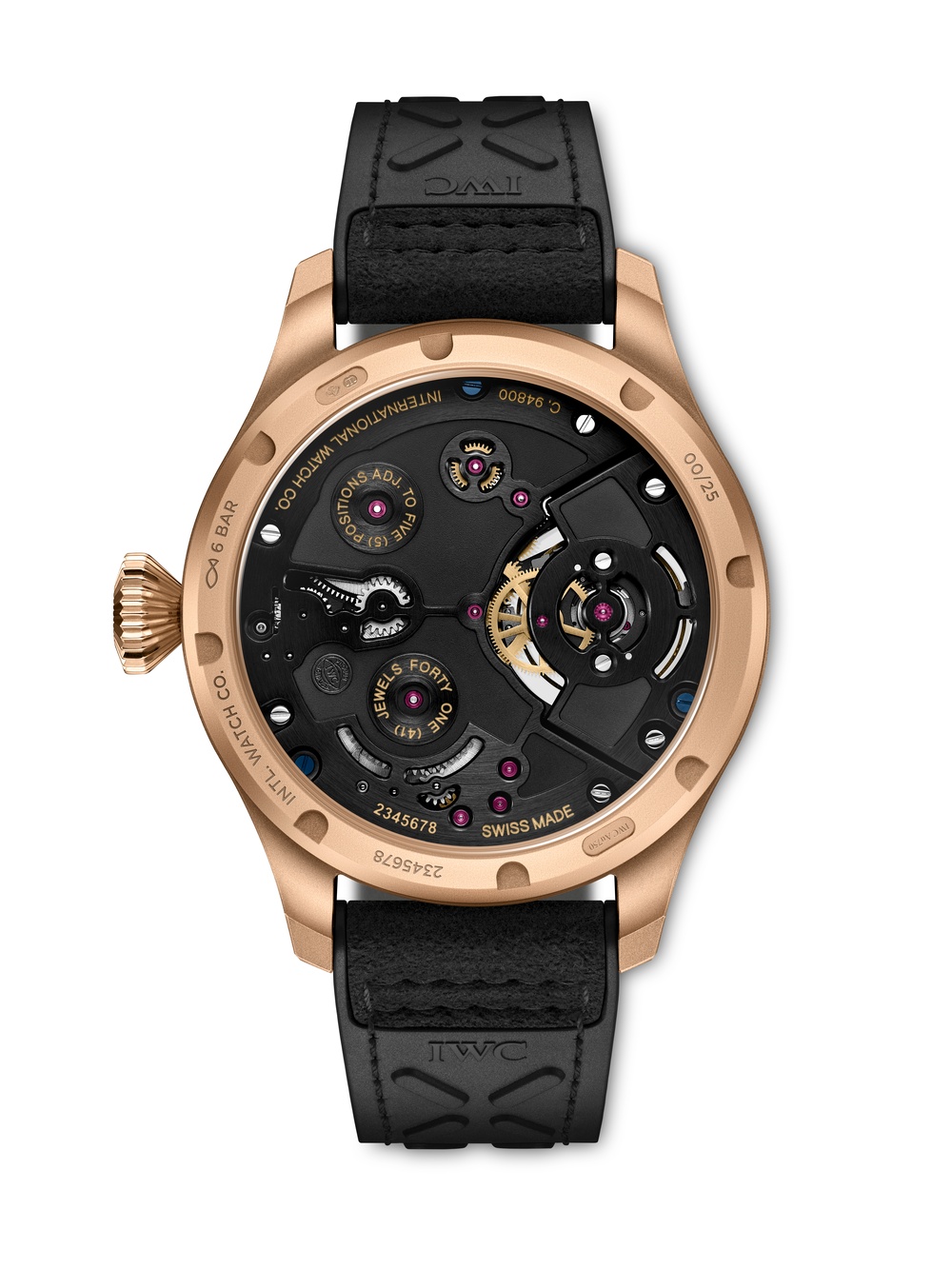
IWC present the Big Pilot’s Watch Constant Force Tourbillon in armour gold, a tougher and more durable gold alloy compared to the standard 5N gold. That’s a good thing too because at 46.2mm it’s quite the wrist monster, so some protection against dings and scratches helps make wearing the watch regularly a more realistic prospect.
A constant force mechanism is one that ensures the amount of energy that is transferred to the watch’s balance is consistent regardless of how much total energy is in the system. Mechanisms like this are often used to ensure that the energy remains the same even as the power reserve gets lower but here the opposite is true, it limits the energy being transmitted when the power reserve is full to protect the balance from too much torque. That’s important because the twin power barrel supplies a 4-day power reserve, which is a lot for a tourbillon movement. The calibre is the 94800 and the watch is price on request.
Price and Specs:
More details at IWC.