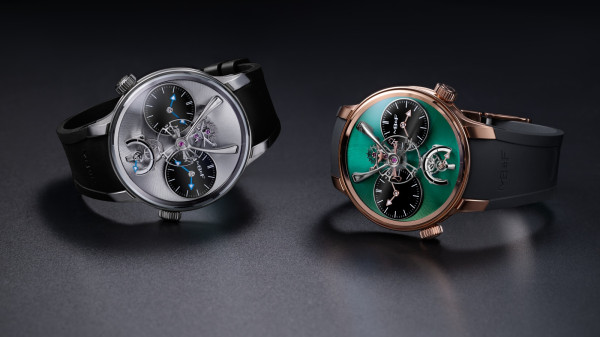
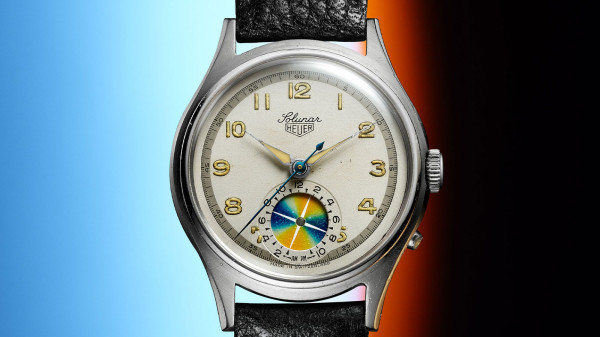
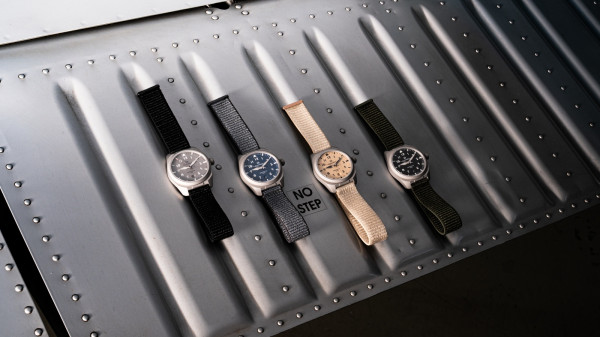
‘GMT’ stands for something imaginary and arbitrary: Greenwich Mean Time, the time zone of the Royal Observatory in Greenwich, London. But those three letters are usually enough to summon a single image: a red-and-blue 24-hour bezel (as per the Pan American World Airways livery) and an additional red 24-hour hand. Rolex’s mid-century partnership with Pan Am is a story so steadfast that it’s caused ‘GMT’ to be synonymous with ‘Rolex GMT-Master’.
But this story has missing pages. Rolex did not invent the need to track multiple time zones, nor did they solve it alone. As the world entered the Jet Age, the problem of global timekeeping belonged to everyone, and the watch industry, collectively, set about solving it.
The Groundwork to GMTs

Aviation watches are as old as wristwatches. One of the first men’s wristwatches, as opposed to a pocket watch, was one made by Louis Cartier for the Brazilian sportsman and aviator Alberto Santos-Dumont. The watch had to be strapped on Santos-Dumont’s wrist so he could read the time without removing his hands from the controls during his early-1900s flying demonstrations.
While Santos-Dumont’s dirigibles flew only a few hundred metres at a time, aviation advanced rapidly. Just two decades later, Charles Lindbergh flew solo, nonstop across the Atlantic. Inspired by his navigation teacher, Philip Van Horn Weems, Lindbergh helped design the Longines Hour-Angle – a wristwatch whose complex bezel system allowed pilots to calculate longitude while flying over open oceans, provided they could receive a radio time signal.
But notably, the concept of tracking a second time standard with an additional hand predated intercontinental flight altogether. As early as the mid-1920s, Longines was already producing watches with an additional hand to display Zulu Time – the universal military time, ‘Zulu’ representing the letter ‘Z’ in the NATO phonetic alphabet – primarily for army officers.

As flight pushed beyond oceans and into true global travel, speed increased. In 1939, Germany secretly flew the world’s first jet-powered aircraft, the Heinkel He 178. By the end of World War II, jets started to eclipse propeller aircraft, and by the late 1940s they entered civilian service, setting the stage for the Jet Age, supersonic flight, and the very modern problem of timekeeping across the world’s time zones.
In the years after World War II, commercial aviation expanded at extraordinary speed. Propellers gave way to jets, and the world contracted accordingly. Pan Am’s blue globe promised breakfast in New York and dinner in Paris. For the first time, time zones were no longer abstractions printed in atlases, but personal inconveniences felt by a new society who had transcended boarders.
A Fateful Flight from Bangkok to Calcutta

In the summer of 1953, as Rolex and Pan Am were laying the blueprint for the GMT-Master, Samuel Glur, sales manager of the Glycine Watch Company, was flying from Bangkok to Calcutta after a business trip across Southeast Asia.
During the flight, Glur managed to sit in the cockpit of the Douglas DC4, not actually a jet, but a propellor plane. There, he had a serendipitous audience with Thai Airways Captain, Chat Brown, who provided feedback on what pilots need most out of their wristwatch. Captain Brown spelled out the design for a watch with a 24-hour dial and handset along with a bi-rotational 24-hour bezel. This setup, Brown explained, would allow pilots to track their local time as well as GMT, while also having an indication of day or night, all done on-the-fly.
Glycine listened carefully to the needs of Captain Brown, and, excited by the new well of professional customers a GMT watch would afford them, they set about prototyping the Airman. Early prototypes were equipped with Felsa 690/N and 692/N automatic movements, a white dial and white bezel. The prototyping was a success, and Glycine was awarded the patent no. 314 050 for a 24-hour watch with a locking 24-hour bezel in December 1953, representing the first wristwatch made especially for pilots looking to track GMT.

Shortly after its release, the usefulness of the Airman for pilots operating across multiple timezones was recognised by various military units, mainly in Southeast Asia. Notable examples include a French helicopter unit operating in Laos, US Navy air traffic controllers, and USAF pilots in Vietnam.
The Airman successfully preceded Rolex’s GMT-Master by a year. And just like the Cartier Santos and the Weems Hour Angle watches, the innovation behind the Airman came not from the brand itself, but from the aviator who benefited from its functionality.
When the GMT Really Took Flight

The appeal of the GMT was never confined to the cockpit. For the postwar traveller crossing oceans, sleep schedules, connections, meetings, and telegrams home all demanded awareness of more than one time standard. The GMT became a cultural instrument of this new Jet Age.
But none pursued it with the same ubiquity of Enicar. By the late 1950s the company was actively embedded in aviation, manufacturing cockpit-mounted timing instruments alongside watches. This dual role gave Enicar a mandate for aviation timekeeping from the wrist to the instrument panel.
The cockpit chronograph in question was the Ref. 817 CH, a stopwatch with a commanding 75mm diameter introduced around 1960. It featured a stark black dial, oversized Arabic numerals, a 15-minute counter, and hollow hands. There was no luminous material; illumination instead came from a red backlight, preserving night vision in dark cockpits. The movement, Minerva’s Cal. 19/9 CH, was a proven chronograph calibre with roots stretching back to the early 20th century.
Enicar were at the operational heart of the Jet Age, not merely its aesthetic fringes. Leading Enicar expert and proprietor of enicar101.com, Nico Henke, shows us how surviving cockpit photographs confirm the 817 CH’s real-world use. In Douglas DC-8s, one of the first long-range jet airliners of the era, Enicar chronographs were mounted directly onto the control yokes. In Sud Aviation Caravelles, among the earliest short-to-medium-haul jets, the same chronographs appear mounted within the cockpit. New evidence reveals that 817 CHs were also onboard Swissair Coronado 990s, a jet also used by NASA to research landing systems.

That philosophy extended naturally to the wrist. Enicar addressed the full hierarchy of air travel via the Sherpa line: The Sherpa GMT and Sherpa Jet served professional aviators, while models such as the Sherpa Steward and Stewardess acknowledged the timekeeping demands beyond those at the controls. The Sherpa Guide, incorporating a world-time function, reflected the growing civilian experience of global mobility.
Enicar also pushed the GMT format forward technically. The brand was the first to combine the GMT functionality with a chronograph – the Jet Graph. This hybrid configuration was famously explored later by, Glycine, Breitling, Heuer’s Autavia GMT, Omega’s Flightmaster and many others, expanding the GMT’s role from a static reference to an active navigational tool.
By the early 1960s, the GMT had splintered into multiple identities: navigational equipment, crew-issued tool watches, and traveller’s companions. Enicar’s contribution lies not in inventing the complication, but in recognising its scalability and embedding itself in the cultural fabric of the Jet Age
A Futuristic Watch for a Futuristic Plane

If Glycine’s Airman and subsequent brands’ models represented a pragmatic solution to the global timekeeping problem, Bulova’s next step was something else entirely. Where the likes of Enicar refined the mechanical language of the pilot’s watch, Bulova rewrote the grammar with the Accutron Astronaut.
We’ve seen how by the late-1950s, jet travel became commercial, but it was also becoming geopolitical. With the Cold War looming, skies had become contested territory, and from this environment Bulova’s Accutron Astronaut emerged.
Unlike Rolex’s GMT-Master, born from a partnership with an airline, the Accutron Astronaut was quietly selected by the CIA for pilots of the Lockheed A-12 OXCART spy plane, the fastest aircraft ever built and predecessor to the SR-71 ‘Blackbird’.
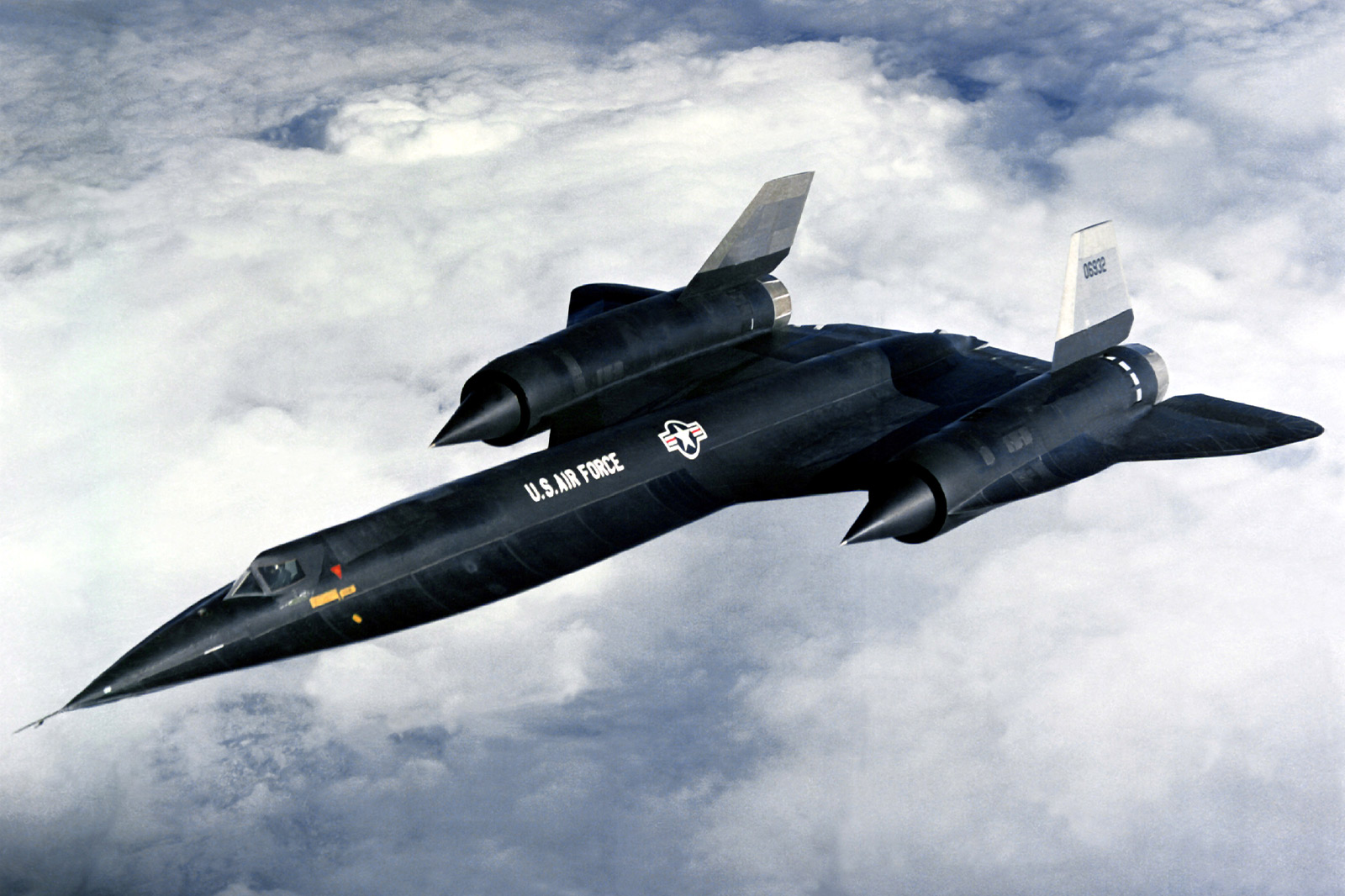
The A-12 was extreme. Cruising above 85,000 feet at over three times the speed of sound, its titanium skin reached temperatures approaching 800°F. During the CIA’s development and testing, anything delicate became suspect. Traditional mechanical watches, no matter how well made, struggled under such conditions.
Introduced in 1960, the Accutron Astronaut’s aesthetic was purely functional, featuring legible ‘daggers’ lume plots, stainless steel 24-hour bezel and a large GMT hand. But its lack of crown and minimal angular lugs gave it just a hint of ’60’s flair.
But it’s the movement that offered something fundamentally different: accuracy derived not from a mainsprings and balance, but from electronics. Its tuning fork oscillator vibrated at whopping 360 Hz, regulated by a transistorised circuit and powered by a battery, delivering unprecedented accuracy and stability: the precursor to quartz.
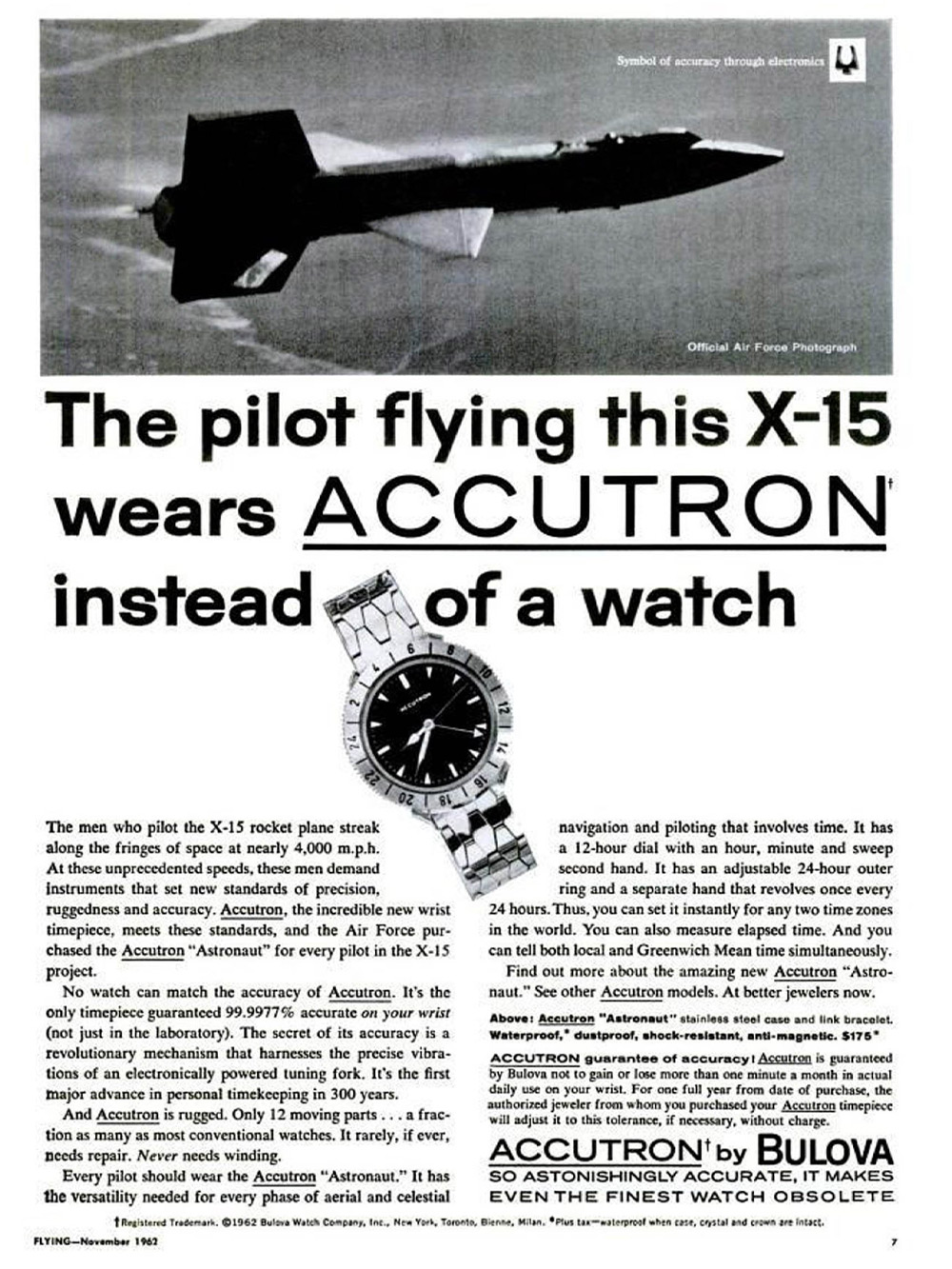
Former A-12 pilot Lt. Col. Frank Murray later recalled the extreme cockpit environment and unforgiving workloads. The Accutron’s low-inertia movement proved unusually resistant to heat, vibration, and sustained G-forces, maintaining accuracy where mechanical watches couldn’t. That same robustness saw Accutron movements used far beyond the A-12 as timers in the X-15 – essentially a rocket with wings – onboard clocks in satellites, and timing devices in the Nike missile program.
The Jet Age did not belong to a single watch, brand, or bezel colour. It was a collective moment, shaped by pilots, engineers, militaries, and manufacturers responding to a world that had suddenly become faster than earth’s spin. Long before ‘GMT’ became shorthand for one watch, it was simply a necessity of living globally.