The H. Moser & Cie. Endeavour Tourbillon has been a staple of the Endeavour collection for years at this point. One of the earliest articles published on Oracle Time almost a decade ago was the Endeavour Tourbillon Concept and it continues to be relevant thanks to collections like the Concept Pop last year. Now they’ve released a new interpretation that strips away the dial completely, the Endeavour Tourbillon Skeleton.
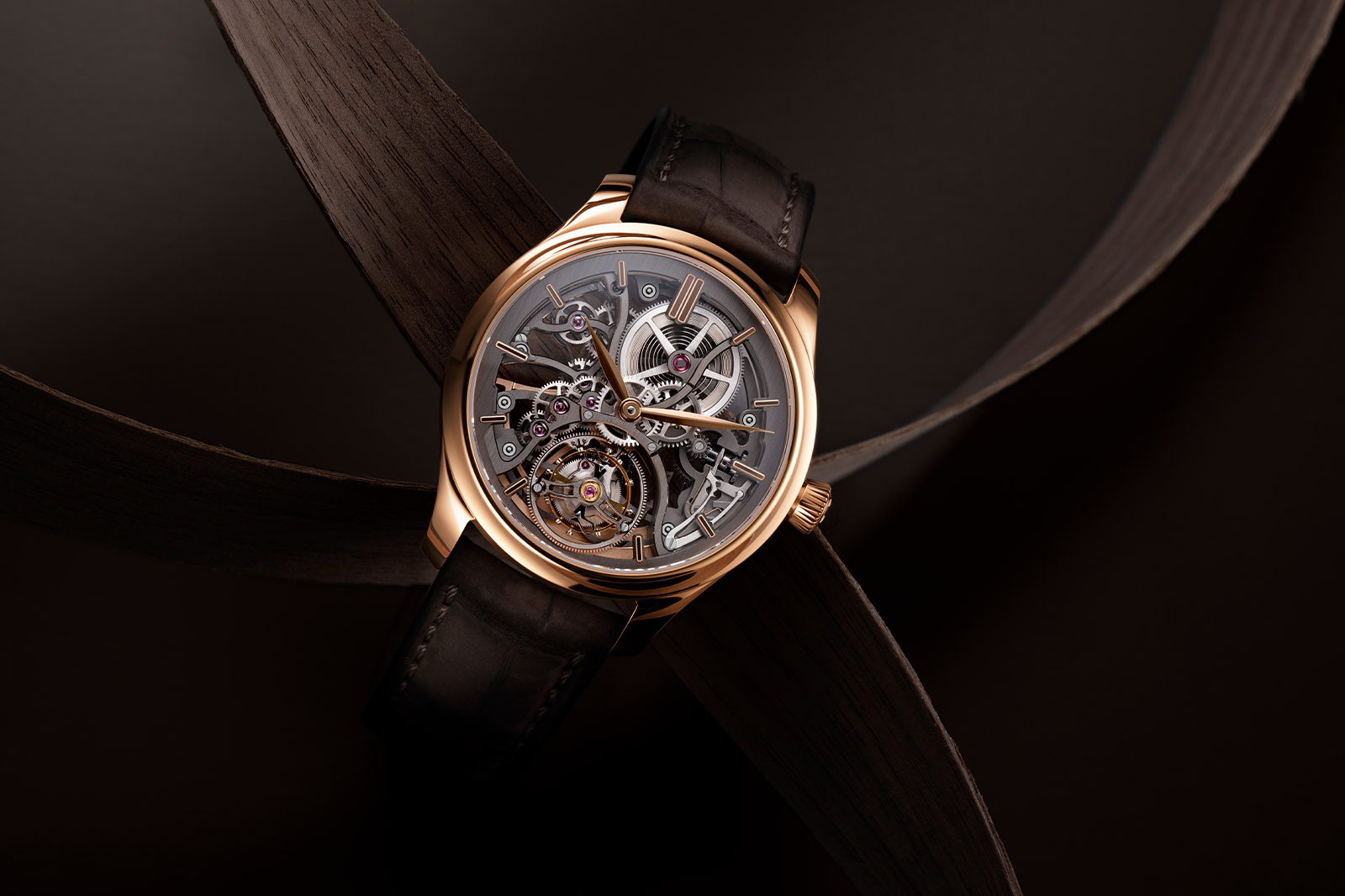
For the 40mm case they’ve gone with 5N red gold, which is a slightly darker gold alloy than the more common rose gold. It works well in combination with the anthracite architecture of the skeletonised display, adding a good amount of contrast while still sitting in those less dazzling tones that stop the watch feeling too ostentatious. It has the typical Endeavour shape with polished lugs, a smooth bezel and a slightly flared crown.
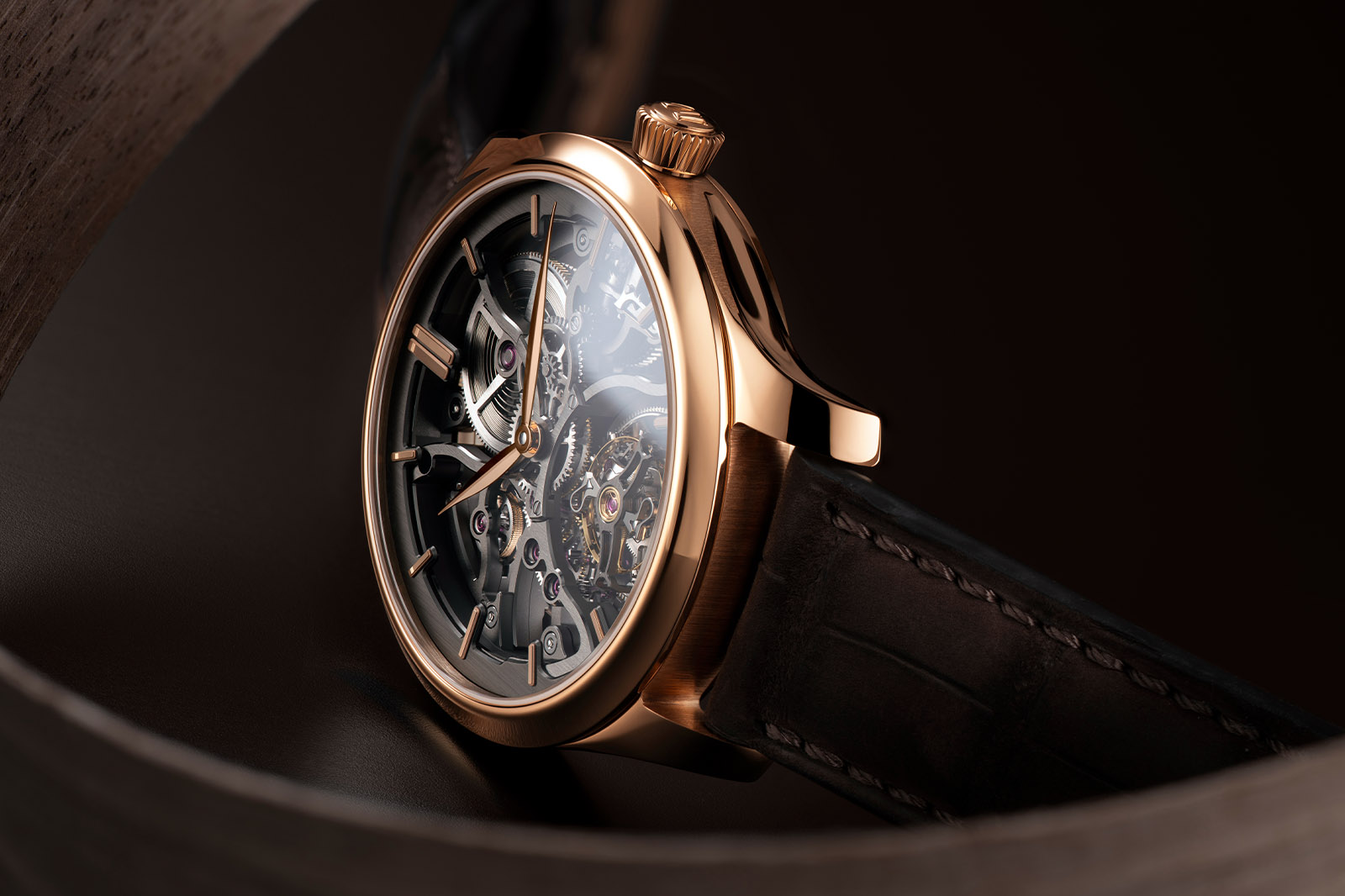
Unsurprisingly, the dial is the key focus of this new release. It’s a skeleton display in the truest sense with as much material as possible removed, leaving only the essential architecture supporting the key components. There’s the central hour and minute hands suspended in the middle. Below which sits the tourbillon at 6 o’clock with its spinning cage and oscillating balance. Then between 12 and 1 o’clock is the main power barrel sans cover, revealing the main spring that stores the energy to power the watch when you wind it – and when you do wind it you can watch it coil tighter in real time.
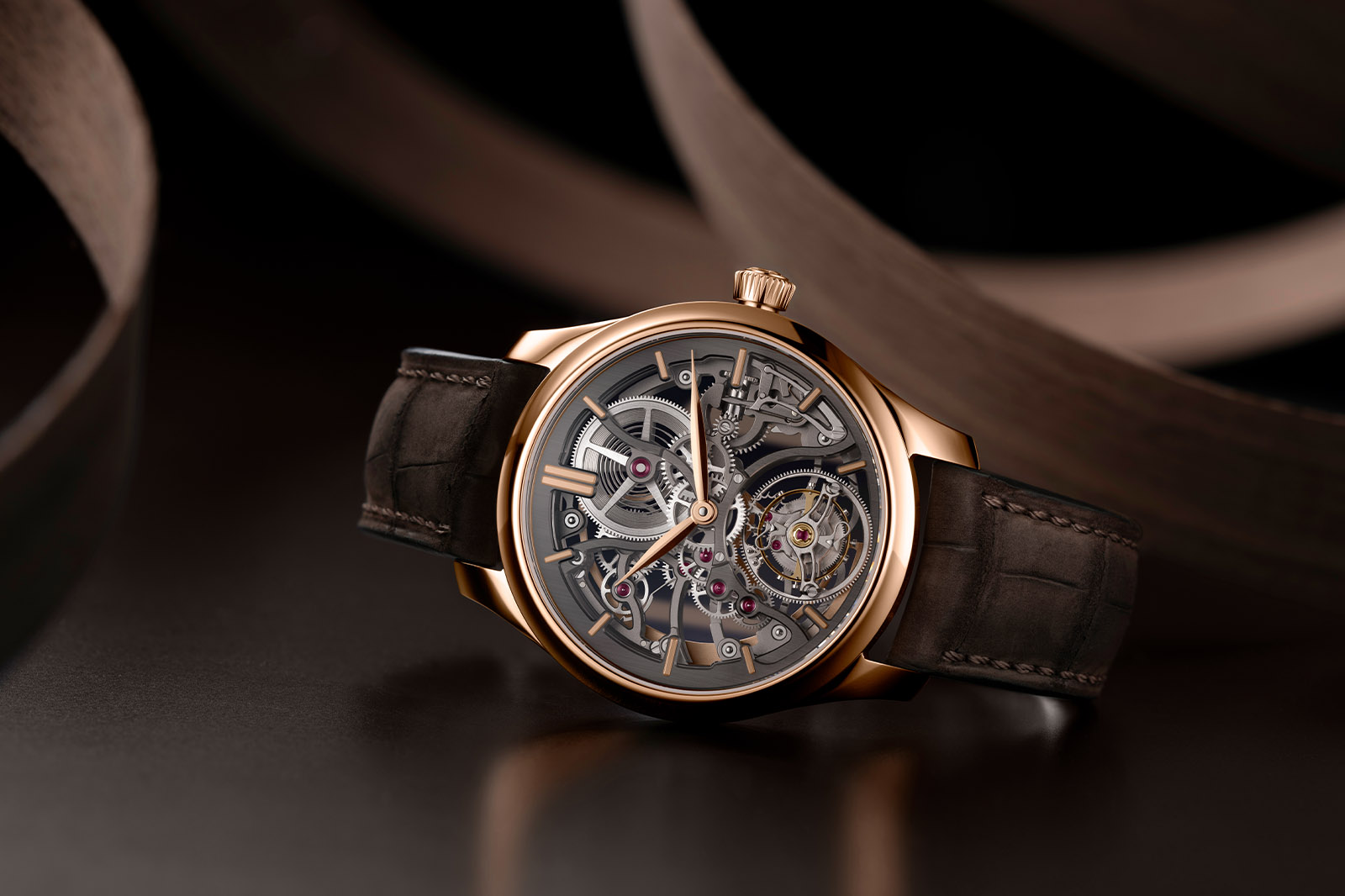
One of the issues frequently raised regarding skeleton designs is readability. The clarity of the hands pointing towards the peripheral timing scales can be lost due to the impact of the exposed bridges and mechanical components. H. Moser has tried to avoid that in the Endeavour Tourbillon Skeleton by making sure the hands and hour markers stand out in the same red gold as the case against the anthracite components. They’ve also avoided the pitfall of skeletonising the hands, instead maintaining the feuille shape that gives them a solid presence.
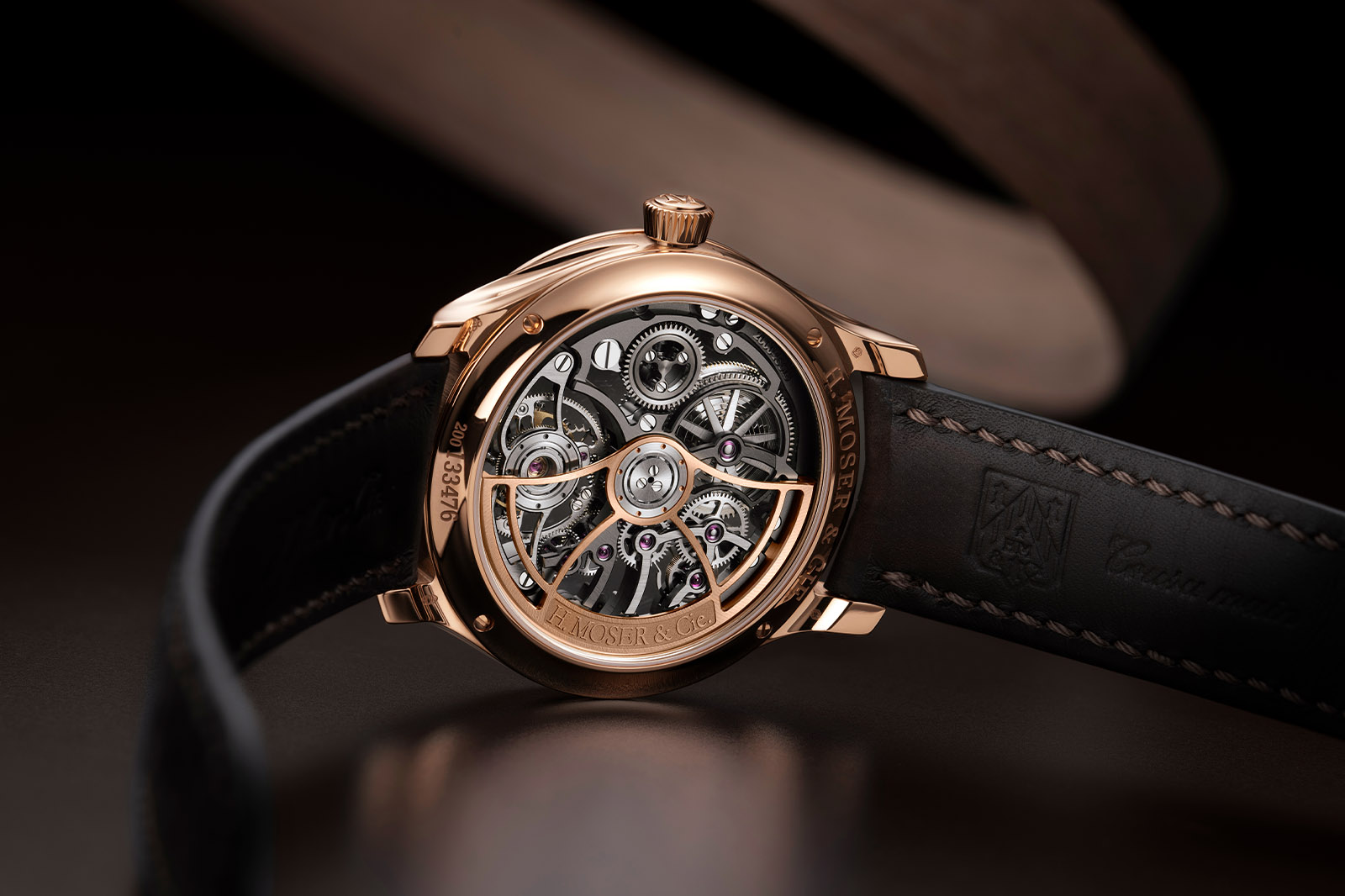
The movement on display is the calibre HMC 814 automatic with 72-hour power reserve and skeletonised rotor. It’s equipped with central hour and minutes with small seconds via the one minute tourbillon – which means that because the tourbillon rotates at a rate of once per minute, it serves double duty as the running seconds indicator.
Given the price of gold, the H. Moser & Cie. Endeavour Tourbillon Skeleton is unsurprisingly CHF 79,000 (approx. £74,650). I know that skeleton styles are not for everyone – you’ll never avoid the fact that some people just don’t want to see the back of their wrist through a watch – but this is a really solid expression of the archetype with a haute horological complication.
Price and Specs:
More details at H. Moser & Cie.