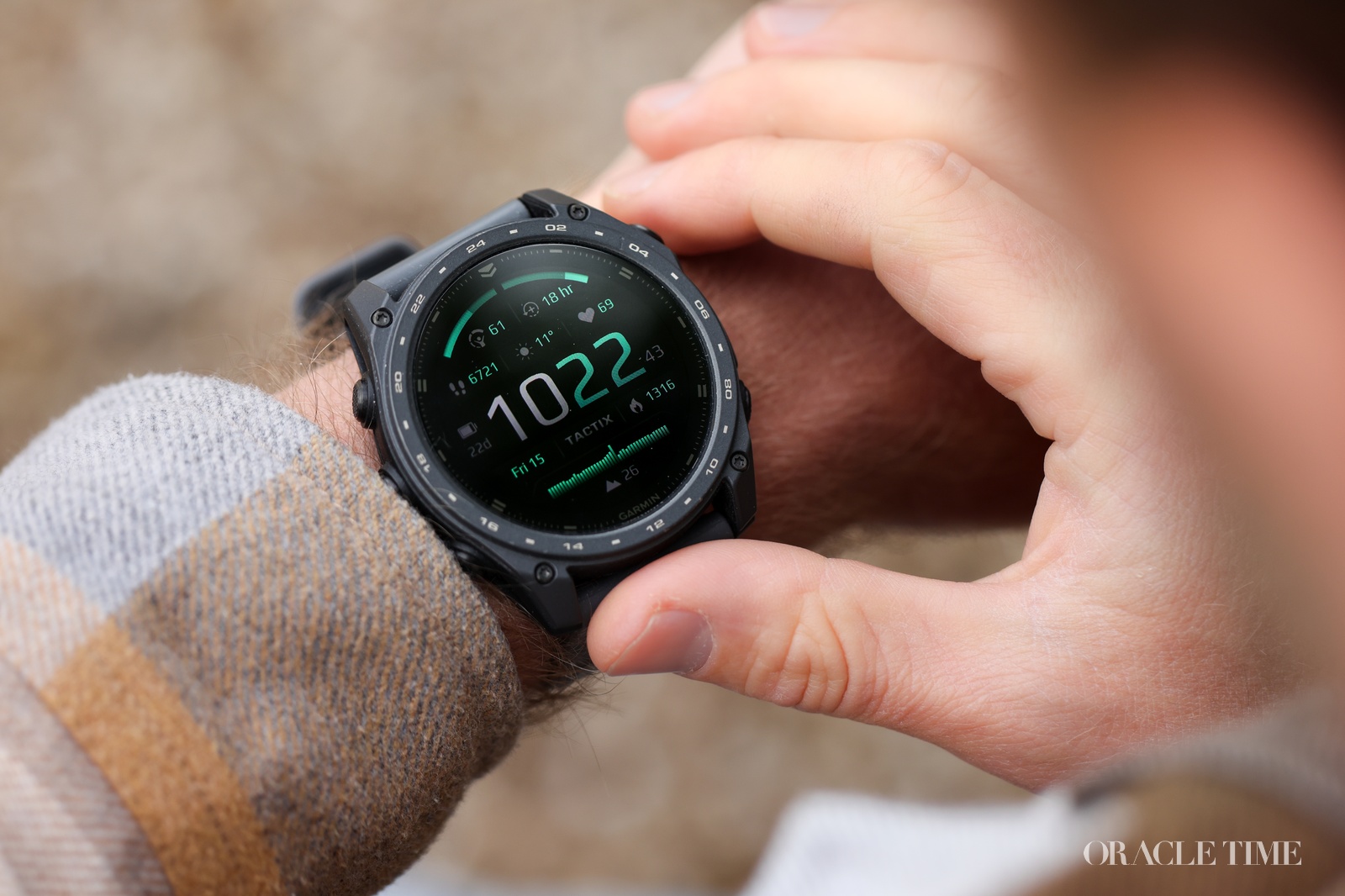
I am drawn to tool watches: under 40mm, mechanical, with some heritage behind them. The Garmin Tactix 8 Cerakote Edition is none of those things. I have worn Garmins for some time now, but at 51mm this is a significant step up from the svelte Venu X1.
The Tactix sits at the top of Garmin’s lineup, essentially a Fenix 8 with military-spec features bolted on. Those features include Applied Ballistics, Stealth Mode, night-vision compatibility, a kill switch, and Jumpmaster.
David Goggins I am not, so the most tactical applications have gone untested. My use has been limited to runs, short hikes, weight-training sessions, the odd round of golf, and (the most fun part) mapping GPX trails and following them on the wrist. In those contexts it performs well: the strength-training plans are useful, the golf course data is comprehensive, and the running metrics are as good as anything in Garmin’s stable. But I am probably using about 20% of what this watch can do.
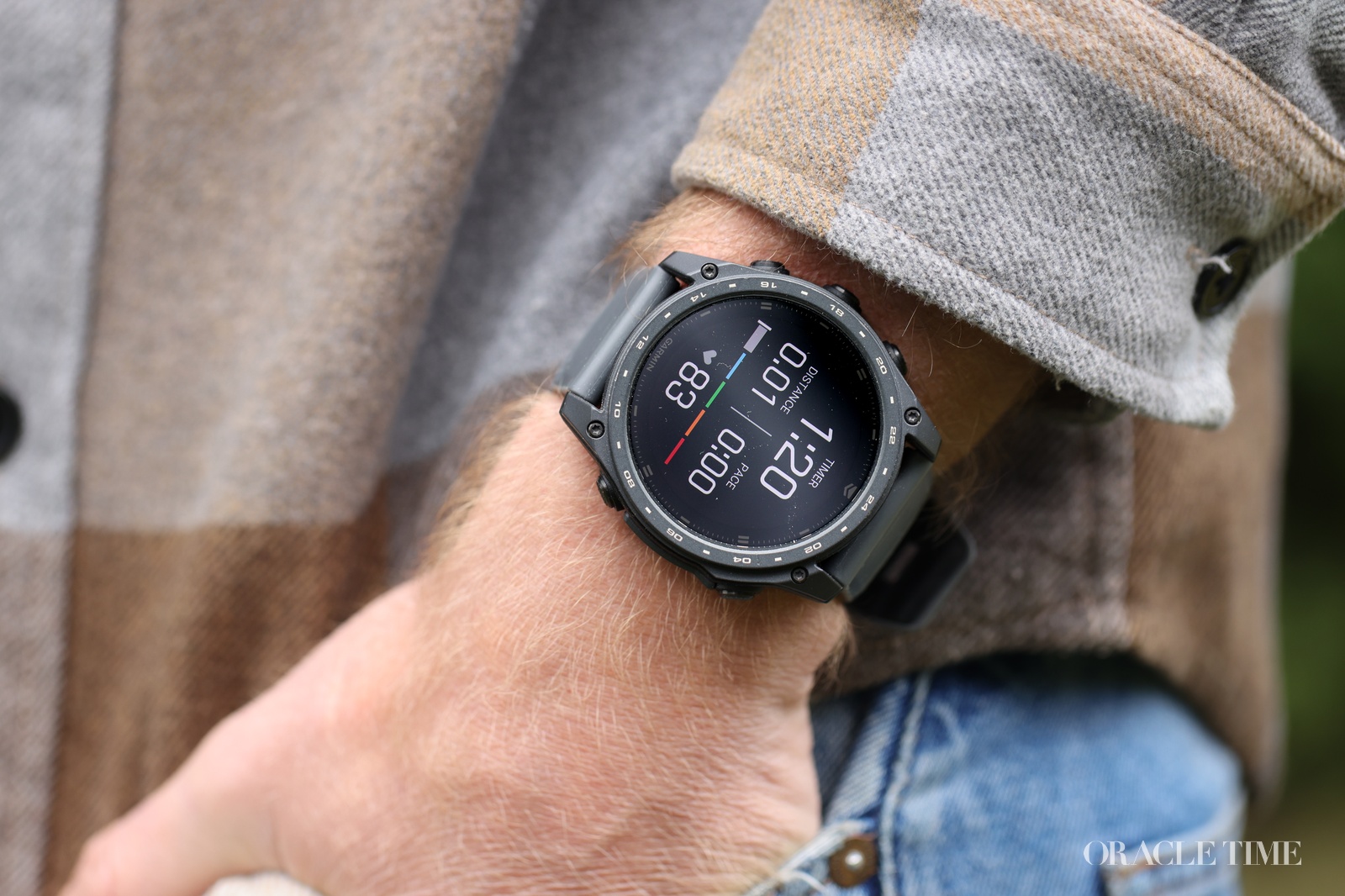
A multi-day hunting trip into remote terrain, a through-hike where battery life measured in weeks actually matters, a smokejumper drop into a wildfire zone where stealth mode and bombproof navigation aren’t just handy features but actual survival tools: that is the Tactix’s ideal setting.
So let me return to how I usually review mechanical watches: how does it feel on the wrist? It is large. 51mm is chunky, and the Cerakote Edition, a materials-focused variant of the standard Tactix 8, is only available at that size. Under the coating, it is the same Tactix 8: same screen, same sensors, same software. But Garmins always manage to wear more comfortably than their dimensions suggest. The titanium bezel and fibre-reinforced polymer case keep the weight around 73g, lighter than many smaller steel watches, and the supple silicone strap helps.
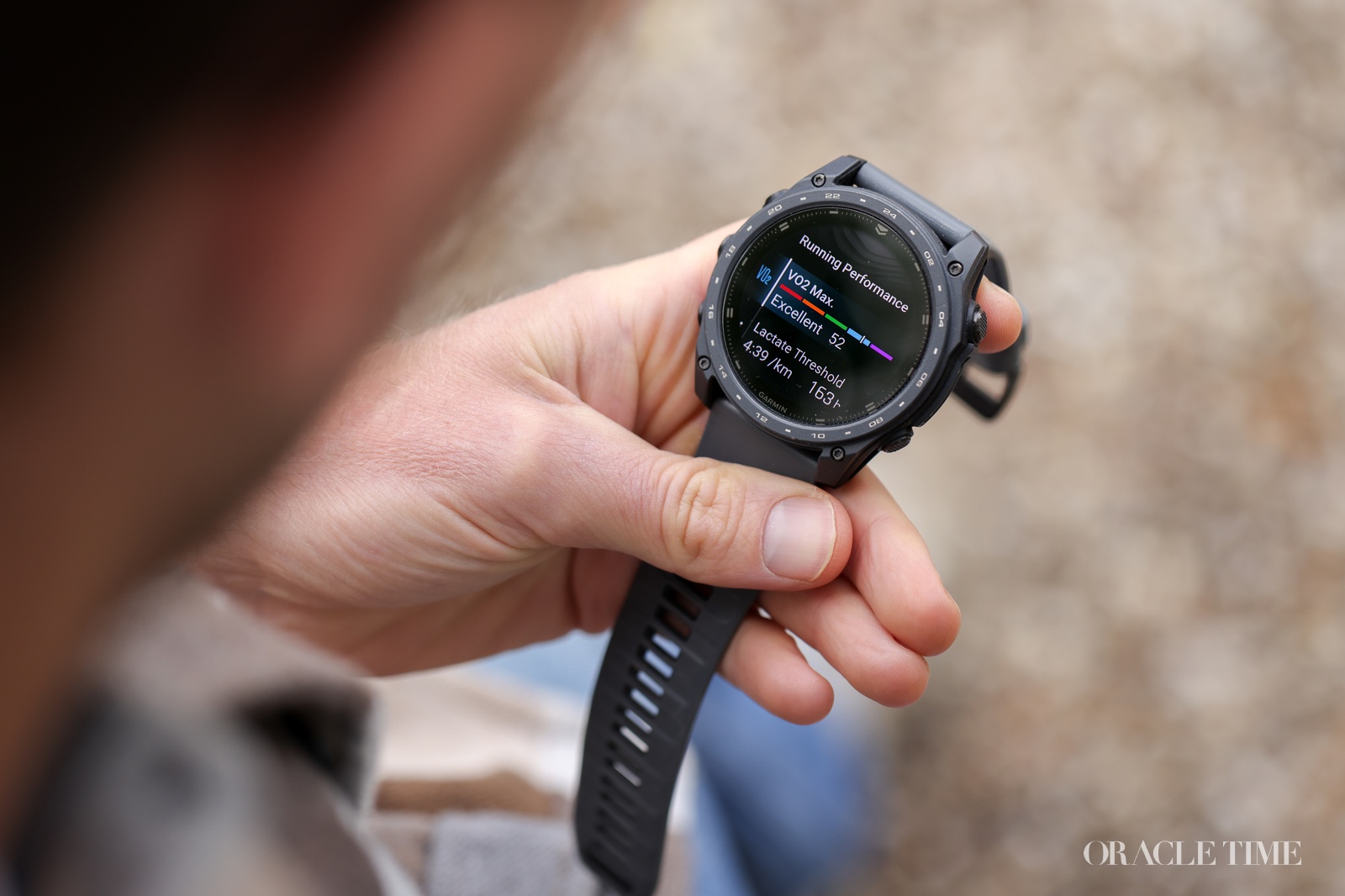
Then there is the Cerakote itself. Ceramic in watchmaking is hardly novel: Rado essentially pioneered the material, and it is now used widely by Hublot, Omega, Panerai, Bulgari and IWC, among many others. Cerakote is not quite the same thing but chases the same aesthetic. It is a ceramic-polymer composite coating born of the firearms industry, used on gun slides, rifle receivers, and knife blades for its resistance to abrasion, corrosion, and chemicals. The coating is sprayed onto each case and baked to cure. Watch brands using it include Nodus and Unimatic.
Cerakote is hard-wearing, but designed to show its age. Wear marks develop character rather than looking like damage, much like a bronze dive watch. Available in slate grey or olive drab, the matte finish is properly tactile and kills reflections: the smartwatch equivalent of dulling the shiny parts on your kit before heading into the field.
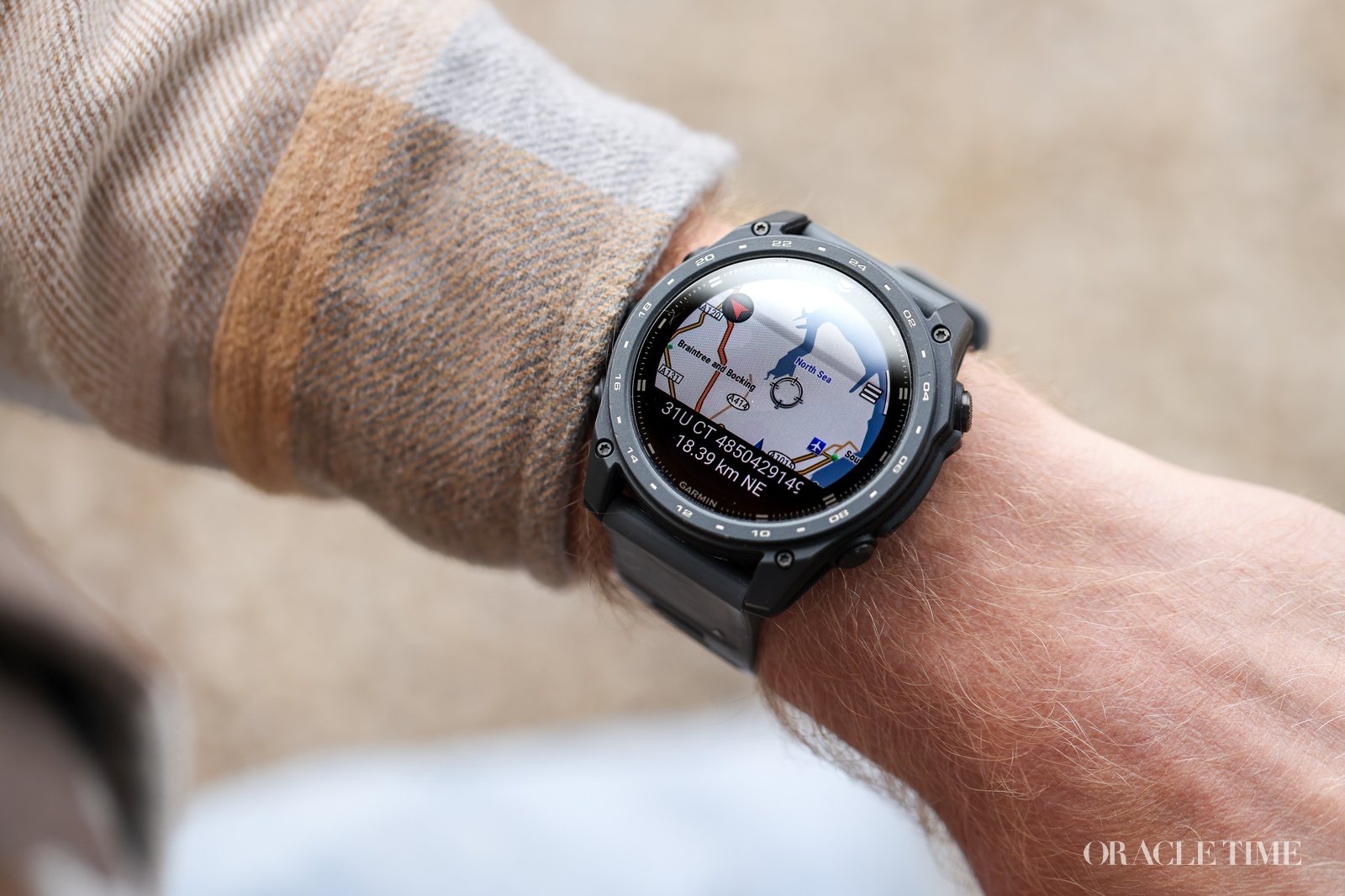
The tactical features are where the Tactix sets itself apart from the standard Fenix. Jumpmaster tracks three military parachute methods: HAHO (High Altitude, High Opening), HALO (High Altitude, Low Opening), and static line, the technique used by paratroopers where the canopy is deployed automatically by a tether on jumping. Applied Ballistics Ultralight provides aiming solutions for long-range marksmanship, accounting for wind, temperature, altitude and humidity. Stealth Mode and the kill switch handle the covert end: wireless dark, biometric logging without location, rapid data wipe if compromised.
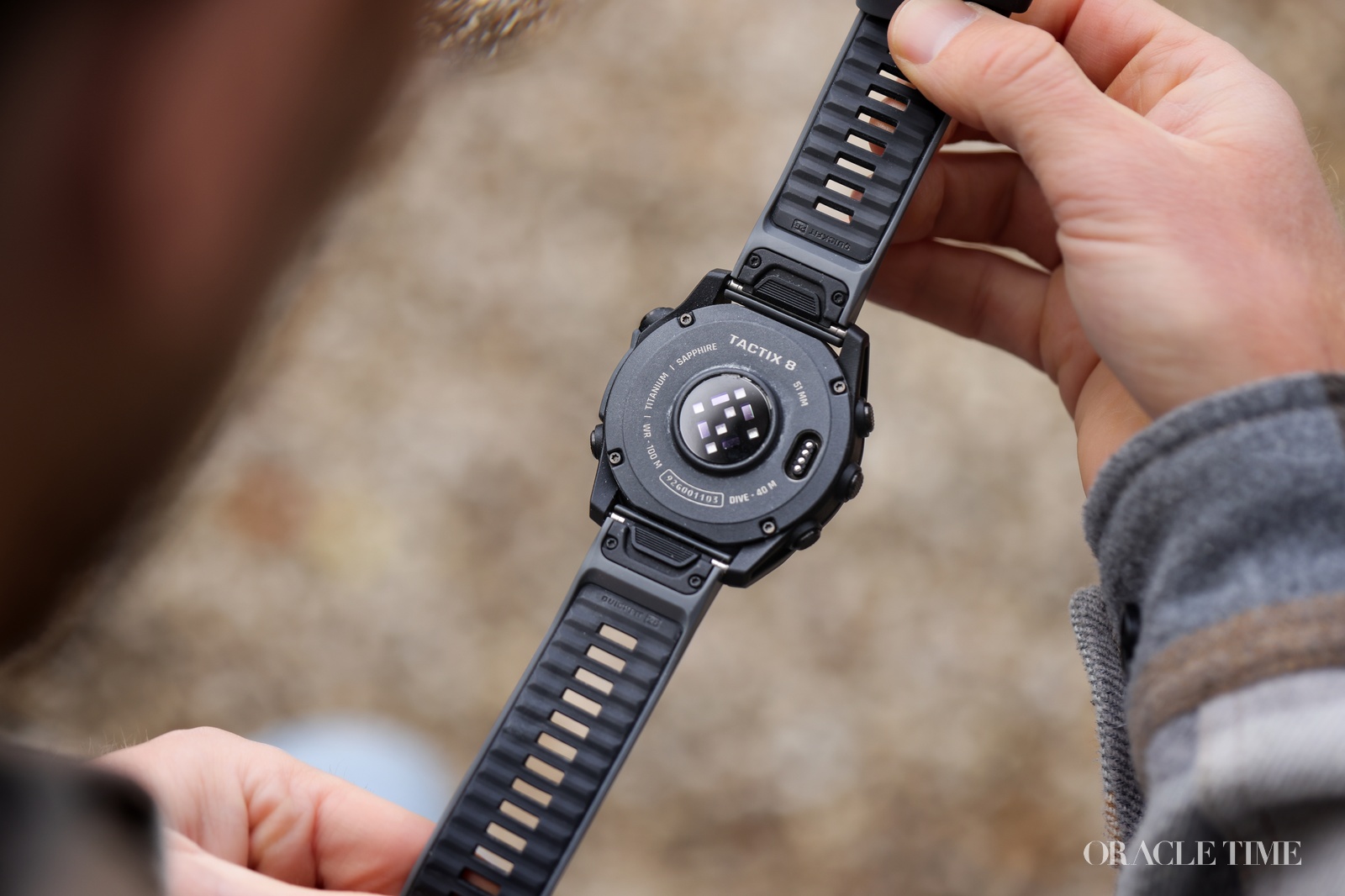
Beyond the tactical suite, battery life consistently meets Garmin’s 29-day claim. The rucking profile lets you input pack weight to refine fitness data for loaded movement. And the built-in flashlight, green and white with instant access, sounds gimmicky until you use it after dark.
At £1,379.99, it is not cheap. But the Cerakote finish earns its place: it adds genuine durability, develops character over time, and looks the part in a way the standard polymer doesn’t. No mechanical watch can match what sits inside this 51mm case. It does everything, except tell the time with the quiet romance of a mainspring.
Price and Specs:
More details at Garmin.