Founded in 2017, Felipe Pikullik has been building some of the most beautiful watches in Germany. That’s a bold claim given the exceptional haute horology of Glashütte, but one that I stand by. Whether it’s their entry-level Klassik or the openworked Mondphase II, the young brand’s attention to detail and finishing is immaculate. In fact, at a glance you’d be forgiven for missing that Felipe Pikullik largely uses widely available stock movements.
Earlier models such as the Klassik, Sternenhimmel, and HTH all used ETA movements. Heavily modified ETA movements, with finishing equal to the finest independent ateliers (the mirror-polished angles of the bevelling alone is breathtaking) but still stock base calibres. For some watchmakers and collectors that’s less of an issue than the final result, especially if it means a slightly more accessible watch. But for a watchmaker as obsessed with the finer details as Pikullik, it wouldn’t do.
The customisation of these ETA movements has helped establish a certain visual identity for Pikullik. They have allowed the atelier to fine-tune their approach to finishing and create a first wave of timepieces that, in the case of the entry-level Klassik, are temptingly accessible at €6,500. It was the foundation upon which Felipe Pikullik was built. But now for 2026, the watchmaker is building a new foundation in the FPA1.

The Felipe Pikullik Architektur Eins is a completely new, developmental approach for the watchmaker. The calibre is handmade in-house from the ground up, with bridges made from German silver, a handcrafted screw balance wheel and an integrated retrograde date function. The exceptional bevelling, engraving, striping and host of other finishes are what we’ve come to know the brand for. But beyond the aesthetics, it also includes some genuine horological research in the solving of a problem: dust in the movement.
No matter how well-made, the movement of different watch components as they run causes friction and friction, in turn, causes wear and tear. As teeth and wheels get worn, that creates dust, which can settle on surfaces inside the movement. This is even more true in finely finished movements, which for a brand like Felipe Pikullik makes it a genuine problem. The solution is a novel Hidden Click Mechanism and Wolf-Tooth winding System.
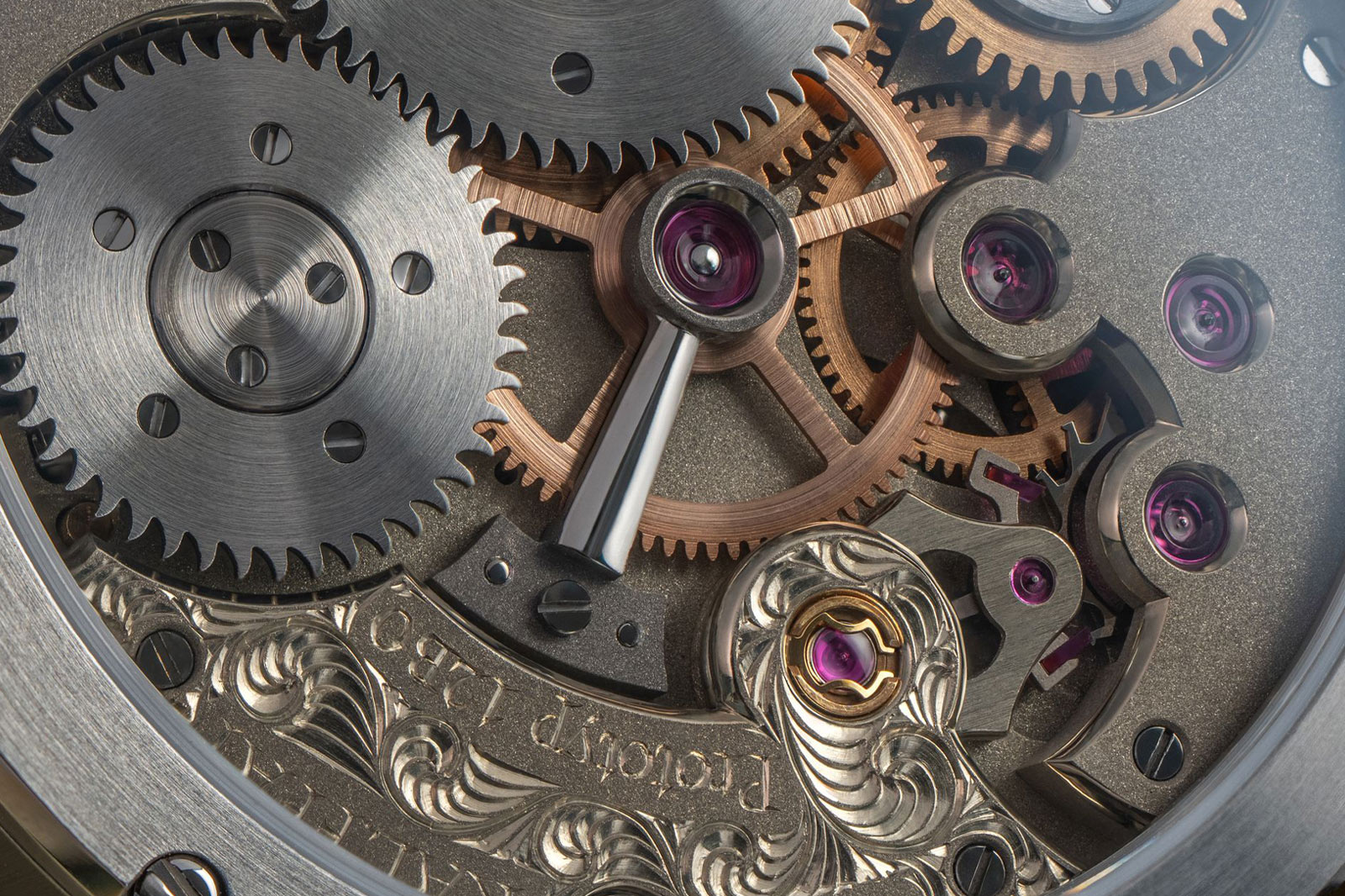
Wolf-Tooth winding systems are a rarity. The name comes from the fact that rather than standard gears, these teeth are slightly curved like animal canines. This allows them to better interlock with other gears, meshing together in a way that more efficiently transfers force, reduces backlash and lowers friction. Wolf-Tooth winding gears are also very hard to build, to the point where only a handful of independent watchmakers use them, like Simon Brette in his Chronomètre Artisans. And now, Felipe Pikullik.
The first model to use the FPA1 is the Sternenhimmel, a time-only piece with an aventurine dial. It’s on the more poetic, astronomical side of Pikullik’s collection, but more importantly it is the watch largely responsible for garnering the watchmaker international acclaim. So, to use it as the launch model for the FPA1 sends a message: that the movement is the brand’s new chronometric flagship.
With a new movement comes the opportunity to give the flagship 2021 collection an overhaul. While the new Sternenhimmel models will have the same green or blue aventurine dials, the proportions have changed. Most obviously, that means a downsized case, from 41mm to 39mm, with the same 10.5mm thickness. They’ll also be presented on a pair of new straps, either rubber or rubberised leather compared to the original’s calfskin for a more contemporary finish. As for what that means in terms of price: the new Sternenhimmel will set you back €17,500.
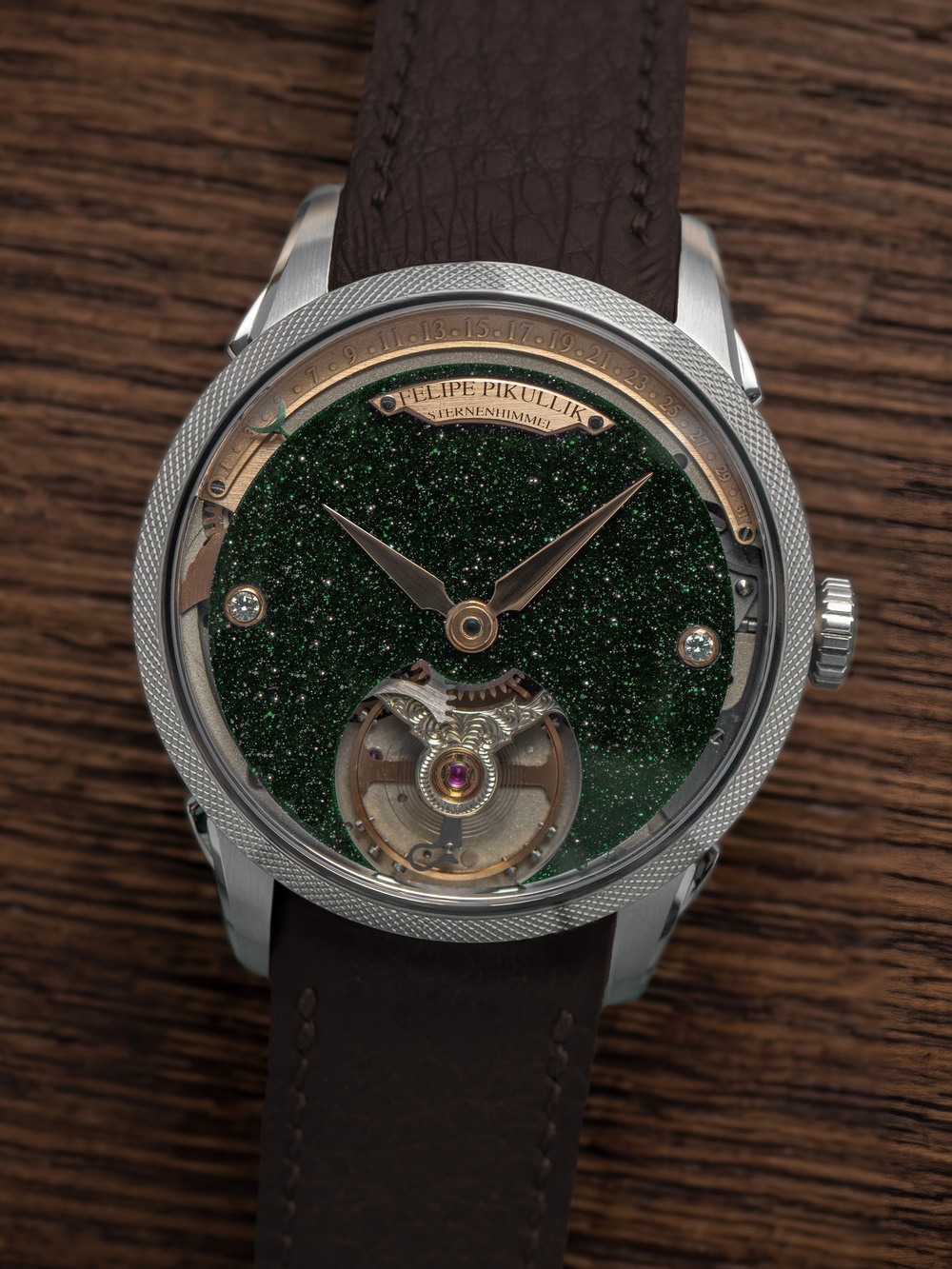


It’s worth noting that the Sternenhimmel is just the starting point for the FPA1. The calibre wasn’t conceived in a vacuum as a standalone movement, but as a calibre with generational architecture. It’s been designed specifically as the basis for an entire family of mechanical movements that will eventually power Felipe Pikullik’s entire collection. You can expect to see the FPA1 in future generations of the Klassik and HTH models, but more importantly, it allows the watchmaker to mechanically evolve.
With the FPA1 Pikullik can now work on new complications, approach mechanical problems – such as dust in the movement – without the constraints of third-party architecture and further define their own approach to watchmaking. After establishing themselves as an exceptional finisher, the new movement is a sign that Felipe Pikullik has finally arrived as a true watchmaker.
Find out more at Felipe Pikullik.